The Eastern front
World war 2
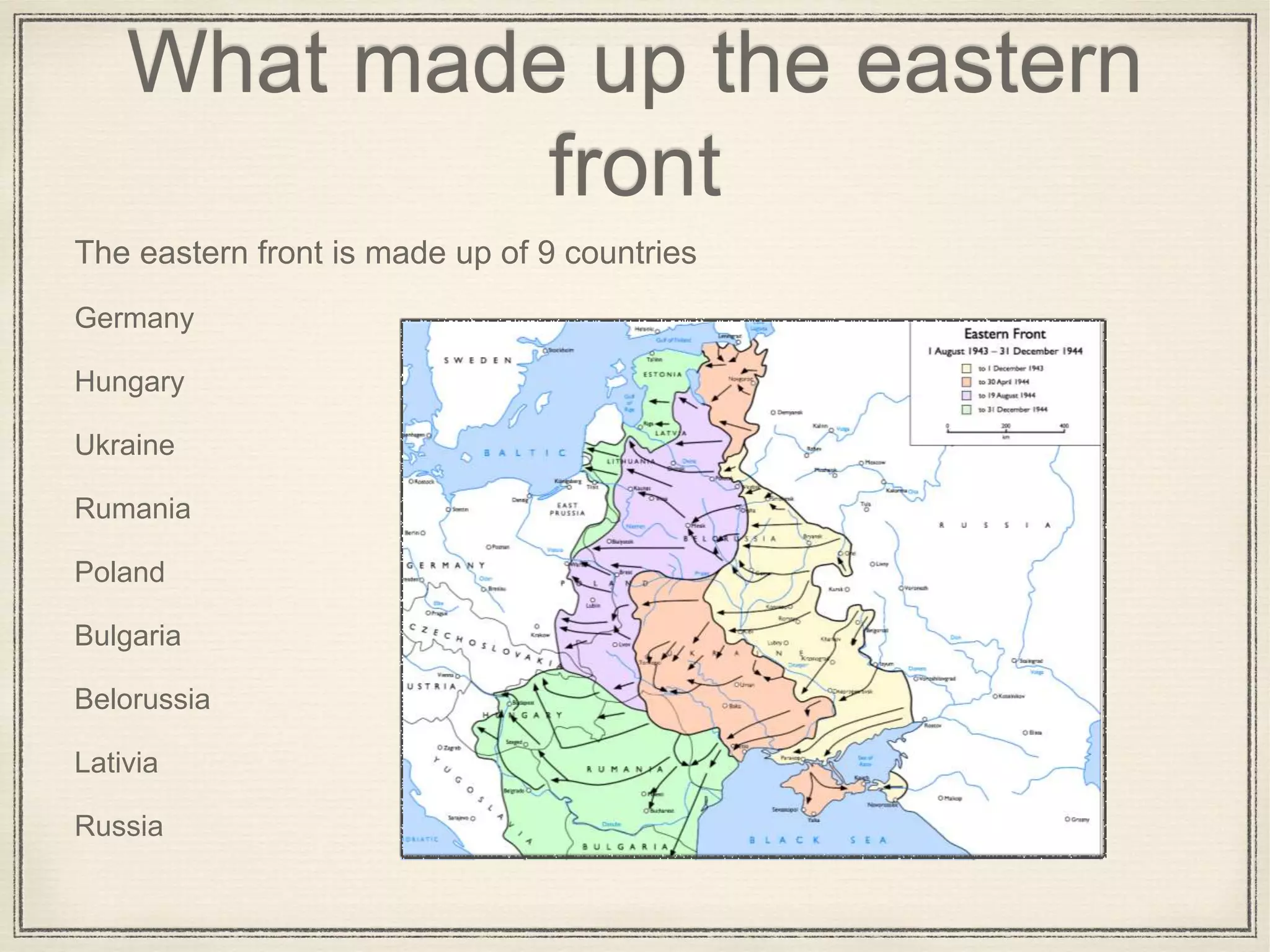
What made up the eastern
front
The eastern front is made up of 9 countries
Germany
Hungary
Ukraine
Rumania
Poland
Bulgaria
Belorussia
Lativia
Russia
The Beginning
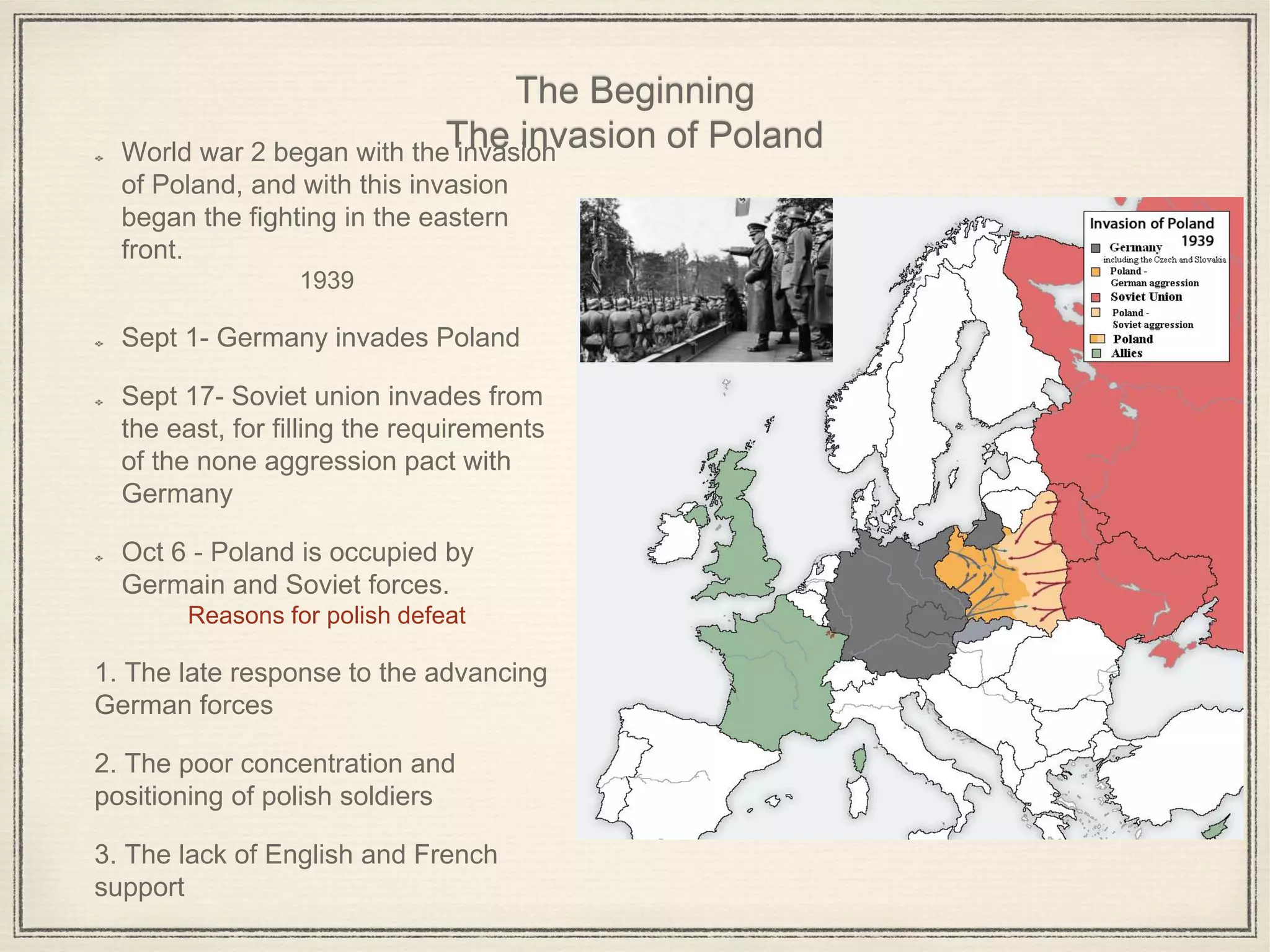
The invasion of PolandWorld war 2 began with the invasion
of Poland, and with this invasion
began the fighting in the eastern
front.
1939
Sept 1- Germany invades Poland
Sept 17- Soviet union invades from
the east, for filling the requirements
of the none aggression pact with
Germany
Oct 6 - Poland is occupied by
Germain and Soviet forces.
Reasons for polish defeat
1. The late response to the advancing
German forces
2. The poor concentration and
positioning of polish soldiers
3. The lack of English and French
support
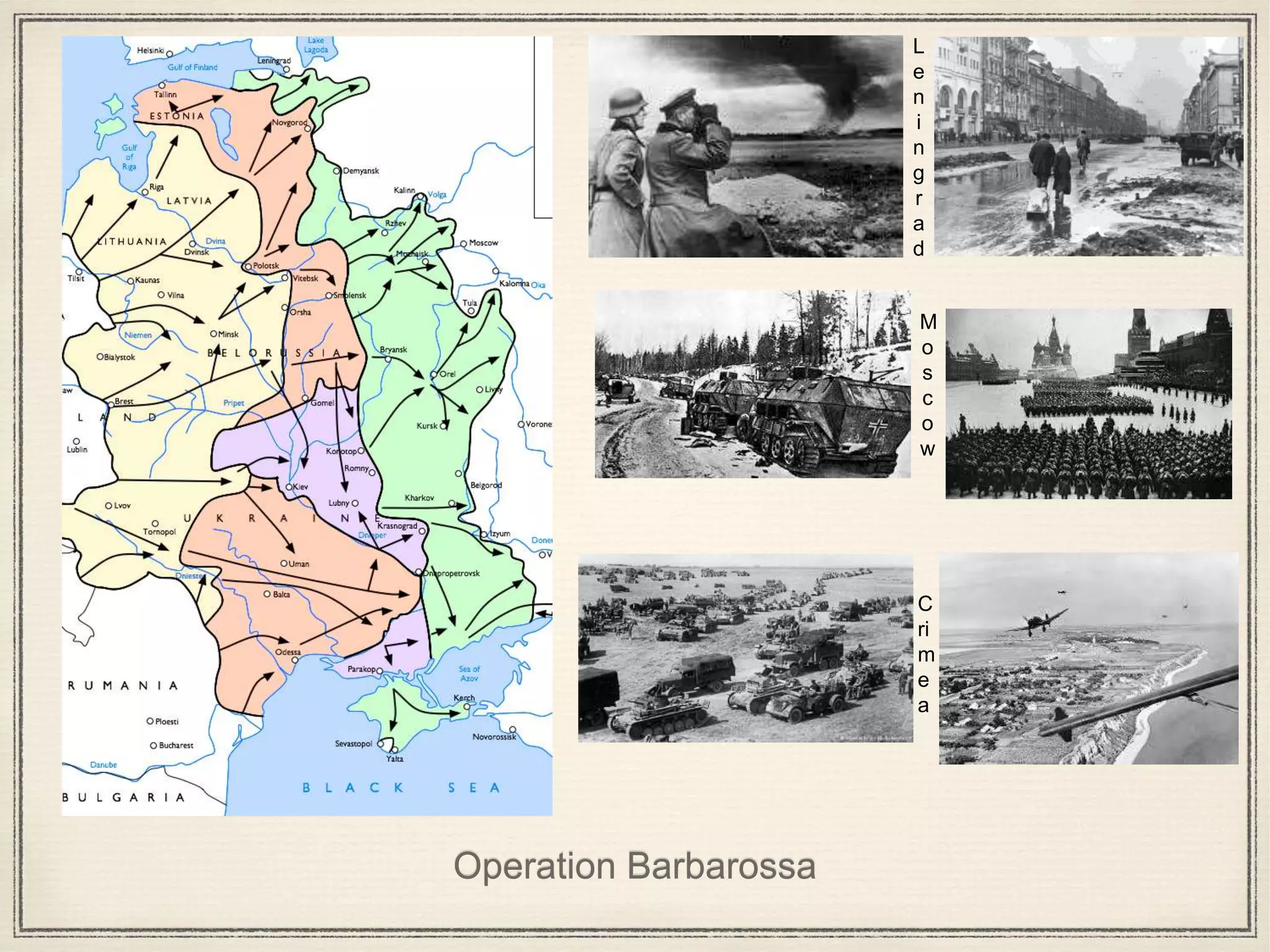
Operation Barbarossa
The betrayal of Russia
Hitler planed to invade the Soviet Union in
an attempt to gain more living space
Hitler belived that the Russians (Slavs) we
inferior to the people of Germany.
1941
June 22 - hitler goes against the Nazi-
soviet non aggression pact by invading
the Soviot Union
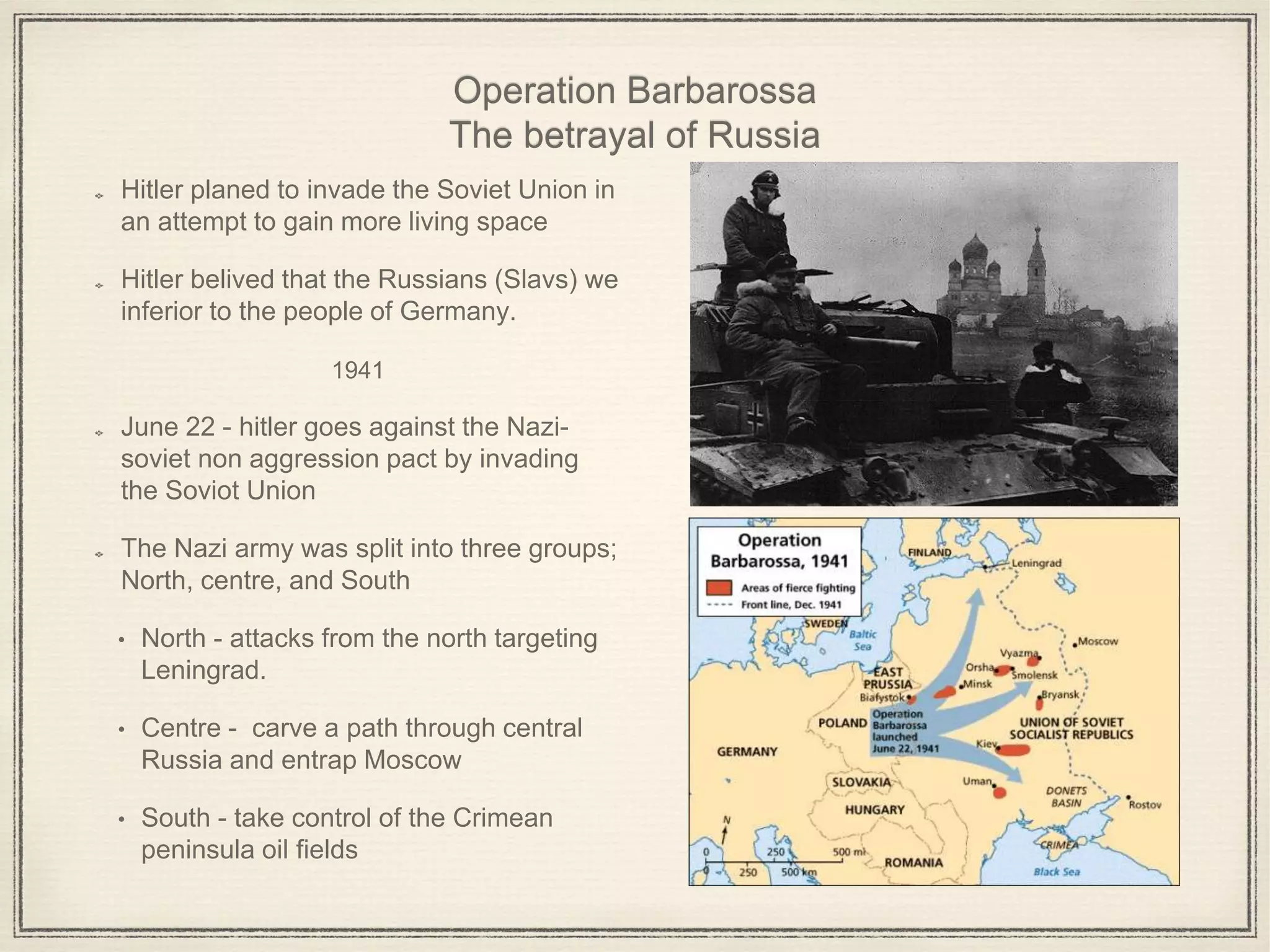
The Nazi army was split into three groups;
North, centre, and South
• North - attacks from the north targeting
Leningrad.
• Centre - carve a path through central
Russia and entrap Moscow
• South - take control of the Crimean
peninsula oil fields
Operation Barbarossa
L
e
n
i
n
g
r
a
d
M
o
s
c
o
w
C
ri
m
e
a
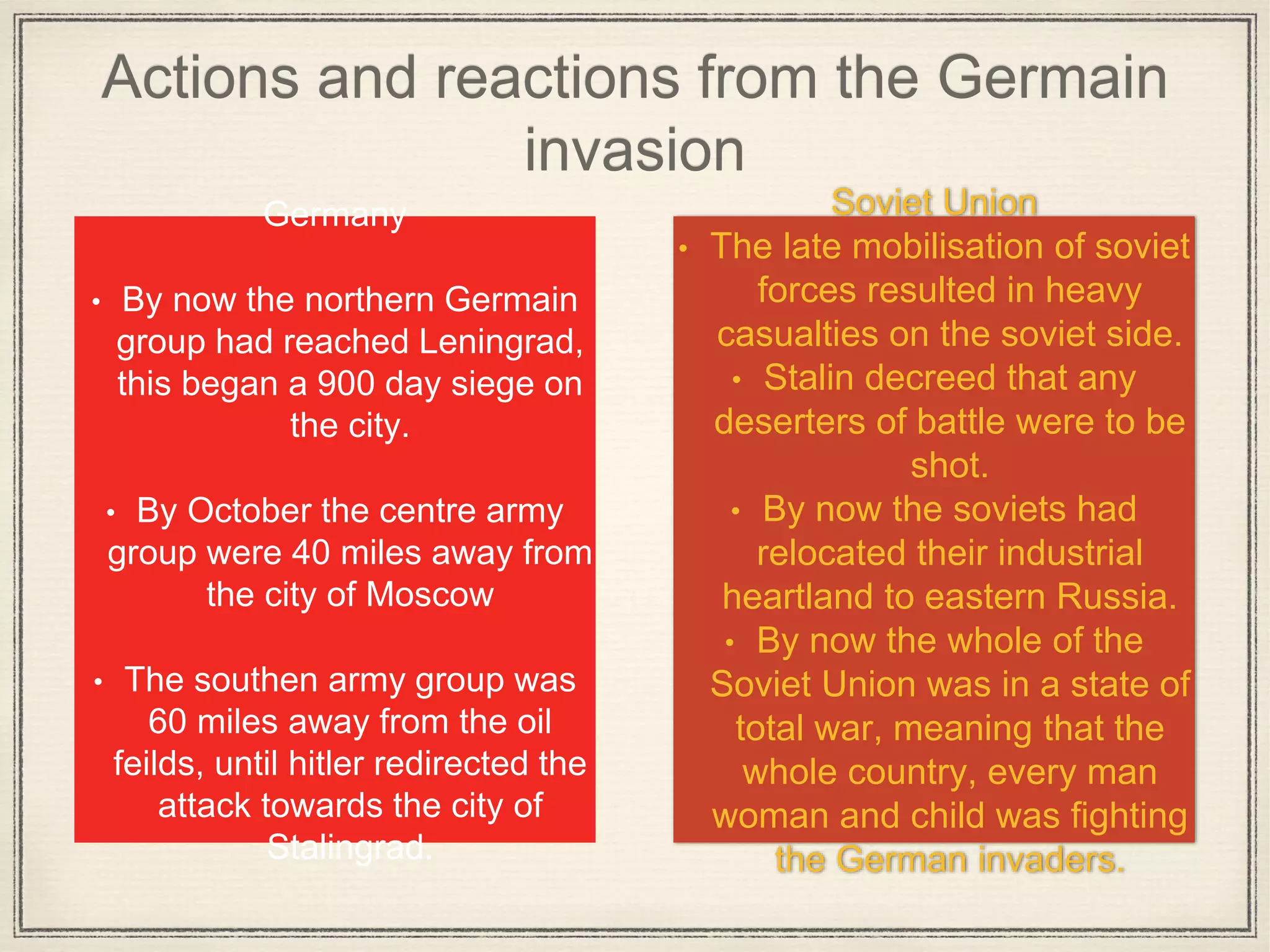
Actions and reactions from the Germain
invasion
Soviet Union
• The late mobilisation of soviet
forces resulted in heavy
casualties on the soviet side.
• Stalin decreed that any
deserters of battle were to be
shot.
• By now the soviets had
relocated their industrial
heartland to eastern Russia.
• By now the whole of the
Soviet Union was in a state of
total war, meaning that the
whole country, every man
woman and child was fighting
the German invaders.
Germany
• By now the northern Germain
group had reached Leningrad,
this began a 900 day siege on
the city.
• By October the centre army
group were 40 miles away from
the city of Moscow
• The southen army group was
60 miles away from the oil
feilds, until hitler redirected the
attack towards the city of
Stalingrad.
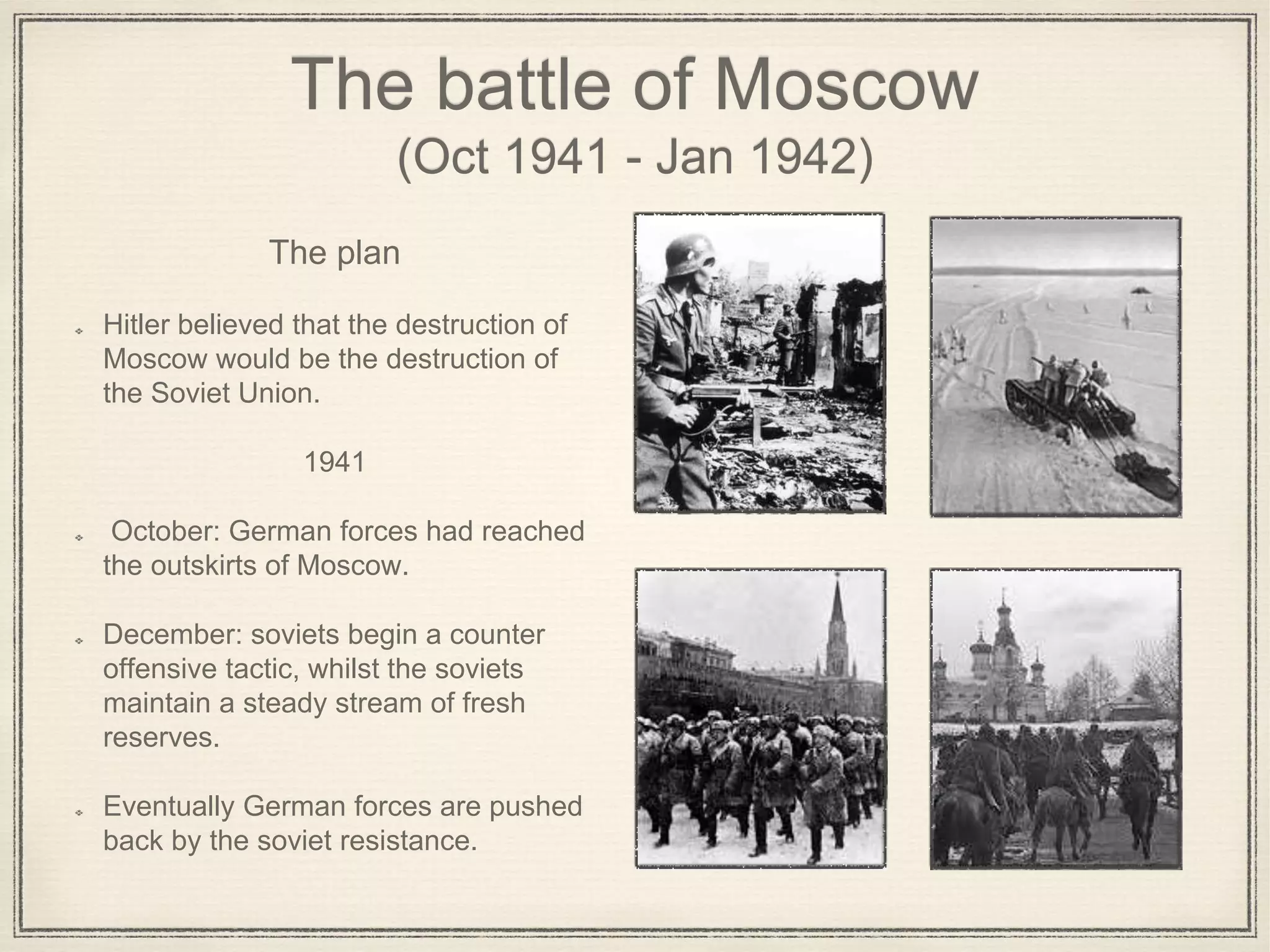
The battle of Moscow
(Oct 1941 - Jan 1942)
The plan
Hitler believed that the destruction of
Moscow would be the destruction of
the Soviet Union.
1941
October: German forces had reached
the outskirts of Moscow.
December: soviets begin a counter
offensive tactic, whilst the soviets
maintain a steady stream of fresh
reserves.
Eventually German forces are pushed
back by the soviet resistance.
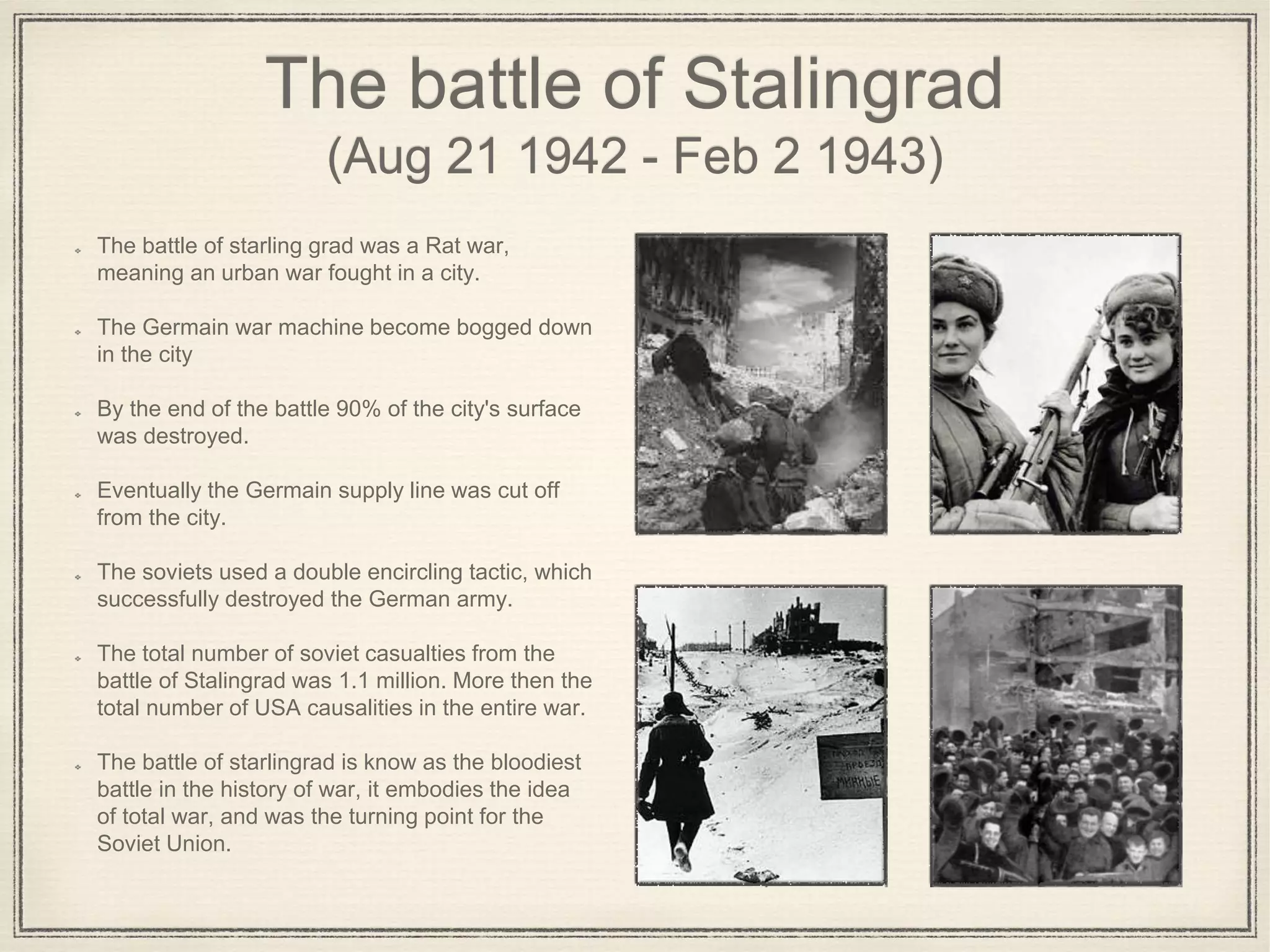
The battle of Stalingrad
(Aug 21 1942 - Feb 2 1943)
The battle of starling grad was a Rat war,
meaning an urban war fought in a city.
The Germain war machine become bogged down
in the city
By the end of the battle 90% of the city's surface
was destroyed.
Eventually the Germain supply line was cut off
from the city.
The soviets used a double encircling tactic, which
successfully destroyed the German army.
The total number of soviet casualties from the
battle of Stalingrad was 1.1 million. More then the
total number of USA causalities in the entire war.
The battle of starlingrad is know as the bloodiest
battle in the history of war, it embodies the idea
of total war, and was the turning point for the
Soviet Union.
The battle of Kursk
( July 3 - August 23 1943)
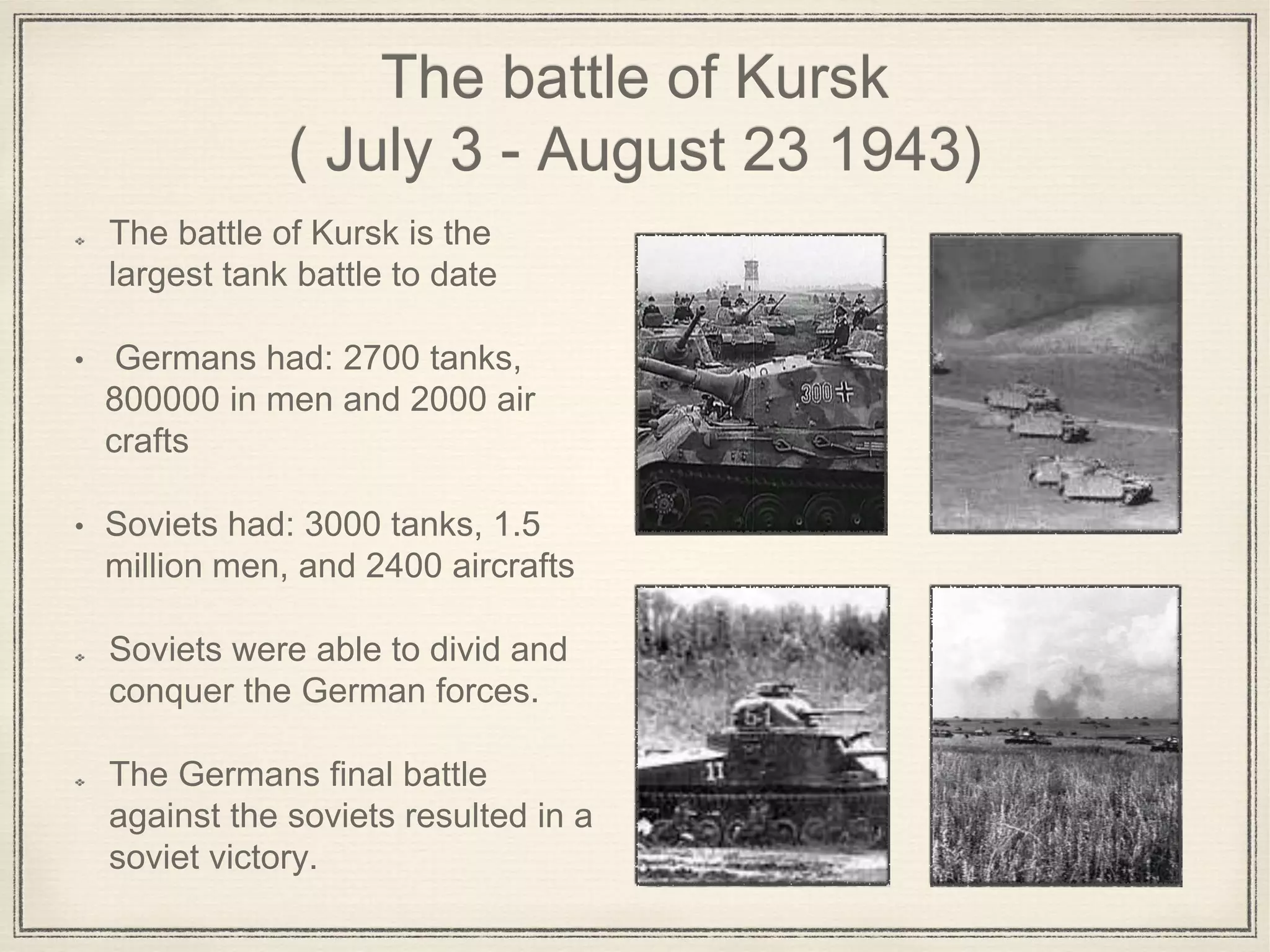
The battle of Kursk is the
largest tank battle to date
• Germans had: 2700 tanks,
800000 in men and 2000 air
crafts
• Soviets had: 3000 tanks, 1.5
million men, and 2400 aircrafts
Soviets were able to divid and
conquer the German forces.
The Germans final battle
against the soviets resulted in a
soviet victory.
Joseph Stalin
I believe in one thing only, the power of
human will.
The Eastern Front
Aftermath
1939-1945
Eventually Soviet forces began to push the German
army back to Berlin.
Over 80% of the German army was situated at the
eastern front.
6 million soviets died protecting their homeland.
The Eastern Front

The Eastern Front

  • 1.
  • 2.
    What made upthe eastern front The eastern front is made up of 9 countries Germany Hungary Ukraine Rumania Poland Bulgaria Belorussia Lativia Russia
  • 3.
    The Beginning The invasionof PolandWorld war 2 began with the invasion of Poland, and with this invasion began the fighting in the eastern front. 1939 Sept 1- Germany invades Poland Sept 17- Soviet union invades from the east, for filling the requirements of the none aggression pact with Germany Oct 6 - Poland is occupied by Germain and Soviet forces. Reasons for polish defeat 1. The late response to the advancing German forces 2. The poor concentration and positioning of polish soldiers 3. The lack of English and French support
  • 4.
    Operation Barbarossa The betrayalof Russia Hitler planed to invade the Soviet Union in an attempt to gain more living space Hitler belived that the Russians (Slavs) we inferior to the people of Germany. 1941 June 22 - hitler goes against the Nazi- soviet non aggression pact by invading the Soviot Union The Nazi army was split into three groups; North, centre, and South • North - attacks from the north targeting Leningrad. • Centre - carve a path through central Russia and entrap Moscow • South - take control of the Crimean peninsula oil fields
  • 5.
  • 6.
    Actions and reactionsfrom the Germain invasion Soviet Union • The late mobilisation of soviet forces resulted in heavy casualties on the soviet side. • Stalin decreed that any deserters of battle were to be shot. • By now the soviets had relocated their industrial heartland to eastern Russia. • By now the whole of the Soviet Union was in a state of total war, meaning that the whole country, every man woman and child was fighting the German invaders. Germany • By now the northern Germain group had reached Leningrad, this began a 900 day siege on the city. • By October the centre army group were 40 miles away from the city of Moscow • The southen army group was 60 miles away from the oil feilds, until hitler redirected the attack towards the city of Stalingrad.
  • 7.
    The battle ofMoscow (Oct 1941 - Jan 1942) The plan Hitler believed that the destruction of Moscow would be the destruction of the Soviet Union. 1941 October: German forces had reached the outskirts of Moscow. December: soviets begin a counter offensive tactic, whilst the soviets maintain a steady stream of fresh reserves. Eventually German forces are pushed back by the soviet resistance.
  • 8.
    The battle ofStalingrad (Aug 21 1942 - Feb 2 1943) The battle of starling grad was a Rat war, meaning an urban war fought in a city. The Germain war machine become bogged down in the city By the end of the battle 90% of the city's surface was destroyed. Eventually the Germain supply line was cut off from the city. The soviets used a double encircling tactic, which successfully destroyed the German army. The total number of soviet casualties from the battle of Stalingrad was 1.1 million. More then the total number of USA causalities in the entire war. The battle of starlingrad is know as the bloodiest battle in the history of war, it embodies the idea of total war, and was the turning point for the Soviet Union.
  • 9.
    The battle ofKursk ( July 3 - August 23 1943) The battle of Kursk is the largest tank battle to date • Germans had: 2700 tanks, 800000 in men and 2000 air crafts • Soviets had: 3000 tanks, 1.5 million men, and 2400 aircrafts Soviets were able to divid and conquer the German forces. The Germans final battle against the soviets resulted in a soviet victory.
  • 10.
    Joseph Stalin I believein one thing only, the power of human will. The Eastern Front Aftermath 1939-1945 Eventually Soviet forces began to push the German army back to Berlin. Over 80% of the German army was situated at the eastern front. 6 million soviets died protecting their homeland.