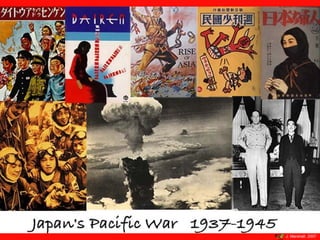
J. Marshall, 2007
1. Why would Japan attack
the USA?
a) Low opinion of USA
• Drunks
• Lazy
• Lack fighting spirit
b. Influential military command
• The public thought the
politicians were weak.
• The military had
brought Japan glory.
c. Japan was expanding in the
Far East
• USA exerting economic pressure
(ie Manchuria).
• Oil stoppage.
• Roosevelt’s demand for Japan to leave
mainland Asia (fall, 1941).
• Had to limit U.S. reach in the Pacific -
oil and rubber in Borneo and Malaya.
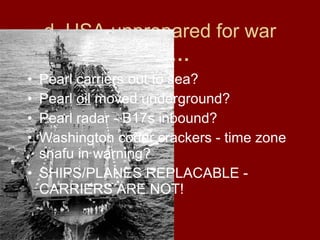
d. USA unprepared for war
BUT…
• Pearl carriers out to sea?
• Pearl oil moved underground?
• Pearl radar - B17s inbound?
• Washington coder crackers - time zone
snafu in warning?
• SHIPS/PLANES REPLACABLE -
CARRIERS ARE NOT!
But…
Admiral Yamamoto
warned of waking the
SLEEPING GIANT.
2. Why was Japan initially so
successful?
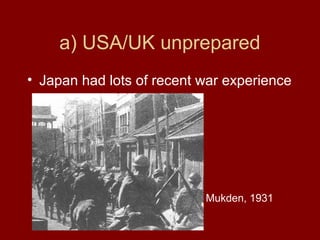
a) USA/UK unprepared
• Japan had lots of recent war experience
Mukden, 1931
b) No soldiers fought like the
Japanese
Bushido code
• Ferocity
• Live off land
• Strict obedience
For example…
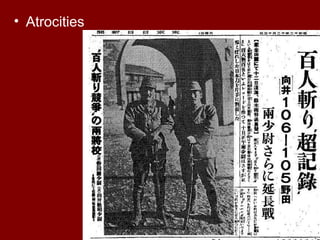
• Atrocities
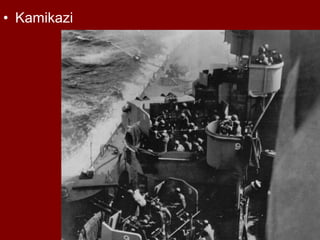
• Kamikazi
• The Bushido code also linked surrender
to dishonour.
c) Initially local populations
welcomed the Japanese
“liberators.”
• From whom were they
liberating Asians?
Asia for the Asians
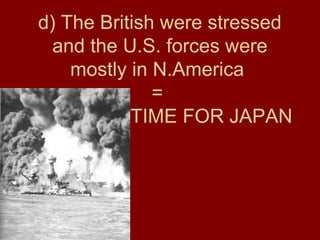
d) The British were stressed
and the U.S. forces were
mostly in N.America
=
TIME FOR JAPAN
3. Why did Japan ultimately
lose?
a) American public support
This
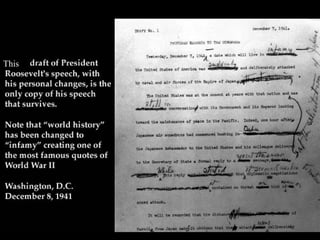
Declassified memo
(dated May 3, 1942) to
FDR re:
Doolittle Raid
b) Massive economic/military
power of USA
• Once mobilized that is!
• Factories were safe across the Pacific.
• Images of Pearl + propaganda
galvanized the nation behind the
President.
• Now the economic might could go far
beyond Lend-Lease…
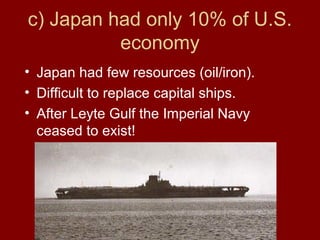
c) Japan had only 10% of U.S.
economy
• Japan had few resources (oil/iron).
• Difficult to replace capital ships.
• After Leyte Gulf the Imperial Navy
ceased to exist!
c) cont. Japan needed food
• Japan had only 3% of U.S. agricultural
capacity.
• Had trouble feeding its people.
• Thus: since raw materials rare, factories
not the prime targets (they are dying by
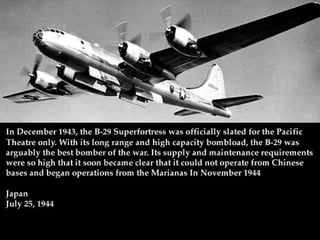
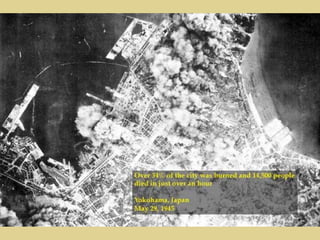
themselves - TARGET CITIES.
• For every 40 factory bombs, 100 land
on cities.
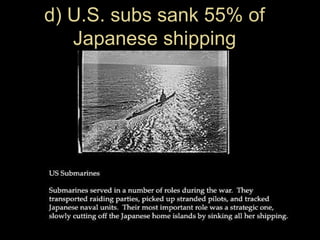
d) U.S. subs sank 55% of
Japanese shipping
e) Island Hopping
• Attack main islands and isolate minor
ones - “left to wither on the vine.”
• Thus limit U.S. casualties (remember
Bushido code).
• On the Asian mainland the British and
Commonwealth fought…
The famed Chindits - early special
forces often behind enemy lines.
Part of the Forgotten Army
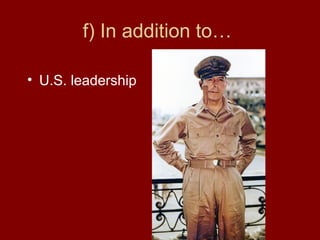
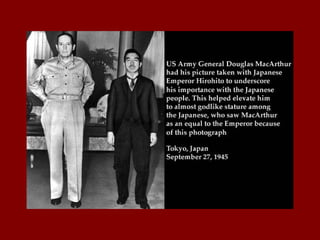
f) In addition to…
• U.S. leadership
U.S. victories: Success Breeds Success
• Iwo Jima
and, U.S. might..
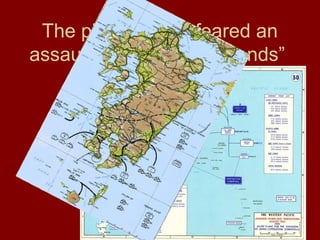
The planners still feared an
assault on the “home islands”
g) Intelligence warned of
1 million + casualties
• This would be unacceptable to the U.S.
public.
• The Manhatten Project was the answer.
• Why would the U.S. use the bomb
against Japan but rely on traditional
munitions for Germany?
Hiroshima, August 6
Nagasaki, August 9
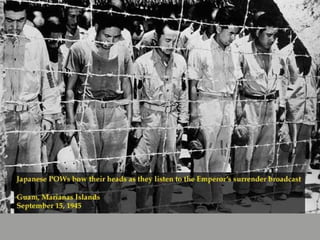
4. The Surrender
Ultimately:
• Historians agree it really was a foregone
conclusion - the USA was just too strong
economically with too much military
potential.
• It is a testament to the ferocity and
commitment of the Japanese fighters that the
war took as long as it did.
• Easier geography also would have sped the
inevitable conclusion.
end

Pacific War

  • 1.
  • 2.
    1. Why wouldJapan attack the USA?
  • 3.
    a) Low opinionof USA • Drunks • Lazy • Lack fighting spirit
  • 4.
    b. Influential militarycommand • The public thought the politicians were weak. • The military had brought Japan glory.
  • 5.
    c. Japan wasexpanding in the Far East • USA exerting economic pressure (ie Manchuria). • Oil stoppage. • Roosevelt’s demand for Japan to leave mainland Asia (fall, 1941). • Had to limit U.S. reach in the Pacific - oil and rubber in Borneo and Malaya.
  • 6.
    d. USA unpreparedfor war BUT… • Pearl carriers out to sea? • Pearl oil moved underground? • Pearl radar - B17s inbound? • Washington coder crackers - time zone snafu in warning? • SHIPS/PLANES REPLACABLE - CARRIERS ARE NOT!
  • 7.
    But… Admiral Yamamoto warned ofwaking the SLEEPING GIANT.
  • 8.
    2. Why wasJapan initially so successful?
  • 9.
    a) USA/UK unprepared •Japan had lots of recent war experience Mukden, 1931
  • 10.
    b) No soldiersfought like the Japanese Bushido code • Ferocity • Live off land • Strict obedience For example…
  • 11.
  • 12.
  • 13.
    • The Bushidocode also linked surrender to dishonour.
  • 15.
    c) Initially localpopulations welcomed the Japanese “liberators.” • From whom were they liberating Asians? Asia for the Asians
  • 16.
    d) The Britishwere stressed and the U.S. forces were mostly in N.America = TIME FOR JAPAN
  • 17.
    3. Why didJapan ultimately lose?
  • 18.
  • 19.
  • 20.
    Declassified memo (dated May3, 1942) to FDR re: Doolittle Raid
  • 21.
    b) Massive economic/military powerof USA • Once mobilized that is! • Factories were safe across the Pacific. • Images of Pearl + propaganda galvanized the nation behind the President. • Now the economic might could go far beyond Lend-Lease…
  • 23.
    c) Japan hadonly 10% of U.S. economy • Japan had few resources (oil/iron). • Difficult to replace capital ships. • After Leyte Gulf the Imperial Navy ceased to exist!
  • 24.
    c) cont. Japanneeded food • Japan had only 3% of U.S. agricultural capacity. • Had trouble feeding its people. • Thus: since raw materials rare, factories not the prime targets (they are dying by themselves - TARGET CITIES. • For every 40 factory bombs, 100 land on cities.
  • 25.
    d) U.S. subssank 55% of Japanese shipping
  • 29.
    e) Island Hopping •Attack main islands and isolate minor ones - “left to wither on the vine.” • Thus limit U.S. casualties (remember Bushido code). • On the Asian mainland the British and Commonwealth fought…
  • 30.
    The famed Chindits- early special forces often behind enemy lines. Part of the Forgotten Army
  • 31.
    f) In additionto… • U.S. leadership
  • 32.
    U.S. victories: SuccessBreeds Success • Iwo Jima
  • 33.
  • 34.
    The planners stillfeared an assault on the “home islands”
  • 35.
    g) Intelligence warnedof 1 million + casualties • This would be unacceptable to the U.S. public. • The Manhatten Project was the answer. • Why would the U.S. use the bomb against Japan but rely on traditional munitions for Germany?
  • 36.
  • 37.
  • 41.
    Ultimately: • Historians agreeit really was a foregone conclusion - the USA was just too strong economically with too much military potential. • It is a testament to the ferocity and commitment of the Japanese fighters that the war took as long as it did. • Easier geography also would have sped the inevitable conclusion.
  • 42.