BANKING WITHOUT BANKS
PEER-TO-PEER LENDING
Group 1
Aakash Kulkarni [MGBSEP13IBWM001]
Aishwarye Pandey [MGBSEP13CMM028]
Kanika Bansal [MGBSEP13CMM039]
Nishant Menda [MGBSEP13IBWM017]
Ritika Shetty [MGBSEP13CMM047]
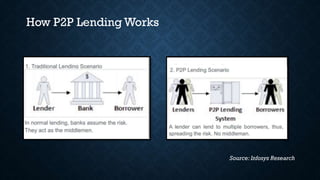
How P2P Lending Works

Source: Infosys Research
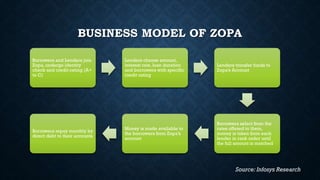
BUSINESS MODEL OF ZOPA
Borrowers and Lenders join
Zopa, undergo identity
check and credit-rating (A+
to C)

Borrowers repay monthly by
direct debt to their accounts

Lenders choose amount,
interest rate, loan duration
and borrowers with specific
credit rating

Lenders transfer funds to
Zopa’s Account

Money is made available to
the borrowers from Zopa’s
account

Borrowers select from the
rates offered to them,
money is taken from each
lender in rank order until
the full amount is matched

Source: Infosys Research
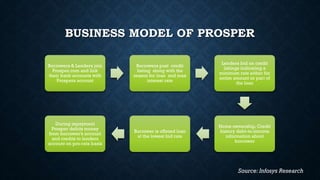
BUSINESS MODEL OF PROSPER
Borrowers & Lenders join
Prosper.com and link
their bank accounts with
Prospers account

During repayment
Prosper debits money
from borrower’s account
and credits to lenders
account on pro-rata basis

Borrowers post credit
listing along with the
reason for loan and max
interest rate

Lenders bid on credit
listings indicating a
minimum rate either for
entire amount or part of
the loan

Borrower is offered loan
at the lowest bid rate

Home ownership, Credit
history debt-to-income
information about
borrower

Source: Infosys Research
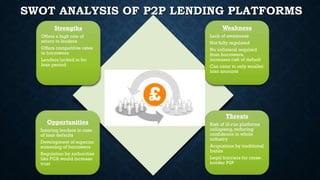
SWOT ANALYSIS OF P2P LENDING PLATFORMS
Strengths
Offers a high rate of
return to lenders
Offers competitive rates
to borrowers
Lenders locked in for
loan period

Opportunities
Insuring lenders in case
of loan defaults
Development of superior
screening of borrowers
Regulation by authorities
like FCA would increase
trust

Weakness
Lack of awareness
Not fully regulated
No collateral required
from borrowers,
increases risk of default
Can cater to only smaller
loan amounts

Threats
Risk of ill-run platforms
collapsing, reducing
confidence in whole
industry
Acquisition by traditional
banks
Legal barriers for crossborder P2P
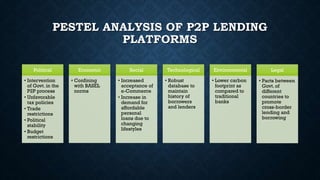
PESTEL ANALYSIS OF P2P LENDING
PLATFORMS
Political
• Intervention
of Govt. in the
P2P process
• Unfavorable
tax policies
• Trade
restrictions
• Political
stability
• Budget
restrictions

Economic
• Confining
with BASEL
norms

Social
• Increased
acceptance of
e-Commerce
• Increase in
demand for
affordable
personal
loans due to
changing
lifestyles

Technological
• Robust
database to
maintain
history of
borrowers
and lenders

Environmental

Legal

• Lower carbon
footprint as
compared to
traditional
banks

• Pacts between
Govt. of
different
countries to
promote
cross-border
lending and
borrowing
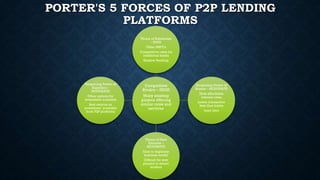
PORTER'S 5 FORCES OF P2P LENDING
PLATFORMS
Threat of Substitutes
- HIGH
Other NBFCs
Competitive rates by
traditional banks
Shadow Banking

Bargaining Power of
Suppliers –
MODERATE
Other options for
investment available
Best returns on
investment available
from P2P platforms

Competitive
Rivalry – HIGH
Many existing
players offering
similar rates and
services

Threat of New
Entrants –
MODERATE
Easy to duplicate
business model
Difficult for new
players to attract
lenders

Bargaining Power of
Buyers – MODERATE
Most affordable
interest rates
Lower transaction
fees than banks
Loan limit
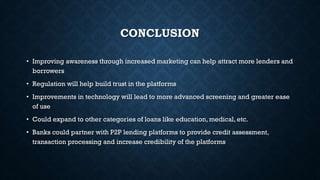
CONCLUSION
• Improving awareness through increased marketing can help attract more lenders and
borrowers
• Regulation will help build trust in the platforms
• Improvements in technology will lead to more advanced screening and greater ease
of use
• Could expand to other categories of loans like education, medical, etc.
• Banks could partner with P2P lending platforms to provide credit assessment,
transaction processing and increase credibility of the platforms
THANK YOU

Banking without banks group 1

  • 1.
    BANKING WITHOUT BANKS PEER-TO-PEERLENDING Group 1 Aakash Kulkarni [MGBSEP13IBWM001] Aishwarye Pandey [MGBSEP13CMM028] Kanika Bansal [MGBSEP13CMM039] Nishant Menda [MGBSEP13IBWM017] Ritika Shetty [MGBSEP13CMM047]
  • 2.
    How P2P LendingWorks Source: Infosys Research
  • 3.
    BUSINESS MODEL OFZOPA Borrowers and Lenders join Zopa, undergo identity check and credit-rating (A+ to C) Borrowers repay monthly by direct debt to their accounts Lenders choose amount, interest rate, loan duration and borrowers with specific credit rating Lenders transfer funds to Zopa’s Account Money is made available to the borrowers from Zopa’s account Borrowers select from the rates offered to them, money is taken from each lender in rank order until the full amount is matched Source: Infosys Research
  • 4.
    BUSINESS MODEL OFPROSPER Borrowers & Lenders join Prosper.com and link their bank accounts with Prospers account During repayment Prosper debits money from borrower’s account and credits to lenders account on pro-rata basis Borrowers post credit listing along with the reason for loan and max interest rate Lenders bid on credit listings indicating a minimum rate either for entire amount or part of the loan Borrower is offered loan at the lowest bid rate Home ownership, Credit history debt-to-income information about borrower Source: Infosys Research
  • 5.
    SWOT ANALYSIS OFP2P LENDING PLATFORMS Strengths Offers a high rate of return to lenders Offers competitive rates to borrowers Lenders locked in for loan period Opportunities Insuring lenders in case of loan defaults Development of superior screening of borrowers Regulation by authorities like FCA would increase trust Weakness Lack of awareness Not fully regulated No collateral required from borrowers, increases risk of default Can cater to only smaller loan amounts Threats Risk of ill-run platforms collapsing, reducing confidence in whole industry Acquisition by traditional banks Legal barriers for crossborder P2P
  • 6.
    PESTEL ANALYSIS OFP2P LENDING PLATFORMS Political • Intervention of Govt. in the P2P process • Unfavorable tax policies • Trade restrictions • Political stability • Budget restrictions Economic • Confining with BASEL norms Social • Increased acceptance of e-Commerce • Increase in demand for affordable personal loans due to changing lifestyles Technological • Robust database to maintain history of borrowers and lenders Environmental Legal • Lower carbon footprint as compared to traditional banks • Pacts between Govt. of different countries to promote cross-border lending and borrowing
  • 7.
    PORTER'S 5 FORCESOF P2P LENDING PLATFORMS Threat of Substitutes - HIGH Other NBFCs Competitive rates by traditional banks Shadow Banking Bargaining Power of Suppliers – MODERATE Other options for investment available Best returns on investment available from P2P platforms Competitive Rivalry – HIGH Many existing players offering similar rates and services Threat of New Entrants – MODERATE Easy to duplicate business model Difficult for new players to attract lenders Bargaining Power of Buyers – MODERATE Most affordable interest rates Lower transaction fees than banks Loan limit
  • 8.
    CONCLUSION • Improving awarenessthrough increased marketing can help attract more lenders and borrowers • Regulation will help build trust in the platforms • Improvements in technology will lead to more advanced screening and greater ease of use • Could expand to other categories of loans like education, medical, etc. • Banks could partner with P2P lending platforms to provide credit assessment, transaction processing and increase credibility of the platforms
  • 9.