Bamboo and climate changeBamboo and climate change
Trinh Thang Long
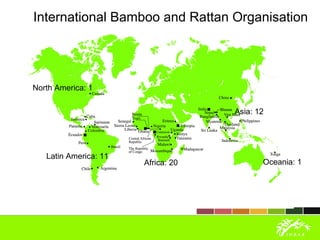
North America: 1
Asia: 12
Latin America: 11
Africa: 20 Oceania: 1
International Bamboo and Rattan Organisation
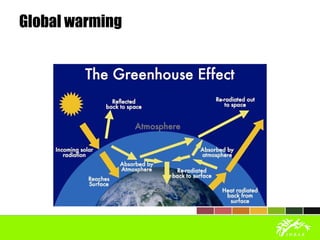
Global warming
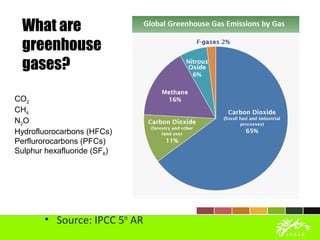
What are
greenhouse
gases?
• Source: IPCC 5th
AR
CO2
CH4
N2O
Hydrofluorocarbons (HFCs)
Perflurorocarbons (PFCs)
Sulphur hexafluoride (SF6)
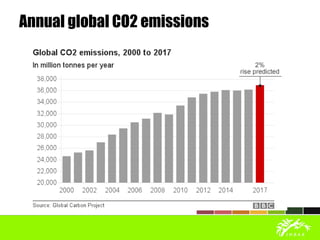
Annual global CO2 emissions
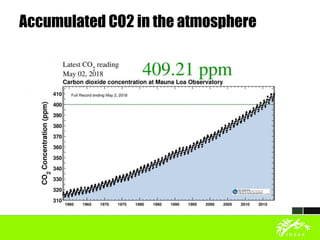
Accumulated CO2 in the atmosphere
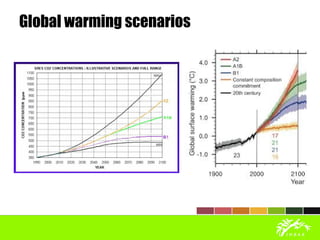
Global warming scenarios
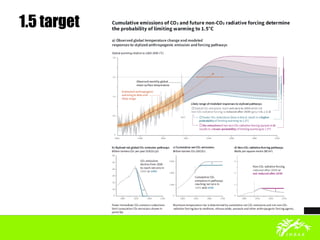
1.5 target
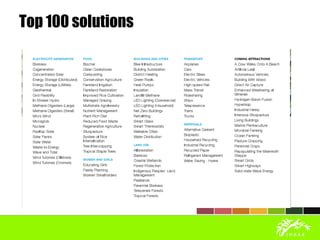
Top 100 solutions
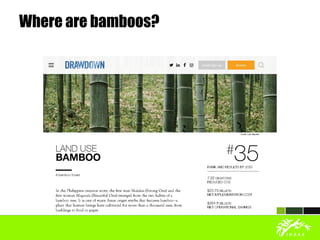
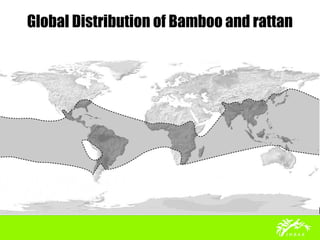
Where are bamboos?
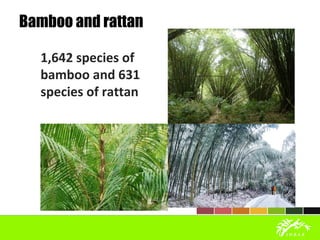
Bamboo and rattan
1,642 species of
bamboo and 631
species of rattan
Global Distribution of Bamboo and rattan
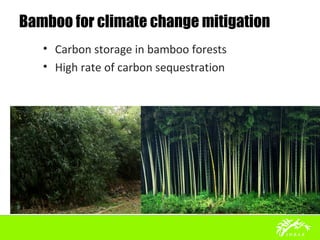
Bamboo for climate change mitigation
• Carbon storage in bamboo forests
• High rate of carbon sequestration
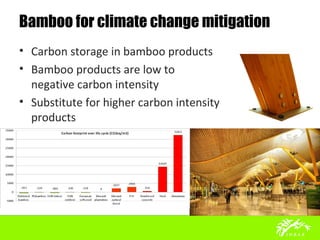
Bamboo for climate change mitigation
• Carbon storage in bamboo products
• Bamboo products are low to
negative carbon intensity
• Substitute for higher carbon intensity
products
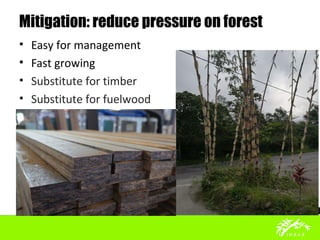
Mitigation: reduce pressure on forest
• Easy for management
• Fast growing
• Substitute for timber
• Substitute for fuelwood
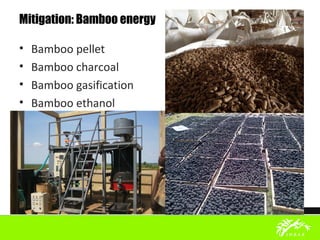
Mitigation: Bamboo energy
• Bamboo pellet
• Bamboo charcoal
• Bamboo gasification
• Bamboo ethanol
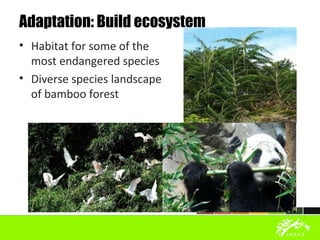
Adaptation: Build ecosystem
• Habitat for some of the
most endangered species
• Diverse species landscape
of bamboo forest
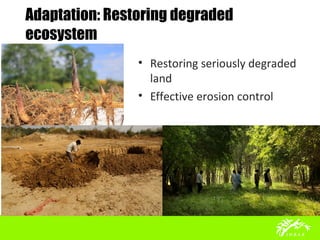
Adaptation: Restoring degraded
ecosystem
• Restoring seriously degraded
land
• Effective erosion control
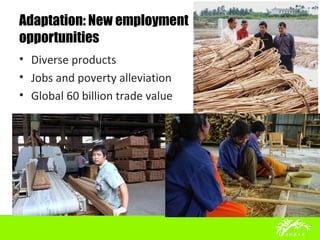
Adaptation: New employment
opportunities
• Diverse products
• Jobs and poverty alleviation
• Global 60 billion trade value
Why NOTbamboo?
• Lack of vision and guidelines
• Lack of policy support (national and international)
• Lack of investors
Why lack of …?
Insufficient knowledge and information on bamboo and
rattan resources
Insufficient knowledge of bamboo and rattan potential
Limited knowledge of advanced technologies and markets
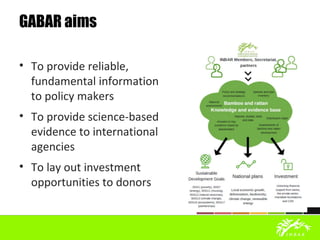
GABAR aims
• To provide reliable,
fundamental information
to policy makers
• To provide science-based
evidence to international
agencies
• To lay out investment
opportunities to donors
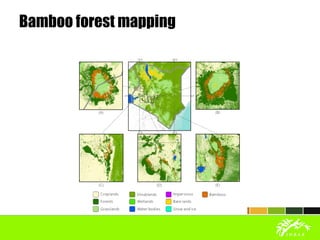
Bamboo forest mapping
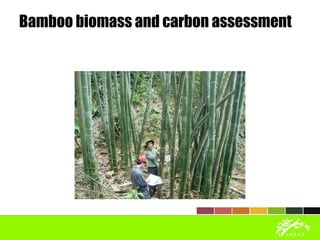
Bamboo biomass and carbon assessment
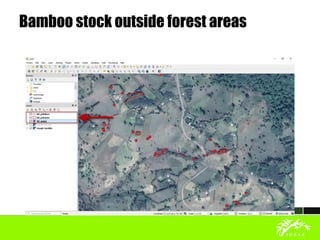
Bamboo stock outside forest areas
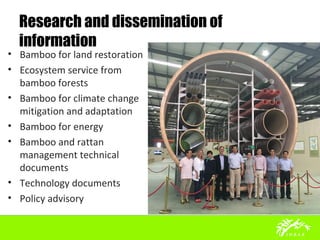
Research and dissemination of
information
• Bamboo for land restoration
• Ecosystem service from
bamboo forests
• Bamboo for climate change
mitigation and adaptation
• Bamboo for energy
• Bamboo and rattan
management technical
documents
• Technology documents
• Policy advisory
THANK YOUTHANK YOU
Trinh Thang Long
ttlong@inbar.int
www.inbar.int

Bamboo for climate change

Editor's Notes

  • #8 A2: high emission scenario –Regional economic oriented, population growth- clash, A1B Middle emission scenario, B1 Low emission scenario- Sustainable development and the last one is no emission added Source: IPCC AR 4