By:
:
Areej Salim
Dawood
SUPERVISION BY::
Dr.Emad Hamodey Abdulla
Asthma is a chronic
inflammatory disorder of the
airways, causes recurrent
episodes of wheezing,
breathlessness, chest tightness,
and coughing, particularly at
night or in the early morning
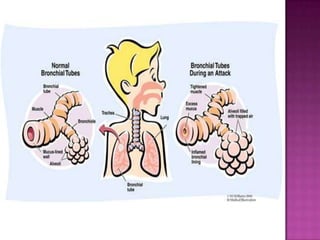
 Narrowing of bronchial Airways
 Muscle
Spasm
 Mucosal swelling
 Thick bronchial
secretion
 Inflammatory
Reaction
 Reversibl
e
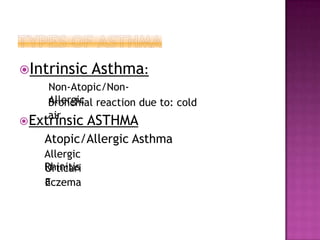
Intrinsic Asthma:
Non-Atopic/Non-
Allergic
Bronchial reaction due to: cold
air
Extrinsic ASTHMA
Atopic/Allergic Asthma
Allergic
Rhinitis
Urticari
a
Eczema
Signs
&
Symptoms
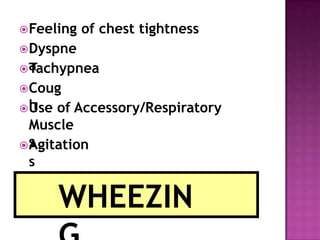
Feeling of chest tightness
Dyspne
a
Tachypnea
Coug
h
Use of Accessory/Respiratory
Muscle
s
Agitation
s
WHEEZIN
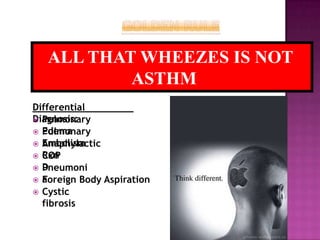
Differential
Diagnosis:
 Pulmonary
Edema
 Pulmonary
Embolism
 Anaphylactic
Rxn
 COP
D
 Pneumoni
a
 Foreign Body Aspiration
 Cystic
fibrosis
ALL THAT WHEEZES IS NOT
ASTHM
A
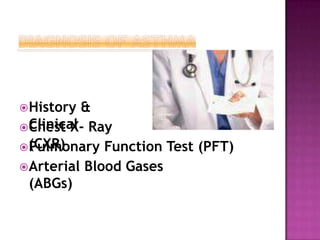
History &
Clinical
Chest X- Ray
(CXR)
Pulmonary Function Test (PFT)
Arterial Blood Gases
(ABGs)
Dental treatment may lead to anxiety
of patient this lead to bronchi
construction.
.
And if not treated immediately it may
lead to a condition called status
asthmaticus,, it consider as sever
form of paroxysmal asthma and
consider as live threat
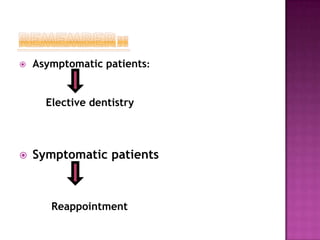
 Asymptomatic patients:
Elective dentistry
 Symptomatic patients
Reappointment
Dentifrices
Sulfite
s
Cotton rolls
Fluoride trays
Fissure sealants
Tooth Enamel dust
Methyl
methacrylate
Frequency of asthmatic
attacks
Precipitating agents
Types of pharmacotherapy used
Length of time since an emergency visit
owing to acute
asthma
1.Patients appointment should be late morning or
afternoon
.
2.Assess severity of ASTHAMATIC condition.
3.Consider antibiotic prophylaxis for
immuno-
suppressed
patients
4.Consider corticosteriod replacement for
adrenally
suppressed
patients.
 Confirm that they have taken their most recent
scheduled dose of medication.
 The patient’s own metered-dose inhaler
bronchodilator should be on hand at each visit to
minimize the risk of an attack.
 Procedure should be done Late morning / afternoon.
 Emergency kit with a bronchodilator and oxygen.
 Avoid using dental materials that may elicit
an ASTHMATIC ATTACK ie ,DENTIFRICES
,FISSURE SEALANTS ,METHYL METHA
ACRYLATE ,FLOURIDE TRAYS & COTTON ROLLS
can trigger asthmatic
events.
 If asthmatic patients does not use a
broncodilator ,make sure the emergency kits
has both a bronchodilator &
oxygen.
1.Rubber dams should be used cautiously.
2.Use technique to reduce patient
stress:
 Avoid prolonged supine positioning
 Avoid nitrous oxide in people with sever ASTHMA.
 Avoid using BARBITURATES.
3.Avoid using LA containing SODIUM METABISULFIDE.
4.Use vasoconstrictor
judiciously
1.TETRACYCLINE should be used cautiously.
2.Avoid use of ERTHROMYCIN in patients taking
THEOPHYLLINE
.
3.Avoid use of PHENOBARBITALS in patients taking
THEOPHYLLINE
.
4.Analgesic of choice for these patients is
ACETAMINOPHEN.
During and immediately after local
anesthetic
administration.
With stimulating procedures such
as extraction, surgery,pulp
extirpatio
n
You gave local anesthesia to your patient & all
of a sudden patient:
 Has difficulty in
breathing
 Talking in phrases
 You could hear loud wheezes
 Using accessory
muscles
 Slightly Agitated
THE DENTAL PROCEDURE
DON’T
BE
AFRAID
 Discontinue the dental procedure and allow the
patient to assume a comfortable
position.
 Establish and maintain a patent airway and
administer
b
2 agonists via inhaler or nebulizer.
 Administer oxygen 6-10 liters via face mask,
nasal hood or cannula. If no improvement is
observed and symptoms are worsening,
administer epinephrine subcutaneously (1:1,000
solution, 0.01 milligram/ kilogram of body weight
to a maximum dose of 0.3
mg).
 Document in time form the beginning of the
event
.
 Alert emergency medical
services.
 Maintain a good oxygen level until the patient
stops wheezing and/or medical assistance
arrives.
 Begin diligent basic life
support.
 Escort patient to hospital as
needed.
UPRIGHT
POSITION
IS
PREFERED
b4a061affc406d97404a9c1d5076ea7f_65219d5889f01.pptx

b4a061affc406d97404a9c1d5076ea7f_65219d5889f01.pptx

  • 1.
  • 2.
    Asthma is achronic inflammatory disorder of the airways, causes recurrent episodes of wheezing, breathlessness, chest tightness, and coughing, particularly at night or in the early morning
  • 3.
     Narrowing ofbronchial Airways  Muscle Spasm  Mucosal swelling  Thick bronchial secretion  Inflammatory Reaction  Reversibl e
  • 5.
    Intrinsic Asthma: Non-Atopic/Non- Allergic Bronchial reactiondue to: cold air Extrinsic ASTHMA Atopic/Allergic Asthma Allergic Rhinitis Urticari a Eczema
  • 6.
  • 7.
    Feeling of chesttightness Dyspne a Tachypnea Coug h Use of Accessory/Respiratory Muscle s Agitation s WHEEZIN
  • 8.
    Differential Diagnosis:  Pulmonary Edema  Pulmonary Embolism Anaphylactic Rxn  COP D  Pneumoni a  Foreign Body Aspiration  Cystic fibrosis ALL THAT WHEEZES IS NOT ASTHM A
  • 9.
    History & Clinical Chest X-Ray (CXR) Pulmonary Function Test (PFT) Arterial Blood Gases (ABGs)
  • 10.
    Dental treatment maylead to anxiety of patient this lead to bronchi construction. . And if not treated immediately it may lead to a condition called status asthmaticus,, it consider as sever form of paroxysmal asthma and consider as live threat
  • 11.
     Asymptomatic patients: Electivedentistry  Symptomatic patients Reappointment
  • 12.
    Dentifrices Sulfite s Cotton rolls Fluoride trays Fissuresealants Tooth Enamel dust Methyl methacrylate
  • 13.
    Frequency of asthmatic attacks Precipitatingagents Types of pharmacotherapy used Length of time since an emergency visit owing to acute asthma
  • 14.
    1.Patients appointment shouldbe late morning or afternoon . 2.Assess severity of ASTHAMATIC condition. 3.Consider antibiotic prophylaxis for immuno- suppressed patients 4.Consider corticosteriod replacement for adrenally suppressed patients.
  • 15.
     Confirm thatthey have taken their most recent scheduled dose of medication.  The patient’s own metered-dose inhaler bronchodilator should be on hand at each visit to minimize the risk of an attack.  Procedure should be done Late morning / afternoon.  Emergency kit with a bronchodilator and oxygen.
  • 16.
     Avoid usingdental materials that may elicit an ASTHMATIC ATTACK ie ,DENTIFRICES ,FISSURE SEALANTS ,METHYL METHA ACRYLATE ,FLOURIDE TRAYS & COTTON ROLLS can trigger asthmatic events.  If asthmatic patients does not use a broncodilator ,make sure the emergency kits has both a bronchodilator & oxygen.
  • 17.
    1.Rubber dams shouldbe used cautiously. 2.Use technique to reduce patient stress:  Avoid prolonged supine positioning  Avoid nitrous oxide in people with sever ASTHMA.  Avoid using BARBITURATES. 3.Avoid using LA containing SODIUM METABISULFIDE. 4.Use vasoconstrictor judiciously
  • 18.
    1.TETRACYCLINE should beused cautiously. 2.Avoid use of ERTHROMYCIN in patients taking THEOPHYLLINE . 3.Avoid use of PHENOBARBITALS in patients taking THEOPHYLLINE . 4.Analgesic of choice for these patients is ACETAMINOPHEN.
  • 19.
    During and immediatelyafter local anesthetic administration. With stimulating procedures such as extraction, surgery,pulp extirpatio n
  • 20.
    You gave localanesthesia to your patient & all of a sudden patient:  Has difficulty in breathing  Talking in phrases  You could hear loud wheezes  Using accessory muscles  Slightly Agitated
  • 21.
  • 23.
  • 24.
     Discontinue thedental procedure and allow the patient to assume a comfortable position.  Establish and maintain a patent airway and administer b 2 agonists via inhaler or nebulizer.  Administer oxygen 6-10 liters via face mask, nasal hood or cannula. If no improvement is observed and symptoms are worsening, administer epinephrine subcutaneously (1:1,000 solution, 0.01 milligram/ kilogram of body weight to a maximum dose of 0.3 mg).
  • 25.
     Document intime form the beginning of the event .  Alert emergency medical services.  Maintain a good oxygen level until the patient stops wheezing and/or medical assistance arrives.  Begin diligent basic life support.  Escort patient to hospital as needed.
  • 26.