Jan Dietz
Bergen, August 16, 2013
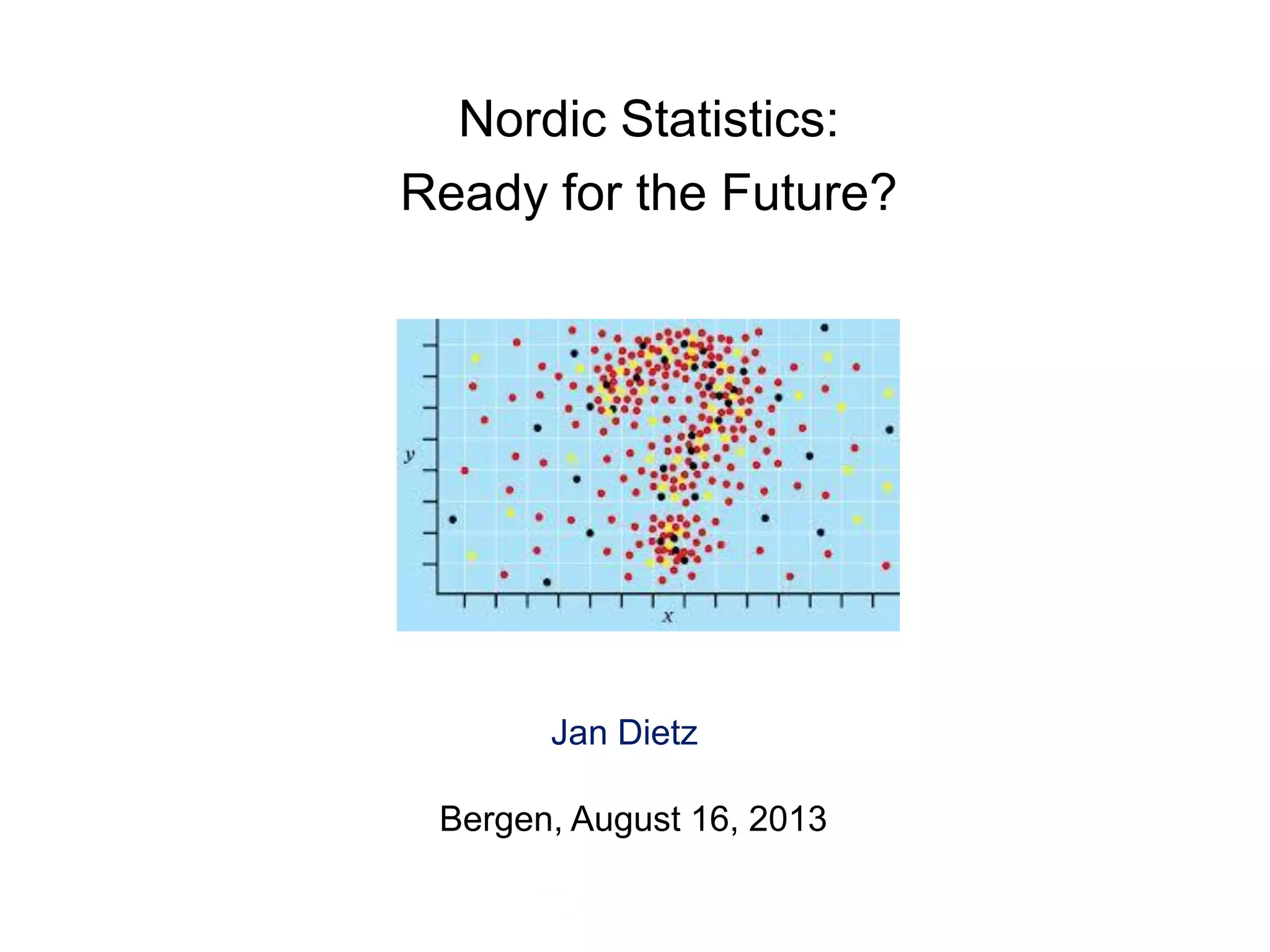
Nordic Statistics:
Ready for the Future?
➜ Statistics in a «Brave New World»
➜ Trends and challenges...
➜ In search of new approaches
➜ Some suggestions for Nordic cooperation
In brief
Nordic statistics - a success story
- Pervasive influence - and in
everyday use
- Difficult to imagine Nordic
welfare (and democracy!) without
statistics
- Unique continuity
- Taken for granted and
sometimes invisible
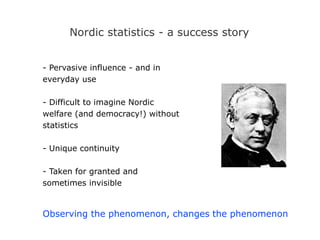
Observing the phenomenon, changes the phenomenon
An impressive past -
and a challenging future
- Rational planning has lost credibility
- «Everybody» assembles and distributes
information
- Statisticians see the world chiefly from the
inside-out (rather than from the outside-in)
Statistics may be in danger of becoming marginalised!
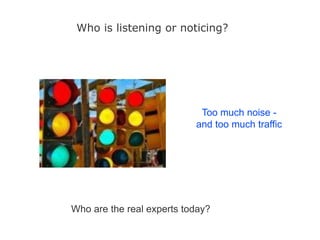
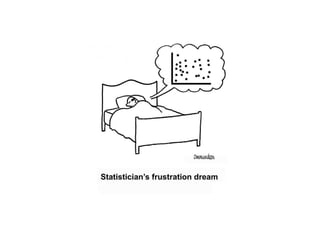
Too much noise -
and too much traffic
Who are the real experts today?
Who is listening or noticing?
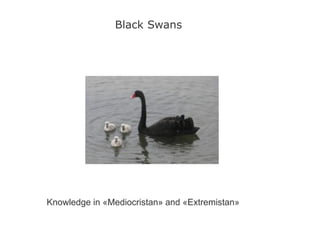
Black Swans
Knowledge in «Mediocristan» and «Extremistan»
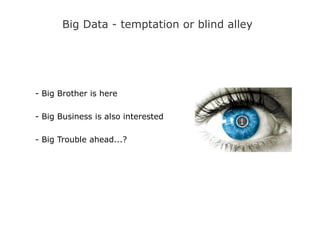
Big Data - temptation or blind alley
- Big Brother is here
- Big Business is also interested
- Big Trouble ahead...?
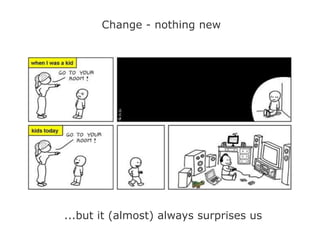
Change - nothing new
...but it (almost) always surprises us
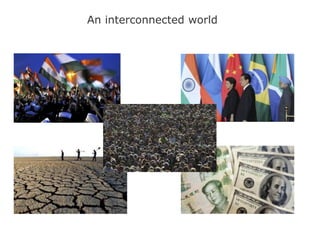
An interconnected world
Unpredictability and uncertainty
= Understanding the future ever more crucial - and it
cannot be extrapolated from the past
= Quantitative data must be supplemented and
enriched by qualitative analysis and human judgement
= Greater need for the «Big Picture»
Better roughly right than precisely wrong
Failed forecasts (a few examples)
- A New Ice Age (experts ca. 1988)
- Collapse in Western societies (Alvin Toffler)
- The 1987/88 stock market crash
- The financial crisis in 2008 (everybody)
- The Russian Revolution (including Lenin)
- The fall of the Berlin Wall (including
Vaclav Havel)
- Higher education means more tolerant
societies (sociologists in the 1920s)
- The Internet (including Bill Gates)
- The Arab Spring (not even Israeli
intelligence)
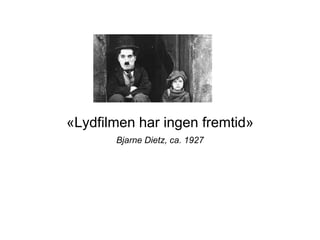
«Lydfilmen har ingen fremtid»
Bjarne Dietz, ca. 1927
Looking for new approaches
- Emphasis on anticipation of needs (rather
than on being told)
- A greater interest in the dynamics of
change and interplay of trends
- Knowing the limits - and improving the
quality - of probability estimates
- Experimentation with new methods and
techniques, drawing on i.a. foresight
(especially scenario methodology)
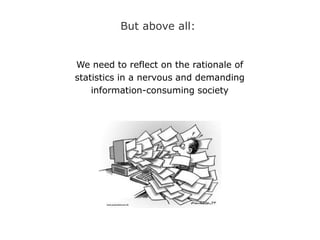
But above all:
We need to reflect on the rationale of
statistics in a nervous and demanding
information-consuming society
Three interesting areas
☛ Migration patterns in a global perspective
☛ Climate change: Mapping social effects
☛ Financial systems: Actors, networks and
behaviour
Examples of new possible approaches to content
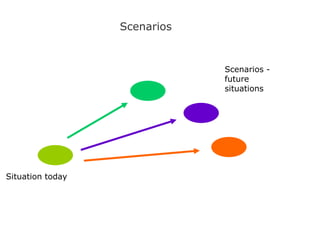
Scenarios
Scenarios -
future
situations
Situation today
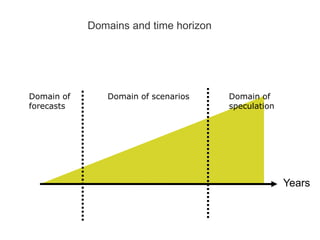
Years
Domain of
forecasts
Domain of scenarios Domain of
speculation
Domains and time horizon
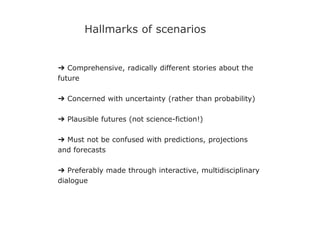
➔ Comprehensive, radically different stories about the
future
➔ Concerned with uncertainty (rather than probability)
➔ Plausible futures (not science-fiction!)
➔ Must not be confused with predictions, projections
and forecasts
➔ Preferably made through interactive, multidisciplinary
dialogue
Hallmarks of scenarios
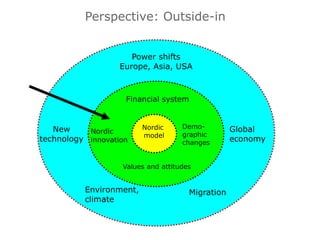
Perspective: Outside-in
←←↑
Nordic
model
Financial system
Power shifts
Europe, Asia, USA
New
technology
Environment,
climate
Global
economy
Nordic
innovation
Demo-
graphic
changes
Values and attitudes
Migration
Nordic cooperation - why it makes sense
✔ A chance to experiment with foresight and new
approaches in a bigger yet familiar setting
✔ The major (strategic) challenges are largely
common to the statistical bureaux?
✔ Many of the external driving forces in a globalised
world are the same - and may be studied jointly
✔ Also diversity in perspectives!
Project 1: Scenarios about the Future of
Nordic Statistics
- A scenario process that investigates the driving forces
that shape or determine the future of Nordic statistics,
e.g. looking towards 2033
- Using scenarios to delineate the range of uncertainty
and to explore both opportunities and threats for the field of
statistics and the Nordic bureaux
- Using the scenarios to anticipate change and to
become (more) proactive in relation to governments and
the public
Understanding the role and proper influence of statistics
Project 2: Horizon Scanning -
New and Emerging issues
- A horizon scanning project with the aim of detecting new
and potentially important issues that need to be
addressed by the Nordic statistical bureaux
- Searching the periphery for weak signals, seeds of
change and new patterns: The social issues of tomorrow
- Complementing and improving ongoing studies and
time-series analyses
Renewing both method and content
Where is Nordic statistics heading?
Avslutning: Nordic statistics ready for the future?

Avslutning: Nordic statistics ready for the future?

  • 1.
    Jan Dietz Bergen, August16, 2013 Nordic Statistics: Ready for the Future?
  • 3.
    ➜ Statistics ina «Brave New World» ➜ Trends and challenges... ➜ In search of new approaches ➜ Some suggestions for Nordic cooperation In brief
  • 4.
    Nordic statistics -a success story - Pervasive influence - and in everyday use - Difficult to imagine Nordic welfare (and democracy!) without statistics - Unique continuity - Taken for granted and sometimes invisible Observing the phenomenon, changes the phenomenon
  • 5.
    An impressive past- and a challenging future - Rational planning has lost credibility - «Everybody» assembles and distributes information - Statisticians see the world chiefly from the inside-out (rather than from the outside-in) Statistics may be in danger of becoming marginalised!
  • 6.
    Too much noise- and too much traffic Who are the real experts today? Who is listening or noticing?
  • 7.
    Black Swans Knowledge in«Mediocristan» and «Extremistan»
  • 8.
    Big Data -temptation or blind alley - Big Brother is here - Big Business is also interested - Big Trouble ahead...?
  • 9.
    Change - nothingnew ...but it (almost) always surprises us
  • 10.
  • 11.
    Unpredictability and uncertainty =Understanding the future ever more crucial - and it cannot be extrapolated from the past = Quantitative data must be supplemented and enriched by qualitative analysis and human judgement = Greater need for the «Big Picture» Better roughly right than precisely wrong
  • 12.
    Failed forecasts (afew examples) - A New Ice Age (experts ca. 1988) - Collapse in Western societies (Alvin Toffler) - The 1987/88 stock market crash - The financial crisis in 2008 (everybody) - The Russian Revolution (including Lenin) - The fall of the Berlin Wall (including Vaclav Havel) - Higher education means more tolerant societies (sociologists in the 1920s) - The Internet (including Bill Gates) - The Arab Spring (not even Israeli intelligence)
  • 13.
    «Lydfilmen har ingenfremtid» Bjarne Dietz, ca. 1927
  • 14.
    Looking for newapproaches - Emphasis on anticipation of needs (rather than on being told) - A greater interest in the dynamics of change and interplay of trends - Knowing the limits - and improving the quality - of probability estimates - Experimentation with new methods and techniques, drawing on i.a. foresight (especially scenario methodology)
  • 15.
    But above all: Weneed to reflect on the rationale of statistics in a nervous and demanding information-consuming society
  • 16.
    Three interesting areas ☛Migration patterns in a global perspective ☛ Climate change: Mapping social effects ☛ Financial systems: Actors, networks and behaviour Examples of new possible approaches to content
  • 17.
  • 18.
    Years Domain of forecasts Domain ofscenarios Domain of speculation Domains and time horizon
  • 19.
    ➔ Comprehensive, radicallydifferent stories about the future ➔ Concerned with uncertainty (rather than probability) ➔ Plausible futures (not science-fiction!) ➔ Must not be confused with predictions, projections and forecasts ➔ Preferably made through interactive, multidisciplinary dialogue Hallmarks of scenarios
  • 20.
    Perspective: Outside-in ←←↑ Nordic model Financial system Powershifts Europe, Asia, USA New technology Environment, climate Global economy Nordic innovation Demo- graphic changes Values and attitudes Migration
  • 21.
    Nordic cooperation -why it makes sense ✔ A chance to experiment with foresight and new approaches in a bigger yet familiar setting ✔ The major (strategic) challenges are largely common to the statistical bureaux? ✔ Many of the external driving forces in a globalised world are the same - and may be studied jointly ✔ Also diversity in perspectives!
  • 22.
    Project 1: Scenariosabout the Future of Nordic Statistics - A scenario process that investigates the driving forces that shape or determine the future of Nordic statistics, e.g. looking towards 2033 - Using scenarios to delineate the range of uncertainty and to explore both opportunities and threats for the field of statistics and the Nordic bureaux - Using the scenarios to anticipate change and to become (more) proactive in relation to governments and the public Understanding the role and proper influence of statistics
  • 23.
    Project 2: HorizonScanning - New and Emerging issues - A horizon scanning project with the aim of detecting new and potentially important issues that need to be addressed by the Nordic statistical bureaux - Searching the periphery for weak signals, seeds of change and new patterns: The social issues of tomorrow - Complementing and improving ongoing studies and time-series analyses Renewing both method and content
  • 24.
    Where is Nordicstatistics heading?