1
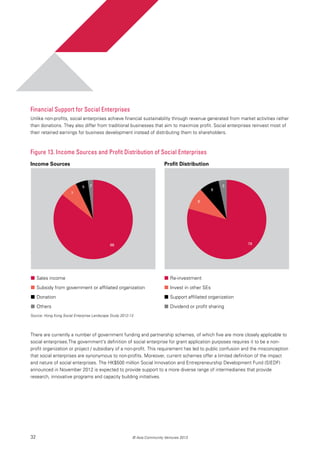
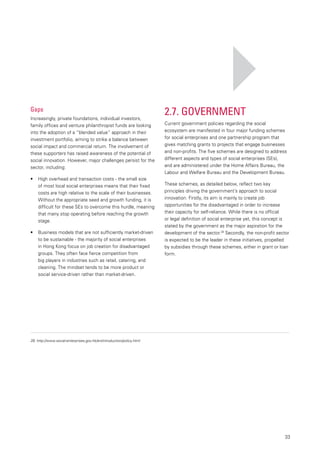
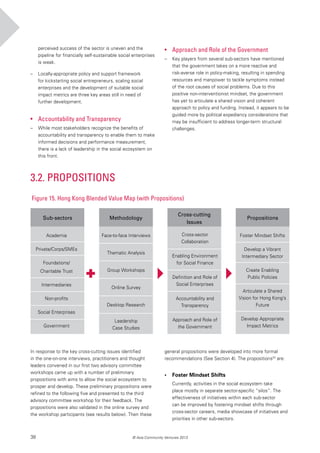
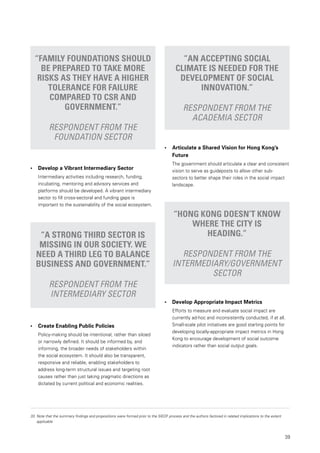
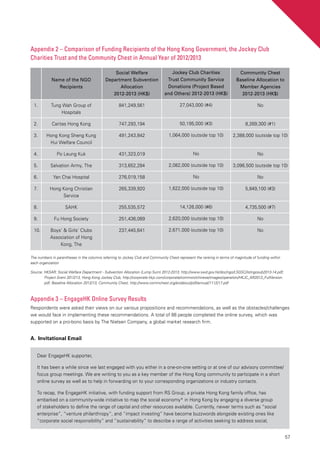
List of Figures	 2
Message from the RS Group	 3
Acknowledgements 	 4
Preface 	 5
Executive Summary 	 6
Section 1 – Introduction	 9
1.1 Overview 	 10
1.2 Objectives	 10
1.3 Approach	 11
1.4 Research Design and Methodology	 13
Section 2 – Sub-sectors and Gaps	 17
2.1 Academia	 18
2.2 Corporations/Corporate Foundations 	 20
2.3 Foundations/Charitable Trusts	 23
2.4 Intermediaries	 26
2.5 Non-profits	 28
Mind the Gap:
Lessons and Findings
from
2.6 Social Enterprises	 30
2.7 Government	 33
Section 3 – Key Findings	 36
3.1 Cross-cutting Issues	 37
3.2 Propositions 	 38
Section 4 – Recommendations	 41
4.1 Foster Cross-sector Dialogue and Collaboration	 42
4.2 Focus on Both Social and Economic Benefits	 46
4.3 Create Clearinghouses for Ideas and Capital	 48
4.4 Promote Greater Accountability and Transparency	50
4.5 Encourage Enabling Role of Government	 52
Section 5 – Going Forward	 54
Appendices	56
Bibliography	60
Cover Photo: Benny Lam/SoCO/Rex Features; Photos on page 21, 30, 36, 53: by Ben Moldenhauer; Photos on page 10, 25, 29: by Joan Shang
EngageHK
2 © Asia Community Ventures 2013
List of Figures
Figure 1. 	 Overview of the Blended Value Map	 11
Figure 2. 	 The Blended Value Map – Adapted for Hong Kong	 12
Figure 3. 	 EngageHK Timeline	 13
Figure 4. 	 EngageHK Interview Process	 14
Figure 5. 	 EngageHK Methodology	 15
Figure 6. 	 Distribution of Respondents	 15
Figure 7. 	 Distribution of Advisory Committee Participants	 16
Figure 8. 	 Distribution of Online Survey Respondents 	 16
Figure 9. 	 Description of Seven Sub-sectors	 18
Figure 10. 	 Funding Information of the Top Ten Fund Recipients of the Jockey Club
	 Charities Trust and Community Chest	 24
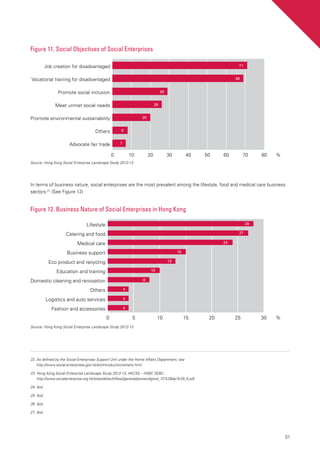
Figure 11. 	 Social Objectives of Social Enterprises	 31
Figure 12. 	 Business Nature of Social Enterprises in Hong Kong 	 31
Figure 13. 	 Income Sources and Profit Distribution of Social Enterprises	 32
Figure 14. 	 Blended Value Map (with Cross-cutting issues) for Hong Kong	 37
Figure 15. 	 Blended Value Map (with Propositions) for Hong Kong	 38
Figure 16. 	 Online Survey Respondents’ View on Propositions	 40

Figure 17. 	 Blended value Map (with Recommendations) – for Hong Kong	 42
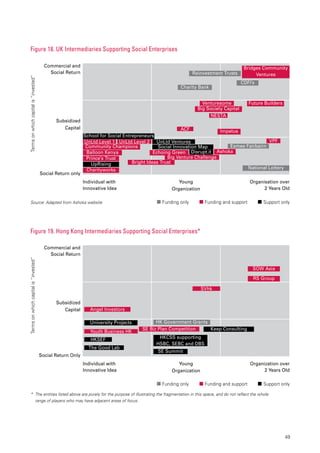
Figure 18. 	 UK Intermediaries Supporting Social Enterprises	 49
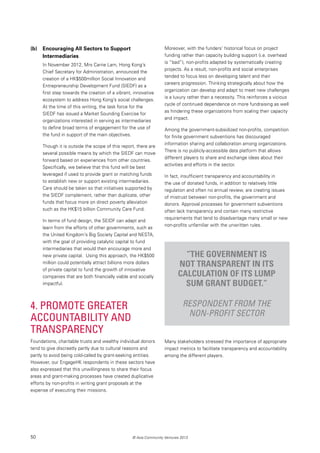
Figure 19. 	 Hong Kong Intermediaries Supporting Social Enterprises	 49
The views expressed in this report are those of the authors, and do not necessarily represent the opinions of RS Group, our
sponsor. For comments or feedback, please contact the co-authors via email: Philo Alto (philo.alto@acvmail.org) and Ming
Wong (ming.wong@acvmail.org)
3
Message from the RS Group
In late 2011, our team decided it would be useful to map
out the social sector landscape in Hong Kong. Having
brought on Jed Emerson as a senior advisor to RS Group
a year earlier, we were interested in conducting our own
version of his Blended Value Map (www.blendedvalue.org)
to help us, as a funder and investor, to better understand
Hong Kong’s social ecosystem.
We wanted to explore a fundamental set of
questions:
Who are the people trying to do something about Hong
Kong’s social and environmental issues?
How do they do it?
What are the main challenges they face, and are there
cross-cutting themes as we move along the capital and
organizational spectra in which they operate?
Our objectives in undertaking this task were
two-fold:
Firstly, for our own self-interested purpose, we hoped
the resulting “map” would help us make better decisions
regarding who and what we fund, and with what type of
funding (investment vs. grant).
Secondly, we felt conversations regarding social impact are
no longer the exclusive domain of the traditional funders
and providers of “social goods” (such as philanthropists/
foundations and non-profits), but are increasingly being
taken up by those who want to use private capital to
achieve positive social change. These actors include
impact investors, for-profit social enterprises and socially-
responsible businesses. By identifying examples of a
variety of “impact actors” and locating them along the
capital and organizational spectrum, we aimed to identify
like-minded constituents whom we normally would
not have thought of as having very much in common,
but who in fact constitute a community of people and
organizations sharing a common purpose and intent—to
create positive social/environmental impact through the
intentional management of organizations (non-profit, for-
profit or hybrid) and with their capital (public sector, private
philanthropy or market-rate investments).
We reached out to Ming Wong and Philo Alto to undertake
this mapping project, working with them over a number of
months to offer feedback on their process, and this report
is the culmination of their efforts over 18 months.
While our goal was to create the “product” that is this
report, it is not our most important takeaway from this
project. Having participated in some of the workshops
convened by Philo and Ming, we came to appreciate
how succinctly the title they chose for this initiative,
“EngageHK”, captured the spirit of the process they
created to engage some of Hong Kong’s impact actors,
individually and in groups, in conversations regarding their
aspirations and the challenges they face. Although limited
in scope and coverage, this exercise allowed us to see the
incredible richness and diversity of human talent actively
working in a variety of discrete fields to make Hong Kong a
better place.
But the world we live in is getting more complicated, and
social and environmental challenges have complex causes
that require systemic solutions. This means we need more
collaboration among the different sectors, as well as better
coordination of resources, both human and financial. For
this we need impact leaders who can step outside their
silos to see the larger agenda, and who are willing to work
with a community of peers to create significant impact.
We feel if we as a community focus more on our common
challenges of capital, organization, metrics, leadership and
policy, we will each be better positioned to execute the
specific agendas we seek to advance.
Through the EngageHK project, we have been offered a
glimpse of the potential for such collaboration. And it is our
hope this report will encourage future dialogue regarding
opportunities for action and even greater collaborations to
come.
Annie Chen and team
RS Group
4 © Asia Community Ventures 2013
AcknowledgementS
This report would not have been
possible without the collaboration
of and contributions by practitioners
in the field as well as the support of
volunteer consultants.
RS Group for their funding support
and guidance – Annie Chen, Katy
Yung, and Joan Shang; their advisors,
Anna Wang and Bonny Landers; We
would like to offer special thanks to
Jed Emerson, senior advisor to RS
Group, for his inputs to our efforts
and perspectives he shared based
upon his experience researching The
Blended Value Map.
Our volunteer consultants in
alphabetical order: Keitaro Asaba,
Kevin Chong, Gloria Chow, Lilian
Chow, Paolo Fresia, Mabel Fung,
Arian Hassani, Connie Lee, Stephanie
Man, Karen Ng, Alexander She, Janet
Shum and Norma Wong.
Our advance copy peer reviewers in
alphabetical order: Scott Lawson, Ada
Wong, Kim Salkeld, Vincent Wong,
and Terence Yuen.
The Nielsen Company especially to
Oliver Rust, Jason Byun, Edward
Chan, and Angel Young for providing
us with their pro-bono support with
the EngageHK online survey.
Venue hosts for our various
workshops: Standard Chartered Bank,
UBS, Bank of America Merrill Lynch,
and Latham and Watkins.
Lastly, in interviews and workshops,
participants openly engaged with their
perspectives, constructive feedback,
and made suggestions as to the
pathways forward. Thank you.
Please note that the affiliations
listed below reflect the respondents’
relevant affiliation at the time of
interviews. We apologize for any
inadvertent omission or inaccuracies.
Workshop participants (alphabetical),
with many having also participated in
one-on-one interviews:
Paul Angwin (People and Planet)
John Burns (HKU)
Carmen Chan (YES Network)
Crystal Chan (Make a Difference)
Rachel Chan (Innofoco)
Christine Chao (Grameen Foundation)
Annie Chen (RS Group)
Darwin Chen
James Chen (Chen Yet-Sen Family
Foundation)
Agnes Cheng (Esquel Foundation)
Cooke Cheung (St. James Settlement)
Patrick Cheung (Water Drops
Foundation)
Stephanie Cheung (Make a Difference)
KO Chia (Grace Financial)
Elsie Chien (HKU)
Jed Emerson (Blended Value Group)
Scot Frank (One Earth Designs)
Josee Ha (HK Young Entrepreneurs
Alliance)
Cecilia Ho (Lee Hysan Foundation)
Abbie Jung (Synergy Social Ventures)
Olivia Kan (Hong Kong Jockey Club)
Chi Hing Kee (Fullness Social
Enterprises Society)
Danny Lam (HKU)
LK Lam (Office of Chief Secretary for
Administration, HKSAR)
Bonny Landers (RS Group)
Jane Lau (China Light and Power)
Laura Lau (Swire Group Charitable Trust)
Patricia Lau (Efficiency Unit, HKSAR)
Yan Lau (UBS)
Scott Lawson (SOW Asia)
Edwin Lee (HK Council of Social Service)
Jane Lee (Sheng Kung Hui Welfare
Council)
Josephine Lee (St. James Settlement)
Thousand Lim (YES Network)
Eleanor Ling (Keswick Foundation)
Melissa Moi (Bank of America Merrill
Lynch)
Adam Nelson (Yeh Family Philanthropy)
Charles Ng (InvestHK)
Fern Ngai (Standard Chartered Bank &
Community Business)
Francis Ngai (Social Ventures Hong
Kong)
Kim Salkeld (Efficiency Unit, HKSAR)
Joan Shang (RS Group)
Brian Tang (Credit Suisse)
Donna Tang (Hong Kong Jockey Club)
Malini Thadani (HSBC)
Susan Tse (British Council)
Mingles Tsoi (CUHK)
Diana Tsui (KPMG Foundation)
Christina Tung (UBS)
Anna Wang (RS Group)
Bonita Wang (iDonate)
Xiao-Lu Wang (HKU)
Ada Wong (HKICC)
Linda Wong (CityU)
May Wong (Asian Charity Services)
Vincent Wong (Hong Kong Social
Enterprise Summit)
Yvette Yeh (Yeh Family Philanthropy)
Alvin Yip (HKPU)
Yan-yan Yip (Civic Exchange)
Terence Yuen (HKU & CUHK)
Katy Yung (RS Group)
One-on-one interviews:
John Budge (Charity Law Reform
Commission)
Dorothy Chan (China Light and Power)
Denis Chang
Hoi Wai Chua (HK Council of Social
Service)
Daniel Chun (Kids4Kids)
Cees de Bont (PolyU)
Cynthia D’Anjou-Brown (HSBC)
Simon Galpin (InvestHK)
Diana Gan (Compassion for Migrant
Children)
Mimi Hutton (STEP Philanthropy)
Gabrielle Kirstein (Feeding Hong Kong)
Christophe Lee (Keswick Foundation)
Doris Leung (Diamond Cab)
Michael Lai (St. James Settlement)
Michele Lai (Kids4Kids)
Jong Lee (Bonham Strand)
Yvonne Li (Avantage Ventures)
Howard Ling (HKCSS-HSBC Social
Enterprise Business Center)
Jennifer Liu (Sir Hudson)
Neil McNamara (Jardines Group)
Derek Ng (InvestHK)
Joe Ngai (McKinsey & Company)
Oliver Rust (Nielsen Company)
Douglas So (Hong Kong Jockey Club)
Herman To
Peter Witton (Habitat for Humanity)
Fanny Wong (Keswick Foundation)
Nancy Yang (Asian Charity Services)
Teresa Yang (Esquel Foundation)
Constance Yue (Po Leung Kuk)
Alice Yuk (HK General Chamber of Social
Enterprises)
5
Preface
When Annie Chen from RS Group and her senior advisor
Jed Emerson invited us in late 2011 to conduct a mapping
exercise of Hong Kong’s social ecosystem, they initially
wanted to identify existing gaps between providers of
capital (both philanthropic funders and investors) and users
of capital (non-profits, social enterprises and intermediaries)
in Hong Kong so that resources and capital could be more
effectively and efficiently allocated.
After doing our own preliminary assessment of the
research, we felt it was important for our research to be
useful to as broad a stakeholder group as possible. We then
decided to widen the definition of our social ecosystem to
include the Hong Kong government, academia and private,
corporates and SME stakeholders in addition to more
obvious stakeholders like non-profits, social enterprises,
foundations and intermediaries.
Our EngageHK journey formally started in February
2012.  Since then, we have conducted one-on-one
interviews with over 100 leaders from more than 80
different organizations in the public, private and civil society
sectors, and convened four workshops with over 50
practitioners, policymakers, educators and entrepreneurs
to discuss cross-cutting issues, share our findings,
brainstorm recommendations and plan our strategies going
forward.  To encourage broader stakeholder input, we also
initiated an on-line survey with the support of the Nielsen
Company to further test and validate our propositions and
recommendations.
The stakeholders we spoke with were enthusiastic and
showed a high willingness to cooperate.  Very often our
requested 90-minute interview sessions turned into two
and sometimes three hours of engaging conversation.  The
people we met ranged from stalwarts who have been
working in their fields for over 30 years to recent college
graduates looking for ways to make a difference.  All shared
a common passion to contribute to the greater good for
Hong Kong.
One might think the sheer diversity and number of players
addressing Hong Kong’s sustainability would be sufficient
to lead to new and innovative solutions.  However,
this has not been the case.  In fact, there are many
instances where efforts are duplicated, resources wasted,
results not achieved and impact dissipated rather than
multiplied. While some duplication is healthy for promoting
competition and creative destruction often leads to
further innovation, we noticed there was not sufficient
collaboration overall.
We believe it is time for key stakeholders in Hong Kong to
step back and examine the landscape, figure out what is
and is not working, and in doing so understand how best to
broaden collective impact, whether it be social, economic
or environmental in nature.  Hong Kong’s resources, talent
pool and shared motivation uniquely position it to play
a leading regional role in finding innovative solutions to
pressing sustainability challenges.
For both of us, this report’s significance goes well beyond
its findings and recommendations. Its greatest value lies in
bringing together stakeholders that do not normally talk to
one another regularly. As you read through this report, you
will probably recognize some of your own views along with
those from other players in your own or other sectors.  We
hope that the recommendations resonate with you on a
personal level, and we look forward to working together
with you to move them forward. Please share this report
with a friend. Better yet, share it with an acquaintance
or even a stranger to help break down the silos that are
hindering collaboration.
As we complete the first phase of EngageHK, we
realize our journey is just beginning.  Our findings and
recommendations are intended to spur conversations and
inspire multi-party dialogue so that we can work together to
build a better and more sustainable Hong Kong.
P. Ming Wong & Philo Alto
6 © Asia Community Ventures 2013
Executive Summary
Persistent environmental challenges along with social ones
including our worsening wealth gap, lack of affordable
housing, ageing population, and growing discontent among
certain sectors of our community represent some of the
most pressing issues hindering Hong Kong’s pursuit of a
better future even as we continue to hold on to top spots in
world competitiveness surveys in recent years.
EngageHK is a community-wide initiative to foster a
collaborative social ecosystem that facilitates the flow of
ideas and capital to build a more sustainable and resilient
future for Hong Kong.
Our goals involve:
1. 	 providing an overview of Hong Kong’s current social
ecosystem of stakeholders working on social issues,
2.		 identifying stakeholders’ desire to scale and optimize
their impact within the context of the broader social
ecosystem, and
3.		 formulating recommendations to help stakeholders
build an ecosystem that more effectively meets their
needs.
The stakeholder groups covered in this paper include
government, academia, corporations, foundations
and charitable trusts, non-profits, social enterprises
and intermediaries which we collectively refer to as
stakeholders in Hong Kong’s social ecosystem. We also
acknowledge the crucial role media plays in shaping and
framing public opinion with regard to Hong Kong’s social
challenges.
Our research was informed by Jed Emerson’s Blended
Value Framework and conducted from February 2012
to April 2013, when we interviewed over one hundred
individuals from more than 80 Hong Kong-based
organizations, completed an online survey with 88
respondents and conducted four workshops involving 20 to
25 participants each.
We then identified and summarized five cross-cutting
issues that represented the key drivers impacting the
sustainability of Hong Kong’s social ecosystem, including
the key gaps and opportunities. These cross-cutting issues
include:
•	 	 Lack of Cross-sector Collaboration - Hong Kong lacks
a culture of knowledge sharing and collaboration, and
thus is unable to realize the benefits of cross-sector
collaboration in developing the social ecosystem.
•	 	 Lack of an Enabling Environment for Social Finance -
There is no organized “clearinghouse” for ideas and
philanthropic funding to NGOs and social businesses, as
well as a lack of awareness of the role and importance
of the intermediary sector.
•	 	 Ambiguous Definitions and Roles of Social Enterprises
- Locally-appropriate legal and policy framework to scale
social entrepreneurship and enterprises and suitable
social impact metrics are two key areas still in need of
further development.
•	 	 Limited Interest to be Accountable to Shared
Sustainability Goals - While all stakeholders recognize
the benefit of greater accountability and transparency
towards shared sustainability goals, many seem
unwilling to take the lead unless compelled.
•	 	 Approach and Role of the Government – The
government has yet to articulate a shared vision,
coherent policy and funding approach. It appears to be
guided more by political expediency considerations that
may be insufficient to address longer-term structural
challenges.
7
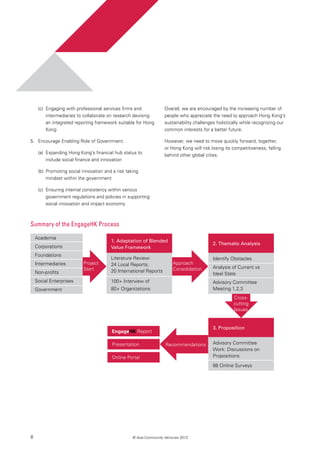
		 To further analyze the cross-cutting issues to come
up with findings, identify propositions and possible
recommendations, participants in our advisory
committee workshops discussed and refined five broad
propositions. These were subsequently validated by
results from our online survey and discussed at our
third and fourth advisory committee workshops. The
propositions are:
•	 	 Foster Mindset Shifts
•	 	 Develop a Vibrant Intermediary Sector
•	 	 Create Enabling Public Policies
•	 	 Articulate a Shared Vision for Hong Kong’s Future
•	 	 Develop Appropriate Impact Metrics
To achieve the propositions, we identified specific
recommendations, namely:
1.		 Foster Cross-sector Dialogue and Collaboration
(a)	 Promoting cross-sector careers and leadership
opportunities
(b)	 Creating a network of co-working spaces
(c)	 Developing alternatives to mainstream media in
showcasing socially-oriented initiatives addressing
target social issues
2.		 Focus on Both Social and Economic Benefits
(a) 	Fostering a mindset shift towards a blended value
approach that incorporates social and environmental
sustainability considerations in addition to financial
goals
(b) 	Developing and supporting a hybrid sector that
explicitly combines social, environmental and
economic impact goals
3.		 Create Clearinghouses for Ideas and Capital
(a) 	Developing a robust intermediary sector that
attracts talent and innovation
(b) 	Encouraging all sectors to support intermediaries
4.		 Promote Greater Accountability and Transparency
(a) 	Developing user-relevant impact metrics to facilitate
sharing and benchmarking of results across sectors
(b) 	Establishing a cross-sector platform for government
and other sectors to share best practices ideas, data
and resources
“Hong Kong is regarded as one of the richest cities in the
world; however, lurking beneath this prosperity is also
extreme poverty. Hundreds of thousands of people still
live in caged homes and wood-partitioned cubicles, while
the unemployed, new-arrived families from China and
children in poverty struggle for survival”
Ho Hei-Wah, Executive Director of Society for
Community Organization (SoCO)
8 © Asia Community Ventures 2013
(c) 	Engaging with professional services firms and
intermediaries to collaborate on research devising
an integrated reporting framework suitable for Hong
Kong
5.		 Encourage Enabling Role of Government.
(a) 	Expanding Hong Kong’s financial hub status to
include social finance and innovation
(b) 	Promoting social innovation and a risk taking
mindset within the government
(c) 	Ensuring internal consistency within various
government regulations and policies in supporting
social innovation and impact economy
Overall, we are encouraged by the increasing number of
people who appreciate the need to approach Hong Kong’s
sustainability challenges holistically while recognizing our
common interests for a better future.
However, we need to move quickly forward, together,
or Hong Kong will risk losing its competitiveness, falling
behind other global cities.
Academia
Corporations
Foundations
Intermediaries
Non-profits
Social Enterprises
Government
EngageHK Report
Presentation
Online Portal
Approach
Consolidation
Recommendations
Cross-
cutting
Issues
1. Adaptation of Blended
Value Framework
Literature Review:
24 Local Reports;
20 International Reports
100+ Interview of
80+ Organizations
2. Thematic Analysis
Identify Obstacles
Analysis of Current vs
Ideal State
Advisory Committee
Meeting 1,2,3
3. Proposition
Advisory Committee
Work: Discussions on
Propositions
88 Online Surveys
Project
Start
Summary of the EngageHK Process
9
Section 1:
Introduction
10 © Asia Community Ventures 2013
1.1. Overview
EngageHK is a community-wide initiative to foster a
collaborative social ecosystem to catalyze the flow of ideas
and capital to build a more sustainable and resilient future
for Hong Kong.
A sustainable future has to incorporate social and
environmental in addition to economic elements. It is a
journey that all progressive societies embark on in their
pursuit of happiness, well-being, success and community
cohesion. It needs to include civil liberties, affordable
housing, equitable access to quality healthcare, education
and other social welfare services that can be financed
sensibly, without jeopardizing the financial health of our
city . Furthermore, it is one where the most vulnerable
members of society are given appropriate assistance to
regain their footing and live as a dignified human being.
Finally, it is one where society recognizes and celebrates
success of all forms, not simply financial ones.
It is becoming increasingly clear that the worsening rich-
poor gap, environmental challenges, lack of affordable
housing, ageing population, and poverty are not only
contributing to the increased social and political tensions
as manifested by recent civil demonstrations such as the
Occupy Central movement, but they are also sapping
our longer-term productivity and economic potential. This
makes it everyone’s problem.
As a result, and much like a growing number of countries
around the world, Hong Kong’s social ecosystem has
experienced renewed interest from many stakeholders
seeking to address these pressing issues. From the
government to individual entrepreneurs, foundations,
corporates, non-profit organizations and investors, these
stakeholders are examining and tackling these issues with
different perspectives, resources and tools.
EngageHK provided leaders and practitioners from
government, business, academia and civil society with a
forum to reflect on their work as well as those of related
stakeholders, express their viewpoints and come together
through shared values to find more effective ways to boost
their collective impact.
While this initiative is grounded in research and information
collection, we believe the mapping process itself ignited a
unique opportunity for continued stakeholder engagement
towards a shared interest for Hong Kong’s longer-term
sustainability.
1.2. Objectives
The key objectives of our mapping initiative are:
1. 	 provide an overview of Hong Kong’s current ecosystem
of stakeholders working on social issues,
2. 	 identify stakeholders’ needs to scale and optimize
their impact within the context of the broader social
ecosystem, and
3. 	 formulate recommendations to help stakeholders build
an ecosystem that more effectively meets their needs.
The stakeholder groups covered in our paper include
government, academia, corporations, foundations, non-
profits, social enterprises and intermediaries in the social
11
space. Collectively, we refer to them as Hong Kong’s social
ecosystem.
EngageHK is not meant to provide prescriptive measures
on building a more sustainable future for Hong Kong.
Rather, we strive to encourage productive conversation and
coordinated action around recurring themes and challenges
faced by stakeholders in the social ecosystem.
1.3. Approach
Achieving sustainability for Hong Kong requires that value
be generated, and ideally optimized, along and across all
efforts, whether for-profit or non-profit in nature.
The traditional bifurcated mindset that certain types of
organizations create only economic value, while others only
social value has institutionalized a maximization of private
gains whilst externalizing social and environmental costs to
people and planet. This mindset has arguably contributed
to a number of environmental and social challenges, often
resulting in sub-optimal outcomes that could hinder the
city’s long-term sustainability.
Cross-cutting IssuesAreas to Explore
Topics
Information Resources
(Books, Articles,
Websites)
Resource Organizations
Initiatives
Leadership Examples
Issues Under Discussion
Capital Questions
Measurement and
Metrics (Non-profits &
CSR)
Organizational Capacity
Regulatory, Policy and
Tax Code
Implications
Infrastructure
Cross-sector
Collaboration
Silos
Corporate Social
Responsibility (CSR)
Social Enterprise
Social Investing –
Socially Responsible
Investing
Social Investing –
Community & Double
Bottom Line Investing
Strategic/Effective
Philanthropy
Sustainable
Development
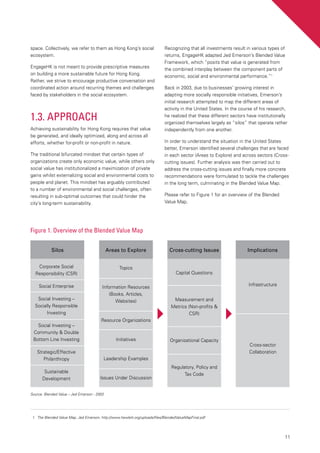
Figure 1. Overview of the Blended Value Map
Source: Blended Value – Jed Emerson - 2003
Recognizing that all investments result in various types of
returns, EngageHK adapted Jed Emerson’s Blended Value
Framework, which “posits that value is generated from
the combined interplay between the component parts of
economic, social and environmental performance.”1
Back in 2003, due to businesses’ growing interest in
adapting more socially responsible initiatives, Emerson’s
initial research attempted to map the different areas of
activity in the United States. In the course of his research,
he realized that these different sectors have institutionally
organized themselves largely as “silos” that operate rather
independently from one another.
In order to understand the situation in the United States
better, Emerson identified several challenges that are faced
in each sector (Areas to Explore) and across sectors (Cross-
cutting issues). Further analysis was then carried out to
address the cross-cutting issues and finally more concrete
recommendations were formulated to tackle the challenges
in the long term, culminating in the Blended Value Map.
Please refer to Figure 1 for an overview of the Blended
Value Map.
1.	 The Blended Value Map, Jed Emerson, http://www.hewlett.org/uploads/files/BlendedValueMapFinal.pdf
12 © Asia Community Ventures 2013
Emerson stressed that it was important to break through silos that separated corporate social responsibility (CSR), social
enterprise, socially responsible investing (SRI), community and double bottom line investing, strategic/effective philanthropy
and sustainable development.
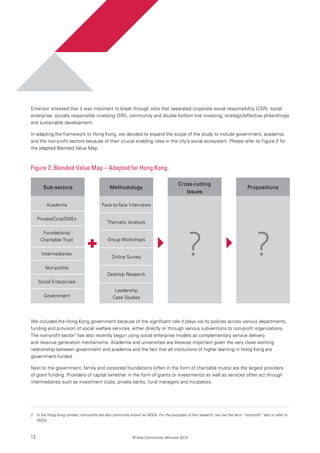
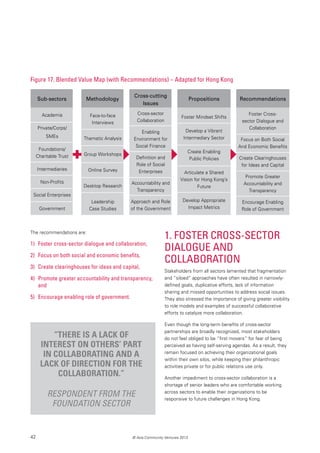
In adapting the framework to Hong Kong, we decided to expand the scope of the study to include government, academia
and the non-profit sectors because of their crucial enabling roles in the city’s social ecosystem. Please refer to Figure 2 for
the adapted Blended Value Map.
We included the Hong Kong government because of the significant role it plays via its policies across various departments,
funding and provision of social welfare services, either directly or through various subventions to non-profit organizations.
The non-profit sector2
has also recently begun using social enterprise models as complementary service delivery
and revenue generation mechanisms. Academia and universities are likewise important given the very close working
relationship between government and academia and the fact that all institutions of higher learning in Hong Kong are
government-funded.
Next to the government, family and corporate foundations (often in the form of charitable trusts) are the largest providers
of grant funding. Providers of capital (whether in the form of grants or investments) as well as services often act through
intermediaries such as investment clubs, private banks, fund managers and incubators.
Figure 2. Blended Value Map – Adapted for Hong Kong
Cross-cutting
Issues
PropositionsMethodology
Face-to-face Interviews
Thematic Analysis
Group Workshops
Online Survey
Desktop Research
Leadership
Case Studies
Sub-sectors
Academia
Private/Corp/SMEs
Foundations/
Charitable Trust
Intermediaries
Non-profits
Social Enterprises
Government
? ?
2. 	 In the Hong Kong context, non-profits are also commonly known as NGOs. For the purposes of this research, we use the term “non-profit” also to refer to
NGOs.
13
1.4. Research Design and
Methodology
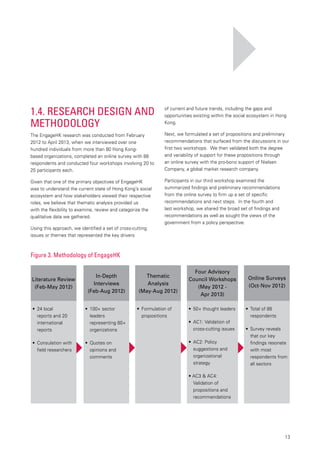
The EngageHK research was conducted from February
2012 to April 2013, when we interviewed over one
hundred individuals from more than 80 Hong Kong-
based organizations, completed an online survey with 88
respondents and conducted four workshops involving 20 to
25 participants each.
Given that one of the primary objectives of EngageHK
was to understand the current state of Hong Kong’s social
ecosystem and how stakeholders viewed their respective
roles, we believe that thematic analysis provided us
with the flexibility to examine, review and categorize the
qualitative data we gathered.
Using this approach, we identified a set of cross-cutting
issues or themes that represented the key drivers
Figure 3. Methodology of EngageHK
Literature Review
(Feb-May 2012)
In-Depth
Interviews
(Feb-Aug 2012)
Thematic
Analysis
(May-Aug 2012)
Online Surveys
(Oct-Nov 2012)
Four Advisory
Council Workshops
(May 2012 -
Apr 2013)
•	 24 local
reports and 20
international
reports
•	 Consulation with
field researchers
•	 100+ sector
leaders
representing 80+
organizations
•	 Quotes on
opinions and
comments
•	 Formulation of
propositions
•	 Total of 88
respondents
•	 Survey reveals
that our key
findings resonate
with most
respondents from
all sectors
•	 50+ thought leaders
•	 AC1: Validation of
cross-cutting issues
•	 AC2: Policy
suggestions and
organizational
strategy
• AC3 & AC4:
Validation of
propositions and
recommendations
of current and future trends, including the gaps and
opportunities existing within the social ecosystem in Hong
Kong.
Next, we formulated a set of propositions and preliminary
recommendations that surfaced from the discussions in our
first two workshops. We then validated both the degree
and variability of support for these propositions through
an online survey with the pro-bono support of Nielsen
Company, a global market research company.
Participants in our third workshop examined the
summarized findings and preliminary recommendations
from the online survey to firm up a set of specific
recommendations and next steps. In the fourth and
last workshop, we shared the broad set of findings and
recommendations as well as sought the views of the
government from a policy perspective.
14 © Asia Community Ventures 2013
1.4.1. Desktop Research
The desktop research consisted mainly of a literature review both locally and overseas, including relevant publications in
academic journals, reports by think tanks and consultancies, official websites and annual reports. While our research went
as far back as in the 1990s, we focused on materials in the last five years for data citation where relevant.
Please refer to the Bibliography for a select list of the reports we reviewed.
1.4.2. One-on-one Interviews
We selected an initial group of respondents from our desktop research and our contacts of leaders and practitioners in the
various sub-sectors. Through a typical snowball sampling technique, further respondents were suggested to us as a result
of initial interviews. The average interview lasted 90 minutes, with the shortest taking an hour and the longest lasting three
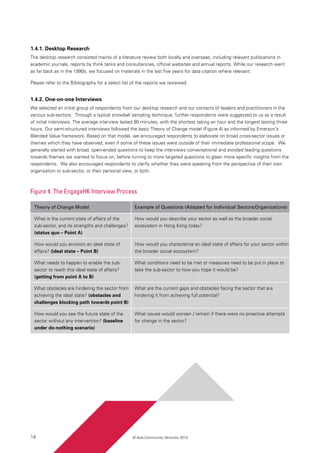
hours. Our semi-structured interviews followed the basic Theory of Change model (Figure 4) as informed by Emerson’s
Blended Value framework. Based on that model, we encouraged respondents to elaborate on broad cross-sector issues or
themes which they have observed, even if some of these issues were outside of their immediate professional scope. We
generally started with broad, open-ended questions to keep the interviews conversational and avoided leading questions
towards themes we wanted to focus on, before turning to more targeted questions to glean more specific insights from the
respondents. We also encouraged respondents to clarify whether they were speaking from the perspective of their own
organization or sub-sector, or their personal view, or both.
Figure 4. The EngageHK Interview Process
Theory of Change Model
What is the current state of affairs of the
sub-sector, and its strengths and challenges?
(status quo – Point A)
How would you envision an ideal state of
affairs? (ideal state – Point B)
What needs to happen to enable the sub-
sector to reach this ideal state of affairs?
(getting from point A to B)
What obstacles are hindering the sector from
achieving the ideal state? (obstacles and
challenges blocking path towards point B)
How would you see the future state of the
sector without any intervention? (baseline
under do-nothing scenario)
Example of Questions (Adapted for Individual Sectors/Organizations)
How would you describe your sector as well as the broader social
ecosystem in Hong Kong today?
How would you characterize an ideal state of affairs for your sector within
the broader social ecosystem?
What conditions need to be met or measures need to be put in place to
take the sub-sector to how you hope it would be?
What are the current gaps and obstacles facing the sector that are
hindering it from achieving full potential?
What issues would worsen / remain if there were no proactive attempts
for change in the sector?
15
1.4.3. Advisory Committee Workshops
After identifying a set of preliminary cross-cutting issues from our initial 20 one-on-one interviews, we convened our first
group workshop comprising a select group of practitioners and leaders based on their level of involvement and interest in
the development of Hong Kong’s social ecosystem.
We convened a total of four workshops of 20 to 25 participants at various stages of our study, with the first one (AC1)
taking place on May 9, 2012, the second (AC2) on August 7, 2012, the third (AC3) on November 9, 2012 and the fourth and
final (AC4) on April 22, 2013. We strived to strike a balance between continuity and diversity of perspectives by inviting new
stakeholders across the four workshops, while ensuring that a core group of stakeholders attended at least two workshops.
The workshops were generally conducted in two parts, a presentation of EngageHK’s latest findings followed by a
discussion that involved all participants, often in smaller break-out sessions.
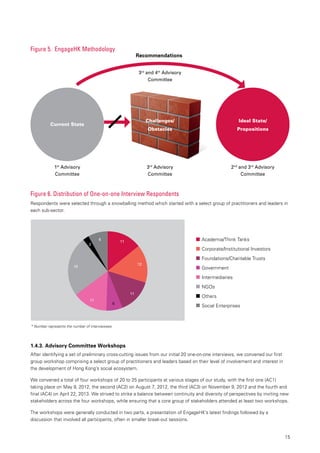
Figure 6. Distribution of One-on-one Interview Respondents
Respondents were selected through a snowballing method which started with a select group of practitioners and leaders in
each sub-sector.
* Number represents the number of interviewees
11
12
11
11
19
2
6
5
Academia/Think Tanks
Corporate/Institutional Investors
Foundations/Charitable Trusts
Government
Intermediaries
NGOs
Others
Social Enterprises
Figure 5. EngageHK Methodology
Current State
1st
Advisory
Committee
2nd
and 3rd
Advisory
Committee
3rd
Advisory
Committee
Recommendations
3rd
and 4th
Advisory
Committee
Ideal State/
Propositions
Challenges/
Obstacles
16 © Asia Community Ventures 2013
13
6
8
20
9
17
1
14
Academia/Think Tanks
Corporate/Institutional Investors
Foundations/Charitable Trusts
Government
Intermediaries
NGOs
Others
Social Enterprises
Please see fix URL: http://www.asiacommunityventures.org/EngageHK for the survey template form and Appendix 3 for the survey results.
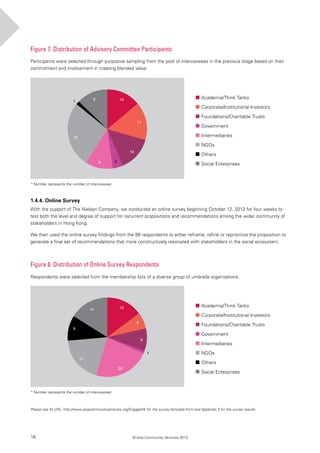
1.4.4. Online Survey
With the support of The Nielsen Company, we conducted an online survey beginning October 12, 2012 for four weeks to
test both the level and degree of support for recurrent propositions and recommendations among the wider community of
stakeholders in Hong Kong.
We then used the online survey findings from the 88 respondents to either reframe, refine or reprioritize the proposition to
generate a final set of recommendations that more constructively resonated with stakeholders in the social ecosystem.
Figure 8. Distribution of Online Survey Respondents
Figure 7. Distribution of Advisory Committee Participants
Participants were selected through purposive sampling from the pool of interviewees in the previous stage based on their
commitment and involvement in creating blended value.
Respondents were selected from the membership lists of a diverse group of umbrella organizations.
* Number represents the number of interviewees
10
11
10
8
19
1
9
3
Academia/Think Tanks
Corporate/Institutional Investors
Foundations/Charitable Trusts
Government
Intermediaries
NGOs
Others
Social Enterprises
17
Section 2:
Sub-sectors and Gaps
Following the (modified) Blended Value framework and through our one-on-one interviews with key
stakeholders in various sub-sectors, we explore the work that has been done by these sectors and
reveal the gaps that hinder the development of the social ecosystem. The seven sub-sectors and the
types of organizations included for each sub-sector are specified in the chart below.
18 © Asia Community Ventures 2013
2.1. 	Academia
The academic sector broadly consists of higher educational
institutions. For the purpose of this research, it pertains
to the local universities and to some extent community
colleges and vocational training centers. Academia plays an
important part in the development of the social ecosystem
because of its leadership role in equipping youth with
the critical skills necessary to enter into workforce,
facilitating knowledge transfer among various sectors and
nurturing future leaders and social entrepreneurs. The
academic community is also well positioned to enable
social innovation and foster an entrepreneurial mindset, as
well as to conduct research on social impact metrics and
assessment.
Figure 9. Description of Seven Sub-sectors
Overview of Initiatives in Academia
Social innovation and entrepreneurship are rapidly gaining
attention globally in academic circles as important subject
matters, not only for research purposes, but more
importantly, for their significant potential to contribute
to more sustainable societies. In Hong Kong, a few
universities have launched larger scale multi-disciplinary
projects that integrate business plan competitions,
mentorship schemes, field learning programs, workshops,
networking activities, and research programs.
Currently, the Hong Kong Jockey Club is the biggest
funder of such projects in academia, including among
others: 1) ExCEL33
under the Faculty of Social Sciences
at the University of Hong Kong, and 2) JCDISI4
under
the School of Design at the Hong Kong Polytechnic
University. These projects provide training programs,
Academia
Private/Corps/SMEs
Foundations/
Charitable Trust
Intermediaries
Non-profits
Social enterprises
Government
Others*
Universities engaged in research in non-profits, social enterprises and social
entrepreneurship
Corporations engaged in CSR, community investment, banks offering sustainable/
responsible investing, philanthropy services
Corporate foundations, family foundations, family offices, individual investors and
philanthropists
Services providers to the social sector, involved in funding, incubating, mentoring or
consultancy services, membership-based networking organizations, impact investing funds
International NGOs, NGOs funded by the Hong Kong government, NGOs with or without
social enterprise units
Non-profit owned and controlled social enterprises and private social enterprises without
government subvention
Policy research, advisory committees, supporting and grant-making units for non-profits
and social enterprises
Media, advocates, individuals not affiliated with any of the above classifications
* This category is only used in the online surveys.
19
workshops, competitions and other activities, allowing
students, faculties and NGOs to collaborate and build
on organizational, research and teaching capabilities.
Other examples of larger scale projects include Project
Flame at City University of Hong Kong and the Centre for
Entrepreneurship at the Chinese University of Hong Kong.
In addition to courses offered under these larger-scale
projects, universities also hold standalone courses on
social innovation and sustainability. Courses at the Baptist
University, and the Hong Kong University of Science
and Technology tend to focus more on corporate social
responsibility.
Cross-sector Collaboration
There has been a boom in cross-sector partnerships
between academia and other sectors in recent years.
Currently, there are a few intermediaries that are focusing
on cross-sector collaboration. For example, YES Network
– the People Incubator, is an intermediary platform that
enables all actors from different sub-sectors to collaborate
and support social entrepreneurs in up-scaling social
change. Their current engagements include a two-year
project collaboration with the University of Hong Kong
(Academia) and the Hong Kong Jockey Club (Foundation),
on the ExCEL3 initiative. Another example is the HKUST-
China Entrepreneurship Network (HKUST-CEN), which
organizes social entrepreneurship forums.
Another local initiative, Education for Good, also contributes
to the promotion of social innovation and entrepreneurship
by spearheading educational program via collaborative
efforts with non-academic sectors to create and sustain a
civic movement of social entrepreneurship.
Gaps
Social innovation remains a nascent subject matter in
academia, and efforts are still underway to bring together
the resources and talent necessary to overcome some key
challenges, including:
•	 	 Dearth of courses on social innovation and
entrepreneurship – despite growing student demand,
local universities have been slow to offer courses on
topics such as impact investing, venture philanthropy,
social entrepreneurship, and social innovation. Most
social science faculties have been focusing more on
social welfare and service delivery training rather than
social innovation. Some business and entrepreneurship
faculties meanwhile organize separate business
plan competitions with limited interaction with other
faculties.
•	 	 Lack of inter- and intra-departmental collaboration
– offerings that foster social innovation and cross-
disciplinary thinking has not been evolving quickly
enough, largely due to the fact that faculties lack
experienced social entrepreneurs and mentors who can
bring practical field experience to the table.
•	 	 Lack of multi-disciplinary training – overemphasis
on standardized examination and early specialization
has led to narrowly defined training rather than
interdisciplinary educational opportunities, which are
crucial in advancing critical knowledge surrounding
blended value and cross-sector skills development.
•	 	 Limited cross-discipline academic research – most
research in Hong Kong has thus far been issues-
driven and sector specific. Very little funding has been
available for researchers looking at how to identify and
address cross-sector market gaps and inefficiencies
such as better ways to provide capital and training to
social enterprises. Furthermore, very few professors,
other than adjunct lecturers from the field, currently
have the practical social entrepreneurship experience
and relevant cross-sectoral networks needed to conduct
meaningful research in this area.
3. 	 Excellence in Capacity-building on Entrepreneurship and Leadership for
the Third Sector
4.	 Jockey Club Design Institute for Social Innovation
20 © Asia Community Ventures 2013
2.2. Private Sector/
Corporations/
Small and Medium
Enterprises
Within the context of this research, this sub-sector includes
any privately incorporated organizations, publicly-listed
corporations, small- and medium-enterprises (SMEs) as
well as foundations of corporations such as Swire Trust.
The conventional goal of corporations is to maximize
shareholder value or private gains. This is often perceived
as unrelated or even disruptive to the promotion of
sustainability and the creation of social impact. However,
in recent years, corporations have begun to acknowledge
that their social impact, whether positive or negative,
intended or otherwise, is becoming more closely linked
to their financial returns with increased expectations from
society and its stakeholders. As such, they have begun to
integrate corporate social responsibility (CSR) efforts into
their operational plans, including corporate donations, staff
volunteering and grant-making, among other activities.
A Community Business survey revealed that the major
motivation for companies to engage in CSR is the positive
impact on the financial value of the company (58%),
followed by human resource benefits (52%) and good
public relations (40%)5
.
Practice of CSR in Hong Kong
The practice of corporate social responsibility (CSR),
including community investing (CI) or community
engagement (CE) has become more prevalent among
corporations in Hong Kong since the 1990s.
Among the many potential beneficiary groups, corporations
in Hong Kong have a preference for giving to projects
related to education, the environment, poverty, children and
healthcare.6
In contrast, heritage, culture and sports receive
much less attention in terms of corporate donations.
Among the many components of CSR, corporations in
Hong Kong consider community investment (CI) as a
priority since it is the most visible way for a corporation to
market its commitment to CSR. According to Community
Business,7
CI includes cash donations, in-kind donations of
both goods and services and employee volunteering. As
the charitable subset of CI, corporate donations contribute
to 10% of total giving in Hong Kong. In particular, corporate
donations to non-governmental organizations in Hong Kong
have increased from HK$700 million during the fiscal year
of 1999-2000 to $3.7 billion during 2010-20118
.
The concept of CSR was largely “imported” by
multinational corporations (MNCs) based in Hong Kong.
These MNCs are also considered as the main contributors
of corporate donations. Despite the generosity of MNCs,
the philanthropic resources are concentrated in developing
regions like Mainland China and India instead of Hong
Kong, which is regarded as a comparatively wealthy city.
Since many MNCs have been affected by the global
economy, many have cut their philanthropic budgets and
staffing in recent years.9
As a result, MNCs are doing more
with less and have tended to concentrate funding to a
handful of more established non-profits when partnering
to implement their CSR activities. Other initiatives include
that of HSBC in 2008, which helped launch the HKCSS-
HSBC Social Enterprise Business Centre10
, one of the first
Hong Kong social enterprise incubators. Over the past five
years, some 800 corporate volunteers have been trained,
contributing around 2,000 consultancy hours and benefiting
approximately 50 SEs.
Conversely, smaller or developing non-profits are usually
hard-pressed to get their foot in the door of corporations
and therefore struggle to gain access to CSR capital and
resources.
21
5.	 Corporate Social Responsibility (CSR) in Hong Kong – A Survey of Good Practice 2007 (Print).
6.	 The Role of Companies in the Development of a Vibrant Third Sector in Hong Kong, Golin/Harris Forrest 2001, www.cpu.gov.hk/doc/tc/research_reports/3rd-
fullrep.rtf
7.	 A membership based NGO dedicated to advocating for CSR in Asia.
8.	 Annual Report 2000-2001 and Annual Report 2011-2012, Inland Revenue Department
9.	 Liu Youping, deputy director of the China Charity and Donation Information Center, said the global economic downturn forced some foreign companies to
cut their spending on charity. He Dan(2012). Charitable donations to Mainland China. China Daily.
10.	HKCSS- HSBC Social Entreprise Business Centre.
http://www.hsbc.com.hk/1/2/cr/community/projects/sebc
11.	Trade and Industry Department - Support and Consultation Centre for SMEs (2012).
http://www.success.tid.gov.hk/english/lin_sup_org/gov_dep/service_detail_6863.html
12. Ibid.
Small and Medium Enterprises (SMEs)
SMEs in Hong Kong are defined as “any manufacturing
business that employs fewer than 100 people in Hong
Kong, or any non-manufacturing business that employs
fewer than 50 people in Hong Kong”11
. There are
approximately 300,000 SMEs in Hong Kong (98% of total
business units), contributing to 1.2 million jobs (48% of
total employment excluding civil service). More than half of
Hong Kong’s SMEs engage in import/export, wholesale and
retail industries.12
Since SMEs seldom publicize their CSR initiatives, there
are few public role models, which has led to a limited
awareness of their CSR efforts and trends. Due to resource
prioritization towards growth, CSR is often a lower priority
for SMEs. With the high rental costs in the city, most SMEs
do not have the luxury of sustainably operating at lower
margins or slower turnover which results in CSR being
accorded a lower priority.
For many SMEs, implementing CSR means providing fair
salaries and access to job opportunities for marginalized
individuals or communities whether or not they call
themselves social enterprises. It is not surprising therefore
that SME charitable giving is also relatively low given other
more pressing priorities. Their commitment tends to take
the form of in-kind donations and employee volunteerism
that have strategic value to their operations rather than
outright cash donations.
Family-owned Businesses
In the CSR context, family- or privately-owned businesses
are generally less constrained by shareholders’
expectations compared to public companies. Family
businesses’ philanthropic giving also tends to be
proportionally larger than their corporate counterparts and
their CSR units have more flexibility and have shown higher
risk thresholds. In this regard, family businesses have
an advantage in fostering social innovation. The Esquel
Group, a family-owned textile manufacturing company,
is an example of this trend and has been engaging in
initiatives building social enterprises as a means to provide
gainful employment for their former staff hit by the shifting
economy.
22 © Asia Community Ventures 2013
Gaps and Challenges
Corporations often cite lack of senior management buy-in
and financial support towards CSR activities as two of
their biggest challenges especially in uncertain economic
environments. There is, however, a great deal corporates
can do to optimize their contribution amidst reduced CSR
budgets, including forming of informal industry networks
as well as joining as members of intermediaries such as
Community Business. By collaborating with each other
and pooling expertise and initiatives of their peers, they
maximize their social impact and avoid duplication of efforts
in the social ecosystem.
This also means that social purpose organizations (SPOs)
– whether they are incorporated as non-profits or social
enterprises – should research which specific needs or
pockets of vulnerability in the social ecosystem can be
most relevantly addressed by the CSR activities of major
corporate sponsors. Ensuring such alignment of purpose
would be most valuable when, for instance, corporations
look to provide pro-bono consulting by offering the
specialized skills of their own workforce.
There are other challenges hindering the growth of social
innovation in the business sector, namely the observations
that:
•	 CSR activities tend to be box-ticking exercise for many
firms – CSR activities are generally not perceived to
directly impact financial returns for shareholders, and as
such receive little engagement from top management.
These activities are usually housed in corporations’
marketing and/or human resource departments,
designed to raise businesses’ visibility and general
likeability, among both its employees and customers.
As a result, companies are more likely to fund popular
projects with greater visibility rather than those with
genuine funding needs and impact potential.
•	 Corporations’ innovative CSR ideas lack “one-stop
shop” support from the government – companies
are seeking a “one-stop” platform to be able to
engage in collaborative efforts with the government
in scaling their CSR or community investment ideas.
They are often discouraged from seeking government
support because of the perceived heavy bureaucratic
requirements to make things happen.
•	 Minimal support for non-profit capacity building or
“good overhead” – most funding from the corporations
focus on non-profits project funding and not on non-
profits capacity building. This traditional focus on project
funding does not allow non-profits to achieve financial
or strategic sustainability necessary for them to sustain
their impact in the long-run. The usual practice of
giving donations has not made full use of the potentials
of the business sector in contributing to poverty
alleviation work, as articulated in a research report
recently published by the Bauhinia Foundation Research
Centre13
.
23
2.3. Foundations/
Charitable Trusts
Foundations have historically played an important role
in providing supplementary funding sources relative
to government subvention and individual charitable
donations. There are generally two types of foundations
in Hong Kong,14
grant-making and operating. Grant-making
foundations generate income from their endowments,
evaluate funding requests and decide to support projects
that are aligned with their missions. The Hong Kong Jockey
Club Charities Trust, Hong Kong Bank Foundation, and Li Ka
Shing Foundation are three prominent examples of grant-
making foundations.
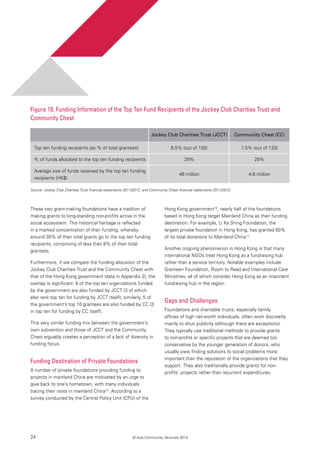
Source: Hong Kong Jockey Club and Community Chest websites, Jockey Club Charities Trust financial statements 2011/2012, and Community Chest financial 	
statements 2011/2012.
Jockey Club and Community Chest
Areas of Interest
Recipients of Funds
Major Source of Funding
Agencies Supported
Funds Allocation (HK$)
Jockey Club Charities Trust
Six main areas of interests: Promoting
A Healthy Living, Lending A Hand &
Volunteering, Creating Possibilities,
Developing Sports, Fun & Games, Cultivating
Arts & Culture and Preserving & Creating
Jobs
Projects and programs
Appropriations from The Hong Kong Jockey
Club Group, financial income of the Charities
Trust and forfeited dividend and refunds.
155 non-profits and community projects
(2011/2012)
1,729 million (2011/2012)
Community Chest
Community services, which include services
for elderly, children and youth, family,
rehabilitation and aftercare, medical and
health, residents of poor living environment.
Community development programs are also
funded.
Programs
Public fundraising
133 charitable organisations (2011/2012)
219 million (2011/2012)
In contrast, operating foundations raise their money
from the public, mainly through gala and auction events,
flag days, and fundraising campaigns to provide goods
and services to beneficiaries or social issues directly. As
a result, they are under greater public scrutiny and are
expected to directly fund projects with specific areas of
interest, such as children and youth, ethnic minorities,
elderly and the environment.
Jockey Club Charities Trust and Community Chest
The Community Chest and the Jockey Club Charities Trust
are two of the largest grant-making institutions that play
indispensable roles in funding social service organizations in
Hong Kong.
13.	Executive Summary, Poverty Alleviation – What Can the Business Sector Do?, http://www.bauhinia.org/document/doc154eng.pdf
14.	Philanthropic Intermediaries, Study on the Third Sector Landscape in Hong Kong, Eva Liu, released by Central Policy Unit,
http://www.polyu.edu.hk/apss/Third/LSTS/3rd_ch13.pdf
24 © Asia Community Ventures 2013
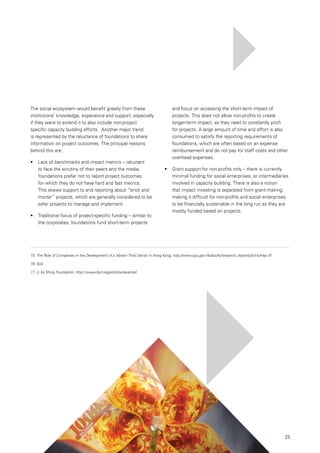
Figure 10. Funding Information of the Top Ten Fund Recipients of the Jockey Club Charities Trust and
Community Chest
Top ten funding recipients (as % of total grantees)
% of funds allocated to the top ten funding recipients
Average size of funds received by the top ten funding
recipients (HK$)
Jockey Club Charities Trust (JCCT)
6.5% (out of 155)
28%
46 million
Community Chest (CC)
7.5% (out of 133)
29%
4.6 million
Source: Jockey Club Charities Trust financial statements 2011/2012, and Community Chest financial statements 2011/2012.
These two grant-making foundations have a tradition of
making grants to long-standing non-profits active in the
social ecosystem. This historical heritage is reflected
in a marked concentration of their funding, whereby
around 30% of their total grants go to the top ten funding
recipients, comprising of less than 8% of their total
grantees.
Furthermore, if we compare the funding allocation of the
Jockey Club Charities Trust and the Community Chest with
that of the Hong Kong government (data in Appendix 2), the
overlap is significant: 8 of the top ten organizations funded
by the government are also funded by JCCT (3 of which
also rank top ten for funding by JCCT itself); similarly, 5 of
the government’s top 10 grantees are also funded by CC (3
in top ten for funding by CC itself).
This very similar funding mix between the government’s
own subvention and those of JCCT and the Community
Chest arguably creates a perception of a lack of diversity in
funding focus.
Funding Destination of Private Foundations
A number of private foundations providing funding to
projects in mainland China are motivated by an urge to
give back to one’s hometown, with many individuals
tracing their roots in mainland China15
. According to a
survey conducted by the Central Policy Unit (CPU) of the
Hong Kong government16
, nearly half of the foundations
based in Hong Kong target Mainland China as their funding
destination. For example, Li Ka Shing Foundation, the
largest private foundation in Hong Kong, has granted 60%
of its total donations to Mainland China17
.
Another ongoing phenomenon in Hong Kong is that many
international NGOs treat Hong Kong as a fundraising hub
rather than a service territory. Notable examples include
Grameen Foundation, Room to Read and International Care
Ministries, all of which consider Hong Kong as an important
fundraising hub in the region.
Gaps and Challenges
Foundations and charitable trusts, especially family
offices of high net-worth individuals, often work discreetly
mainly to shun publicity (although there are exceptions).
They typically use traditional methods to provide grants
to non-profits or specific projects that are deemed too
conservative by the younger generation of donors, who
usually view finding solutions to social problems more
important than the reputation of the organizations that they
support. They also traditionally provide grants for non-
profits’ projects rather than recurrent expenditures.
25
The social ecosystem would benefit greatly from these
institutions’ knowledge, experience and support, especially
if they were to extend it to also include non-project
specific capacity building efforts. Another major trend
is represented by the reluctance of foundations to share
information on project outcomes. The principal reasons
behind this are:
•	 	 Lack of benchmarks and impact metrics – reluctant
to face the scrutiny of their peers and the media,
foundations prefer not to report project outcomes
for which they do not have hard and fast metrics.
This skews support to and reporting about “brick and
mortar” projects, which are generally considered to be
safer projects to manage and implement.
•	 	 Traditional focus of project-specific funding – similar to
the corporates, foundations fund short-term projects
and focus on accessing the short-term impact of
projects. This does not allow non-profits to create
longer-term impact, as they need to constantly pitch
for projects. A large amount of time and effort is also
consumed to satisfy the reporting requirements of
foundations, which are often based on an expense
reimbursement and do not pay for staff costs and other
overhead expenses.
•	 	 Grant support for non-profits only – there is currently
minimal funding for social enterprises, or intermediaries
involved in capacity building. There is also a notion
that impact investing is separated from grant-making,
making it difficult for non-profits and social enterprises
to be financially sustainable in the long run as they are
mostly funded based on projects.
15.	The Role of Companies in the Development of a Vibrant Third Sector in Hong Kong, http://www.cpu.gov.hk/doc/tc/research_reports/3rd-fullrep.rtf
16.	Ibid.
17.	Li Ka Shing Foundation. http:/ /www.lksf.org/en/other/eventall
26 © Asia Community Ventures 2013
2.4. Intermediaries
Intermediary organizations provide a wide range of
services that are central to the sustainability of the social
ecosystem, from capacity building to technical assistance,
advisory services, research and facilitation. They can also
perform an important convening function by putting in place
and managing a common platform to engage stakeholders
from across sectors in open dialogue.
Like social enterprise, there is no universal or legal
definition of an intermediary in Hong Kong’s social
ecosystem. In this section, we refer to intermediaries
as service providers to the social ecosystem, involved in
funding, incubating, mentoring and/or consultancy services.
They can also include membership-based networking
organizations and impact investment funds. Since there are
only a few examples of “pure” intermediaries in the social
ecosystem, this section will also draw examples from other
sectors.
Incubation and Financial Support
Impact investors seeking to invest in social enterprises
(also known as social businesses) oftentimes encounter
difficulties because these ventures are rarely at a growth
stage where they are investor-ready. Intermediaries can
play an important role in bridging this market gap by helping
social enterprises to become investor-ready and connect
impact investors to such businesses at the right time. In
Hong Kong, these intermediaries include organizations
such as Social Ventures Hong Kong (SVhk) and SOW Asia
Foundation (SOW Asia) that provide financial and non-
financial support in addition to potentially investing in social
enterprises.
Precursor to Impact Investment Funds
As demonstrated by the work of SVhk and SOW Asia, it
is common for intermediaries to provide both financial
and capacity building support. While individuals, family
offices and philanthropic foundations currently dominate
the supply of capital for the social investment market,
impact investment funds that draw their capital from
institutional investors and others are also emerging in the
market. Although there tends to be some overlap between
intermediaries that offer incubation and financial support,
impact investment funds often adopt a more “hands-off”
approach to their portfolio companies. They focus instead
on providing a common standard and shared back-office
infrastructure such as IT, accounting and legal services to
assist companies to scale their operations beyond volunteer
mentorship programs.
Consultancy and Networking Organizations
Examples of local consultancy and networking organizations
include Asia Community Ventures (ACV), which aims to
promote collaboration among key players in the social
ecosystem, and Make a Difference (MaD), an organization
that fosters cross-disciplinary innovation and creative
thinking to instill a “blended value” mindset in the younger
generation. Regionally, Association for Sustainable and
Responsible Investment in Asia (ASrIA), a Hong Kong based
organization, is dedicated to promoting sustainable and
responsible investing (SRI) in Asia Pacific.
Intermediary Activities in Hong Kong
Many organizations in other sub-sectors also perform
important intermediary functions to encourage cross-sector
collaboration. One such example would be the Hong Kong
Social Enterprise Challenge organized by the Chinese
University of Hong Kong Center for Entrepreneurship.
HKSEC believes all students have the potential to become
successful social entrepreneurs. The program consists of
both formal and informal trainings where participants can
exchange ideas and interact with executives from business,
government departments and non-profits.
Think tanks are also frequent organizers of intermediary
activities. To conduct, publish and publicize research on
certain social issues, think tanks often engage in and
promote cross-sector collaboration and partnerships. Since
2008, the Hong Kong Policy Research Institute has been
organizing its annual Social Enterprise Summit, raising
awareness of social entrepreneurship among members of
the ecosystem. The Bauhinia Foundation Research Centre
also organizes seminars and workshops on social topics
that gather practitioners from different stakeholder groups
to formulate well-rounded policy proposals.
27
Gaps
Our findings have shown intermediary organizations are by far the most under-developed among the sub-sectors examined
in Hong Kong’s social ecosystem. The current challenges faced by intermediaries include:
•	 	 Low awareness of and support for intermediaries - in general funders in Hong Kong do not rely on intermediaries
platforms to find non-profits that suit the funders’ objective. In the name of reducing overhead costs, funders conduct
the search and due diligence themselves with their limited staff time and budgets. This limitation has the unintended
consequence that ultimate target beneficiaries are not adequately identified and served.
•	 	 Insufficient number and types of intermediaries to support the Hong Kong ecosystem- a vibrant social ecosystem
requires a network of intermediaries to connect non-profits, social enterprises, foundations and the private sector. Hong
Kong also needs more intermediary companies to provide services like research, fundraising, ratings, advisory, training
and mentorship , and impact measurement to make the ecosystem more efficient.
Initiatives Abroad to Support 				
Intermediaries in the Social Ecosystem
Governments in the United States and the United Kingdom have a more substantial track record in supporting
intermediaries, and could be valuable cases for further examination
Over the past decades, the United States has developed a fairly vibrant ecosystem of intermediaries supporting the
social ecosystem. For example, groups such as the Corporation for Supportive Housing, Enterprise, and Living Cities have
worked to support the efforts of individual organizations and practitioners. More recently, the Social Innovation Fund was
established in 2009 to provide government grants to intermediary grant makers. The design is characterized by a reliance
on experienced and knowledgeable grant-making bodies that are well positioned to identify, select and grow the impact of
non-profits that can achieve results. In its first three years, the Social Innovation Fund has awarded US$138 million to 20
grant-making intermediaries, which in turn supported 197 non-profits.
In the United Kingdom, a series of initiatives to grow the social investment market have also relied heavily on
intermediaries. The various funding schemes have established clear definitions and functions of different types of
intermediaries. Examples are:
•	 Investment and Contract Readiness Providers: organizations that support, guide and assist social ventures to develop
realistic proposals to become investment and contract ready;
•	 Social Incubators: organizations that offer a period of intensive support to social enterprise start-ups; and
•	 Social Investment Finance Intermediaries: organizations that connect those interested in investing for social impact with
social purpose organizations that need capital to achieve positive social change.
27
28 © Asia Community Ventures 2013
2.5. Non-Profits
Non-profit organizations (non-profits) are instrumental in
civil society as direct social welfare service providers and
recipients of donations. They play an important role in the
social ecosystem and rely on a collaborative network of
public bodies, private donors and the general public. As part
of the front-line service providers, they also have a good
understanding of the needs and expectations of potential
beneficiaries.
Size of Non-profit Sector in Hong Kong
The non-profit sector includes voluntary, non-governmental
and formal organizations whose primary purpose is related
to social services and policy advocacy18
. In Hong Kong,
government expenditure on NGOs totaled HK$ 10.1 billion
in 2012-201319
.
Legal Status
As of March 2012, there are 7,194 non-profits in Hong
Kong20
. There are no specific laws that govern the
registration of charities except for the recognition they are
granted by the Inland Revenue Department for their tax-
exempt status.
The legal and regulatory environment for non-profits is
fragmented. Most established voluntary organizations are
registered companies limited by guarantee for which they
need to meet minimal corporate governance requirements,
including audit reports and annual general meetings.
Major Functions and Roles
Over 70% of all social welfare services are currently
operated by non-profits, including education, health
care and others.21
As the pioneer of public social service
providers since the early colonial era, non-profits have laid
down the groundwork and standard in this field.
Donations to non-profits have full social and environmental
objectives with no expected financial return. Currently,
about 60% of non-profit welfare programs are funded
under the Social Welfare Department subvention scheme,
and most of the remaining 40% are funded by either the
Hong Kong Jockey Club Charities Trust or the Community
Chest Fund. Support from foundations, private donations
and other income from fee-charging services or other
enterprising programs account for a minimal proportion of
revenue generated by social service non-profits.
Since the dramatic expansion of social welfare expenditure
in the 1970s, the government has been relying on non-
profits for their capacity, reputation, knowledge and
experience as social service providers. The sector’s
relationship with the government had been especially close
considering that many rely on public funding for survival.
Before the termination of the five-year welfare policy plan
in 2002, non-profit organizations had been engaged and
consulted for long-term welfare policies for the city, and
were seen in close partnership with the government in
both devising and delivering essential and timely welfare
policies.
Relationship with the Government
There are three main issues in relation to the funding
and operation of non-profits as far as the government
is concerned. Firstly, many Hong Kong non-profits
disproportionately rely on government funding for their
operations. While the generous availability of government
funding might not be an issue in itself, the means by which
such funding is allocated and its use monitored could limit
non-profit’s incentive to innovate. The lump sum grant
scheme introduced in 2000 that gradually eliminated the
subvention system may have exacerbated this condition,
given that it resulted in non-profits being increasingly
viewed as outsourced social welfare service providers.
The government’s monitoring system also encourages
micro-management, which means program design and
scope is very limited by service agreements. Therefore,
organizations are less likely to explore new areas of need or
to serve needy groups.
The second dimension relates to the introduction of a new
market mechanism with the lump sum grant scheme. The
bidding for welfare services creates competition among
non-profits, which results in a shift to immediate and easily
29
measurable output of services. Such rigidity and formality
leaves little room for innovation and organizational capacity.
The third dimension has to do with the compensation of
social workers. The lump sum grant scheme allowed non-
profits to set their own payment scale for social workers,
as opposed to previous practices of linking salaries to
that of civil servants. This trend dramatically reduced
compensation for social work as a career and resulted in
major challenges related to staff recruitment and retention.
Gaps and Challenges
As government funding has become unreliable for
long-term development, non-profit organizations have
been forced to explore alternative sources of income.
Unfortunately, many are not well equipped to manage
donor constituents, nor do they have the knowledge and
skills to take advantage of market operations. These new
initiatives divert resources from operations and service
provision, putting pressure on existing management. As a
result, related challenges for non-profits include a lack of:
•	 Best Practices and Support for Social Enterprise
Development - Government policies to encourage
social enterprises are still at the experimental stage
and are therefore lacking in very clear guidelines and
legal frameworks. Non-profits seeking to to develop
and grow have little direction or best practice to follow,
and there is a lack of formal networks that cultivate and
galvanize a community with an entrepreneurial spirit.
•	 Relevant Skills - Due to the predominance of project
funding, non-profits tend to deprioritize investing in
their staff’s skills and careers, which hinders their
ability to scale. This is in stark contrast to international
non-profits that are usually more sophisticated in
approaching their sustainability with a strong focus
on organizational capacity building. In addition, the
relatively lower salaries in the non-profit sector make
career prospects unattractive, worsening the skills gap.
•	 Transparency and Weak Board Governance - Relatively
little regulation and often no annual review have led
to insufficient transparency and accountability in not
only the sourcing, but also the use of funding. This has
created issues related to mistrust between non-profits
and the government and donors.
•	 Competition in Attracting Talent - Societal norms favor
financially more lucrative commercial career paths.
Salary levels, staff benefits and career prospects are
relatively unattractive for jobs in the non-profit sector.
There is also fierce competition in the recruitment of
board members and volunteers.
18.	Hong Kong: The Fact, http://www.gov.hk/en/about/abouthk/factsheets/docs/social_welfare.pdf
19.	Ibid.
20. Miscellaneous, Annual Report 2011-12, Inland Revenue Department, http://www.ird.gov.hk/dar/2011-12/table/eng/misc.pdf
21.	Study on the Third Sector Landscape in Hong Kong,Central Policy Unit, http://www.cpu.gov.hk/doc/sc/research_reports/3rd_ch07.pdf
30 © Asia Community Ventures 2013
2.6. Social Enterprises
Social enterprises are often viewed as a hybrid between
traditional non-profits and pure for-profit organizations.
Social enterprises are usually established by non-profits to
explore revenue generating options rather than traditional
fundraising activities. Increasingly however, some are
managed by private businesses as an “impact-first” arm
or founded by social entrepreneurs. To tackle social issues
using business approaches, social enterprises often need
to create and execute innovative solutions. Therefore,
by nature, social enterprises are instrumental in the
development of our social ecosystem.
Definition of Social Enterprise
There is currently no universal or legal definition of social
enterprise in Hong Kong. According to the Hong Kong
government, “a social enterprise is a business to achieve
specific social objectives … funding its other social services
through the profits earned, etc. Its profits will be principally
reinvested in the business for the social objectives that it
pursues, rather than distribution to its shareholders.22
”
For the purposes of this research, we use the term social
enterprise to refer to non-profit owned and controlled SEs
as well as private SEs that do not receive government
subvention subsidy. It also includes SEs that may receive
some indirect subsidy via subsidized or free rent.
Social Enterprises in Hong Kong
There are currently around 400 social enterprise units in
Hong Kong,23
almost doubling in the past five years (222
units in 2007)24
.
Social enterprises in Hong Kong are registered as either
companies limited by shares or companies limited by
guarantee (the usual legal status for non-profits). There is
no specific legal structure for hybrid companies like social
enterprises. Currently, 60% of social enterprise units are
operated by non-profit organizations, 39% by registered
companies and 1% by co-operatives.25
As illustrated in the bar charts below, most of Hong Kong’s
social enterprises stated job creation (71%) and vocational
training for the disadvantaged (69%) as their main social
objectives.26
31
0 10 20 30 40 50 60 70 80
Advocate fair trade
Others
Promote environmental sustainability
Meet unmet social needs
Promote social inclusion
Vocational training for disadvantaged
Job creation for disadvantaged
%
71
69
29
26
20
8
7
Figure 11. Social Objectives of Social Enterprises
Source: Hong Kong Social Enterprise Landscape Study 2012-13
0 5 10 15 20 25 30
Fashion and accessories
Logistics and auto services
Others
Domestic cleaning and renovation
Education and training
Eco product and recycling
Business support
Medical care
Catering and food
Lifestyle
%
28
27
24
15
13
10
8
4
4
4
Figure 12. Business Nature of Social Enterprises in Hong Kong
In terms of business nature, social enterprises are the most prevalent among the lifestyle, food and medical care business
sectors.27
(See Figure 12)
Source: Hong Kong Social Enterprise Landscape Study 2012-13
22.	As defined by the Social Enterprises Support Unit under the Home Affairs Department, see
http://www.social-enterprises.gov.hk/en/introduction/whatis.html
23.	Hong Kong Social Enterprise Landscape Study 2012-13, HKCSS – HSBC SEBC.
http://www.socialenterprise.org.hk/sites/default/files//general/powerofgood_72%28dpi%29_0.pdf
24.	Ibid.
25.	Ibid.
26.	Ibid.
27.	Ibid.
32 © Asia Community Ventures 2013
Figure 13. Income Sources and Profit Distribution of Social Enterprises
Income Sources Profit Distribution
Source: Hong Kong Social Enterprise Landscape Study 2
There are currently a number of government funding and partnership schemes, of which five are more closely applicable to
social enterprises.The government’s definition of social enterprise for grant application purposes requires it to be a non-
profit organization or project / subsidiary of a non-profit. This requirement has led to public confusion and the misconception
that social enterprises are synonymous to non-profits. Moreover, current schemes offer a limited definition of the impact
and nature of social enterprises. The HK$500 million Social Innovation and Entrepreneurship Development Fund (SIEDF)
announced in November 2012 is expected to provide support to a more diverse range of intermediaries that provide
research, innovative programs and capacity building initiatives.
86
7
25
Sales income
Subsidy from government or affiliated organization
Donation
Others
79
9
3
8
Re-investment
Invest in other SEs
Support affiliated organization
Dividend or profit sharing
Source: Hong Kong Social Enterprise Landscape Study 2012-13
Financial Support for Social Enterprises
Unlike non-profits, social enterprises achieve financial sustainability through revenue generated from market activities rather
than donations. They also differ from traditional businesses that aim to maximize profit. Social enterprises reinvest most of
their retained earnings for business development instead of distributing them to shareholders.
33
2.7. Government
Current government policies regarding the social
ecosystem are manifested in four major funding schemes
for social enterprises and one partnership program that
gives matching grants to projects that engage businesses
and non-profits. The five schemes are designed to address
different aspects and types of social enterprises (SEs),
and are administered under the Home Affairs Bureau, the
Labour and Welfare Bureau and the Development Bureau.
These schemes, as detailed below, reflect two key
principles driving the government’s approach to social
innovation. Firstly, its aim is mainly to create job
opportunities for the disadvantaged in order to increase
their capacity for self-reliance. While there is no official
or legal definition of social enterprise yet, this concept is
stated by the government as the major aspiration for the
development of the sector.28
Secondly, the non-profit sector
is expected to be the leader in these initiatives, propelled
by subsidies through these schemes, either in grant or loan
form.
Gaps
Increasingly, private foundations, individual investors,
family offices and venture philanthropist funds are looking
into the adoption of a “blended value” approach in their
investment portfolio, aiming to strike a balance between
social impact and commercial return. The involvement of
these supporters has raised awareness of the potential of
social innovation. However, major challenges persist for the
sector, including:
•	 	 High overhead and transaction costs - the small size
of most local social enterprises means that their fixed
costs are high relative to the scale of their businesses.
Without the appropriate seed and growth funding, it is
difficult for these SEs to overcome this hurdle, meaning
that many stop operating before reaching the growth
stage.
•	 	 Business models that are not sufficiently market-driven
to be sustainable - the majority of social enterprises
in Hong Kong focus on job creation for disadvantaged
groups. They often face fierce competition from
big players in industries such as retail, catering, and
cleaning. The mindset tends to be more product or
social service-driven rather than market-driven.
28.	http://www.social-enterprises.gov.hk/en/introduction/policy.html
34 © Asia Community Ventures 2013
Sources: Data cited from Background brief prepared by the Legislative Council Secretariat (2011): LC Paper No. CB(2)490/11-12(03) http://www.legco.gov.hk/
yr11-12/english/panels/ws/papers/ws1212cb2-490-3-e.pdf, Statistics from the reply of Secretary of Home Affairs following a question by Legislative
Council: http://www.info.gov.hk/gia/general/201010/27/P201010270146.htm
Examples of Government Funding
Schemes for Social Enterprises
1.		 The “Enhancing Employment of People with Disabilities
through Small Enterprise Project” (The 3E’s Project)
is a grant to NGOs to carry out programs aiming to
create job opportunities and promote self-reliance for
the underprivileged in society. The project, announced
in 2001, is a one-off provision of HK$50 million
administered by the Social Welfare Department. As
of October 2011, over HK$36 million was granted to
create 66 small SEs and 520 employment opportunities
for the disadvantaged. A further HK$100 million is
expected to be injected into the project.
2.		 The “Enhancing Self-Reliance through District
Partnership Program” (ESR Program) of the Home
Affairs Department supports the creation of small
enterprises/ businesses that offer employment
opportunities for the disabled. The program started
in 2006, and as of October 2010, 52 social enterprise
projects were approved creating about 800 jobs.1 In
February 2011, it was decided that non-profits could
also be eligible for this scheme on a trial basis.
3.		 The “Community Investment and Inclusion Fund”
(CIIF) under the Welfare and Labour Bureau of the
Social Welfare Department supports projects with
various objectives, including the empowerment of
vulnerable groups, the creation of community capacity
through cross-generational, cross-strata and cross-
cultural networks and the development of opportunities
for more social and economic participation. Eligible
organizations, including welfare agencies, education
organizations and private companies are encouraged
to apply for collaborative projects. The fund was
established in 2001 with HK$300 million in seed capital,
and by 2010 it had granted HK$212 million to support
213 projects.
4.		 The “Revitalizing Historic Buildings through Partnership
Scheme” administered by the Development Bureau
under the Commissioner of Heritage’s Office (CHO)
aims to encourage non-profits to use selected historic
buildings to provide services or business in the form
of SEs. As of 2010, the government had granted
approximately HK$557mm under this scheme for six
projects to create 285 full time positions.
5.		 The “Social Enterprise Partnership Program” provides
mentoring services and matches funds donated by
partnering corporations. Five rounds of funding have
been allocated so far, and the last three covered more
than 130 projects initiated by 59 NGOs with 299
business partners. An evaluation of the program by the
Hong Kong Polytechnic University in 2012 found that it
had achieved its overall goals and significantly increased
NGOs’ resources. However, the report recommended
that smaller sized, community-based NGOs should
be engaged for future development, and that a more
outcome-based evaluation system be used for future
funding schemes.
35
The Central Policy Unit
To facilitate the government’s efforts to promote and
develop social entrepreneurship, the CPU carried out
a research project in 2008 called “Social Enterprises
in Hong Kong: Toward a Conceptual Model.”29
In the
report, the CPU analyzed examples from overseas and
identified key elements necessary for a successful social
enterprise sector. The CPU determined that the “social
investment model” would best suit Hong Kong’s needs and
context. This model emphasizes that social and economic
development should go hand-in-hand in order to create
sustainable benefits to all Hong Kong citizens. It urges the
Hong Kong Government to carry out social welfare policies
that are human capital investment-oriented, such that it can
enhance human capacity and ultimately increase the quality
and quantity of labor participation in the economy30
.
The Social Enterprise Support Unit
The Social Enterprise Support Unit was set up in
2008 under the Home Affairs Bureau to oversee the
implementation of these schemes and to raise public
awareness of the concept of social entrepreneurship.
In addition, under the Home Affairs Bureau, a “Social
Enterprise Advisory Committee” was set up in 2010 to
mainly advise the government on the formulation of policies
and strategies for the promotion and development of social
enterprises in Hong Kong.
The Social Innovation and Entrepreneurship
Development Fund (SIEDF)
In March 2013 the government announced that it would
introduce a HK$500million “Social Innovation and
Entrepreneurship Fund” as part of a cross-departmental
poverty alleviation initiative. The government’s primary
objective is to develop innovations that build social capital
to alleviate poverty by supporting processes in favor of
social entrepreneurship in the criteria of research, capacity
building, and innovative programs31
.
Gaps
As discussed in the previous section on non-profits,
the Hong Kong government treats many non-profits as
outsourced welfare service providers instead of long-term
partners to address root causes. Some respondents felt the
current system is outdated and designed for a Hong Kong
from 15 to 30 years ago. In addition, there is insufficient
research on international benchmarking and exposure to
best practices globally to make its policy framework more
responsive to current and future social needs.
Some observers have quipped that the government tends
to focus on tackling the symptoms of problems instead
of their root and systemic causes. Public consultations
also take up too much time because of a perceived risk
aversion, particularly on any new policies. As a result, there
are insufficient investments in resources for pilot programs,
which are necessary for promoting social innovation and
entrepreneurship.
Lastly, there is a perception of a heavy focus on internal
operations and an apparent lack of inter-departmental
collaboration, often resulting in inefficiencies and overlap
that do not properly address complex, multi-sector issues
like public health, ageing, lack of affordable housing and
poverty.
29.	http://www.cpu.gov.hk/doc/en/research_reports/20080421%20Social%20Enterprises%20in%20Hong%20Kong.pdf
30.	Social Enterprises in Hong Kong: Toward a Conceptual Model, ibid, p.91
31.	Market Sounding Exercise: Engaging Intermediaries for the Social Innovation and Entrepreneurship Development Fund, Commission on Poverty
36 © Asia Community Ventures 2013
Section 3:
Key findings
37
3.1. Cross-cutting issues
Figure 14. Hong Kong Blended Value Map (with Cross-cutting Issues)
Based on the in-depth issues raised during the initial one-
on-one interviews with different key players in each sub-
sectors, five cross-cutting issues were identified. These
cross-cutting issues are prevalent problems or phenomena
that are similar across the different sub-sectors. These
issues, which are summarized below, were then validated
through our first advisory committee meeting. The issues
include:
•	 More Cross-sector Collaboration
–		 Hong Kong lacks a culture of knowledge sharing and
collaboration, and thus is unable to realize the benefits
of cross-sector collaboration in developing the social
ecosystem. Also, there is a “siloed” mindset in the
ecosystem, where for-profit and not-for-profit sectors
rarely collaborate due to the different visions of these
sectors.
• 	 Lack of an Enabling Environment for Social
Finance
–		 Currently, there is no organized “clearinghouse” for
ideas and philanthropic funding to non-profits and social
businesses. There is also a dearth of funding platforms
at scale for individuals with an innovative social idea to
get started32
. There is a lack of awareness of the role
and importance of the intermediary sector that provides
a platform for idea exchange in the social ecosystem.
•	 Ambiguous Definitions and Roles of Social
Enterprises
–		 Government and non-profit funded social enterprises
generally focus on social mission with some earned
revenues while privately-funded social enterprises
are struggling to get seed funding. As a result, the
Cross-sector
Collaboration
Enabling Environment
for Social Finance
Definition and Role of
Social Enterprises
Accountability and
Transparency
Approach and Role of
the Government
Cross-cutting
Issues
PropositionsMethodology
Face-to-face Interviews
Thematic Analysis
Group Workshops
Online Survey
Desktop Research
Leadership
Case Studies
Sub-sectors
Academia
Private/Corps/SMEs
Foundations/
Charitable Trust
Intermediaries
Non-profits
Social Enterprises
Government
?
32	 InvestHK recently launched the StartMeUp Venture (see http://www.startmeup.hk/), with potential support for social enterprises.
38 © Asia Community Ventures 2013
perceived success of the sector is uneven and the
pipeline for financially self-sustainable social enterprises
is weak.
–		 Locally-appropriate policy and support framework
for kickstarting social entrepreneurs, scaling social
enterprises and the development of suitable social
impact metrics are three key areas still in need of
further development.
• 	 Accountability and Transparency
–		 While most stakeholders recognize the benefits of
accountability and transparency to enable them to make
informed decisions and performance measurement,
there is a lack of leadership in the social ecosystem on
this front.
In response to the key cross-cutting issues identified
in the one-on-one interviews, practitioners and thought
leaders convened in our first two advisory committee
workshops came up with a number of preliminary
propositions with aims to allow the social ecosystem to
prosper and develop. These preliminary propositions were
refined to the following five and presented to the third
advisory committee workshop for their feedback. The
propositions were also validated in the online survey and
the workshop participants (see results below). Then these
• 	 Approach and Role of the Government
–		 Key players from several sub-sectors have mentioned
that the government takes on a more reactive and
risk-averse role in policy-making, resulting in spending
resources and manpower to tackle symptoms instead
of the root causes of social problems. Due to this
positive non-interventionist mindset, the government
has yet to articulate a shared vision and coherent
approach to policy and funding. Instead, it appears to be
guided more by political expediency considerations that
may be insufficient to address longer-term structural
challenges.
Sub-sectors
Academia
Private/Corps/SMEs
Foundations/
Charitable Trust
Intermediaries
Non-profits
Social Enterprises
Government
Foster Mindset Shifts
Develop a Vibrant
Intermediary Sector
Create Enabling
Public Policies
Articulate a Shared
Vision for Hong Kong’s
Future
Develop Appropriate
Impact Metrics
Propositions
Figure 15. Hong Kong Blended Value Map (with Propositions)
3.2. Propositions
Cross-sector
Collaboration
Enabling Environment
for Social Finance
Definition and Role of
Social Enterprises
Accountability and
Transparency
Approach and Role of
the Government
Cross-cutting
Issues
Methodology
Face-to-face Interviews
Thematic Analysis
Group Workshops
Online Survey
Desktop Research
Leadership
Case Studies
general propositions were developed into more formal
recommendations (See Section 4). The propositions33
are:
• 	 Foster Mindset Shifts
Currently, activities in the social ecosystem take
place mostly in separate sector-specific “silos”. The
effectiveness of initiatives within each sub-sector
can be improved by fostering mindset shifts through
cross-sector careers, media showcase of initiatives and
priorities in other sub-sectors.
39
33.	Note that the summary findings and propositions were formed prior to the SIEDF process and the authors factored in related implications to the extent
applicable
“Family foundations should
be prepared to take more
risks as they have a higher
tolerance for failure
compared to CSR and
government.”
Respondent from the
foundation sector
“An accepting social
climate is needed for the
development of social
innovation.”
Respondent from the
academia sector
• 	 Develop a Vibrant Intermediary Sector
Intermediary activities including research, funding,
incubating, mentoring and advisory services and
platforms should be developed. A vibrant intermediary
sector to fill cross-sectoral and funding gaps is
important to the sustainability of the social ecosystem.
•	 Create Enabling Public Policies
Policy-making should be intentional, rather than siloed
or narrowly defined. It should be informed by, and
informing, the broader needs of stakeholders within
the social ecosystem. It should also be transparent,
responsive and reliable, enabling stakeholders to
address long-term structural issues and targeting root
causes rather than just taking pragmatic directions as
dictated by current political and economic realities.
“A strong third sector is
missing in our society. We
need a third leg to balance
business and government.”
Respondent from the
intermediary sector
“Hong Kong doesn’t know
where the city is
heading.”
Respondent from the
intermediary/government
sector
• 	 Articulate a Shared Vision for Hong Kong’s 		
	 Future
The government should articulate a clear and consistent
vision to serve as guideposts to allow other sub-
sectors to better shape their roles in the social impact
landscape.
• 	 Develop Appropriate Impact Metrics
Efforts to measure and evaluate social impact are
currently ad-hoc and inconsistently conducted, if at all.
Small-scale pilot initiatives are good starting points for
developing locally-appropriate impact metrics in Hong
Kong to encourage development of social outcome
indicators rather than social output goals.
40 © Asia Community Ventures 2013
Figure 16. Online Survey Respondents’ View on Propositions
The percentage of respondents who agreed with our 5 propositions ranges from 69-96% (those who strongly agree range
from 23-55%).
Fostering mindset shifts and creating a vibrant intermediary sector enjoyed the two highest levels of approval.
0 20 40 60 80 100
Create enabling public policies
Develop appropriate impact metrics
Articulate a shared vision for HK's future
Develop a vibrant intermediary sector
Foster mindset shifts
%
55 41 1 21
42 43 9 19
43 34 15 7 1
23 52 9 11 5
36 34 17 310
Strongly agree Agree No view/Don’t know Disagree Strongly disagree
“Universities and researchers can help develop
benchmarks which are useful for donors.”
Respondent from the foundation sector
“There should be an objective way to measure how much
good [organizations] are actually producing.”
Respondent from the Private Sector
41
We adapted the propositions to make it pragmatic in the local context. To this end, we put forward five
specific recommendations to address the gaps in Hong Kong’s social ecosystem. Please note that the
recommendations listed below do not bear a one-to-one correspondence with the propositions.
Section 4:
Recommendations
42 © Asia Community Ventures 2013
Figure 17. Blended Value Map (with Recommendations) – Adapted for Hong Kong
The recommendations are:
1)	 Foster cross-sector dialogue and collaboration,
2)	 Focus on both social and economic benefits,
3)	Create clearinghouses for ideas and capital,
4)	Promote greater accountability and transparency, 	
	and
5)	Encourage enabling role of government.
“There is a lack of
interest on others’ part
in collaborating and a
lack of direction for the
collaboration.”
Respondent from the
foundation sector
Foster Cross-
sector Dialogue and
Collaboration
Focus on Both Social
And Economic Benefits
Create Clearinghouses
for Ideas and Capital
Promote Greater
Accountability and
Transparency
Encourage Enabling
Role of Government
Recommendations
Foster Mindset Shifts
Develop a Vibrant
Intermediary Sector
Create Enabling
Public Policies
Articulate a Shared
Vision for Hong Kong’s
Future
Develop Appropriate
Impact Metrics
PropositionsMethodology
Face-to-face
Interviews
Thematic Analysis
Group Workshops
Online Survey
Desktop Research
Leadership
Case Studies
Cross-cutting
Issues
Cross-sector
Collaboration
Enabling
Environment for
Social Finance
Definition and
Role of Social
Enterprises
Accountability and
Transparency
Approach and Role
of the Government
Sub-sectors
Academia
Private/Corps/
SMEs
Foundations/
Charitable Trust
Intermediaries
Non-Profits
Social Enterprises
Government
1. Foster Cross-sector
Dialogue and
Collaboration
Stakeholders from all sectors lamented that fragmentation
and “siloed” approaches have often resulted in narrowly-
defined goals, duplicative efforts, lack of information
sharing and missed opportunities to address social issues.
They also stressed the importance of giving greater visibility
to role models and examples of successful collaborative
efforts to catalyze more collaboration.
Even though the long-term benefits of cross-sector
partnerships are broadly recognized, most stakeholders
do not feel obliged to be “first movers” for fear of being
perceived as having self-serving agendas. As a result, they
remain focused on achieving their organizational goals
within their own silos, while keeping their philanthropic
activities private or for public relations use only.
Another impediment to cross-sector collaboration is a
shortage of senior leaders who are comfortable working
across sectors to enable their organizations to be
responsive to future challenges in Hong Kong.
43
on-the-ground cross-sector expertise. Encouraging
secondments and externships for civil servants, social
workers and corporate employees to experience
working in different sectors could be another way to
enhance such training.
We also need programs - showcased by appropriate
media coverage and preferably endorsed by
government - to promote and showcase role models
depicting cross-sectoral leadership. Because Hong
Kong is such a high-cost city, parents and their
children face huge peer and economic pressures
to take a “safe” path to make money, which
unfortunately reinforces existing silos. Showcasing
examples of individuals who are successfully
engaging in cross-sectoral career paths can go a long
way in broadening young people’s perspectives and
revitalizing their “hope” in making a difference in
society.
Private foundations and the Hong Kong government
should consider introducing fellowships to incentivize
Hong Kong’s brightest students to choose careers
in public service or in organizations with clear public
or social benefit. International programs such as the
highly selective Teach-for-All network have proved
effective in attracting talent in public or social service.
“There are limited ways
for the various sectors
to communicate and
collaborate - they are ad
hoc.”
Respondent from the
private sector
“We need more young
people to join the
‘caring’ profession”
Respondent from the
non-profit sector
Action Steps for Recommendation #1: Encourage
Cross-sector Collaboration by:
(a) 	 Promoting Cross-sector Careers and
Leadership Opportunities
The old paradigm of a linear career path within a
chosen sector is becoming increasingly irrelevant
in our globalized world. The complex problems
faced by Hong Kong require solutions that have to
balance multidisciplinary factors that cut across fields
like finance, the social sciences, design and urban
planning, the environment and public policy to name
just a few.
However, the number of professionals with such
multidisciplinary training is small. Most of them
would have acquired these skills by working
extensively across the public, private and other civil
society sectors. Hong Kong desperately needs more
of such “multi- or tri-sector athletes.”
Universities can help train current and future leaders
by developing field-based initiatives within their
existing curricula that promote interdisciplinary and
44 © Asia Community Ventures 2013
Pay is another critical issue that needs to be
addressed. Although civil servants in Hong Kong are
well paid relative to the private sector, most non-
profit salaries are significantly below their private
sector counterparts. Similar pay gaps exist in other
countries, but in a high-cost city like Hong Kong they
systematically keep talent away from the public and
non -profit sectors. “Blended” careers that combine
financial and social returns could perhaps help to
narrow this pay gap.
(b) 	 Creating a Network of Co-working Spaces
To foster greater collaboration among individuals
across sectors, lessons from overseas suggest that
it would be helpful if there were more co-working
spaces that could provide such opportunities.
However, we find it unfortunate that almost every
grant-making body with which we spoke had
restrictions from funding rental expenses in a city
known for its high real estate costs. In such a
context, a network of affordable and conveniently
located co-working spaces would be instrumental
in bringing like-minded individuals and organizations
from different backgrounds and sectors together to
network and exchange ideas, potentially incubating
innovative solutions that would otherwise not be
possible.
Such a network could conceivably include a
consortium of entities from the government,
academia, the private and non-profit sectors to
offer their under-utilized or off-peak hour premises
to host these platforms. Group and individual use
of these spaces would of course need to meet
certain requirements and be in accordance to shared
community goals. The Metropolitan Government of
Seoul, for example, has already begun taking steps
in this direction by making more of its facilities
available for public use on weekends and evenings.
Our government could help to facilitate such steps
by addressing potential liability and insurance issues
under current regulations.
Some specific suggestions could include the use of:
-	 Government offices and meeting spaces after
office hours,
-	 Under- or unused spaces or premises currently
leased to non-profit organizations that provide only
limited access to the public,
-	 Private sector landlords to lease out their under-
utilized space,
-	 Universities and schools in centrally located areas
opening up their classrooms for specific events
during study weeks and term breaks,
-	 Restaurants owned or subsidized by the
government and non-profits that are only
frequented during lunch hours,
-	 Rooftops of government buildings, including
parking lots.
“Parents are a big
barrier [to students who
want to start a career
in the Social Enterprise
sector] because of
fears that it could not
provide sufficient income
security nor observable
career prospects.”
Respondent from the
academia sector
45
We are certain that there are many more examples of
government-controlled space that can be utilized for
such purposes. We hope the government considers
undertaking a study to explore all potential venues
and design viable solutions. Having the government
take the lead in finding innovative solution to such a
fundamental problem will surely also spur the private
sector in examining and coming up with their own
contribution.
(c) 	 Developing Alternatives to Mainstream
Media in Showcasing Socially-oriented
Initiatives Addressing Target Social Issues
A recurring theme from our discussions was the role
of the media in promoting social innovation and cross-
sector collaboration. Too often the mainstream media
highlights problems to satiate the public’s appetite
for sensationalism. Not surprisingly, government
actors go out of their way to avoid being the subject
of negative reporting, and unfortunately this also
means that they are reluctant to try new or innovative
approaches to solve social issues for fear of failure.
Although we did not incorporate the media into
our seven sub-sectors, it plays an increasingly
significant role in shaping the public’s awareness
and understanding of the “doing good” space. This
is why it is essential that organizations across all
sectors learn to work with media to raise awareness
of what’s being done well and what still needs to be
addressed in the social ecosystem.
“The government and
some non-profits use
media platforms such
as social media, online
portals and videos
to promote public
awareness among young
people because these
tools are appealing to
the target group.”
Respondent from the
government sector
46 © Asia Community Ventures 2013
2. Focus on Both Social
and Economic Benefits
A majority of stakeholders with whom we spoke believed
that most people in Hong Kong perceived the goals and
objectives of the for-profit and non-profit sectors to be
diametrically opposed. Given this context, respondents
agreed that there is an urgent need to adopt a more
“blended value” or “double- or triple-bottomline”
approach to building the social ecosystem; however, some
important challenges persist, including: 1) a generally loose
understanding of terms like “social enterprise” and “impact
investing”, 2) disjointed legal and policy frameworks
governing the non-profit and for-profit sectors, 3) a dearth
of relevant education, training and capacity, and 4) the
lack of knowledge about impact metrics and performance
measurement tools.
The government’s current working definition of social
enterprise for purposes of grant applications requires
them to be either non-profit organizations or projects/
subsidiaries of non-profits. This has led the public to believe
that social enterprises function in the same way as non-
profits, a perception that is stifling the development of
the social enterprise sector. Prior to the SIEDF launch, the
government had insisted that it cannot grant public money
to for-profit endeavors. However, such thinking could in
fact be myopic. The government should be focusing on
appropriately supporting social enterprises that generate
positive outcomes meeting their policy goals. If the social
enterprise can make a profit while doing this, then it
should be hailed as a good role model. We hope both the
government and the intermediaries who seek funding from
SIEDF will be able to support truly innovative programs
and capacity building initiatives as intended by the Fund’s
objectives.
Finally, respondents stressed the importance of stepping
up educational and capacity-building efforts to promote the
growth of the social enterprise sector. It was highlighted
that local business schools have been slow in offering
courses in impact investing and social entrepreneurship,
while most social science faculties have continued to focus
only on social welfare. We hope both the government and
True innovation can only happen if we are willing to
take risk and accept that failure is part of the learning
process. A recently formed social enterprise called
Solution on Wheels is already trying to reshape
public discourse through its solution-based approach
to journalism by showcasing stories of everyday
people who are doing their part to build a better Hong
Kong. We urge the mainstream media to play a more
socially-responsible role in shaping the words and
images that impact our social ecosystem.
“We need a mainstream
press that provides
consistent, balanced and
positive viewpoints. It is
very polarized/extreme
at the moment, at least
among the dominant
media sources which
the ‘post 80s’ generation
accesses.”
Respondent from the
non-profit sector
47
the intermediaries seeking funding from SIEDF will be able
to support truly innovative programs and capacity building
initiatives as intended by the Fund’s objectives.
Action Steps for Recommendation #2: Seek and
Identify Both the Social and Economic Impact of
Activities across Sectors by:
(a)	 Fostering a Mindset Shift towards a Blended
Value Approach that Incorporates Positive
Social, Environmental Impacts in Addition to
Financial Sustainability Goals
In our EngageHK online surveys, fostering
a mindset shift was ranked first among five
propositions, specifically: nurturing stronger social
and environmental values, fostering a culture of
risk-taking and a willingness to collaborate across
sectors that needs to start with young people through
their university and early work experience. Similarly,
foundations, corporates, social enterprises and non-
profits can partner with schools and intermediaries
to integrate service and field-based learning and
volunteerism into the mainstream curriculum.
Even though many corporations are focusing
more attention on scaling their corporate social
responsibility (CSR) initiatives, we find that the
norm remains that of maximizing financial returns
while complying with the minimum required
reporting obligations. As a result, CSR initiatives
are often side activities with little engagement from
top management, and philanthropic activities are
frequently used for branding and public relations
purposes. Such mindsets are in urgent need of
change. Leading corporations should fund not only
projects, but also organizations that generate positive
outcomes rather than those that garner the greatest
brand visibility. Companies need to explore how they
can contribute to solving societal challenges through
various avenues including leveraging their own core
business skills and practices, utilizing their internal
resources and developing their corporate culture.
(b)	 Developing and Supporting a Hybrid
Sector that Explicitly Combines Social,
Environmental and Economic Impact Goals
Respondents overwhelmingly agree that Hong
Kong needs to work towards developing new
organizational models and establishing a hybrid sector
that systematically seeks both economic and social
impacts.
For example, the creation of funds and organizations
similar to Big Society Capital and NESTA in the
United Kingdom could go a long way in facilitating
the development of these new models and entities
by advocating for new legislation and regulations. To
adapt such initiatives to the local Hong Kong context,
we recommend that a study be commissioned (by
the government or a grant-making foundation) to
understand what financial and legal regulations are
required in principle, and the possibility of establishing
Hong Kong equivalents of benefit corporations,
low profit limited liability companies (L3Cs) and
community interest companies (CICs).
“Create a culture of
social innovation at
different social sectors
to address various
social issues.”
Respondent from the
intermediary/non-profit
sector
48 © Asia Community Ventures 2013
3. Create Clearinghouses
for Ideas and Capital
An increasing number of non-profits have begun to diversify
their funding streams, including starting social enterprises
to buffer against reduced government subventions. Due
to their historical dependence on grant funding, many
of these organizations have found it challenging to have
the necessary human capital and management skills to
sustain and scale their operations. Funders, including the
government, have to date underestimated the role and
importance of the intermediary sector in developing this
infrastructure and supporting the ecosystem.
Just like in the broader economy, a vibrant social
ecosystem requires a network of collaborative
intermediaries to provide various services to non-profits,
social enterprises, foundations, businesses, government
and investors. Among others, these services include
advisory, financing, research, ratings, training and
mentorship. Intermediaries can also play an important role
in bridging gaps within their sectors, in addition to across
sectors, by providing a platform for people to network and
exchange ideas.
Action Steps for Recommendation #3:Create
Platforms to Source Ideas and Resources across
Sectors by:
(a)	 Developing a Robust Intermediary Sector
that Attracts Cross-sector Talent and
Innovation
In general, we observed that there are three types of
intermediaries:
1.	Organizational capacity building and business
development focused, which frequently includes
advocacy and policy research.
2.	Education and skills training focused, such as
those established by universities that teach social
enterprises and entrepreneurship including Project
Flame at City University of Hong Kong and ExCEL3
at University of Hong Kong
3.	Financing support focused – both philanthropic
grants as well as investments such as equity
and loans. For grants there are intermediaries for
venture philanthropy, which is a highly engaged
form of charitable giving, often incorporating
principles of venture capital that involve advisory
and other capacity-building support in addition to
financing. Some intermediaries support start-ups by
providing advice and seed capital.
To understand where Hong Kong can aspire towards
in building an intermediary ecosystem, we can
compare the city’s current landscape with that of the
United Kingdom. The reason we chose the UK is the
latter’s decades-long track record in developing this
space more so than we find in the United States.
As an illustration (see Figure 18), the intermediary
sector supporting social enterprises in the UK is
mature with funding and other resources available to
social enterprises throughout the different stages of
development.
In contrast, Hong Kong’s intermediary support for
social enterprises (see Figure 19) is highly fragmented
and with significant support and funding gaps. To
enable organizations to scale, Hong Kong would
need a similar combination of intermediary support.
We urge the government to commission an in-
depth research to identify the types and levels of
intermediation and funding gaps along this spectrum.
Such an analysis would enable stakeholders identify
areas where they can best leverage their resourcing
and support.
“A strong third sector
is missing in our society.
We need a third leg to
balance business and
government.”
Respondent from the
intermediary sector
48
49
Figure 18. UK Intermediaries Supporting Social Enterprises
Commercial and
Social Return
Subsidized
Capital
Termsonwhichcapitalis“invested”
Social Return only
Individual with
Innovative Idea
Funding onlySource: Adapted from Ashoka website Funding and support Support only
Young
Organization
Organisation over
2 Years Old
Future Builders
Bridges Community
Ventures
CDFI’s
Reinvestment Trusts
Esmee Fairbairn
National Lottery
Charity Bank
Venturesome
Big Society Capital
Impetus
NESTA
ACF
VPF
Ashoka
Prince’s Trust
UpRising
Charityworks
UnLtd Level 1 UnLtd Level 2 UnLtd Ventures
Community Champions
Balloon Kenya Disrupt.it
Social Innovation Map
Echoing Green
Big Venture Challenge
Bright Ideas Trust
School for Social Entrepreneurs
Figure 19. Hong Kong Intermediaries Supporting Social Enterprises*
Commercial and
Social Return
Subsidized
Capital
Termsonwhichcapitalis“invested”
Social Return Only
Individual with
Innovative Idea
Funding only
*	 The entities listed above are purely for the purpose of illustrating the fragmentation in this space, and do not reflect the whole
range of players who may have adjacent areas of focus.
Funding and support Support only
Young
Organization
Organization over
2 Years Old
RS Group
SOW Asia
HK Government Grants
SVhk
HKSEF
The Good Lab
Angel Investors
Youth Business HK
SE Biz Plan Competition
HKCSS supporting
HSBC, SEBC and DBS
University Projects
SE Summit
Keep Consulting
50 © Asia Community Ventures 2013
(b) 	 Encouraging All Sectors to Support
Intermediaries
In November 2012, Mrs Carrie Lam, Hong Kong’s
Chief Secretary for Administration, announced the
creation of a HK$500million Social Innovation and
Entrepreneurship Development Fund (SIEDF) as a
first step towards the creation of a vibrant, innovative
ecosystem to address Hong Kong’s social challenges.
At the time of this writing, the task force for the
SIEDF has issued a Market Sounding Exercise for
organizations interested in serving as intermediaries
to define broad terms of engagement for the use of
the fund in support of the main objectives.
Though it is outside the scope of this report, there are
several possible means by which the SIEDF can move
forward based on experiences from other countries.
Specifically, we believe that this fund will be best
leveraged if used to provide grant or matching funds
to establish new or support existing intermediaries.
Care should be taken so that initiatives supported by
the SIEDF complement, rather than duplicate, other
funds that focus more on direct poverty alleviation
such as the HK$15 billion Community Care Fund.
In terms of fund design, the SEIDF can adapt and
learn from the efforts of other governments, such as
the United Kingdom’s Big Society Capital and NESTA,
with the goal of providing catalytic capital to fund
intermediaries that would then encourage more and
new private capital. Using this approach, the HK$500
million could potentially attract billions more dollars
of private capital to fund the growth of innovative
companies that are both financially viable and socially
impactful.
4. Promote Greater
Accountability and
Transparency
Foundations, charitable trusts and wealthy individual donors
tend to give discreetly partly due to cultural reasons and
partly to avoid being cold-called by grant-seeking entities.
However, our EngageHK respondents in these sectors have
also expressed that this unwillingness to share their focus
areas and grant-making processes have created duplicative
efforts by non-profits in writing grant proposals at the
expense of executing their missions.
Moreover, with the funders’ historical focus on project
funding rather than capacity building support (i.e. overhead
is “bad”), non-profits adapted by systematically creating
projects. As a result, non-profits and social enterprises
tended to focus less on developing talent and their
careers progression. Thinking strategically about how the
organization can develop and adapt to meet new challenges
is a luxury rather than a necessity. This reinforces a vicious
cycle of continued dependence on more fundraising as well
as hindering these organizations from scaling their capacity
and impact.
Among the government-subsidized non-profits, competition
for finite government subventions has discouraged
information sharing and collaboration among organizations.
There is no publicly-accessible data platform that allows
different players to share and exchange ideas about their
activities and efforts in the sector.
In fact, insufficient transparency and accountability in
the use of donated funds, in addition to relatively little
regulation and often no annual review, are creating issues
of mistrust between non-profits, the government and
donors. Approval processes for government subventions
often lack transparency and contain many restrictive
requirements that tend to disadvantage many small or new
non-profits unfamiliar with the unwritten rules.
“The government is
not transparent in its
calculation of its lump
sum grant budget.”
Respondent from the
non-profit sector
Many stakeholders stressed the importance of appropriate
impact metrics to facilitate transparency and accountability
among the different players.
51
Action Steps for Recommendation #4: Promote
Efforts to Strengthen Accountability and
Transparency by:
(a) 	 Developing User-relevant Impact Metrics
to Facilitate Sharing and Benchmarking of
Results across Sectors
While a number of respondents indicated that the
academic sector is best positioned to initiate research
in impact metrics, we believe they might not be fully
incentivized to conduct this work in a truly cross-
sectoral manner on their own. Rather, research
should be led by appropriate intermediaries with
government support via matching grants to better
align incentives towards metrics with stronger cross-
sectoral relevance.
We believe impact measurement standardization
may not be viable for Hong Kong at this stage given
the nascent awareness and dearth of high quality
data. Instead, small-scale pilot initiatives focusing on
impact metrics research, whether sector- or issues-
specific, are good starting points to maintain flexibility
and reduce political risk of failure. It is important too
for such initiatives to have a rigorous process for
gathering evidence of impact across the range of
initiatives pursued.
(b) 	 Establishing a Cross-sector Platform for
Government and Other Sectors to Share Best
Practice Ideas, Data and Resources
Our inaugural Impact Investing Forum held in March
of this year highlighted the benefits of sharing best
practices within government departments and across
national boundaries. For the Hong Kong government,
such dialogue provides useful case studies and
translates to lower risk since we are able to learn
from the experience of others. Adapting existing and
successful programs from other countries is easier
and less risky than embarking on programs that are
totally new.
“Everyone likes to work on their own.”
Respondent from the intermediary/government sector
(c) 	 Engaging with Professional Services Firms
and Intermediaries to Collaborate on
Research Devising an Integrated Reporting
Framework Suitable for Hong Kong
Intermediaries and professional services firms,
especially those providing accounting, legal and
ratings services, are best positioned to introduce
more inclusive reporting standards that capture
the social and environmental impact of companies’
activities. This additional layer of reporting should not
be viewed as additional costs. Instead, investors will
most likely welcome such increased transparency in
line with greater accountability expectations by the
community, in turn leading to increased shareholder
value.
52 © Asia Community Ventures 2013
Action Steps for Recommendation #5: Redefine
the Government’s Role as an Enabler and
Innovator by:
(a)	 Expanding Hong Kong’s Financial Hub Status
to Include Social Finance and Innovation
Hong Kong is well placed to grow into an international
social finance and innovation hub due to its cultural
and geographic proximity to Mainland China and
to some degree the rest of Asia. For example,
expanding the mandate of InvestHK to promote Hong
Kong as a regional headquarters for social purpose
organizations, including social enterprises and non-
profits, could attract global talent focused on social
innovation benefiting Hong Kong and the rest of the
region.
The government should build on the momentum
generated from the recently announced
HK$500million SIEDF to leverage the fund’s design,
charter and processes to signal to the broader sector
5. Encourage Enabling
Role of Government
While it is natural for incumbent governments to avoid
political risks, the Hong Kong situation in recent years
has, according to a number of our respondents, become
significantly more risk-averse to investing resources in new
ideas or untested programs. It is not clear how much of the
factors are internally- versus externally- influenced. Some
respondents lamented that the government has become
more “gun-shy” in introducing bold reforms to address
pressing social challenges, perhaps, because of concerns
on how the media might portray them.
Our respondents have also noted the government has
often focused on addressing the symptoms rather than
attacking the root of a social problem. One example is
the controversial HK$6,000 cash handout to the city’s 6.1
million permanent residents aged 18 or above in 2011 after
Financial Secretary John Tsang bowed to public pressure
amid a large budget surplus. With HK’s budget surplus, the
HK$6,000 is an example of a wasted opportunity for the
government to be bold in sticking its neck out to address
one or two pressing social issues.
Furthermore, given Hong Kong’s prominence as a global
financial hub, there is a perception among our respondents
that many government policies are geared towards
maintaining this status - favoring economic over social
development. One example is a lack of a population policy,
which fosters greater uncertainty about adjacent policy
roadmaps such as immigration, urban design and poverty
indicators in a context of a rapidly aging population and
worsening rich-poor divide.
“The government welfare
policy is lacking in long
term planning and
detail. Government is
reactive and implement
ad hoc policies to tackle
issues that come up.”
Respondent from the
non-profit sector
53
its strong resolve to innovate and foster an enabling
policy environment. This new fund must demonstrate
that it is not business as usual by supporting new
players and resisting overtures from incumbent
players attempting to exert undue control over the
fund’s mission and scope.
(b)	 Promoting Social Innovation and a Risk
Taking Mindset within the Government
Forward-looking agencies within the government
such as the Efficiency Unit should perhaps be
renamed The Office of Social Innovation, with a
mandate to promote social innovation within the
government and take on a coordinating role to ensure
that all government departments work together
with minimal overlap. It should also be informing
and informed by developments and priorities of
other sectors to encourage the crowding-in of
funding and resourcing from other sectors towards
social innovation. These agencies should also be
encouraged to support and work with credible
intermediary partners to support a large number of
pilot programs with the understanding that many of
them might not work. Those projects that do work
can then be provided additional funding with possible
matching funds from the private sector to scale their
impact.
(c)	 Ensuring Internal Consistency within Various
Government Regulations and Policies in
Supporting Social Innovation and Impact
Economy
Besides the work of SIEDF to promote social
innovation and entrepreneurship, the recently
shelved Charity Law Reform needs to be revived
and a Charities Commission formed. This
commission should take an expansive remit beyond
its regulatory role to promote best practices, such
as harnessing the experience and energy of mid-
career professionals who are trying to pursue second
“Government would only
step in when they see
success.”
Respondent from the
foundation sector
careers at the nexus of business and philanthropy.
Another area is to educate foundations on the role of
charitable grants to support the growth of early stage
social enterprises.
Going forward, a more permanent commission on
social innovation and impact economy could provide
an enabling policy context where various sectors
could collaborate in areas where they overlap, such as
corporate social responsibility, social enterprise and
impact investing.
54 © Asia Community Ventures 2013
Section 5:
Going Forward
Our initial plan was to conduct a mapping exercise of the Hong Kong social space as dispassionate
observers, even “outsiders.” But somewhere along the way our EngageHK journey took an unexpected
turn. The context shifted because the process of mapping evolved into a deeper course of discovery
for both individual players and the social space as a whole. EngageHK encouraged people to leave their
silos and share their experiences; a few participants also encouraged us to provide the community
with a voice that had been missing. This discovery, along with the encouragement of RS Group and
the Rockefeller Foundation, eventually led to the establishment of a new independent, non-profit
organization called Asia Community Ventures so that we can continue the work of EngageHK.
55
In closing we also wish to share five observations:
1. Closed Culture and
Reluctance to Share
Knowledge
Many of the corporations, foundations and family offices
we interviewed have done excellent work, but most of
them expressed a desire to be discreet. Modesty might
be a desired Asian trait but without knowledge sharing (on
both good and bad projects), the entire social ecosystem
suffers. This reluctance to share unfortunately even
extended to a number of institutions claiming to promote
social good, which were unwilling to be interviewed or help
distribute our online survey.
2. Allocation of Funding
is Politically Expedient
and Does Not Align
with Real Needs
Recent demands brought on by rapid socio-economic
changes, including rising public expectations, deepening
income inequality, an ageing population and environmental
degradation, do not appear to be adequately addressed by
the players in the sector. Allocation of funding does not
necessarily align with the real needs in society, especially
because most organizations do not really know where the
critical needs are. For instance, conversations on how to
improve our environment are notably lacking given that the
bulk of the efforts we observed relate to social issues. As
one participant wryly noted, “People vote; trees don’t.”
More balance is definitely required since Hong Kong needs
both social and environmental sustainability to prosper.
3. The Missing Middle
Social entrepreneurs often complain they are not able to
find money to fund their early stage endeavors. Impact
investors frequently talk about the challenges of finding
enough “investment ready” social enterprises. Researchers
refer to this gap as the “missing middle” and creating a
network of intermediaries to bridge the divide between
entrepreneurs and investors is often cited as the one of
the key steps towards building a vibrant social ecosystem.
For Hong Kong though, this situation is paradoxically
complicated by the fact that our government has no
shortage of funds. In countries like the United Kingdom
and the United States with their budget deficits, the
government has no choice but to encourage the private
sector to join hands in coming up with solutions to solve
social and environmental issues. Hong Kong’s challenge
is how to promote social innovation and entrepreneurship
when public funds are earmarked for the various
government departments and large non-profits tasked
with addressing environmental issues and providing social
welfare services. The creation of SIEDF is a first step in the
right direction towards this end.
4. Inertia & Lack of
Action
Despite its prosperity and high standard of living, Hong
Kong’s social and environmental engagement still lags
behind many advanced cities. People in Hong Kong are
self-starters in maximizing private gains but many tend
to wait for the government to take the lead to address
social and environmental inequities and will follow only
when required. This mindset needs to change. Well-
written research pieces on various sub-sectors have been
produced in the past, but few recommendations have been
implemented. We truly hope our current mapping initiative,
especially given our multi-sector emphasis on collaboration,
will not suffer the same fate.
5. Need for More
New Players
As a community, we need to rethink whether the current
culture of primarily having careers with the larger and
more established organizations is the way to promote
social innovation and entrepreneurship. We are not saying
that there is no place for experience and tradition. But
we need to be cognizant that innovations, whether in
policies, technologies or services almost always come from
outsiders challenging the status quo. We need to step out
of our silos and look instead at the nexus of government,
business, civil society and academia for better ways to
collaborate and encourage incumbent and new players alike
to work collaboratively for a better Hong Kong.
We are encouraged by the increasing number of people
interviewed who understand the need to approach societal
challenges holistically with a view to creating, combining
and sharing value from every sector that contribute to the
progress of Hong Kong.
Time is running out. We must now move quickly beyond
discussion to action. The gaps we identified must be
bridged or Hong Kong will risk losing its competitiveness
and falling behind other global cities.
56 © Asia Community Ventures 2013
Appendices
Appendix 1 – Abbreviations
Abbreviations
ACF
ASrlA
CC
CDFIs
CI
CE
CICs
COP
CPU
CSR
DBS- HKCSS SE Grants
EFG
ExCEL3
HKCSS
HKCSS-HSBC SE Biz
Center
HKSEC
HKSEF
HKUST-CEN
JCCT
JCDISI
L3Cs
MaD
MNCs
NESTA
NGOs
Proj Flame
SE Summit
SEs
SIEDF
SMEs
SOW Asia
SPOs
SRI
SVhk
UnLtd
VPF
Full Name
Association of Charitable Foundations
Association for Sustainable & Responsible Investment in Asia
Community Chest
Community Development Finance Institutions
Community Investing
Community Engagement
Community Interest Companies
Commission of Poverty
Central Policy Unit
Corporate Social Responsibility
Development Bank of Singapore – Hong Kong Council of Social Service Social
Enterprise Grant
Education for Good
Excellence in Capacity-building on Entrepreneurship and Leadership of the Third-sector
Hong Kong Council of Social Service
Hong Kong Council of Social Service – The Hongkong Shanghai Banking Corporation
Social Enterprise Business Center
Hong Kong Social Enterprise Challenge
Hong Kong Social Entrepreneurship Form
Hong Kong University of Science and Technology China Entrepreneurship Network
Jockey Club Charities Trust
Jockey Club Design Institute for Social Innovation
Low Profit Limited Liability Companies
Make a Difference
Multinational Corporations
Nesta Operating Company
Non-Governmental Organizations
Project Flame – Social Innovation & Entrepreneurship @ City University
Social Enterprise Summit
Social Enterprises
Social Innovation and Entrepreneurship Development Fund
Small and Medium Enterprises
SOW Asia Foundation
Social Purpose Organizations
Sustainable and Responsible Investing
Social Ventures Hong Kong
UnLtd – The Foundation for Social Entrepreneurs
Venture Partnership Foundation
57
Appendix 2 – Comparison of Funding Recipients of the Hong Kong Government, the Jockey Club
Charities Trust and the Community Chest in Annual Year of 2012/2013
Appendix 3 – EngageHK Online Survey Results
Respondents were asked their views on our various propositions and recommendations, as well as the obstacles/challenges
we would face in implementing these recommendations. A total of 88 people completed the online survey, which was
supported on a pro-bono basis by The Nielsen Company, a global market research firm.
A.	 Invitational Email
Dear EngageHK supporter,
It has been a while since we last engaged with you either in a one-on-one setting or at one of our advisory committee/
focus group meetings. We are writing to you as a key member of the Hong Kong community to participate in a short
online survey as well as to help in forwarding on to your corresponding organizations or industry contacts.
To recap, the EngageHK initiative, with funding support from RS Group, a private Hong Kong family office, has
embarked on a community-wide initiative to map the social economy* in Hong Kong by engaging a diverse group
of stakeholders to define the range of capital and other resources available. Currently, newer terms such as “social
enterprise”, “venture philanthropy”, and “impact investing” have become buzzwords alongside existing ones like
“corporate social responsibility” and “sustainability” to describe a range of activities seeking to address social,
Name of the NGO
Recipients
Tung Wah Group of
Hospitals
Caritas Hong Kong
Hong Kong Sheng Kung
Hui Welfare Council
Po Leung Kuk
Salvation Army, The
Yan Chai Hospital
Hong Kong Christian
Service
SAHK
Fu Hong Society
Boys’ & Girls’ Clubs
Association of Hong
Kong, The
1. 	
2. 	
3. 	
4. 	
5. 	
6. 	
7. 	
8. 	
9. 	
10. 	
Social Welfare
Department Subvention
Allocation
2012-2013 (HK$)
841,249,561
747,293,194
491,243,842
431,323,019
313,652,284
276,019,158
265,339,920
255,535,572
251,436,089
237,445,641
Community Chest
Baseline Allocation to
Member Agencies
2012-2013 (HK$)
No
8,269,300 (#1)
2,388,000 (outside top 10)
No
3,096,500 (outside top 10)
No
5,849,100 (#3)
4,735,500 (#7)
No
No
Jockey Club Charities
Trust Community Service
Donations (Project Based
and Others) 2012-2013 (HK$)
27,043,000 (#4)
50,195,000 (#3)
1,064,000 (outside top 10)
No
2,082,000 (outside top 10)
No
1,622,000 (outside top 10)
14,126,000 (#6)
2,620,000 (outside top 10)
2,671,000 (outside top 10)
Source: HKSAR: Social Welfare Department - Subvention Allocation (Lump Sum) 2012-2013, http://www.swd.gov.hk/doc/ngo/LSGSC/listngosub2013-14.pdf;
Project Grant 2012/13, Hong Kong Jockey Club, http://corporate.hkjc.com/corporate/common/chinese/images/operation/HKJC_AR2012_FullVersion.
pdf; Baseline Allocation 2012/13, Community Chest, http://www.commchest.org/en/about/pdf/annual/1112/17.pdf
The numbers in parentheses in the columns referring to Jockey Club and Community Chest represent the ranking in terms of magnitude of funding within
each organization
58 © Asia Community Ventures 2013
B.	 Respondents’ Views on Propositions
- 	 The percentage of respondents who agreed with our five propositions range from 69 – 96% (those who strongly agree
range from 23 – 55%)
- 	 Fostering mindset shifts and creating a vibrant intermediary sector enjoyed the two highest support levels
0 20 40 60 80 100
Create enabling public policies
Develop appropriate impact metrics
Articulate a shared vision for HK's future
Develop a vibrant intermediary sector
Foster mindset shifts
%
55 41 1 21
42 43 9 19
43 34 15 7 1
23 52 9 11 5
36 34 17 310
Strongly agree Agree No view/Don’t know Disagree Strongly disagree
environmental and economic challenges. These are reflected by the number of individuals and organizations in Hong
Kong launching initiatives seeking to define these terms, and their associated values and policies. Unfortunately,
these initiatives are often fragmented, resulting sometimes in missed opportunities, incomplete public discourse and
wasteful activities limiting their overall social impact and success.
How can you help? We would like you and your contacts to take part in an online survey that will be sent to you in
a separate email. This survey will be conducted by Nielsen Company**, a market research firm, that has voluntarily
agreed to assist in the process to ensure objectivity. This survey will take about 10 to 15 minutes to complete. Any
opinions you share will be kept strictly confidential and only reported as part of aggregated results, unless you elect
to make personal comments attributable. As a token of our appreciation, a copy of the report will be sent to you upon
request.
We hope this survey will allow stakeholders in Hong Kong to validate local approaches, resources, emerging practices
and thinking in such areas as social innovation and the use of capital markets for financing the social sector. The
survey will also articulate opportunities - and make recommendations - for future work to advise the social sector in
Hong Kong.
Thank you in advance for your thoughts and inputs toward creating a better and more sustainable Hong Kong. If you
have any questions about the online survey, please contact the Co-Convenors at convenors@engagehk.org.
Sincerely,
Philo Alto and Ming Wong
Co-Convenors,
EngageHK
*	 “Social economy” is a broad description of the various sectors, its players and institutions, which directly or indirectly address common social and
environmental challenges and opportunities within the local political and regulatory context.
**	 Nielsen is a leading global information and measurement company with presence in approximately 100 countries. It has leading market positions in
marketing and consumer information, television and other media measurement, online intelligence, mobile measurement, trade show and related
properties. Learn more at www.nielsen.com.
59
C.	 Respondents’ Views on Recommendations
- 	 The percentage of respondents who believed that our five recommendations would have an impact on the sector range
from 83 to 94% (those who believe our recommendations would have high impact range from 43 to 72%)
- 	 Promoting a greater role for media (to influence mindset shifts) and hybrid models enjoyed the most support
D. 	Respondents’ Views on Obstacles and Challenges
- 	 The percentage of respondents who agreed with our five obstacles / challenges range from 67 to 85% (those who
strongly agree range from 30 to 34%)
- 	 Lack of public awareness of the social enterprise sector and talent recruitment were considered the two toughest
challenges.
0 20 40 60 80 100
Lack of awareness of own stengths
as social finance hub
Lack of government support
to intermediary support
Lack of government policies to
enable innovation in impact assessment
Talent recruitment
Lack of public awareness of
social enterprises and their success cases
%
34 51 3 110
31 49 5 016
30 42 11 17 0
33 38 11 17 1
32 35 15 514
Strongly agree Agree No view/Don’t know Disagree Strongly disagree
0 20 40 60 80 100
Develop HK as a social finance hub
Create of co-working spaces
Incentives to encourage
cross-sector careers
Promote awareness of hybrid models
Encourage media to play a more proactive
role in public communications
%
72 22 2 13
63 26 2 27
54 33 7 3 2
43 45 5 5 2
57 26 9 35
High Impact Limited Impact No view/Don’t know No Impact Negative Impact
60 © Asia Community Ventures 2013
Bibliography
Corporate Social Responsibility Survey of Hang Seng Index Constituent Companies 2009. Rep. Oxfam Hong Kong, Apr. 2010. Web.
2012.<http://www.csrasia.com/download/HS%20index_eng.pdf>
Dan, He. “Charitable Donations to Mainland China Fall.” |Society|chinadaily.com.cn. China Daily, 13 July 2012. Web. 2013. <http://www.
chinadaily.com.cn/china/2012-07/13/content_15575468.htm>
Emerson, Jed. “The Blended Value Map: Tracking the Intersects and Opportunities of Economic, Social and Environmental Value Creation.”
www.blendedvalue.org. N.p., Oct. 2003. Web. 2012. <http://www.blendedvalue.org/wp-content/uploads/2004/02/pdf-bv-map.pdf>
Emerson, Jed. “A Value Vision for the 21st Century: The Role of Foundations in Creating Sustainable Capitalism.” The Case Foundation,
2004. Web. 2012.<http://www.blendedvalue.org/wp-content/uploads/2004/02/pdf-sustainable-capitalism.pdf>
Ho, Amy Po-ying, and Kam-tong Chan. “The Social Impact of Work-integration Social Enterprise in Hong Kong.” International Social Work
53 (2010): 33-45. SAGE Journals, Jan. 2010. Web. 2012. <http://isw.sagepub.com/content/53/1/33.abstract>
“Impact Investors in Asia Characteristics and Preferences for Investing in Social Enterprises in Asia and the Pacific.” Asian Development
Bank, 2011. Web. 2012. <http://evpa.eu.com/wp-content/uploads/2011/05/Impact-investors-in-Asia.pdf>
Keating, Giles and Mirjam, Schöning. “Investing for Impact January 2012 Research Institute Thought Leadership from Credit Suisse
Research and the World’s Foremost Experts How Social Entrepreneurship Is Redefining the Meaning of Return. Credit Suisse, the
Schwab Foundation for Social Entrepreneurship, Jan. 2012. Web. 2012. <https://infocus.creditsuisse.com/data/_product_documents/_
shop/336096/investing_for_impact.pdf>
Kee, Chi Hing, and Yvonne Yeung Kin Ha. “20 Business Strategies for Social Enterprises”The Government of the Hong Kong Special
Administrative Region Home Affairs Bureau, 2012. Web 2012. <http://www.socialenterprises.gov.hk/file_manager/pdf/publications/
hab04nov.pdf>
Lee, Ching-man. A Study on Social Enterprise in Hong Kong. Thesis. The University of Hong Kong, 2011. Web. 2012.<http://hub.hku.hk/
bitstream/10722/144119/3/FullText.pdf>
“9th Annual Demographia International Housing Affordability Survey: 2013 Ratings for Metropolitan Markets.” Performance Urban
Planning, 2012. Web. 2013. <http://www.demographia.com/dhi.pdf>
Ng, Sik Hung., Yan-leung Cheung, and Prakash Brahm. Social Capital in Hong Kong: Connectivities and Social Enterprise. Hong Kong: City
University of Hong Kong, 2010. Print.
Power, Gavin, Bianca Wilson, Margot Brandenburg, Kelly Melia-Teevan, and Justina Lai. “A Framework for Action: Social Enterprise &
Impact Investing.” United Nations Global Compact, June 2012. Web. <http://www.unglobalcompact.org/docs/issues_doc/development/
Framework_Social_Enterprise_Impact_Investing.pdf>
“Poverty Alleviation – What Can the Business Sector Do? “ Bauhinia Foundation Research Centre, 2013. Web. 2013. <http://www.bauhinia.
org/document/doc154eng.pdf>
“Poverty Figures in First Half of 2012.” The Hong Kong Council of Social Service, 2012. Web. 2013. <http://www.hkcss.org.hk/cm/cc/press/
documents/2012H1poverty.pdf>
’Serving Alone’: The Social Service Sector in Hong Kong - Annual Report on the Civil Society in Hong Kong 2009.” Department of Politics
and Public AdministrationCentre for Civil Society and Governance University of Hong Kong, 2009. Web. 2012. <http://web.hku.
hk/~ccsg/files/Serving_Alone_final.pdf>
Tay, Kester. “From Financer to Enabler: Changing Government’s Role in NGOs as Way Ahead for Social Welfare HK.” Civic Exchange,
2006. Web. 2012. <http://www.civic-exchange.org/eng/upload/files/200906_KesterTay.pdf>
AVA EngageHK report-Aug 2013

AVA EngageHK report-Aug 2013

  • 3.
    1 List of Figures 2 Message from the RS Group 3 Acknowledgements 4 Preface 5 Executive Summary 6 Section 1 – Introduction 9 1.1 Overview 10 1.2 Objectives 10 1.3 Approach 11 1.4 Research Design and Methodology 13 Section 2 – Sub-sectors and Gaps 17 2.1 Academia 18 2.2 Corporations/Corporate Foundations 20 2.3 Foundations/Charitable Trusts 23 2.4 Intermediaries 26 2.5 Non-profits 28 Mind the Gap: Lessons and Findings from 2.6 Social Enterprises 30 2.7 Government 33 Section 3 – Key Findings 36 3.1 Cross-cutting Issues 37 3.2 Propositions 38 Section 4 – Recommendations 41 4.1 Foster Cross-sector Dialogue and Collaboration 42 4.2 Focus on Both Social and Economic Benefits 46 4.3 Create Clearinghouses for Ideas and Capital 48 4.4 Promote Greater Accountability and Transparency 50 4.5 Encourage Enabling Role of Government 52 Section 5 – Going Forward 54 Appendices 56 Bibliography 60 Cover Photo: Benny Lam/SoCO/Rex Features; Photos on page 21, 30, 36, 53: by Ben Moldenhauer; Photos on page 10, 25, 29: by Joan Shang EngageHK
  • 4.
    2 © AsiaCommunity Ventures 2013 List of Figures Figure 1. Overview of the Blended Value Map 11 Figure 2. The Blended Value Map – Adapted for Hong Kong 12 Figure 3. EngageHK Timeline 13 Figure 4. EngageHK Interview Process 14 Figure 5. EngageHK Methodology 15 Figure 6. Distribution of Respondents 15 Figure 7. Distribution of Advisory Committee Participants 16 Figure 8. Distribution of Online Survey Respondents 16 Figure 9. Description of Seven Sub-sectors 18 Figure 10. Funding Information of the Top Ten Fund Recipients of the Jockey Club Charities Trust and Community Chest 24 Figure 11. Social Objectives of Social Enterprises 31 Figure 12. Business Nature of Social Enterprises in Hong Kong 31 Figure 13. Income Sources and Profit Distribution of Social Enterprises 32 Figure 14. Blended Value Map (with Cross-cutting issues) for Hong Kong 37 Figure 15. Blended Value Map (with Propositions) for Hong Kong 38 Figure 16. Online Survey Respondents’ View on Propositions 40 Figure 17. Blended value Map (with Recommendations) – for Hong Kong 42 Figure 18. UK Intermediaries Supporting Social Enterprises 49 Figure 19. Hong Kong Intermediaries Supporting Social Enterprises 49 The views expressed in this report are those of the authors, and do not necessarily represent the opinions of RS Group, our sponsor. For comments or feedback, please contact the co-authors via email: Philo Alto (philo.alto@acvmail.org) and Ming Wong (ming.wong@acvmail.org)
  • 5.
    3 Message from theRS Group In late 2011, our team decided it would be useful to map out the social sector landscape in Hong Kong. Having brought on Jed Emerson as a senior advisor to RS Group a year earlier, we were interested in conducting our own version of his Blended Value Map (www.blendedvalue.org) to help us, as a funder and investor, to better understand Hong Kong’s social ecosystem. We wanted to explore a fundamental set of questions: Who are the people trying to do something about Hong Kong’s social and environmental issues? How do they do it? What are the main challenges they face, and are there cross-cutting themes as we move along the capital and organizational spectra in which they operate? Our objectives in undertaking this task were two-fold: Firstly, for our own self-interested purpose, we hoped the resulting “map” would help us make better decisions regarding who and what we fund, and with what type of funding (investment vs. grant). Secondly, we felt conversations regarding social impact are no longer the exclusive domain of the traditional funders and providers of “social goods” (such as philanthropists/ foundations and non-profits), but are increasingly being taken up by those who want to use private capital to achieve positive social change. These actors include impact investors, for-profit social enterprises and socially- responsible businesses. By identifying examples of a variety of “impact actors” and locating them along the capital and organizational spectrum, we aimed to identify like-minded constituents whom we normally would not have thought of as having very much in common, but who in fact constitute a community of people and organizations sharing a common purpose and intent—to create positive social/environmental impact through the intentional management of organizations (non-profit, for- profit or hybrid) and with their capital (public sector, private philanthropy or market-rate investments). We reached out to Ming Wong and Philo Alto to undertake this mapping project, working with them over a number of months to offer feedback on their process, and this report is the culmination of their efforts over 18 months. While our goal was to create the “product” that is this report, it is not our most important takeaway from this project. Having participated in some of the workshops convened by Philo and Ming, we came to appreciate how succinctly the title they chose for this initiative, “EngageHK”, captured the spirit of the process they created to engage some of Hong Kong’s impact actors, individually and in groups, in conversations regarding their aspirations and the challenges they face. Although limited in scope and coverage, this exercise allowed us to see the incredible richness and diversity of human talent actively working in a variety of discrete fields to make Hong Kong a better place. But the world we live in is getting more complicated, and social and environmental challenges have complex causes that require systemic solutions. This means we need more collaboration among the different sectors, as well as better coordination of resources, both human and financial. For this we need impact leaders who can step outside their silos to see the larger agenda, and who are willing to work with a community of peers to create significant impact. We feel if we as a community focus more on our common challenges of capital, organization, metrics, leadership and policy, we will each be better positioned to execute the specific agendas we seek to advance. Through the EngageHK project, we have been offered a glimpse of the potential for such collaboration. And it is our hope this report will encourage future dialogue regarding opportunities for action and even greater collaborations to come. Annie Chen and team RS Group
  • 6.
    4 © AsiaCommunity Ventures 2013 AcknowledgementS This report would not have been possible without the collaboration of and contributions by practitioners in the field as well as the support of volunteer consultants. RS Group for their funding support and guidance – Annie Chen, Katy Yung, and Joan Shang; their advisors, Anna Wang and Bonny Landers; We would like to offer special thanks to Jed Emerson, senior advisor to RS Group, for his inputs to our efforts and perspectives he shared based upon his experience researching The Blended Value Map. Our volunteer consultants in alphabetical order: Keitaro Asaba, Kevin Chong, Gloria Chow, Lilian Chow, Paolo Fresia, Mabel Fung, Arian Hassani, Connie Lee, Stephanie Man, Karen Ng, Alexander She, Janet Shum and Norma Wong. Our advance copy peer reviewers in alphabetical order: Scott Lawson, Ada Wong, Kim Salkeld, Vincent Wong, and Terence Yuen. The Nielsen Company especially to Oliver Rust, Jason Byun, Edward Chan, and Angel Young for providing us with their pro-bono support with the EngageHK online survey. Venue hosts for our various workshops: Standard Chartered Bank, UBS, Bank of America Merrill Lynch, and Latham and Watkins. Lastly, in interviews and workshops, participants openly engaged with their perspectives, constructive feedback, and made suggestions as to the pathways forward. Thank you. Please note that the affiliations listed below reflect the respondents’ relevant affiliation at the time of interviews. We apologize for any inadvertent omission or inaccuracies. Workshop participants (alphabetical), with many having also participated in one-on-one interviews: Paul Angwin (People and Planet) John Burns (HKU) Carmen Chan (YES Network) Crystal Chan (Make a Difference) Rachel Chan (Innofoco) Christine Chao (Grameen Foundation) Annie Chen (RS Group) Darwin Chen James Chen (Chen Yet-Sen Family Foundation) Agnes Cheng (Esquel Foundation) Cooke Cheung (St. James Settlement) Patrick Cheung (Water Drops Foundation) Stephanie Cheung (Make a Difference) KO Chia (Grace Financial) Elsie Chien (HKU) Jed Emerson (Blended Value Group) Scot Frank (One Earth Designs) Josee Ha (HK Young Entrepreneurs Alliance) Cecilia Ho (Lee Hysan Foundation) Abbie Jung (Synergy Social Ventures) Olivia Kan (Hong Kong Jockey Club) Chi Hing Kee (Fullness Social Enterprises Society) Danny Lam (HKU) LK Lam (Office of Chief Secretary for Administration, HKSAR) Bonny Landers (RS Group) Jane Lau (China Light and Power) Laura Lau (Swire Group Charitable Trust) Patricia Lau (Efficiency Unit, HKSAR) Yan Lau (UBS) Scott Lawson (SOW Asia) Edwin Lee (HK Council of Social Service) Jane Lee (Sheng Kung Hui Welfare Council) Josephine Lee (St. James Settlement) Thousand Lim (YES Network) Eleanor Ling (Keswick Foundation) Melissa Moi (Bank of America Merrill Lynch) Adam Nelson (Yeh Family Philanthropy) Charles Ng (InvestHK) Fern Ngai (Standard Chartered Bank & Community Business) Francis Ngai (Social Ventures Hong Kong) Kim Salkeld (Efficiency Unit, HKSAR) Joan Shang (RS Group) Brian Tang (Credit Suisse) Donna Tang (Hong Kong Jockey Club) Malini Thadani (HSBC) Susan Tse (British Council) Mingles Tsoi (CUHK) Diana Tsui (KPMG Foundation) Christina Tung (UBS) Anna Wang (RS Group) Bonita Wang (iDonate) Xiao-Lu Wang (HKU) Ada Wong (HKICC) Linda Wong (CityU) May Wong (Asian Charity Services) Vincent Wong (Hong Kong Social Enterprise Summit) Yvette Yeh (Yeh Family Philanthropy) Alvin Yip (HKPU) Yan-yan Yip (Civic Exchange) Terence Yuen (HKU & CUHK) Katy Yung (RS Group) One-on-one interviews: John Budge (Charity Law Reform Commission) Dorothy Chan (China Light and Power) Denis Chang Hoi Wai Chua (HK Council of Social Service) Daniel Chun (Kids4Kids) Cees de Bont (PolyU) Cynthia D’Anjou-Brown (HSBC) Simon Galpin (InvestHK) Diana Gan (Compassion for Migrant Children) Mimi Hutton (STEP Philanthropy) Gabrielle Kirstein (Feeding Hong Kong) Christophe Lee (Keswick Foundation) Doris Leung (Diamond Cab) Michael Lai (St. James Settlement) Michele Lai (Kids4Kids) Jong Lee (Bonham Strand) Yvonne Li (Avantage Ventures) Howard Ling (HKCSS-HSBC Social Enterprise Business Center) Jennifer Liu (Sir Hudson) Neil McNamara (Jardines Group) Derek Ng (InvestHK) Joe Ngai (McKinsey & Company) Oliver Rust (Nielsen Company) Douglas So (Hong Kong Jockey Club) Herman To Peter Witton (Habitat for Humanity) Fanny Wong (Keswick Foundation) Nancy Yang (Asian Charity Services) Teresa Yang (Esquel Foundation) Constance Yue (Po Leung Kuk) Alice Yuk (HK General Chamber of Social Enterprises)
  • 7.
    5 Preface When Annie Chenfrom RS Group and her senior advisor Jed Emerson invited us in late 2011 to conduct a mapping exercise of Hong Kong’s social ecosystem, they initially wanted to identify existing gaps between providers of capital (both philanthropic funders and investors) and users of capital (non-profits, social enterprises and intermediaries) in Hong Kong so that resources and capital could be more effectively and efficiently allocated. After doing our own preliminary assessment of the research, we felt it was important for our research to be useful to as broad a stakeholder group as possible. We then decided to widen the definition of our social ecosystem to include the Hong Kong government, academia and private, corporates and SME stakeholders in addition to more obvious stakeholders like non-profits, social enterprises, foundations and intermediaries. Our EngageHK journey formally started in February 2012.  Since then, we have conducted one-on-one interviews with over 100 leaders from more than 80 different organizations in the public, private and civil society sectors, and convened four workshops with over 50 practitioners, policymakers, educators and entrepreneurs to discuss cross-cutting issues, share our findings, brainstorm recommendations and plan our strategies going forward.  To encourage broader stakeholder input, we also initiated an on-line survey with the support of the Nielsen Company to further test and validate our propositions and recommendations. The stakeholders we spoke with were enthusiastic and showed a high willingness to cooperate.  Very often our requested 90-minute interview sessions turned into two and sometimes three hours of engaging conversation.  The people we met ranged from stalwarts who have been working in their fields for over 30 years to recent college graduates looking for ways to make a difference.  All shared a common passion to contribute to the greater good for Hong Kong. One might think the sheer diversity and number of players addressing Hong Kong’s sustainability would be sufficient to lead to new and innovative solutions.  However, this has not been the case.  In fact, there are many instances where efforts are duplicated, resources wasted, results not achieved and impact dissipated rather than multiplied. While some duplication is healthy for promoting competition and creative destruction often leads to further innovation, we noticed there was not sufficient collaboration overall. We believe it is time for key stakeholders in Hong Kong to step back and examine the landscape, figure out what is and is not working, and in doing so understand how best to broaden collective impact, whether it be social, economic or environmental in nature.  Hong Kong’s resources, talent pool and shared motivation uniquely position it to play a leading regional role in finding innovative solutions to pressing sustainability challenges. For both of us, this report’s significance goes well beyond its findings and recommendations. Its greatest value lies in bringing together stakeholders that do not normally talk to one another regularly. As you read through this report, you will probably recognize some of your own views along with those from other players in your own or other sectors.  We hope that the recommendations resonate with you on a personal level, and we look forward to working together with you to move them forward. Please share this report with a friend. Better yet, share it with an acquaintance or even a stranger to help break down the silos that are hindering collaboration. As we complete the first phase of EngageHK, we realize our journey is just beginning.  Our findings and recommendations are intended to spur conversations and inspire multi-party dialogue so that we can work together to build a better and more sustainable Hong Kong. P. Ming Wong & Philo Alto
  • 8.
    6 © AsiaCommunity Ventures 2013 Executive Summary Persistent environmental challenges along with social ones including our worsening wealth gap, lack of affordable housing, ageing population, and growing discontent among certain sectors of our community represent some of the most pressing issues hindering Hong Kong’s pursuit of a better future even as we continue to hold on to top spots in world competitiveness surveys in recent years. EngageHK is a community-wide initiative to foster a collaborative social ecosystem that facilitates the flow of ideas and capital to build a more sustainable and resilient future for Hong Kong. Our goals involve: 1. providing an overview of Hong Kong’s current social ecosystem of stakeholders working on social issues, 2. identifying stakeholders’ desire to scale and optimize their impact within the context of the broader social ecosystem, and 3. formulating recommendations to help stakeholders build an ecosystem that more effectively meets their needs. The stakeholder groups covered in this paper include government, academia, corporations, foundations and charitable trusts, non-profits, social enterprises and intermediaries which we collectively refer to as stakeholders in Hong Kong’s social ecosystem. We also acknowledge the crucial role media plays in shaping and framing public opinion with regard to Hong Kong’s social challenges. Our research was informed by Jed Emerson’s Blended Value Framework and conducted from February 2012 to April 2013, when we interviewed over one hundred individuals from more than 80 Hong Kong-based organizations, completed an online survey with 88 respondents and conducted four workshops involving 20 to 25 participants each. We then identified and summarized five cross-cutting issues that represented the key drivers impacting the sustainability of Hong Kong’s social ecosystem, including the key gaps and opportunities. These cross-cutting issues include: • Lack of Cross-sector Collaboration - Hong Kong lacks a culture of knowledge sharing and collaboration, and thus is unable to realize the benefits of cross-sector collaboration in developing the social ecosystem. • Lack of an Enabling Environment for Social Finance - There is no organized “clearinghouse” for ideas and philanthropic funding to NGOs and social businesses, as well as a lack of awareness of the role and importance of the intermediary sector. • Ambiguous Definitions and Roles of Social Enterprises - Locally-appropriate legal and policy framework to scale social entrepreneurship and enterprises and suitable social impact metrics are two key areas still in need of further development. • Limited Interest to be Accountable to Shared Sustainability Goals - While all stakeholders recognize the benefit of greater accountability and transparency towards shared sustainability goals, many seem unwilling to take the lead unless compelled. • Approach and Role of the Government – The government has yet to articulate a shared vision, coherent policy and funding approach. It appears to be guided more by political expediency considerations that may be insufficient to address longer-term structural challenges.
  • 9.
    7 To furtheranalyze the cross-cutting issues to come up with findings, identify propositions and possible recommendations, participants in our advisory committee workshops discussed and refined five broad propositions. These were subsequently validated by results from our online survey and discussed at our third and fourth advisory committee workshops. The propositions are: • Foster Mindset Shifts • Develop a Vibrant Intermediary Sector • Create Enabling Public Policies • Articulate a Shared Vision for Hong Kong’s Future • Develop Appropriate Impact Metrics To achieve the propositions, we identified specific recommendations, namely: 1. Foster Cross-sector Dialogue and Collaboration (a) Promoting cross-sector careers and leadership opportunities (b) Creating a network of co-working spaces (c) Developing alternatives to mainstream media in showcasing socially-oriented initiatives addressing target social issues 2. Focus on Both Social and Economic Benefits (a) Fostering a mindset shift towards a blended value approach that incorporates social and environmental sustainability considerations in addition to financial goals (b) Developing and supporting a hybrid sector that explicitly combines social, environmental and economic impact goals 3. Create Clearinghouses for Ideas and Capital (a) Developing a robust intermediary sector that attracts talent and innovation (b) Encouraging all sectors to support intermediaries 4. Promote Greater Accountability and Transparency (a) Developing user-relevant impact metrics to facilitate sharing and benchmarking of results across sectors (b) Establishing a cross-sector platform for government and other sectors to share best practices ideas, data and resources “Hong Kong is regarded as one of the richest cities in the world; however, lurking beneath this prosperity is also extreme poverty. Hundreds of thousands of people still live in caged homes and wood-partitioned cubicles, while the unemployed, new-arrived families from China and children in poverty struggle for survival” Ho Hei-Wah, Executive Director of Society for Community Organization (SoCO)
  • 10.
    8 © AsiaCommunity Ventures 2013 (c) Engaging with professional services firms and intermediaries to collaborate on research devising an integrated reporting framework suitable for Hong Kong 5. Encourage Enabling Role of Government. (a) Expanding Hong Kong’s financial hub status to include social finance and innovation (b) Promoting social innovation and a risk taking mindset within the government (c) Ensuring internal consistency within various government regulations and policies in supporting social innovation and impact economy Overall, we are encouraged by the increasing number of people who appreciate the need to approach Hong Kong’s sustainability challenges holistically while recognizing our common interests for a better future. However, we need to move quickly forward, together, or Hong Kong will risk losing its competitiveness, falling behind other global cities. Academia Corporations Foundations Intermediaries Non-profits Social Enterprises Government EngageHK Report Presentation Online Portal Approach Consolidation Recommendations Cross- cutting Issues 1. Adaptation of Blended Value Framework Literature Review: 24 Local Reports; 20 International Reports 100+ Interview of 80+ Organizations 2. Thematic Analysis Identify Obstacles Analysis of Current vs Ideal State Advisory Committee Meeting 1,2,3 3. Proposition Advisory Committee Work: Discussions on Propositions 88 Online Surveys Project Start Summary of the EngageHK Process
  • 11.
  • 12.
    10 © AsiaCommunity Ventures 2013 1.1. Overview EngageHK is a community-wide initiative to foster a collaborative social ecosystem to catalyze the flow of ideas and capital to build a more sustainable and resilient future for Hong Kong. A sustainable future has to incorporate social and environmental in addition to economic elements. It is a journey that all progressive societies embark on in their pursuit of happiness, well-being, success and community cohesion. It needs to include civil liberties, affordable housing, equitable access to quality healthcare, education and other social welfare services that can be financed sensibly, without jeopardizing the financial health of our city . Furthermore, it is one where the most vulnerable members of society are given appropriate assistance to regain their footing and live as a dignified human being. Finally, it is one where society recognizes and celebrates success of all forms, not simply financial ones. It is becoming increasingly clear that the worsening rich- poor gap, environmental challenges, lack of affordable housing, ageing population, and poverty are not only contributing to the increased social and political tensions as manifested by recent civil demonstrations such as the Occupy Central movement, but they are also sapping our longer-term productivity and economic potential. This makes it everyone’s problem. As a result, and much like a growing number of countries around the world, Hong Kong’s social ecosystem has experienced renewed interest from many stakeholders seeking to address these pressing issues. From the government to individual entrepreneurs, foundations, corporates, non-profit organizations and investors, these stakeholders are examining and tackling these issues with different perspectives, resources and tools. EngageHK provided leaders and practitioners from government, business, academia and civil society with a forum to reflect on their work as well as those of related stakeholders, express their viewpoints and come together through shared values to find more effective ways to boost their collective impact. While this initiative is grounded in research and information collection, we believe the mapping process itself ignited a unique opportunity for continued stakeholder engagement towards a shared interest for Hong Kong’s longer-term sustainability. 1.2. Objectives The key objectives of our mapping initiative are: 1. provide an overview of Hong Kong’s current ecosystem of stakeholders working on social issues, 2. identify stakeholders’ needs to scale and optimize their impact within the context of the broader social ecosystem, and 3. formulate recommendations to help stakeholders build an ecosystem that more effectively meets their needs. The stakeholder groups covered in our paper include government, academia, corporations, foundations, non- profits, social enterprises and intermediaries in the social
  • 13.
    11 space. Collectively, werefer to them as Hong Kong’s social ecosystem. EngageHK is not meant to provide prescriptive measures on building a more sustainable future for Hong Kong. Rather, we strive to encourage productive conversation and coordinated action around recurring themes and challenges faced by stakeholders in the social ecosystem. 1.3. Approach Achieving sustainability for Hong Kong requires that value be generated, and ideally optimized, along and across all efforts, whether for-profit or non-profit in nature. The traditional bifurcated mindset that certain types of organizations create only economic value, while others only social value has institutionalized a maximization of private gains whilst externalizing social and environmental costs to people and planet. This mindset has arguably contributed to a number of environmental and social challenges, often resulting in sub-optimal outcomes that could hinder the city’s long-term sustainability. Cross-cutting IssuesAreas to Explore Topics Information Resources (Books, Articles, Websites) Resource Organizations Initiatives Leadership Examples Issues Under Discussion Capital Questions Measurement and Metrics (Non-profits & CSR) Organizational Capacity Regulatory, Policy and Tax Code Implications Infrastructure Cross-sector Collaboration Silos Corporate Social Responsibility (CSR) Social Enterprise Social Investing – Socially Responsible Investing Social Investing – Community & Double Bottom Line Investing Strategic/Effective Philanthropy Sustainable Development Figure 1. Overview of the Blended Value Map Source: Blended Value – Jed Emerson - 2003 Recognizing that all investments result in various types of returns, EngageHK adapted Jed Emerson’s Blended Value Framework, which “posits that value is generated from the combined interplay between the component parts of economic, social and environmental performance.”1 Back in 2003, due to businesses’ growing interest in adapting more socially responsible initiatives, Emerson’s initial research attempted to map the different areas of activity in the United States. In the course of his research, he realized that these different sectors have institutionally organized themselves largely as “silos” that operate rather independently from one another. In order to understand the situation in the United States better, Emerson identified several challenges that are faced in each sector (Areas to Explore) and across sectors (Cross- cutting issues). Further analysis was then carried out to address the cross-cutting issues and finally more concrete recommendations were formulated to tackle the challenges in the long term, culminating in the Blended Value Map. Please refer to Figure 1 for an overview of the Blended Value Map. 1. The Blended Value Map, Jed Emerson, http://www.hewlett.org/uploads/files/BlendedValueMapFinal.pdf
  • 14.
    12 © AsiaCommunity Ventures 2013 Emerson stressed that it was important to break through silos that separated corporate social responsibility (CSR), social enterprise, socially responsible investing (SRI), community and double bottom line investing, strategic/effective philanthropy and sustainable development. In adapting the framework to Hong Kong, we decided to expand the scope of the study to include government, academia and the non-profit sectors because of their crucial enabling roles in the city’s social ecosystem. Please refer to Figure 2 for the adapted Blended Value Map. We included the Hong Kong government because of the significant role it plays via its policies across various departments, funding and provision of social welfare services, either directly or through various subventions to non-profit organizations. The non-profit sector2 has also recently begun using social enterprise models as complementary service delivery and revenue generation mechanisms. Academia and universities are likewise important given the very close working relationship between government and academia and the fact that all institutions of higher learning in Hong Kong are government-funded. Next to the government, family and corporate foundations (often in the form of charitable trusts) are the largest providers of grant funding. Providers of capital (whether in the form of grants or investments) as well as services often act through intermediaries such as investment clubs, private banks, fund managers and incubators. Figure 2. Blended Value Map – Adapted for Hong Kong Cross-cutting Issues PropositionsMethodology Face-to-face Interviews Thematic Analysis Group Workshops Online Survey Desktop Research Leadership Case Studies Sub-sectors Academia Private/Corp/SMEs Foundations/ Charitable Trust Intermediaries Non-profits Social Enterprises Government ? ? 2. In the Hong Kong context, non-profits are also commonly known as NGOs. For the purposes of this research, we use the term “non-profit” also to refer to NGOs.
  • 15.
    13 1.4. Research Designand Methodology The EngageHK research was conducted from February 2012 to April 2013, when we interviewed over one hundred individuals from more than 80 Hong Kong- based organizations, completed an online survey with 88 respondents and conducted four workshops involving 20 to 25 participants each. Given that one of the primary objectives of EngageHK was to understand the current state of Hong Kong’s social ecosystem and how stakeholders viewed their respective roles, we believe that thematic analysis provided us with the flexibility to examine, review and categorize the qualitative data we gathered. Using this approach, we identified a set of cross-cutting issues or themes that represented the key drivers Figure 3. Methodology of EngageHK Literature Review (Feb-May 2012) In-Depth Interviews (Feb-Aug 2012) Thematic Analysis (May-Aug 2012) Online Surveys (Oct-Nov 2012) Four Advisory Council Workshops (May 2012 - Apr 2013) • 24 local reports and 20 international reports • Consulation with field researchers • 100+ sector leaders representing 80+ organizations • Quotes on opinions and comments • Formulation of propositions • Total of 88 respondents • Survey reveals that our key findings resonate with most respondents from all sectors • 50+ thought leaders • AC1: Validation of cross-cutting issues • AC2: Policy suggestions and organizational strategy • AC3 & AC4: Validation of propositions and recommendations of current and future trends, including the gaps and opportunities existing within the social ecosystem in Hong Kong. Next, we formulated a set of propositions and preliminary recommendations that surfaced from the discussions in our first two workshops. We then validated both the degree and variability of support for these propositions through an online survey with the pro-bono support of Nielsen Company, a global market research company. Participants in our third workshop examined the summarized findings and preliminary recommendations from the online survey to firm up a set of specific recommendations and next steps. In the fourth and last workshop, we shared the broad set of findings and recommendations as well as sought the views of the government from a policy perspective.
  • 16.
    14 © AsiaCommunity Ventures 2013 1.4.1. Desktop Research The desktop research consisted mainly of a literature review both locally and overseas, including relevant publications in academic journals, reports by think tanks and consultancies, official websites and annual reports. While our research went as far back as in the 1990s, we focused on materials in the last five years for data citation where relevant. Please refer to the Bibliography for a select list of the reports we reviewed. 1.4.2. One-on-one Interviews We selected an initial group of respondents from our desktop research and our contacts of leaders and practitioners in the various sub-sectors. Through a typical snowball sampling technique, further respondents were suggested to us as a result of initial interviews. The average interview lasted 90 minutes, with the shortest taking an hour and the longest lasting three hours. Our semi-structured interviews followed the basic Theory of Change model (Figure 4) as informed by Emerson’s Blended Value framework. Based on that model, we encouraged respondents to elaborate on broad cross-sector issues or themes which they have observed, even if some of these issues were outside of their immediate professional scope. We generally started with broad, open-ended questions to keep the interviews conversational and avoided leading questions towards themes we wanted to focus on, before turning to more targeted questions to glean more specific insights from the respondents. We also encouraged respondents to clarify whether they were speaking from the perspective of their own organization or sub-sector, or their personal view, or both. Figure 4. The EngageHK Interview Process Theory of Change Model What is the current state of affairs of the sub-sector, and its strengths and challenges? (status quo – Point A) How would you envision an ideal state of affairs? (ideal state – Point B) What needs to happen to enable the sub- sector to reach this ideal state of affairs? (getting from point A to B) What obstacles are hindering the sector from achieving the ideal state? (obstacles and challenges blocking path towards point B) How would you see the future state of the sector without any intervention? (baseline under do-nothing scenario) Example of Questions (Adapted for Individual Sectors/Organizations) How would you describe your sector as well as the broader social ecosystem in Hong Kong today? How would you characterize an ideal state of affairs for your sector within the broader social ecosystem? What conditions need to be met or measures need to be put in place to take the sub-sector to how you hope it would be? What are the current gaps and obstacles facing the sector that are hindering it from achieving full potential? What issues would worsen / remain if there were no proactive attempts for change in the sector?
  • 17.
    15 1.4.3. Advisory CommitteeWorkshops After identifying a set of preliminary cross-cutting issues from our initial 20 one-on-one interviews, we convened our first group workshop comprising a select group of practitioners and leaders based on their level of involvement and interest in the development of Hong Kong’s social ecosystem. We convened a total of four workshops of 20 to 25 participants at various stages of our study, with the first one (AC1) taking place on May 9, 2012, the second (AC2) on August 7, 2012, the third (AC3) on November 9, 2012 and the fourth and final (AC4) on April 22, 2013. We strived to strike a balance between continuity and diversity of perspectives by inviting new stakeholders across the four workshops, while ensuring that a core group of stakeholders attended at least two workshops. The workshops were generally conducted in two parts, a presentation of EngageHK’s latest findings followed by a discussion that involved all participants, often in smaller break-out sessions. Figure 6. Distribution of One-on-one Interview Respondents Respondents were selected through a snowballing method which started with a select group of practitioners and leaders in each sub-sector. * Number represents the number of interviewees 11 12 11 11 19 2 6 5 Academia/Think Tanks Corporate/Institutional Investors Foundations/Charitable Trusts Government Intermediaries NGOs Others Social Enterprises Figure 5. EngageHK Methodology Current State 1st Advisory Committee 2nd and 3rd Advisory Committee 3rd Advisory Committee Recommendations 3rd and 4th Advisory Committee Ideal State/ Propositions Challenges/ Obstacles
  • 18.
    16 © AsiaCommunity Ventures 2013 13 6 8 20 9 17 1 14 Academia/Think Tanks Corporate/Institutional Investors Foundations/Charitable Trusts Government Intermediaries NGOs Others Social Enterprises Please see fix URL: http://www.asiacommunityventures.org/EngageHK for the survey template form and Appendix 3 for the survey results. 1.4.4. Online Survey With the support of The Nielsen Company, we conducted an online survey beginning October 12, 2012 for four weeks to test both the level and degree of support for recurrent propositions and recommendations among the wider community of stakeholders in Hong Kong. We then used the online survey findings from the 88 respondents to either reframe, refine or reprioritize the proposition to generate a final set of recommendations that more constructively resonated with stakeholders in the social ecosystem. Figure 8. Distribution of Online Survey Respondents Figure 7. Distribution of Advisory Committee Participants Participants were selected through purposive sampling from the pool of interviewees in the previous stage based on their commitment and involvement in creating blended value. Respondents were selected from the membership lists of a diverse group of umbrella organizations. * Number represents the number of interviewees * Number represents the number of interviewees 10 11 10 8 19 1 9 3 Academia/Think Tanks Corporate/Institutional Investors Foundations/Charitable Trusts Government Intermediaries NGOs Others Social Enterprises
  • 19.
    17 Section 2: Sub-sectors andGaps Following the (modified) Blended Value framework and through our one-on-one interviews with key stakeholders in various sub-sectors, we explore the work that has been done by these sectors and reveal the gaps that hinder the development of the social ecosystem. The seven sub-sectors and the types of organizations included for each sub-sector are specified in the chart below.
  • 20.
    18 © AsiaCommunity Ventures 2013 2.1. Academia The academic sector broadly consists of higher educational institutions. For the purpose of this research, it pertains to the local universities and to some extent community colleges and vocational training centers. Academia plays an important part in the development of the social ecosystem because of its leadership role in equipping youth with the critical skills necessary to enter into workforce, facilitating knowledge transfer among various sectors and nurturing future leaders and social entrepreneurs. The academic community is also well positioned to enable social innovation and foster an entrepreneurial mindset, as well as to conduct research on social impact metrics and assessment. Figure 9. Description of Seven Sub-sectors Overview of Initiatives in Academia Social innovation and entrepreneurship are rapidly gaining attention globally in academic circles as important subject matters, not only for research purposes, but more importantly, for their significant potential to contribute to more sustainable societies. In Hong Kong, a few universities have launched larger scale multi-disciplinary projects that integrate business plan competitions, mentorship schemes, field learning programs, workshops, networking activities, and research programs. Currently, the Hong Kong Jockey Club is the biggest funder of such projects in academia, including among others: 1) ExCEL33 under the Faculty of Social Sciences at the University of Hong Kong, and 2) JCDISI4 under the School of Design at the Hong Kong Polytechnic University. These projects provide training programs, Academia Private/Corps/SMEs Foundations/ Charitable Trust Intermediaries Non-profits Social enterprises Government Others* Universities engaged in research in non-profits, social enterprises and social entrepreneurship Corporations engaged in CSR, community investment, banks offering sustainable/ responsible investing, philanthropy services Corporate foundations, family foundations, family offices, individual investors and philanthropists Services providers to the social sector, involved in funding, incubating, mentoring or consultancy services, membership-based networking organizations, impact investing funds International NGOs, NGOs funded by the Hong Kong government, NGOs with or without social enterprise units Non-profit owned and controlled social enterprises and private social enterprises without government subvention Policy research, advisory committees, supporting and grant-making units for non-profits and social enterprises Media, advocates, individuals not affiliated with any of the above classifications * This category is only used in the online surveys.
  • 21.
    19 workshops, competitions andother activities, allowing students, faculties and NGOs to collaborate and build on organizational, research and teaching capabilities. Other examples of larger scale projects include Project Flame at City University of Hong Kong and the Centre for Entrepreneurship at the Chinese University of Hong Kong. In addition to courses offered under these larger-scale projects, universities also hold standalone courses on social innovation and sustainability. Courses at the Baptist University, and the Hong Kong University of Science and Technology tend to focus more on corporate social responsibility. Cross-sector Collaboration There has been a boom in cross-sector partnerships between academia and other sectors in recent years. Currently, there are a few intermediaries that are focusing on cross-sector collaboration. For example, YES Network – the People Incubator, is an intermediary platform that enables all actors from different sub-sectors to collaborate and support social entrepreneurs in up-scaling social change. Their current engagements include a two-year project collaboration with the University of Hong Kong (Academia) and the Hong Kong Jockey Club (Foundation), on the ExCEL3 initiative. Another example is the HKUST- China Entrepreneurship Network (HKUST-CEN), which organizes social entrepreneurship forums. Another local initiative, Education for Good, also contributes to the promotion of social innovation and entrepreneurship by spearheading educational program via collaborative efforts with non-academic sectors to create and sustain a civic movement of social entrepreneurship. Gaps Social innovation remains a nascent subject matter in academia, and efforts are still underway to bring together the resources and talent necessary to overcome some key challenges, including: • Dearth of courses on social innovation and entrepreneurship – despite growing student demand, local universities have been slow to offer courses on topics such as impact investing, venture philanthropy, social entrepreneurship, and social innovation. Most social science faculties have been focusing more on social welfare and service delivery training rather than social innovation. Some business and entrepreneurship faculties meanwhile organize separate business plan competitions with limited interaction with other faculties. • Lack of inter- and intra-departmental collaboration – offerings that foster social innovation and cross- disciplinary thinking has not been evolving quickly enough, largely due to the fact that faculties lack experienced social entrepreneurs and mentors who can bring practical field experience to the table. • Lack of multi-disciplinary training – overemphasis on standardized examination and early specialization has led to narrowly defined training rather than interdisciplinary educational opportunities, which are crucial in advancing critical knowledge surrounding blended value and cross-sector skills development. • Limited cross-discipline academic research – most research in Hong Kong has thus far been issues- driven and sector specific. Very little funding has been available for researchers looking at how to identify and address cross-sector market gaps and inefficiencies such as better ways to provide capital and training to social enterprises. Furthermore, very few professors, other than adjunct lecturers from the field, currently have the practical social entrepreneurship experience and relevant cross-sectoral networks needed to conduct meaningful research in this area. 3. Excellence in Capacity-building on Entrepreneurship and Leadership for the Third Sector 4. Jockey Club Design Institute for Social Innovation
  • 22.
    20 © AsiaCommunity Ventures 2013 2.2. Private Sector/ Corporations/ Small and Medium Enterprises Within the context of this research, this sub-sector includes any privately incorporated organizations, publicly-listed corporations, small- and medium-enterprises (SMEs) as well as foundations of corporations such as Swire Trust. The conventional goal of corporations is to maximize shareholder value or private gains. This is often perceived as unrelated or even disruptive to the promotion of sustainability and the creation of social impact. However, in recent years, corporations have begun to acknowledge that their social impact, whether positive or negative, intended or otherwise, is becoming more closely linked to their financial returns with increased expectations from society and its stakeholders. As such, they have begun to integrate corporate social responsibility (CSR) efforts into their operational plans, including corporate donations, staff volunteering and grant-making, among other activities. A Community Business survey revealed that the major motivation for companies to engage in CSR is the positive impact on the financial value of the company (58%), followed by human resource benefits (52%) and good public relations (40%)5 . Practice of CSR in Hong Kong The practice of corporate social responsibility (CSR), including community investing (CI) or community engagement (CE) has become more prevalent among corporations in Hong Kong since the 1990s. Among the many potential beneficiary groups, corporations in Hong Kong have a preference for giving to projects related to education, the environment, poverty, children and healthcare.6 In contrast, heritage, culture and sports receive much less attention in terms of corporate donations. Among the many components of CSR, corporations in Hong Kong consider community investment (CI) as a priority since it is the most visible way for a corporation to market its commitment to CSR. According to Community Business,7 CI includes cash donations, in-kind donations of both goods and services and employee volunteering. As the charitable subset of CI, corporate donations contribute to 10% of total giving in Hong Kong. In particular, corporate donations to non-governmental organizations in Hong Kong have increased from HK$700 million during the fiscal year of 1999-2000 to $3.7 billion during 2010-20118 . The concept of CSR was largely “imported” by multinational corporations (MNCs) based in Hong Kong. These MNCs are also considered as the main contributors of corporate donations. Despite the generosity of MNCs, the philanthropic resources are concentrated in developing regions like Mainland China and India instead of Hong Kong, which is regarded as a comparatively wealthy city. Since many MNCs have been affected by the global economy, many have cut their philanthropic budgets and staffing in recent years.9 As a result, MNCs are doing more with less and have tended to concentrate funding to a handful of more established non-profits when partnering to implement their CSR activities. Other initiatives include that of HSBC in 2008, which helped launch the HKCSS- HSBC Social Enterprise Business Centre10 , one of the first Hong Kong social enterprise incubators. Over the past five years, some 800 corporate volunteers have been trained, contributing around 2,000 consultancy hours and benefiting approximately 50 SEs. Conversely, smaller or developing non-profits are usually hard-pressed to get their foot in the door of corporations and therefore struggle to gain access to CSR capital and resources.
  • 23.
    21 5. Corporate SocialResponsibility (CSR) in Hong Kong – A Survey of Good Practice 2007 (Print). 6. The Role of Companies in the Development of a Vibrant Third Sector in Hong Kong, Golin/Harris Forrest 2001, www.cpu.gov.hk/doc/tc/research_reports/3rd- fullrep.rtf 7. A membership based NGO dedicated to advocating for CSR in Asia. 8. Annual Report 2000-2001 and Annual Report 2011-2012, Inland Revenue Department 9. Liu Youping, deputy director of the China Charity and Donation Information Center, said the global economic downturn forced some foreign companies to cut their spending on charity. He Dan(2012). Charitable donations to Mainland China. China Daily. 10. HKCSS- HSBC Social Entreprise Business Centre. http://www.hsbc.com.hk/1/2/cr/community/projects/sebc 11. Trade and Industry Department - Support and Consultation Centre for SMEs (2012). http://www.success.tid.gov.hk/english/lin_sup_org/gov_dep/service_detail_6863.html 12. Ibid. Small and Medium Enterprises (SMEs) SMEs in Hong Kong are defined as “any manufacturing business that employs fewer than 100 people in Hong Kong, or any non-manufacturing business that employs fewer than 50 people in Hong Kong”11 . There are approximately 300,000 SMEs in Hong Kong (98% of total business units), contributing to 1.2 million jobs (48% of total employment excluding civil service). More than half of Hong Kong’s SMEs engage in import/export, wholesale and retail industries.12 Since SMEs seldom publicize their CSR initiatives, there are few public role models, which has led to a limited awareness of their CSR efforts and trends. Due to resource prioritization towards growth, CSR is often a lower priority for SMEs. With the high rental costs in the city, most SMEs do not have the luxury of sustainably operating at lower margins or slower turnover which results in CSR being accorded a lower priority. For many SMEs, implementing CSR means providing fair salaries and access to job opportunities for marginalized individuals or communities whether or not they call themselves social enterprises. It is not surprising therefore that SME charitable giving is also relatively low given other more pressing priorities. Their commitment tends to take the form of in-kind donations and employee volunteerism that have strategic value to their operations rather than outright cash donations. Family-owned Businesses In the CSR context, family- or privately-owned businesses are generally less constrained by shareholders’ expectations compared to public companies. Family businesses’ philanthropic giving also tends to be proportionally larger than their corporate counterparts and their CSR units have more flexibility and have shown higher risk thresholds. In this regard, family businesses have an advantage in fostering social innovation. The Esquel Group, a family-owned textile manufacturing company, is an example of this trend and has been engaging in initiatives building social enterprises as a means to provide gainful employment for their former staff hit by the shifting economy.
  • 24.
    22 © AsiaCommunity Ventures 2013 Gaps and Challenges Corporations often cite lack of senior management buy-in and financial support towards CSR activities as two of their biggest challenges especially in uncertain economic environments. There is, however, a great deal corporates can do to optimize their contribution amidst reduced CSR budgets, including forming of informal industry networks as well as joining as members of intermediaries such as Community Business. By collaborating with each other and pooling expertise and initiatives of their peers, they maximize their social impact and avoid duplication of efforts in the social ecosystem. This also means that social purpose organizations (SPOs) – whether they are incorporated as non-profits or social enterprises – should research which specific needs or pockets of vulnerability in the social ecosystem can be most relevantly addressed by the CSR activities of major corporate sponsors. Ensuring such alignment of purpose would be most valuable when, for instance, corporations look to provide pro-bono consulting by offering the specialized skills of their own workforce. There are other challenges hindering the growth of social innovation in the business sector, namely the observations that: • CSR activities tend to be box-ticking exercise for many firms – CSR activities are generally not perceived to directly impact financial returns for shareholders, and as such receive little engagement from top management. These activities are usually housed in corporations’ marketing and/or human resource departments, designed to raise businesses’ visibility and general likeability, among both its employees and customers. As a result, companies are more likely to fund popular projects with greater visibility rather than those with genuine funding needs and impact potential. • Corporations’ innovative CSR ideas lack “one-stop shop” support from the government – companies are seeking a “one-stop” platform to be able to engage in collaborative efforts with the government in scaling their CSR or community investment ideas. They are often discouraged from seeking government support because of the perceived heavy bureaucratic requirements to make things happen. • Minimal support for non-profit capacity building or “good overhead” – most funding from the corporations focus on non-profits project funding and not on non- profits capacity building. This traditional focus on project funding does not allow non-profits to achieve financial or strategic sustainability necessary for them to sustain their impact in the long-run. The usual practice of giving donations has not made full use of the potentials of the business sector in contributing to poverty alleviation work, as articulated in a research report recently published by the Bauhinia Foundation Research Centre13 .
  • 25.
    23 2.3. Foundations/ Charitable Trusts Foundationshave historically played an important role in providing supplementary funding sources relative to government subvention and individual charitable donations. There are generally two types of foundations in Hong Kong,14 grant-making and operating. Grant-making foundations generate income from their endowments, evaluate funding requests and decide to support projects that are aligned with their missions. The Hong Kong Jockey Club Charities Trust, Hong Kong Bank Foundation, and Li Ka Shing Foundation are three prominent examples of grant- making foundations. Source: Hong Kong Jockey Club and Community Chest websites, Jockey Club Charities Trust financial statements 2011/2012, and Community Chest financial statements 2011/2012. Jockey Club and Community Chest Areas of Interest Recipients of Funds Major Source of Funding Agencies Supported Funds Allocation (HK$) Jockey Club Charities Trust Six main areas of interests: Promoting A Healthy Living, Lending A Hand & Volunteering, Creating Possibilities, Developing Sports, Fun & Games, Cultivating Arts & Culture and Preserving & Creating Jobs Projects and programs Appropriations from The Hong Kong Jockey Club Group, financial income of the Charities Trust and forfeited dividend and refunds. 155 non-profits and community projects (2011/2012) 1,729 million (2011/2012) Community Chest Community services, which include services for elderly, children and youth, family, rehabilitation and aftercare, medical and health, residents of poor living environment. Community development programs are also funded. Programs Public fundraising 133 charitable organisations (2011/2012) 219 million (2011/2012) In contrast, operating foundations raise their money from the public, mainly through gala and auction events, flag days, and fundraising campaigns to provide goods and services to beneficiaries or social issues directly. As a result, they are under greater public scrutiny and are expected to directly fund projects with specific areas of interest, such as children and youth, ethnic minorities, elderly and the environment. Jockey Club Charities Trust and Community Chest The Community Chest and the Jockey Club Charities Trust are two of the largest grant-making institutions that play indispensable roles in funding social service organizations in Hong Kong. 13. Executive Summary, Poverty Alleviation – What Can the Business Sector Do?, http://www.bauhinia.org/document/doc154eng.pdf 14. Philanthropic Intermediaries, Study on the Third Sector Landscape in Hong Kong, Eva Liu, released by Central Policy Unit, http://www.polyu.edu.hk/apss/Third/LSTS/3rd_ch13.pdf
  • 26.
    24 © AsiaCommunity Ventures 2013 Figure 10. Funding Information of the Top Ten Fund Recipients of the Jockey Club Charities Trust and Community Chest Top ten funding recipients (as % of total grantees) % of funds allocated to the top ten funding recipients Average size of funds received by the top ten funding recipients (HK$) Jockey Club Charities Trust (JCCT) 6.5% (out of 155) 28% 46 million Community Chest (CC) 7.5% (out of 133) 29% 4.6 million Source: Jockey Club Charities Trust financial statements 2011/2012, and Community Chest financial statements 2011/2012. These two grant-making foundations have a tradition of making grants to long-standing non-profits active in the social ecosystem. This historical heritage is reflected in a marked concentration of their funding, whereby around 30% of their total grants go to the top ten funding recipients, comprising of less than 8% of their total grantees. Furthermore, if we compare the funding allocation of the Jockey Club Charities Trust and the Community Chest with that of the Hong Kong government (data in Appendix 2), the overlap is significant: 8 of the top ten organizations funded by the government are also funded by JCCT (3 of which also rank top ten for funding by JCCT itself); similarly, 5 of the government’s top 10 grantees are also funded by CC (3 in top ten for funding by CC itself). This very similar funding mix between the government’s own subvention and those of JCCT and the Community Chest arguably creates a perception of a lack of diversity in funding focus. Funding Destination of Private Foundations A number of private foundations providing funding to projects in mainland China are motivated by an urge to give back to one’s hometown, with many individuals tracing their roots in mainland China15 . According to a survey conducted by the Central Policy Unit (CPU) of the Hong Kong government16 , nearly half of the foundations based in Hong Kong target Mainland China as their funding destination. For example, Li Ka Shing Foundation, the largest private foundation in Hong Kong, has granted 60% of its total donations to Mainland China17 . Another ongoing phenomenon in Hong Kong is that many international NGOs treat Hong Kong as a fundraising hub rather than a service territory. Notable examples include Grameen Foundation, Room to Read and International Care Ministries, all of which consider Hong Kong as an important fundraising hub in the region. Gaps and Challenges Foundations and charitable trusts, especially family offices of high net-worth individuals, often work discreetly mainly to shun publicity (although there are exceptions). They typically use traditional methods to provide grants to non-profits or specific projects that are deemed too conservative by the younger generation of donors, who usually view finding solutions to social problems more important than the reputation of the organizations that they support. They also traditionally provide grants for non- profits’ projects rather than recurrent expenditures.
  • 27.
    25 The social ecosystemwould benefit greatly from these institutions’ knowledge, experience and support, especially if they were to extend it to also include non-project specific capacity building efforts. Another major trend is represented by the reluctance of foundations to share information on project outcomes. The principal reasons behind this are: • Lack of benchmarks and impact metrics – reluctant to face the scrutiny of their peers and the media, foundations prefer not to report project outcomes for which they do not have hard and fast metrics. This skews support to and reporting about “brick and mortar” projects, which are generally considered to be safer projects to manage and implement. • Traditional focus of project-specific funding – similar to the corporates, foundations fund short-term projects and focus on accessing the short-term impact of projects. This does not allow non-profits to create longer-term impact, as they need to constantly pitch for projects. A large amount of time and effort is also consumed to satisfy the reporting requirements of foundations, which are often based on an expense reimbursement and do not pay for staff costs and other overhead expenses. • Grant support for non-profits only – there is currently minimal funding for social enterprises, or intermediaries involved in capacity building. There is also a notion that impact investing is separated from grant-making, making it difficult for non-profits and social enterprises to be financially sustainable in the long run as they are mostly funded based on projects. 15. The Role of Companies in the Development of a Vibrant Third Sector in Hong Kong, http://www.cpu.gov.hk/doc/tc/research_reports/3rd-fullrep.rtf 16. Ibid. 17. Li Ka Shing Foundation. http:/ /www.lksf.org/en/other/eventall
  • 28.
    26 © AsiaCommunity Ventures 2013 2.4. Intermediaries Intermediary organizations provide a wide range of services that are central to the sustainability of the social ecosystem, from capacity building to technical assistance, advisory services, research and facilitation. They can also perform an important convening function by putting in place and managing a common platform to engage stakeholders from across sectors in open dialogue. Like social enterprise, there is no universal or legal definition of an intermediary in Hong Kong’s social ecosystem. In this section, we refer to intermediaries as service providers to the social ecosystem, involved in funding, incubating, mentoring and/or consultancy services. They can also include membership-based networking organizations and impact investment funds. Since there are only a few examples of “pure” intermediaries in the social ecosystem, this section will also draw examples from other sectors. Incubation and Financial Support Impact investors seeking to invest in social enterprises (also known as social businesses) oftentimes encounter difficulties because these ventures are rarely at a growth stage where they are investor-ready. Intermediaries can play an important role in bridging this market gap by helping social enterprises to become investor-ready and connect impact investors to such businesses at the right time. In Hong Kong, these intermediaries include organizations such as Social Ventures Hong Kong (SVhk) and SOW Asia Foundation (SOW Asia) that provide financial and non- financial support in addition to potentially investing in social enterprises. Precursor to Impact Investment Funds As demonstrated by the work of SVhk and SOW Asia, it is common for intermediaries to provide both financial and capacity building support. While individuals, family offices and philanthropic foundations currently dominate the supply of capital for the social investment market, impact investment funds that draw their capital from institutional investors and others are also emerging in the market. Although there tends to be some overlap between intermediaries that offer incubation and financial support, impact investment funds often adopt a more “hands-off” approach to their portfolio companies. They focus instead on providing a common standard and shared back-office infrastructure such as IT, accounting and legal services to assist companies to scale their operations beyond volunteer mentorship programs. Consultancy and Networking Organizations Examples of local consultancy and networking organizations include Asia Community Ventures (ACV), which aims to promote collaboration among key players in the social ecosystem, and Make a Difference (MaD), an organization that fosters cross-disciplinary innovation and creative thinking to instill a “blended value” mindset in the younger generation. Regionally, Association for Sustainable and Responsible Investment in Asia (ASrIA), a Hong Kong based organization, is dedicated to promoting sustainable and responsible investing (SRI) in Asia Pacific. Intermediary Activities in Hong Kong Many organizations in other sub-sectors also perform important intermediary functions to encourage cross-sector collaboration. One such example would be the Hong Kong Social Enterprise Challenge organized by the Chinese University of Hong Kong Center for Entrepreneurship. HKSEC believes all students have the potential to become successful social entrepreneurs. The program consists of both formal and informal trainings where participants can exchange ideas and interact with executives from business, government departments and non-profits. Think tanks are also frequent organizers of intermediary activities. To conduct, publish and publicize research on certain social issues, think tanks often engage in and promote cross-sector collaboration and partnerships. Since 2008, the Hong Kong Policy Research Institute has been organizing its annual Social Enterprise Summit, raising awareness of social entrepreneurship among members of the ecosystem. The Bauhinia Foundation Research Centre also organizes seminars and workshops on social topics that gather practitioners from different stakeholder groups to formulate well-rounded policy proposals.
  • 29.
    27 Gaps Our findings haveshown intermediary organizations are by far the most under-developed among the sub-sectors examined in Hong Kong’s social ecosystem. The current challenges faced by intermediaries include: • Low awareness of and support for intermediaries - in general funders in Hong Kong do not rely on intermediaries platforms to find non-profits that suit the funders’ objective. In the name of reducing overhead costs, funders conduct the search and due diligence themselves with their limited staff time and budgets. This limitation has the unintended consequence that ultimate target beneficiaries are not adequately identified and served. • Insufficient number and types of intermediaries to support the Hong Kong ecosystem- a vibrant social ecosystem requires a network of intermediaries to connect non-profits, social enterprises, foundations and the private sector. Hong Kong also needs more intermediary companies to provide services like research, fundraising, ratings, advisory, training and mentorship , and impact measurement to make the ecosystem more efficient. Initiatives Abroad to Support Intermediaries in the Social Ecosystem Governments in the United States and the United Kingdom have a more substantial track record in supporting intermediaries, and could be valuable cases for further examination Over the past decades, the United States has developed a fairly vibrant ecosystem of intermediaries supporting the social ecosystem. For example, groups such as the Corporation for Supportive Housing, Enterprise, and Living Cities have worked to support the efforts of individual organizations and practitioners. More recently, the Social Innovation Fund was established in 2009 to provide government grants to intermediary grant makers. The design is characterized by a reliance on experienced and knowledgeable grant-making bodies that are well positioned to identify, select and grow the impact of non-profits that can achieve results. In its first three years, the Social Innovation Fund has awarded US$138 million to 20 grant-making intermediaries, which in turn supported 197 non-profits. In the United Kingdom, a series of initiatives to grow the social investment market have also relied heavily on intermediaries. The various funding schemes have established clear definitions and functions of different types of intermediaries. Examples are: • Investment and Contract Readiness Providers: organizations that support, guide and assist social ventures to develop realistic proposals to become investment and contract ready; • Social Incubators: organizations that offer a period of intensive support to social enterprise start-ups; and • Social Investment Finance Intermediaries: organizations that connect those interested in investing for social impact with social purpose organizations that need capital to achieve positive social change. 27
  • 30.
    28 © AsiaCommunity Ventures 2013 2.5. Non-Profits Non-profit organizations (non-profits) are instrumental in civil society as direct social welfare service providers and recipients of donations. They play an important role in the social ecosystem and rely on a collaborative network of public bodies, private donors and the general public. As part of the front-line service providers, they also have a good understanding of the needs and expectations of potential beneficiaries. Size of Non-profit Sector in Hong Kong The non-profit sector includes voluntary, non-governmental and formal organizations whose primary purpose is related to social services and policy advocacy18 . In Hong Kong, government expenditure on NGOs totaled HK$ 10.1 billion in 2012-201319 . Legal Status As of March 2012, there are 7,194 non-profits in Hong Kong20 . There are no specific laws that govern the registration of charities except for the recognition they are granted by the Inland Revenue Department for their tax- exempt status. The legal and regulatory environment for non-profits is fragmented. Most established voluntary organizations are registered companies limited by guarantee for which they need to meet minimal corporate governance requirements, including audit reports and annual general meetings. Major Functions and Roles Over 70% of all social welfare services are currently operated by non-profits, including education, health care and others.21 As the pioneer of public social service providers since the early colonial era, non-profits have laid down the groundwork and standard in this field. Donations to non-profits have full social and environmental objectives with no expected financial return. Currently, about 60% of non-profit welfare programs are funded under the Social Welfare Department subvention scheme, and most of the remaining 40% are funded by either the Hong Kong Jockey Club Charities Trust or the Community Chest Fund. Support from foundations, private donations and other income from fee-charging services or other enterprising programs account for a minimal proportion of revenue generated by social service non-profits. Since the dramatic expansion of social welfare expenditure in the 1970s, the government has been relying on non- profits for their capacity, reputation, knowledge and experience as social service providers. The sector’s relationship with the government had been especially close considering that many rely on public funding for survival. Before the termination of the five-year welfare policy plan in 2002, non-profit organizations had been engaged and consulted for long-term welfare policies for the city, and were seen in close partnership with the government in both devising and delivering essential and timely welfare policies. Relationship with the Government There are three main issues in relation to the funding and operation of non-profits as far as the government is concerned. Firstly, many Hong Kong non-profits disproportionately rely on government funding for their operations. While the generous availability of government funding might not be an issue in itself, the means by which such funding is allocated and its use monitored could limit non-profit’s incentive to innovate. The lump sum grant scheme introduced in 2000 that gradually eliminated the subvention system may have exacerbated this condition, given that it resulted in non-profits being increasingly viewed as outsourced social welfare service providers. The government’s monitoring system also encourages micro-management, which means program design and scope is very limited by service agreements. Therefore, organizations are less likely to explore new areas of need or to serve needy groups. The second dimension relates to the introduction of a new market mechanism with the lump sum grant scheme. The bidding for welfare services creates competition among non-profits, which results in a shift to immediate and easily
  • 31.
    29 measurable output ofservices. Such rigidity and formality leaves little room for innovation and organizational capacity. The third dimension has to do with the compensation of social workers. The lump sum grant scheme allowed non- profits to set their own payment scale for social workers, as opposed to previous practices of linking salaries to that of civil servants. This trend dramatically reduced compensation for social work as a career and resulted in major challenges related to staff recruitment and retention. Gaps and Challenges As government funding has become unreliable for long-term development, non-profit organizations have been forced to explore alternative sources of income. Unfortunately, many are not well equipped to manage donor constituents, nor do they have the knowledge and skills to take advantage of market operations. These new initiatives divert resources from operations and service provision, putting pressure on existing management. As a result, related challenges for non-profits include a lack of: • Best Practices and Support for Social Enterprise Development - Government policies to encourage social enterprises are still at the experimental stage and are therefore lacking in very clear guidelines and legal frameworks. Non-profits seeking to to develop and grow have little direction or best practice to follow, and there is a lack of formal networks that cultivate and galvanize a community with an entrepreneurial spirit. • Relevant Skills - Due to the predominance of project funding, non-profits tend to deprioritize investing in their staff’s skills and careers, which hinders their ability to scale. This is in stark contrast to international non-profits that are usually more sophisticated in approaching their sustainability with a strong focus on organizational capacity building. In addition, the relatively lower salaries in the non-profit sector make career prospects unattractive, worsening the skills gap. • Transparency and Weak Board Governance - Relatively little regulation and often no annual review have led to insufficient transparency and accountability in not only the sourcing, but also the use of funding. This has created issues related to mistrust between non-profits and the government and donors. • Competition in Attracting Talent - Societal norms favor financially more lucrative commercial career paths. Salary levels, staff benefits and career prospects are relatively unattractive for jobs in the non-profit sector. There is also fierce competition in the recruitment of board members and volunteers. 18. Hong Kong: The Fact, http://www.gov.hk/en/about/abouthk/factsheets/docs/social_welfare.pdf 19. Ibid. 20. Miscellaneous, Annual Report 2011-12, Inland Revenue Department, http://www.ird.gov.hk/dar/2011-12/table/eng/misc.pdf 21. Study on the Third Sector Landscape in Hong Kong,Central Policy Unit, http://www.cpu.gov.hk/doc/sc/research_reports/3rd_ch07.pdf
  • 32.
    30 © AsiaCommunity Ventures 2013 2.6. Social Enterprises Social enterprises are often viewed as a hybrid between traditional non-profits and pure for-profit organizations. Social enterprises are usually established by non-profits to explore revenue generating options rather than traditional fundraising activities. Increasingly however, some are managed by private businesses as an “impact-first” arm or founded by social entrepreneurs. To tackle social issues using business approaches, social enterprises often need to create and execute innovative solutions. Therefore, by nature, social enterprises are instrumental in the development of our social ecosystem. Definition of Social Enterprise There is currently no universal or legal definition of social enterprise in Hong Kong. According to the Hong Kong government, “a social enterprise is a business to achieve specific social objectives … funding its other social services through the profits earned, etc. Its profits will be principally reinvested in the business for the social objectives that it pursues, rather than distribution to its shareholders.22 ” For the purposes of this research, we use the term social enterprise to refer to non-profit owned and controlled SEs as well as private SEs that do not receive government subvention subsidy. It also includes SEs that may receive some indirect subsidy via subsidized or free rent. Social Enterprises in Hong Kong There are currently around 400 social enterprise units in Hong Kong,23 almost doubling in the past five years (222 units in 2007)24 . Social enterprises in Hong Kong are registered as either companies limited by shares or companies limited by guarantee (the usual legal status for non-profits). There is no specific legal structure for hybrid companies like social enterprises. Currently, 60% of social enterprise units are operated by non-profit organizations, 39% by registered companies and 1% by co-operatives.25 As illustrated in the bar charts below, most of Hong Kong’s social enterprises stated job creation (71%) and vocational training for the disadvantaged (69%) as their main social objectives.26
  • 33.
    31 0 10 2030 40 50 60 70 80 Advocate fair trade Others Promote environmental sustainability Meet unmet social needs Promote social inclusion Vocational training for disadvantaged Job creation for disadvantaged % 71 69 29 26 20 8 7 Figure 11. Social Objectives of Social Enterprises Source: Hong Kong Social Enterprise Landscape Study 2012-13 0 5 10 15 20 25 30 Fashion and accessories Logistics and auto services Others Domestic cleaning and renovation Education and training Eco product and recycling Business support Medical care Catering and food Lifestyle % 28 27 24 15 13 10 8 4 4 4 Figure 12. Business Nature of Social Enterprises in Hong Kong In terms of business nature, social enterprises are the most prevalent among the lifestyle, food and medical care business sectors.27 (See Figure 12) Source: Hong Kong Social Enterprise Landscape Study 2012-13 22. As defined by the Social Enterprises Support Unit under the Home Affairs Department, see http://www.social-enterprises.gov.hk/en/introduction/whatis.html 23. Hong Kong Social Enterprise Landscape Study 2012-13, HKCSS – HSBC SEBC. http://www.socialenterprise.org.hk/sites/default/files//general/powerofgood_72%28dpi%29_0.pdf 24. Ibid. 25. Ibid. 26. Ibid. 27. Ibid.
  • 34.
    32 © AsiaCommunity Ventures 2013 Figure 13. Income Sources and Profit Distribution of Social Enterprises Income Sources Profit Distribution Source: Hong Kong Social Enterprise Landscape Study 2 There are currently a number of government funding and partnership schemes, of which five are more closely applicable to social enterprises.The government’s definition of social enterprise for grant application purposes requires it to be a non- profit organization or project / subsidiary of a non-profit. This requirement has led to public confusion and the misconception that social enterprises are synonymous to non-profits. Moreover, current schemes offer a limited definition of the impact and nature of social enterprises. The HK$500 million Social Innovation and Entrepreneurship Development Fund (SIEDF) announced in November 2012 is expected to provide support to a more diverse range of intermediaries that provide research, innovative programs and capacity building initiatives. 86 7 25 Sales income Subsidy from government or affiliated organization Donation Others 79 9 3 8 Re-investment Invest in other SEs Support affiliated organization Dividend or profit sharing Source: Hong Kong Social Enterprise Landscape Study 2012-13 Financial Support for Social Enterprises Unlike non-profits, social enterprises achieve financial sustainability through revenue generated from market activities rather than donations. They also differ from traditional businesses that aim to maximize profit. Social enterprises reinvest most of their retained earnings for business development instead of distributing them to shareholders.
  • 35.
    33 2.7. Government Current governmentpolicies regarding the social ecosystem are manifested in four major funding schemes for social enterprises and one partnership program that gives matching grants to projects that engage businesses and non-profits. The five schemes are designed to address different aspects and types of social enterprises (SEs), and are administered under the Home Affairs Bureau, the Labour and Welfare Bureau and the Development Bureau. These schemes, as detailed below, reflect two key principles driving the government’s approach to social innovation. Firstly, its aim is mainly to create job opportunities for the disadvantaged in order to increase their capacity for self-reliance. While there is no official or legal definition of social enterprise yet, this concept is stated by the government as the major aspiration for the development of the sector.28 Secondly, the non-profit sector is expected to be the leader in these initiatives, propelled by subsidies through these schemes, either in grant or loan form. Gaps Increasingly, private foundations, individual investors, family offices and venture philanthropist funds are looking into the adoption of a “blended value” approach in their investment portfolio, aiming to strike a balance between social impact and commercial return. The involvement of these supporters has raised awareness of the potential of social innovation. However, major challenges persist for the sector, including: • High overhead and transaction costs - the small size of most local social enterprises means that their fixed costs are high relative to the scale of their businesses. Without the appropriate seed and growth funding, it is difficult for these SEs to overcome this hurdle, meaning that many stop operating before reaching the growth stage. • Business models that are not sufficiently market-driven to be sustainable - the majority of social enterprises in Hong Kong focus on job creation for disadvantaged groups. They often face fierce competition from big players in industries such as retail, catering, and cleaning. The mindset tends to be more product or social service-driven rather than market-driven. 28. http://www.social-enterprises.gov.hk/en/introduction/policy.html
  • 36.
    34 © AsiaCommunity Ventures 2013 Sources: Data cited from Background brief prepared by the Legislative Council Secretariat (2011): LC Paper No. CB(2)490/11-12(03) http://www.legco.gov.hk/ yr11-12/english/panels/ws/papers/ws1212cb2-490-3-e.pdf, Statistics from the reply of Secretary of Home Affairs following a question by Legislative Council: http://www.info.gov.hk/gia/general/201010/27/P201010270146.htm Examples of Government Funding Schemes for Social Enterprises 1. The “Enhancing Employment of People with Disabilities through Small Enterprise Project” (The 3E’s Project) is a grant to NGOs to carry out programs aiming to create job opportunities and promote self-reliance for the underprivileged in society. The project, announced in 2001, is a one-off provision of HK$50 million administered by the Social Welfare Department. As of October 2011, over HK$36 million was granted to create 66 small SEs and 520 employment opportunities for the disadvantaged. A further HK$100 million is expected to be injected into the project. 2. The “Enhancing Self-Reliance through District Partnership Program” (ESR Program) of the Home Affairs Department supports the creation of small enterprises/ businesses that offer employment opportunities for the disabled. The program started in 2006, and as of October 2010, 52 social enterprise projects were approved creating about 800 jobs.1 In February 2011, it was decided that non-profits could also be eligible for this scheme on a trial basis. 3. The “Community Investment and Inclusion Fund” (CIIF) under the Welfare and Labour Bureau of the Social Welfare Department supports projects with various objectives, including the empowerment of vulnerable groups, the creation of community capacity through cross-generational, cross-strata and cross- cultural networks and the development of opportunities for more social and economic participation. Eligible organizations, including welfare agencies, education organizations and private companies are encouraged to apply for collaborative projects. The fund was established in 2001 with HK$300 million in seed capital, and by 2010 it had granted HK$212 million to support 213 projects. 4. The “Revitalizing Historic Buildings through Partnership Scheme” administered by the Development Bureau under the Commissioner of Heritage’s Office (CHO) aims to encourage non-profits to use selected historic buildings to provide services or business in the form of SEs. As of 2010, the government had granted approximately HK$557mm under this scheme for six projects to create 285 full time positions. 5. The “Social Enterprise Partnership Program” provides mentoring services and matches funds donated by partnering corporations. Five rounds of funding have been allocated so far, and the last three covered more than 130 projects initiated by 59 NGOs with 299 business partners. An evaluation of the program by the Hong Kong Polytechnic University in 2012 found that it had achieved its overall goals and significantly increased NGOs’ resources. However, the report recommended that smaller sized, community-based NGOs should be engaged for future development, and that a more outcome-based evaluation system be used for future funding schemes.
  • 37.
    35 The Central PolicyUnit To facilitate the government’s efforts to promote and develop social entrepreneurship, the CPU carried out a research project in 2008 called “Social Enterprises in Hong Kong: Toward a Conceptual Model.”29 In the report, the CPU analyzed examples from overseas and identified key elements necessary for a successful social enterprise sector. The CPU determined that the “social investment model” would best suit Hong Kong’s needs and context. This model emphasizes that social and economic development should go hand-in-hand in order to create sustainable benefits to all Hong Kong citizens. It urges the Hong Kong Government to carry out social welfare policies that are human capital investment-oriented, such that it can enhance human capacity and ultimately increase the quality and quantity of labor participation in the economy30 . The Social Enterprise Support Unit The Social Enterprise Support Unit was set up in 2008 under the Home Affairs Bureau to oversee the implementation of these schemes and to raise public awareness of the concept of social entrepreneurship. In addition, under the Home Affairs Bureau, a “Social Enterprise Advisory Committee” was set up in 2010 to mainly advise the government on the formulation of policies and strategies for the promotion and development of social enterprises in Hong Kong. The Social Innovation and Entrepreneurship Development Fund (SIEDF) In March 2013 the government announced that it would introduce a HK$500million “Social Innovation and Entrepreneurship Fund” as part of a cross-departmental poverty alleviation initiative. The government’s primary objective is to develop innovations that build social capital to alleviate poverty by supporting processes in favor of social entrepreneurship in the criteria of research, capacity building, and innovative programs31 . Gaps As discussed in the previous section on non-profits, the Hong Kong government treats many non-profits as outsourced welfare service providers instead of long-term partners to address root causes. Some respondents felt the current system is outdated and designed for a Hong Kong from 15 to 30 years ago. In addition, there is insufficient research on international benchmarking and exposure to best practices globally to make its policy framework more responsive to current and future social needs. Some observers have quipped that the government tends to focus on tackling the symptoms of problems instead of their root and systemic causes. Public consultations also take up too much time because of a perceived risk aversion, particularly on any new policies. As a result, there are insufficient investments in resources for pilot programs, which are necessary for promoting social innovation and entrepreneurship. Lastly, there is a perception of a heavy focus on internal operations and an apparent lack of inter-departmental collaboration, often resulting in inefficiencies and overlap that do not properly address complex, multi-sector issues like public health, ageing, lack of affordable housing and poverty. 29. http://www.cpu.gov.hk/doc/en/research_reports/20080421%20Social%20Enterprises%20in%20Hong%20Kong.pdf 30. Social Enterprises in Hong Kong: Toward a Conceptual Model, ibid, p.91 31. Market Sounding Exercise: Engaging Intermediaries for the Social Innovation and Entrepreneurship Development Fund, Commission on Poverty
  • 38.
    36 © AsiaCommunity Ventures 2013 Section 3: Key findings
  • 39.
    37 3.1. Cross-cutting issues Figure14. Hong Kong Blended Value Map (with Cross-cutting Issues) Based on the in-depth issues raised during the initial one- on-one interviews with different key players in each sub- sectors, five cross-cutting issues were identified. These cross-cutting issues are prevalent problems or phenomena that are similar across the different sub-sectors. These issues, which are summarized below, were then validated through our first advisory committee meeting. The issues include: • More Cross-sector Collaboration – Hong Kong lacks a culture of knowledge sharing and collaboration, and thus is unable to realize the benefits of cross-sector collaboration in developing the social ecosystem. Also, there is a “siloed” mindset in the ecosystem, where for-profit and not-for-profit sectors rarely collaborate due to the different visions of these sectors. • Lack of an Enabling Environment for Social Finance – Currently, there is no organized “clearinghouse” for ideas and philanthropic funding to non-profits and social businesses. There is also a dearth of funding platforms at scale for individuals with an innovative social idea to get started32 . There is a lack of awareness of the role and importance of the intermediary sector that provides a platform for idea exchange in the social ecosystem. • Ambiguous Definitions and Roles of Social Enterprises – Government and non-profit funded social enterprises generally focus on social mission with some earned revenues while privately-funded social enterprises are struggling to get seed funding. As a result, the Cross-sector Collaboration Enabling Environment for Social Finance Definition and Role of Social Enterprises Accountability and Transparency Approach and Role of the Government Cross-cutting Issues PropositionsMethodology Face-to-face Interviews Thematic Analysis Group Workshops Online Survey Desktop Research Leadership Case Studies Sub-sectors Academia Private/Corps/SMEs Foundations/ Charitable Trust Intermediaries Non-profits Social Enterprises Government ? 32 InvestHK recently launched the StartMeUp Venture (see http://www.startmeup.hk/), with potential support for social enterprises.
  • 40.
    38 © AsiaCommunity Ventures 2013 perceived success of the sector is uneven and the pipeline for financially self-sustainable social enterprises is weak. – Locally-appropriate policy and support framework for kickstarting social entrepreneurs, scaling social enterprises and the development of suitable social impact metrics are three key areas still in need of further development. • Accountability and Transparency – While most stakeholders recognize the benefits of accountability and transparency to enable them to make informed decisions and performance measurement, there is a lack of leadership in the social ecosystem on this front. In response to the key cross-cutting issues identified in the one-on-one interviews, practitioners and thought leaders convened in our first two advisory committee workshops came up with a number of preliminary propositions with aims to allow the social ecosystem to prosper and develop. These preliminary propositions were refined to the following five and presented to the third advisory committee workshop for their feedback. The propositions were also validated in the online survey and the workshop participants (see results below). Then these • Approach and Role of the Government – Key players from several sub-sectors have mentioned that the government takes on a more reactive and risk-averse role in policy-making, resulting in spending resources and manpower to tackle symptoms instead of the root causes of social problems. Due to this positive non-interventionist mindset, the government has yet to articulate a shared vision and coherent approach to policy and funding. Instead, it appears to be guided more by political expediency considerations that may be insufficient to address longer-term structural challenges. Sub-sectors Academia Private/Corps/SMEs Foundations/ Charitable Trust Intermediaries Non-profits Social Enterprises Government Foster Mindset Shifts Develop a Vibrant Intermediary Sector Create Enabling Public Policies Articulate a Shared Vision for Hong Kong’s Future Develop Appropriate Impact Metrics Propositions Figure 15. Hong Kong Blended Value Map (with Propositions) 3.2. Propositions Cross-sector Collaboration Enabling Environment for Social Finance Definition and Role of Social Enterprises Accountability and Transparency Approach and Role of the Government Cross-cutting Issues Methodology Face-to-face Interviews Thematic Analysis Group Workshops Online Survey Desktop Research Leadership Case Studies general propositions were developed into more formal recommendations (See Section 4). The propositions33 are: • Foster Mindset Shifts Currently, activities in the social ecosystem take place mostly in separate sector-specific “silos”. The effectiveness of initiatives within each sub-sector can be improved by fostering mindset shifts through cross-sector careers, media showcase of initiatives and priorities in other sub-sectors.
  • 41.
    39 33. Note that thesummary findings and propositions were formed prior to the SIEDF process and the authors factored in related implications to the extent applicable “Family foundations should be prepared to take more risks as they have a higher tolerance for failure compared to CSR and government.” Respondent from the foundation sector “An accepting social climate is needed for the development of social innovation.” Respondent from the academia sector •  Develop a Vibrant Intermediary Sector Intermediary activities including research, funding, incubating, mentoring and advisory services and platforms should be developed. A vibrant intermediary sector to fill cross-sectoral and funding gaps is important to the sustainability of the social ecosystem. • Create Enabling Public Policies Policy-making should be intentional, rather than siloed or narrowly defined. It should be informed by, and informing, the broader needs of stakeholders within the social ecosystem. It should also be transparent, responsive and reliable, enabling stakeholders to address long-term structural issues and targeting root causes rather than just taking pragmatic directions as dictated by current political and economic realities. “A strong third sector is missing in our society. We need a third leg to balance business and government.” Respondent from the intermediary sector “Hong Kong doesn’t know where the city is heading.” Respondent from the intermediary/government sector • Articulate a Shared Vision for Hong Kong’s Future The government should articulate a clear and consistent vision to serve as guideposts to allow other sub- sectors to better shape their roles in the social impact landscape. • Develop Appropriate Impact Metrics Efforts to measure and evaluate social impact are currently ad-hoc and inconsistently conducted, if at all. Small-scale pilot initiatives are good starting points for developing locally-appropriate impact metrics in Hong Kong to encourage development of social outcome indicators rather than social output goals.
  • 42.
    40 © AsiaCommunity Ventures 2013 Figure 16. Online Survey Respondents’ View on Propositions The percentage of respondents who agreed with our 5 propositions ranges from 69-96% (those who strongly agree range from 23-55%). Fostering mindset shifts and creating a vibrant intermediary sector enjoyed the two highest levels of approval. 0 20 40 60 80 100 Create enabling public policies Develop appropriate impact metrics Articulate a shared vision for HK's future Develop a vibrant intermediary sector Foster mindset shifts % 55 41 1 21 42 43 9 19 43 34 15 7 1 23 52 9 11 5 36 34 17 310 Strongly agree Agree No view/Don’t know Disagree Strongly disagree “Universities and researchers can help develop benchmarks which are useful for donors.” Respondent from the foundation sector “There should be an objective way to measure how much good [organizations] are actually producing.” Respondent from the Private Sector
  • 43.
    41 We adapted thepropositions to make it pragmatic in the local context. To this end, we put forward five specific recommendations to address the gaps in Hong Kong’s social ecosystem. Please note that the recommendations listed below do not bear a one-to-one correspondence with the propositions. Section 4: Recommendations
  • 44.
    42 © AsiaCommunity Ventures 2013 Figure 17. Blended Value Map (with Recommendations) – Adapted for Hong Kong The recommendations are: 1) Foster cross-sector dialogue and collaboration, 2) Focus on both social and economic benefits, 3) Create clearinghouses for ideas and capital, 4) Promote greater accountability and transparency, and 5) Encourage enabling role of government. “There is a lack of interest on others’ part in collaborating and a lack of direction for the collaboration.” Respondent from the foundation sector Foster Cross- sector Dialogue and Collaboration Focus on Both Social And Economic Benefits Create Clearinghouses for Ideas and Capital Promote Greater Accountability and Transparency Encourage Enabling Role of Government Recommendations Foster Mindset Shifts Develop a Vibrant Intermediary Sector Create Enabling Public Policies Articulate a Shared Vision for Hong Kong’s Future Develop Appropriate Impact Metrics PropositionsMethodology Face-to-face Interviews Thematic Analysis Group Workshops Online Survey Desktop Research Leadership Case Studies Cross-cutting Issues Cross-sector Collaboration Enabling Environment for Social Finance Definition and Role of Social Enterprises Accountability and Transparency Approach and Role of the Government Sub-sectors Academia Private/Corps/ SMEs Foundations/ Charitable Trust Intermediaries Non-Profits Social Enterprises Government 1. Foster Cross-sector Dialogue and Collaboration Stakeholders from all sectors lamented that fragmentation and “siloed” approaches have often resulted in narrowly- defined goals, duplicative efforts, lack of information sharing and missed opportunities to address social issues. They also stressed the importance of giving greater visibility to role models and examples of successful collaborative efforts to catalyze more collaboration. Even though the long-term benefits of cross-sector partnerships are broadly recognized, most stakeholders do not feel obliged to be “first movers” for fear of being perceived as having self-serving agendas. As a result, they remain focused on achieving their organizational goals within their own silos, while keeping their philanthropic activities private or for public relations use only. Another impediment to cross-sector collaboration is a shortage of senior leaders who are comfortable working across sectors to enable their organizations to be responsive to future challenges in Hong Kong.
  • 45.
    43 on-the-ground cross-sector expertise.Encouraging secondments and externships for civil servants, social workers and corporate employees to experience working in different sectors could be another way to enhance such training. We also need programs - showcased by appropriate media coverage and preferably endorsed by government - to promote and showcase role models depicting cross-sectoral leadership. Because Hong Kong is such a high-cost city, parents and their children face huge peer and economic pressures to take a “safe” path to make money, which unfortunately reinforces existing silos. Showcasing examples of individuals who are successfully engaging in cross-sectoral career paths can go a long way in broadening young people’s perspectives and revitalizing their “hope” in making a difference in society. Private foundations and the Hong Kong government should consider introducing fellowships to incentivize Hong Kong’s brightest students to choose careers in public service or in organizations with clear public or social benefit. International programs such as the highly selective Teach-for-All network have proved effective in attracting talent in public or social service. “There are limited ways for the various sectors to communicate and collaborate - they are ad hoc.” Respondent from the private sector “We need more young people to join the ‘caring’ profession” Respondent from the non-profit sector Action Steps for Recommendation #1: Encourage Cross-sector Collaboration by: (a) Promoting Cross-sector Careers and Leadership Opportunities The old paradigm of a linear career path within a chosen sector is becoming increasingly irrelevant in our globalized world. The complex problems faced by Hong Kong require solutions that have to balance multidisciplinary factors that cut across fields like finance, the social sciences, design and urban planning, the environment and public policy to name just a few. However, the number of professionals with such multidisciplinary training is small. Most of them would have acquired these skills by working extensively across the public, private and other civil society sectors. Hong Kong desperately needs more of such “multi- or tri-sector athletes.” Universities can help train current and future leaders by developing field-based initiatives within their existing curricula that promote interdisciplinary and
  • 46.
    44 © AsiaCommunity Ventures 2013 Pay is another critical issue that needs to be addressed. Although civil servants in Hong Kong are well paid relative to the private sector, most non- profit salaries are significantly below their private sector counterparts. Similar pay gaps exist in other countries, but in a high-cost city like Hong Kong they systematically keep talent away from the public and non -profit sectors. “Blended” careers that combine financial and social returns could perhaps help to narrow this pay gap. (b) Creating a Network of Co-working Spaces To foster greater collaboration among individuals across sectors, lessons from overseas suggest that it would be helpful if there were more co-working spaces that could provide such opportunities. However, we find it unfortunate that almost every grant-making body with which we spoke had restrictions from funding rental expenses in a city known for its high real estate costs. In such a context, a network of affordable and conveniently located co-working spaces would be instrumental in bringing like-minded individuals and organizations from different backgrounds and sectors together to network and exchange ideas, potentially incubating innovative solutions that would otherwise not be possible. Such a network could conceivably include a consortium of entities from the government, academia, the private and non-profit sectors to offer their under-utilized or off-peak hour premises to host these platforms. Group and individual use of these spaces would of course need to meet certain requirements and be in accordance to shared community goals. The Metropolitan Government of Seoul, for example, has already begun taking steps in this direction by making more of its facilities available for public use on weekends and evenings. Our government could help to facilitate such steps by addressing potential liability and insurance issues under current regulations. Some specific suggestions could include the use of: - Government offices and meeting spaces after office hours, - Under- or unused spaces or premises currently leased to non-profit organizations that provide only limited access to the public, - Private sector landlords to lease out their under- utilized space, - Universities and schools in centrally located areas opening up their classrooms for specific events during study weeks and term breaks, - Restaurants owned or subsidized by the government and non-profits that are only frequented during lunch hours, - Rooftops of government buildings, including parking lots. “Parents are a big barrier [to students who want to start a career in the Social Enterprise sector] because of fears that it could not provide sufficient income security nor observable career prospects.” Respondent from the academia sector
  • 47.
    45 We are certainthat there are many more examples of government-controlled space that can be utilized for such purposes. We hope the government considers undertaking a study to explore all potential venues and design viable solutions. Having the government take the lead in finding innovative solution to such a fundamental problem will surely also spur the private sector in examining and coming up with their own contribution. (c) Developing Alternatives to Mainstream Media in Showcasing Socially-oriented Initiatives Addressing Target Social Issues A recurring theme from our discussions was the role of the media in promoting social innovation and cross- sector collaboration. Too often the mainstream media highlights problems to satiate the public’s appetite for sensationalism. Not surprisingly, government actors go out of their way to avoid being the subject of negative reporting, and unfortunately this also means that they are reluctant to try new or innovative approaches to solve social issues for fear of failure. Although we did not incorporate the media into our seven sub-sectors, it plays an increasingly significant role in shaping the public’s awareness and understanding of the “doing good” space. This is why it is essential that organizations across all sectors learn to work with media to raise awareness of what’s being done well and what still needs to be addressed in the social ecosystem. “The government and some non-profits use media platforms such as social media, online portals and videos to promote public awareness among young people because these tools are appealing to the target group.” Respondent from the government sector
  • 48.
    46 © AsiaCommunity Ventures 2013 2. Focus on Both Social and Economic Benefits A majority of stakeholders with whom we spoke believed that most people in Hong Kong perceived the goals and objectives of the for-profit and non-profit sectors to be diametrically opposed. Given this context, respondents agreed that there is an urgent need to adopt a more “blended value” or “double- or triple-bottomline” approach to building the social ecosystem; however, some important challenges persist, including: 1) a generally loose understanding of terms like “social enterprise” and “impact investing”, 2) disjointed legal and policy frameworks governing the non-profit and for-profit sectors, 3) a dearth of relevant education, training and capacity, and 4) the lack of knowledge about impact metrics and performance measurement tools. The government’s current working definition of social enterprise for purposes of grant applications requires them to be either non-profit organizations or projects/ subsidiaries of non-profits. This has led the public to believe that social enterprises function in the same way as non- profits, a perception that is stifling the development of the social enterprise sector. Prior to the SIEDF launch, the government had insisted that it cannot grant public money to for-profit endeavors. However, such thinking could in fact be myopic. The government should be focusing on appropriately supporting social enterprises that generate positive outcomes meeting their policy goals. If the social enterprise can make a profit while doing this, then it should be hailed as a good role model. We hope both the government and the intermediaries who seek funding from SIEDF will be able to support truly innovative programs and capacity building initiatives as intended by the Fund’s objectives. Finally, respondents stressed the importance of stepping up educational and capacity-building efforts to promote the growth of the social enterprise sector. It was highlighted that local business schools have been slow in offering courses in impact investing and social entrepreneurship, while most social science faculties have continued to focus only on social welfare. We hope both the government and True innovation can only happen if we are willing to take risk and accept that failure is part of the learning process. A recently formed social enterprise called Solution on Wheels is already trying to reshape public discourse through its solution-based approach to journalism by showcasing stories of everyday people who are doing their part to build a better Hong Kong. We urge the mainstream media to play a more socially-responsible role in shaping the words and images that impact our social ecosystem. “We need a mainstream press that provides consistent, balanced and positive viewpoints. It is very polarized/extreme at the moment, at least among the dominant media sources which the ‘post 80s’ generation accesses.” Respondent from the non-profit sector
  • 49.
    47 the intermediaries seekingfunding from SIEDF will be able to support truly innovative programs and capacity building initiatives as intended by the Fund’s objectives. Action Steps for Recommendation #2: Seek and Identify Both the Social and Economic Impact of Activities across Sectors by: (a) Fostering a Mindset Shift towards a Blended Value Approach that Incorporates Positive Social, Environmental Impacts in Addition to Financial Sustainability Goals In our EngageHK online surveys, fostering a mindset shift was ranked first among five propositions, specifically: nurturing stronger social and environmental values, fostering a culture of risk-taking and a willingness to collaborate across sectors that needs to start with young people through their university and early work experience. Similarly, foundations, corporates, social enterprises and non- profits can partner with schools and intermediaries to integrate service and field-based learning and volunteerism into the mainstream curriculum. Even though many corporations are focusing more attention on scaling their corporate social responsibility (CSR) initiatives, we find that the norm remains that of maximizing financial returns while complying with the minimum required reporting obligations. As a result, CSR initiatives are often side activities with little engagement from top management, and philanthropic activities are frequently used for branding and public relations purposes. Such mindsets are in urgent need of change. Leading corporations should fund not only projects, but also organizations that generate positive outcomes rather than those that garner the greatest brand visibility. Companies need to explore how they can contribute to solving societal challenges through various avenues including leveraging their own core business skills and practices, utilizing their internal resources and developing their corporate culture. (b) Developing and Supporting a Hybrid Sector that Explicitly Combines Social, Environmental and Economic Impact Goals Respondents overwhelmingly agree that Hong Kong needs to work towards developing new organizational models and establishing a hybrid sector that systematically seeks both economic and social impacts. For example, the creation of funds and organizations similar to Big Society Capital and NESTA in the United Kingdom could go a long way in facilitating the development of these new models and entities by advocating for new legislation and regulations. To adapt such initiatives to the local Hong Kong context, we recommend that a study be commissioned (by the government or a grant-making foundation) to understand what financial and legal regulations are required in principle, and the possibility of establishing Hong Kong equivalents of benefit corporations, low profit limited liability companies (L3Cs) and community interest companies (CICs). “Create a culture of social innovation at different social sectors to address various social issues.” Respondent from the intermediary/non-profit sector
  • 50.
    48 © AsiaCommunity Ventures 2013 3. Create Clearinghouses for Ideas and Capital An increasing number of non-profits have begun to diversify their funding streams, including starting social enterprises to buffer against reduced government subventions. Due to their historical dependence on grant funding, many of these organizations have found it challenging to have the necessary human capital and management skills to sustain and scale their operations. Funders, including the government, have to date underestimated the role and importance of the intermediary sector in developing this infrastructure and supporting the ecosystem. Just like in the broader economy, a vibrant social ecosystem requires a network of collaborative intermediaries to provide various services to non-profits, social enterprises, foundations, businesses, government and investors. Among others, these services include advisory, financing, research, ratings, training and mentorship. Intermediaries can also play an important role in bridging gaps within their sectors, in addition to across sectors, by providing a platform for people to network and exchange ideas. Action Steps for Recommendation #3:Create Platforms to Source Ideas and Resources across Sectors by: (a) Developing a Robust Intermediary Sector that Attracts Cross-sector Talent and Innovation In general, we observed that there are three types of intermediaries: 1. Organizational capacity building and business development focused, which frequently includes advocacy and policy research. 2. Education and skills training focused, such as those established by universities that teach social enterprises and entrepreneurship including Project Flame at City University of Hong Kong and ExCEL3 at University of Hong Kong 3. Financing support focused – both philanthropic grants as well as investments such as equity and loans. For grants there are intermediaries for venture philanthropy, which is a highly engaged form of charitable giving, often incorporating principles of venture capital that involve advisory and other capacity-building support in addition to financing. Some intermediaries support start-ups by providing advice and seed capital. To understand where Hong Kong can aspire towards in building an intermediary ecosystem, we can compare the city’s current landscape with that of the United Kingdom. The reason we chose the UK is the latter’s decades-long track record in developing this space more so than we find in the United States. As an illustration (see Figure 18), the intermediary sector supporting social enterprises in the UK is mature with funding and other resources available to social enterprises throughout the different stages of development. In contrast, Hong Kong’s intermediary support for social enterprises (see Figure 19) is highly fragmented and with significant support and funding gaps. To enable organizations to scale, Hong Kong would need a similar combination of intermediary support. We urge the government to commission an in- depth research to identify the types and levels of intermediation and funding gaps along this spectrum. Such an analysis would enable stakeholders identify areas where they can best leverage their resourcing and support. “A strong third sector is missing in our society. We need a third leg to balance business and government.” Respondent from the intermediary sector 48
  • 51.
    49 Figure 18. UKIntermediaries Supporting Social Enterprises Commercial and Social Return Subsidized Capital Termsonwhichcapitalis“invested” Social Return only Individual with Innovative Idea Funding onlySource: Adapted from Ashoka website Funding and support Support only Young Organization Organisation over 2 Years Old Future Builders Bridges Community Ventures CDFI’s Reinvestment Trusts Esmee Fairbairn National Lottery Charity Bank Venturesome Big Society Capital Impetus NESTA ACF VPF Ashoka Prince’s Trust UpRising Charityworks UnLtd Level 1 UnLtd Level 2 UnLtd Ventures Community Champions Balloon Kenya Disrupt.it Social Innovation Map Echoing Green Big Venture Challenge Bright Ideas Trust School for Social Entrepreneurs Figure 19. Hong Kong Intermediaries Supporting Social Enterprises* Commercial and Social Return Subsidized Capital Termsonwhichcapitalis“invested” Social Return Only Individual with Innovative Idea Funding only * The entities listed above are purely for the purpose of illustrating the fragmentation in this space, and do not reflect the whole range of players who may have adjacent areas of focus. Funding and support Support only Young Organization Organization over 2 Years Old RS Group SOW Asia HK Government Grants SVhk HKSEF The Good Lab Angel Investors Youth Business HK SE Biz Plan Competition HKCSS supporting HSBC, SEBC and DBS University Projects SE Summit Keep Consulting
  • 52.
    50 © AsiaCommunity Ventures 2013 (b) Encouraging All Sectors to Support Intermediaries In November 2012, Mrs Carrie Lam, Hong Kong’s Chief Secretary for Administration, announced the creation of a HK$500million Social Innovation and Entrepreneurship Development Fund (SIEDF) as a first step towards the creation of a vibrant, innovative ecosystem to address Hong Kong’s social challenges. At the time of this writing, the task force for the SIEDF has issued a Market Sounding Exercise for organizations interested in serving as intermediaries to define broad terms of engagement for the use of the fund in support of the main objectives. Though it is outside the scope of this report, there are several possible means by which the SIEDF can move forward based on experiences from other countries. Specifically, we believe that this fund will be best leveraged if used to provide grant or matching funds to establish new or support existing intermediaries. Care should be taken so that initiatives supported by the SIEDF complement, rather than duplicate, other funds that focus more on direct poverty alleviation such as the HK$15 billion Community Care Fund. In terms of fund design, the SEIDF can adapt and learn from the efforts of other governments, such as the United Kingdom’s Big Society Capital and NESTA, with the goal of providing catalytic capital to fund intermediaries that would then encourage more and new private capital. Using this approach, the HK$500 million could potentially attract billions more dollars of private capital to fund the growth of innovative companies that are both financially viable and socially impactful. 4. Promote Greater Accountability and Transparency Foundations, charitable trusts and wealthy individual donors tend to give discreetly partly due to cultural reasons and partly to avoid being cold-called by grant-seeking entities. However, our EngageHK respondents in these sectors have also expressed that this unwillingness to share their focus areas and grant-making processes have created duplicative efforts by non-profits in writing grant proposals at the expense of executing their missions. Moreover, with the funders’ historical focus on project funding rather than capacity building support (i.e. overhead is “bad”), non-profits adapted by systematically creating projects. As a result, non-profits and social enterprises tended to focus less on developing talent and their careers progression. Thinking strategically about how the organization can develop and adapt to meet new challenges is a luxury rather than a necessity. This reinforces a vicious cycle of continued dependence on more fundraising as well as hindering these organizations from scaling their capacity and impact. Among the government-subsidized non-profits, competition for finite government subventions has discouraged information sharing and collaboration among organizations. There is no publicly-accessible data platform that allows different players to share and exchange ideas about their activities and efforts in the sector. In fact, insufficient transparency and accountability in the use of donated funds, in addition to relatively little regulation and often no annual review, are creating issues of mistrust between non-profits, the government and donors. Approval processes for government subventions often lack transparency and contain many restrictive requirements that tend to disadvantage many small or new non-profits unfamiliar with the unwritten rules. “The government is not transparent in its calculation of its lump sum grant budget.” Respondent from the non-profit sector Many stakeholders stressed the importance of appropriate impact metrics to facilitate transparency and accountability among the different players.
  • 53.
    51 Action Steps forRecommendation #4: Promote Efforts to Strengthen Accountability and Transparency by: (a) Developing User-relevant Impact Metrics to Facilitate Sharing and Benchmarking of Results across Sectors While a number of respondents indicated that the academic sector is best positioned to initiate research in impact metrics, we believe they might not be fully incentivized to conduct this work in a truly cross- sectoral manner on their own. Rather, research should be led by appropriate intermediaries with government support via matching grants to better align incentives towards metrics with stronger cross- sectoral relevance. We believe impact measurement standardization may not be viable for Hong Kong at this stage given the nascent awareness and dearth of high quality data. Instead, small-scale pilot initiatives focusing on impact metrics research, whether sector- or issues- specific, are good starting points to maintain flexibility and reduce political risk of failure. It is important too for such initiatives to have a rigorous process for gathering evidence of impact across the range of initiatives pursued. (b) Establishing a Cross-sector Platform for Government and Other Sectors to Share Best Practice Ideas, Data and Resources Our inaugural Impact Investing Forum held in March of this year highlighted the benefits of sharing best practices within government departments and across national boundaries. For the Hong Kong government, such dialogue provides useful case studies and translates to lower risk since we are able to learn from the experience of others. Adapting existing and successful programs from other countries is easier and less risky than embarking on programs that are totally new. “Everyone likes to work on their own.” Respondent from the intermediary/government sector (c) Engaging with Professional Services Firms and Intermediaries to Collaborate on Research Devising an Integrated Reporting Framework Suitable for Hong Kong Intermediaries and professional services firms, especially those providing accounting, legal and ratings services, are best positioned to introduce more inclusive reporting standards that capture the social and environmental impact of companies’ activities. This additional layer of reporting should not be viewed as additional costs. Instead, investors will most likely welcome such increased transparency in line with greater accountability expectations by the community, in turn leading to increased shareholder value.
  • 54.
    52 © AsiaCommunity Ventures 2013 Action Steps for Recommendation #5: Redefine the Government’s Role as an Enabler and Innovator by: (a) Expanding Hong Kong’s Financial Hub Status to Include Social Finance and Innovation Hong Kong is well placed to grow into an international social finance and innovation hub due to its cultural and geographic proximity to Mainland China and to some degree the rest of Asia. For example, expanding the mandate of InvestHK to promote Hong Kong as a regional headquarters for social purpose organizations, including social enterprises and non- profits, could attract global talent focused on social innovation benefiting Hong Kong and the rest of the region. The government should build on the momentum generated from the recently announced HK$500million SIEDF to leverage the fund’s design, charter and processes to signal to the broader sector 5. Encourage Enabling Role of Government While it is natural for incumbent governments to avoid political risks, the Hong Kong situation in recent years has, according to a number of our respondents, become significantly more risk-averse to investing resources in new ideas or untested programs. It is not clear how much of the factors are internally- versus externally- influenced. Some respondents lamented that the government has become more “gun-shy” in introducing bold reforms to address pressing social challenges, perhaps, because of concerns on how the media might portray them. Our respondents have also noted the government has often focused on addressing the symptoms rather than attacking the root of a social problem. One example is the controversial HK$6,000 cash handout to the city’s 6.1 million permanent residents aged 18 or above in 2011 after Financial Secretary John Tsang bowed to public pressure amid a large budget surplus. With HK’s budget surplus, the HK$6,000 is an example of a wasted opportunity for the government to be bold in sticking its neck out to address one or two pressing social issues. Furthermore, given Hong Kong’s prominence as a global financial hub, there is a perception among our respondents that many government policies are geared towards maintaining this status - favoring economic over social development. One example is a lack of a population policy, which fosters greater uncertainty about adjacent policy roadmaps such as immigration, urban design and poverty indicators in a context of a rapidly aging population and worsening rich-poor divide. “The government welfare policy is lacking in long term planning and detail. Government is reactive and implement ad hoc policies to tackle issues that come up.” Respondent from the non-profit sector
  • 55.
    53 its strong resolveto innovate and foster an enabling policy environment. This new fund must demonstrate that it is not business as usual by supporting new players and resisting overtures from incumbent players attempting to exert undue control over the fund’s mission and scope. (b) Promoting Social Innovation and a Risk Taking Mindset within the Government Forward-looking agencies within the government such as the Efficiency Unit should perhaps be renamed The Office of Social Innovation, with a mandate to promote social innovation within the government and take on a coordinating role to ensure that all government departments work together with minimal overlap. It should also be informing and informed by developments and priorities of other sectors to encourage the crowding-in of funding and resourcing from other sectors towards social innovation. These agencies should also be encouraged to support and work with credible intermediary partners to support a large number of pilot programs with the understanding that many of them might not work. Those projects that do work can then be provided additional funding with possible matching funds from the private sector to scale their impact. (c) Ensuring Internal Consistency within Various Government Regulations and Policies in Supporting Social Innovation and Impact Economy Besides the work of SIEDF to promote social innovation and entrepreneurship, the recently shelved Charity Law Reform needs to be revived and a Charities Commission formed. This commission should take an expansive remit beyond its regulatory role to promote best practices, such as harnessing the experience and energy of mid- career professionals who are trying to pursue second “Government would only step in when they see success.” Respondent from the foundation sector careers at the nexus of business and philanthropy. Another area is to educate foundations on the role of charitable grants to support the growth of early stage social enterprises. Going forward, a more permanent commission on social innovation and impact economy could provide an enabling policy context where various sectors could collaborate in areas where they overlap, such as corporate social responsibility, social enterprise and impact investing.
  • 56.
    54 © AsiaCommunity Ventures 2013 Section 5: Going Forward Our initial plan was to conduct a mapping exercise of the Hong Kong social space as dispassionate observers, even “outsiders.” But somewhere along the way our EngageHK journey took an unexpected turn. The context shifted because the process of mapping evolved into a deeper course of discovery for both individual players and the social space as a whole. EngageHK encouraged people to leave their silos and share their experiences; a few participants also encouraged us to provide the community with a voice that had been missing. This discovery, along with the encouragement of RS Group and the Rockefeller Foundation, eventually led to the establishment of a new independent, non-profit organization called Asia Community Ventures so that we can continue the work of EngageHK.
  • 57.
    55 In closing wealso wish to share five observations: 1. Closed Culture and Reluctance to Share Knowledge Many of the corporations, foundations and family offices we interviewed have done excellent work, but most of them expressed a desire to be discreet. Modesty might be a desired Asian trait but without knowledge sharing (on both good and bad projects), the entire social ecosystem suffers. This reluctance to share unfortunately even extended to a number of institutions claiming to promote social good, which were unwilling to be interviewed or help distribute our online survey. 2. Allocation of Funding is Politically Expedient and Does Not Align with Real Needs Recent demands brought on by rapid socio-economic changes, including rising public expectations, deepening income inequality, an ageing population and environmental degradation, do not appear to be adequately addressed by the players in the sector. Allocation of funding does not necessarily align with the real needs in society, especially because most organizations do not really know where the critical needs are. For instance, conversations on how to improve our environment are notably lacking given that the bulk of the efforts we observed relate to social issues. As one participant wryly noted, “People vote; trees don’t.” More balance is definitely required since Hong Kong needs both social and environmental sustainability to prosper. 3. The Missing Middle Social entrepreneurs often complain they are not able to find money to fund their early stage endeavors. Impact investors frequently talk about the challenges of finding enough “investment ready” social enterprises. Researchers refer to this gap as the “missing middle” and creating a network of intermediaries to bridge the divide between entrepreneurs and investors is often cited as the one of the key steps towards building a vibrant social ecosystem. For Hong Kong though, this situation is paradoxically complicated by the fact that our government has no shortage of funds. In countries like the United Kingdom and the United States with their budget deficits, the government has no choice but to encourage the private sector to join hands in coming up with solutions to solve social and environmental issues. Hong Kong’s challenge is how to promote social innovation and entrepreneurship when public funds are earmarked for the various government departments and large non-profits tasked with addressing environmental issues and providing social welfare services. The creation of SIEDF is a first step in the right direction towards this end. 4. Inertia & Lack of Action Despite its prosperity and high standard of living, Hong Kong’s social and environmental engagement still lags behind many advanced cities. People in Hong Kong are self-starters in maximizing private gains but many tend to wait for the government to take the lead to address social and environmental inequities and will follow only when required. This mindset needs to change. Well- written research pieces on various sub-sectors have been produced in the past, but few recommendations have been implemented. We truly hope our current mapping initiative, especially given our multi-sector emphasis on collaboration, will not suffer the same fate. 5. Need for More New Players As a community, we need to rethink whether the current culture of primarily having careers with the larger and more established organizations is the way to promote social innovation and entrepreneurship. We are not saying that there is no place for experience and tradition. But we need to be cognizant that innovations, whether in policies, technologies or services almost always come from outsiders challenging the status quo. We need to step out of our silos and look instead at the nexus of government, business, civil society and academia for better ways to collaborate and encourage incumbent and new players alike to work collaboratively for a better Hong Kong. We are encouraged by the increasing number of people interviewed who understand the need to approach societal challenges holistically with a view to creating, combining and sharing value from every sector that contribute to the progress of Hong Kong. Time is running out. We must now move quickly beyond discussion to action. The gaps we identified must be bridged or Hong Kong will risk losing its competitiveness and falling behind other global cities.
  • 58.
    56 © AsiaCommunity Ventures 2013 Appendices Appendix 1 – Abbreviations Abbreviations ACF ASrlA CC CDFIs CI CE CICs COP CPU CSR DBS- HKCSS SE Grants EFG ExCEL3 HKCSS HKCSS-HSBC SE Biz Center HKSEC HKSEF HKUST-CEN JCCT JCDISI L3Cs MaD MNCs NESTA NGOs Proj Flame SE Summit SEs SIEDF SMEs SOW Asia SPOs SRI SVhk UnLtd VPF Full Name Association of Charitable Foundations Association for Sustainable & Responsible Investment in Asia Community Chest Community Development Finance Institutions Community Investing Community Engagement Community Interest Companies Commission of Poverty Central Policy Unit Corporate Social Responsibility Development Bank of Singapore – Hong Kong Council of Social Service Social Enterprise Grant Education for Good Excellence in Capacity-building on Entrepreneurship and Leadership of the Third-sector Hong Kong Council of Social Service Hong Kong Council of Social Service – The Hongkong Shanghai Banking Corporation Social Enterprise Business Center Hong Kong Social Enterprise Challenge Hong Kong Social Entrepreneurship Form Hong Kong University of Science and Technology China Entrepreneurship Network Jockey Club Charities Trust Jockey Club Design Institute for Social Innovation Low Profit Limited Liability Companies Make a Difference Multinational Corporations Nesta Operating Company Non-Governmental Organizations Project Flame – Social Innovation & Entrepreneurship @ City University Social Enterprise Summit Social Enterprises Social Innovation and Entrepreneurship Development Fund Small and Medium Enterprises SOW Asia Foundation Social Purpose Organizations Sustainable and Responsible Investing Social Ventures Hong Kong UnLtd – The Foundation for Social Entrepreneurs Venture Partnership Foundation
  • 59.
    57 Appendix 2 –Comparison of Funding Recipients of the Hong Kong Government, the Jockey Club Charities Trust and the Community Chest in Annual Year of 2012/2013 Appendix 3 – EngageHK Online Survey Results Respondents were asked their views on our various propositions and recommendations, as well as the obstacles/challenges we would face in implementing these recommendations. A total of 88 people completed the online survey, which was supported on a pro-bono basis by The Nielsen Company, a global market research firm. A. Invitational Email Dear EngageHK supporter, It has been a while since we last engaged with you either in a one-on-one setting or at one of our advisory committee/ focus group meetings. We are writing to you as a key member of the Hong Kong community to participate in a short online survey as well as to help in forwarding on to your corresponding organizations or industry contacts. To recap, the EngageHK initiative, with funding support from RS Group, a private Hong Kong family office, has embarked on a community-wide initiative to map the social economy* in Hong Kong by engaging a diverse group of stakeholders to define the range of capital and other resources available. Currently, newer terms such as “social enterprise”, “venture philanthropy”, and “impact investing” have become buzzwords alongside existing ones like “corporate social responsibility” and “sustainability” to describe a range of activities seeking to address social, Name of the NGO Recipients Tung Wah Group of Hospitals Caritas Hong Kong Hong Kong Sheng Kung Hui Welfare Council Po Leung Kuk Salvation Army, The Yan Chai Hospital Hong Kong Christian Service SAHK Fu Hong Society Boys’ & Girls’ Clubs Association of Hong Kong, The 1. 2. 3. 4. 5. 6. 7. 8. 9. 10. Social Welfare Department Subvention Allocation 2012-2013 (HK$) 841,249,561 747,293,194 491,243,842 431,323,019 313,652,284 276,019,158 265,339,920 255,535,572 251,436,089 237,445,641 Community Chest Baseline Allocation to Member Agencies 2012-2013 (HK$) No 8,269,300 (#1) 2,388,000 (outside top 10) No 3,096,500 (outside top 10) No 5,849,100 (#3) 4,735,500 (#7) No No Jockey Club Charities Trust Community Service Donations (Project Based and Others) 2012-2013 (HK$) 27,043,000 (#4) 50,195,000 (#3) 1,064,000 (outside top 10) No 2,082,000 (outside top 10) No 1,622,000 (outside top 10) 14,126,000 (#6) 2,620,000 (outside top 10) 2,671,000 (outside top 10) Source: HKSAR: Social Welfare Department - Subvention Allocation (Lump Sum) 2012-2013, http://www.swd.gov.hk/doc/ngo/LSGSC/listngosub2013-14.pdf; Project Grant 2012/13, Hong Kong Jockey Club, http://corporate.hkjc.com/corporate/common/chinese/images/operation/HKJC_AR2012_FullVersion. pdf; Baseline Allocation 2012/13, Community Chest, http://www.commchest.org/en/about/pdf/annual/1112/17.pdf The numbers in parentheses in the columns referring to Jockey Club and Community Chest represent the ranking in terms of magnitude of funding within each organization
  • 60.
    58 © AsiaCommunity Ventures 2013 B. Respondents’ Views on Propositions - The percentage of respondents who agreed with our five propositions range from 69 – 96% (those who strongly agree range from 23 – 55%) - Fostering mindset shifts and creating a vibrant intermediary sector enjoyed the two highest support levels 0 20 40 60 80 100 Create enabling public policies Develop appropriate impact metrics Articulate a shared vision for HK's future Develop a vibrant intermediary sector Foster mindset shifts % 55 41 1 21 42 43 9 19 43 34 15 7 1 23 52 9 11 5 36 34 17 310 Strongly agree Agree No view/Don’t know Disagree Strongly disagree environmental and economic challenges. These are reflected by the number of individuals and organizations in Hong Kong launching initiatives seeking to define these terms, and their associated values and policies. Unfortunately, these initiatives are often fragmented, resulting sometimes in missed opportunities, incomplete public discourse and wasteful activities limiting their overall social impact and success. How can you help? We would like you and your contacts to take part in an online survey that will be sent to you in a separate email. This survey will be conducted by Nielsen Company**, a market research firm, that has voluntarily agreed to assist in the process to ensure objectivity. This survey will take about 10 to 15 minutes to complete. Any opinions you share will be kept strictly confidential and only reported as part of aggregated results, unless you elect to make personal comments attributable. As a token of our appreciation, a copy of the report will be sent to you upon request. We hope this survey will allow stakeholders in Hong Kong to validate local approaches, resources, emerging practices and thinking in such areas as social innovation and the use of capital markets for financing the social sector. The survey will also articulate opportunities - and make recommendations - for future work to advise the social sector in Hong Kong. Thank you in advance for your thoughts and inputs toward creating a better and more sustainable Hong Kong. If you have any questions about the online survey, please contact the Co-Convenors at convenors@engagehk.org. Sincerely, Philo Alto and Ming Wong Co-Convenors, EngageHK * “Social economy” is a broad description of the various sectors, its players and institutions, which directly or indirectly address common social and environmental challenges and opportunities within the local political and regulatory context. ** Nielsen is a leading global information and measurement company with presence in approximately 100 countries. It has leading market positions in marketing and consumer information, television and other media measurement, online intelligence, mobile measurement, trade show and related properties. Learn more at www.nielsen.com.
  • 61.
    59 C. Respondents’ Viewson Recommendations - The percentage of respondents who believed that our five recommendations would have an impact on the sector range from 83 to 94% (those who believe our recommendations would have high impact range from 43 to 72%) - Promoting a greater role for media (to influence mindset shifts) and hybrid models enjoyed the most support D. Respondents’ Views on Obstacles and Challenges - The percentage of respondents who agreed with our five obstacles / challenges range from 67 to 85% (those who strongly agree range from 30 to 34%) - Lack of public awareness of the social enterprise sector and talent recruitment were considered the two toughest challenges. 0 20 40 60 80 100 Lack of awareness of own stengths as social finance hub Lack of government support to intermediary support Lack of government policies to enable innovation in impact assessment Talent recruitment Lack of public awareness of social enterprises and their success cases % 34 51 3 110 31 49 5 016 30 42 11 17 0 33 38 11 17 1 32 35 15 514 Strongly agree Agree No view/Don’t know Disagree Strongly disagree 0 20 40 60 80 100 Develop HK as a social finance hub Create of co-working spaces Incentives to encourage cross-sector careers Promote awareness of hybrid models Encourage media to play a more proactive role in public communications % 72 22 2 13 63 26 2 27 54 33 7 3 2 43 45 5 5 2 57 26 9 35 High Impact Limited Impact No view/Don’t know No Impact Negative Impact
  • 62.
    60 © AsiaCommunity Ventures 2013 Bibliography Corporate Social Responsibility Survey of Hang Seng Index Constituent Companies 2009. Rep. Oxfam Hong Kong, Apr. 2010. Web. 2012.<http://www.csrasia.com/download/HS%20index_eng.pdf> Dan, He. “Charitable Donations to Mainland China Fall.” |Society|chinadaily.com.cn. China Daily, 13 July 2012. Web. 2013. <http://www. chinadaily.com.cn/china/2012-07/13/content_15575468.htm> Emerson, Jed. “The Blended Value Map: Tracking the Intersects and Opportunities of Economic, Social and Environmental Value Creation.” www.blendedvalue.org. N.p., Oct. 2003. Web. 2012. <http://www.blendedvalue.org/wp-content/uploads/2004/02/pdf-bv-map.pdf> Emerson, Jed. “A Value Vision for the 21st Century: The Role of Foundations in Creating Sustainable Capitalism.” The Case Foundation, 2004. Web. 2012.<http://www.blendedvalue.org/wp-content/uploads/2004/02/pdf-sustainable-capitalism.pdf> Ho, Amy Po-ying, and Kam-tong Chan. “The Social Impact of Work-integration Social Enterprise in Hong Kong.” International Social Work 53 (2010): 33-45. SAGE Journals, Jan. 2010. Web. 2012. <http://isw.sagepub.com/content/53/1/33.abstract> “Impact Investors in Asia Characteristics and Preferences for Investing in Social Enterprises in Asia and the Pacific.” Asian Development Bank, 2011. Web. 2012. <http://evpa.eu.com/wp-content/uploads/2011/05/Impact-investors-in-Asia.pdf> Keating, Giles and Mirjam, Schöning. “Investing for Impact January 2012 Research Institute Thought Leadership from Credit Suisse Research and the World’s Foremost Experts How Social Entrepreneurship Is Redefining the Meaning of Return. Credit Suisse, the Schwab Foundation for Social Entrepreneurship, Jan. 2012. Web. 2012. <https://infocus.creditsuisse.com/data/_product_documents/_ shop/336096/investing_for_impact.pdf> Kee, Chi Hing, and Yvonne Yeung Kin Ha. “20 Business Strategies for Social Enterprises”The Government of the Hong Kong Special Administrative Region Home Affairs Bureau, 2012. Web 2012. <http://www.socialenterprises.gov.hk/file_manager/pdf/publications/ hab04nov.pdf> Lee, Ching-man. A Study on Social Enterprise in Hong Kong. Thesis. The University of Hong Kong, 2011. Web. 2012.<http://hub.hku.hk/ bitstream/10722/144119/3/FullText.pdf> “9th Annual Demographia International Housing Affordability Survey: 2013 Ratings for Metropolitan Markets.” Performance Urban Planning, 2012. Web. 2013. <http://www.demographia.com/dhi.pdf> Ng, Sik Hung., Yan-leung Cheung, and Prakash Brahm. Social Capital in Hong Kong: Connectivities and Social Enterprise. Hong Kong: City University of Hong Kong, 2010. Print. Power, Gavin, Bianca Wilson, Margot Brandenburg, Kelly Melia-Teevan, and Justina Lai. “A Framework for Action: Social Enterprise & Impact Investing.” United Nations Global Compact, June 2012. Web. <http://www.unglobalcompact.org/docs/issues_doc/development/ Framework_Social_Enterprise_Impact_Investing.pdf> “Poverty Alleviation – What Can the Business Sector Do? “ Bauhinia Foundation Research Centre, 2013. Web. 2013. <http://www.bauhinia. org/document/doc154eng.pdf> “Poverty Figures in First Half of 2012.” The Hong Kong Council of Social Service, 2012. Web. 2013. <http://www.hkcss.org.hk/cm/cc/press/ documents/2012H1poverty.pdf> ’Serving Alone’: The Social Service Sector in Hong Kong - Annual Report on the Civil Society in Hong Kong 2009.” Department of Politics and Public AdministrationCentre for Civil Society and Governance University of Hong Kong, 2009. Web. 2012. <http://web.hku. hk/~ccsg/files/Serving_Alone_final.pdf> Tay, Kester. “From Financer to Enabler: Changing Government’s Role in NGOs as Way Ahead for Social Welfare HK.” Civic Exchange, 2006. Web. 2012. <http://www.civic-exchange.org/eng/upload/files/200906_KesterTay.pdf>