10th CSR Summit


Rania Tayeh-Pahl
Senior brand & CSR officer
raniatay@dubal.ae
Corporate Social Responsibility
 Who we are?
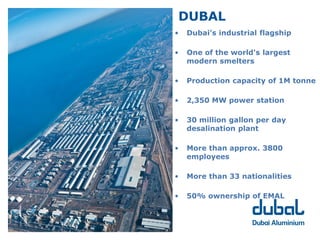
DUBAL
                                    •   Dubai’s industrial flagship
To be among the Top 5 producers
of Aluminium in the world by 2015
                                    •   One of the world's largest
                                        modern smelters

                                    •   Production capacity of 1M tonne

                                    •   2,350 MW power station

                                    •   30 million gallon per day
                                        desalination plant

                                    •   More than approx. 3800
                                        employees

                                    •   More than 33 nationalities

                                    •   50% ownership of EMAL
Ice cream breaker

We will split the audience into two groups:

Group A                     Group B

People with more than 5     People with less than 5 years
years experience in their   experience in their profession
profession


Question:What I wish I              What I think I
                            Question:
knew at the beginning       need to know to get to
that I know now             the next level
Corporate Social Responsibility
 Session: Selecting stakeholders
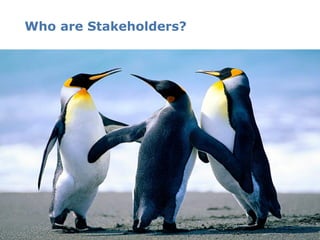
Who are Stakeholders?
A stakeholder:


can be defined as any person, or
group, who has an interest in the
project or could be potentially
affected by its delivery or outputs.
Why is stakeholder management
important?
     •Recognised as a central part of an
     organisation’s effectiveness.


     •Stakeholders play important roles as
     advocates, sponsors and partners


     •People are more willing to listen to companies
     with strong reputations. Where there is trust,
     communications are more effective.
Possible purposes (or reasons) for undertaking
stakeholder engagement include:

 To connect other people’s energies and resources
 To explore issues and come up with fresh ideas
 To network, share ideas and best practice
 To assist decision-making
 To understand local needs and wants
 To encourage local buy-in & ownership in projects
 To achieve more sustainable results
 To better understand and monitor community
  perceptions
 To establish more open communication channels, gain
  trust or work on
 To break down historic barriers.
Level of Responsibilities
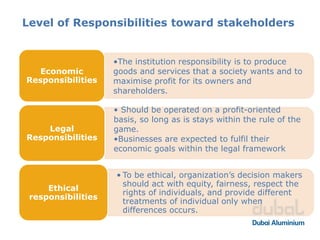
Level of Responsibilities toward stakeholders


                    •The institution responsibility is to produce
   Economic         goods and services that a society wants and to
Responsibilities    maximise profit for its owners and
                    shareholders.

                    • Should be operated on a profit-oriented
                    basis, so long as is stays within the rule of the
    Legal           game.
Responsibilities    •Businesses are expected to fulfil their
                    economic goals within the legal framework


                    • To be ethical, organization’s decision makers
                      should act with equity, fairness, respect the
     Ethical
                      rights of individuals, and provide different
 responsibilities
                      treatments of individual only when
                      differences occurs.
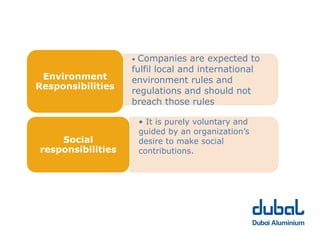
• Companies are expected to
                   fulfil local and international
 Environment       environment rules and
Responsibilities
                   regulations and should not
                   breach those rules

                       • It is purely voluntary and
                       guided by an organization’s
    Social             desire to make social
responsibilities       contributions.
Stakeholder Engagement
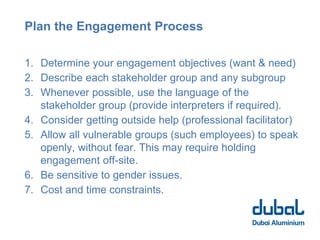
Plan the Engagement Process

1. Determine your engagement objectives (want & need)
2. Describe each stakeholder group and any subgroup
3. Whenever possible, use the language of the
   stakeholder group (provide interpreters if required).
4. Consider getting outside help (professional facilitator)
5. Allow all vulnerable groups (such employees) to speak
   openly, without fear. This may require holding
   engagement off-site.
6. Be sensitive to gender issues.
7. Cost and time constraints.
Conducting a Stakeholder Analysis
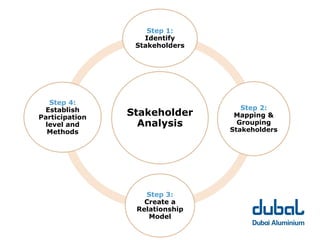
Step 1:
                   Identify
                 Stakeholders


  Step 4:
 Establish                         Step 2:
Participation
                Stakeholder      Mapping &
 level and        Analysis        Grouping
  Methods                       Stakeholders


                   Step 3:
                   Create a
                 Relationship
                    Model
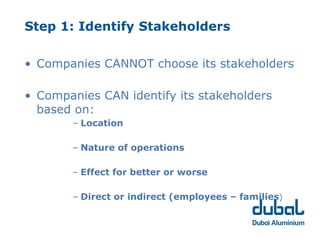
Step 1: Identify Stakeholders

• Companies CANNOT choose its stakeholders

• Companies CAN identify its stakeholders
  based on:
       – Location

       – Nature of operations

       – Effect for better or worse

       – Direct or indirect (employees – families)
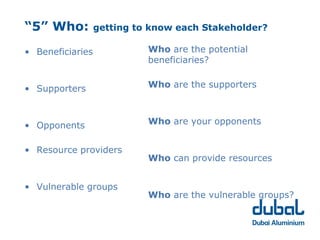
“5” Who:          getting to know each Stakeholder?

• Beneficiaries             Who are the potential
                            beneficiaries?


• Supporters                Who are the supporters


• Opponents                 Who are your opponents


• Resource providers
                            Who can provide resources


• Vulnerable groups
                            Who are the vulnerable groups?
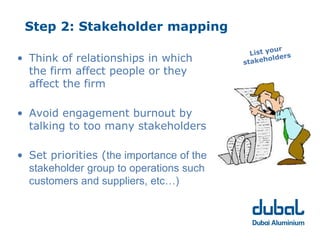
Step 2: Stakeholder mapping

• Think of relationships in which
  the firm affect people or they
  affect the firm

• Avoid engagement burnout by
  talking to too many stakeholders

• Set priorities (the importance of the
  stakeholder group to operations such
  customers and suppliers, etc…)
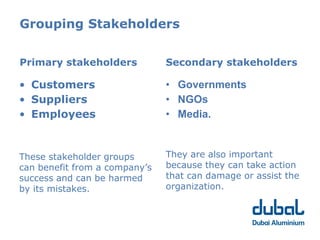
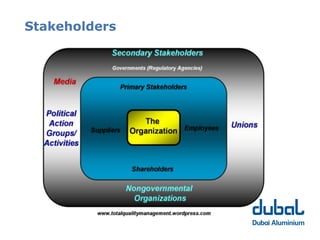
Grouping Stakeholders


Primary stakeholders           Secondary stakeholders

• Customers                    • Governments
• Suppliers                    • NGOs
• Employees                    • Media.


These stakeholder groups       They are also important
can benefit from a company’s   because they can take action
success and can be harmed      that can damage or assist the
by its mistakes.               organization.
Stakeholders
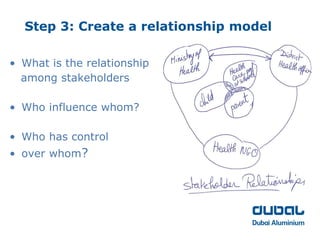
Step 3: Create a relationship model

• What is the relationship
  among stakeholders

• Who influence whom?

• Who has control
• over whom?
Step 4: Encourage Stakeholder
participation
•   Workshops
•   Questionnaires
•   Interviews
•   Role plays
•   Brainstroming discussions
•   Small group discussions
•   Surveys
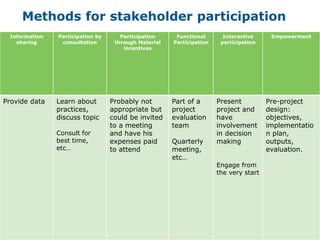
Methods for stakeholder participation
 Information   Participation by      Participation     Functional       Interactive     Empowerment
   sharing      consultation       through Material   Participation    participation
                                      incentives


Provide data   Learn about        Probably not        Part of a       Present          Pre-project
               practices,         appropriate but     project         project and      design:
               discuss topic      could be invited    evaluation      have             objectives,
                                  to a meeting        team            involvement      implementatio
               Consult for        and have his                        in decision      n plan,
               best time,         expenses paid       Quarterly       making           outputs,
               etc…               to attend           meeting,                         evaluation.
                                                      etc…
                                                                      Engage from
                                                                      the very start
Consideration
1. Maintain the Dialogue & Deliver on
Commitment
• Engage in a spirit of respect and openness for
  mutual benefit

• There can be a wide range of engagement
  approaches. There is no “one size fits all
2: what to consider when engaging
with aboriginal people?
Building mutually supportive relationships with native
people requires:

• Genuine respect for their perspective and position.

• A common problem area is Aboriginal imagery (use
  Aboriginal images to promote or market company or
  product) sometimes without the consent of affected
  Aboriginal communities.

• Out of respect for the owners of this intellectual property,
  companies need to consult with and obtain the
  permission of the owners of these images prior to using
  them.
3: Why it is important to engage with
non-governmental organizations

Partnerships with non-governmental organizations are
becoming a valued CSR strategy.

• Engaging with
   – Ethical groups
   – Non-profitable organizations
   – Unions and campaign groups
   – Environmental or social Networks
   – Innovation groups

• Check: www.bsr.org
CSR at DUBAL
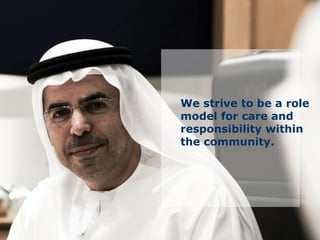
We strive to be a role
model for care and
responsibility within
the community.
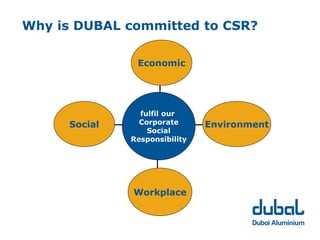
Why is DUBAL committed to CSR?

                Economic


                 fulfil our
      Social     Corporate      Environment
                   Social
               Responsibility


               Workplace
Community Engagement clip
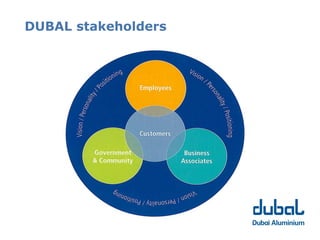
DUBAL stakeholders
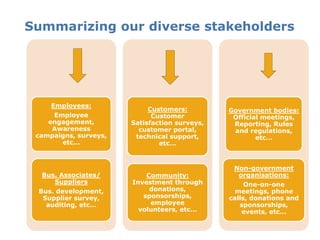
Summarizing our diverse stakeholders


     Employees:
                            Customers:         Government bodies:
     Employee                Customer           Official meetings,
    engagement,        Satisfaction surveys,    Reporting, Rules
     Awareness           customer portal,       and regulations,
 campaigns, surveys,    technical support,             etc…
       etc…                    etc…


                                                Non-government
  Bus. Associates/         Community:            organisations:
     Suppliers         Investment through           One-on-one
 Bus. development,          donations,           meetings, phone
  Supplier survey,        sponsorships,        calls, donations and
   auditing, etc…           employee              sponsorships,
                         volunteers, etc…          events, etc…
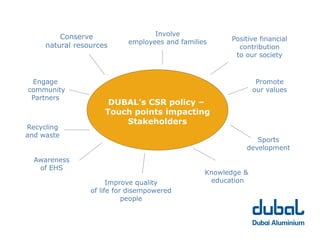
Conserve                  Involve
                            employees and families     Positive financial
     natural resources                                   contribution
                                                        to our society


 Engage                                                         Promote
community                                                      our values
 Partners
                      DUBAL’s CSR policy –
                     Touch points impacting
                         Stakeholders
Recycling
and waste
                                                              Sports
                                                           development
  Awareness
   of EHS
                                                 Knowledge &
                       Improve quality            education
                 of life for disempowered
                            people
Quick Tips
Quick tips


• Prioritize which stakeholders to engage with in terms of
  their ability to impact positively or negatively on the
  firm.

• Make sure you know in advance why and how you are
  going to engage with them.

• Consider using professional facilitators or consultants to
  assist in constructing an effective engagement process.

• Involve “champions”
Thank you,

Selecting stakeholders

  • 1.
    10th CSR Summit RaniaTayeh-Pahl Senior brand & CSR officer raniatay@dubal.ae
  • 2.
  • 3.
    DUBAL • Dubai’s industrial flagship To be among the Top 5 producers of Aluminium in the world by 2015 • One of the world's largest modern smelters • Production capacity of 1M tonne • 2,350 MW power station • 30 million gallon per day desalination plant • More than approx. 3800 employees • More than 33 nationalities • 50% ownership of EMAL
  • 4.
    Ice cream breaker Wewill split the audience into two groups: Group A Group B People with more than 5 People with less than 5 years years experience in their experience in their profession profession Question:What I wish I What I think I Question: knew at the beginning need to know to get to that I know now the next level
  • 5.
    Corporate Social Responsibility Session: Selecting stakeholders
  • 6.
  • 7.
    A stakeholder: can bedefined as any person, or group, who has an interest in the project or could be potentially affected by its delivery or outputs.
  • 8.
    Why is stakeholdermanagement important? •Recognised as a central part of an organisation’s effectiveness. •Stakeholders play important roles as advocates, sponsors and partners •People are more willing to listen to companies with strong reputations. Where there is trust, communications are more effective.
  • 9.
    Possible purposes (orreasons) for undertaking stakeholder engagement include:  To connect other people’s energies and resources  To explore issues and come up with fresh ideas  To network, share ideas and best practice  To assist decision-making  To understand local needs and wants  To encourage local buy-in & ownership in projects  To achieve more sustainable results  To better understand and monitor community perceptions  To establish more open communication channels, gain trust or work on  To break down historic barriers.
  • 10.
  • 11.
    Level of Responsibilitiestoward stakeholders •The institution responsibility is to produce Economic goods and services that a society wants and to Responsibilities maximise profit for its owners and shareholders. • Should be operated on a profit-oriented basis, so long as is stays within the rule of the Legal game. Responsibilities •Businesses are expected to fulfil their economic goals within the legal framework • To be ethical, organization’s decision makers should act with equity, fairness, respect the Ethical rights of individuals, and provide different responsibilities treatments of individual only when differences occurs.
  • 12.
    • Companies areexpected to fulfil local and international Environment environment rules and Responsibilities regulations and should not breach those rules • It is purely voluntary and guided by an organization’s Social desire to make social responsibilities contributions.
  • 13.
  • 14.
    Plan the EngagementProcess 1. Determine your engagement objectives (want & need) 2. Describe each stakeholder group and any subgroup 3. Whenever possible, use the language of the stakeholder group (provide interpreters if required). 4. Consider getting outside help (professional facilitator) 5. Allow all vulnerable groups (such employees) to speak openly, without fear. This may require holding engagement off-site. 6. Be sensitive to gender issues. 7. Cost and time constraints.
  • 15.
  • 16.
    Step 1: Identify Stakeholders Step 4: Establish Step 2: Participation Stakeholder Mapping & level and Analysis Grouping Methods Stakeholders Step 3: Create a Relationship Model
  • 17.
    Step 1: IdentifyStakeholders • Companies CANNOT choose its stakeholders • Companies CAN identify its stakeholders based on: – Location – Nature of operations – Effect for better or worse – Direct or indirect (employees – families)
  • 18.
    “5” Who: getting to know each Stakeholder? • Beneficiaries Who are the potential beneficiaries? • Supporters Who are the supporters • Opponents Who are your opponents • Resource providers Who can provide resources • Vulnerable groups Who are the vulnerable groups?
  • 19.
    Step 2: Stakeholdermapping • Think of relationships in which the firm affect people or they affect the firm • Avoid engagement burnout by talking to too many stakeholders • Set priorities (the importance of the stakeholder group to operations such customers and suppliers, etc…)
  • 20.
    Grouping Stakeholders Primary stakeholders Secondary stakeholders • Customers • Governments • Suppliers • NGOs • Employees • Media. These stakeholder groups They are also important can benefit from a company’s because they can take action success and can be harmed that can damage or assist the by its mistakes. organization.
  • 21.
  • 22.
    Step 3: Createa relationship model • What is the relationship among stakeholders • Who influence whom? • Who has control • over whom?
  • 23.
    Step 4: EncourageStakeholder participation • Workshops • Questionnaires • Interviews • Role plays • Brainstroming discussions • Small group discussions • Surveys
  • 24.
    Methods for stakeholderparticipation Information Participation by Participation Functional Interactive Empowerment sharing consultation through Material Participation participation incentives Provide data Learn about Probably not Part of a Present Pre-project practices, appropriate but project project and design: discuss topic could be invited evaluation have objectives, to a meeting team involvement implementatio Consult for and have his in decision n plan, best time, expenses paid Quarterly making outputs, etc… to attend meeting, evaluation. etc… Engage from the very start
  • 25.
  • 26.
    1. Maintain theDialogue & Deliver on Commitment • Engage in a spirit of respect and openness for mutual benefit • There can be a wide range of engagement approaches. There is no “one size fits all
  • 27.
    2: what toconsider when engaging with aboriginal people? Building mutually supportive relationships with native people requires: • Genuine respect for their perspective and position. • A common problem area is Aboriginal imagery (use Aboriginal images to promote or market company or product) sometimes without the consent of affected Aboriginal communities. • Out of respect for the owners of this intellectual property, companies need to consult with and obtain the permission of the owners of these images prior to using them.
  • 28.
    3: Why itis important to engage with non-governmental organizations Partnerships with non-governmental organizations are becoming a valued CSR strategy. • Engaging with – Ethical groups – Non-profitable organizations – Unions and campaign groups – Environmental or social Networks – Innovation groups • Check: www.bsr.org
  • 29.
  • 30.
    We strive tobe a role model for care and responsibility within the community.
  • 31.
    Why is DUBALcommitted to CSR? Economic fulfil our Social Corporate Environment Social Responsibility Workplace
  • 32.
  • 33.
  • 34.
    Summarizing our diversestakeholders Employees: Customers: Government bodies: Employee Customer Official meetings, engagement, Satisfaction surveys, Reporting, Rules Awareness customer portal, and regulations, campaigns, surveys, technical support, etc… etc… etc… Non-government Bus. Associates/ Community: organisations: Suppliers Investment through One-on-one Bus. development, donations, meetings, phone Supplier survey, sponsorships, calls, donations and auditing, etc… employee sponsorships, volunteers, etc… events, etc…
  • 35.
    Conserve Involve employees and families Positive financial natural resources contribution to our society Engage Promote community our values Partners DUBAL’s CSR policy – Touch points impacting Stakeholders Recycling and waste Sports development Awareness of EHS Knowledge & Improve quality education of life for disempowered people
  • 36.
  • 37.
    Quick tips • Prioritizewhich stakeholders to engage with in terms of their ability to impact positively or negatively on the firm. • Make sure you know in advance why and how you are going to engage with them. • Consider using professional facilitators or consultants to assist in constructing an effective engagement process. • Involve “champions”
  • 38.