Why do you think we call the
break from one shot to another
the cut?
Can you think of examples for other
types of transitions between shots besides
a straight cut?
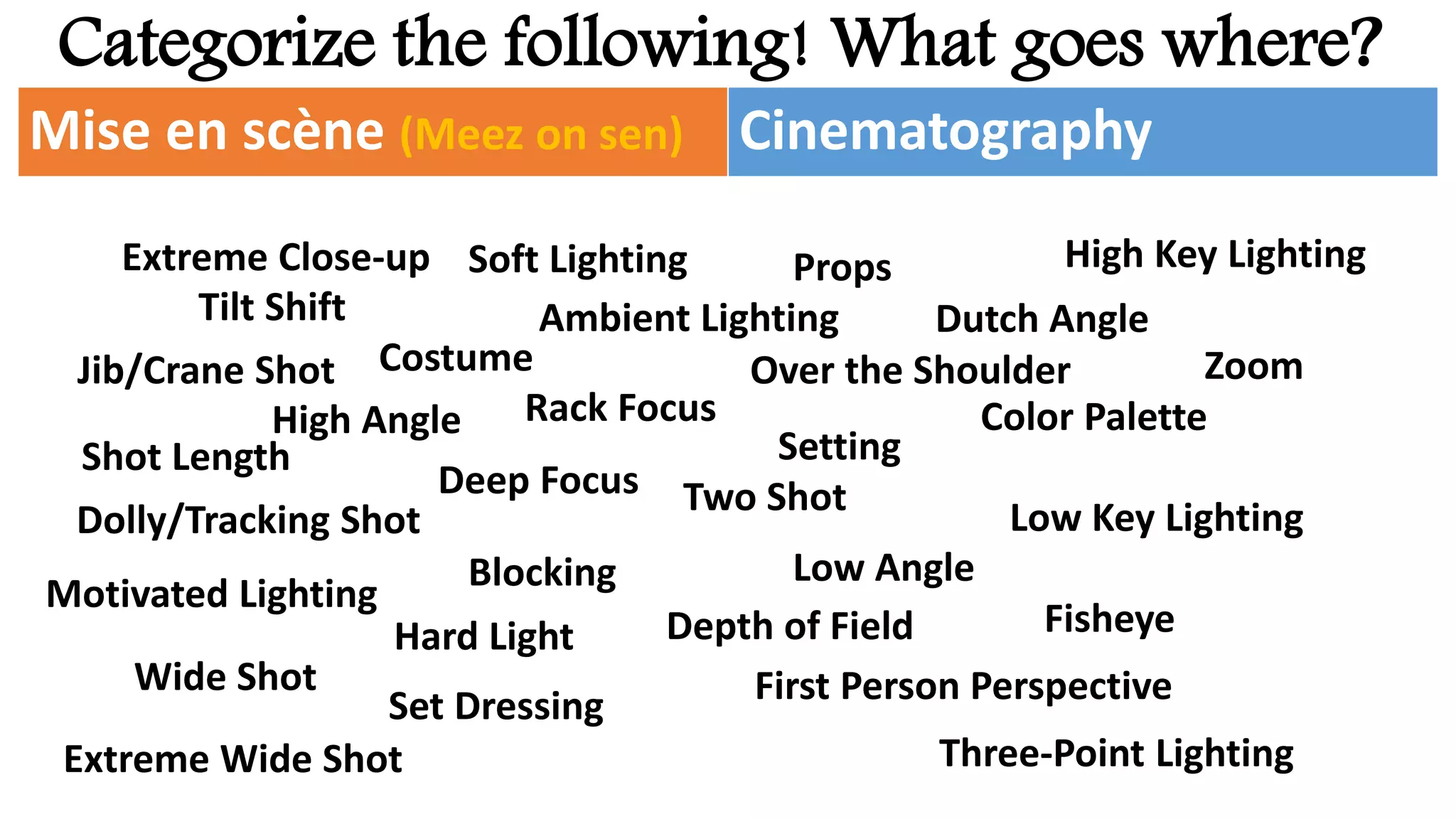
Categorize the following! What goes where?
Mise en scène (Meez on sen) Cinematography
High Angle
Costume
Setting
Set Dressing
Props
Hard Light
Three-Point Lighting
Deep Focus
Tilt Shift
Low Key Lighting
Soft Lighting
Ambient Lighting
Motivated Lighting
Color Palette
Blocking
Shot Length
Wide Shot
Two Shot
Over the Shoulder
Extreme Close-up
Low Angle
First Person Perspective
Fisheye
Dutch Angle
Depth of Field
Rack Focus
High Key Lighting
ZoomJib/Crane Shot
Dolly/Tracking Shot
Extreme Wide Shot
Writing About Mise en Scène
and Cinematography–
tinyurl.com/misecine
njames@uplifteducation.org
Pick a movie + essay combo and identify 5-10
qualities for both categories of focus.
Your notes can be short and to the point.
Google search and watch the following:
Watch Editing - How to Speak Movie,
Part 3
It should be the first result on blip.tv
Editing shots together creates a flow
and energy (the editing pace).
Editors arrange the shots into scenes and
scenes into the sequence.
The editing pace, or rhythm, is
determined by the length of shots
and the amount of cuts.
Continuity Editing
Creating continuity is creating
the illusion of seamlessness.
Time and space seem uninterrupted.
Actions flow smoothly from shot
to shot.
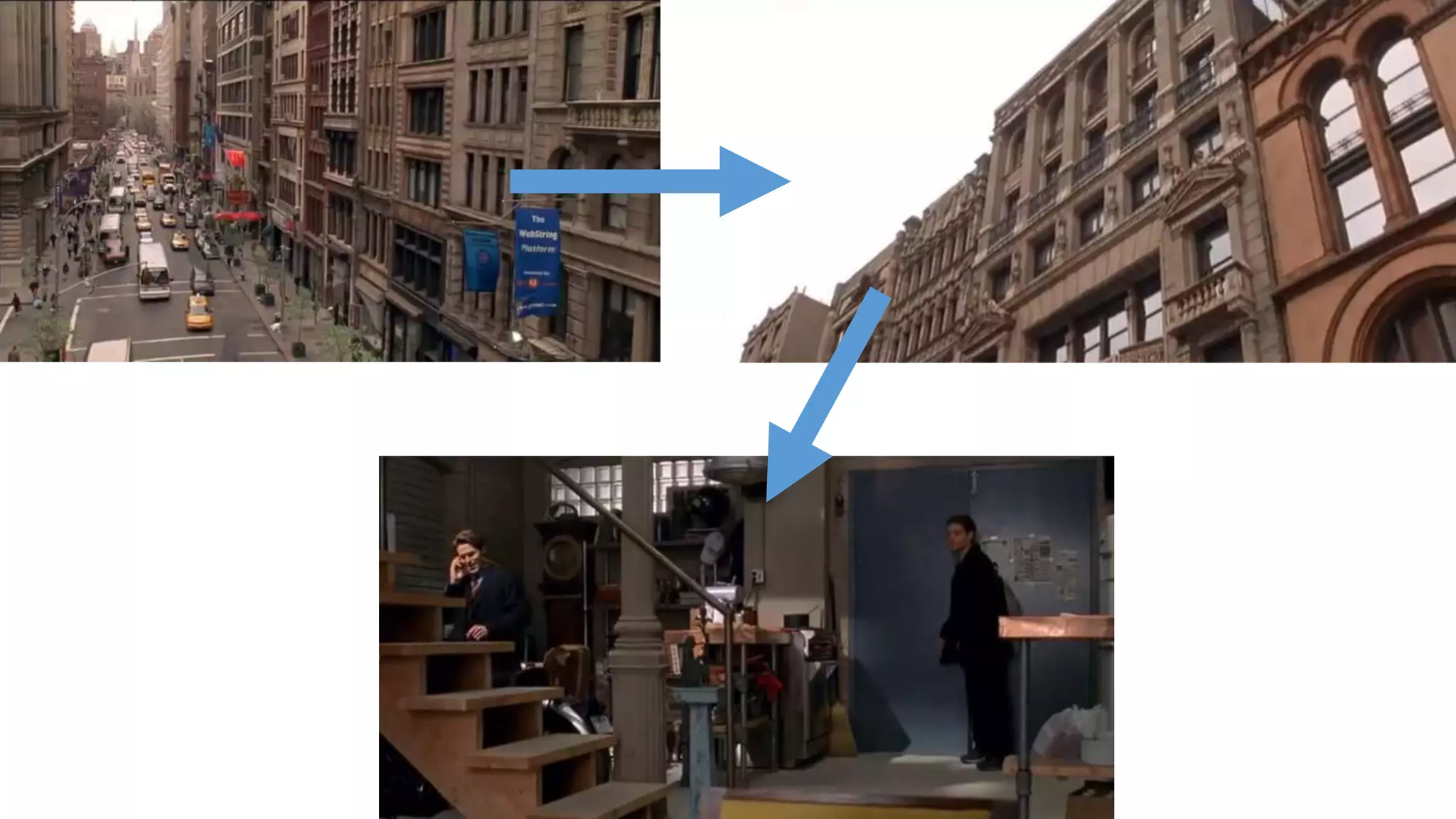
Establishing Shot
The first few shots in a scene are
usually establishing shots.
They introduces us to location and help our minds
place actors/set pieces in relation to each other.
These shots are usually wide and they help smooth out a
scene by showing the viewer where the action will be taking
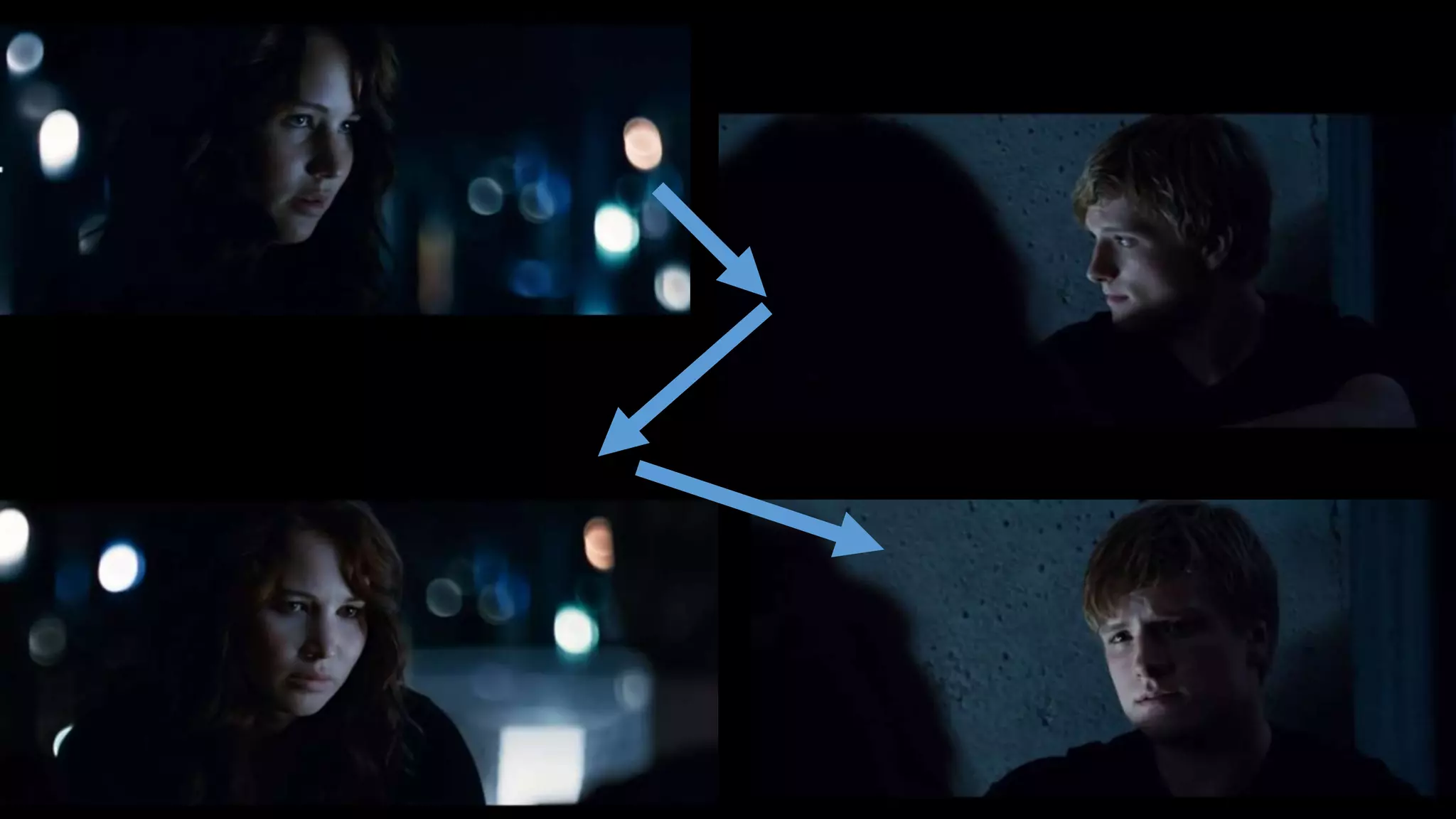
Shot/Reverse Shot
This editing pattern is a fundamental
part of continuity editing.
This technique is used for a person-to-person
exchange or a person-to-object exchange.
Cut from the person speaking to the person or being addressed.
Cut from the person reacting to the object they observe.
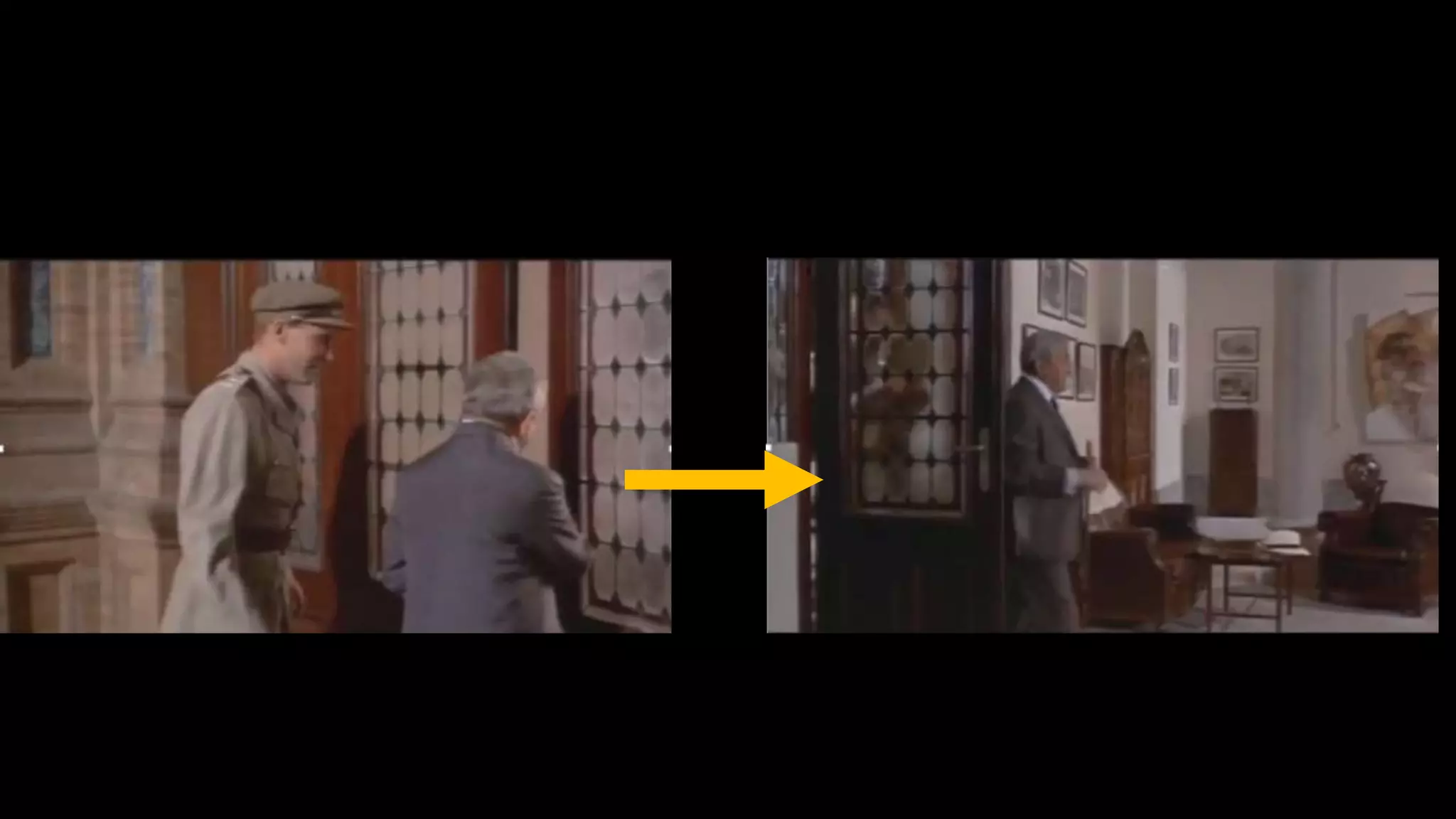
Match on Action
This editing technique matches the last
action/movement at the end of one shot to connect
with the first action/movement in the next shot.
This places the cut on the action.
Examples: a kick begins cut to the kick lands
a door begins to opens cut to door finishes
opening
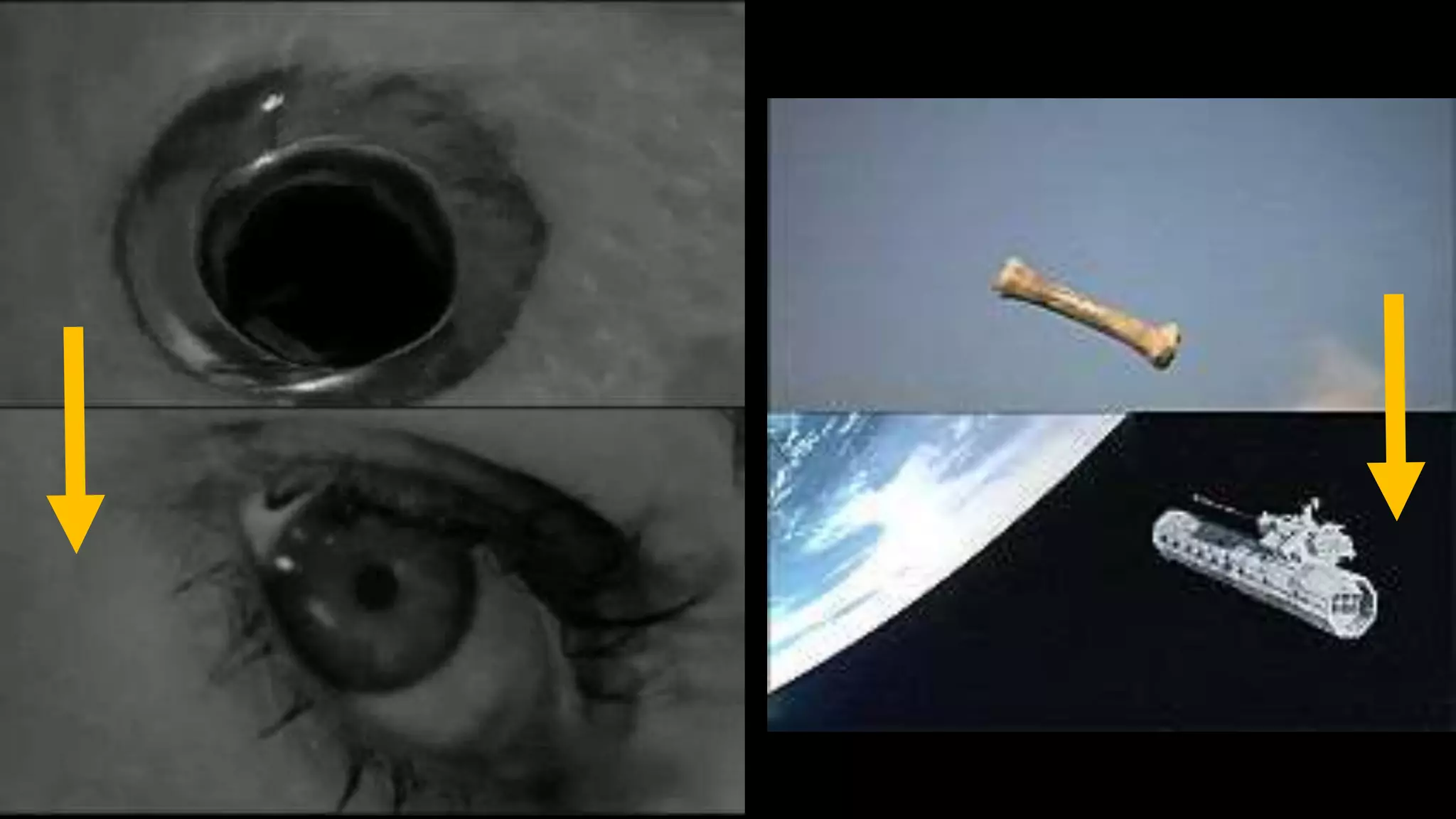
Graphic Match
This occurs when the shapes, colors and/or overall
movement of two shots match in composition,
either within a scene or, especially, across a
transition between two scenes.
This creates a smooth visual transition and often
compares two different images in an interesting
way.
Parallel Editing
Parallel editing (also known as cross
cutting) alternates between two or
more scenes.
It is often used to show simultaneous action
occurring in two locations (the editor can combine
scenes from different times as well).
It can be used to compare/contrast two or more events.
Search and watch on YouTube:
“Crosscutting Inception”
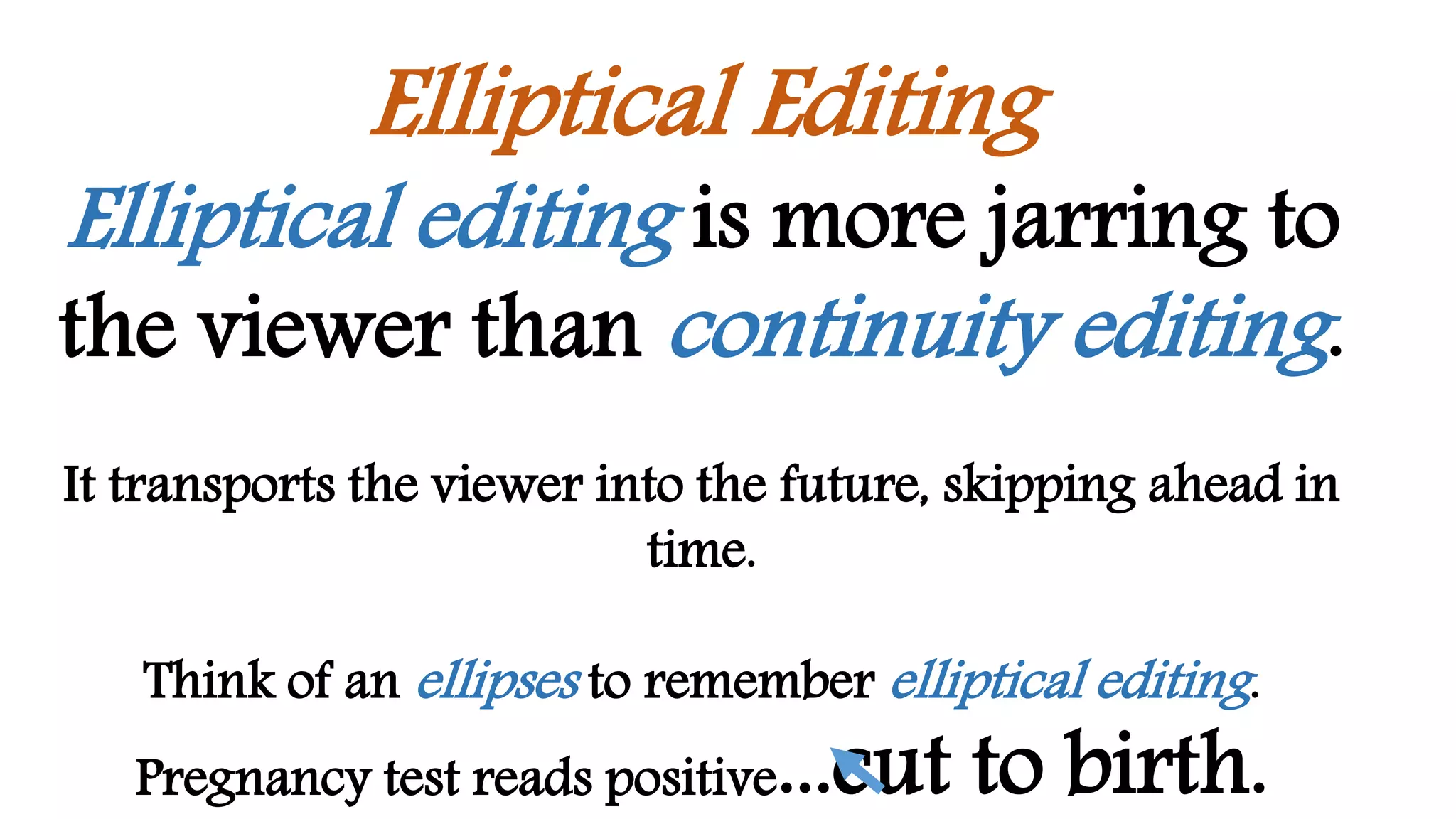
Elliptical Editing
Elliptical editing is more jarring to
the viewer than continuity editing.
It transports the viewer into the future, skipping ahead in
time.
Think of an ellipses to remember elliptical editing.
Pregnancy test reads positive...cut to birth.
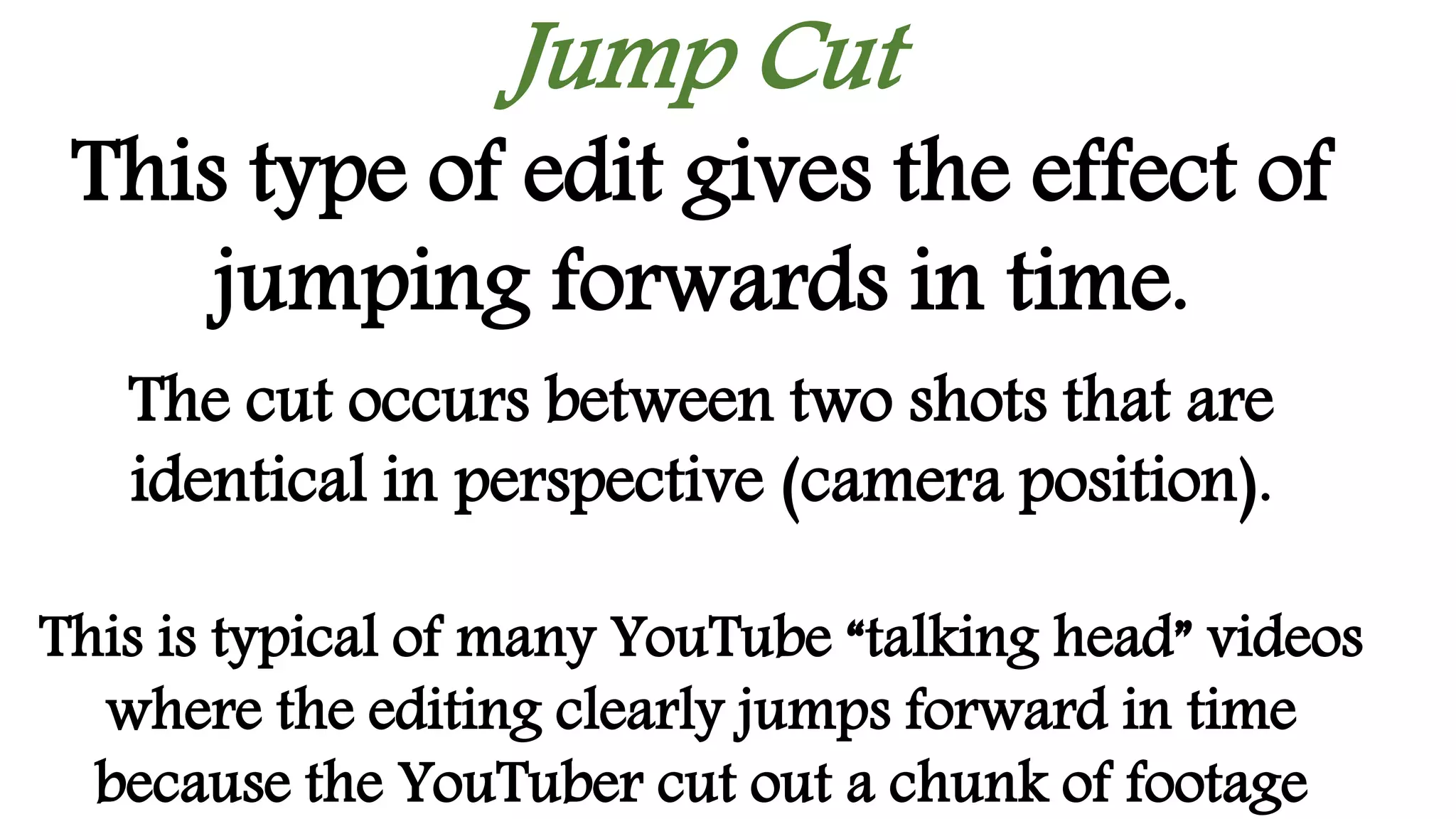
Jump Cut
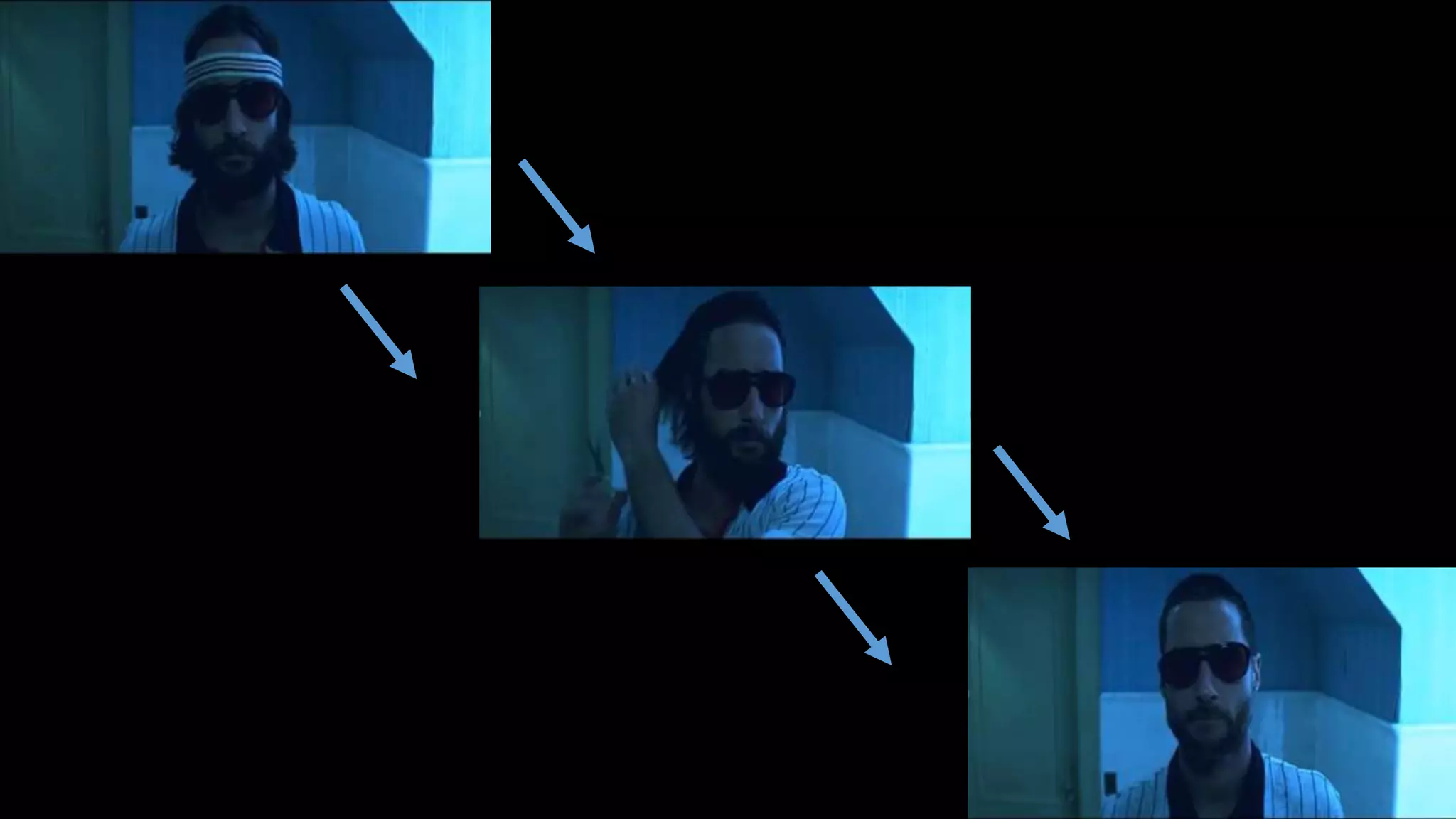
This type of edit gives the effect of
jumping forwards in time.
The cut occurs between two shots that are
identical in perspective (camera position).
This is typical of many YouTube “talking head” videos
where the editing clearly jumps forward in time
because the YouTuber cut out a chunk of footage
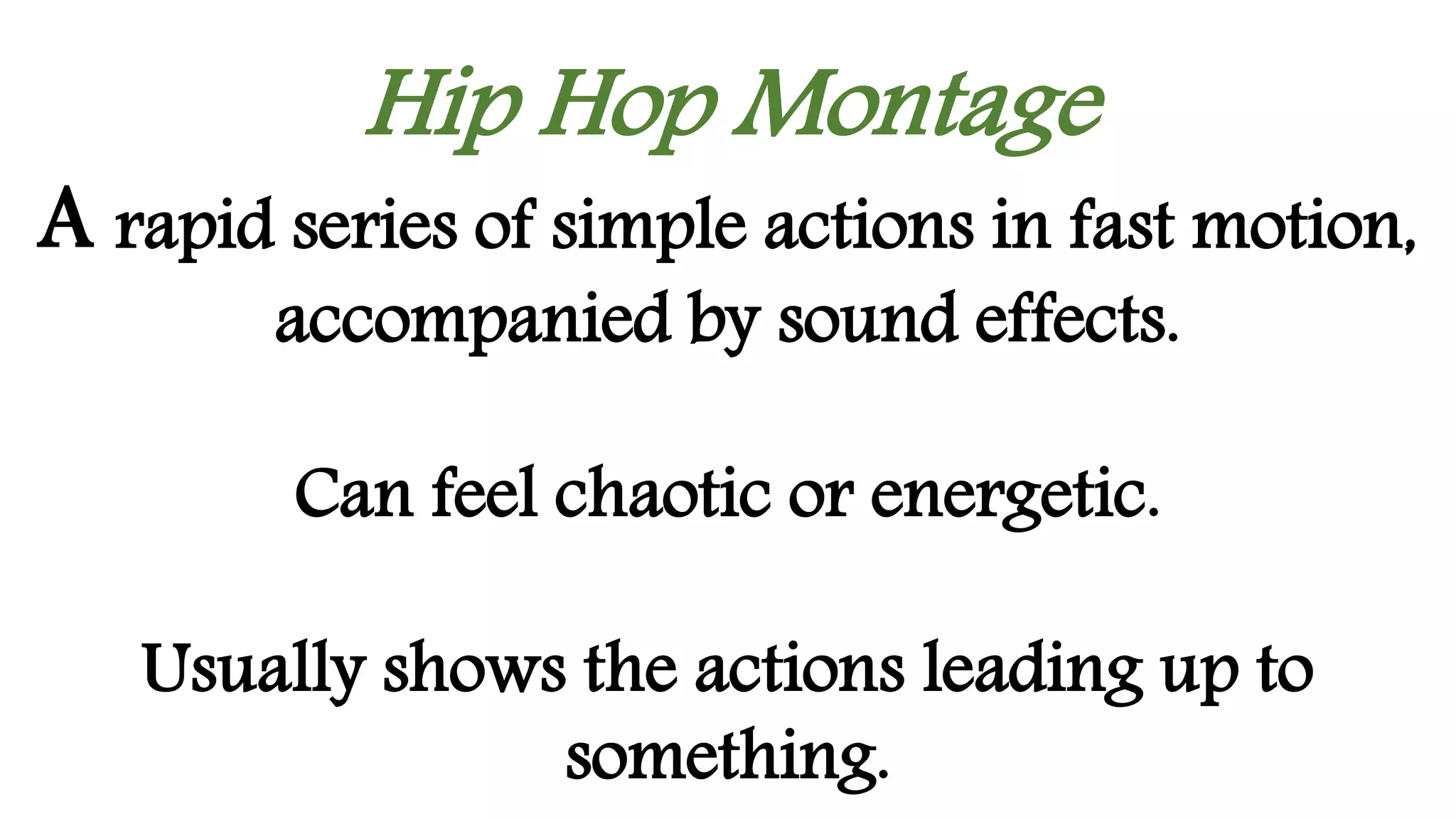
Hip Hop Montage
A rapid series of simple actions in fast motion,
accompanied by sound effects.
Can feel chaotic or energetic.
Usually shows the actions leading up to
something.
Search and the following on
YouTube:
“Hot Fuzz Hip Hop Montage”
Writing about the Editing–
tinyurl.com/writeaboutedit
Take 5 minutes to watch the intro to Slumdog Millionaire.
Find an example of: Establishing Shot,
Shot/Reverse Shot, Match on Action,
& Parallel Editing
B. Describe the edit.
C. Why do you think the director and editor chose
to use this technique. For what effect?
Writing about the Editing–
tinyurl.com/writeaboutedit
njames@uplifteducation.org

Av lesson4 internet_friendly

  • 1.
    Why do youthink we call the break from one shot to another the cut? Can you think of examples for other types of transitions between shots besides a straight cut?
  • 2.
    Categorize the following!What goes where? Mise en scène (Meez on sen) Cinematography High Angle Costume Setting Set Dressing Props Hard Light Three-Point Lighting Deep Focus Tilt Shift Low Key Lighting Soft Lighting Ambient Lighting Motivated Lighting Color Palette Blocking Shot Length Wide Shot Two Shot Over the Shoulder Extreme Close-up Low Angle First Person Perspective Fisheye Dutch Angle Depth of Field Rack Focus High Key Lighting ZoomJib/Crane Shot Dolly/Tracking Shot Extreme Wide Shot
  • 3.
    Writing About Miseen Scène and Cinematography– tinyurl.com/misecine njames@uplifteducation.org Pick a movie + essay combo and identify 5-10 qualities for both categories of focus. Your notes can be short and to the point.
  • 4.
    Google search andwatch the following: Watch Editing - How to Speak Movie, Part 3 It should be the first result on blip.tv
  • 5.
    Editing shots togethercreates a flow and energy (the editing pace). Editors arrange the shots into scenes and scenes into the sequence. The editing pace, or rhythm, is determined by the length of shots and the amount of cuts.
  • 6.
    Continuity Editing Creating continuityis creating the illusion of seamlessness. Time and space seem uninterrupted. Actions flow smoothly from shot to shot.
  • 7.
    Establishing Shot The firstfew shots in a scene are usually establishing shots. They introduces us to location and help our minds place actors/set pieces in relation to each other. These shots are usually wide and they help smooth out a scene by showing the viewer where the action will be taking
  • 9.
    Shot/Reverse Shot This editingpattern is a fundamental part of continuity editing. This technique is used for a person-to-person exchange or a person-to-object exchange. Cut from the person speaking to the person or being addressed. Cut from the person reacting to the object they observe.
  • 11.
    Match on Action Thisediting technique matches the last action/movement at the end of one shot to connect with the first action/movement in the next shot. This places the cut on the action. Examples: a kick begins cut to the kick lands a door begins to opens cut to door finishes opening
  • 13.
    Graphic Match This occurswhen the shapes, colors and/or overall movement of two shots match in composition, either within a scene or, especially, across a transition between two scenes. This creates a smooth visual transition and often compares two different images in an interesting way.
  • 15.
    Parallel Editing Parallel editing(also known as cross cutting) alternates between two or more scenes. It is often used to show simultaneous action occurring in two locations (the editor can combine scenes from different times as well). It can be used to compare/contrast two or more events.
  • 16.
    Search and watchon YouTube: “Crosscutting Inception”
  • 17.
    Elliptical Editing Elliptical editingis more jarring to the viewer than continuity editing. It transports the viewer into the future, skipping ahead in time. Think of an ellipses to remember elliptical editing. Pregnancy test reads positive...cut to birth.
  • 18.
    Jump Cut This typeof edit gives the effect of jumping forwards in time. The cut occurs between two shots that are identical in perspective (camera position). This is typical of many YouTube “talking head” videos where the editing clearly jumps forward in time because the YouTuber cut out a chunk of footage
  • 20.
    Hip Hop Montage Arapid series of simple actions in fast motion, accompanied by sound effects. Can feel chaotic or energetic. Usually shows the actions leading up to something.
  • 21.
    Search and thefollowing on YouTube: “Hot Fuzz Hip Hop Montage”
  • 22.
    Writing about theEditing– tinyurl.com/writeaboutedit Take 5 minutes to watch the intro to Slumdog Millionaire. Find an example of: Establishing Shot, Shot/Reverse Shot, Match on Action, & Parallel Editing B. Describe the edit. C. Why do you think the director and editor chose to use this technique. For what effect?
  • 23.
    Writing about theEditing– tinyurl.com/writeaboutedit njames@uplifteducation.org