Autosomal Dominant Diseases
Ekbal Mohamed Abo-Hashem-MD
Professor of Clinical Pathology Mansoura
University-Egypt
An individual with an autosomal
dominant disease may have
inherited an abnormal allele from an
affected parent, or alternatively the
mutant allele may have risen de
novo as a new mutation during
gametogenesis in an unaffected
parent.
AUTOSOMAL DOMINANT
DISEASES
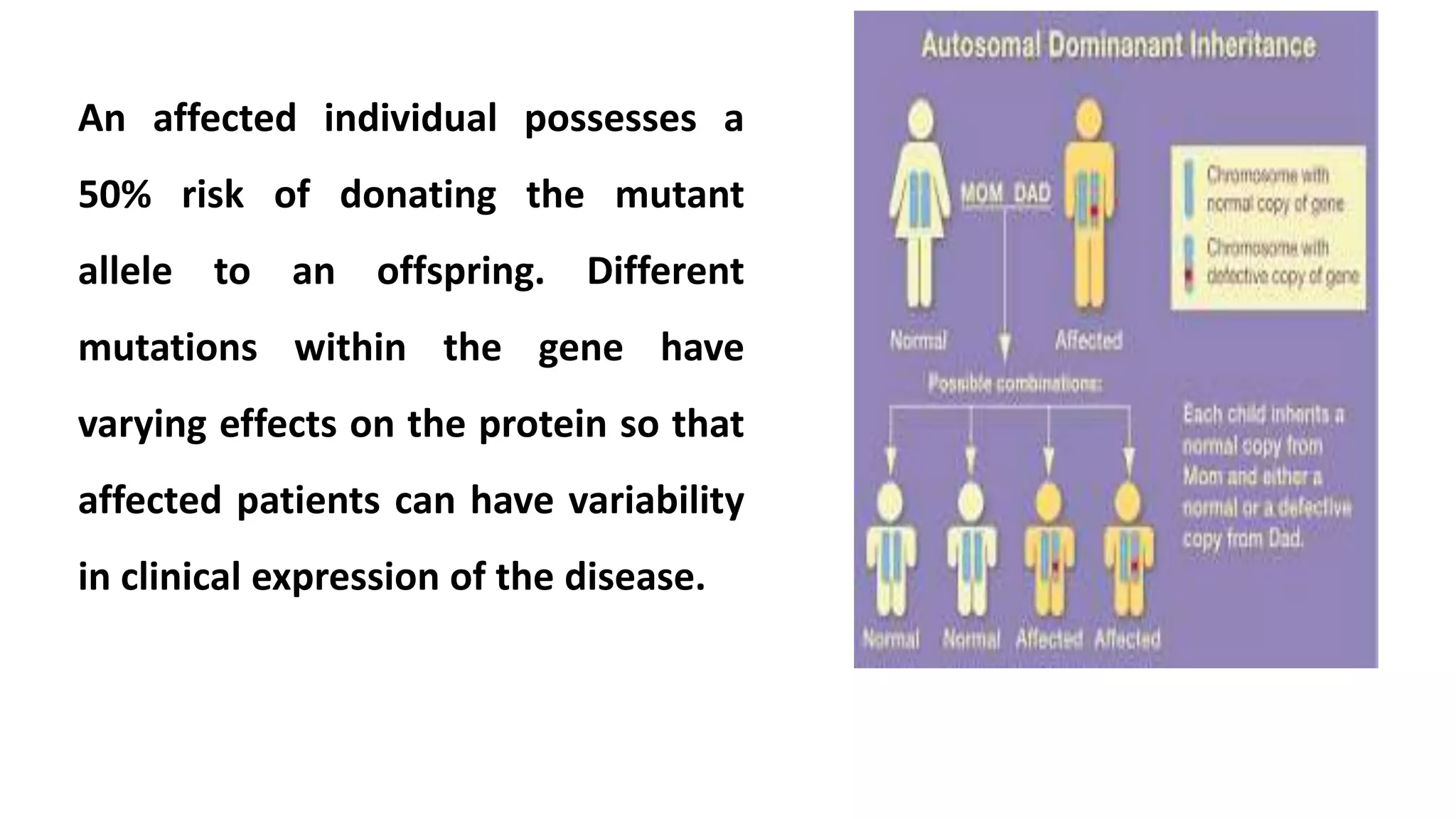
An affected individual possesses a
50% risk of donating the mutant
allele to an offspring. Different
mutations within the gene have
varying effects on the protein so that
affected patients can have variability
in clinical expression of the disease.
In some instances, known mutant gene carriers
have no clinical symptoms of the disease, a
phenomenon referred to as reduced
penetrance, yet possess a 50% chance of having
an affected child. Differences in phenotypic
expression of the disease are most likely
explained by the effect of other genes (modifier
genes) and/or environmental influences.
Autosomal Dominant Disorders include :
-Familial polyposis coli
-von Willibrand disease
-Polycystic kidney disease
-Acute intermittent porphyria
-*Achondroplasia
-*Charcot-Marie-Tooth disease
-*Huntington disease
-Neurofibromatosis
-Myotonic dystrophy
-Familial hypercholesterolemia
-Hereditery spherocytosis
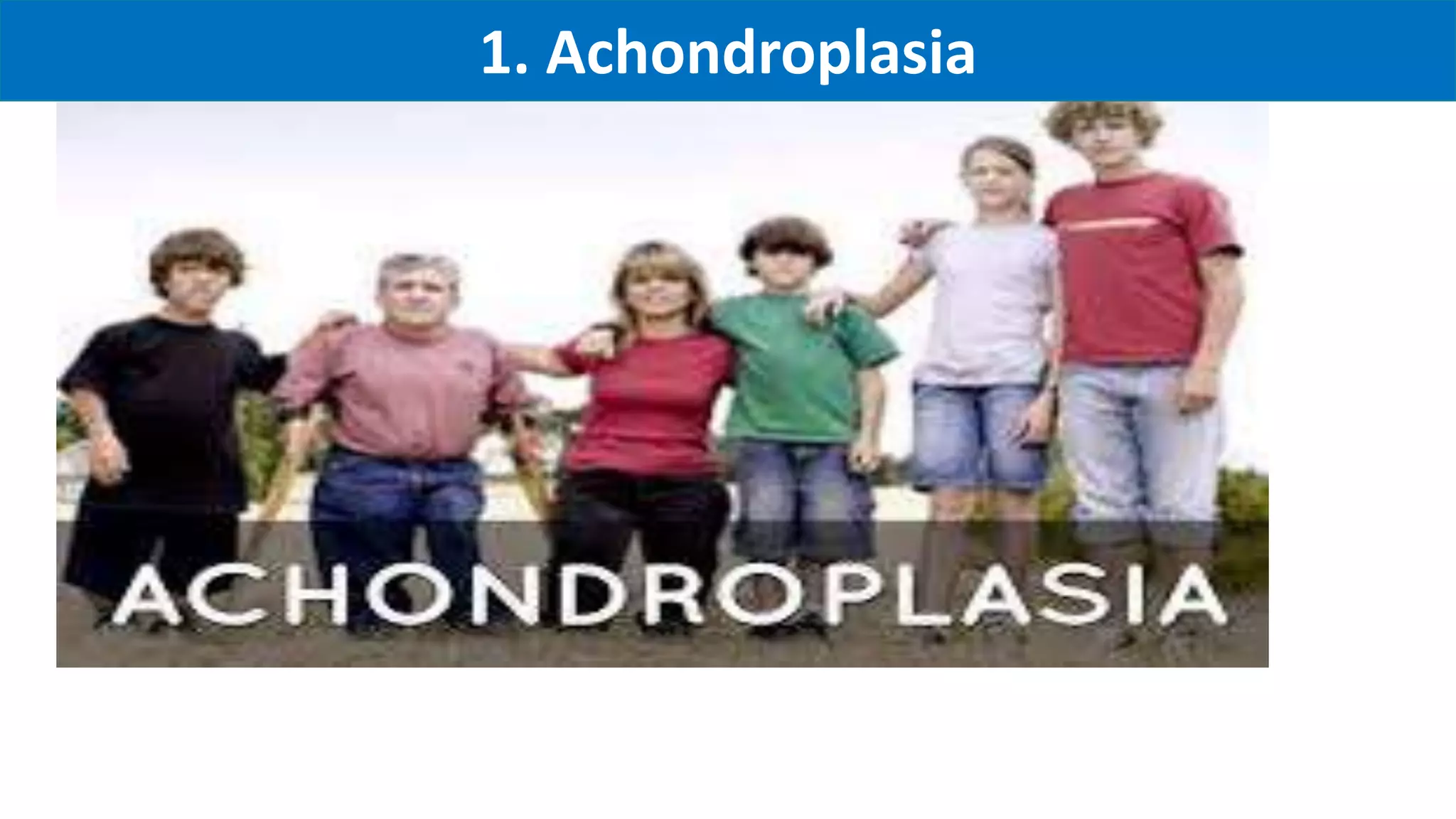
1. Achondroplasia
Achondroplasia is the most common form of human genetic
dwarfism and is inherited as an autosomal dominant trait with
complete penetrance.
It is characterized by short-limbed dwarfism (rhizomelic form),
macrocephaly, frontal and biparietal bossing, bowing of the lower
extremities, and normal intelligence.
Infants with this disease can die within the first year of life from
central apnea caused by compression at the craniocervical
junction; homozygous disease is most often lethal.
a. Phenotype
Children undergoing surgical decompression of the craniocervical
junction have decreased mortality and demonstrate improvement
in neurological function.
The mean and standard deviation adult height is (131 -+5.6) cm for
men and (124_ +5.9) cm for women.
The life expectancy is about 10 years less than that for the general
population.
During the first 5 years of life, affected children are at risk of death
from compression of the brainstem and/or the upper cervical
spinal cord. Deaths in adults between 25 and 54 years of age are
most often attributed to cardiovascular problems.
Achondroplasia has an incidence of about 0.5 to 1.5 per 10,000
births and has been reported in individuals from different races
and ethnic groups.
More than 90% of patients are born to parents of normal height.
These patients represent sporadic cases arising from new
mutations, a phenomenon associated with advanced paternal age.
b. Mutation
This "paternal effect" has been thought to occur because of lifelong
spermatogonial stem cell divisions and thus an increase in
production of mutant sperm as the male grows older.
However, recent data generated from examining sperm DNA from
donors of different ages did not illustrate an exponential increase
in mutation with age, indicating that sperm mutation frequency
cannot explain an effect of paternal age in achondroplasia.
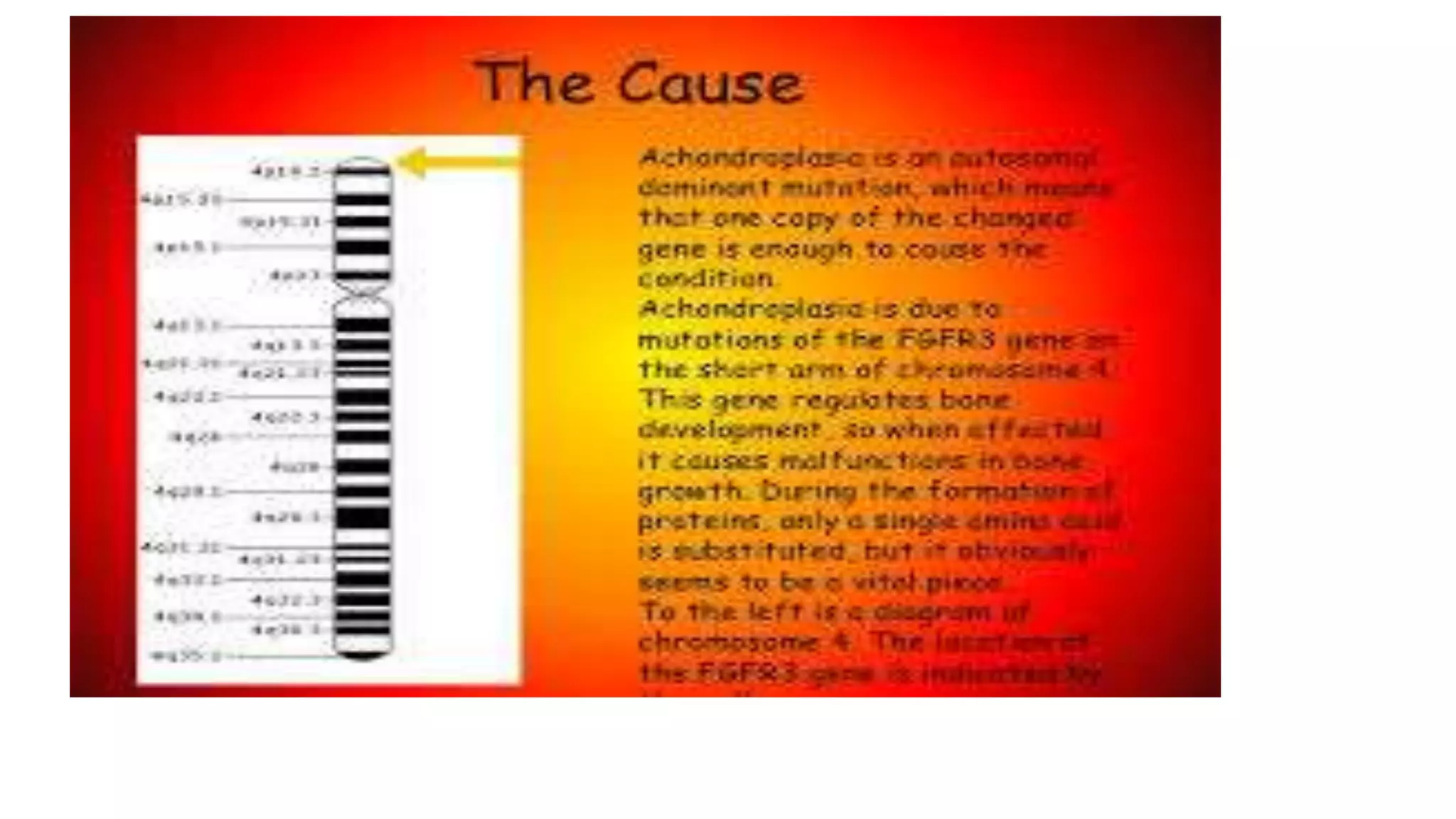
The gene for achondroplasia is mapped to the telomeric region of
chromosome 4p (4p16.3).
The fibroblast growth factor receptor 3 gene (FGFR3), mapped to
this region and previously considered as a candidate gene for
Huntington's disease (HD), is known as a candidate gene for
achondroplasia and is reported to have mutations in patients with
achondroplasia.
c. FGFR3 Gene and Protein
FGFR3 is a tyrosine kinase receptor, which when bound to 1 of 23
fibroblast growth factors (FGFs) coupled with heparin sulfate-
bearing proteoglycans on the cell surface, induces dimerization of
receptor monomers, activates tyrosine kinase activity, and
promotes phosphorylation of key tyrosine residues in the
cytoplasmic domain, which in turn induces multiple signaling
pathways .
The target genes for FGFR3 are not well characterized, but FGFR3
is thought to negatively regulate chondrocyte proliferation and
differentiation.
The FGFR3 protein product, FGFR3,
contains three extracellular
immunoglobulin-like domains, a
single transmembrane domain,
and an intracellular tyrosine kinase
domain.
The primary mutation in achondroplasia results in a defect in
internalization and degradation of the mutant receptor.
Thus it is retained on the cell surface and has uncontrolled and
prolonged activation in chondrocytes. Hence, chondrocyte
maturation and terminal differentiation are inhibited.
d. Gene Mutation
In the original report identifying the FGFR3 gene as the cause of
achondroplasia, most patients had a G-to-A transition mutation at
nucleotide 1138 (G1138A), and the only patient that did not have
this mutation instead had a G-to-C transversion mutation at the
same position (G1138C).
Both mutations result in a glycine-to-arginine substitution in the
transmembrane domain of FGFR3 at codon 380 .
Since >98% of FGFR3 mutations
causing achondroplasia are G
1138A, and about I % are G
1138C, DNA testing includes
direct mutation analysis for both
mutations.
Testing can be performed postnatally to confirm the diagnosis of
achondroplasia.
In addition, prenatal DNA testing may be requested by unaffected
couples with an affected child representing a sporadic case
Prenatal DNA testing can be requested by these couples who have
a 25% chance of having a child homozygous for this condition
e. DNA Testing
2. Charcot-Marie-Tooth Disease
Charcot-Marie-Tooth (CMT) disease,
sometimes referred to as hereditary motor
and sensory neuropathies (HMSN), refers to a
genetically heterogeneous group of
hereditary neuropathies characterized by
chronic motor and sensory polyneuropathy
and demonstrating all patterns of mendelian
inheritance.
a. Phenotype
The most common form of CMT, type l A, is one of the most
common autosomal dominant disorders in man, with an estimated
incidence of 1 in 2500.
This disease is characterized by progressive distal muscle atrophy
and weakness, depressed or absent deep tendon reflexes, high-
arched feet, decreased nerve conduction velocity (generally <35 to
40 m/s), and nerve demyelination as visualized on biopsy
specimens.
The age of onset is within the first decade of life in 50% of patients
and before the age of 20 in 70% of patients. However, despite a
common genetic abnormality, phenotypic manifestations of the
disease are variable even within the same family, suggesting the
influence of environmental factors or modifier genes at other loci.
The gene was mapped to the short arm of chromosome 17 and
specifically localized to 17p11.2-p12 (short arm of chromosome 17
between banding regions 11.2 and 12).
Further, some DNA markers in this region detected a duplication in
the DNA of affected individuals within families and in unrelated
CMT patients.
b. Gene and Mutation
The peripheral myelin protein gene, PMP22, was
identified as a candidate gene for CMT type l A in 1992.
PMP22 is contained within a 1.5Mb monomer unit that
is flanked by several low-copy repeat sequences. A
duplication of the gene is associated with disease and
results from unequal meiotic crossing over caused by
misalignment of homologous sequences.
A duplication of PMP22 results in an extra copy of the gene (altered
gene dosage) and overexpression of the PMP22 protein, which is
considered the causative event for disease.
Interestingly, patients with trisomy 17p (three copies of the short
arm of chromosome 17), who would have an altered PMP22 copy
number, also have clinical features consistent with CMT .
PMP22 is a 160-amino acid transmembrane glycoprotein that
contains four transmembrane hydrophobic regions and two
extracellular domains with the amino and C termini exposed to the
cytosol.
It is predominantly localized in the compact portion of myelin.
c. PMP22 Protein
PMP22 is predominantly expressed in myelinating Schwann cells of
the peripheral nervous system where it is important in myelination
and myelin stability and acts as a negative modulator of Schwann
cell growth.
From studies on transgenic mice, it has been proposed that when
overexpressed, PMP22 accumulates in a late-Golgi and/or plasma-
membrane compartment and uncouples myelin assembly from the
underlying program of Schwann cell differentiation
The PMP22 gene duplication associated with CMT type IA can be
detected by use of Southern blot analysis, fluorescence in situ
hybridization (FISH) on interphase cells, or PCR.
d. DNA Testing
3. Huntington's Disease
HD is an autosomal dominant, late-onset neurodegenerative
disorder with an incidence of about 1 in 10,000 in most populations
of European origin. The disease is progressive and characterized by
frequent involuntary, rapid movements (chorea) and dementia
with a median survival time of 15 to 18 years after the onset of
symptoms.
a. Phenotype
The mean age of onset is in the decade between 35 and 44 years,
but approximately 25% of patients first display symptoms after the
age of 50, and about 10% of patients have juvenile HD with the age
of onset before 20 years.. In the first few years of the disease,
symptoms include mood disturbances, cognitive deficits,
clumsiness, and impairment of voluntary movement.
The next stage of the disease is associated with slurred speech
(dysarthria), hyperreflexia, chorea, gait abnormalities, and
behavioral disturbances including intermittent explosiveness,
apathy, aggression, alcohol abuse, sexual dysfunction and
deviations, and increased appetite.
As the disease advances, bradykinesia, rigidity, dementia, dystonia,
and dysphagia are present. In the late stages of HD, weight loss,
sleep disturbances, and incontinence occur.
A linkage between DNA marker D4Sl0 on the
short arm of chromosome 4 and HD was reported.
Subsequently, more DNA markers were identified,
and the region of the genome containing the HD
gene was narrowed to 4p16.3 (short arm of
chromosome 4 band 16.3). 10 years after its initial
localization, the HD gene, IT15, was cloned.
b. Gene Mutation, CAG Trinucleotide Repeat Expansion
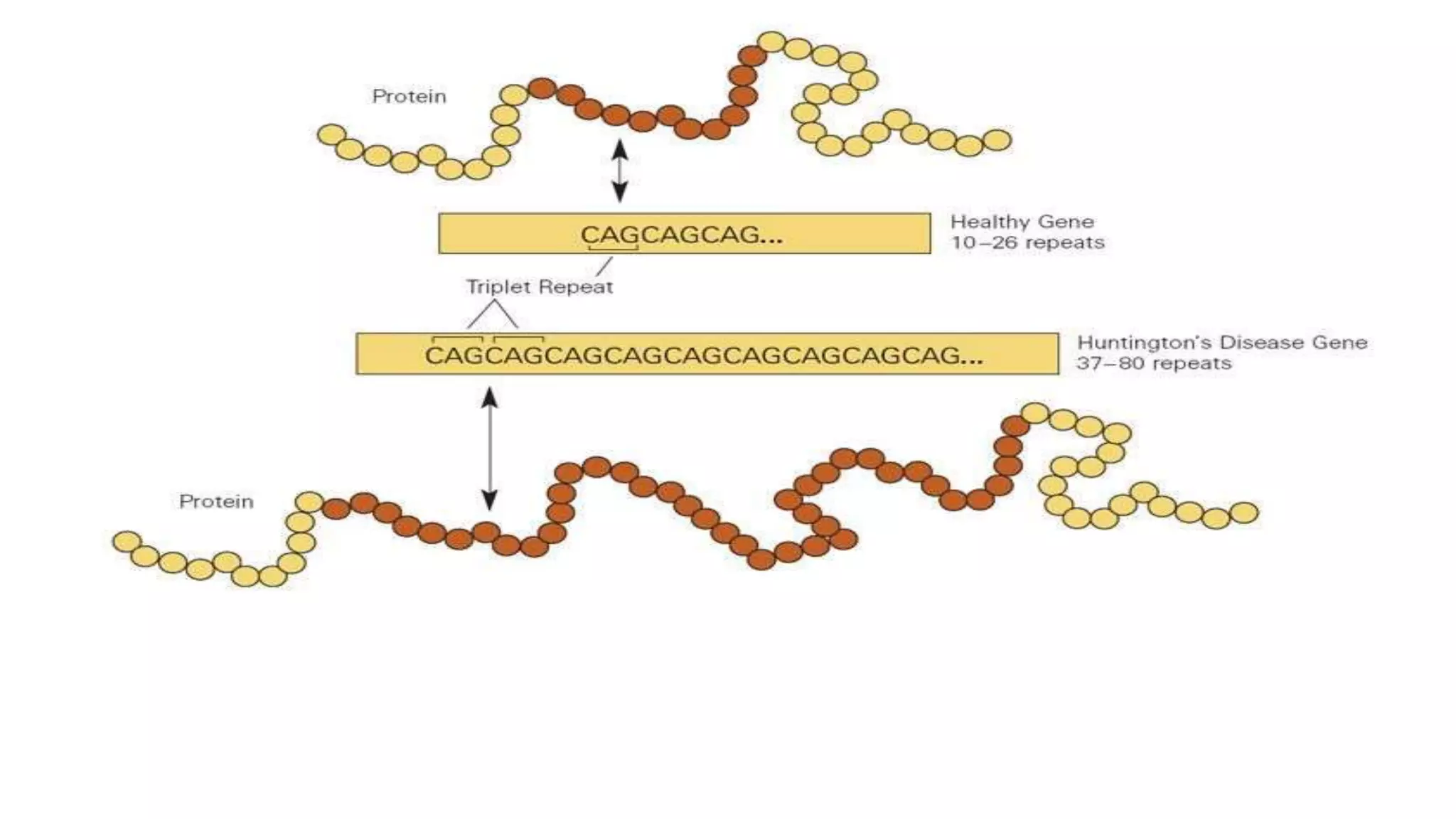
The molecular basis of HD was determined to be expansion of a
glutamine-encoding CAG trinucleotide repeat and was
subsequently confirmed in a worldwide study by the identification
of expanded CAG repeat alleles in HD patients.
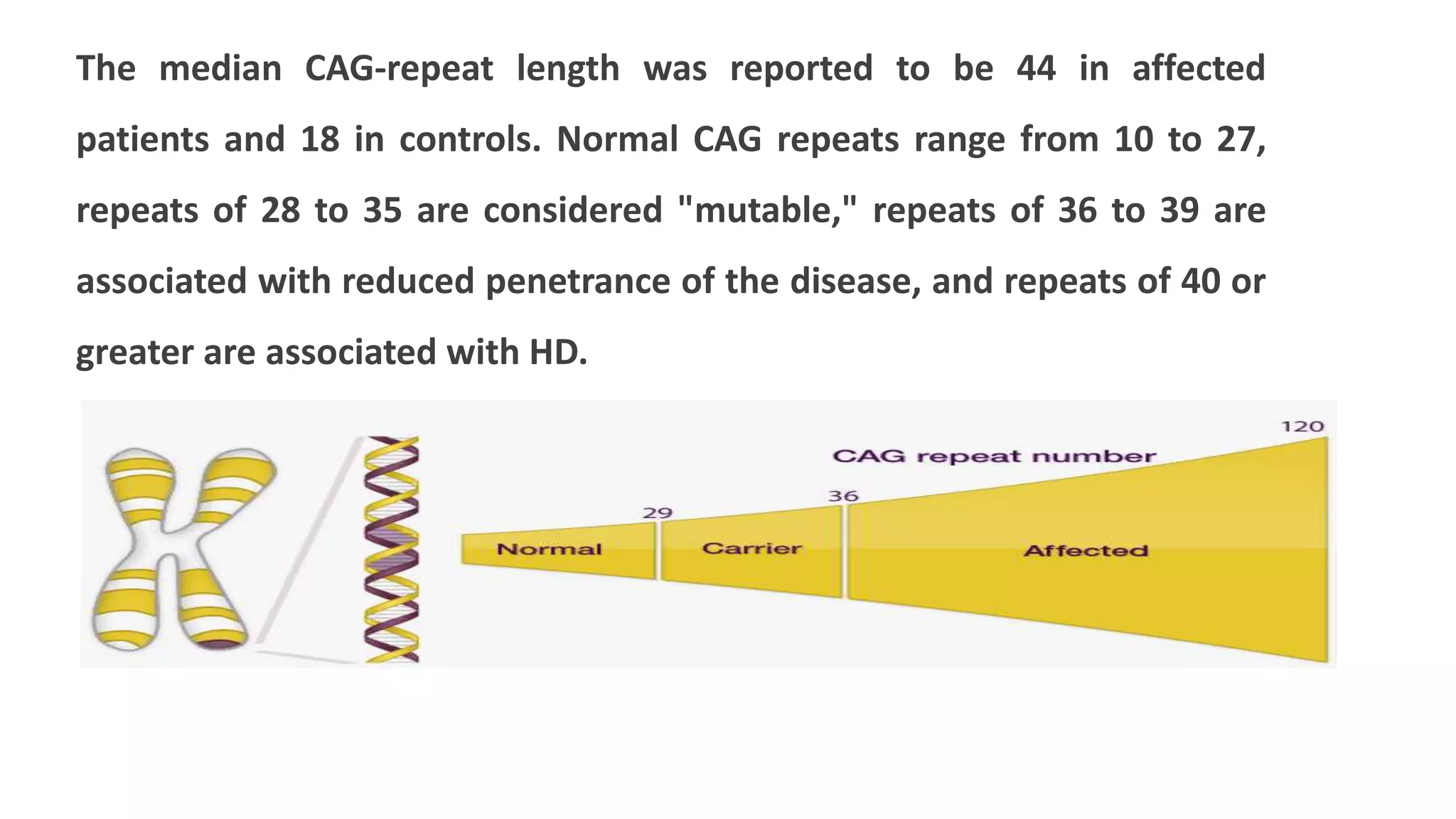
The median CAG-repeat length was reported to be 44 in affected
patients and 18 in controls. Normal CAG repeats range from 10 to 27,
repeats of 28 to 35 are considered "mutable," repeats of 36 to 39 are
associated with reduced penetrance of the disease, and repeats of 40 or
greater are associated with HD.
The number of CAG repeats is inversely correlated with the age at onset of
the disease. Patients with onset as early as 2 years of life have a repeat
number approaching 100 or greater and late-onset-disease patients have
repeat numbers of 36 to 39. The onset of symptoms occurs at progressively
younger ages in successive generations of affected families, a pattern called
anticipation. Anticipation is explained by meiotic expansion of the unstable
CAG repeat during transmission by the affected parent, resulting in an even
higher CAG repeat number in the offspring and an earlier age of onset.
An increase in the CAG-repeat number is also associated with more
rapid progression of disease and greater neuropathological severity in
the striatum.
The HD gene protein, huntingtin (htt), consists of 3144 amino acids,
is expressed in all tissue, and predominantly resides in the
cytoplasm with lesser amounts in the nucleus. In neurons, htt is
associated with synaptic vesicles and microtubules and is abundant
in dendrites and nerve terminals.
c. HD Gene Protein
Huntingtin interacts with multiple proteins functioning in
intracellular trafficking and cytoskeletal organization, thereby
suggesting its role in these activities. Expansion of the CAG repeats
results in elongation of the N-terminal glutamine tract and triggers
the preferential loss of striatal neurons.
The precise mechanism of disease progression has not been
elucidated. However, expanded alleles are effectively transcribed
and translated, but as a result of the increase in glutamine
residues, the protein is misfolded. Thus abnormal folding may
result in aberrant protein-protein interaction of mutant htt with
any of its protein partners and could contribute to the
pathogenesis of HD.
d. Disease Mechanism
In addition, truncated fragments of mutant htt, containing the
amino terminus with expanded polyglutamine repeats, accumulate
to form large aggregates in the nucleus (nuclear inclusions) and in
other subcellular compartments. The aggregates are thought to be
toxic to the cell and may also sequester proteins essential for cell
viability (e.g., transcription factors) or may trigger degradation of
specific factors through the ubiquitin- proteasome-dependent
pathway.
DNA testing for HD is performed by use of PCR so that the exact CAG-
repeat number can be determined.
a new primer pair was identified that flanked the CAG repeat, yet
excluded the problematic polymorphic CGG repeat and provided accu-
rate assessment of the CAG-repeat number.
currently the most common methodology for this assay involves the use
of PCR with fluorescently labeled primers.
e. DNA Testing
Deferential Diagnosis
Autosomal dominant diseases

Autosomal dominant diseases

  • 1.
    Autosomal Dominant Diseases EkbalMohamed Abo-Hashem-MD Professor of Clinical Pathology Mansoura University-Egypt
  • 2.
    An individual withan autosomal dominant disease may have inherited an abnormal allele from an affected parent, or alternatively the mutant allele may have risen de novo as a new mutation during gametogenesis in an unaffected parent. AUTOSOMAL DOMINANT DISEASES
  • 4.
    An affected individualpossesses a 50% risk of donating the mutant allele to an offspring. Different mutations within the gene have varying effects on the protein so that affected patients can have variability in clinical expression of the disease.
  • 5.
    In some instances,known mutant gene carriers have no clinical symptoms of the disease, a phenomenon referred to as reduced penetrance, yet possess a 50% chance of having an affected child. Differences in phenotypic expression of the disease are most likely explained by the effect of other genes (modifier genes) and/or environmental influences.
  • 6.
    Autosomal Dominant Disordersinclude : -Familial polyposis coli -von Willibrand disease -Polycystic kidney disease -Acute intermittent porphyria -*Achondroplasia -*Charcot-Marie-Tooth disease -*Huntington disease -Neurofibromatosis -Myotonic dystrophy -Familial hypercholesterolemia -Hereditery spherocytosis
  • 7.
  • 11.
    Achondroplasia is themost common form of human genetic dwarfism and is inherited as an autosomal dominant trait with complete penetrance. It is characterized by short-limbed dwarfism (rhizomelic form), macrocephaly, frontal and biparietal bossing, bowing of the lower extremities, and normal intelligence. Infants with this disease can die within the first year of life from central apnea caused by compression at the craniocervical junction; homozygous disease is most often lethal. a. Phenotype
  • 12.
    Children undergoing surgicaldecompression of the craniocervical junction have decreased mortality and demonstrate improvement in neurological function. The mean and standard deviation adult height is (131 -+5.6) cm for men and (124_ +5.9) cm for women. The life expectancy is about 10 years less than that for the general population.
  • 13.
    During the first5 years of life, affected children are at risk of death from compression of the brainstem and/or the upper cervical spinal cord. Deaths in adults between 25 and 54 years of age are most often attributed to cardiovascular problems. Achondroplasia has an incidence of about 0.5 to 1.5 per 10,000 births and has been reported in individuals from different races and ethnic groups.
  • 14.
    More than 90%of patients are born to parents of normal height. These patients represent sporadic cases arising from new mutations, a phenomenon associated with advanced paternal age. b. Mutation
  • 15.
    This "paternal effect"has been thought to occur because of lifelong spermatogonial stem cell divisions and thus an increase in production of mutant sperm as the male grows older. However, recent data generated from examining sperm DNA from donors of different ages did not illustrate an exponential increase in mutation with age, indicating that sperm mutation frequency cannot explain an effect of paternal age in achondroplasia.
  • 16.
    The gene forachondroplasia is mapped to the telomeric region of chromosome 4p (4p16.3). The fibroblast growth factor receptor 3 gene (FGFR3), mapped to this region and previously considered as a candidate gene for Huntington's disease (HD), is known as a candidate gene for achondroplasia and is reported to have mutations in patients with achondroplasia. c. FGFR3 Gene and Protein
  • 17.
    FGFR3 is atyrosine kinase receptor, which when bound to 1 of 23 fibroblast growth factors (FGFs) coupled with heparin sulfate- bearing proteoglycans on the cell surface, induces dimerization of receptor monomers, activates tyrosine kinase activity, and promotes phosphorylation of key tyrosine residues in the cytoplasmic domain, which in turn induces multiple signaling pathways . The target genes for FGFR3 are not well characterized, but FGFR3 is thought to negatively regulate chondrocyte proliferation and differentiation.
  • 18.
    The FGFR3 proteinproduct, FGFR3, contains three extracellular immunoglobulin-like domains, a single transmembrane domain, and an intracellular tyrosine kinase domain.
  • 22.
    The primary mutationin achondroplasia results in a defect in internalization and degradation of the mutant receptor. Thus it is retained on the cell surface and has uncontrolled and prolonged activation in chondrocytes. Hence, chondrocyte maturation and terminal differentiation are inhibited. d. Gene Mutation
  • 23.
    In the originalreport identifying the FGFR3 gene as the cause of achondroplasia, most patients had a G-to-A transition mutation at nucleotide 1138 (G1138A), and the only patient that did not have this mutation instead had a G-to-C transversion mutation at the same position (G1138C). Both mutations result in a glycine-to-arginine substitution in the transmembrane domain of FGFR3 at codon 380 .
  • 24.
    Since >98% ofFGFR3 mutations causing achondroplasia are G 1138A, and about I % are G 1138C, DNA testing includes direct mutation analysis for both mutations.
  • 25.
    Testing can beperformed postnatally to confirm the diagnosis of achondroplasia. In addition, prenatal DNA testing may be requested by unaffected couples with an affected child representing a sporadic case Prenatal DNA testing can be requested by these couples who have a 25% chance of having a child homozygous for this condition e. DNA Testing
  • 26.
  • 27.
    Charcot-Marie-Tooth (CMT) disease, sometimesreferred to as hereditary motor and sensory neuropathies (HMSN), refers to a genetically heterogeneous group of hereditary neuropathies characterized by chronic motor and sensory polyneuropathy and demonstrating all patterns of mendelian inheritance. a. Phenotype
  • 28.
    The most commonform of CMT, type l A, is one of the most common autosomal dominant disorders in man, with an estimated incidence of 1 in 2500. This disease is characterized by progressive distal muscle atrophy and weakness, depressed or absent deep tendon reflexes, high- arched feet, decreased nerve conduction velocity (generally <35 to 40 m/s), and nerve demyelination as visualized on biopsy specimens.
  • 29.
    The age ofonset is within the first decade of life in 50% of patients and before the age of 20 in 70% of patients. However, despite a common genetic abnormality, phenotypic manifestations of the disease are variable even within the same family, suggesting the influence of environmental factors or modifier genes at other loci.
  • 31.
    The gene wasmapped to the short arm of chromosome 17 and specifically localized to 17p11.2-p12 (short arm of chromosome 17 between banding regions 11.2 and 12). Further, some DNA markers in this region detected a duplication in the DNA of affected individuals within families and in unrelated CMT patients. b. Gene and Mutation
  • 32.
    The peripheral myelinprotein gene, PMP22, was identified as a candidate gene for CMT type l A in 1992. PMP22 is contained within a 1.5Mb monomer unit that is flanked by several low-copy repeat sequences. A duplication of the gene is associated with disease and results from unequal meiotic crossing over caused by misalignment of homologous sequences.
  • 33.
    A duplication ofPMP22 results in an extra copy of the gene (altered gene dosage) and overexpression of the PMP22 protein, which is considered the causative event for disease. Interestingly, patients with trisomy 17p (three copies of the short arm of chromosome 17), who would have an altered PMP22 copy number, also have clinical features consistent with CMT .
  • 34.
    PMP22 is a160-amino acid transmembrane glycoprotein that contains four transmembrane hydrophobic regions and two extracellular domains with the amino and C termini exposed to the cytosol. It is predominantly localized in the compact portion of myelin. c. PMP22 Protein
  • 35.
    PMP22 is predominantlyexpressed in myelinating Schwann cells of the peripheral nervous system where it is important in myelination and myelin stability and acts as a negative modulator of Schwann cell growth.
  • 36.
    From studies ontransgenic mice, it has been proposed that when overexpressed, PMP22 accumulates in a late-Golgi and/or plasma- membrane compartment and uncouples myelin assembly from the underlying program of Schwann cell differentiation
  • 37.
    The PMP22 geneduplication associated with CMT type IA can be detected by use of Southern blot analysis, fluorescence in situ hybridization (FISH) on interphase cells, or PCR. d. DNA Testing
  • 38.
  • 39.
    HD is anautosomal dominant, late-onset neurodegenerative disorder with an incidence of about 1 in 10,000 in most populations of European origin. The disease is progressive and characterized by frequent involuntary, rapid movements (chorea) and dementia with a median survival time of 15 to 18 years after the onset of symptoms. a. Phenotype
  • 40.
    The mean ageof onset is in the decade between 35 and 44 years, but approximately 25% of patients first display symptoms after the age of 50, and about 10% of patients have juvenile HD with the age of onset before 20 years.. In the first few years of the disease, symptoms include mood disturbances, cognitive deficits, clumsiness, and impairment of voluntary movement.
  • 41.
    The next stageof the disease is associated with slurred speech (dysarthria), hyperreflexia, chorea, gait abnormalities, and behavioral disturbances including intermittent explosiveness, apathy, aggression, alcohol abuse, sexual dysfunction and deviations, and increased appetite. As the disease advances, bradykinesia, rigidity, dementia, dystonia, and dysphagia are present. In the late stages of HD, weight loss, sleep disturbances, and incontinence occur.
  • 42.
    A linkage betweenDNA marker D4Sl0 on the short arm of chromosome 4 and HD was reported. Subsequently, more DNA markers were identified, and the region of the genome containing the HD gene was narrowed to 4p16.3 (short arm of chromosome 4 band 16.3). 10 years after its initial localization, the HD gene, IT15, was cloned. b. Gene Mutation, CAG Trinucleotide Repeat Expansion
  • 43.
    The molecular basisof HD was determined to be expansion of a glutamine-encoding CAG trinucleotide repeat and was subsequently confirmed in a worldwide study by the identification of expanded CAG repeat alleles in HD patients.
  • 44.
    The median CAG-repeatlength was reported to be 44 in affected patients and 18 in controls. Normal CAG repeats range from 10 to 27, repeats of 28 to 35 are considered "mutable," repeats of 36 to 39 are associated with reduced penetrance of the disease, and repeats of 40 or greater are associated with HD.
  • 47.
    The number ofCAG repeats is inversely correlated with the age at onset of the disease. Patients with onset as early as 2 years of life have a repeat number approaching 100 or greater and late-onset-disease patients have repeat numbers of 36 to 39. The onset of symptoms occurs at progressively younger ages in successive generations of affected families, a pattern called anticipation. Anticipation is explained by meiotic expansion of the unstable CAG repeat during transmission by the affected parent, resulting in an even higher CAG repeat number in the offspring and an earlier age of onset. An increase in the CAG-repeat number is also associated with more rapid progression of disease and greater neuropathological severity in the striatum.
  • 48.
    The HD geneprotein, huntingtin (htt), consists of 3144 amino acids, is expressed in all tissue, and predominantly resides in the cytoplasm with lesser amounts in the nucleus. In neurons, htt is associated with synaptic vesicles and microtubules and is abundant in dendrites and nerve terminals. c. HD Gene Protein
  • 49.
    Huntingtin interacts withmultiple proteins functioning in intracellular trafficking and cytoskeletal organization, thereby suggesting its role in these activities. Expansion of the CAG repeats results in elongation of the N-terminal glutamine tract and triggers the preferential loss of striatal neurons.
  • 50.
    The precise mechanismof disease progression has not been elucidated. However, expanded alleles are effectively transcribed and translated, but as a result of the increase in glutamine residues, the protein is misfolded. Thus abnormal folding may result in aberrant protein-protein interaction of mutant htt with any of its protein partners and could contribute to the pathogenesis of HD. d. Disease Mechanism
  • 52.
    In addition, truncatedfragments of mutant htt, containing the amino terminus with expanded polyglutamine repeats, accumulate to form large aggregates in the nucleus (nuclear inclusions) and in other subcellular compartments. The aggregates are thought to be toxic to the cell and may also sequester proteins essential for cell viability (e.g., transcription factors) or may trigger degradation of specific factors through the ubiquitin- proteasome-dependent pathway.
  • 54.
    DNA testing forHD is performed by use of PCR so that the exact CAG- repeat number can be determined. a new primer pair was identified that flanked the CAG repeat, yet excluded the problematic polymorphic CGG repeat and provided accu- rate assessment of the CAG-repeat number. currently the most common methodology for this assay involves the use of PCR with fluorescently labeled primers. e. DNA Testing
  • 55.