Authentic Intellectual Work


 “construction of knowledge, through the use
  of disciplined inquiry, to produce discourse,
  products, or performances that have value
  beyond school”  (Newmann et al, 2007, p. 3).


 Instruction, Assignments, Assessments
Objectives

   Describe the components of authentic instruction
   Describe the way to “score” instruction according
    to the rubric for instruction
   Evaluate lessons using authentic instruction rubric
   Construct daily lessons, where appropriate,
    incorporating components of authentic instruction
What AIW means for
           Instruction
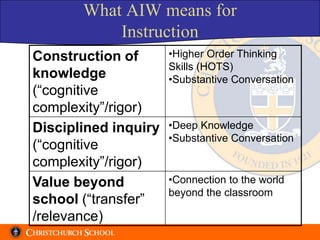
Construction of       •Higher Order Thinking
                      Skills (HOTS)
knowledge             •Substantive Conversation
(“cognitive
complexity”/rigor)
Disciplined inquiry   •Deep Knowledge
                      •Substantive Conversation
(“cognitive
complexity”/rigor)
Value beyond          •Connection to the world
                      beyond the classroom
school (“transfer”
/relevance)
Use of Rubrics

   Common language
   More explicit definition of characteristics for
    authentic instruction
   Tools not prescriptions
   Basis for collegiality (both for agreements and
    disagreements)
   A planning tool
Key Points for Instruction Rubric

   Use only evidence observed during instruction
   Consider grade-level expectations
   Participation (all, almost all, most, many,
    some, a few)
   Choosing between two scores
HOTS

   Does not place a value on level of Higher
    Order Thinking (evaluating is not scored
    higher than synthesizing)
   Lower Order Thinking Skill if students are
    primarily reporting information (however they
    arrived at that information)
Deep Knowledge

   The complexity of the idea, skill, or concept
   Does not necessarily mean level of student
    engagement
   Can be indicated both by depth of teacher’s
    knowledge or depth of understanding students
    demonstrate
Substantive Conversation

   Classroom talk should build shared and
    coherent understanding through sustained
    conversation
   Sustained is qualified as at least three
    consecutive interchanges
   Interchanges must build on previous comments
Value Beyond School

   Value and meaning for the student beyond
    achieving success in school
   3 primary ways to make connections to world
     Address an actual problem of some contemporary
      significance
     Build on students’ personal experiences to teach
      important concepts of discipline
     Communicate knowledge to others beyond the
      classroom that assist or influence others
Practice w/ Rubric

   Seminar on Letter from Birmingham Jail

   Individual Lessons
       Groups of 2 or 3 with other members of your
        department
So what . . .

   “In short, the standards and rubrics should not
    be applied mechanistically, but used to
    provoke more careful discussion and shared
    understanding and the extent to which
    authentic intellectual work should be
    emphasized and what that will mean in a
    particular school, grade level, or subject” (p.
    32).
Plan for year

   Models approach
   Models schedule
   Individual and Peer observations
   Support and collegiality
Models Approach - What to Consider
   Skills or content to be learned
   Learning objectives
        purpose is to communicate to students expectations for lesson, unit, or
         course
        observable and measurable student behavior
             “Students will list from memory six different impacts of the Civil War on
              African Americans.”
             “Students will evaluate the impact of the Civil War on African Americans
              in a well-constructed essay.”
Models Approach - What to Consider
   Teacher strengths
        Certain models fit better within in our strengths but . . .
   Needs of learners
        Strengths and learning styles
        Entering behaviors
        Necessary scaffolding
        Maturity
   Types of assessment
        Formative/Summative
Direct Instruction

   “. . . Direct instruction has a relatively solid
    empirical track record, getting consistent if
    modest effects” (Joyce, Weil, & Calhoun,
    2009, p. 368).
   Best uses tend to be procedural skills
   Flexible framework
   Used very frequently
Direct Instruction

   Identify the components of the lesson on
    authentic instruction rubric
   Score the lesson in terms of AIW
Models
   8/18 - Direct Instruction
   9/23 - Learning from Presentations/Seminar
   10/28 - Inductive Learning/Structured Academic Controversy
   12/9 - Concept Attainment/Debate
   1/6 - Cooperative Learning - Jigsaw/STAD
   2/10 Memorization/Synectics
   3/24 Mastery Learning/Problem-Based Inquiry
   4/7 Simulations/Teaching in Pairs
Individual and Peer Observations

   1 class observation of new teaching model and
    AIW during course of year
   1 peer observation w/ follow-up comments
Support and Collegiality

   “Success in all this requires frequent critical,
    constructive, and collegial discussions among
    groups of teachers about the quality of and
    how to improve the lessons, assignments, and
    student work” (p. 84).

Authentic Intellectual Work

  • 1.
    Authentic Intellectual Work “construction of knowledge, through the use of disciplined inquiry, to produce discourse, products, or performances that have value beyond school” (Newmann et al, 2007, p. 3).  Instruction, Assignments, Assessments
  • 2.
    Objectives  Describe the components of authentic instruction  Describe the way to “score” instruction according to the rubric for instruction  Evaluate lessons using authentic instruction rubric  Construct daily lessons, where appropriate, incorporating components of authentic instruction
  • 3.
    What AIW meansfor Instruction Construction of •Higher Order Thinking Skills (HOTS) knowledge •Substantive Conversation (“cognitive complexity”/rigor) Disciplined inquiry •Deep Knowledge •Substantive Conversation (“cognitive complexity”/rigor) Value beyond •Connection to the world beyond the classroom school (“transfer” /relevance)
  • 4.
    Use of Rubrics  Common language  More explicit definition of characteristics for authentic instruction  Tools not prescriptions  Basis for collegiality (both for agreements and disagreements)  A planning tool
  • 5.
    Key Points forInstruction Rubric  Use only evidence observed during instruction  Consider grade-level expectations  Participation (all, almost all, most, many, some, a few)  Choosing between two scores
  • 6.
    HOTS  Does not place a value on level of Higher Order Thinking (evaluating is not scored higher than synthesizing)  Lower Order Thinking Skill if students are primarily reporting information (however they arrived at that information)
  • 7.
    Deep Knowledge  The complexity of the idea, skill, or concept  Does not necessarily mean level of student engagement  Can be indicated both by depth of teacher’s knowledge or depth of understanding students demonstrate
  • 8.
    Substantive Conversation  Classroom talk should build shared and coherent understanding through sustained conversation  Sustained is qualified as at least three consecutive interchanges  Interchanges must build on previous comments
  • 9.
    Value Beyond School  Value and meaning for the student beyond achieving success in school  3 primary ways to make connections to world  Address an actual problem of some contemporary significance  Build on students’ personal experiences to teach important concepts of discipline  Communicate knowledge to others beyond the classroom that assist or influence others
  • 10.
    Practice w/ Rubric  Seminar on Letter from Birmingham Jail  Individual Lessons  Groups of 2 or 3 with other members of your department
  • 11.
    So what .. .  “In short, the standards and rubrics should not be applied mechanistically, but used to provoke more careful discussion and shared understanding and the extent to which authentic intellectual work should be emphasized and what that will mean in a particular school, grade level, or subject” (p. 32).
  • 12.
    Plan for year  Models approach  Models schedule  Individual and Peer observations  Support and collegiality
  • 13.
    Models Approach -What to Consider  Skills or content to be learned  Learning objectives  purpose is to communicate to students expectations for lesson, unit, or course  observable and measurable student behavior  “Students will list from memory six different impacts of the Civil War on African Americans.”  “Students will evaluate the impact of the Civil War on African Americans in a well-constructed essay.”
  • 14.
    Models Approach -What to Consider  Teacher strengths  Certain models fit better within in our strengths but . . .  Needs of learners  Strengths and learning styles  Entering behaviors  Necessary scaffolding  Maturity  Types of assessment  Formative/Summative
  • 15.
    Direct Instruction  “. . . Direct instruction has a relatively solid empirical track record, getting consistent if modest effects” (Joyce, Weil, & Calhoun, 2009, p. 368).  Best uses tend to be procedural skills  Flexible framework  Used very frequently
  • 16.
    Direct Instruction  Identify the components of the lesson on authentic instruction rubric  Score the lesson in terms of AIW
  • 17.
    Models  8/18 - Direct Instruction  9/23 - Learning from Presentations/Seminar  10/28 - Inductive Learning/Structured Academic Controversy  12/9 - Concept Attainment/Debate  1/6 - Cooperative Learning - Jigsaw/STAD  2/10 Memorization/Synectics  3/24 Mastery Learning/Problem-Based Inquiry  4/7 Simulations/Teaching in Pairs
  • 18.
    Individual and PeerObservations  1 class observation of new teaching model and AIW during course of year  1 peer observation w/ follow-up comments
  • 19.
    Support and Collegiality  “Success in all this requires frequent critical, constructive, and collegial discussions among groups of teachers about the quality of and how to improve the lessons, assignments, and student work” (p. 84).