Audit
Group Members
Vikas Upadhyay – 163
Kaushal Yadav – 172
Yemimal Bhaskaran – 176
Nikki Kayastha – 177
Nidhi Shah - 178
INTRODUCTION & DEFINITION
 The word audit is derived from the Latin word
“AUDIRE” which means to hear.
 An official inspection of an organizations account,
typically by an independent body.
 According to Mautz…..
“ Auditing is concerned with the verification of
auditing data, with determining the accuracy and
reliability of accounting statement and reports”.
Objectives of Auditing
 Primary Objective
To determine and judge the reliability of the
financial statement and the supporting accounting
records of a particular financial period is the main
purpose of the audit.
 Secondary objective
1. Detection and prevention of Errors
2. Detection and prevention of Frauds.
The Auditor
 Person conducting audit
 In India, under the authority of
company act, 1956 only chartered
accountant are professionally qualified
for the audit.
Compulsory audit
 Was introduced by the companies act, 1956.
 Duly qualified and trained in the profession.
 If a person is carrying on business/
Profession and his total sales, turnover or
receipts from such business or profession
exceeds Rs 60 Lacs/ Rs 15Lacs respectively
during the previous year then he is required
to get the accounts audited by a Chartered
Accountant.
Internal Audit
 It is independent appraisal of operation and
records of the company.
 The purpose is to detect errors and frauds that are
already committed.
 It requires separate staff employed only for this
purpose.
 The Internal auditor has to report periodically about
various inefficiencies and suggest improvements.
 It begins when the accounting process ends.
Cost Audit
 The verification of correctness of cost
accounts and of adherences to the
cost accounting plan.
 It reflects a true and fair view of the
cost of production, manufacture
processing marketing of the product
under audit.
Objectives of cost audit
 To establish the correctness of cost records and
accounts.
 Ensure adherence to the cost accounting plan.
 Detection of errors and frauds.
 To check wastage of materials and labour.
 To examine whether the cost statements present a
true and fair view of the cost information.
 Ensuring optimum utilization of human, physical
and financial resources of the company.
 Detection and correction of abnormal losses.
Efficiency audit
 Efficiency audit is related to that whether
corporate plans are effectively executed.
 In this, auditor investigates the reasons of
variances in actual performance and
planned performance.
 It also investigates that capital resources
of company are properly utilized or not.
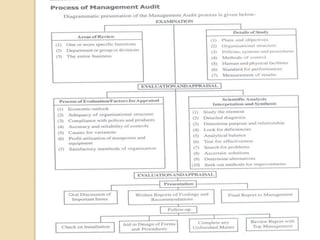
Management Audit
 Is a critical evaluation of business
policies , procedures, efficiency and
effectiveness.
 It is a systematic examination of
decisions and actions of the
management to analyze the
performance.
 Concerned with the review of past
performance.
Objectives of management
audit
 Appraise the managerial performance
at all levels.
 Improve the organizational efficiency.
 Enhance operational profitability.
 Reviews the companies organizational
structure.
Strategic Assessment of cost
and Managerial Performances
 Cost Records And Cost Accounting
Principles
 GACAP(Generally Accepted Cost
Accounting Principles)
 Institute Of Cost & Work Accountants In
India
 Cost Accounting Standard Board
 Strategic Cost Management Or Cost
Management Strategy
 Management strategy cost
 Evaluating & Improving Cost In
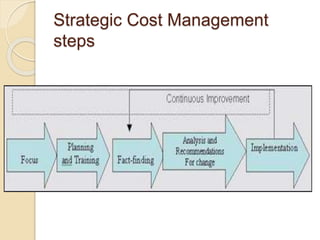
Strategic Cost Management
steps
Audit

Audit

  • 1.
  • 2.
    Group Members Vikas Upadhyay– 163 Kaushal Yadav – 172 Yemimal Bhaskaran – 176 Nikki Kayastha – 177 Nidhi Shah - 178
  • 3.
    INTRODUCTION & DEFINITION The word audit is derived from the Latin word “AUDIRE” which means to hear.  An official inspection of an organizations account, typically by an independent body.  According to Mautz….. “ Auditing is concerned with the verification of auditing data, with determining the accuracy and reliability of accounting statement and reports”.
  • 4.
    Objectives of Auditing Primary Objective To determine and judge the reliability of the financial statement and the supporting accounting records of a particular financial period is the main purpose of the audit.  Secondary objective 1. Detection and prevention of Errors 2. Detection and prevention of Frauds.
  • 5.
    The Auditor  Personconducting audit  In India, under the authority of company act, 1956 only chartered accountant are professionally qualified for the audit.
  • 6.
    Compulsory audit  Wasintroduced by the companies act, 1956.  Duly qualified and trained in the profession.  If a person is carrying on business/ Profession and his total sales, turnover or receipts from such business or profession exceeds Rs 60 Lacs/ Rs 15Lacs respectively during the previous year then he is required to get the accounts audited by a Chartered Accountant.
  • 7.
    Internal Audit  Itis independent appraisal of operation and records of the company.  The purpose is to detect errors and frauds that are already committed.  It requires separate staff employed only for this purpose.  The Internal auditor has to report periodically about various inefficiencies and suggest improvements.  It begins when the accounting process ends.
  • 8.
    Cost Audit  Theverification of correctness of cost accounts and of adherences to the cost accounting plan.  It reflects a true and fair view of the cost of production, manufacture processing marketing of the product under audit.
  • 9.
    Objectives of costaudit  To establish the correctness of cost records and accounts.  Ensure adherence to the cost accounting plan.  Detection of errors and frauds.  To check wastage of materials and labour.  To examine whether the cost statements present a true and fair view of the cost information.  Ensuring optimum utilization of human, physical and financial resources of the company.  Detection and correction of abnormal losses.
  • 10.
    Efficiency audit  Efficiencyaudit is related to that whether corporate plans are effectively executed.  In this, auditor investigates the reasons of variances in actual performance and planned performance.  It also investigates that capital resources of company are properly utilized or not.
  • 11.
    Management Audit  Isa critical evaluation of business policies , procedures, efficiency and effectiveness.  It is a systematic examination of decisions and actions of the management to analyze the performance.  Concerned with the review of past performance.
  • 12.
    Objectives of management audit Appraise the managerial performance at all levels.  Improve the organizational efficiency.  Enhance operational profitability.  Reviews the companies organizational structure.
  • 14.
    Strategic Assessment ofcost and Managerial Performances  Cost Records And Cost Accounting Principles  GACAP(Generally Accepted Cost Accounting Principles)  Institute Of Cost & Work Accountants In India  Cost Accounting Standard Board  Strategic Cost Management Or Cost Management Strategy  Management strategy cost  Evaluating & Improving Cost In
  • 15.