Audience 
Research- 
Questionnaire 
Sean Lillis
Question 1 
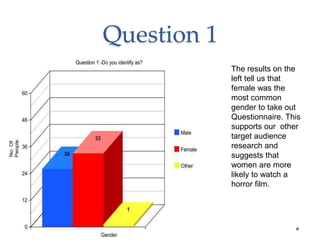
The results on the 
left tell us that 
female was the 
most common 
gender to take out 
Questionnaire. This 
supports our other 
target audience 
research and 
suggests that 
women are more 
likely to watch a 
horror film.
Question 2 
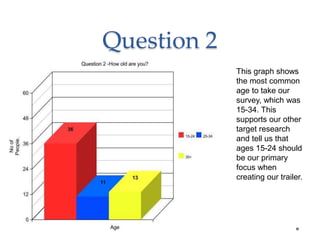
This graph shows 
the most common 
age to take our 
survey, which was 
15-34. This 
supports our other 
target research 
and tell us that 
ages 15-24 should 
be our primary 
focus when 
creating our trailer.
Question 3 
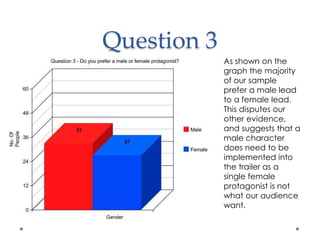
As shown on the 
graph the majority 
of our sample 
prefer a male lead 
to a female lead. 
This disputes our 
other evidence, 
and suggests that a 
male character 
does need to be 
implemented into 
the trailer as a 
single female 
protagonist is not 
what our audience 
want.
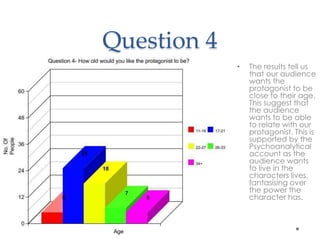
Question 4 
• The results tell us 
that our audience 
wants the 
protagonist to be 
close to their age. 
This suggest that 
the audience 
wants to be able 
to relate with our 
protagonist. This is 
supported by the 
Psychoanalytical 
account as the 
audience wants 
to live in the 
characters lives, 
fantasising over 
the power the 
character has.
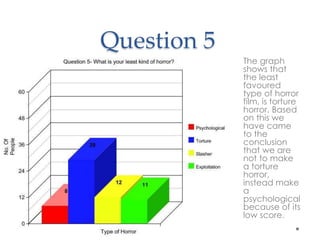
Question 5 
• The graph 
shows that 
the least 
favoured 
type of horror 
film, is torture 
horror. Based 
on this we 
have came 
to the 
conclusion 
that we are 
not to make 
a torture 
horror, 
instead make 
a 
psychological 
because of its 
low score.
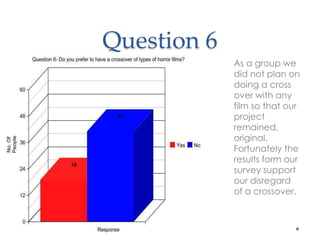
Question 6 
As a group we 
did not plan on 
doing a cross 
over with any 
film so that our 
project 
remained, 
original. 
Fortunately the 
results form our 
survey support 
our disregard 
of a crossover.
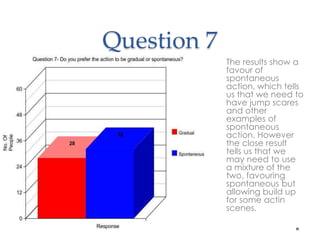
Question 7 
The results show a 
favour of 
spontaneous 
action, which tells 
us that we need to 
have jump scares 
and other 
examples of 
spontaneous 
action. However 
the close result 
tells us that we 
may need to use 
a mixture of the 
two, favouring 
spontaneous but 
allowing build up 
for some actin 
scenes.
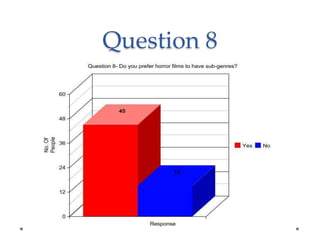
Question 8
Question 8 Cont. 
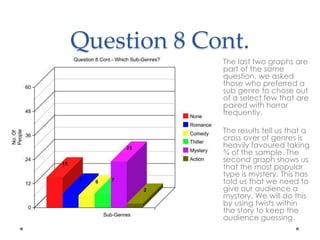
• The last two graphs are 
part of the same 
question, we asked 
those who preferred a 
sub genre to chose out 
of a select few that are 
paired with horror 
frequently. 
• The results tell us that a 
cross over of genres is 
heavily favoured taking 
¾ of the sample. The 
second graph shows us 
that the most popular 
type is mystery. This has 
told us that we need to 
give our audience a 
mystery. We will do this 
by using twists within 
the story to keep the 
audience guessing.
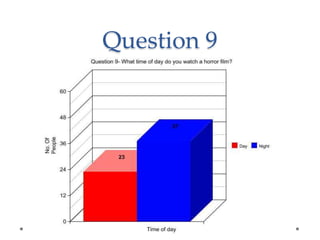
Question 9
Question 10 
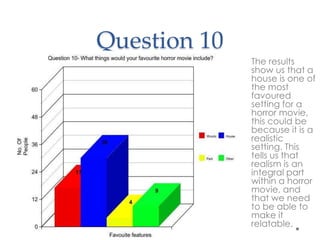
• The results 
show us that a 
house is one of 
the most 
favoured 
setting for a 
horror movie, 
this could be 
because it is a 
realistic 
setting. This 
tells us that 
realism is an 
integral part 
within a horror 
movie, and 
that we need 
to be able to 
make it 
relatable.
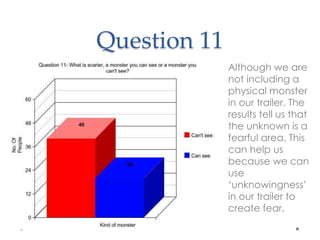
Question 11 
• Although we are 
not including a 
physical monster 
in our trailer. The 
results tell us that 
the unknown is a 
fearful area. This 
can help us 
because we can 
use 
‘unknowingness’ 
in our trailer to 
create fear.
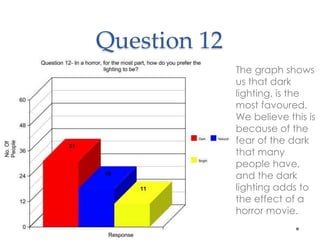
Question 12 
• The graph shows 
us that dark 
lighting, is the 
most favoured. 
We believe this is 
because of the 
fear of the dark 
that many 
people have, 
and the dark 
lighting adds to 
the effect of a 
horror movie.
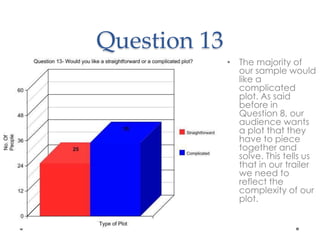
Question 13 
• The majority of 
our sample would 
like a 
complicated 
plot. As said 
before in 
Question 8, our 
audience wants 
a plot that they 
have to piece 
together and 
solve. This tells us 
that in our trailer 
we need to 
reflect the 
complexity of our 
plot.
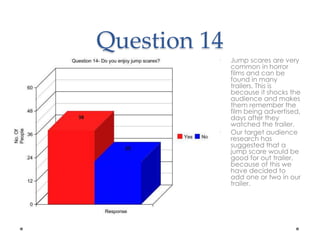
Question 14 
• Jump scares are very 
common in horror 
films and can be 
found in many 
trailers. This is 
because it shocks the 
audience and makes 
them remember the 
film being advertised, 
days after they 
watched the trailer. 
• Our target audience 
research has 
suggested that a 
jump scare would be 
good for out trailer, 
because of this we 
have decided to 
add one or two in our 
trailer.
Question 15
Question 16
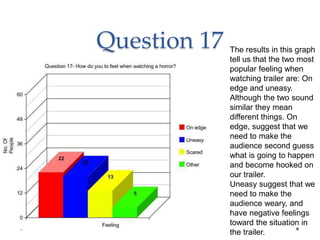
Question 17 The results in this graph 
tell us that the two most 
popular feeling when 
watching trailer are: On 
edge and uneasy. 
Although the two sound 
similar they mean 
different things. On 
edge, suggest that we 
need to make the 
audience second guess 
what is going to happen 
and become hooked on 
our trailer. 
Uneasy suggest that we 
need to make the 
audience weary, and 
have negative feelings 
toward the situation in 
the trailer.
Question 18 
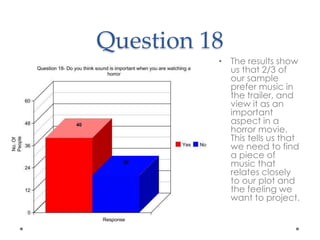
• The results show 
us that 2/3 of 
our sample 
prefer music in 
the trailer, and 
view it as an 
important 
aspect in a 
horror movie. 
This tells us that 
we need to find 
a piece of 
music that 
relates closely 
to our plot and 
the feeling we 
want to project.
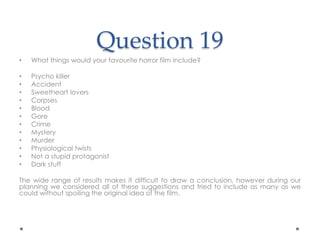
Question 19 
• What things would your favourite horror film include? 
• Psycho killer 
• Accident 
• Sweetheart lovers 
• Corpses 
• Blood 
• Gore 
• Crime 
• Mystery 
• Murder 
• Physiological twists 
• Not a stupid protagonist 
• Dark stuff 
The wide range of results makes it difficult to draw a conclusion, however during our 
planning we considered all of these suggestions and tried to include as many as we 
could without spoiling the original idea of the film.
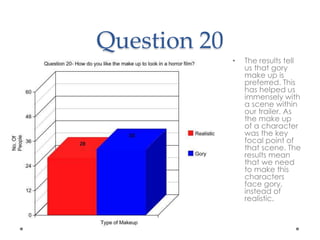
Question 20 
• The results tell 
us that gory 
make up is 
preferred. This 
has helped us 
immensely with 
a scene within 
our trailer. As 
the make up 
of a character 
was the key 
focal point of 
that scene. The 
results mean 
that we need 
to make this 
characters 
face gory, 
instead of 
realistic.

Audience research - Questionnaire

  • 1.
  • 2.
    Question 1 Theresults on the left tell us that female was the most common gender to take out Questionnaire. This supports our other target audience research and suggests that women are more likely to watch a horror film.
  • 3.
    Question 2 Thisgraph shows the most common age to take our survey, which was 15-34. This supports our other target research and tell us that ages 15-24 should be our primary focus when creating our trailer.
  • 4.
    Question 3 Asshown on the graph the majority of our sample prefer a male lead to a female lead. This disputes our other evidence, and suggests that a male character does need to be implemented into the trailer as a single female protagonist is not what our audience want.
  • 5.
    Question 4 •The results tell us that our audience wants the protagonist to be close to their age. This suggest that the audience wants to be able to relate with our protagonist. This is supported by the Psychoanalytical account as the audience wants to live in the characters lives, fantasising over the power the character has.
  • 6.
    Question 5 •The graph shows that the least favoured type of horror film, is torture horror. Based on this we have came to the conclusion that we are not to make a torture horror, instead make a psychological because of its low score.
  • 7.
    Question 6 Asa group we did not plan on doing a cross over with any film so that our project remained, original. Fortunately the results form our survey support our disregard of a crossover.
  • 8.
    Question 7 Theresults show a favour of spontaneous action, which tells us that we need to have jump scares and other examples of spontaneous action. However the close result tells us that we may need to use a mixture of the two, favouring spontaneous but allowing build up for some actin scenes.
  • 9.
  • 10.
    Question 8 Cont. • The last two graphs are part of the same question, we asked those who preferred a sub genre to chose out of a select few that are paired with horror frequently. • The results tell us that a cross over of genres is heavily favoured taking ¾ of the sample. The second graph shows us that the most popular type is mystery. This has told us that we need to give our audience a mystery. We will do this by using twists within the story to keep the audience guessing.
  • 11.
  • 12.
    Question 10 •The results show us that a house is one of the most favoured setting for a horror movie, this could be because it is a realistic setting. This tells us that realism is an integral part within a horror movie, and that we need to be able to make it relatable.
  • 13.
    Question 11 •Although we are not including a physical monster in our trailer. The results tell us that the unknown is a fearful area. This can help us because we can use ‘unknowingness’ in our trailer to create fear.
  • 14.
    Question 12 •The graph shows us that dark lighting, is the most favoured. We believe this is because of the fear of the dark that many people have, and the dark lighting adds to the effect of a horror movie.
  • 15.
    Question 13 •The majority of our sample would like a complicated plot. As said before in Question 8, our audience wants a plot that they have to piece together and solve. This tells us that in our trailer we need to reflect the complexity of our plot.
  • 16.
    Question 14 •Jump scares are very common in horror films and can be found in many trailers. This is because it shocks the audience and makes them remember the film being advertised, days after they watched the trailer. • Our target audience research has suggested that a jump scare would be good for out trailer, because of this we have decided to add one or two in our trailer.
  • 17.
  • 18.
  • 19.
    Question 17 Theresults in this graph tell us that the two most popular feeling when watching trailer are: On edge and uneasy. Although the two sound similar they mean different things. On edge, suggest that we need to make the audience second guess what is going to happen and become hooked on our trailer. Uneasy suggest that we need to make the audience weary, and have negative feelings toward the situation in the trailer.
  • 20.
    Question 18 •The results show us that 2/3 of our sample prefer music in the trailer, and view it as an important aspect in a horror movie. This tells us that we need to find a piece of music that relates closely to our plot and the feeling we want to project.
  • 21.
    Question 19 •What things would your favourite horror film include? • Psycho killer • Accident • Sweetheart lovers • Corpses • Blood • Gore • Crime • Mystery • Murder • Physiological twists • Not a stupid protagonist • Dark stuff The wide range of results makes it difficult to draw a conclusion, however during our planning we considered all of these suggestions and tried to include as many as we could without spoiling the original idea of the film.
  • 22.
    Question 20 •The results tell us that gory make up is preferred. This has helped us immensely with a scene within our trailer. As the make up of a character was the key focal point of that scene. The results mean that we need to make this characters face gory, instead of realistic.