Elliott Koppel
Director of Paid Search and Analytics
Virante
@thekoppel
Where are we coming from?
A flat world of attribution . . .
In reality, conversions take place over many days
and across multiple channels.
Only 14% of marketers surveyed consider last-
click analysis to be “very effective.”
• Yet over 50% are still using it!
- Data from 2012 Joint Study by eConsultancy and Google Analytics
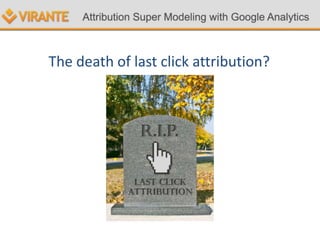
The death of last click attribution?
Marketing attribution is the practice of
determining the role that channels play in
informing and influencing the customer journey.
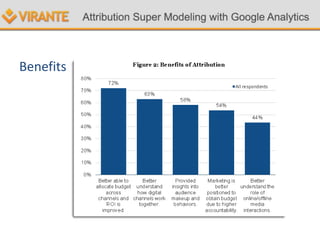
Benefits
How do I know if there are attribution issues?
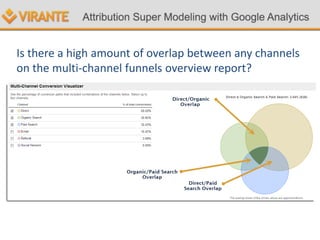
Is there a high amount of overlap between any channels
on the multi-channel funnels overview report?
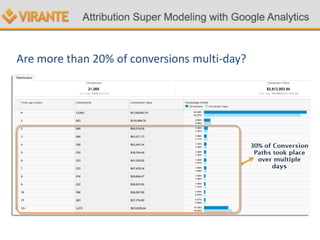
Are more than 20% of conversions multi-day?
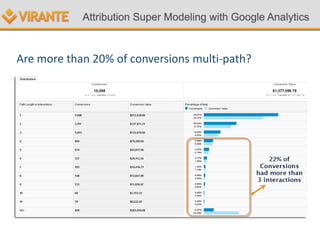
Are more than 20% of conversions multi-path?
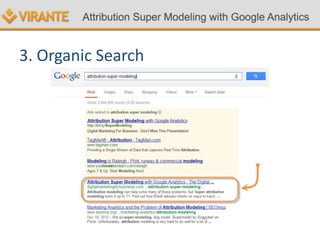
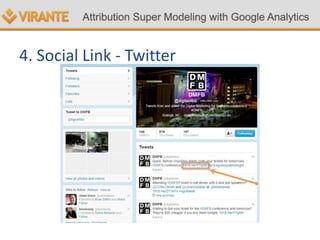
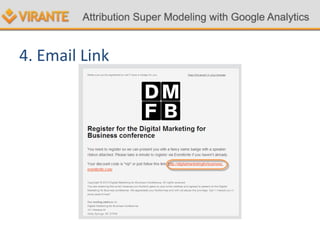
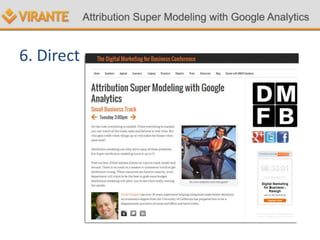
Conversion Example
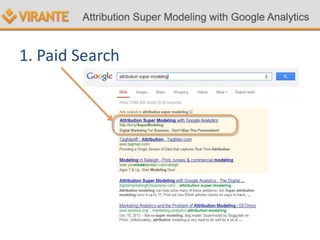
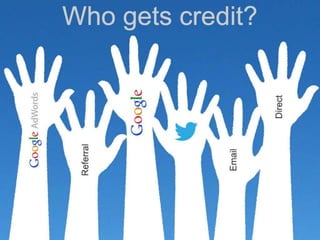
1. Paid Search
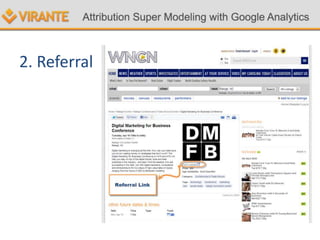
2. Referral
3. Organic Search
4. Social Link - Twitter
4. Email Link
6. Direct
Registration
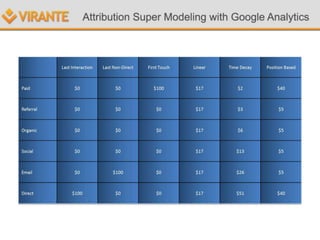
Attribution Models
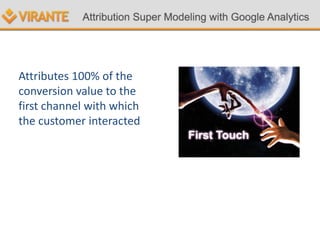
Attributes 100% of the
conversion value to the
first channel with which
the customer interacted
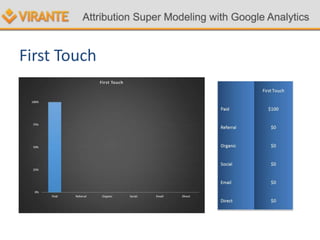
First Touch
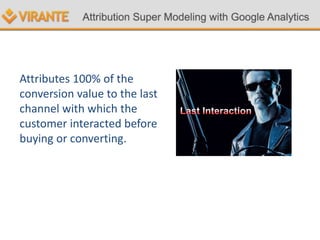
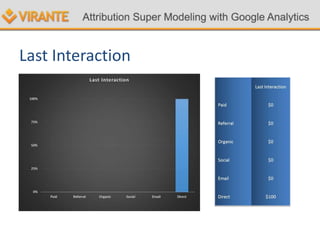
Attributes 100% of the
conversion value to the last
channel with which the
customer interacted before
buying or converting.
Last Interaction
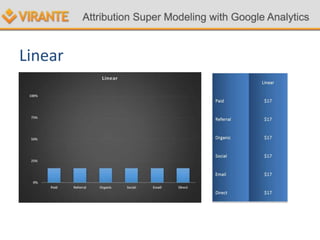
Gives equal credit to each
channel interaction on
the way to conversion.
Linear
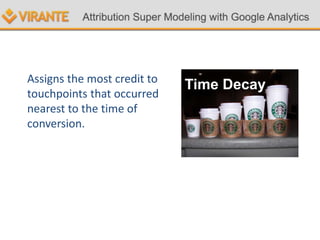
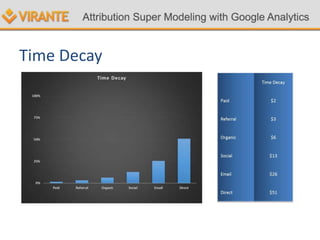
Assigns the most credit to
touchpoints that occurred
nearest to the time of
conversion.
Time Decay
Instead of giving all the credit
to either the first or last
interaction, you can split the
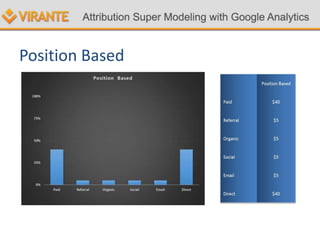
credit between them.
Position Based
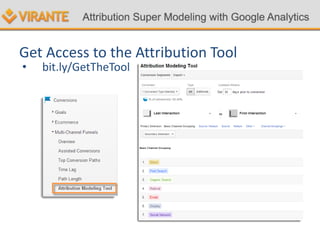
Get Access to the Attribution Tool
• bit.ly/GetTheTool
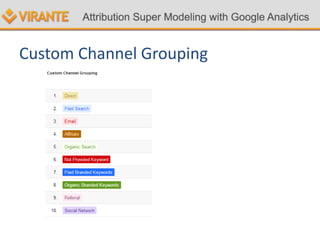
Custom Channel Grouping
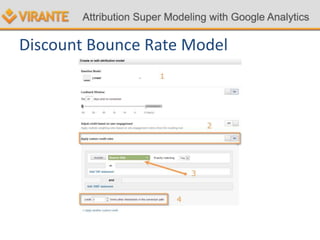
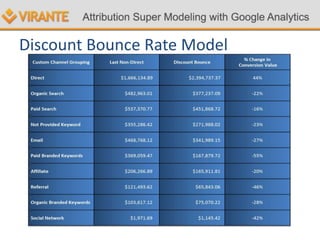
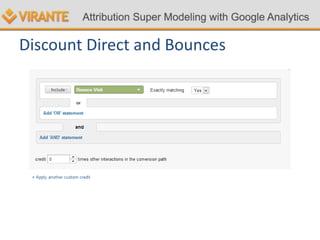
Discount Bounce Rate Model
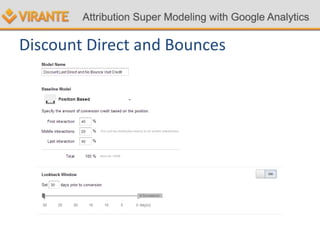
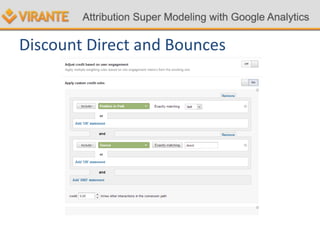
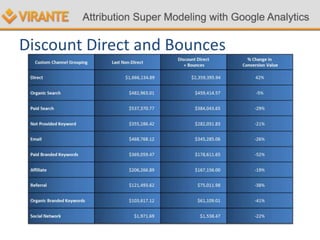
Discount Direct and Bounces
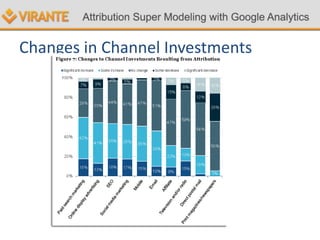
Changes in Channel Investments
Q&A
@thekoppel

Attribution Super Modeling with Google Analytics

Editor's Notes

  • #3 The past doesn’t always look so rosy. . .
  • #4 A world where only the channel that represented the last (non-direct) click received all of the credit.
  • #5 The past doesn’t always look so rosy. . .
  • #6 2012 Joint Study by Google and eConsultancy: Marketing Attribution
  • #8 2012 Joint Study by Google and eConsultancy: Marketing Attribution
  • #9 2012 Joint Study by Google and eConsultancy: Marketing Attribution
  • #12 On the Multi-channel Funnel Time Lag report?
  • #13 On the Multi-channel Funnel Time Lag report?
  • #25 This model is appropriate if you run ads or campaigns to create initial awareness. For example, if your brand is not well known, you may place a premium on the keywords or channels that first exposed customers to the brand.
  • #26 This model is appropriate if you run ads or campaigns to create initial awareness. For example, if your brand is not well known, you may place a premium on the keywords or channels that first exposed customers to the brand.
  • #29 If your ads and campaigns are designed to attract people at the moment of purchase, or your business is primarily transactional with a sales cycle that does not involve a consideration phase, the Last Interaction model may be appropriate.
  • #31 This model is useful if your campaigns are designed to maintain contact and awareness with the customer throughout the entire sales cycle. In this case, each touch point is equally important during the consideration process.
  • #32 This model is useful if your campaigns are designed to maintain contact and awareness with the customer throughout the entire sales cycle. In this case, each touch point is equally important during the consideration process.
  • #34 It can be useful for campaigns with short sales cycles, such as promotions.
  • #35 If you run one-day or two-day promotion campaigns, you may wish to give more credit to interactions during the days of the promotion. In this case, interactions that occurred one week before have only a small value as compared to touch points near the conversion. The Time Decay model allows you to appropriately credit touch points during the day or two leading up to conversion.
  • #38 If you most value touchpoints that introduced customers to your brand and final touchpoints that resulted in sales, use the Position Based model.
  • #48 18% 13% 18% 17% 15% 10% 9% 15% 42% 41% 35% 35% 36% 36% 22% 13% 19% 5% 29% 35% 44% 41% 47% 51% 47% 59% 54% 50% 7% 9% 3% 5% 3% 15% 8% 12% 29% 4% 7% 5% 14% 16% 0% 20% 40% 60% 80% 100% Significant increase Some increase No change Some decrease Significant decrease  Digital Display – the surprising impact of digital display on search ROI and on brand lift was a recurring theme in the interviews. Marketing Attribution: Valuing the Customer Journey Page 12 All rights reserved. No part of this publication may be reproduced or transmitted in any form or by any means, electronic or mechanical, including photocopy, recording or any information storage and retrieval system, without prior permission in writing from the publisher. Copyright © Econsultancy.com Ltd 2012  Television – it’s widely accepted that the role of television is shifting, but for the time being, it’s still the tactic that brand advertisers turn to most. Those conducting attribution studies are more than twice as likely to be investing more in TV as less.  Email – despite many newer digital channels, email remains a highly efficient tactic, at least for some. Respondents are overwhelmingly investing more in this channel or keeping their investment steady.  Social – attribution doesn’t solve all of the issues in measuring the total impact of social, but it does tend to show that social activities “help” the sale, if rarely make it.  Search – both natural and paid search benefit from attribution; respondents are far more likely to be investing in both forms of search rather than cutting.