Attitude and Behavior
Group No. 6
Group No.1
Name
ā–¶ Muhammad Abdullah ā–¶ 02
ā–¶ Narmeen Bushra ā–¶ 49
ā–¶ Shumail Katherine ā–¶ 06
ā–¶ Fahad Altaf ā–¶ 08
ā–¶ Sidra Saher ā–¶ 41
Roll No.
What is Attitude & Behavior
By
Muhammad Abdullah
What is Attitude
ā–¶ ā€œAttitude represents how a person thinks or feels about
someone or somethingā€.
ā–¶ Attitude is a person’s mental outlook, which defines the way
we think or feel anything. Education, experience, and
environment are the major factors that affect a person’s
attitude.
Continued…
ā–¶ A person’s attitude can be positive, negative or neutral
views, which shows one’s likes and dislikes for someone or
something. So, the type of attitude we carry, speaks a lot
about us, as we get into that mood and transmits a
message to the people around us. There is no such thing
like ideal attitude, for a particular situation as it is
spontaneous and so we always have a choice to opt the
right attitude for us.
What is Behavior
ā–¶ ā€œBehavior represents an individual’s
particular action, person or environmentā€.
reaction to a
ā–¶ Behavior is the manner of acting or controlling oneself
towards other people. It is essentially, any output of the
brain.
Continued…
ā–¶ It is the manner of acting or controlling oneself towards other
people. It is the range of actions, responses, and mannerisms
set by an individual, system or organization in association with
themselves or their environment, in any circumstances.
ā–¶ In short, behavior is an individual or group reaction to inputs such
as an action, environment or stimulus which can be internal or
external, voluntary or involuntary, conscious or subconscious.
ComparisonChart
By
Narmeen Bushra
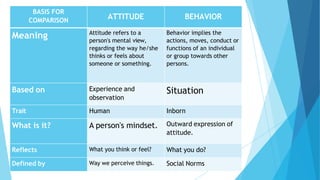
BASIS FOR
COMPARISON ATTITUDE BEHAVIOR
Meaning Attitude refers to a
person's mental view,
regarding the way he/she
thinks or feels about
someone or something.
Behavior implies the
actions, moves, conduct or
functions of an individual
or group towards other
persons.
Based on Experience and
observation
Situation
Trait Human Inborn
What is it? A person's mindset. Outward expression of
attitude.
Reflects What you think or feel? What you do?
Defined by Way we perceive things. Social Norms
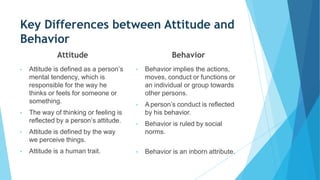
Key Differences between Attitude and
Behavior
Attitude
• Attitude is defined as a person’s
mental tendency, which is
responsible for the way he
thinks or feels for someone or
something.
• The way of thinking or feeling is
reflected by a person’s attitude.
• Attitude is defined by the way
we perceive things.
• Attitude is a human trait.
Behavior
• Behavior implies the actions,
moves, conduct or functions or
an individual or group towards
other persons.
• A person’s conduct is reflected
by his behavior.
• Behavior is ruled by social
norms.
• Behavior is an inborn attribute.
Influence in Behavior
By
Shumail Katherine
How Attitude Influence Behavior
ā–¶ Attitudes can influence behavior in many ways. The first
factors are as follows:
1) Social Norms:
Social norms determine what attitude are acceptable in a
particular social group and will affect when an individual is
expressing their ā€œtrueā€ attitude. Also these norms can foresee
attitudes, intensions and behaviors in many situations.
Continued…
ā–¶ 2) Pluralistic Ignorance:
This means that bias of people to mistakenly believe that
their attitudes differ from others around them when in fact
others may hold the same attitudes or beliefs. Important
forms of situational constraints can moderate the
relationship between attitudes and behavior and block
attitudes from being expressed in overt behavior
When will Attitude influence Behavior
ā–¶ For Example:
An individual is being robbed at gunpoint and is
overwhelmed with fear and confusion. The individual now
reacts by giving the robber his/her money out of impulse.
The individual reacted this way because it is normal to be
full of fear and confusion when being robbed, rather than
being joyful and happy in that situation.
Change of Attitude and behavior
By
Fahad Altaf
How to Change Attitude
ā–¶ Generating a Positive Attitude:
A change in attitude depends on living a new kind of life. Whatever the
negative parts of your life may be, you'll need to let them go if you're
going to develop a better attitude.
ā–¶ Look for the positive:
To develop a positive attitude you should force yourself to notice the
good. Someone with a negative attitude can easily find the downside of
any circumstance. Share your positive observations with others, and
keep negative remarks to yourself.
How to Change Behavior
ā–¶ Changing Your Own Behavior:
Set yourself up for success by making sure you have practical ways to reach
your goals. You’ll be better able to keep track of your progress and stay
motivated if you stick to one or two small, specific, and achievable goals.
Choose behaviors that you actually want to change, not just that other people
ask you to change.
ā–¶ Maintaining Behavioral Changes:
Observe and record the behavior you’re changing. Ask for help if you need it
from supportive friends and family members. Experiencing too much stress can
keep you from being able to successfully change your behavior. Continue
modifying your behavior.
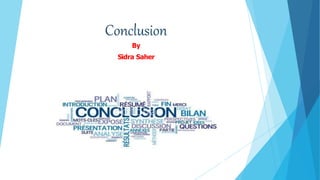
Conclusion
By
Sidra Saher
Conclusion
ā–¶ So, with the above discussion, it is clear that whatever you
say or do, conveys a message to the world about what’s
going on in your mind. It is universally accepted fact that
our emotions, opinions and thoughts cannot be observed,
which shows our attitude. Further, our behavior is ruled by
our attitude as his/her actions are the reflection of his/her
thoughts.
Continued…
ā–¶ Studies have demonstrated that, in some cases, pointing
out inconsistencies between attitudes and behavior can
redirect the behavior. In the case of the school supporter,
showing that their actions (i.e., not voting, not attending
parent-teacher organization meetings) are harming rather
than helping efforts to improve education in their town may
influence them to reevaluate their behavior so that it reflects
their attitudes.
attitude and behavior.pptx

attitude and behavior.pptx

  • 1.
  • 2.
    Group No.1 Name ā–¶ MuhammadAbdullah ā–¶ 02 ā–¶ Narmeen Bushra ā–¶ 49 ā–¶ Shumail Katherine ā–¶ 06 ā–¶ Fahad Altaf ā–¶ 08 ā–¶ Sidra Saher ā–¶ 41 Roll No.
  • 3.
    What is Attitude& Behavior By Muhammad Abdullah
  • 4.
    What is Attitude ā–¶ā€œAttitude represents how a person thinks or feels about someone or somethingā€. ā–¶ Attitude is a person’s mental outlook, which defines the way we think or feel anything. Education, experience, and environment are the major factors that affect a person’s attitude.
  • 5.
    Continued… ā–¶ A person’sattitude can be positive, negative or neutral views, which shows one’s likes and dislikes for someone or something. So, the type of attitude we carry, speaks a lot about us, as we get into that mood and transmits a message to the people around us. There is no such thing like ideal attitude, for a particular situation as it is spontaneous and so we always have a choice to opt the right attitude for us.
  • 6.
    What is Behavior ā–¶ā€œBehavior represents an individual’s particular action, person or environmentā€. reaction to a ā–¶ Behavior is the manner of acting or controlling oneself towards other people. It is essentially, any output of the brain.
  • 7.
    Continued… ā–¶ It isthe manner of acting or controlling oneself towards other people. It is the range of actions, responses, and mannerisms set by an individual, system or organization in association with themselves or their environment, in any circumstances. ā–¶ In short, behavior is an individual or group reaction to inputs such as an action, environment or stimulus which can be internal or external, voluntary or involuntary, conscious or subconscious.
  • 8.
  • 9.
    BASIS FOR COMPARISON ATTITUDEBEHAVIOR Meaning Attitude refers to a person's mental view, regarding the way he/she thinks or feels about someone or something. Behavior implies the actions, moves, conduct or functions of an individual or group towards other persons. Based on Experience and observation Situation Trait Human Inborn What is it? A person's mindset. Outward expression of attitude. Reflects What you think or feel? What you do? Defined by Way we perceive things. Social Norms
  • 10.
    Key Differences betweenAttitude and Behavior Attitude • Attitude is defined as a person’s mental tendency, which is responsible for the way he thinks or feels for someone or something. • The way of thinking or feeling is reflected by a person’s attitude. • Attitude is defined by the way we perceive things. • Attitude is a human trait. Behavior • Behavior implies the actions, moves, conduct or functions or an individual or group towards other persons. • A person’s conduct is reflected by his behavior. • Behavior is ruled by social norms. • Behavior is an inborn attribute.
  • 11.
  • 12.
    How Attitude InfluenceBehavior ā–¶ Attitudes can influence behavior in many ways. The first factors are as follows: 1) Social Norms: Social norms determine what attitude are acceptable in a particular social group and will affect when an individual is expressing their ā€œtrueā€ attitude. Also these norms can foresee attitudes, intensions and behaviors in many situations.
  • 13.
    Continued… ā–¶ 2) PluralisticIgnorance: This means that bias of people to mistakenly believe that their attitudes differ from others around them when in fact others may hold the same attitudes or beliefs. Important forms of situational constraints can moderate the relationship between attitudes and behavior and block attitudes from being expressed in overt behavior
  • 14.
    When will Attitudeinfluence Behavior ā–¶ For Example: An individual is being robbed at gunpoint and is overwhelmed with fear and confusion. The individual now reacts by giving the robber his/her money out of impulse. The individual reacted this way because it is normal to be full of fear and confusion when being robbed, rather than being joyful and happy in that situation.
  • 15.
    Change of Attitudeand behavior By Fahad Altaf
  • 16.
    How to ChangeAttitude ā–¶ Generating a Positive Attitude: A change in attitude depends on living a new kind of life. Whatever the negative parts of your life may be, you'll need to let them go if you're going to develop a better attitude. ā–¶ Look for the positive: To develop a positive attitude you should force yourself to notice the good. Someone with a negative attitude can easily find the downside of any circumstance. Share your positive observations with others, and keep negative remarks to yourself.
  • 17.
    How to ChangeBehavior ā–¶ Changing Your Own Behavior: Set yourself up for success by making sure you have practical ways to reach your goals. You’ll be better able to keep track of your progress and stay motivated if you stick to one or two small, specific, and achievable goals. Choose behaviors that you actually want to change, not just that other people ask you to change. ā–¶ Maintaining Behavioral Changes: Observe and record the behavior you’re changing. Ask for help if you need it from supportive friends and family members. Experiencing too much stress can keep you from being able to successfully change your behavior. Continue modifying your behavior.
  • 18.
  • 19.
    Conclusion ā–¶ So, withthe above discussion, it is clear that whatever you say or do, conveys a message to the world about what’s going on in your mind. It is universally accepted fact that our emotions, opinions and thoughts cannot be observed, which shows our attitude. Further, our behavior is ruled by our attitude as his/her actions are the reflection of his/her thoughts.
  • 20.
    Continued… ā–¶ Studies havedemonstrated that, in some cases, pointing out inconsistencies between attitudes and behavior can redirect the behavior. In the case of the school supporter, showing that their actions (i.e., not voting, not attending parent-teacher organization meetings) are harming rather than helping efforts to improve education in their town may influence them to reevaluate their behavior so that it reflects their attitudes.