Creating a mentally
healthy workplace
Mental illness
1 in 5 people
will experience a mental illness in any 12 month period
Mental illness – data
0.0
5.0
10.0
15.0
20.0
25.0
Any Anxiety
disorder
Any
Affective
disorder
Any
Substance
Use disorder
Any 12-
month
mental
disorder
%
Males
Females
All Persons
Impact on workplaces
Productivity
– Estimated cost 2 hours per day= 2*125*500=
Absenteeism
– $4.7 billion per year
Presenteeism
– Estimates of 18 days lost per year ($6.1 billion)
Injury
– Risk of injury greater
What can workplaces do?
Workplace responses
Factors for success
From PwC report
1. Commitment from senior leaders
2. Employee participation
3. Develop and implement policies
4. Allocated resources for success
5. Ongoing effort for a sustainable approach
6. Plan and evaluate outcomes.
Mental health
problems,
mental illness
Support
recovery
from illness
Support for
mental
health
problems
Identify and
respond
early
Reduce
individual
risk factors
Support
good health
Managing mental health at work
Reducing risk Promoting Recovery
Reduce
environ-
mental risk
factors
• Ensuring a good fit between the job and the person doing the
job
• Preparing people well for the work they need to do
• Creating a culture of high expectations along with support
• Having a culture of fairness and equity
• Promoting mental health literacy (how to stay mentally healthy)
• Good communication between managers and staff
• Increasing social connection and opportunities for peer-
support.
Support
good health
• Reducing drug and alcohol misuse
• Support healthy diet and physical fitness
• Develop individual skills – financial management, stress
management, communication skills
• Management of physical injury and/or pain
• Options to support workers managing ill-health in family
• Provide support and flexibility for staff exposed to traumatic
events at work or experiencing difficult life events.
Reduce
individual
risk factors
• Reduce or manage occupational risks
– Tiredness
– Boredom
– Accidents
– Excessive stress
– Bullying and harassment
– Disharmony
Reduce
environ-
mental risk
factors
Mental health
problems,
mental illness
Support
recovery
from illness
Support for
mental
health
problems
Identify and
respond
early
Reduce
individual
risk factors
Support
good health
Managing mental health at work
Reducing risk Promoting Recovery
Reduce
environ-
mental risk
factors
Identify and
respond
early
• Promote awareness of mental illness, signs, symptoms etc
• Support early identification (self or others)
• Self-identification, peer-identification and support
Identification by supervisors or managers
• Promote culture of acceptance of mental health problems
• Promote culture that help-seeking is a positive thing
• Promote a culture of offering support, expressing concern for
work colleagues
• Training to increase skills in raising difficult, personal issues
with staff in a helpful, non-threatening way.
• Promote for early support
• Provide immediate first aid for staff experiencing a mental
health crisis at work
• Reassurance of support for staff receiving treatment for
mental illness
• Partnerships and referral pathways to mental health providers
• Provide or facilitate access to peer-support models and/or
online treatment modalities.
Support for
mental
health
problems
• Take a positive optimistic approach
• Manage absences well
• Identify and address any workplace contributing factors
• Manage return to work well
• Make reasonable adjustments to the work environment
• Supervisor training to manage return to work
• Facilitate access to support options for family and friends
• Address stigma in the workplace.
Support
recovery
from illness
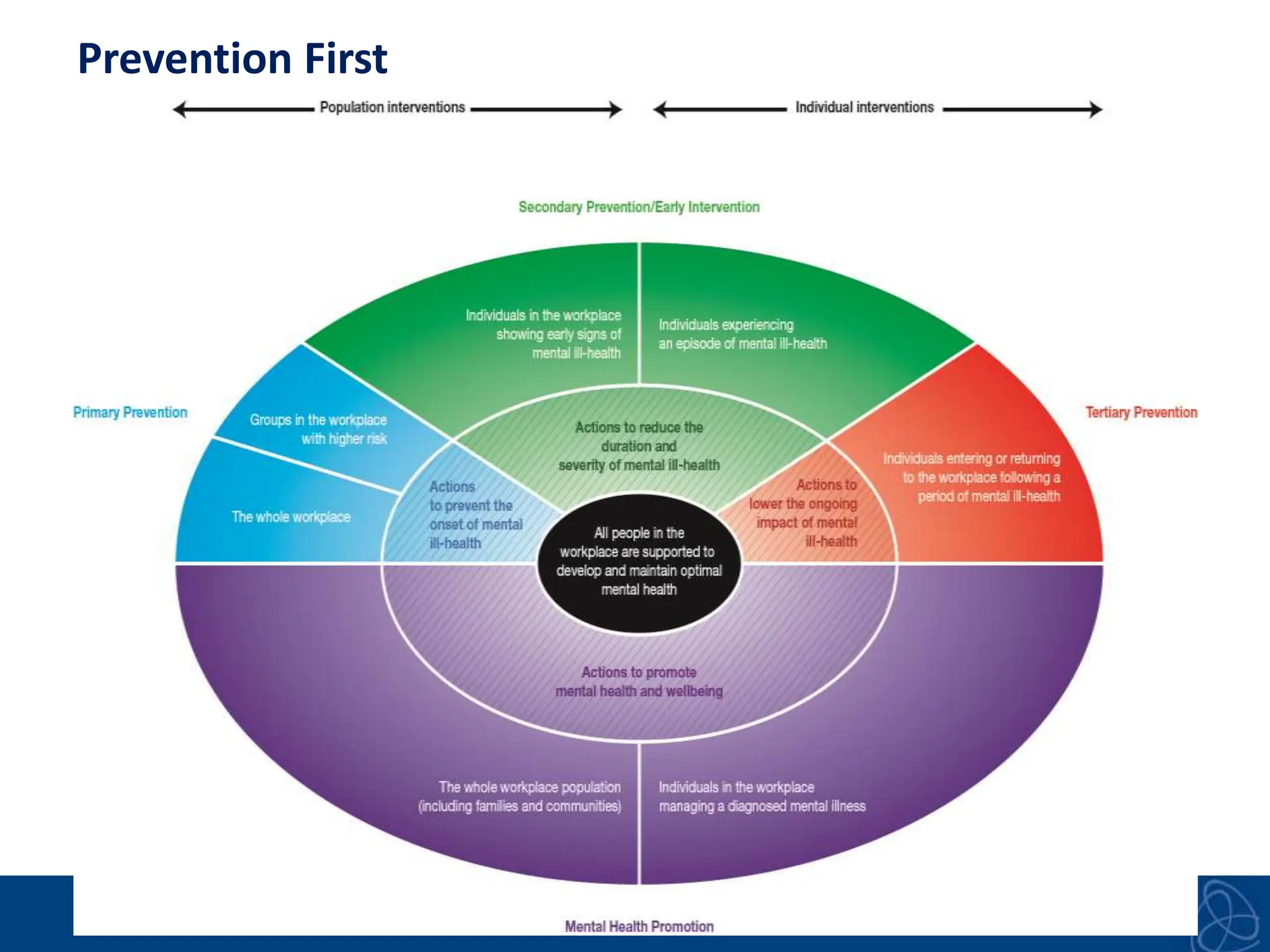
Prevention First

workplace mental health process to overcome

  • 1.
  • 3.
    Mental illness 1 in5 people will experience a mental illness in any 12 month period
  • 4.
    Mental illness –data 0.0 5.0 10.0 15.0 20.0 25.0 Any Anxiety disorder Any Affective disorder Any Substance Use disorder Any 12- month mental disorder % Males Females All Persons
  • 5.
    Impact on workplaces Productivity –Estimated cost 2 hours per day= 2*125*500= Absenteeism – $4.7 billion per year Presenteeism – Estimates of 18 days lost per year ($6.1 billion) Injury – Risk of injury greater
  • 6.
    What can workplacesdo? Workplace responses
  • 7.
    Factors for success FromPwC report 1. Commitment from senior leaders 2. Employee participation 3. Develop and implement policies 4. Allocated resources for success 5. Ongoing effort for a sustainable approach 6. Plan and evaluate outcomes.
  • 8.
    Mental health problems, mental illness Support recovery fromillness Support for mental health problems Identify and respond early Reduce individual risk factors Support good health Managing mental health at work Reducing risk Promoting Recovery Reduce environ- mental risk factors
  • 9.
    • Ensuring agood fit between the job and the person doing the job • Preparing people well for the work they need to do • Creating a culture of high expectations along with support • Having a culture of fairness and equity • Promoting mental health literacy (how to stay mentally healthy) • Good communication between managers and staff • Increasing social connection and opportunities for peer- support. Support good health
  • 10.
    • Reducing drugand alcohol misuse • Support healthy diet and physical fitness • Develop individual skills – financial management, stress management, communication skills • Management of physical injury and/or pain • Options to support workers managing ill-health in family • Provide support and flexibility for staff exposed to traumatic events at work or experiencing difficult life events. Reduce individual risk factors
  • 11.
    • Reduce ormanage occupational risks – Tiredness – Boredom – Accidents – Excessive stress – Bullying and harassment – Disharmony Reduce environ- mental risk factors
  • 12.
    Mental health problems, mental illness Support recovery fromillness Support for mental health problems Identify and respond early Reduce individual risk factors Support good health Managing mental health at work Reducing risk Promoting Recovery Reduce environ- mental risk factors
  • 13.
    Identify and respond early • Promoteawareness of mental illness, signs, symptoms etc • Support early identification (self or others) • Self-identification, peer-identification and support Identification by supervisors or managers • Promote culture of acceptance of mental health problems • Promote culture that help-seeking is a positive thing • Promote a culture of offering support, expressing concern for work colleagues • Training to increase skills in raising difficult, personal issues with staff in a helpful, non-threatening way.
  • 14.
    • Promote forearly support • Provide immediate first aid for staff experiencing a mental health crisis at work • Reassurance of support for staff receiving treatment for mental illness • Partnerships and referral pathways to mental health providers • Provide or facilitate access to peer-support models and/or online treatment modalities. Support for mental health problems
  • 15.
    • Take apositive optimistic approach • Manage absences well • Identify and address any workplace contributing factors • Manage return to work well • Make reasonable adjustments to the work environment • Supervisor training to manage return to work • Facilitate access to support options for family and friends • Address stigma in the workplace. Support recovery from illness
  • 16.

Editor's Notes

  • #4 Alternative master template
  • #5 Alternative master template
  • #6 Alternative master template
  • #8 Alternative master template
  • #9 8
  • #13 12
  • #17 Alternative master template