1. The energy per mol necessary
to ionize a hydrogen atom in the
ground state is :
(a) 1313 kJ/mol (b) 1013 kJ/mol
(c) 2626 kJ/mol (d) 2000 kJ/mol
2. The hydrogen-like ion that has the wavelength
difference between the first lines of Balmer and Lyman
series equal to 59.3 nm (RH = 109678 cm–1) is :
• (a) He+ (b) Li2+
• (c) Be3+ (d) B4+
3. The wavelength of the next line in the series
having lines of spectrum of H-atoms of wavelengths
6565 Å, 4863 Å, 4342 Å and 4103 Å is :
• (a) 4061.47 Å
• (b) 3000 Å
• (c) 2500 Å
• (d) 2000 Å
5. Which of the following transitions have the wave
number ratio as 108 : 7 in atomic spectra of hydrogen?
• (a) First Lyman and first Brackett
• (b) First and second Lyman
• (c) First Lyman and first Balmer
• (d) First Lyman and first Paschen
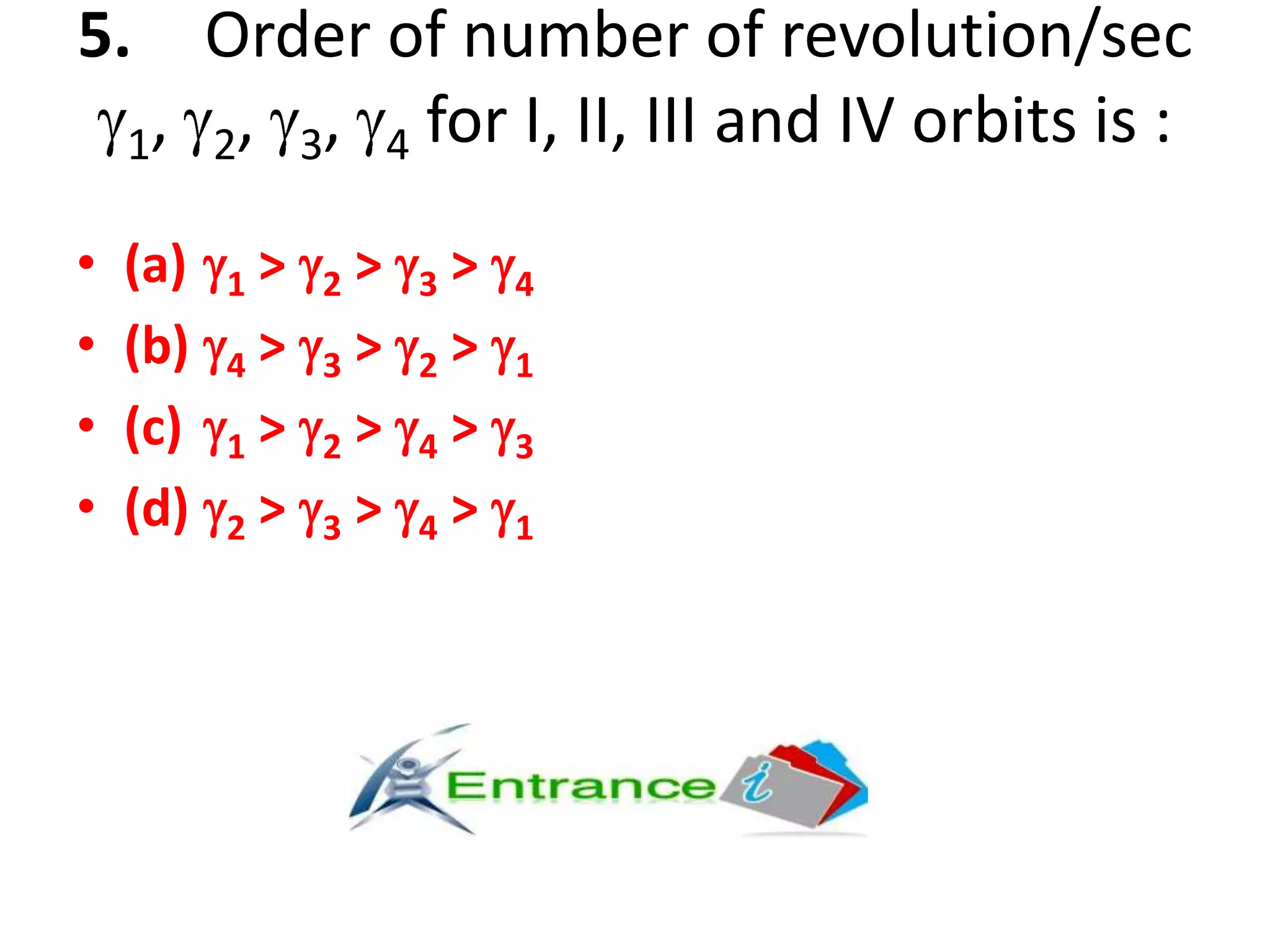
5. Order of number of revolution/sec
1, 2, 3, 4 for I, II, III and IV orbits is :
• (a) 1 > 2 > 3 > 4
• (b) 4 > 3 > 2 > 1
• (c) 1 > 2 > 4 > 3
• (d) 2 > 3 > 4 > 1
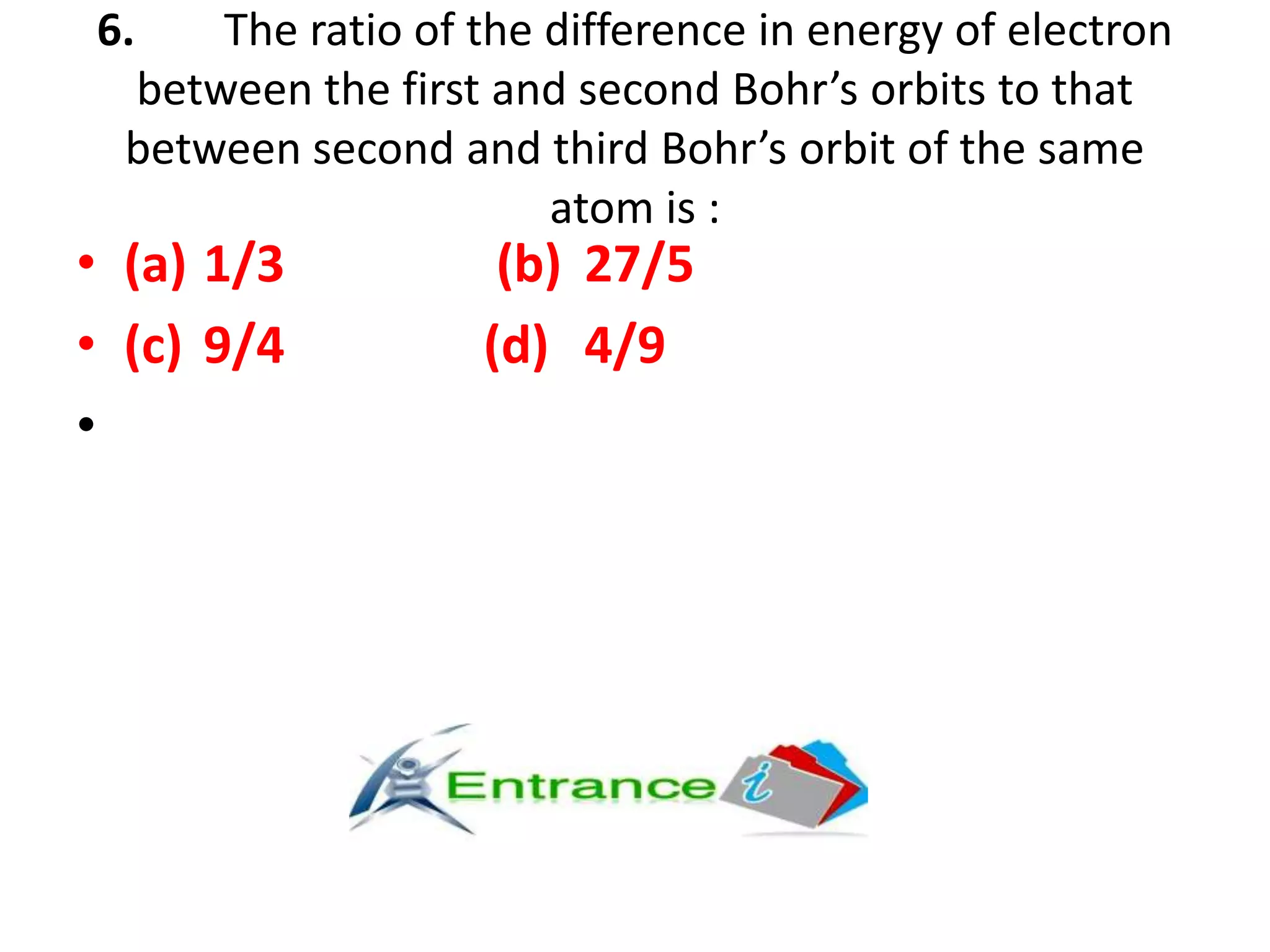
6. The ratio of the difference in energy of electron
between the first and second Bohr’s orbits to that
between second and third Bohr’s orbit of the same
atom is :
• (a) 1/3 (b) 27/5
• (c) 9/4 (d) 4/9
•
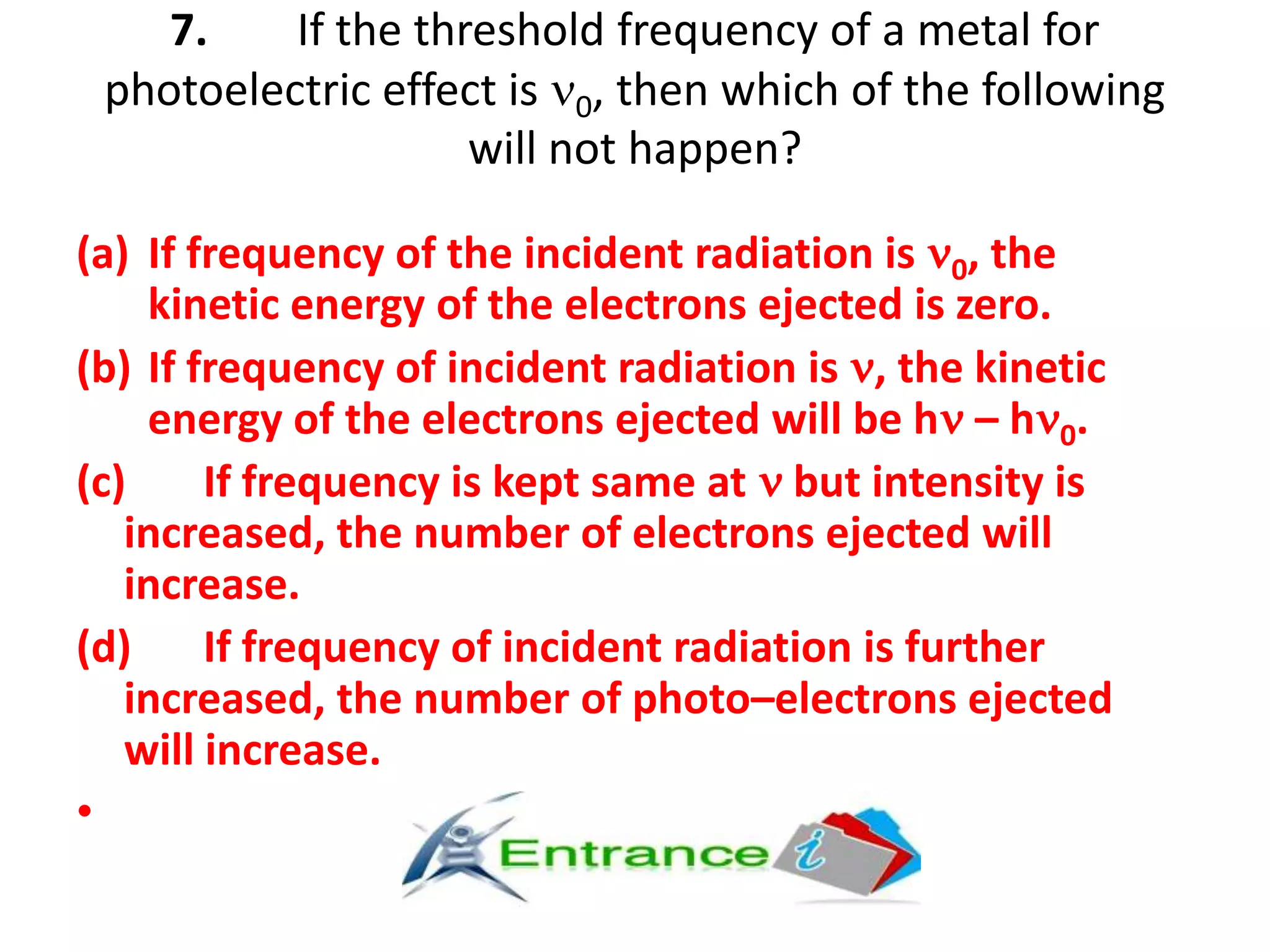
7. If the threshold frequency of a metal for
photoelectric effect is 0, then which of the following
will not happen?
(a) If frequency of the incident radiation is 0, the
kinetic energy of the electrons ejected is zero.
(b) If frequency of incident radiation is , the kinetic
energy of the electrons ejected will be h – h 0.
(c) If frequency is kept same at but intensity is
increased, the number of electrons ejected will
increase.
(d) If frequency of incident radiation is further
increased, the number of photo–electrons ejected
will increase.
•
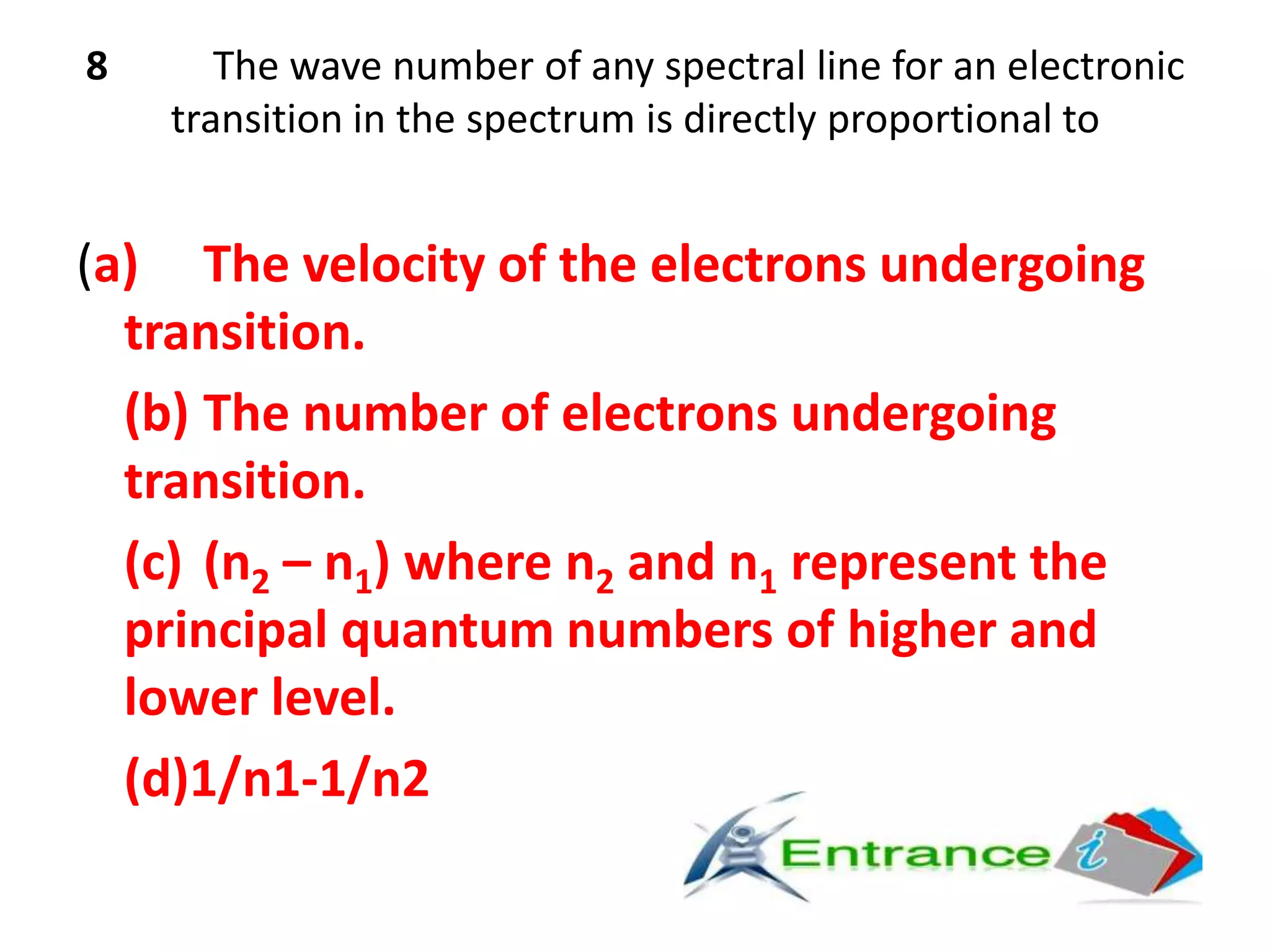
8 The wave number of any spectral line for an electronic
transition in the spectrum is directly proportional to
(a) The velocity of the electrons undergoing
transition.
(b) The number of electrons undergoing
transition.
(c) (n2 – n1) where n2 and n1 represent the
principal quantum numbers of higher and
lower level.
(d)1/n1-1/n2
9. Which of the following sets of
quantum numbers is permissible for
an electron is an atom?
• (a) n = 1, l = 1, m = 0, s = +1/2
• (b) n = 3, l = 1, m = – 2, s = -1/2
• (c) n = 2, l = 1, m = 0, s = +1/2
• (d) n = 2, l = 0, m = 0, s = 1
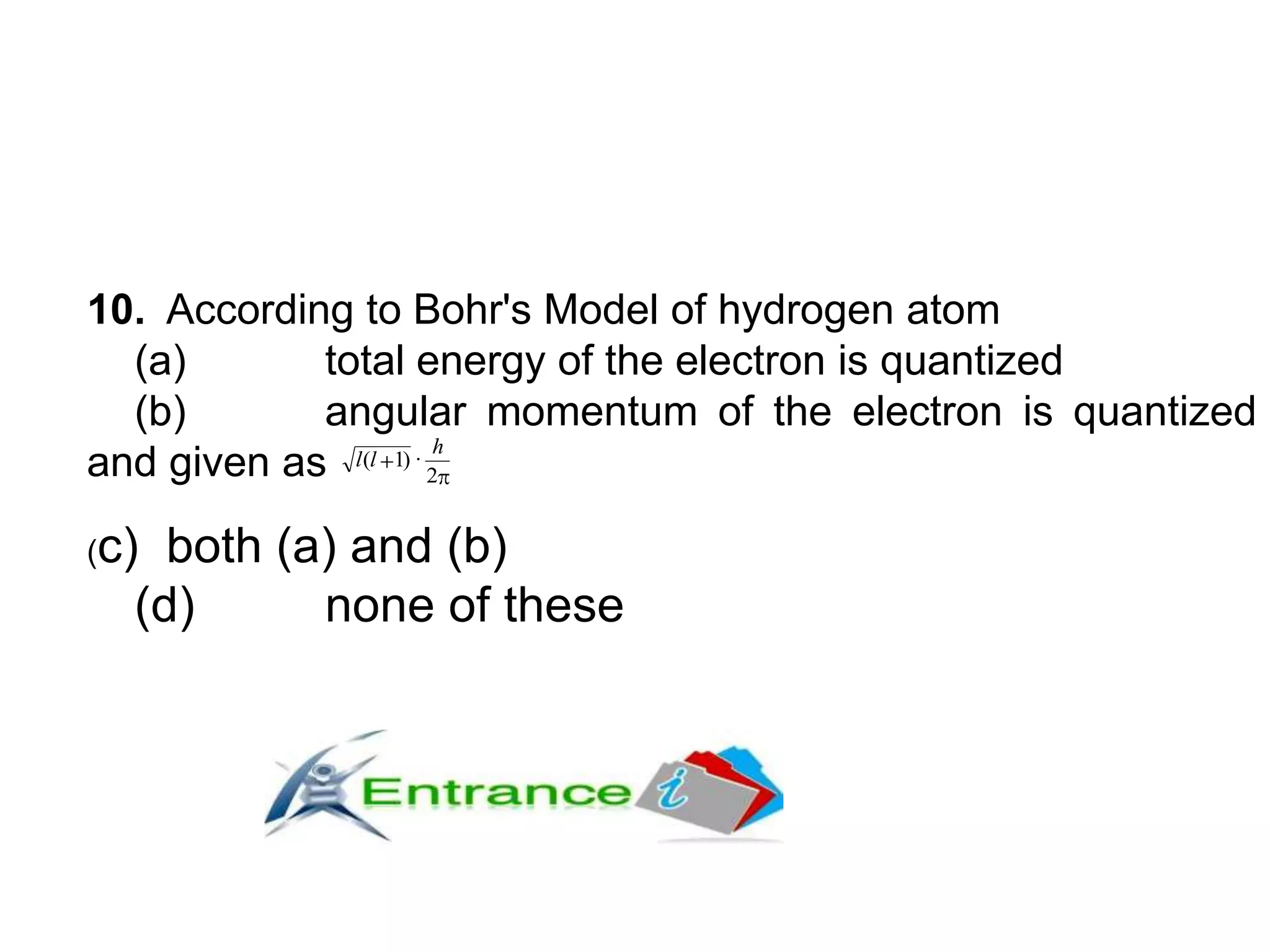
10. According to Bohr's Model of hydrogen atom
(a) total energy of the electron is quantized
(b) angular momentum of the electron is quantized
and given as 2
·)1(
h
ll
(c) both (a) and (b)
(d) none of these
11 Which of the following statement is correct in relation
to the hydrogen atom?
(a) 3s–orbital is lower in energy than 3p–orbital.
(b) 3p–orbital is lower in energy than 3d–orbital.
(c) 3s and 3p–orbitals are of lower energy than 3d–
orbitals.
(d) 3s, 3p and 3d–orbitals all have same energy.
SUBJECTIVE QUESTION FOR AIEEE
1. Suppose 10-17 J of energy is needed by the interior of the human eye to see an
object. How many photons of green light ( = 550 nm) are needed to generate this
minimum amount of energy ?
•
2. Calculate the frequency of the spectral line emitted when the electron in (n = 3) in
hydrogen atom dexcites to ground state. (RH = 2.92 10 sec )
3. Calculate the velocity (cm sec-1) of an electron placed in the third orbit of the
hydrogen atom. Also calculate the number of revolutions per second that this
electron makes around the nucleus.
4. The ionisation energy of hydrogen atom is 13.6 eV. What will be the ionisation
energy of He and Li ions ?
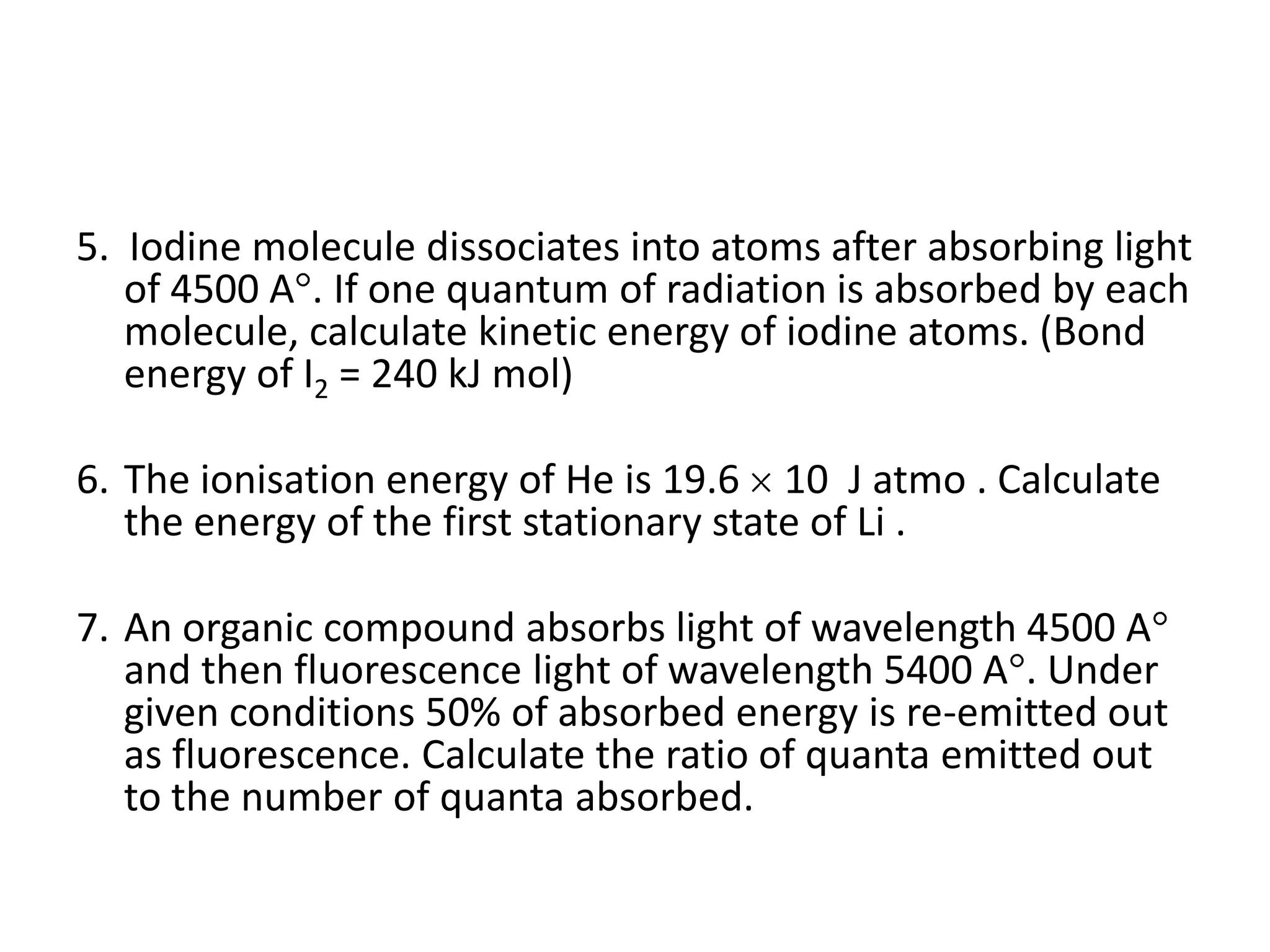
5. Iodine molecule dissociates into atoms after absorbing light
of 4500 A . If one quantum of radiation is absorbed by each
molecule, calculate kinetic energy of iodine atoms. (Bond
energy of I2 = 240 kJ mol)
6. The ionisation energy of He is 19.6 10 J atmo . Calculate
the energy of the first stationary state of Li .
7. An organic compound absorbs light of wavelength 4500 A
and then fluorescence light of wavelength 5400 A . Under
given conditions 50% of absorbed energy is re-emitted out
as fluorescence. Calculate the ratio of quanta emitted out
to the number of quanta absorbed.

Atomic structure

  • 1.
    1. The energyper mol necessary to ionize a hydrogen atom in the ground state is : (a) 1313 kJ/mol (b) 1013 kJ/mol (c) 2626 kJ/mol (d) 2000 kJ/mol
  • 2.
    2. The hydrogen-likeion that has the wavelength difference between the first lines of Balmer and Lyman series equal to 59.3 nm (RH = 109678 cm–1) is : • (a) He+ (b) Li2+ • (c) Be3+ (d) B4+
  • 3.
    3. The wavelengthof the next line in the series having lines of spectrum of H-atoms of wavelengths 6565 Å, 4863 Å, 4342 Å and 4103 Å is : • (a) 4061.47 Å • (b) 3000 Å • (c) 2500 Å • (d) 2000 Å
  • 4.
    5. Which ofthe following transitions have the wave number ratio as 108 : 7 in atomic spectra of hydrogen? • (a) First Lyman and first Brackett • (b) First and second Lyman • (c) First Lyman and first Balmer • (d) First Lyman and first Paschen
  • 5.
    5. Order ofnumber of revolution/sec 1, 2, 3, 4 for I, II, III and IV orbits is : • (a) 1 > 2 > 3 > 4 • (b) 4 > 3 > 2 > 1 • (c) 1 > 2 > 4 > 3 • (d) 2 > 3 > 4 > 1
  • 6.
    6. The ratioof the difference in energy of electron between the first and second Bohr’s orbits to that between second and third Bohr’s orbit of the same atom is : • (a) 1/3 (b) 27/5 • (c) 9/4 (d) 4/9 •
  • 7.
    7. If thethreshold frequency of a metal for photoelectric effect is 0, then which of the following will not happen? (a) If frequency of the incident radiation is 0, the kinetic energy of the electrons ejected is zero. (b) If frequency of incident radiation is , the kinetic energy of the electrons ejected will be h – h 0. (c) If frequency is kept same at but intensity is increased, the number of electrons ejected will increase. (d) If frequency of incident radiation is further increased, the number of photo–electrons ejected will increase. •
  • 8.
    8 The wavenumber of any spectral line for an electronic transition in the spectrum is directly proportional to (a) The velocity of the electrons undergoing transition. (b) The number of electrons undergoing transition. (c) (n2 – n1) where n2 and n1 represent the principal quantum numbers of higher and lower level. (d)1/n1-1/n2
  • 9.
    9. Which ofthe following sets of quantum numbers is permissible for an electron is an atom? • (a) n = 1, l = 1, m = 0, s = +1/2 • (b) n = 3, l = 1, m = – 2, s = -1/2 • (c) n = 2, l = 1, m = 0, s = +1/2 • (d) n = 2, l = 0, m = 0, s = 1
  • 10.
    10. According toBohr's Model of hydrogen atom (a) total energy of the electron is quantized (b) angular momentum of the electron is quantized and given as 2 ·)1( h ll (c) both (a) and (b) (d) none of these
  • 11.
    11 Which ofthe following statement is correct in relation to the hydrogen atom? (a) 3s–orbital is lower in energy than 3p–orbital. (b) 3p–orbital is lower in energy than 3d–orbital. (c) 3s and 3p–orbitals are of lower energy than 3d– orbitals. (d) 3s, 3p and 3d–orbitals all have same energy.
  • 12.
    SUBJECTIVE QUESTION FORAIEEE 1. Suppose 10-17 J of energy is needed by the interior of the human eye to see an object. How many photons of green light ( = 550 nm) are needed to generate this minimum amount of energy ? • 2. Calculate the frequency of the spectral line emitted when the electron in (n = 3) in hydrogen atom dexcites to ground state. (RH = 2.92 10 sec ) 3. Calculate the velocity (cm sec-1) of an electron placed in the third orbit of the hydrogen atom. Also calculate the number of revolutions per second that this electron makes around the nucleus. 4. The ionisation energy of hydrogen atom is 13.6 eV. What will be the ionisation energy of He and Li ions ?
  • 13.
    5. Iodine moleculedissociates into atoms after absorbing light of 4500 A . If one quantum of radiation is absorbed by each molecule, calculate kinetic energy of iodine atoms. (Bond energy of I2 = 240 kJ mol) 6. The ionisation energy of He is 19.6 10 J atmo . Calculate the energy of the first stationary state of Li . 7. An organic compound absorbs light of wavelength 4500 A and then fluorescence light of wavelength 5400 A . Under given conditions 50% of absorbed energy is re-emitted out as fluorescence. Calculate the ratio of quanta emitted out to the number of quanta absorbed.