Exploring Your Personality and Major
Chapter 2
Keys to Success:
Find Your Passion
The secret of success is
making your vocation your
vacation.
Mark Twain
How do you know when you
have found your passion?
When Time Flies
Success is not the key to
happiness.
Happiness is the key to success.
If you love what you are doing,
you will be successful.
Anonymous
Personality Assessments
 Do What You Are
 The material in the textbook
Based on the theory of Carl
Jung
A Swiss Psychologist, 1875-
1961
We are all born with a
personality type.
If you understand your type,
you can understand yourself
and others.
There are no good or bad
personality types,
just differences.
The personality assessment
identifies your preferences.
Demonstration: What is your
preference?
There are advantages and
disadvantages of each
type.
Focus on your gifts
and talents.
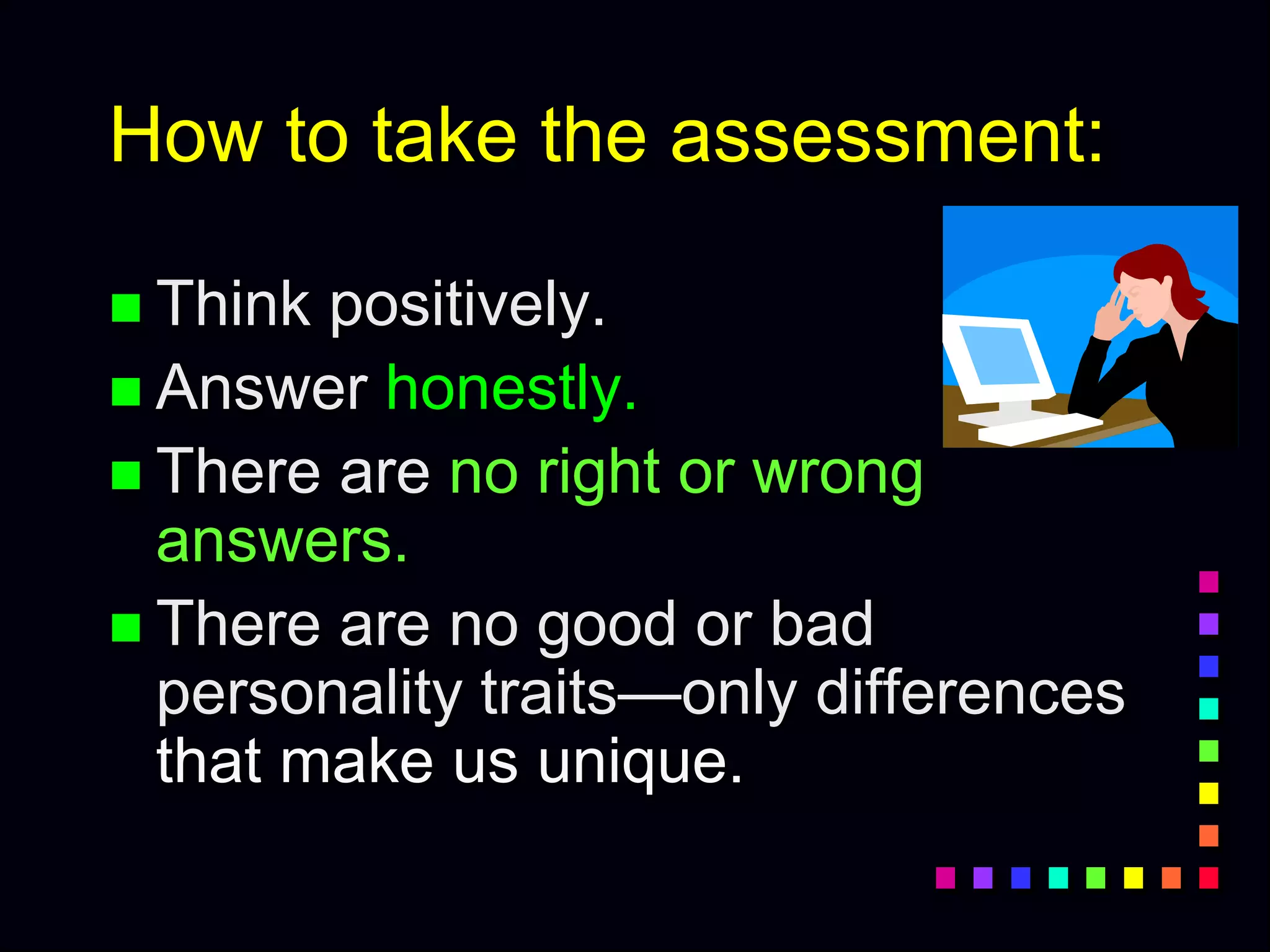
How to take the assessment:
 Think positively.
 Answer honestly.
 There are no right or wrong
answers.
 There are no good or bad
personality traits—only differences
that make us unique.
Personality Assessment
 Helps you understand your personality
type
 Identifies your preferences
 Provides useful ideas for selecting your
career and major
 Helps you identify your gifts and talents
 Helps you to understand differences in
others
Taking the DWYA
 Find a time when you are not tired or
rushed.
 There are no right or wrong answers.
 Each type has their own unique gifts
and talents.
Taking the DWYA
 The test does not measure:
 Intelligence
 Psychological or emotional health
Taking the DWYA
 Answer the questions honestly to get the best
results.
 Answer the questions how you usually are
when you are not stressed.
 Do not answer the questions:
 How you want to be
 How you have to be at home, work or
school
 How others want you to be
Personality Types
• Extravert - E
• Sensing - S
• Thinking - T
• Judging - J
• Introvert - I
• INtuitive - N
• Feeling - F
• Perceptive -P
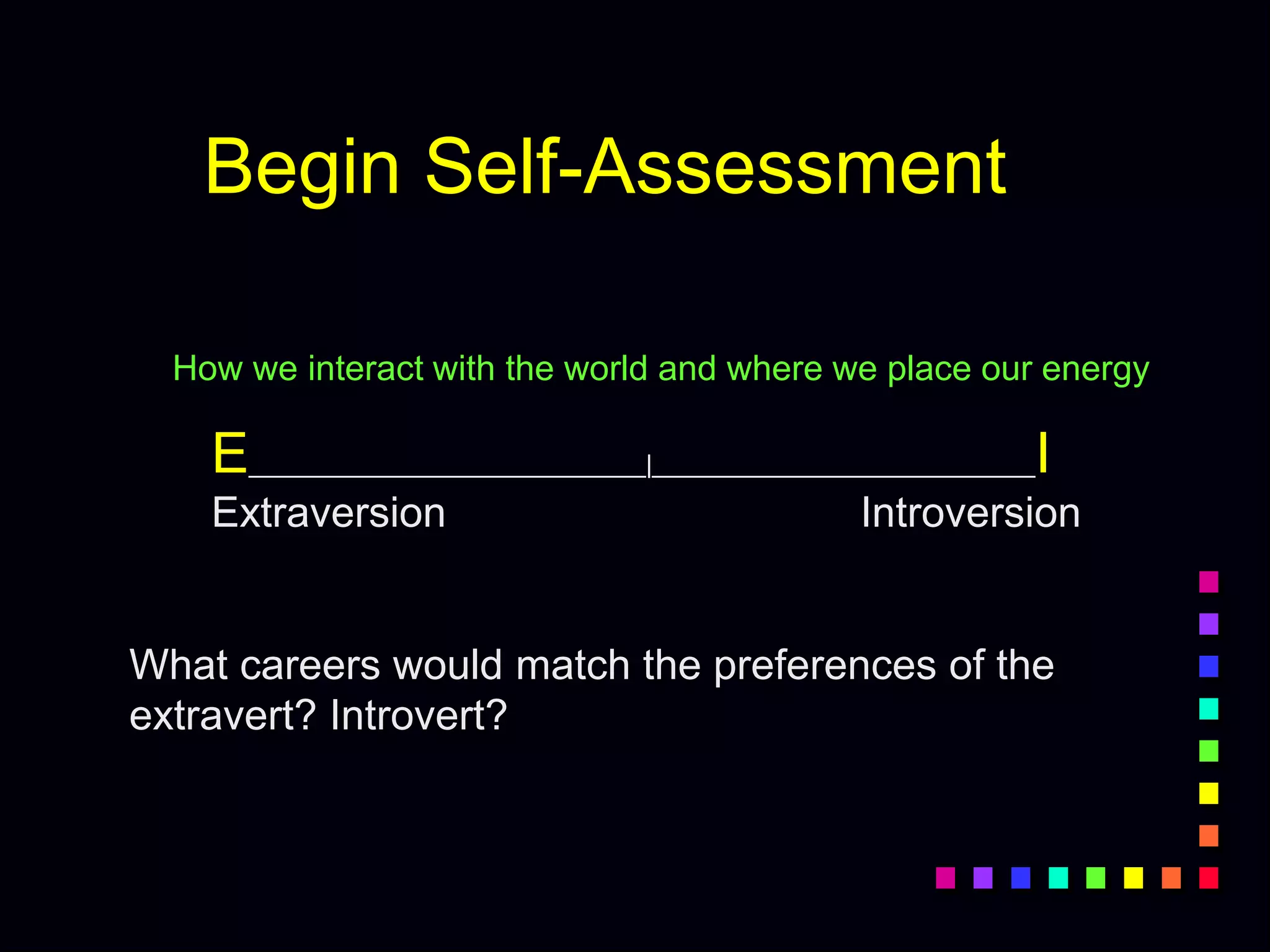
Begin Self-Assessment
How we interact with the world and where we place our energy
E_____________________________|____________________________I
Extraversion Introversion
What careers would match the preferences of the
extravert? Introvert?
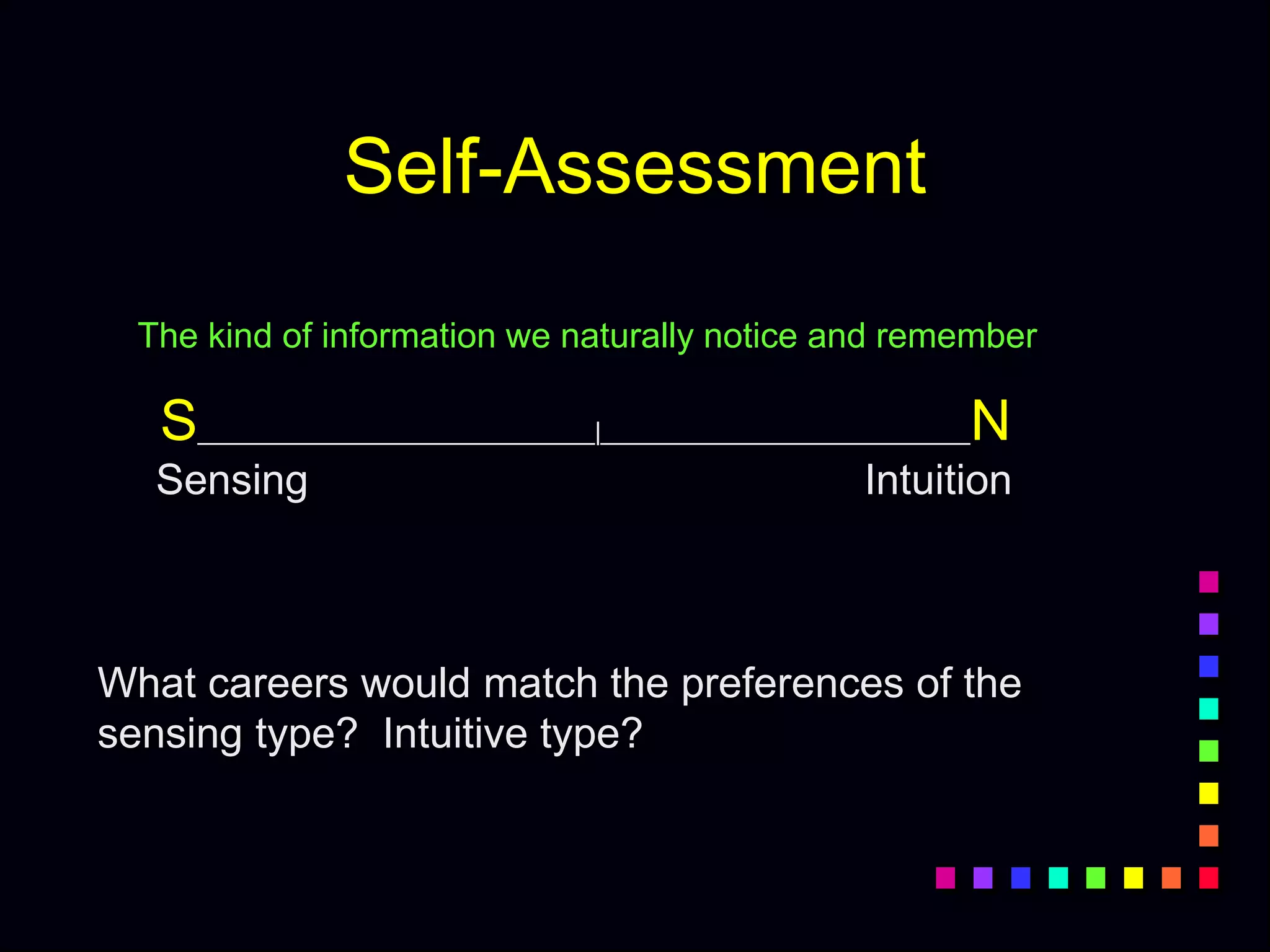
Self-Assessment
The kind of information we naturally notice and remember
S_____________________________|___________________________N
Sensing Intuition
What careers would match the preferences of the
sensing type? Intuitive type?
Self-Assessment
How we make decisions
T_____________________________|___________________________F
Thinking Feeling
What careers match the preferences of the thinking
type? Feeling type?
Self-Assessment
Whether we prefer to live in a more structured or
spontaneous way
J_____________________________|_____________________________P
Judging Perceiving
What careers match the preferences of the judging type?
The perceptive type?
Personality Types
• Extravert - E •Introvert - I
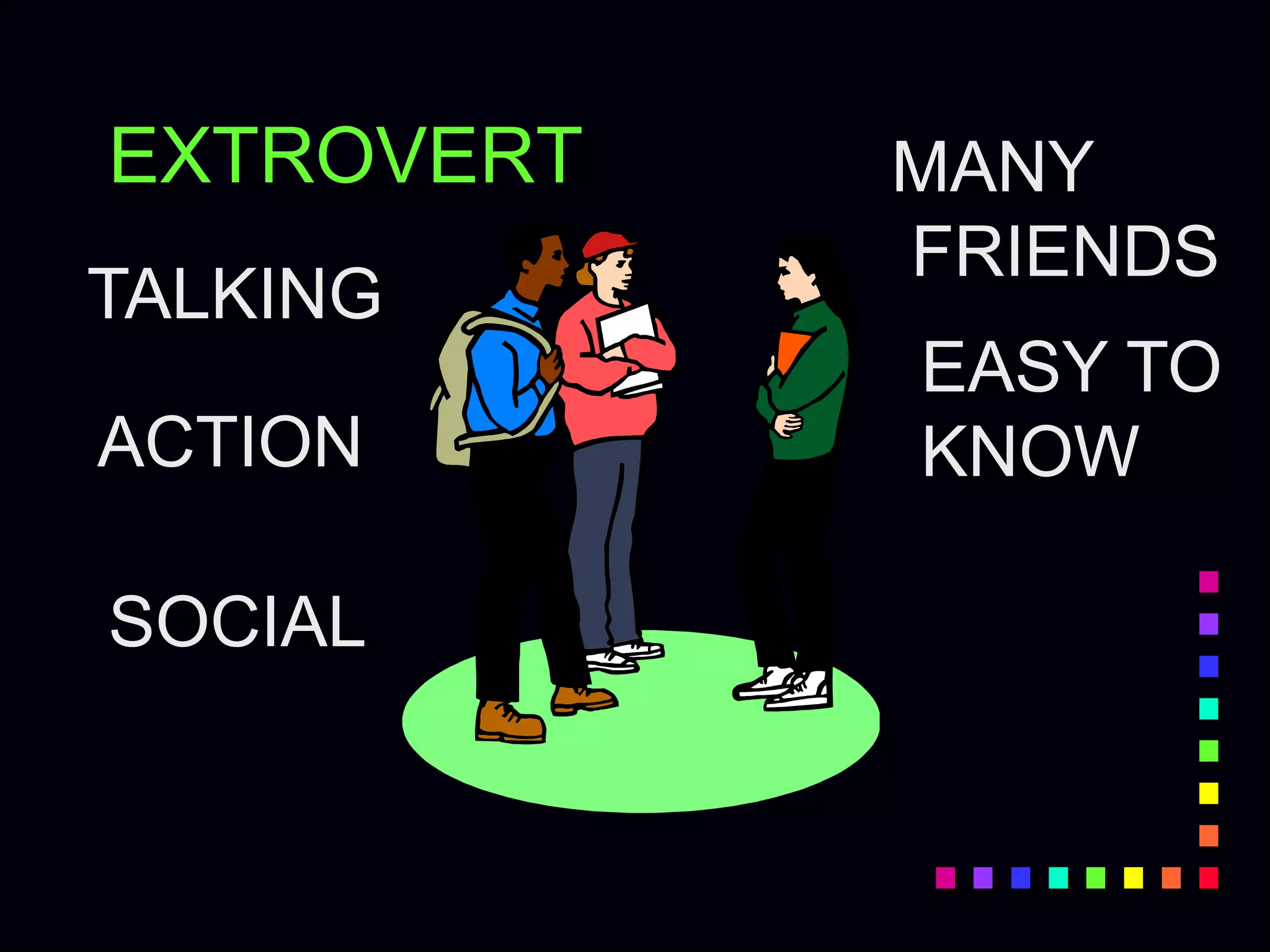
EXTROVERT
TALKING
ACTION
SOCIAL
MANY
FRIENDS
EASY TO
KNOW
A Disadvantage: Speak and
then Think
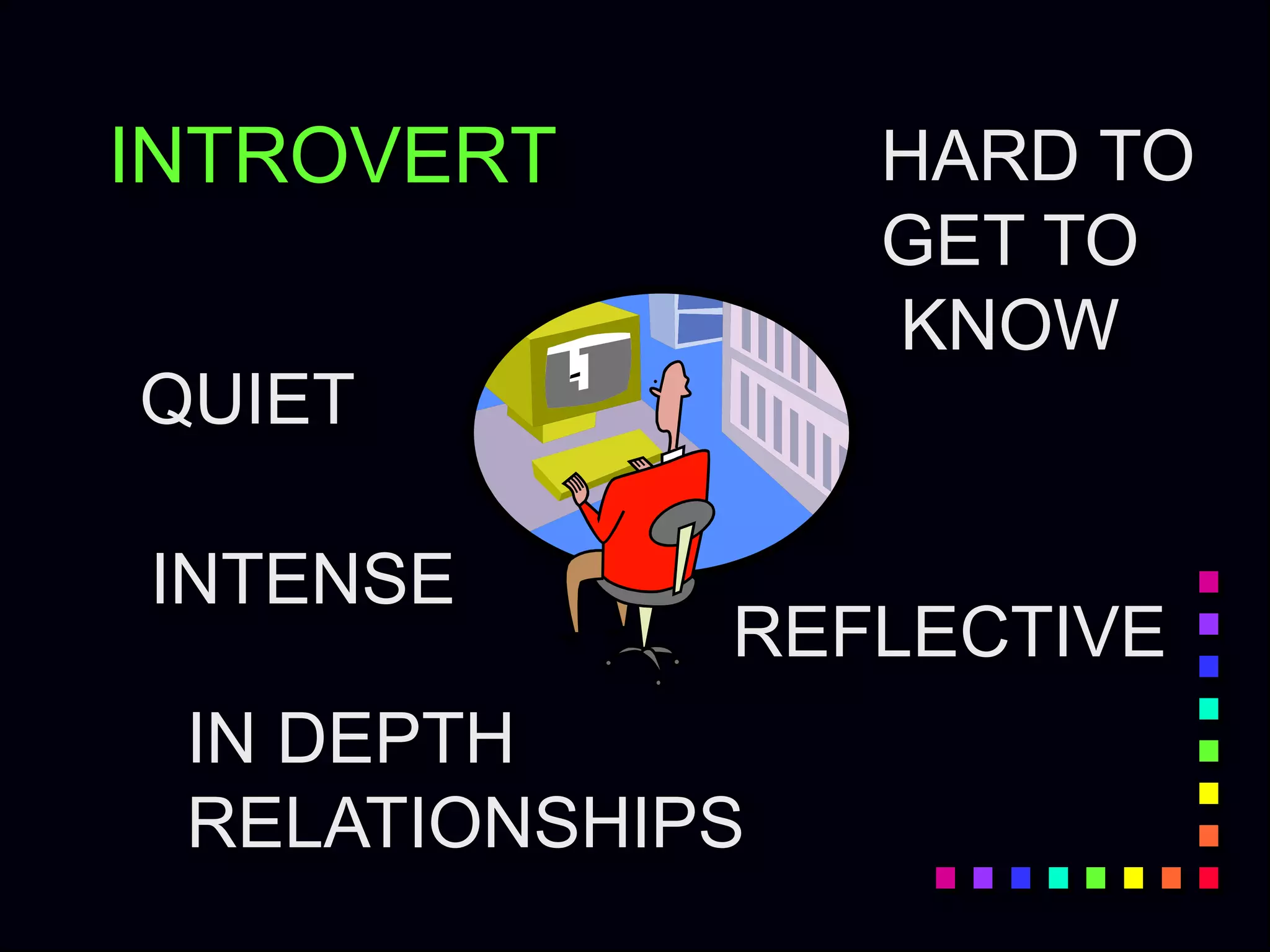
INTROVERT
QUIET
REFLECTIVE
INTENSE
HARD TO
GET TO
KNOW
IN DEPTH
RELATIONSHIPS
Disadvantage: Think, and then
Speak.
MAY NOT GET AROUND TO
SPEAKING AT ALL
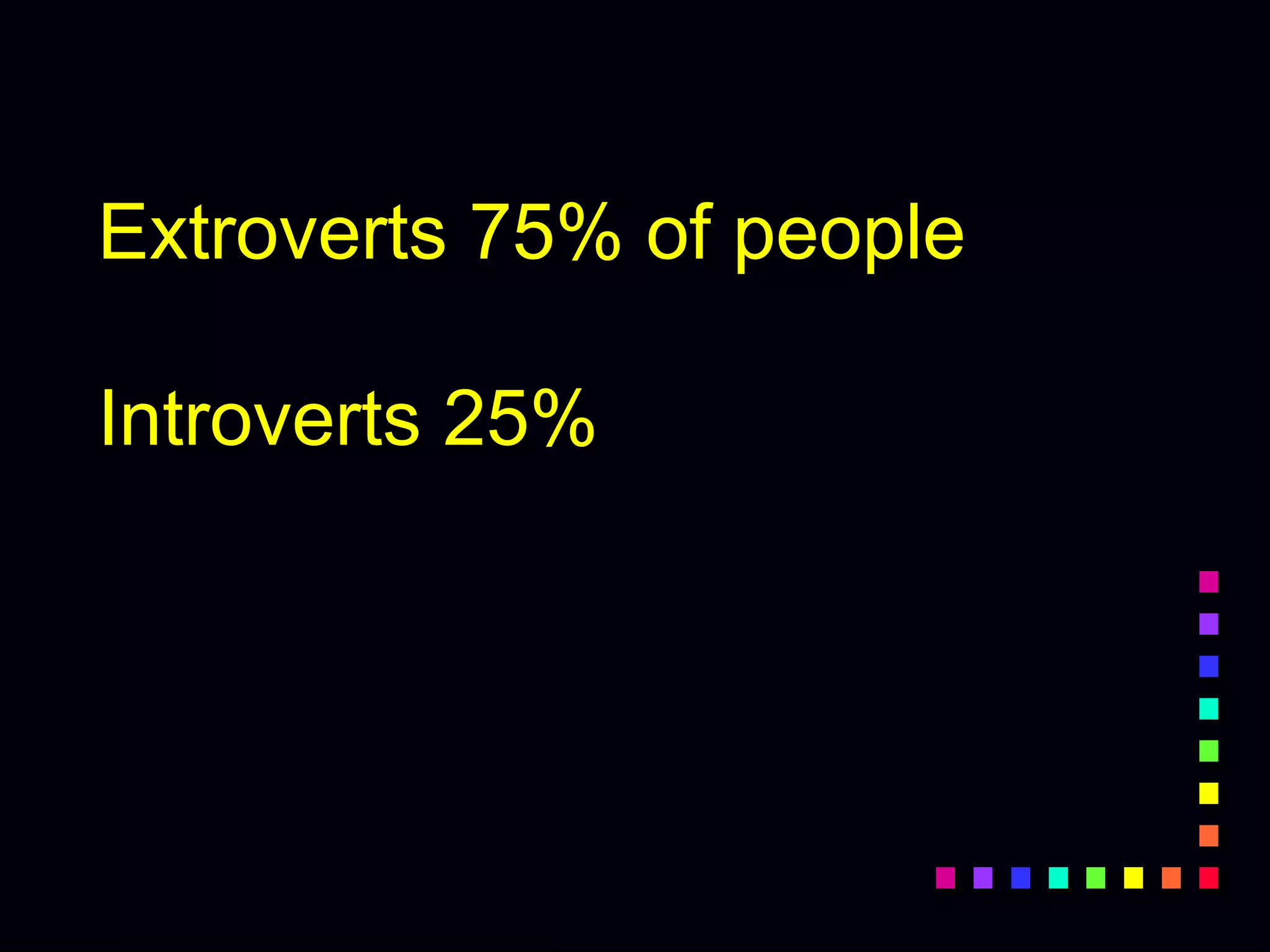
Extroverts 75% of people
Introverts 25%
Use the Textbook to Check
your Preferences
Introvert or Extravert?
Even though there are 16
personality types, we are all
unique because we are varying
degrees of each type.
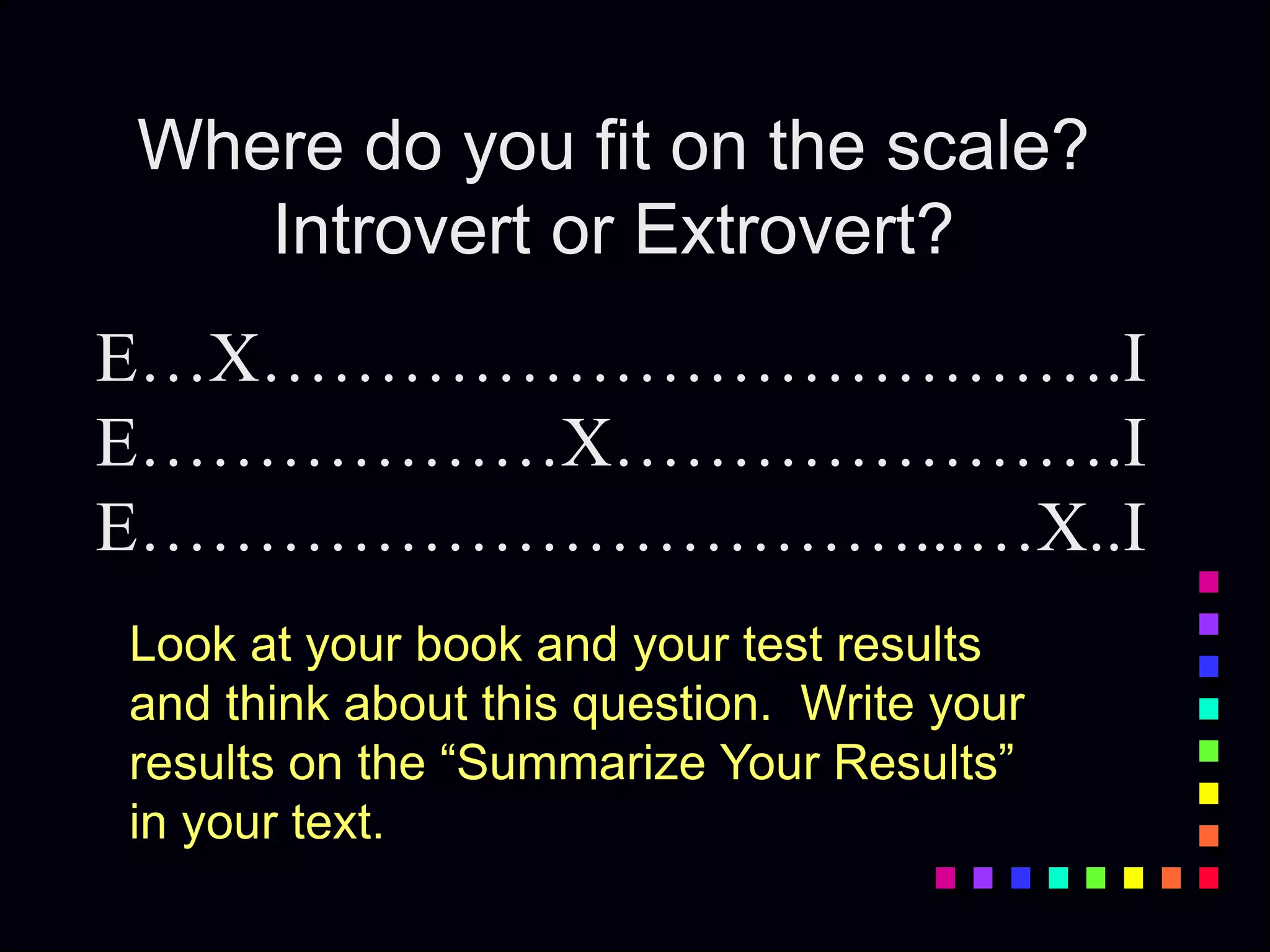
Where do you fit on the scale?
Introvert or Extrovert?
E…X……………………………….I
E………………X………………….I
E……………………………...…X..I
Look at your book and your test results
and think about this question. Write your
results on the “Summarize Your Results”
in your text.
Exercise: Talkers and Listeners
Free Write 5 Minutes
 Choose one:
 I am an introvert
 I am an extravert
 I am a combination introvert/extravert
Personality Types
• Extravert - E
• Sensing - S
•Introvert - I
•INtuitive - N
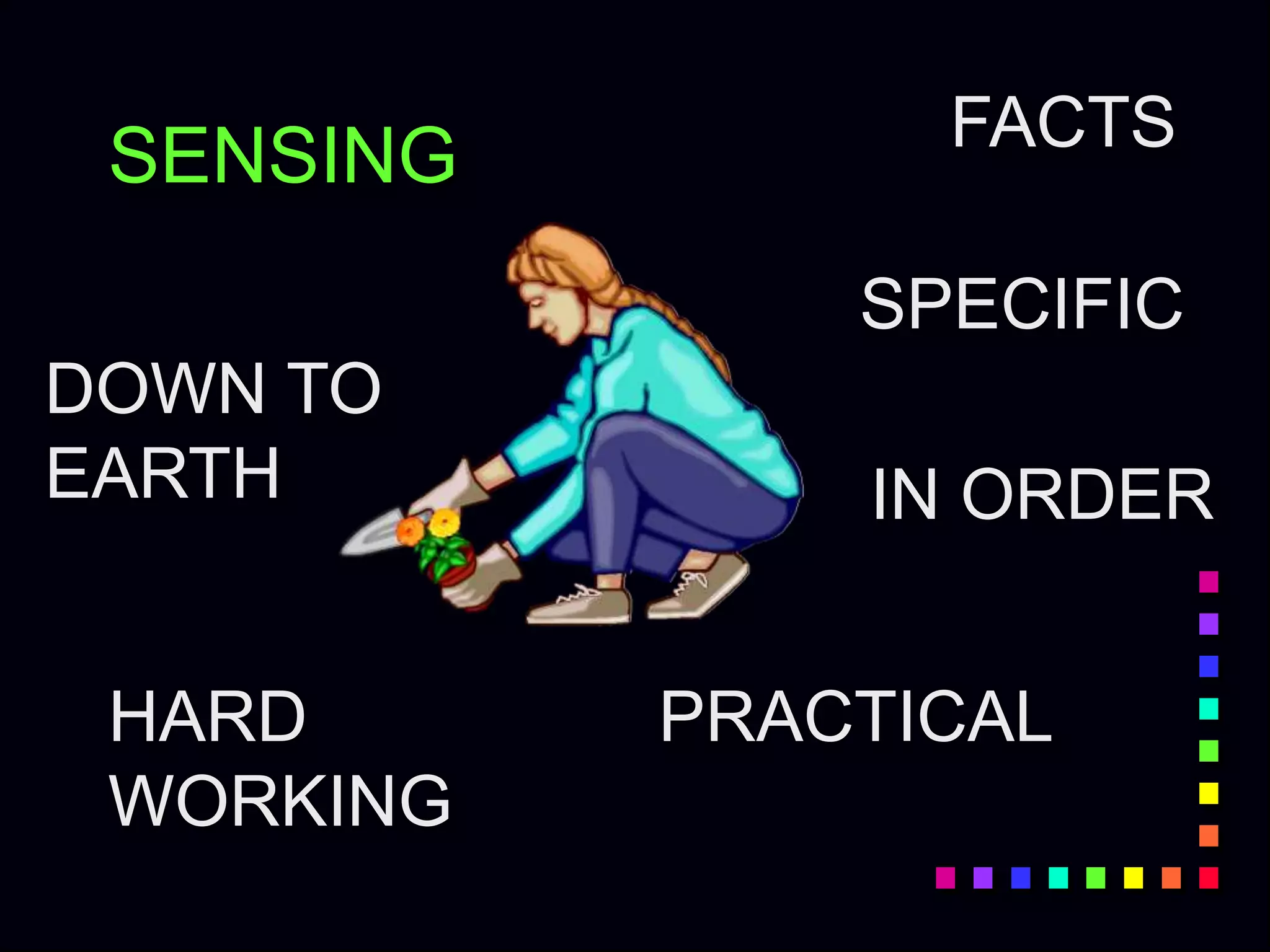
SENSING TYPE
WHAT CAN I SEE, HEAR, FEEL
TASTE, TOUCH?
USES SENSES
SENSING
DOWN TO
EARTH
PRACTICALHARD
WORKING
FACTS
SPECIFIC
IN ORDER
INTUITIVE
CREATIVE
THINKER
CONCEPTS
THE
FUTURE
HEAD IN
THE
CLOUDS
INSPIRATION
FANTASY
INGENUITY
Use the Textbook to Check
your Preferences
Sensing or Intuitive?
Where do you fit?
S…X…………………………….N
S………………X………………..N
S…………………………X….….N
Sensing or Intuitive?
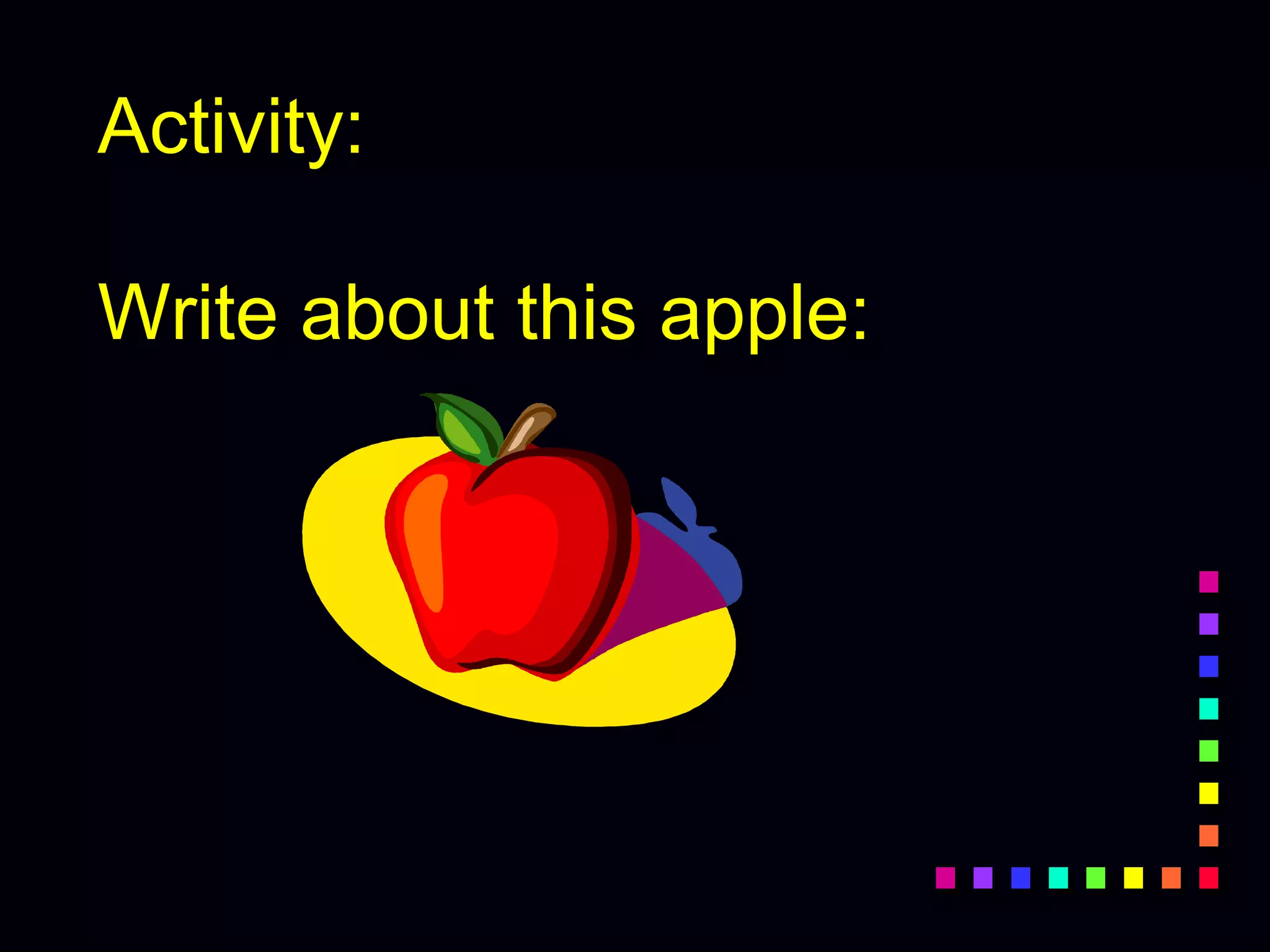
Activity:
Write about this apple:
Personality Exercise
 Write about the picture for 5 minutes
By Ian
Jackson
Free Write 5 Minutes
 Choose 1:
 I am a sensing type
 I am an intuitive type
 I am a combination sensing/intuitive
type
Personality Types
• Extravert - E
• Sensing - S
• Thinking - T
• Introvert - I
• INtuitive - N
• Feeling - F
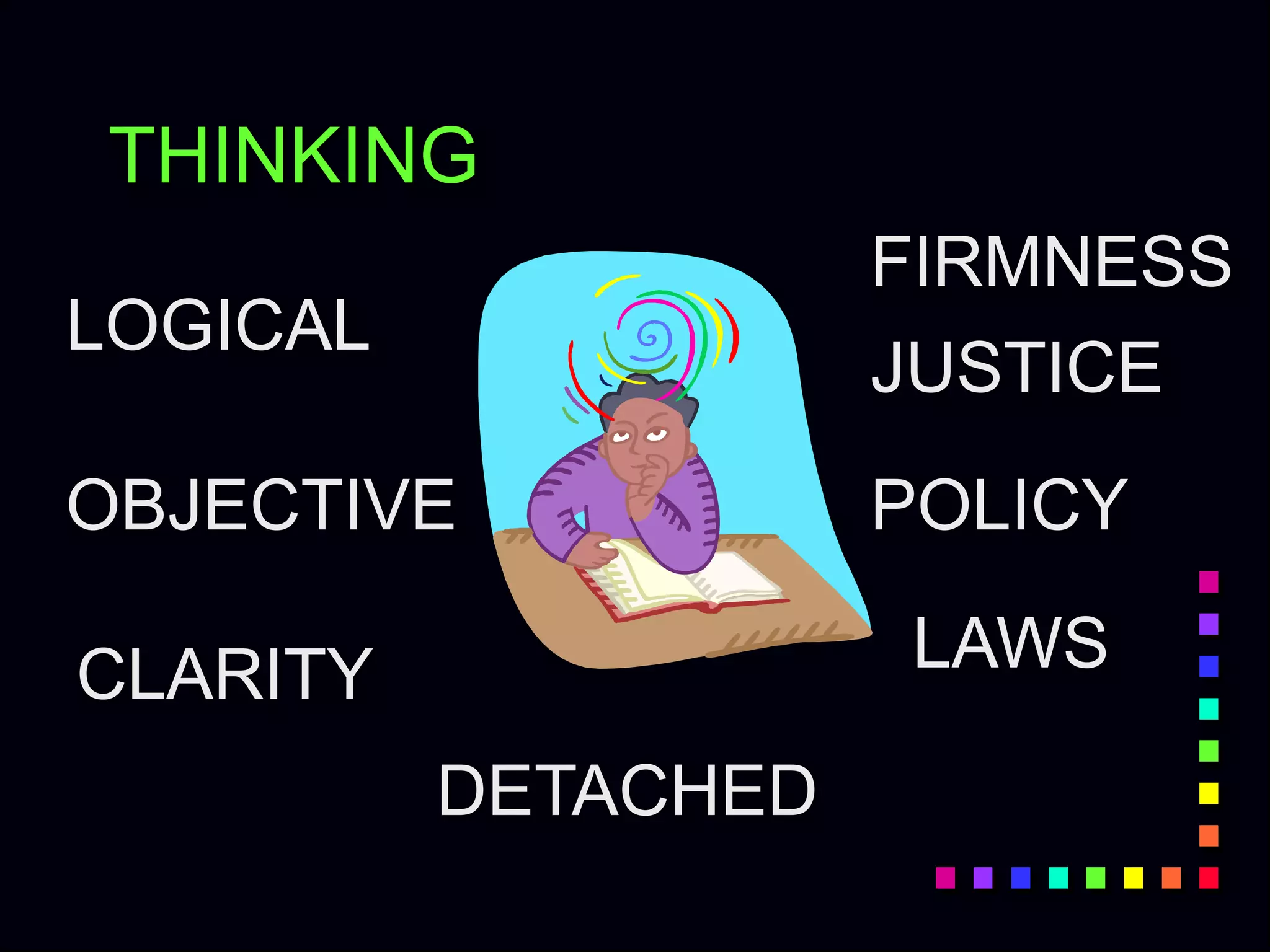
THINKING
LOGICAL
OBJECTIVE
CLARITY
FIRMNESS
JUSTICE
POLICY
LAWS
DETACHED
FEELING
SUBJECTIVE
HUMANE
HARMONY
SOCIAL
VALUES
INVOLVED
FAIR
HEARTED
CIRCUMSTANCES
PERSUADE
60% Of women are
feeling types.
60% Of men are
thinking types.
Use the Textbook to Check
your Preferences
Thinking or Feeling?
Do you prefer Thinking or Feeling?
T.…X…………………….………F
T……………X………………..…F
T………………………………X..F
Exercise: Thinking or Feeling
Free Write 5 Minutes:
 Choose one:
 I am a thinking type
 I am a feeling type
 I am a combination thinking/feeling
type
Personality Types
• Extravert - E
• Sensing - S
• Thinking - T
• Judging - J
• Introvert - I
• INtuitive - N
• Feeling - F
• Perceptive -P
Judging means planned and
organized.
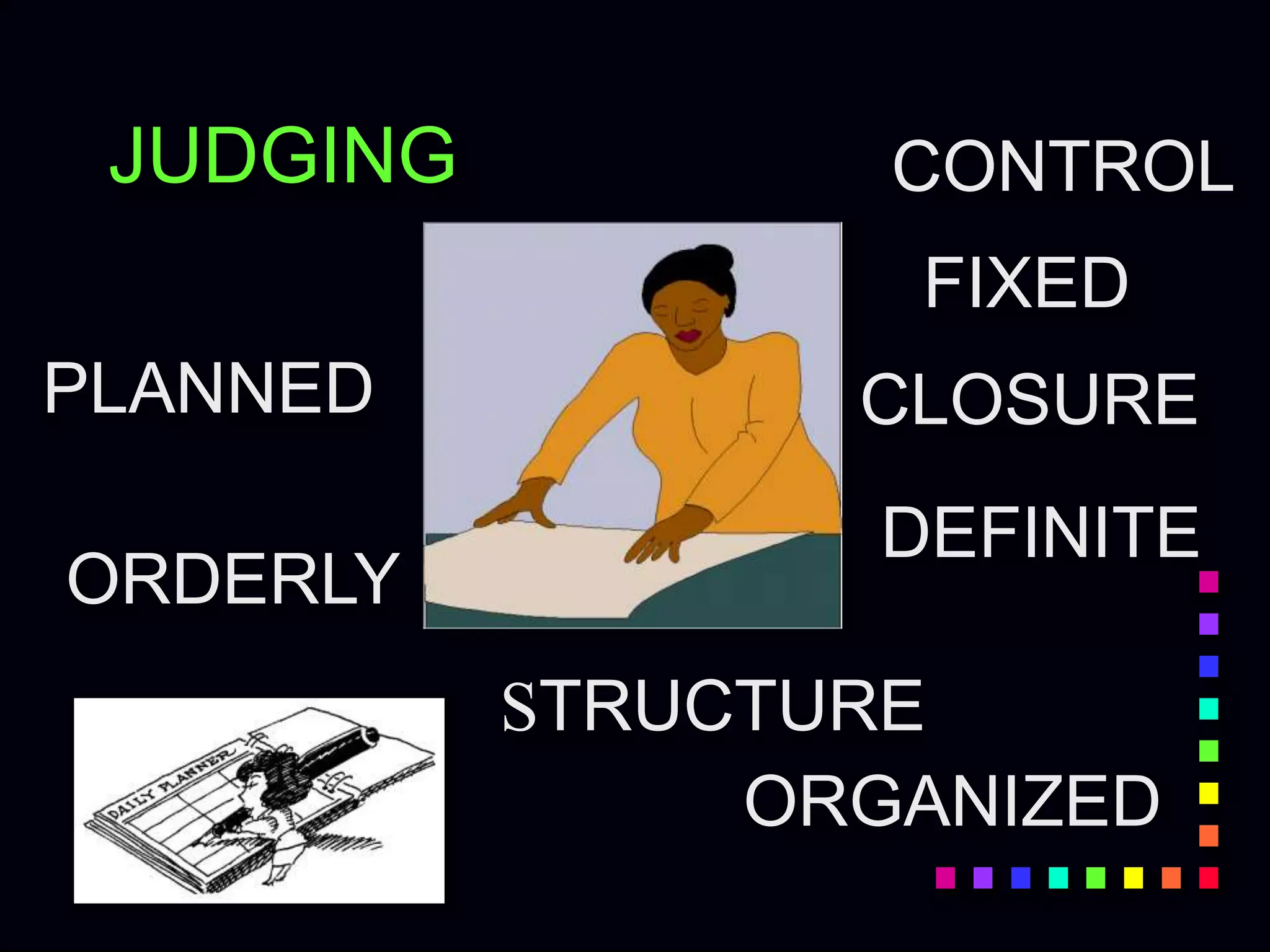
JUDGING
PLANNED
ORDERLY
ORGANIZED
CONTROL
FIXED
CLOSURE
STRUCTURE
DEFINITE
Perceptive means
spontaneous.
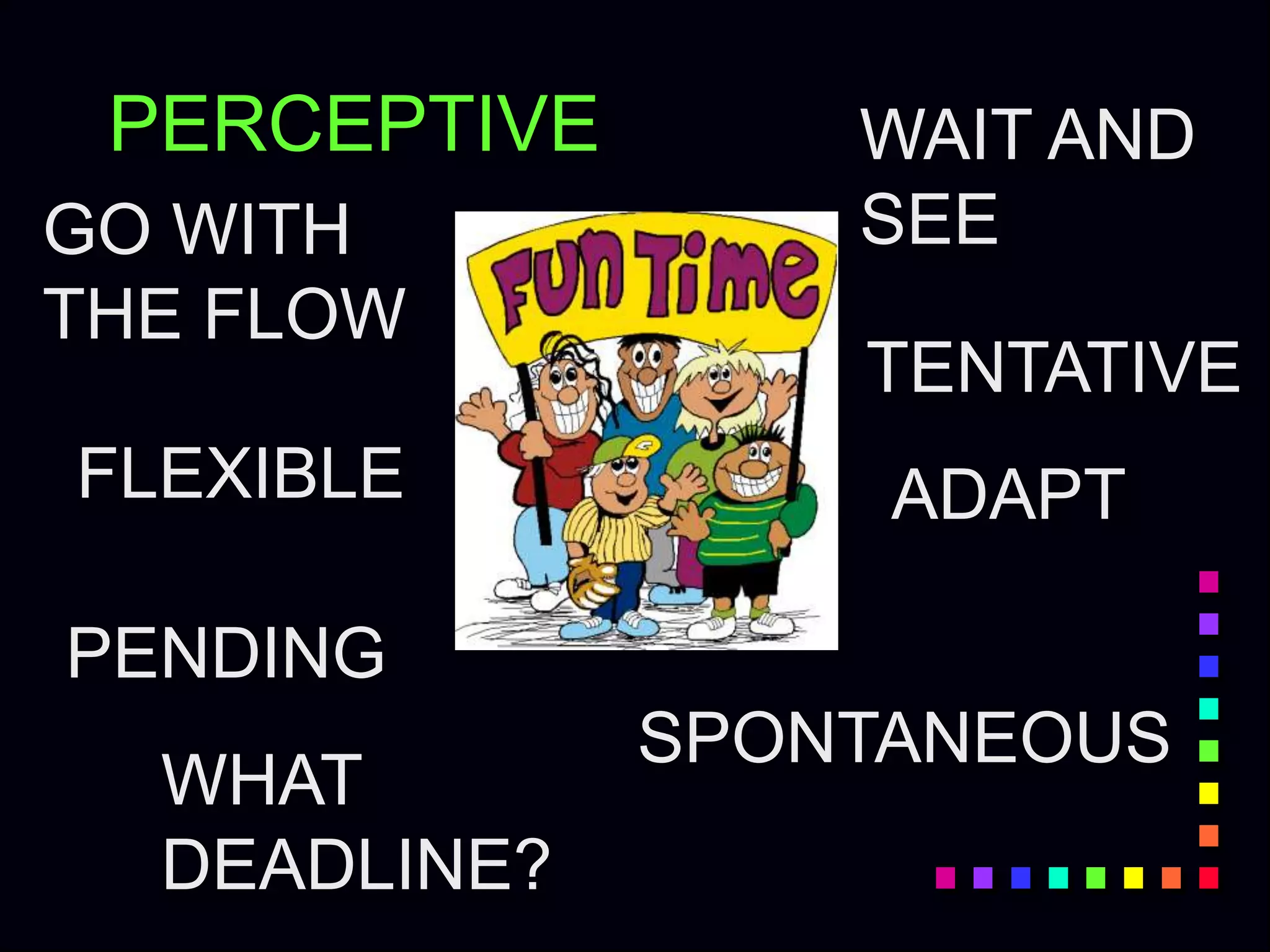
PERCEPTIVE
GO WITH
THE FLOW
SPONTANEOUS
WAIT AND
SEE
FLEXIBLE ADAPT
TENTATIVE
WHAT
DEADLINE?
PENDING
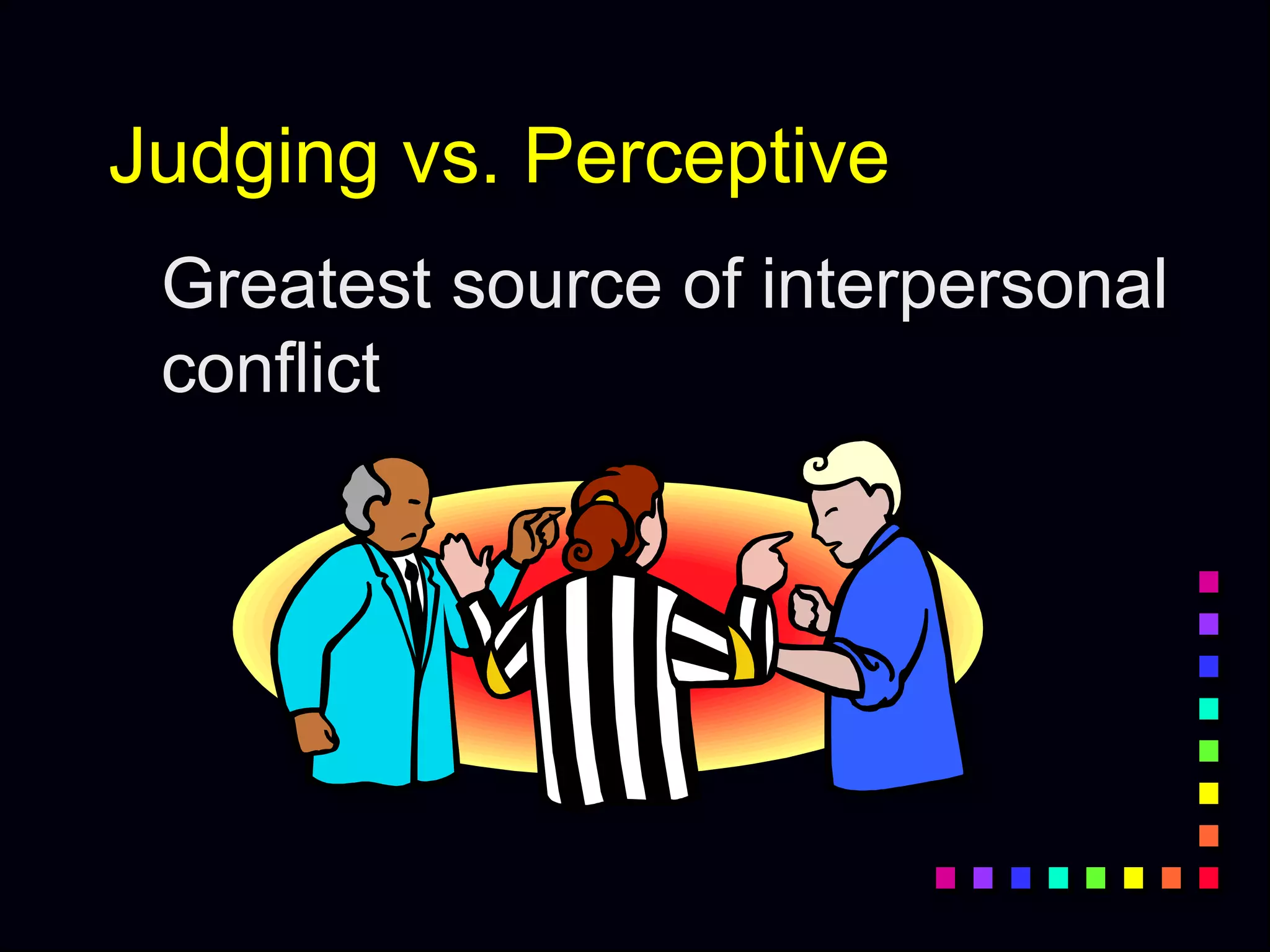
Judging vs. Perceptive
Greatest source of interpersonal
conflict
Use the Textbook to Check
your Preferences
Judging or Perceptive?
J…X……………………………….P
J………………X………………….P
J………………………………X…..P
Exercise: Judging or Perceptive?
Exercise: Where do you stand?
 I can play anytime
 I have to finish my work before I play.
Free Write 5 Minutes
 Choose one:
 I am a judging type.
 I am a perceptive type.
 I am a combination judging/perceptive
type.
Personality and Preferred Work
Environment
 Extraverts prefer environments that
provide opportunity for social
interaction.
 Introverts like quiet for concentration.
Personality and Preferred Work
Environment
 Sensing types like a standard way of
doing things and establishing a routine.
 Intuitive types like change and finding
new ways of doing work.
Personality and Preferred Work
Environment
 Thinking types are objective and
rational and treat others fairly.
 Feeling types value harmony and the
support of co-workers. They know their
values and apply them consistently.
Personality and Preferred Work
Environment
 Judging types like a work environment
that is structured, settled and organized.
 Perceptive types are comfortable in
handling the unplanned or unexpected.
Personality and Decision Making
 The introvert thinks up ideas and
reflects on the problem before deciding.
 The extravert acts as the communicator
in the decision making process.
Personality and Decision Making
 The intuitive type develops theories and
uses intuition to come up with ingenious
solutions to the problem.
 The sensing type applies personal
experience to the problem and comes
up with solutions that are practical and
realistic.
Personality and Decision Making
 The thinking type uses cause and effect
and applies logic to solving problems.
 The feeling type considers human
values and motives (whether they are
logical or not) in the decision making
process.
Personality and Decision Making
 Judging steps go through the steps in
the decision making process and make
decisions quickly.
 Perceptive types like to look at all the
possibilities before making a decision.
They do not want to make a quick
decision.
What is your personal
communication style?
Extrovert
 Social types
 Start conversations easily
 Energized by talking to people
 Find it easy to start a conversation or
ask someone for a date
 In conflict situations, they talk louder
and faster
Introvert
 Rehearse what they are going to say before
they say it
 Need quiet for concentration
 Enjoy peace and quiet
 Often labeled as “quiet” or “shy”
 Find it difficult to start a conversation or ask
someone for a date
 Withdraw from conflict situations to think it
over
To improve communication,
extroverts need to:
 Pause to give the introvert time to think
 Avoid monopolizing the conversation
To improve communication,
introverts need to:
 Make an effort to communicate
Sensing Types
 Are practical and realistic
 Like communication that is exact and
step by step
 Want concrete answers
 Like to get to the point
 Will describe a date in terms of actual
experience
Intuitive Types
 They look at possibilities and
relationships
 They are often ingenious and creative
 They start imagining what the date will
be like before it even happens
 Talk about dreams, visions, beliefs and
creative ideas
Sensing and Intuitive Types
 Sensing types need intuitive types to
bring up new possibilities, deal with
changes and understand different
perspectives.
 Intuitive types need sensing types to
deal with facts and details.
Feeling Types
 Prefer to avoid disagreements to
preserve peace and harmony
 In a conflict situation, they take things
personally
Thinking Types
 Are logical, detached and objective
 In a conflict situation, they use logical
arguments to prove that they are right
Feeling and Thinking Types
 Feeling types need thinking types to
analyze, organize, follow policy and
weigh the evidence.
 Thinking types need feeling types to
understand how others feel and to
establish harmony in the family and
business environments.
Judging Types
 They need events to be structured and
organized in order to relax
 They make decisions quickly and do not
like to change them
 They schedule and plan the dates
 When traveling, they make a list and
pack carefully
Perceptive Types
 They prefer the environment to be
flexible and spontaneous
 They like to keep their options open
 They provide the fun and find it easier to
relax
 They often feel controlled by judging
types
 When traveling, they are open to new
ideas and pack their suitcases at the
last minute
Judging and perceptive types
need each other.
 Judging types need perceptive types to
relax and have fun.
 Perceptive types need judging types to
be more organized and productive.
Exercise: Communication Scenarios
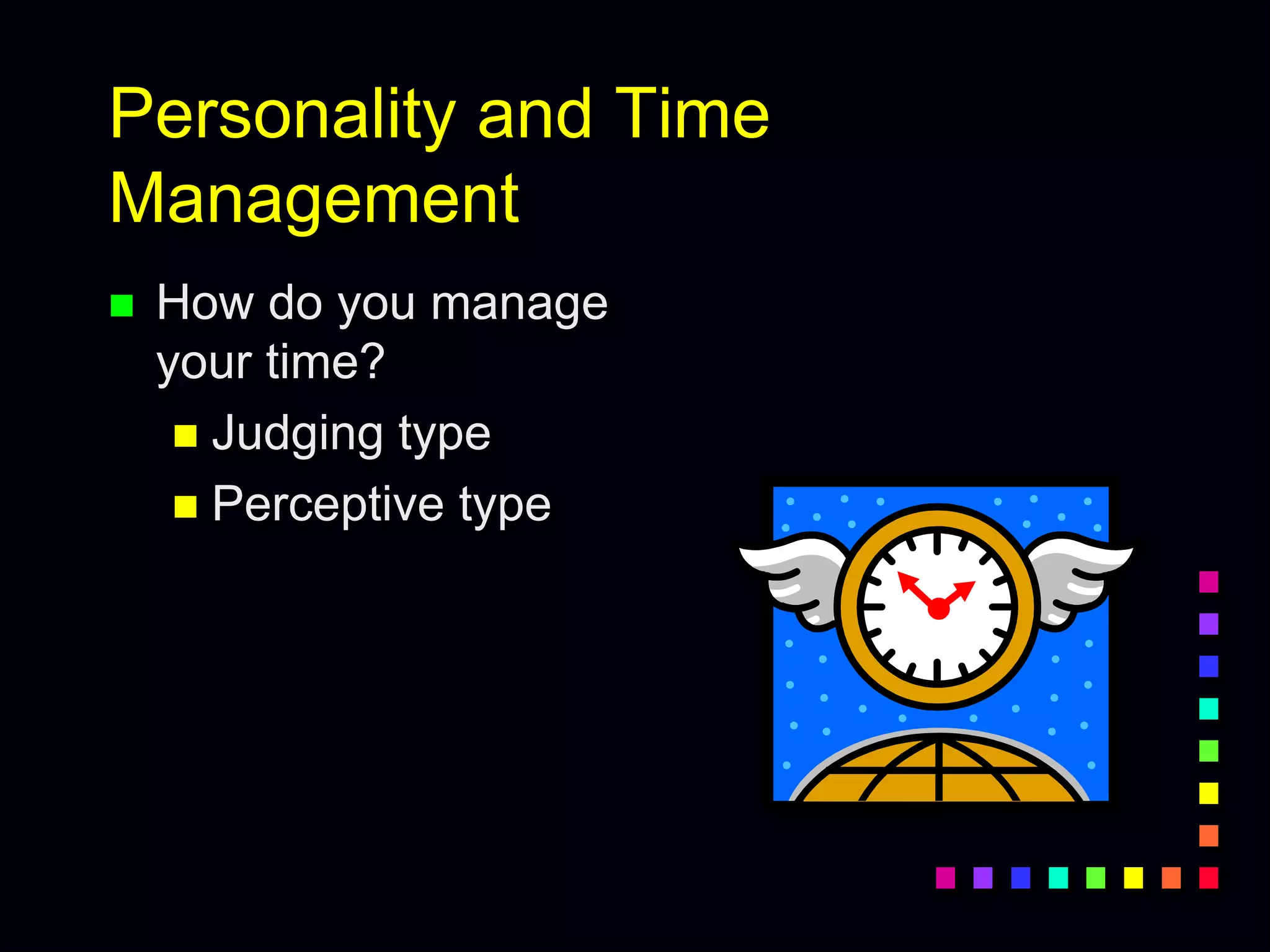
Personality and Time
Management
 How do you manage
your time?
 Judging type
 Perceptive type
Judging Types
 Naturally good at time management
 Use time management techniques to
meet deadlines
 Relax once the work is done
 If there are many projects, may find it
difficult to relax and enjoy recreation
 May need to work on stress
management
Perceptive Types
 Prefer to be spontaneous rather than
organized
 May have difficulty meeting deadlines
 Work at many projects at once
 Take the time to relax and enjoy recreation
 Need to work on organization and meeting
deadlines to be successful in college.
Personality and Money
 Judging types good
at financial planning
 Perceptive types
can adapt to change
and tolerate risk
 Feeling types often
attracted to low
paying jobs that
serve others
Other Factors in Choosing a
Major
 If you have several careers that match
your personality type, consider:
 Career outlook
 Salary
 Working conditions
 Lifestyle

ATh 115 Chapter 2