Discovering antibiotics
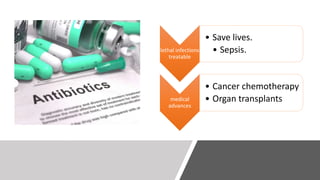
lethal infections
treatable
• Save lives.
• Sepsis.
medical
advances
• Cancer chemotherapy
• Organ transplants
Antibiotic misuse
Antibiotic adverse effect
140,000
visits/year
Antibiotic adverse affects.
Antimicrobial Stewardship
20%-50%
unnecessary
or
inappropriate
•3 Ds
•the right
• drug
• dose
• duration.
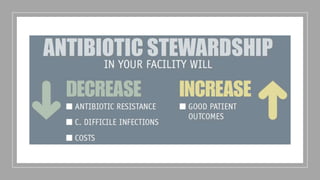
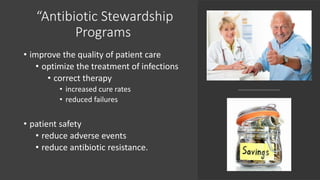
“Antibiotic Stewardship
Programs
• improve the quality of patient care
• optimize the treatment of infections
• correct therapy
• increased cure rates
• reduced failures
• patient safety
• reduce adverse events
• reduce antibiotic resistance.
Which Hospitals?
Core
Elements of
Hospital
Antibiotic
Stewardship
Programs
Leadership Commitment
Accountability
Drug Expertise
Action
Tracking
Reporting
Education
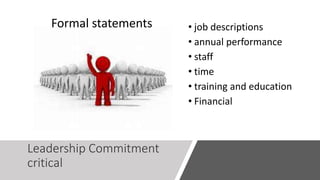
Leadership Commitment
critical
• job descriptions
• annual performance
• staff
• time
• training and education
• Financial
Formal statements
Accountability
identifying a lead
• physicians and
pharmacists
• Infection control
• Quality-improvement
• Laboratorians
• IT staff
Drug expertise
• dose optimization.
• In addition, pharmacists
can assist with:
• Automatic alerts
• automatic stop orders
• Alerts -drug-drug
interactions
• Encouraging prescribers to
document dose, duration,
and indication
• Development treatment
recommendations.
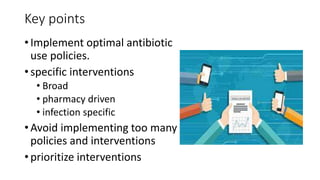
Key points
• Implement optimal antibiotic
use policies.
• specific interventions
• Broad
• pharmacy driven
• infection specific
• Avoid implementing too many
policies and interventions
• prioritize interventions
Action
•Broad Interventions
•Pharmacy-Driven Interventions
•Infection -Specific Interventions
Action
•Broad Interventions
• Antibiotic time outs
• Prior authorization
• Prospective audit and feedback
Action
• Pharmacy-Driven Interventions
• Automatic changes IV-- PO
• Dose adjustments
• Dose optimization
• Automatic alerts
• automatic stop
• drug-drug interactions
Action
Infection -Specific Interventions
• CAP
• UTIs
• SSTI
• Empiric coverage of (MRSA) infections
• Clostridium difficile infections
• Treatment of culture-proven invasive infections
Track antibiotic use and outcomes.
• Process measures
• Periodic assessments of the use of antibiotics or the treatment of infections
to determine the quality of antibiotic use.
• Assess if antibiotics are being given in a timely manner.
• Assess prescribers’ compliance with the facility’s antibiotic-use policies.
• Outcome measures
• Track rates of hospital-onset Clostridium difficile infections.
• Track antibiotic resistance.
• Monitor antibiotic costs.
Reporting
• to prescribers and staff
• compares regional or national.
• Reporting (C-diff) to the National Healthcare Safety Network (NHSN)
Education
• Any antibiotic stewardship program should provider regular updates
and/or training on antibiotic prescribing, antibiotic resistance, and
infectious disease management on updated or emerging local or
national trends.

Atb steward

Editor's Notes

  • #4 In his Nobel Prize acceptance speech, Fleming warned the world of the dangers of misusing antibiotics. He had already noted bacteria in his lab becoming resistant to penicillin, just a few years after its discovery! After decades of antibiotic misuse, today we find ourselves facing bacteria which has become resistant to most, if not all antibiotics.
  • #23 identifying a lead physicians and pharmacists Infection control monitoring and prevention Auditing Analyzing reporting of data. Quality-improvement staff Laboratorians appropriate lab tests results communicated. facility’s antibiogram. IT staff point of care Prompts Data collection and reporting
  • #30 Tracking the prescribing of antibiotics in the facility is important because it will help stewardship team members identify areas for improvement and to assess the impact of any improvement efforts that are implemented. Both processes and outcomes can be tracked and measured.
  • #31 Tracking antibiotic use and outcomes is only beneficial if the information is reported back to the prescribers themselves, the facility's antimicrobial stewardship team, and the facility's executive leadership. By sharing this information, prescribers and staff can identify where improvements can be made or where interventions should be targeted. Reporting of both antibiotic use and antibiotic resistance in a facility can help clinicians make more informed decisions in patient care and potentially prevent misuse of antibiotics.