ASSISTIVE
TECHNOLOGY
Magen McGuire
Assistive Technology is…
◦IDEA defines AT as any item, piece of
equipment, software o product system that
is used to increase, maintain, or improve
the functional capabilities of individuals
with disabilities
Examples of AT
◦ Low Technology- Communication boards made of
cardboard or felt
◦ High Technology- special purpose computers
◦ Hardware prosthetics, attachment devices, and
positioning devices
◦ Specialized circular software
Assistive Technology
◦AT provides services to people who have
difficulty speaking, typing, writing, remembering,
pointing, seeing, hearing, learning, walking, and
other disabilities.
The Law
◦ IDEA is a federal law that governs the provision of special
education in the United States that provides the legal support for
students in schools. The provision of assistive technology is also
covered by other laws governing the civil rights of people with
disabilities such as Americans with Disabilities Act and Section
504 of the Rehabilitation Act of 1973.
◦ http://www.afb.org/assistivetechnology/book.asp?ch=appA
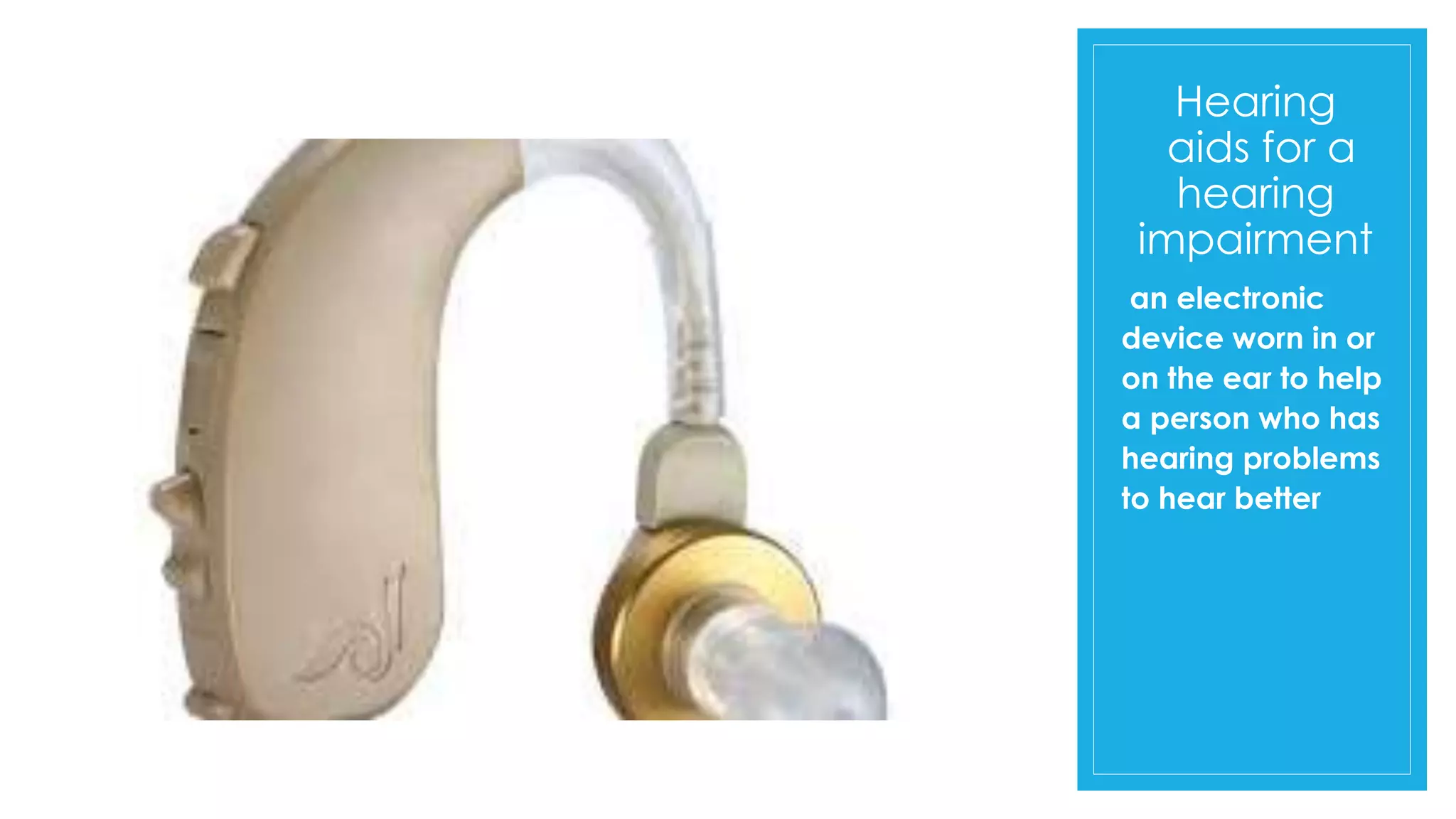
Hearing
aids for a
hearing
impairment
an electronic
device worn in or
on the ear to help
a person who has
hearing problems
to hear better
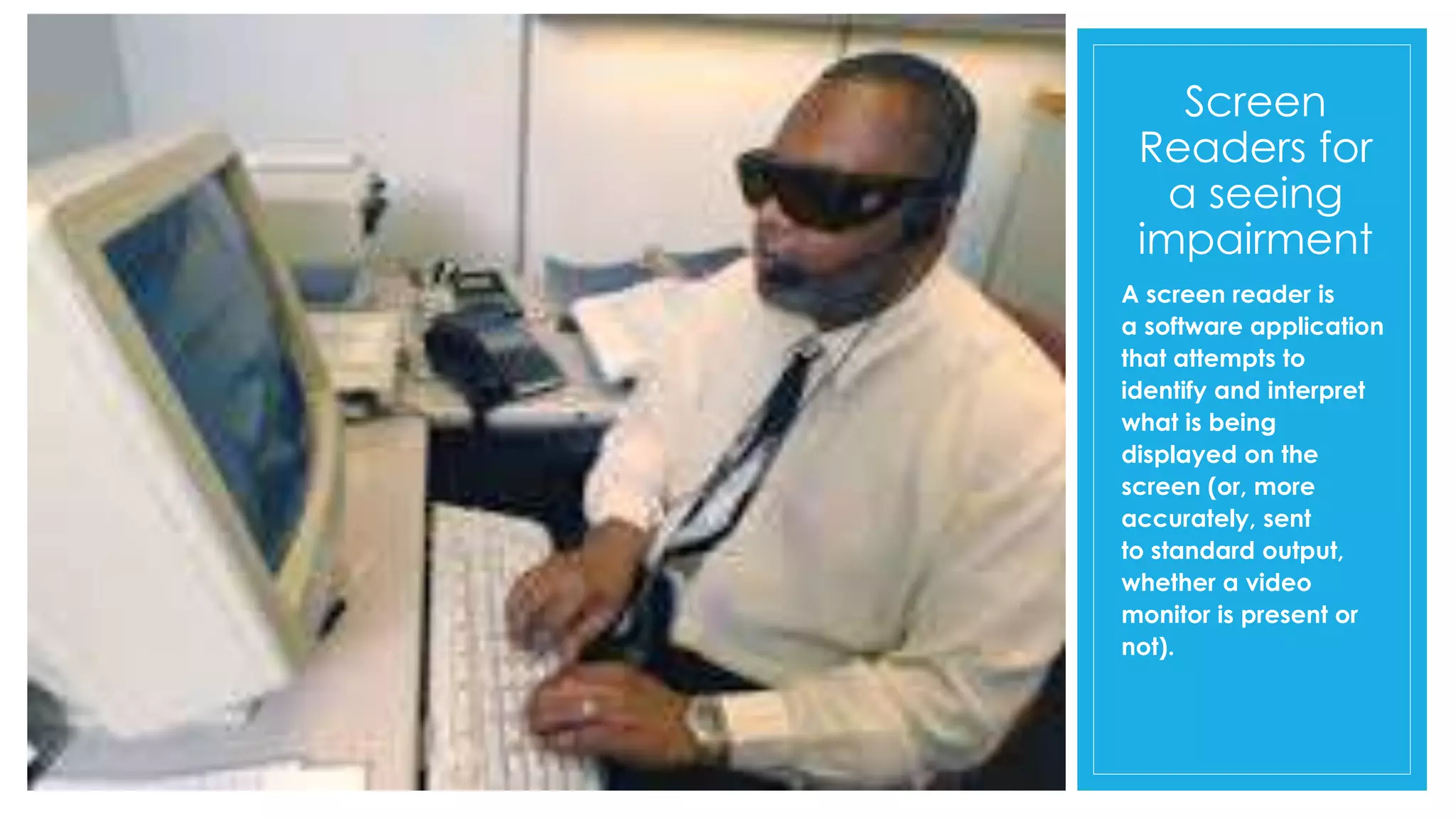
Screen
Readers for
a seeing
impairment
A screen reader is
a software application
that attempts to
identify and interpret
what is being
displayed on the
screen (or, more
accurately, sent
to standard output,
whether a video
monitor is present or
not).
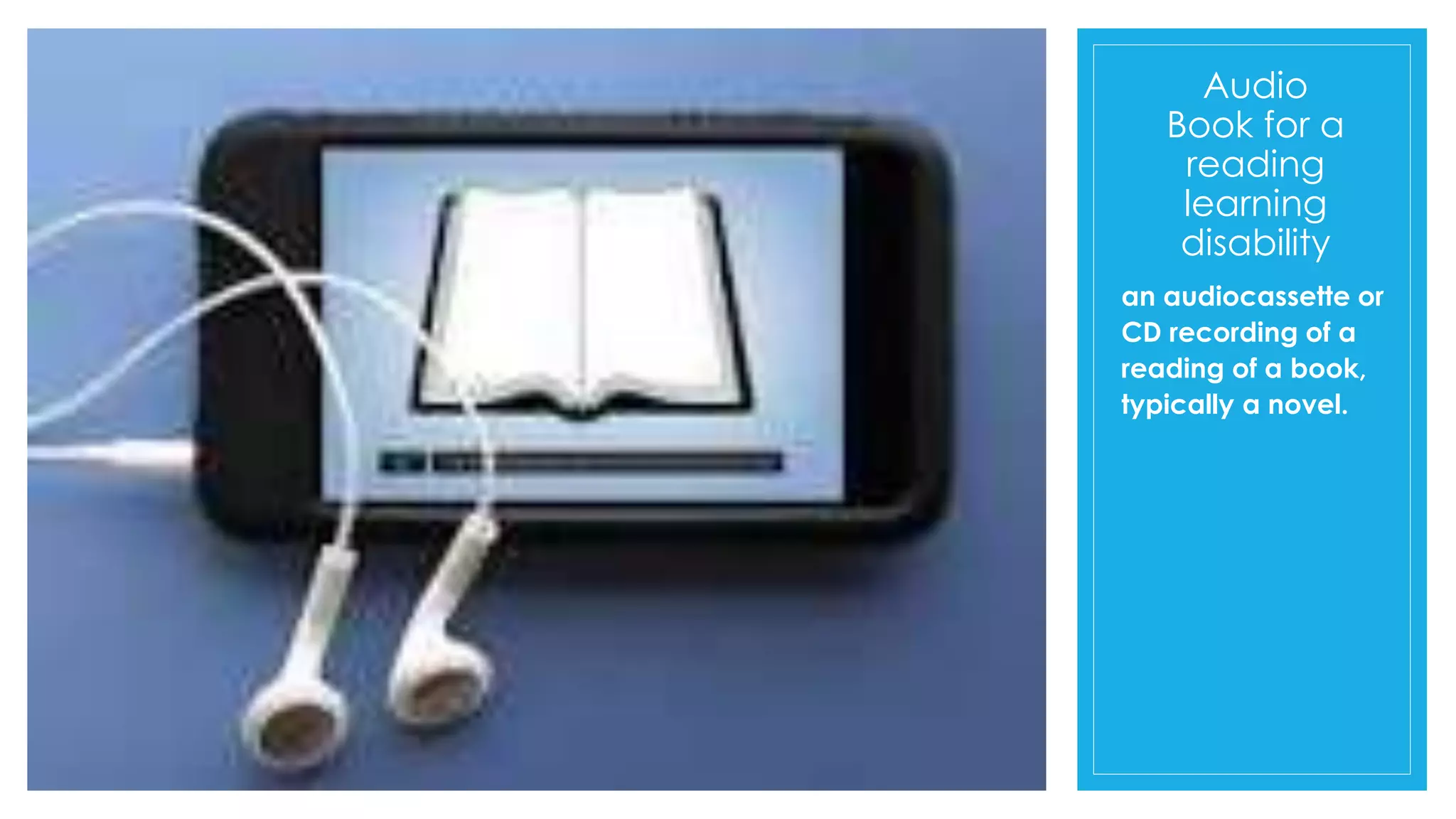
Audio
Book for a
reading
learning
disability
an audiocassette or
CD recording of a
reading of a book,
typically a novel.
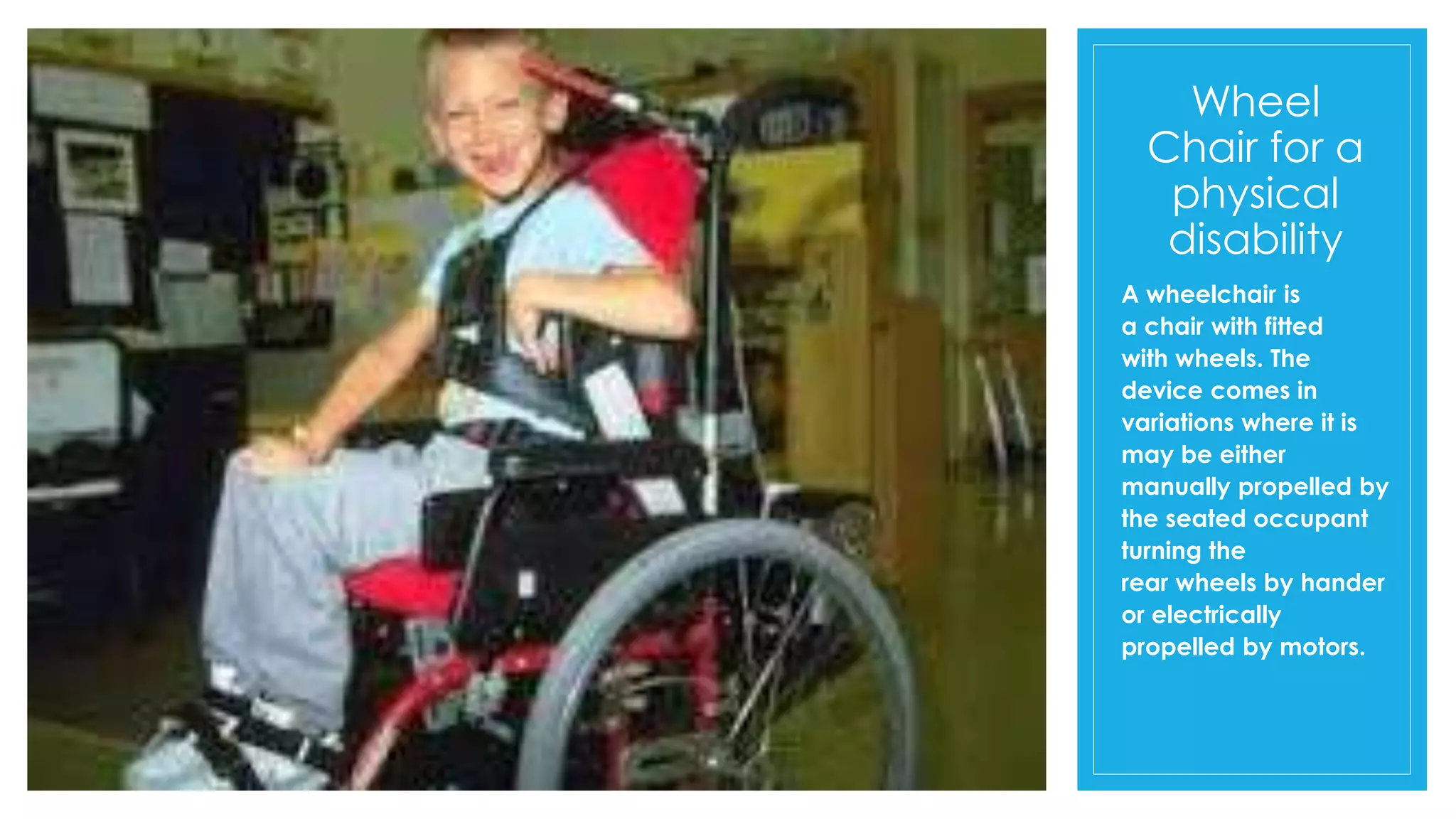
Wheel
Chair for a
physical
disability
A wheelchair is
a chair with fitted
with wheels. The
device comes in
variations where it is
may be either
manually propelled by
the seated occupant
turning the
rear wheels by hander
or electrically
propelled by motors.
Reference page
◦ actionforblindpeople.org. (n.d.). Retrieved January 21, 2015, from Action For Blind People:
https://www.actionforblindpeople.org.uk/resources/practical-advice/assistive-technology-
resources/types-of-assistive-technology/assistive-technology-visual-impairments/
◦ atia.org. (n.d.). Retrieved January 21, 2015, from Assistive Technology Industry Association:
http://www.atia.org/i4a/pages/index.cfm?pageid=3859#What_is_AT
◦ Mittler, J. (n.d.). PBS Parents. Retrieved January 21, 2015, from Assistive Technology Devices:
http://www.pbs.org/parents/education/learning-disabilities/strategies-for-learning-disabilities/assistive-
technology-devices/
◦ PBS Parents. (n.d.). Retrieved January 21, 2015, from Assistive Technology Devices:
http://www.pbs.org/parents/education/learning-disabilities/strategies-for-learning-disabilities/assistive-
technology-devices/

Assistive technology pp

  • 1.
  • 2.
    Assistive Technology is… ◦IDEAdefines AT as any item, piece of equipment, software o product system that is used to increase, maintain, or improve the functional capabilities of individuals with disabilities
  • 3.
    Examples of AT ◦Low Technology- Communication boards made of cardboard or felt ◦ High Technology- special purpose computers ◦ Hardware prosthetics, attachment devices, and positioning devices ◦ Specialized circular software
  • 4.
    Assistive Technology ◦AT providesservices to people who have difficulty speaking, typing, writing, remembering, pointing, seeing, hearing, learning, walking, and other disabilities.
  • 5.
    The Law ◦ IDEAis a federal law that governs the provision of special education in the United States that provides the legal support for students in schools. The provision of assistive technology is also covered by other laws governing the civil rights of people with disabilities such as Americans with Disabilities Act and Section 504 of the Rehabilitation Act of 1973. ◦ http://www.afb.org/assistivetechnology/book.asp?ch=appA
  • 6.
    Hearing aids for a hearing impairment anelectronic device worn in or on the ear to help a person who has hearing problems to hear better
  • 7.
    Screen Readers for a seeing impairment Ascreen reader is a software application that attempts to identify and interpret what is being displayed on the screen (or, more accurately, sent to standard output, whether a video monitor is present or not).
  • 8.
    Audio Book for a reading learning disability anaudiocassette or CD recording of a reading of a book, typically a novel.
  • 9.
    Wheel Chair for a physical disability Awheelchair is a chair with fitted with wheels. The device comes in variations where it is may be either manually propelled by the seated occupant turning the rear wheels by hander or electrically propelled by motors.
  • 10.
    Reference page ◦ actionforblindpeople.org.(n.d.). Retrieved January 21, 2015, from Action For Blind People: https://www.actionforblindpeople.org.uk/resources/practical-advice/assistive-technology- resources/types-of-assistive-technology/assistive-technology-visual-impairments/ ◦ atia.org. (n.d.). Retrieved January 21, 2015, from Assistive Technology Industry Association: http://www.atia.org/i4a/pages/index.cfm?pageid=3859#What_is_AT ◦ Mittler, J. (n.d.). PBS Parents. Retrieved January 21, 2015, from Assistive Technology Devices: http://www.pbs.org/parents/education/learning-disabilities/strategies-for-learning-disabilities/assistive- technology-devices/ ◦ PBS Parents. (n.d.). Retrieved January 21, 2015, from Assistive Technology Devices: http://www.pbs.org/parents/education/learning-disabilities/strategies-for-learning-disabilities/assistive- technology-devices/