

Curriculum
                      Day
                          August, 2012


Mathematics

ASSESSMENT FOR LEARNING
LEARNING INTENTION
     for today
• To effectively use assessment to improve
  student outcomes (Assessment FOR
  Learning) in our teaching of mathematics;

• To differentiate student learning in our
  lesson planning using evidence gained
  from data in all areas of mathematics.
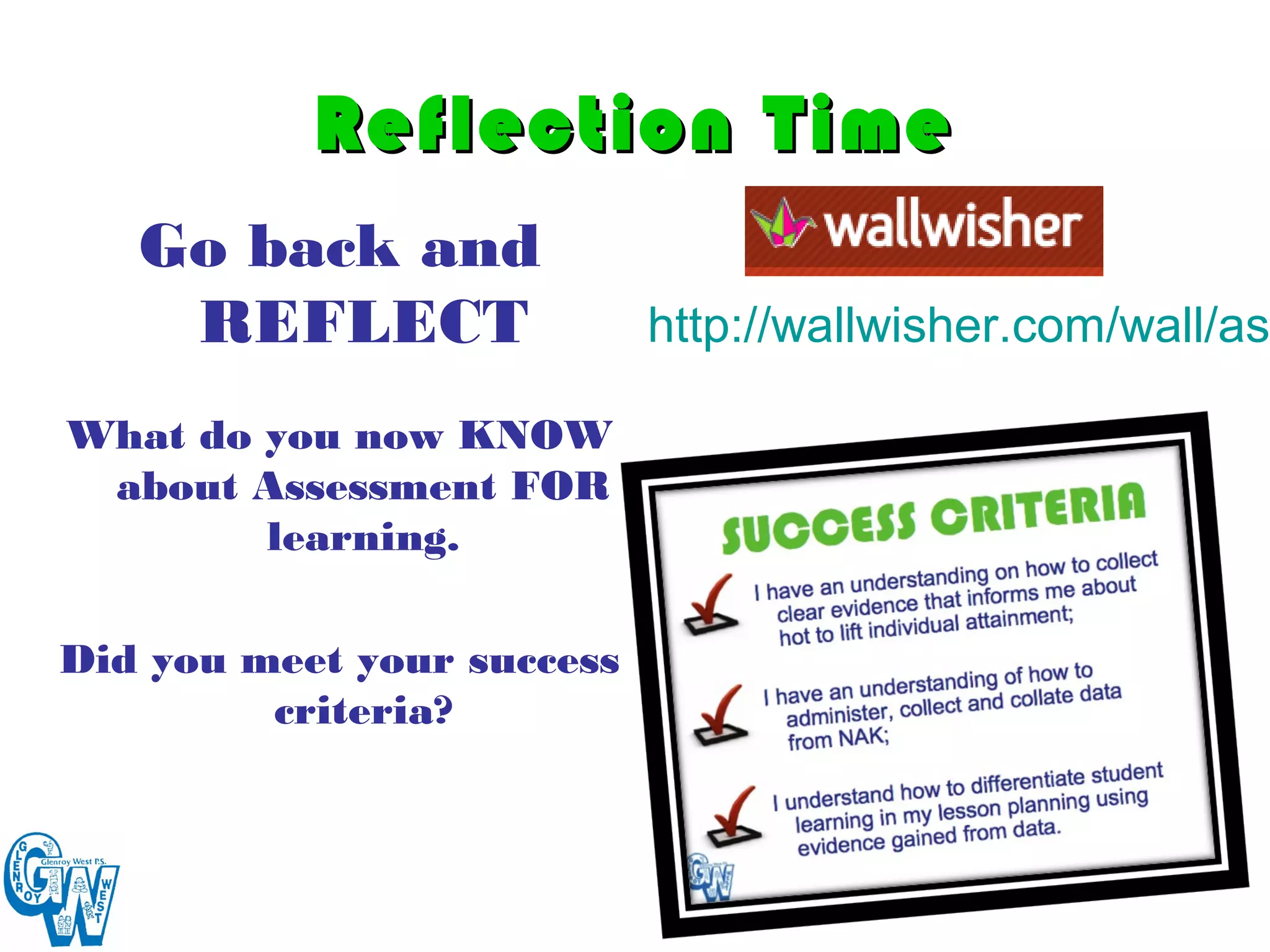
SUCCESS CRITERIA
 I have an understanding on how to collect
    clear evidence that informs me about
    hot to lift individual attainment;

 I have an understanding of how to
    administer, collect and collate data
    from NAK;

 I understand how to differentiate student
    learning in my lesson planning using
    evidence gained from data.
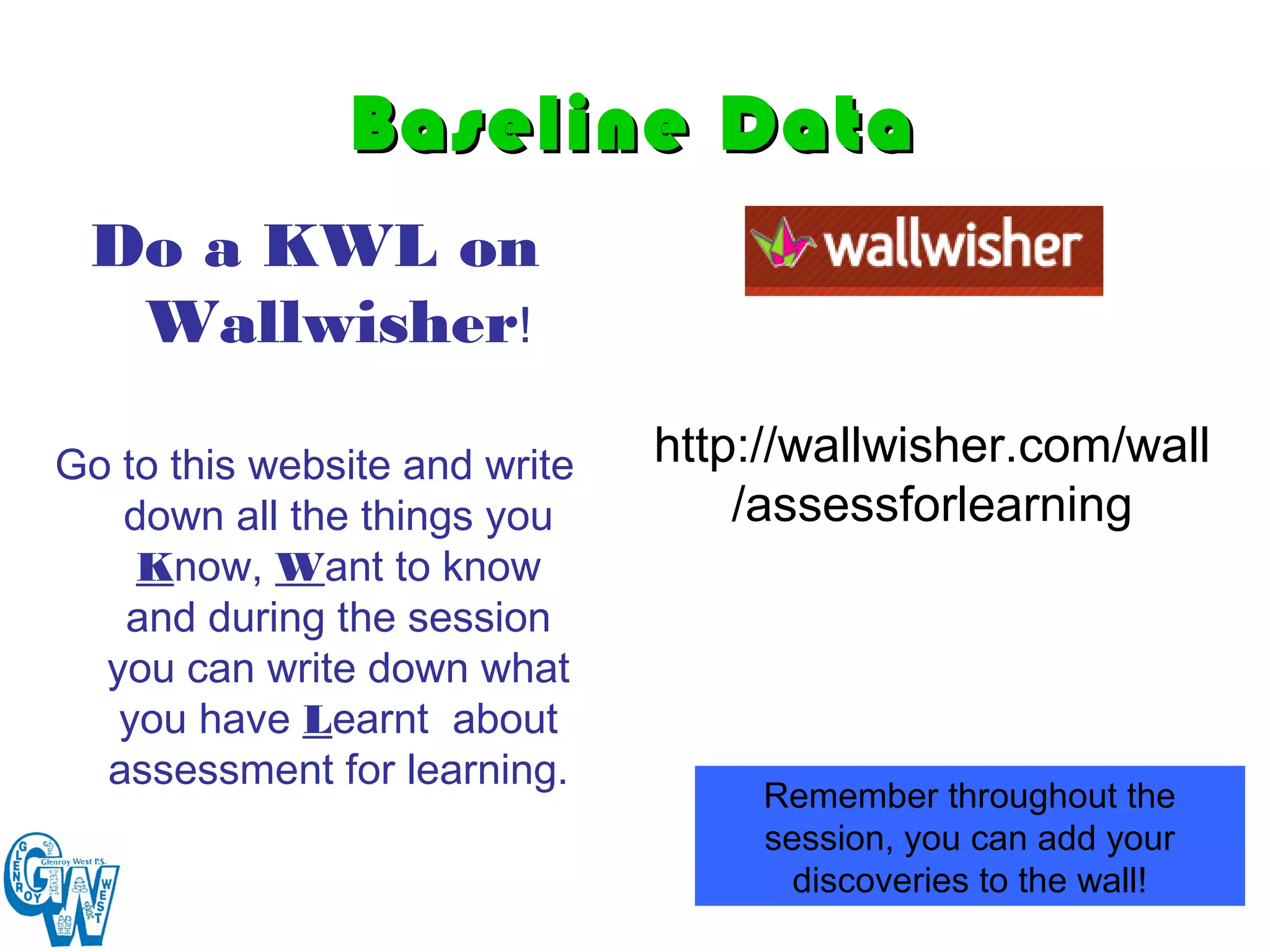
Baseline Data
 Do a KWL on
  Wallwisher!

Go to this website and write   http://wallwisher.com/wall
   down all the things you         /assessforlearning
    Know, Want to know
   and during the session
  you can write down what
   you have Learnt about
  assessment for learning.
                                    Remember throughout the
                                    session, you can add your
                                      discoveries to the wall!
Assessment
           (general definition)


 Assessment is the ongoing process of
  gathering, analysing and reflecting on
evidence to make informed and consistent
  judgements to improve future student
                learning.
Assessment FOR
        Learning
       (Assessment Reform Group, 2002)


 Assessment for learning is the process of
seeking and interpreting evidence for use by
 learners and their teachers to decide where
the learners are in their learning, where they
   need to go, and how best to get there.
Assessment FOR
          Learning
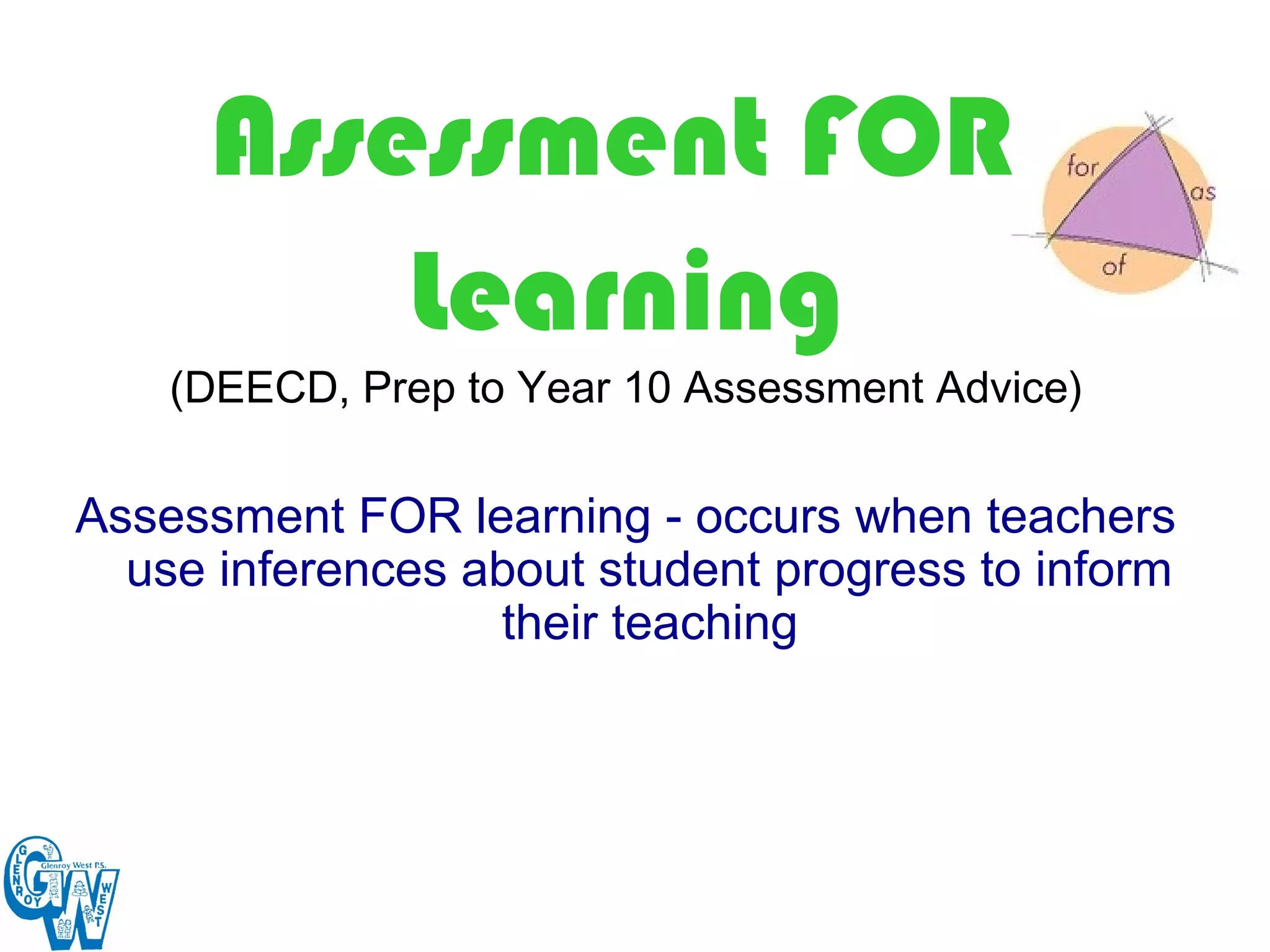
    (DEECD, Prep to Year 10 Assessment Advice)

Assessment FOR learning - occurs when teachers
  use inferences about student progress to inform
                  their teaching
Assessment FOR
          Learning
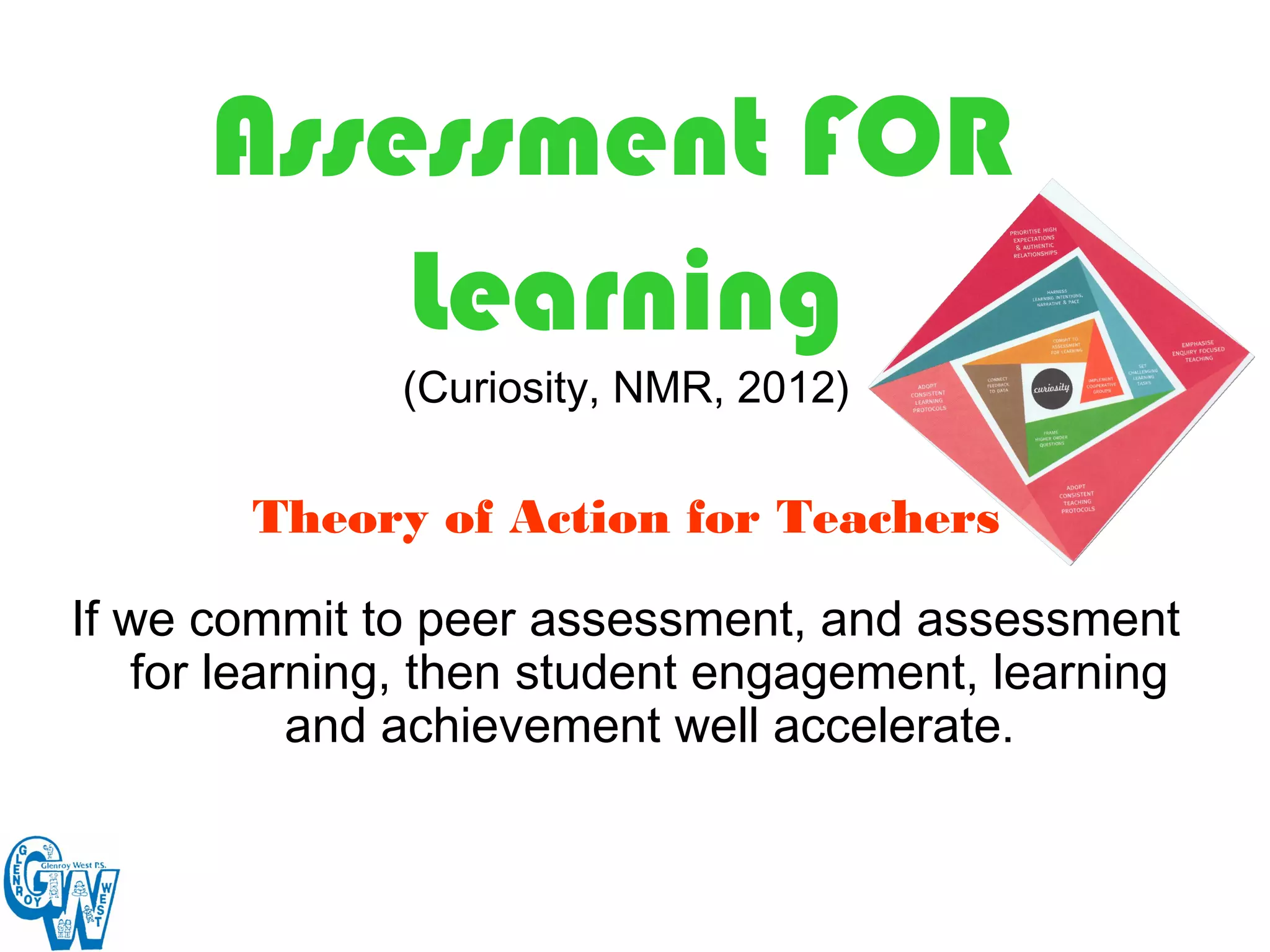
               (Curiosity, NMR, 2012)

        Theory of Action for Teachers

If we commit to peer assessment, and assessment
    for learning, then student engagement, learning
            and achievement well accelerate.
COMMIT TO ASSESSMENT FOR
         LEARNING
Elaboration:
-We collect clear evidence that informs us about how to lift
individual attainment;
-We offer clear feedback to, and seek clear feedback from,
our students – this means we can be precise about what
each student needs to improve and how best to get there;
-Students know what grades/levels they are working at, and
they have transparent criteria to enable peer coaching;
-There is an evidence-based link between student learning
and lesson planning.
What we currently have in place
ASSESSMENT FOR LEARNING –
Assessment that guides our teaching and
learning.

•Online Early Years Mathematics
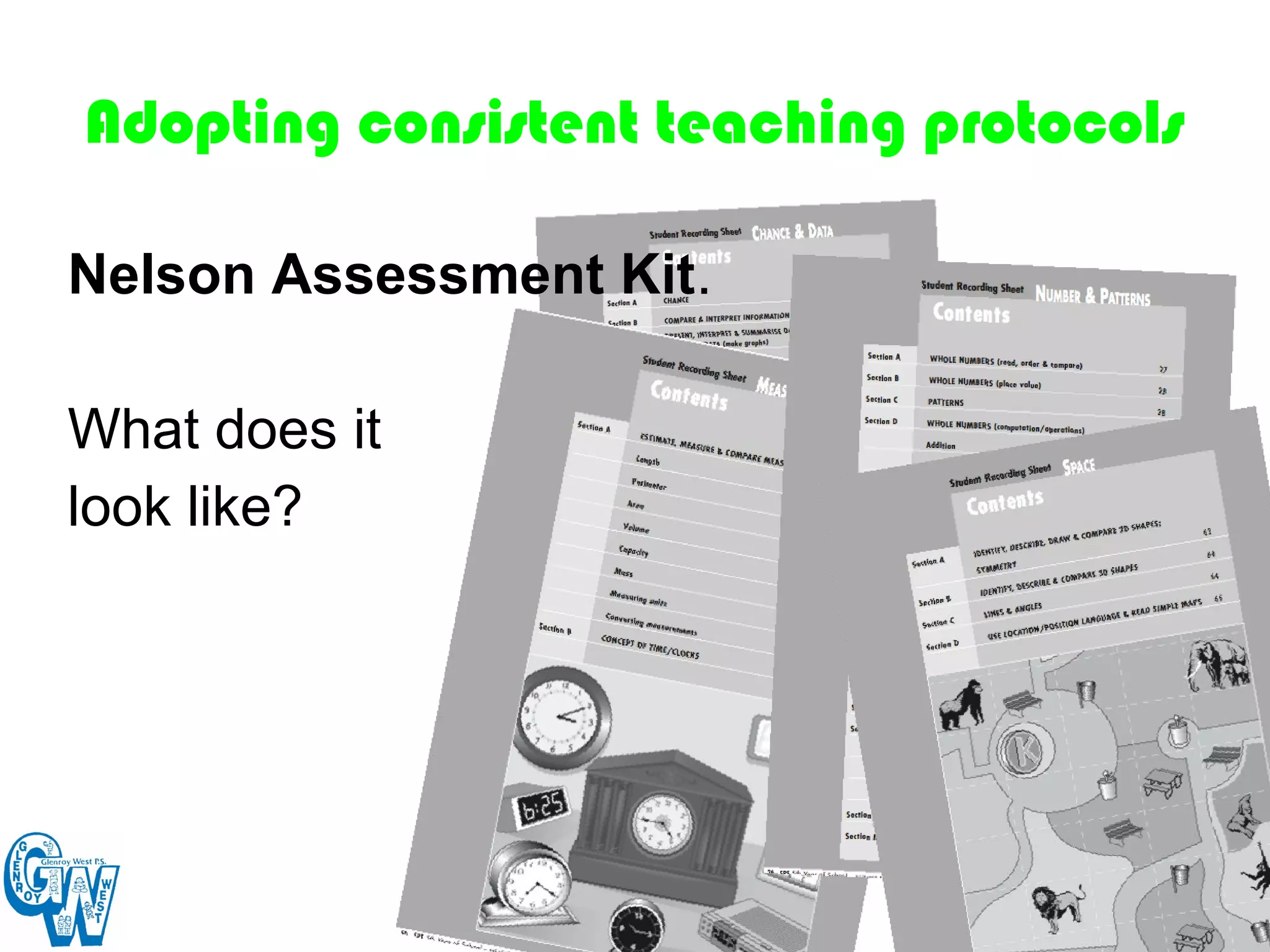
Adopting consistent teaching protocols

Nelson Assessment Kit.

What does it
look like?
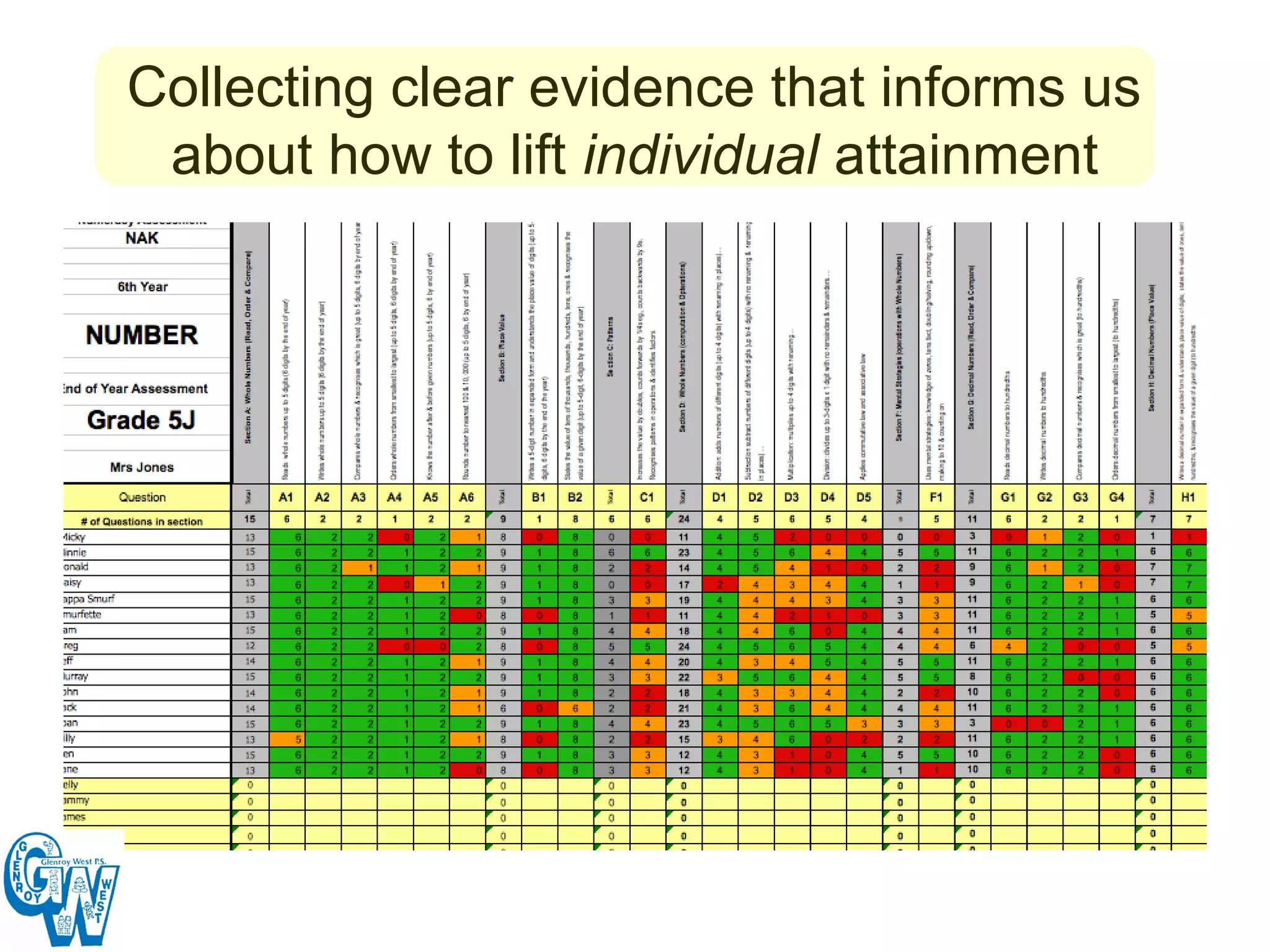
Collecting clear evidence that informs us
 about how to lift individual attainment
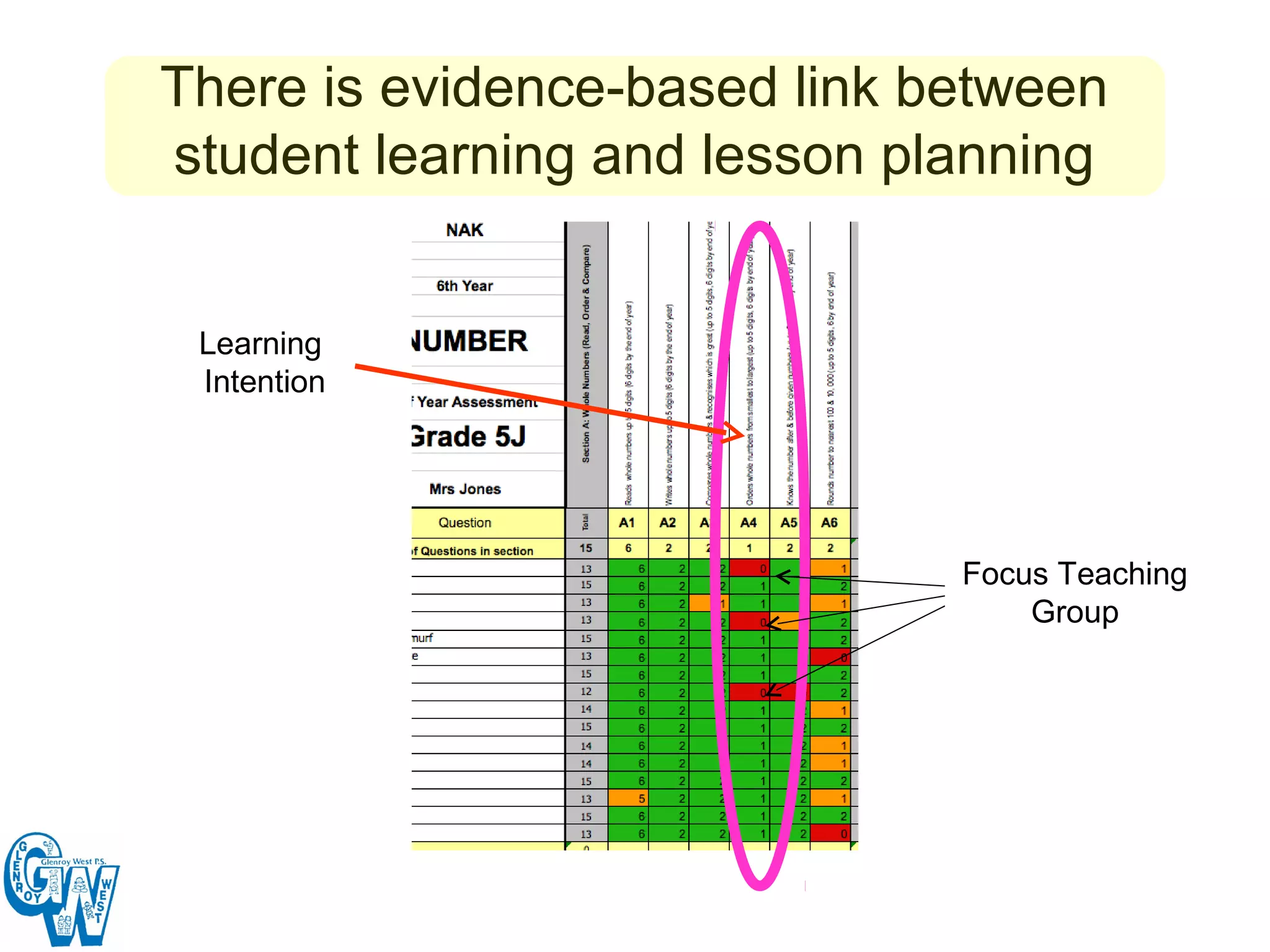
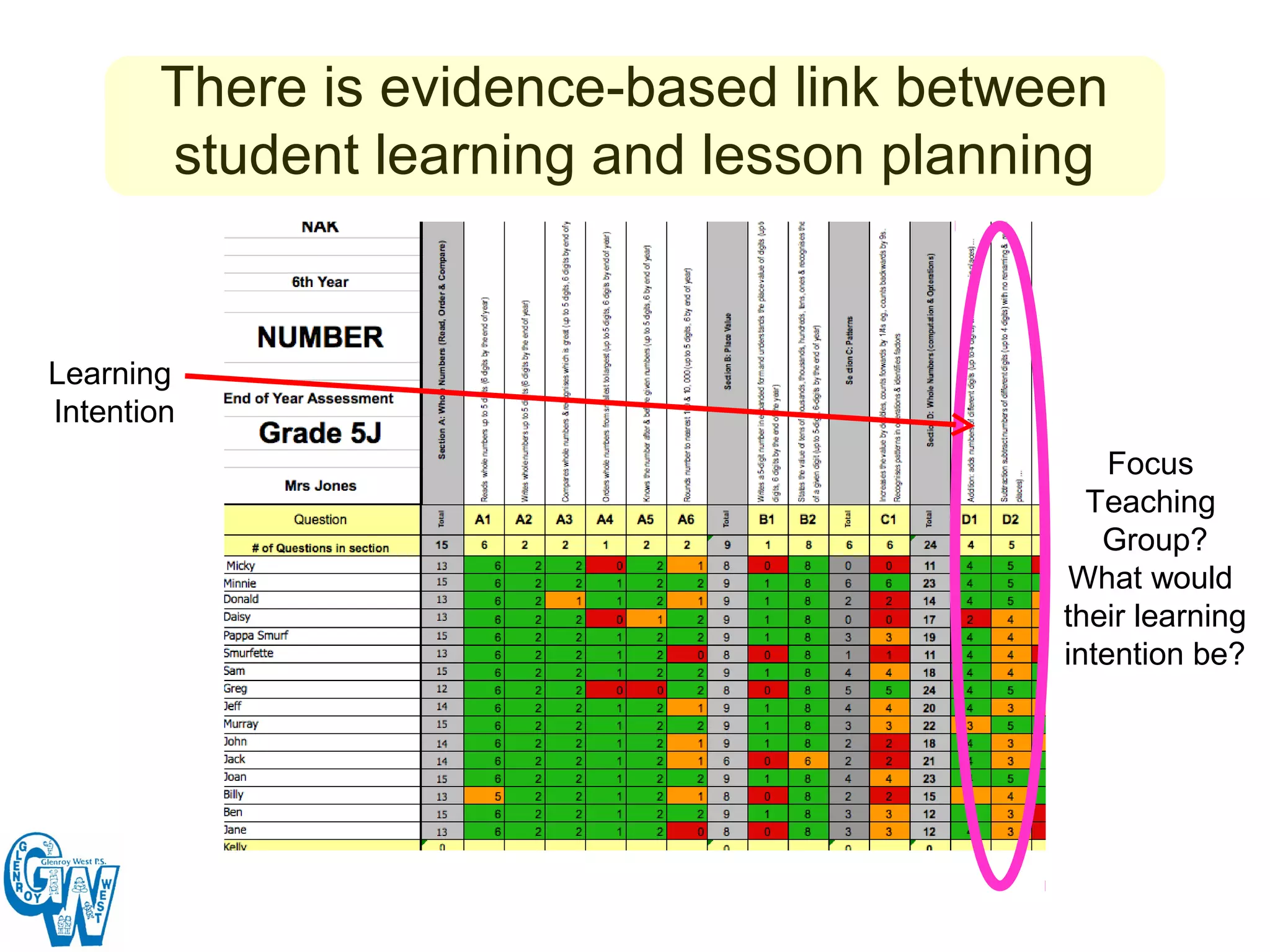
There is evidence-based link between
student learning and lesson planning


 Learning
 Intention


                              Focus Teaching
                                  Group
There is evidence-based link between
       student learning and lesson planning


Learning
Intention
                                             Focus
                                           Teaching
                                            Group?
                                          What would
                                         their learning
                                         intention be?
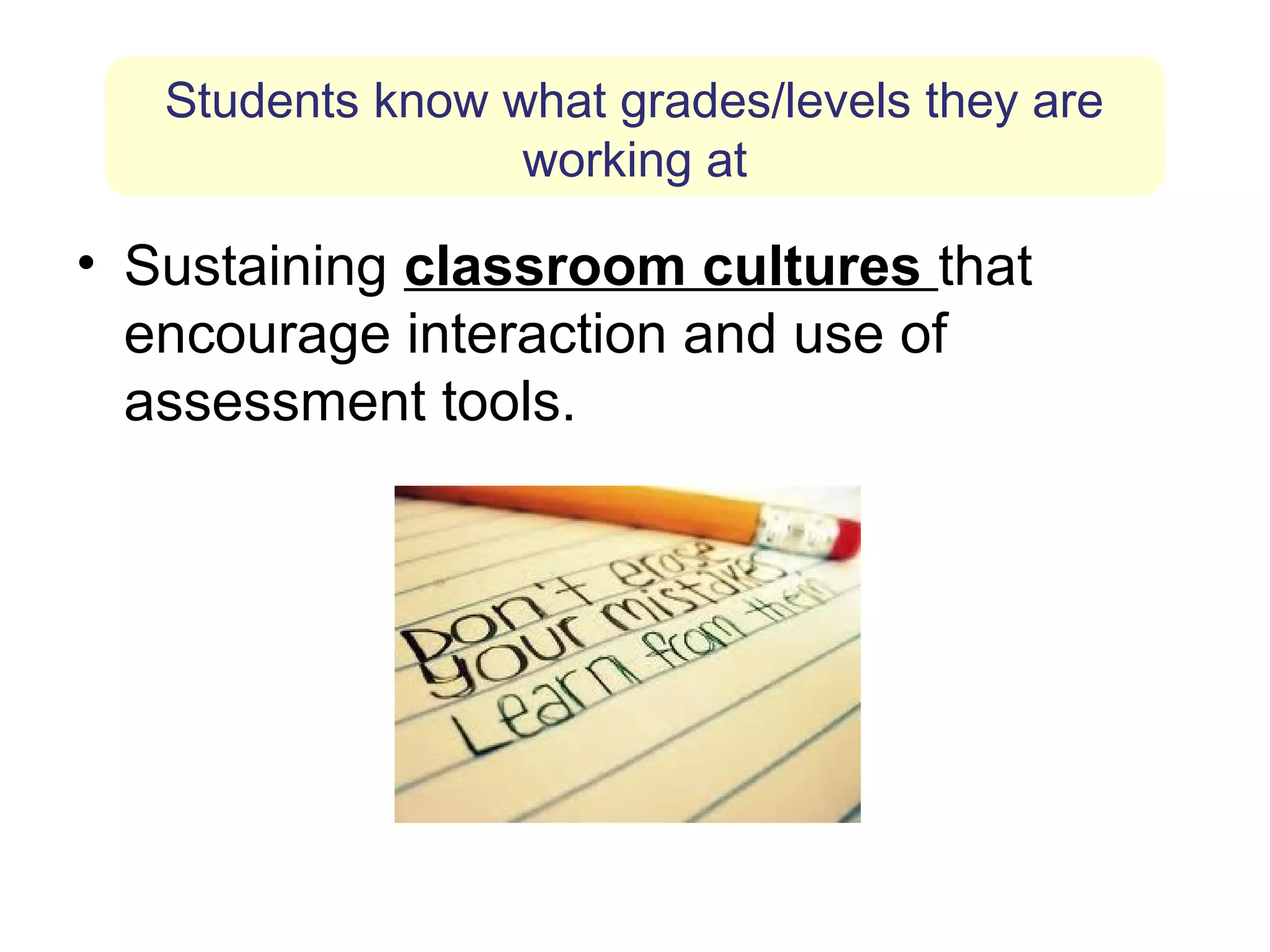
Students know what grades/levels they are
                  working at

• Sustaining classroom cultures that
  encourage interaction and use of
  assessment tools.
Students know what grades/levels they are
working at, ands they have transparent criteria to
              enable peer coaching
We offer clear feedback to, and seek clear
feedback from, our students – this means we can
  be precise about what each student needs to
       improve and how best to get there;

• Roving conferences
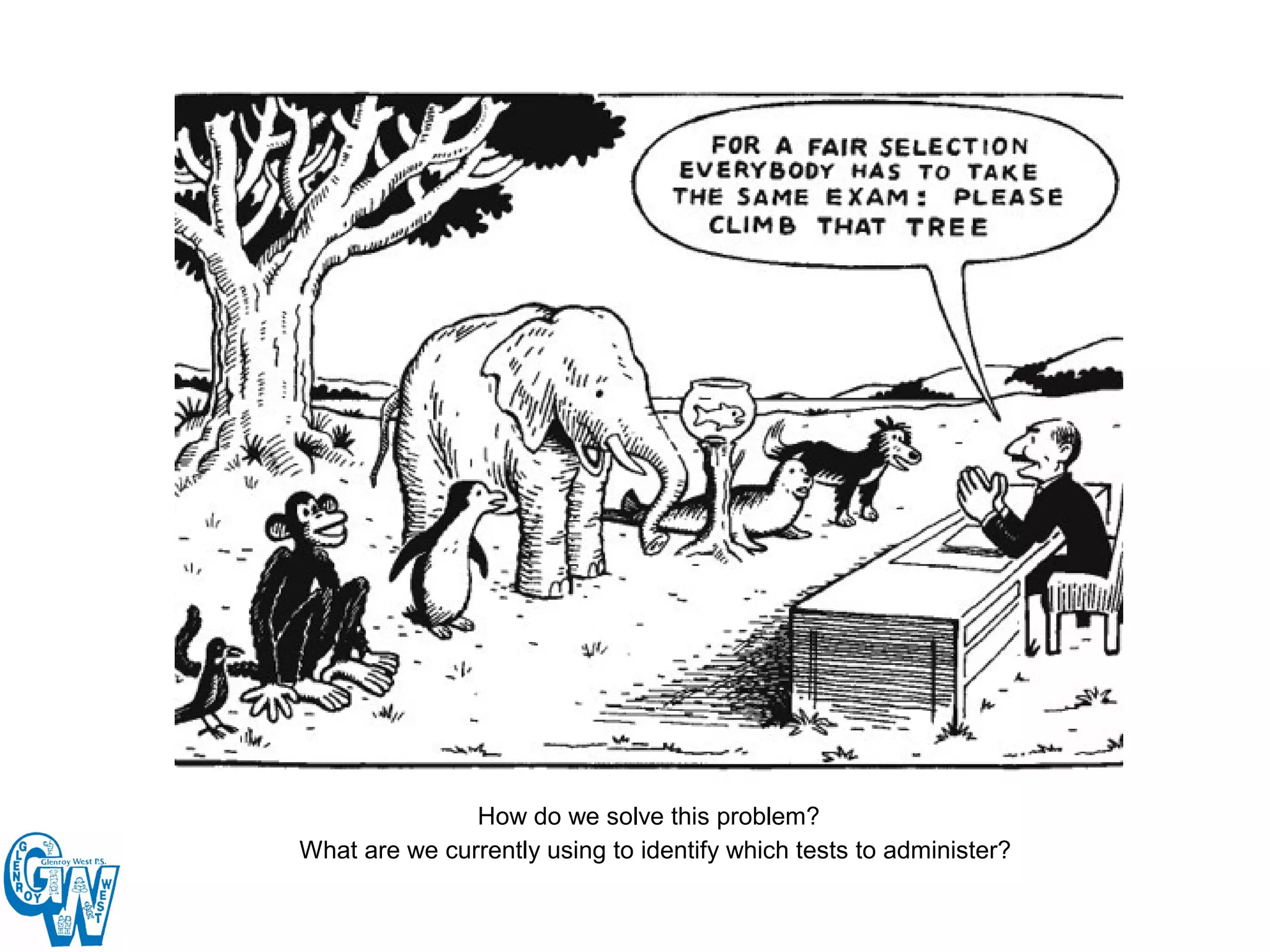
How do we solve this problem?
What are we currently using to identify which tests to administer?
EYN & On Demand ADAPTIVE
ASSESSMENT SCHEDULE

•Online Early Years Numeracy F-2
•On Demand Years 3-6
Reflection Time
   Go back and
    REFLECT                 http://wallwisher.com/wall/as

What do you now KNOW
 about Assessment FOR
        learning.

Did you meet your success
         criteria?

Assessment FOR Learning: Mathematics

  • 1.
    Curriculum Day August, 2012 Mathematics ASSESSMENT FOR LEARNING
  • 3.
    LEARNING INTENTION for today • To effectively use assessment to improve student outcomes (Assessment FOR Learning) in our teaching of mathematics; • To differentiate student learning in our lesson planning using evidence gained from data in all areas of mathematics.
  • 4.
    SUCCESS CRITERIA Ihave an understanding on how to collect clear evidence that informs me about hot to lift individual attainment; I have an understanding of how to administer, collect and collate data from NAK; I understand how to differentiate student learning in my lesson planning using evidence gained from data.
  • 5.
    Baseline Data Doa KWL on Wallwisher! Go to this website and write http://wallwisher.com/wall down all the things you /assessforlearning Know, Want to know and during the session you can write down what you have Learnt about assessment for learning. Remember throughout the session, you can add your discoveries to the wall!
  • 6.
    Assessment (general definition) Assessment is the ongoing process of gathering, analysing and reflecting on evidence to make informed and consistent judgements to improve future student learning.
  • 7.
    Assessment FOR Learning (Assessment Reform Group, 2002) Assessment for learning is the process of seeking and interpreting evidence for use by learners and their teachers to decide where the learners are in their learning, where they need to go, and how best to get there.
  • 8.
    Assessment FOR Learning (DEECD, Prep to Year 10 Assessment Advice) Assessment FOR learning - occurs when teachers use inferences about student progress to inform their teaching
  • 9.
    Assessment FOR Learning (Curiosity, NMR, 2012) Theory of Action for Teachers If we commit to peer assessment, and assessment for learning, then student engagement, learning and achievement well accelerate.
  • 10.
    COMMIT TO ASSESSMENTFOR LEARNING Elaboration: -We collect clear evidence that informs us about how to lift individual attainment; -We offer clear feedback to, and seek clear feedback from, our students – this means we can be precise about what each student needs to improve and how best to get there; -Students know what grades/levels they are working at, and they have transparent criteria to enable peer coaching; -There is an evidence-based link between student learning and lesson planning.
  • 11.
    What we currentlyhave in place ASSESSMENT FOR LEARNING – Assessment that guides our teaching and learning. •Online Early Years Mathematics
  • 12.
    Adopting consistent teachingprotocols Nelson Assessment Kit. What does it look like?
  • 13.
    Collecting clear evidencethat informs us about how to lift individual attainment
  • 14.
    There is evidence-basedlink between student learning and lesson planning Learning Intention Focus Teaching Group
  • 15.
    There is evidence-basedlink between student learning and lesson planning Learning Intention Focus Teaching Group? What would their learning intention be?
  • 16.
    Students know whatgrades/levels they are working at • Sustaining classroom cultures that encourage interaction and use of assessment tools.
  • 17.
    Students know whatgrades/levels they are working at, ands they have transparent criteria to enable peer coaching
  • 18.
    We offer clearfeedback to, and seek clear feedback from, our students – this means we can be precise about what each student needs to improve and how best to get there; • Roving conferences
  • 19.
    How do wesolve this problem? What are we currently using to identify which tests to administer?
  • 20.
    EYN & OnDemand ADAPTIVE ASSESSMENT SCHEDULE •Online Early Years Numeracy F-2 •On Demand Years 3-6
  • 21.
    Reflection Time Go back and REFLECT http://wallwisher.com/wall/as What do you now KNOW about Assessment FOR learning. Did you meet your success criteria?

Editor's Notes

  • #13 Have a look at the tests F-6
  • #14 Look at spreadsheet example – COLLATING DATA
  • #15 Look at spreadsheet example – COLLATING DATA
  • #16 Look at spreadsheet example – COLLATING DATA
  • #17 Discussion on how you have to provide an environment that encourages mistakes! > Celebrating mistakes & developing a need to search for an answer. Show students your mistakes and your desire to find the right answer. Discuss with them your strengths & weakness and that it is ok – Ask the students for help with your weakness. Discussing that everyone learns differently and at different pace.
  • #19 Discuss weekly planners – Do teachers have specified time in their planner for a teaching group, followed by a roving conference? How do they keep records of their roving conference?
  • #20 How do we solve this problem? What are we currently doing to differentiate learning to meet student’s needs?
  • #21 Look at Draft Assessment Schedule for Mathematics Open for discussion.