


AS Macro Revision
Aggregate Supply
Spring 2014
We add new resources / links / articles every day
to our Economics blogs
Follow this link for the AS Macro Blog on Tutor2u
www.tutor2u.net/blog/index.php/economics/categories/C59
Introduction to Aggregate Supply (AS)
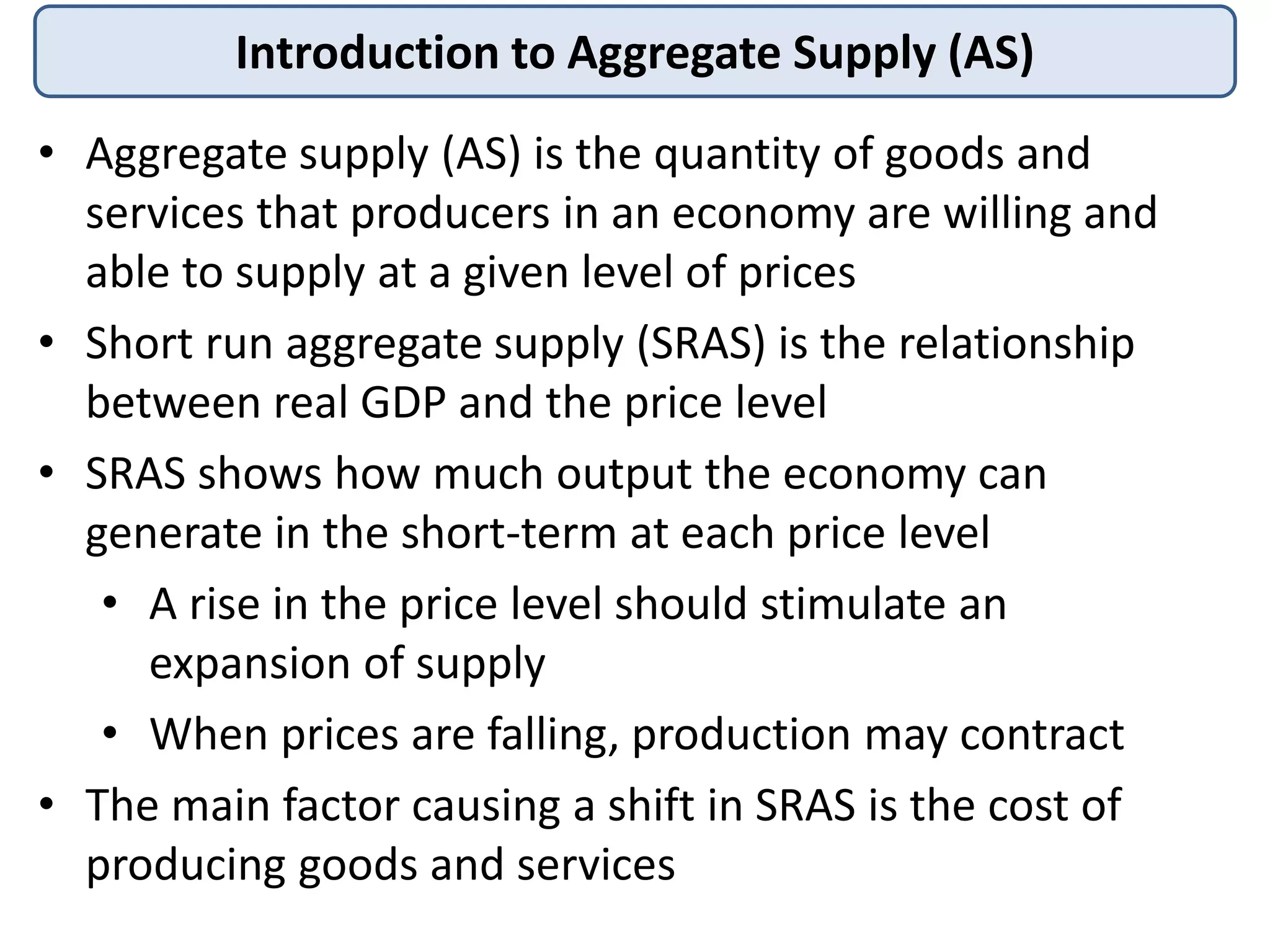
• Aggregate supply (AS) is the quantity of goods and
services that producers in an economy are willing and
able to supply at a given level of prices
• Short run aggregate supply (SRAS) is the relationship
between real GDP and the price level
• SRAS shows how much output the economy can
generate in the short-term at each price level
• A rise in the price level should stimulate an
expansion of supply
• When prices are falling, production may contract
• The main factor causing a shift in SRAS is the cost of
producing goods and services
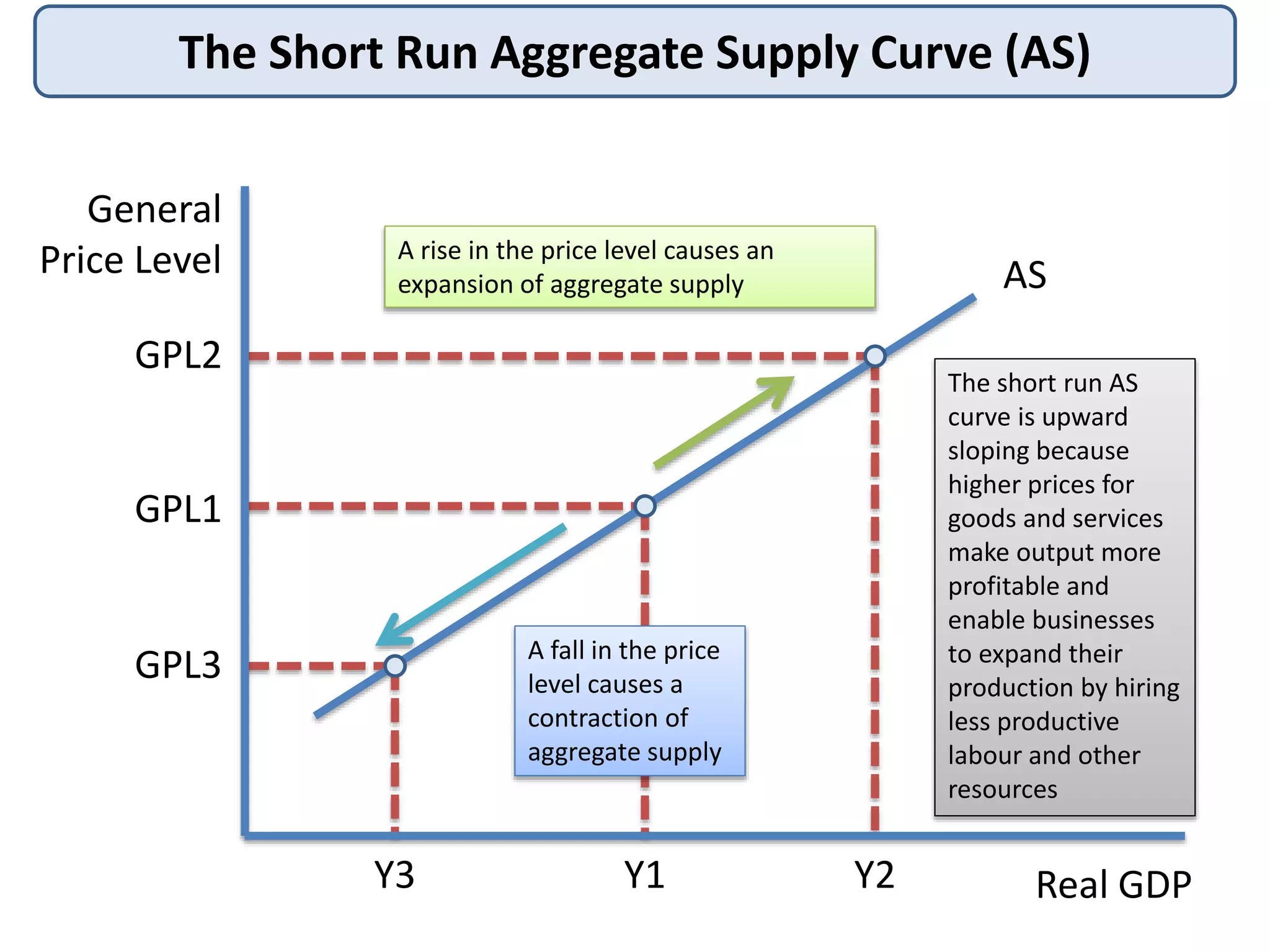
The Short Run Aggregate Supply Curve (AS)
General
Price Level

A rise in the price level causes an
expansion of aggregate supply

AS

GPL2

The short run AS
curve is upward
sloping because
higher prices for
goods and services
make output more
profitable and
enable businesses
to expand their
production by hiring
less productive
labour and other
resources

GPL1
A fall in the price
level causes a
contraction of
aggregate supply

GPL3

Y3

Y1

Y2

Real GDP
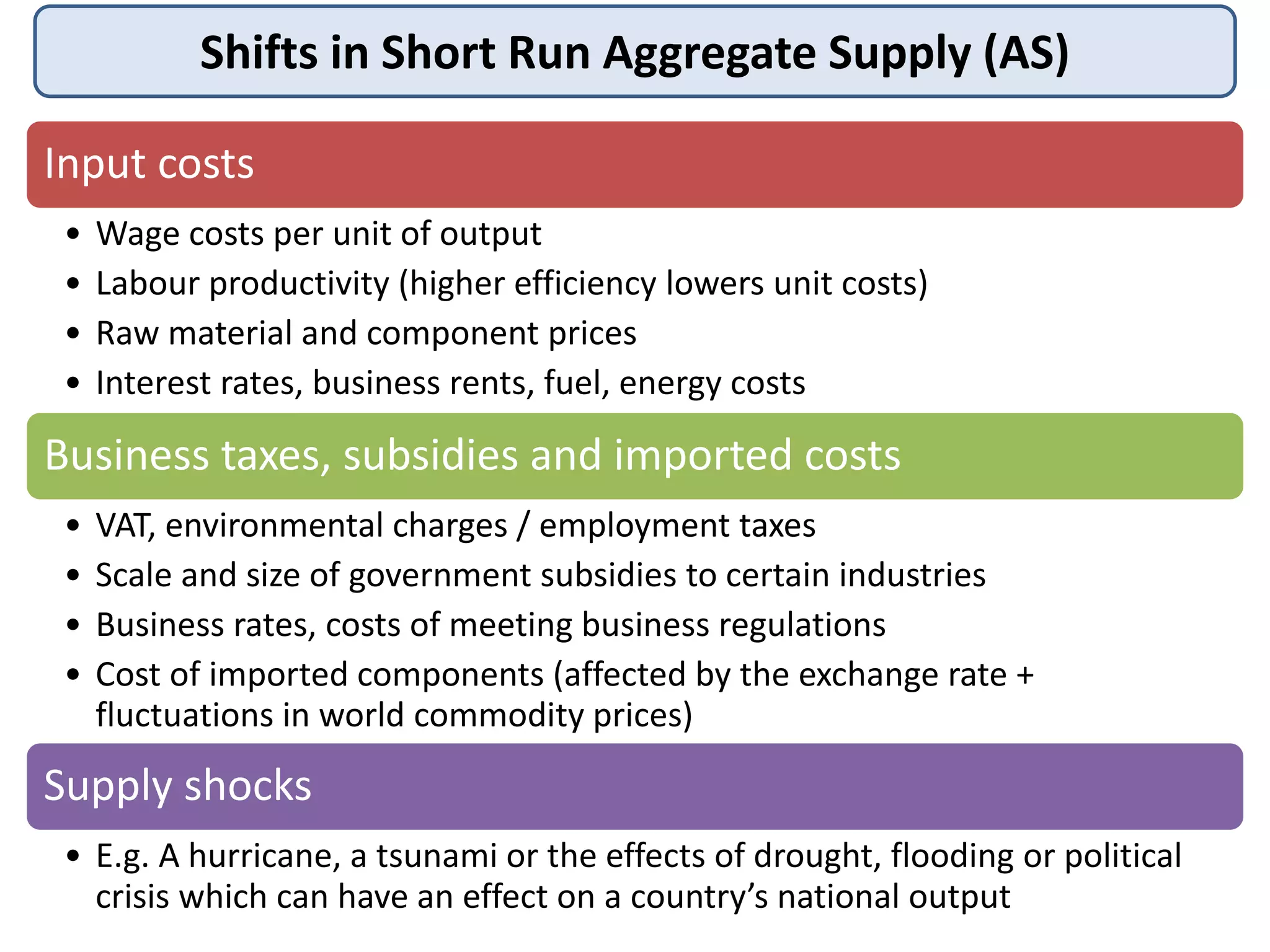
Shifts in Short Run Aggregate Supply (AS)
Input costs
•
•
•
•

Wage costs per unit of output
Labour productivity (higher efficiency lowers unit costs)
Raw material and component prices
Interest rates, business rents, fuel, energy costs

Business taxes, subsidies and imported costs
•
•
•
•

VAT, environmental charges / employment taxes
Scale and size of government subsidies to certain industries
Business rates, costs of meeting business regulations
Cost of imported components (affected by the exchange rate +
fluctuations in world commodity prices)

Supply shocks
• E.g. A hurricane, a tsunami or the effects of drought, flooding or political
crisis which can have an effect on a country’s national output
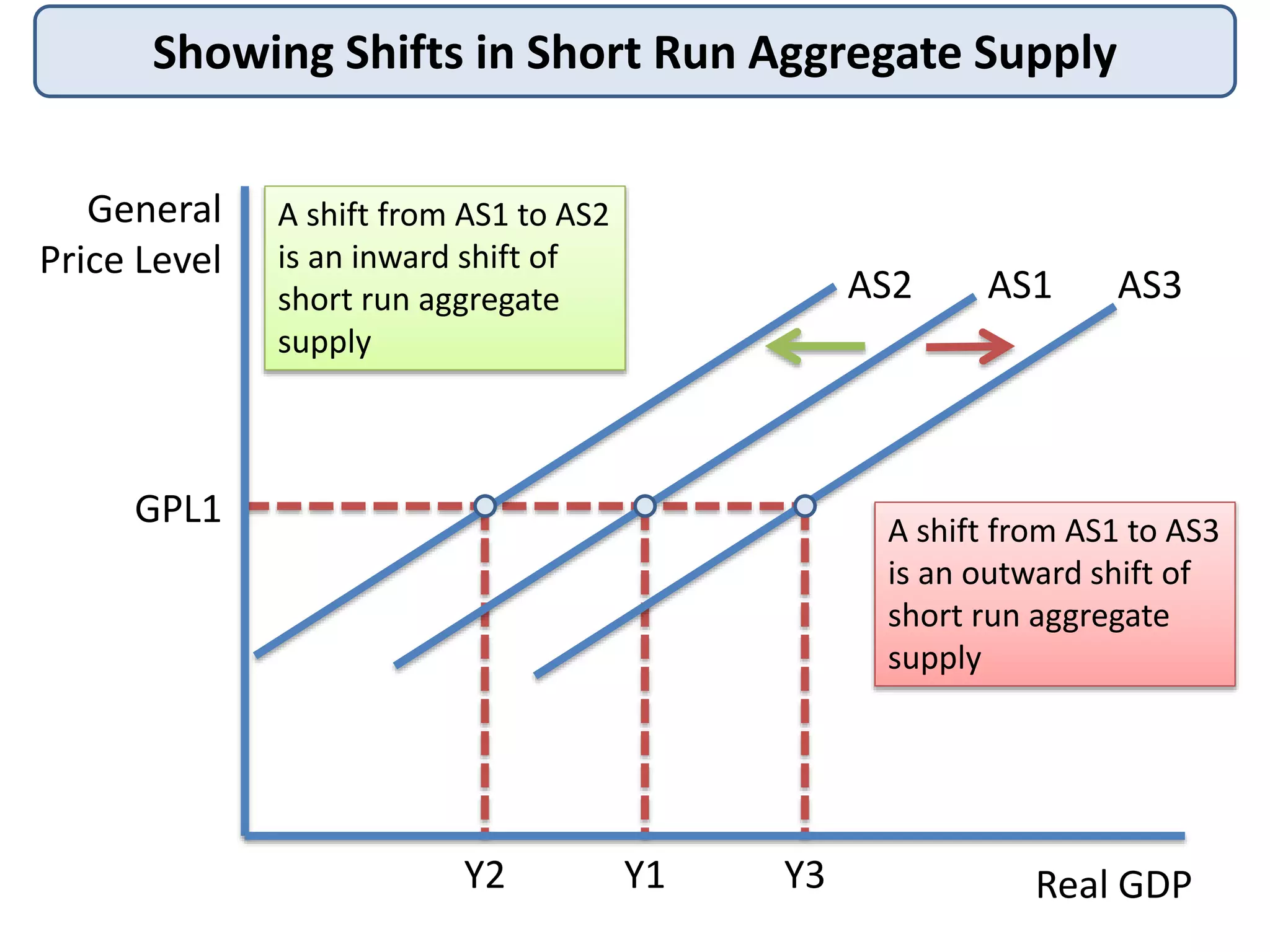
Showing Shifts in Short Run Aggregate Supply
General
Price Level

A shift from AS1 to AS2
is an inward shift of
short run aggregate
supply

AS2

GPL1

AS1

AS3

A shift from AS1 to AS3
is an outward shift of
short run aggregate
supply

Y2

Y1

Y3

Real GDP
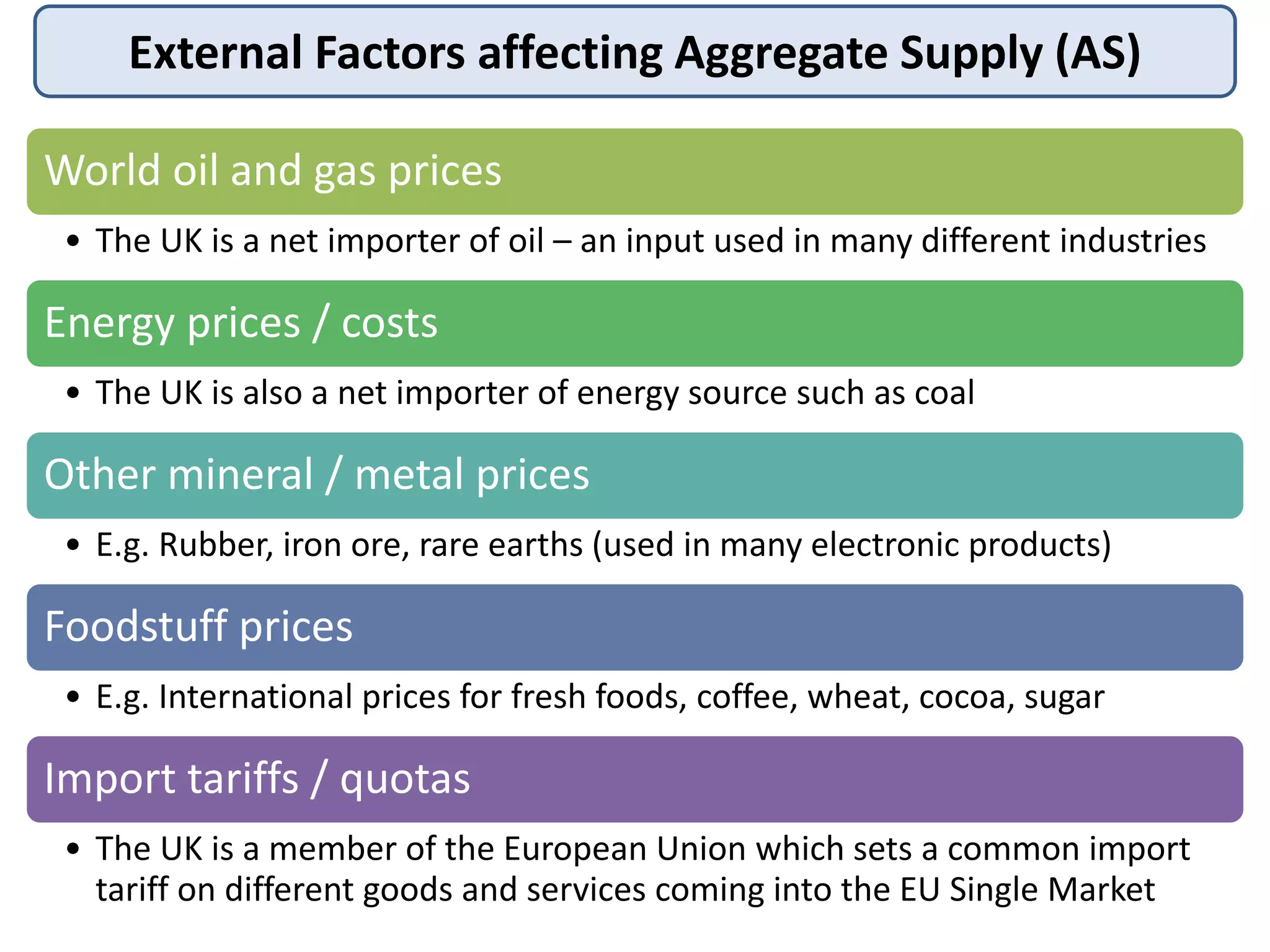
External Factors affecting Aggregate Supply (AS)
World oil and gas prices
• The UK is a net importer of oil – an input used in many different industries

Energy prices / costs
• The UK is also a net importer of energy source such as coal

Other mineral / metal prices
• E.g. Rubber, iron ore, rare earths (used in many electronic products)

Foodstuff prices
• E.g. International prices for fresh foods, coffee, wheat, cocoa, sugar

Import tariffs / quotas
• The UK is a member of the European Union which sets a common import
tariff on different goods and services coming into the EU Single Market
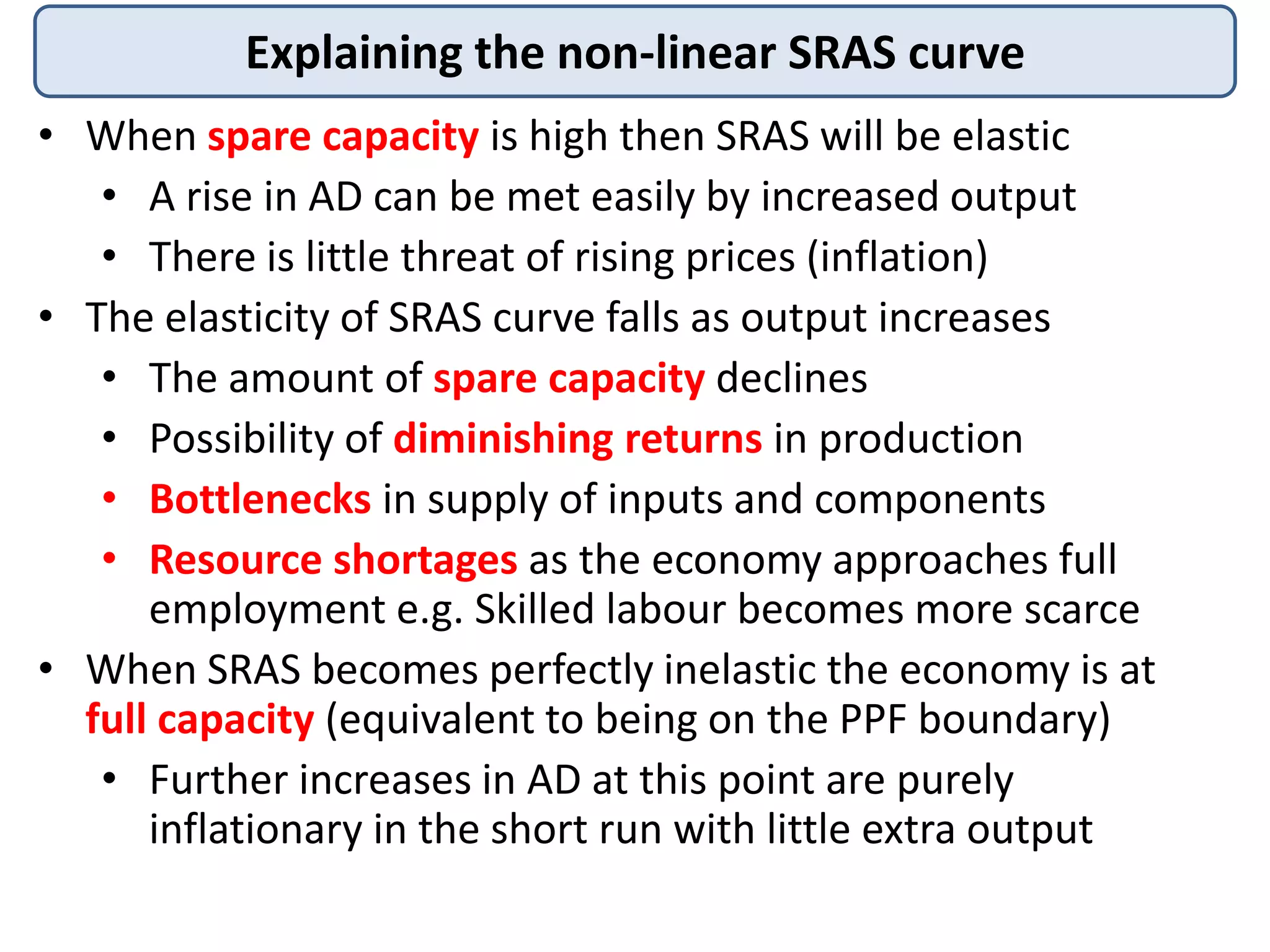
Explaining the non-linear SRAS curve
• When spare capacity is high then SRAS will be elastic
• A rise in AD can be met easily by increased output
• There is little threat of rising prices (inflation)
• The elasticity of SRAS curve falls as output increases
• The amount of spare capacity declines
• Possibility of diminishing returns in production
• Bottlenecks in supply of inputs and components
• Resource shortages as the economy approaches full
employment e.g. Skilled labour becomes more scarce
• When SRAS becomes perfectly inelastic the economy is at
full capacity (equivalent to being on the PPF boundary)
• Further increases in AD at this point are purely
inflationary in the short run with little extra output
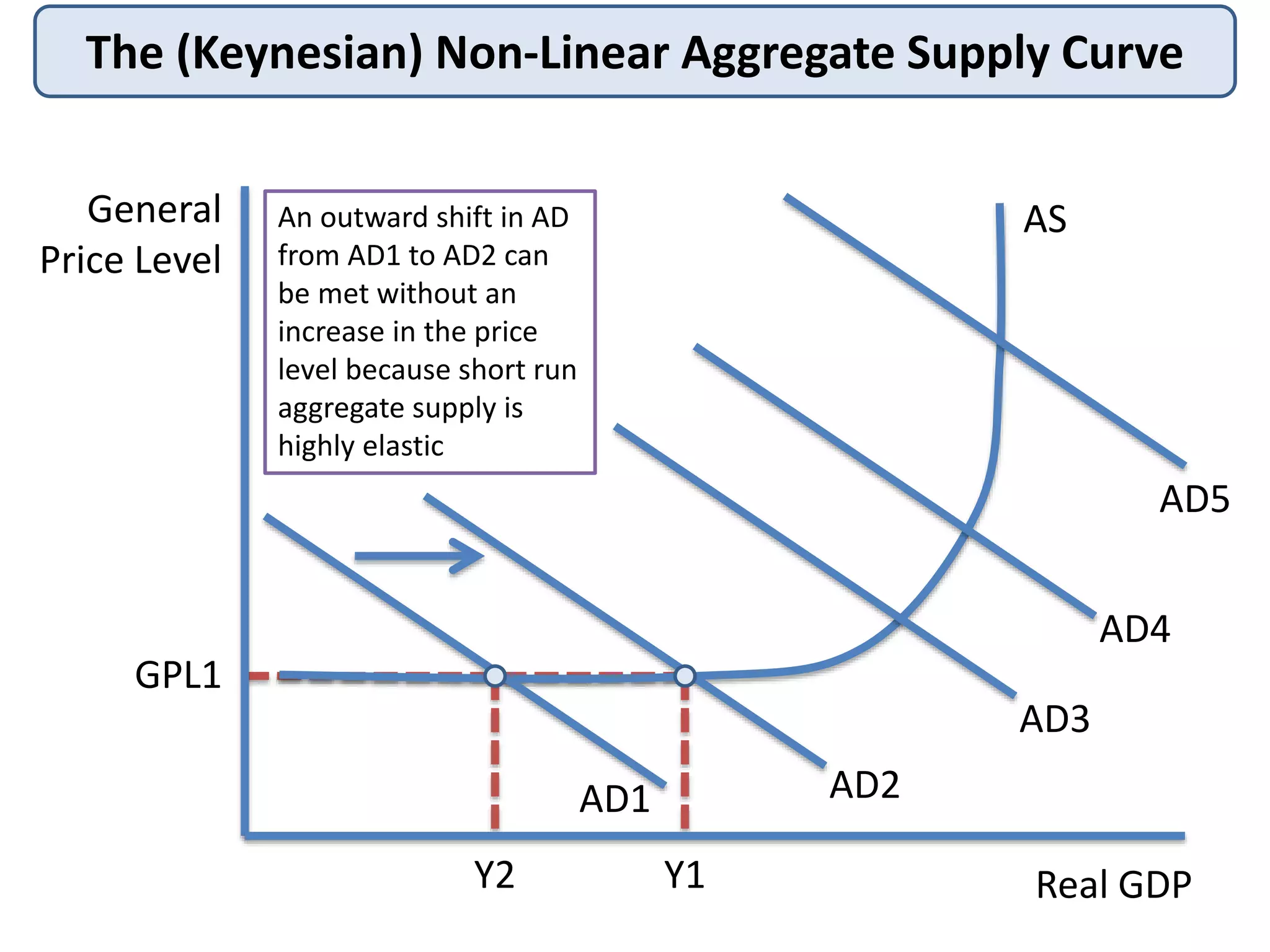
The (Keynesian) Non-Linear Aggregate Supply Curve
General
Price Level

AS

An outward shift in AD
from AD1 to AD2 can
be met without an
increase in the price
level because short run
aggregate supply is
highly elastic

AD5
AD4
GPL1
AD3

AD2

AD1
Y2

Y1

Real GDP
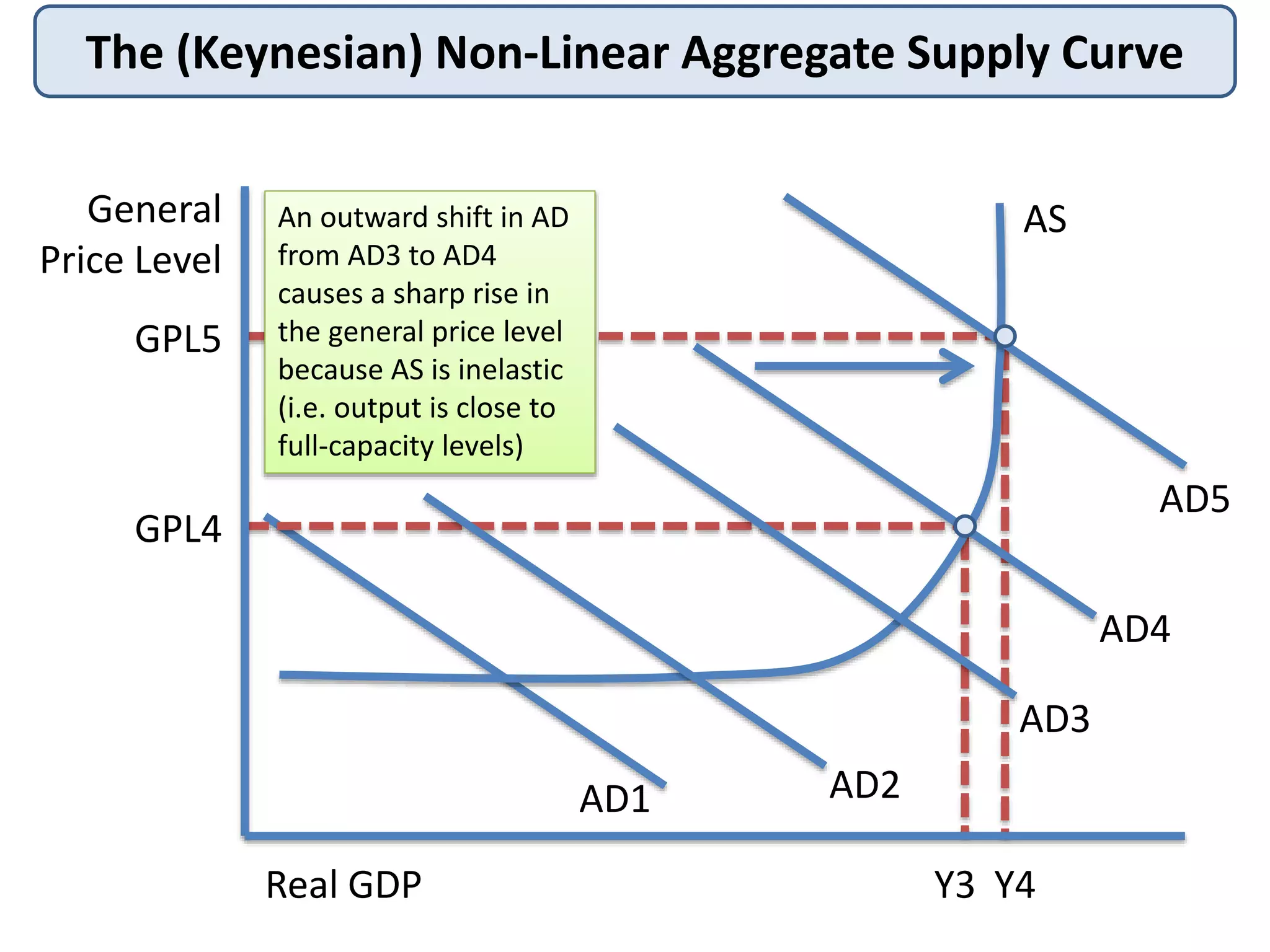
The (Keynesian) Non-Linear Aggregate Supply Curve
General
Price Level

GPL5

AS

An outward shift in AD
from AD3 to AD4
causes a sharp rise in
the general price level
because AS is inelastic
(i.e. output is close to
full-capacity levels)

AD5

GPL4

AD4
AD3
AD1

Real GDP

AD2
Y3 Y4
Long-Run Aggregate Supply (LRAS)
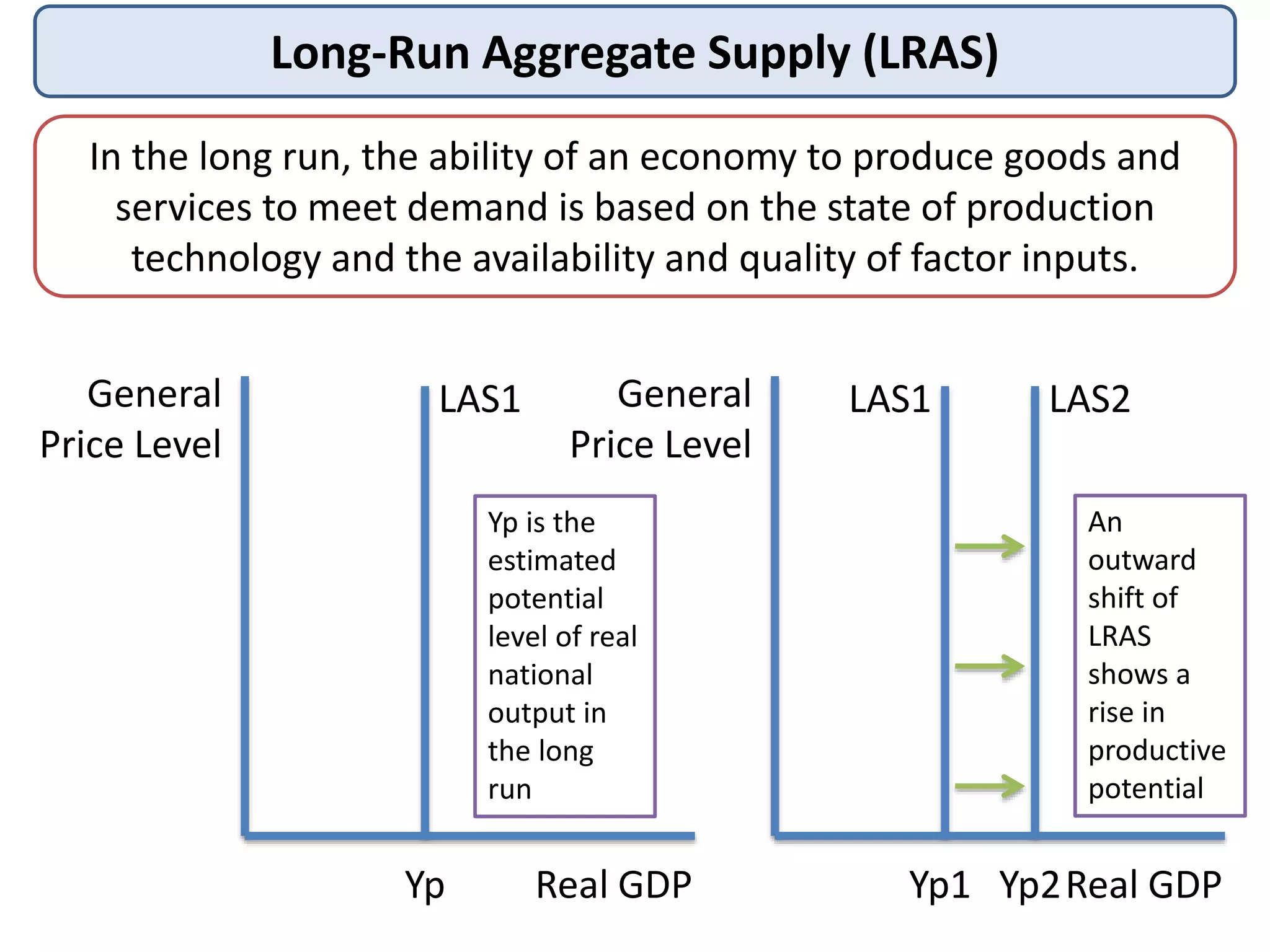
In the long run, the ability of an economy to produce goods and
services to meet demand is based on the state of production
technology and the availability and quality of factor inputs.
General
Price Level

LAS1

General
Price Level

Yp is the
estimated
potential
level of real
national
output in
the long
run

Yp

Real GDP

LAS1

LAS2
An
outward
shift of
LRAS
shows a
rise in
productive
potential

Yp1 Yp2 Real GDP
Increasing LRAS – Productive Potential
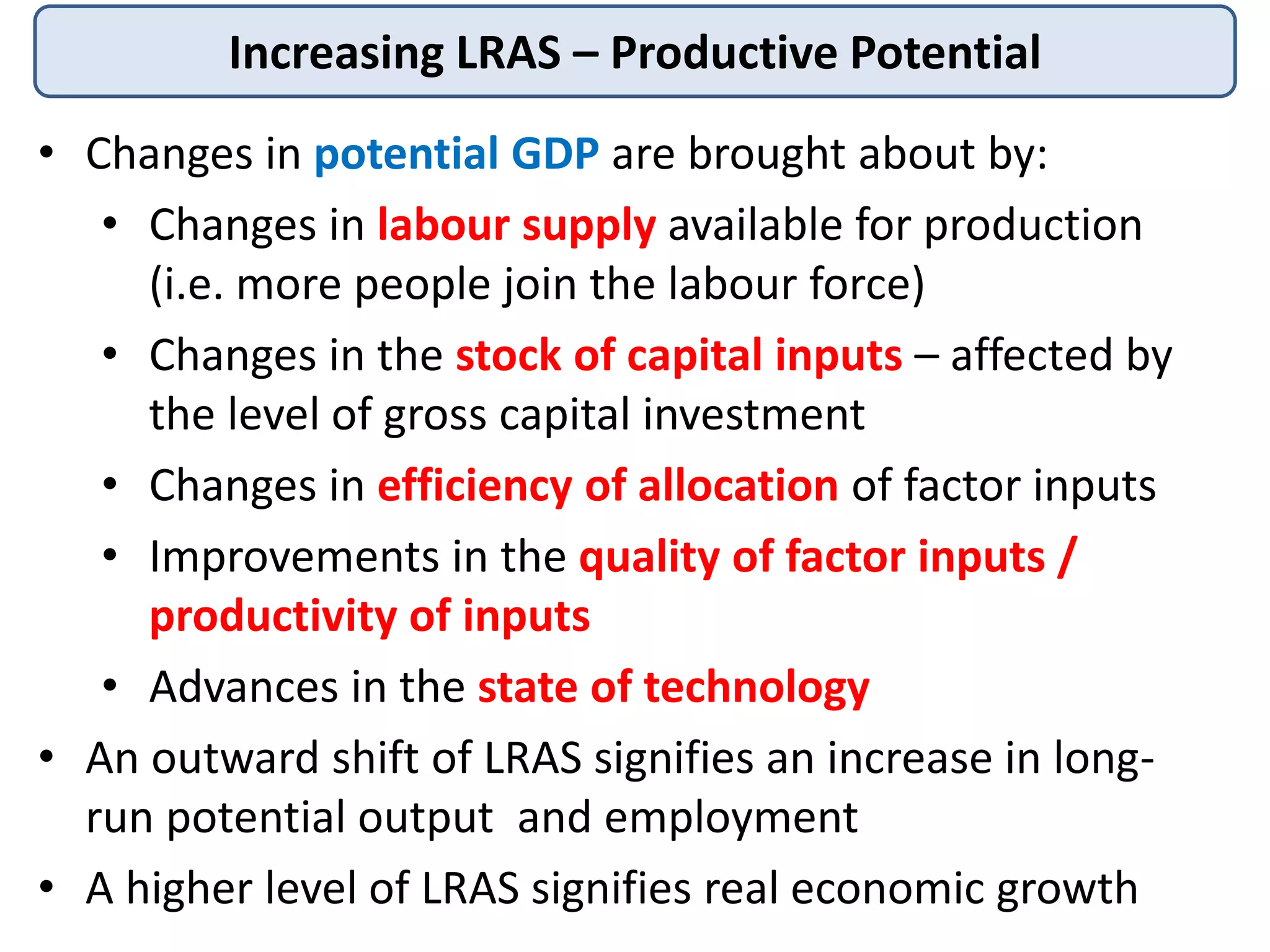
• Changes in potential GDP are brought about by:
• Changes in labour supply available for production
(i.e. more people join the labour force)
• Changes in the stock of capital inputs – affected by
the level of gross capital investment
• Changes in efficiency of allocation of factor inputs
• Improvements in the quality of factor inputs /
productivity of inputs
• Advances in the state of technology
• An outward shift of LRAS signifies an increase in longrun potential output and employment
• A higher level of LRAS signifies real economic growth
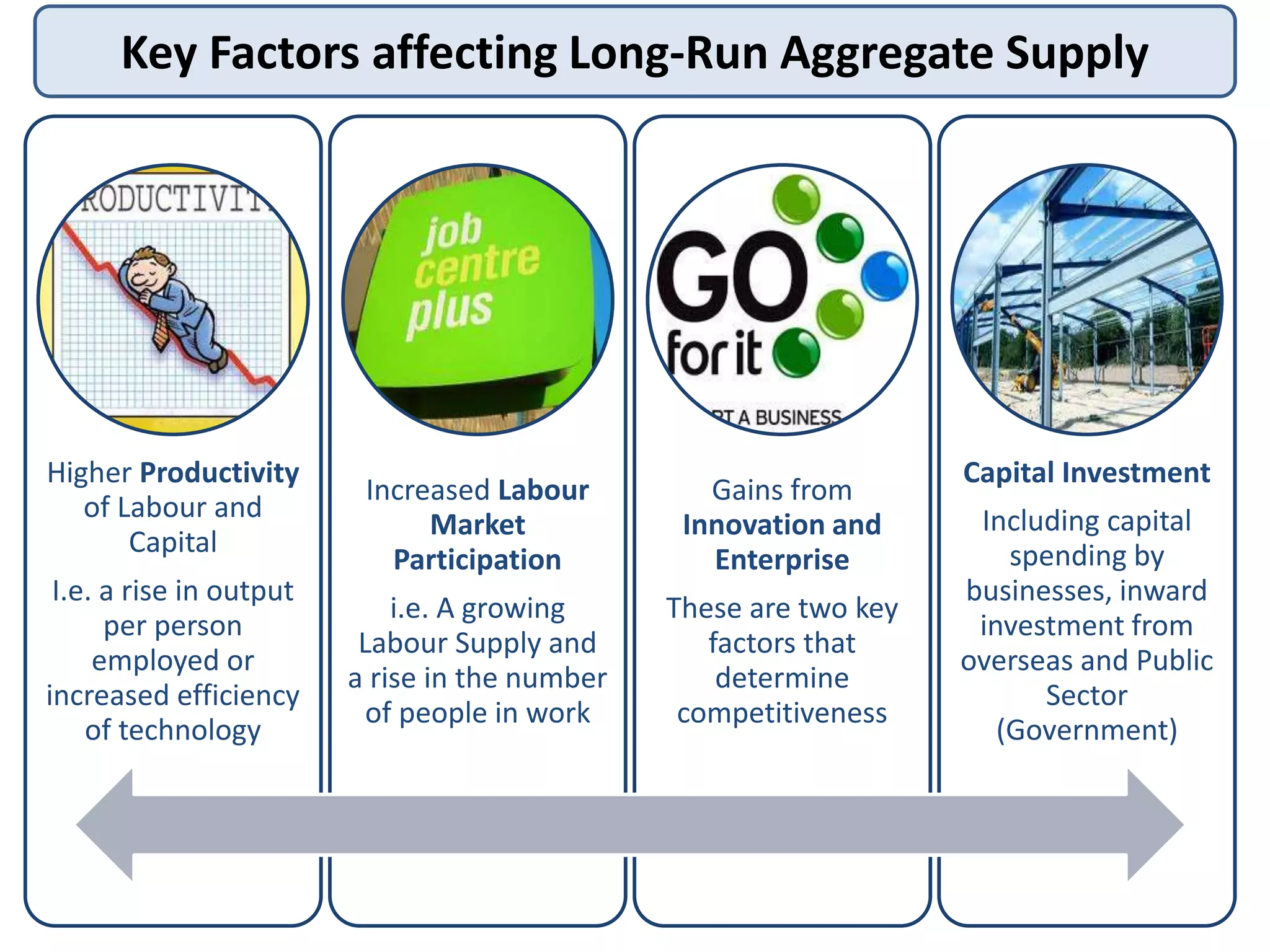
Key Factors affecting Long-Run Aggregate Supply

Higher Productivity
of Labour and
Capital
I.e. a rise in output
per person
employed or
increased efficiency
of technology

Increased Labour
Market
Participation

Gains from
Innovation and
Enterprise

i.e. A growing
Labour Supply and
a rise in the number
of people in work

These are two key
factors that
determine
competitiveness

Capital Investment
Including capital
spending by
businesses, inward
investment from
overseas and Public
Sector
(Government)
Productivity
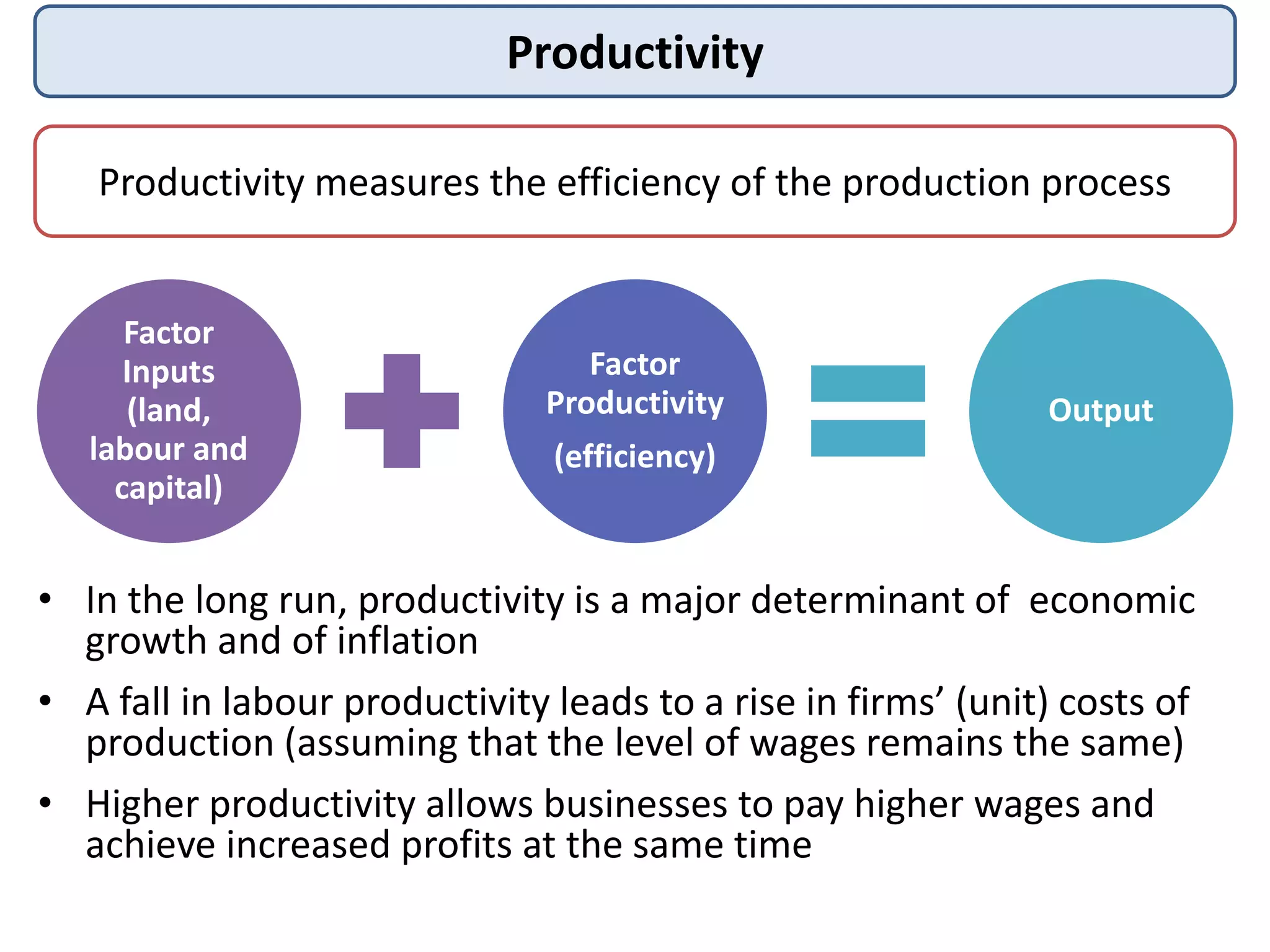
Productivity measures the efficiency of the production process

Factor
Inputs
(land,
labour and
capital)

Factor
Productivity

Output

(efficiency)

• In the long run, productivity is a major determinant of economic
growth and of inflation
• A fall in labour productivity leads to a rise in firms’ (unit) costs of
production (assuming that the level of wages remains the same)
• Higher productivity allows businesses to pay higher wages and
achieve increased profits at the same time
Get help on the AS
macroeconomics course
using twitter

#econ2
@tutor2u_econ

www.tutor2u.net

AS Macro Revision Aggregate Supply

  • 1.
    AS Macro Revision AggregateSupply Spring 2014
  • 2.
    We add newresources / links / articles every day to our Economics blogs Follow this link for the AS Macro Blog on Tutor2u www.tutor2u.net/blog/index.php/economics/categories/C59
  • 3.
    Introduction to AggregateSupply (AS) • Aggregate supply (AS) is the quantity of goods and services that producers in an economy are willing and able to supply at a given level of prices • Short run aggregate supply (SRAS) is the relationship between real GDP and the price level • SRAS shows how much output the economy can generate in the short-term at each price level • A rise in the price level should stimulate an expansion of supply • When prices are falling, production may contract • The main factor causing a shift in SRAS is the cost of producing goods and services
  • 4.
    The Short RunAggregate Supply Curve (AS) General Price Level A rise in the price level causes an expansion of aggregate supply AS GPL2 The short run AS curve is upward sloping because higher prices for goods and services make output more profitable and enable businesses to expand their production by hiring less productive labour and other resources GPL1 A fall in the price level causes a contraction of aggregate supply GPL3 Y3 Y1 Y2 Real GDP
  • 5.
    Shifts in ShortRun Aggregate Supply (AS) Input costs • • • • Wage costs per unit of output Labour productivity (higher efficiency lowers unit costs) Raw material and component prices Interest rates, business rents, fuel, energy costs Business taxes, subsidies and imported costs • • • • VAT, environmental charges / employment taxes Scale and size of government subsidies to certain industries Business rates, costs of meeting business regulations Cost of imported components (affected by the exchange rate + fluctuations in world commodity prices) Supply shocks • E.g. A hurricane, a tsunami or the effects of drought, flooding or political crisis which can have an effect on a country’s national output
  • 6.
    Showing Shifts inShort Run Aggregate Supply General Price Level A shift from AS1 to AS2 is an inward shift of short run aggregate supply AS2 GPL1 AS1 AS3 A shift from AS1 to AS3 is an outward shift of short run aggregate supply Y2 Y1 Y3 Real GDP
  • 7.
    External Factors affectingAggregate Supply (AS) World oil and gas prices • The UK is a net importer of oil – an input used in many different industries Energy prices / costs • The UK is also a net importer of energy source such as coal Other mineral / metal prices • E.g. Rubber, iron ore, rare earths (used in many electronic products) Foodstuff prices • E.g. International prices for fresh foods, coffee, wheat, cocoa, sugar Import tariffs / quotas • The UK is a member of the European Union which sets a common import tariff on different goods and services coming into the EU Single Market
  • 8.
    Explaining the non-linearSRAS curve • When spare capacity is high then SRAS will be elastic • A rise in AD can be met easily by increased output • There is little threat of rising prices (inflation) • The elasticity of SRAS curve falls as output increases • The amount of spare capacity declines • Possibility of diminishing returns in production • Bottlenecks in supply of inputs and components • Resource shortages as the economy approaches full employment e.g. Skilled labour becomes more scarce • When SRAS becomes perfectly inelastic the economy is at full capacity (equivalent to being on the PPF boundary) • Further increases in AD at this point are purely inflationary in the short run with little extra output
  • 9.
    The (Keynesian) Non-LinearAggregate Supply Curve General Price Level AS An outward shift in AD from AD1 to AD2 can be met without an increase in the price level because short run aggregate supply is highly elastic AD5 AD4 GPL1 AD3 AD2 AD1 Y2 Y1 Real GDP
  • 10.
    The (Keynesian) Non-LinearAggregate Supply Curve General Price Level GPL5 AS An outward shift in AD from AD3 to AD4 causes a sharp rise in the general price level because AS is inelastic (i.e. output is close to full-capacity levels) AD5 GPL4 AD4 AD3 AD1 Real GDP AD2 Y3 Y4
  • 11.
    Long-Run Aggregate Supply(LRAS) In the long run, the ability of an economy to produce goods and services to meet demand is based on the state of production technology and the availability and quality of factor inputs. General Price Level LAS1 General Price Level Yp is the estimated potential level of real national output in the long run Yp Real GDP LAS1 LAS2 An outward shift of LRAS shows a rise in productive potential Yp1 Yp2 Real GDP
  • 12.
    Increasing LRAS –Productive Potential • Changes in potential GDP are brought about by: • Changes in labour supply available for production (i.e. more people join the labour force) • Changes in the stock of capital inputs – affected by the level of gross capital investment • Changes in efficiency of allocation of factor inputs • Improvements in the quality of factor inputs / productivity of inputs • Advances in the state of technology • An outward shift of LRAS signifies an increase in longrun potential output and employment • A higher level of LRAS signifies real economic growth
  • 13.
    Key Factors affectingLong-Run Aggregate Supply Higher Productivity of Labour and Capital I.e. a rise in output per person employed or increased efficiency of technology Increased Labour Market Participation Gains from Innovation and Enterprise i.e. A growing Labour Supply and a rise in the number of people in work These are two key factors that determine competitiveness Capital Investment Including capital spending by businesses, inward investment from overseas and Public Sector (Government)
  • 14.
    Productivity Productivity measures theefficiency of the production process Factor Inputs (land, labour and capital) Factor Productivity Output (efficiency) • In the long run, productivity is a major determinant of economic growth and of inflation • A fall in labour productivity leads to a rise in firms’ (unit) costs of production (assuming that the level of wages remains the same) • Higher productivity allows businesses to pay higher wages and achieve increased profits at the same time
  • 15.
    Get help onthe AS macroeconomics course using twitter #econ2 @tutor2u_econ www.tutor2u.net