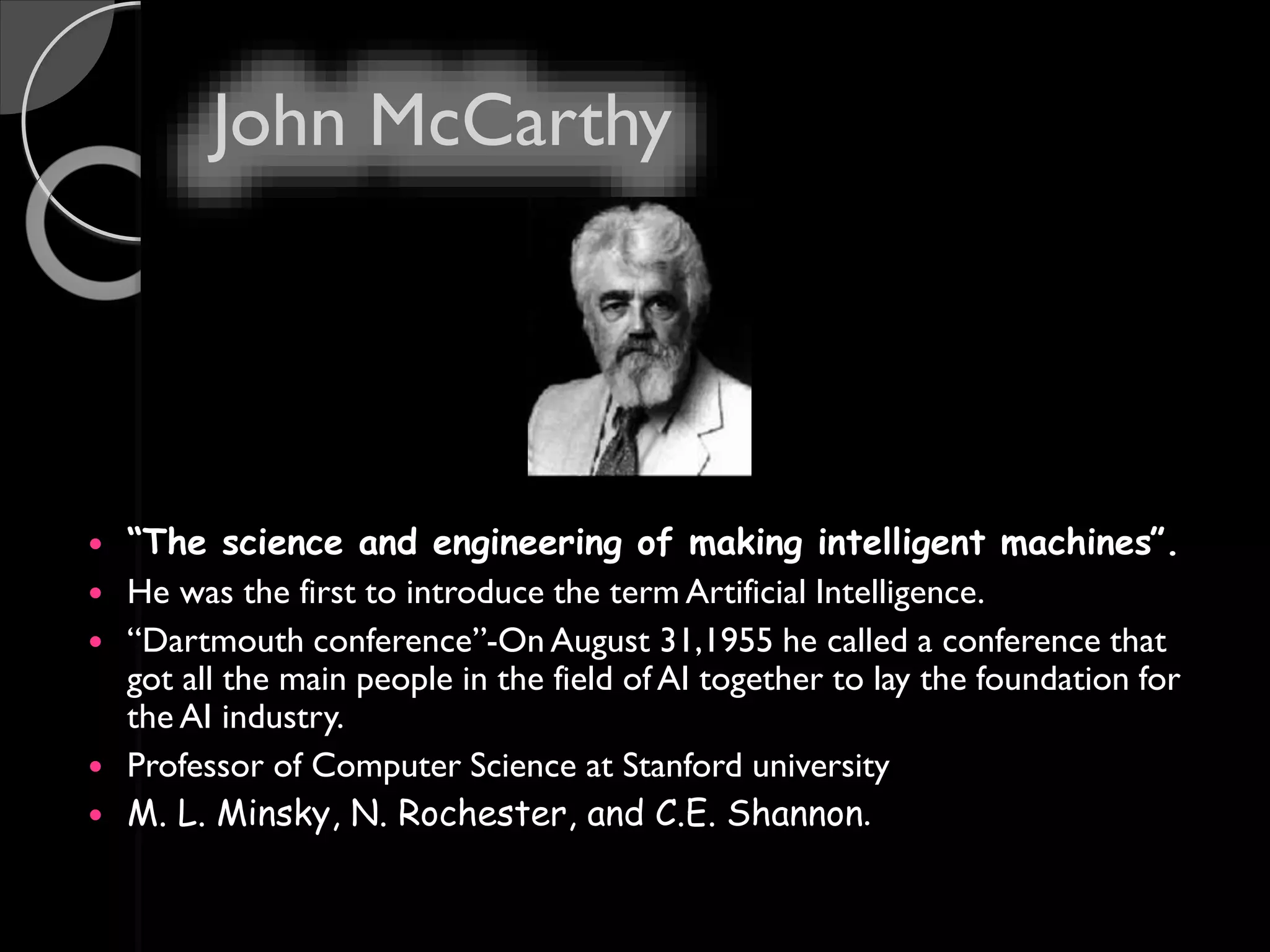
John McCarthy
 “The science and engineering of making intelligent machines”.
 He was the first to introduce the term Artificial Intelligence.
 “Dartmouth conference”-On August 31,1955 he called a conference that
got all the main people in the field of AI together to lay the foundation for
the AI industry.
 Professor of Computer Science at Stanford university
 M. L. Minsky, N. Rochester, and C.E. Shannon.
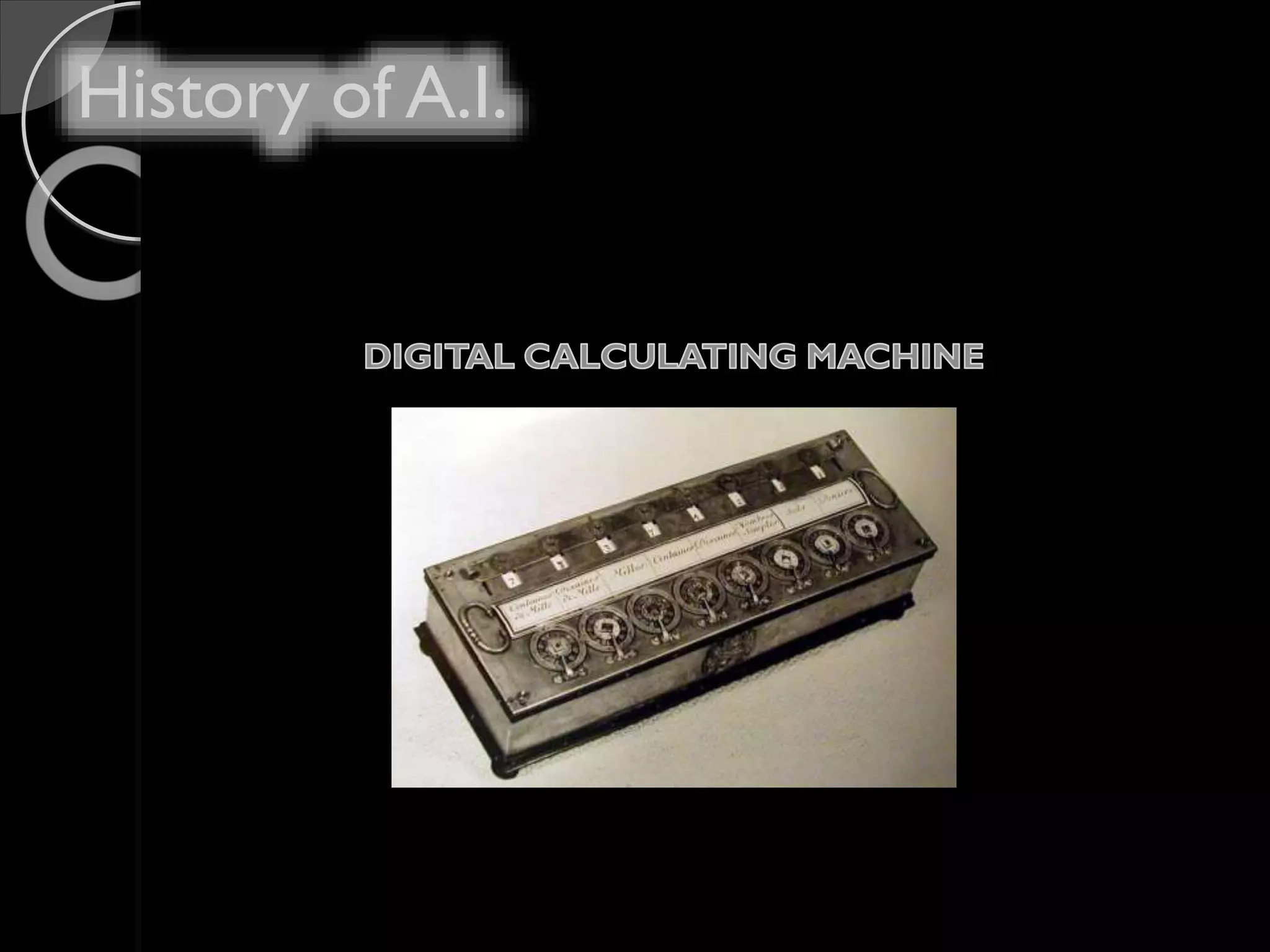
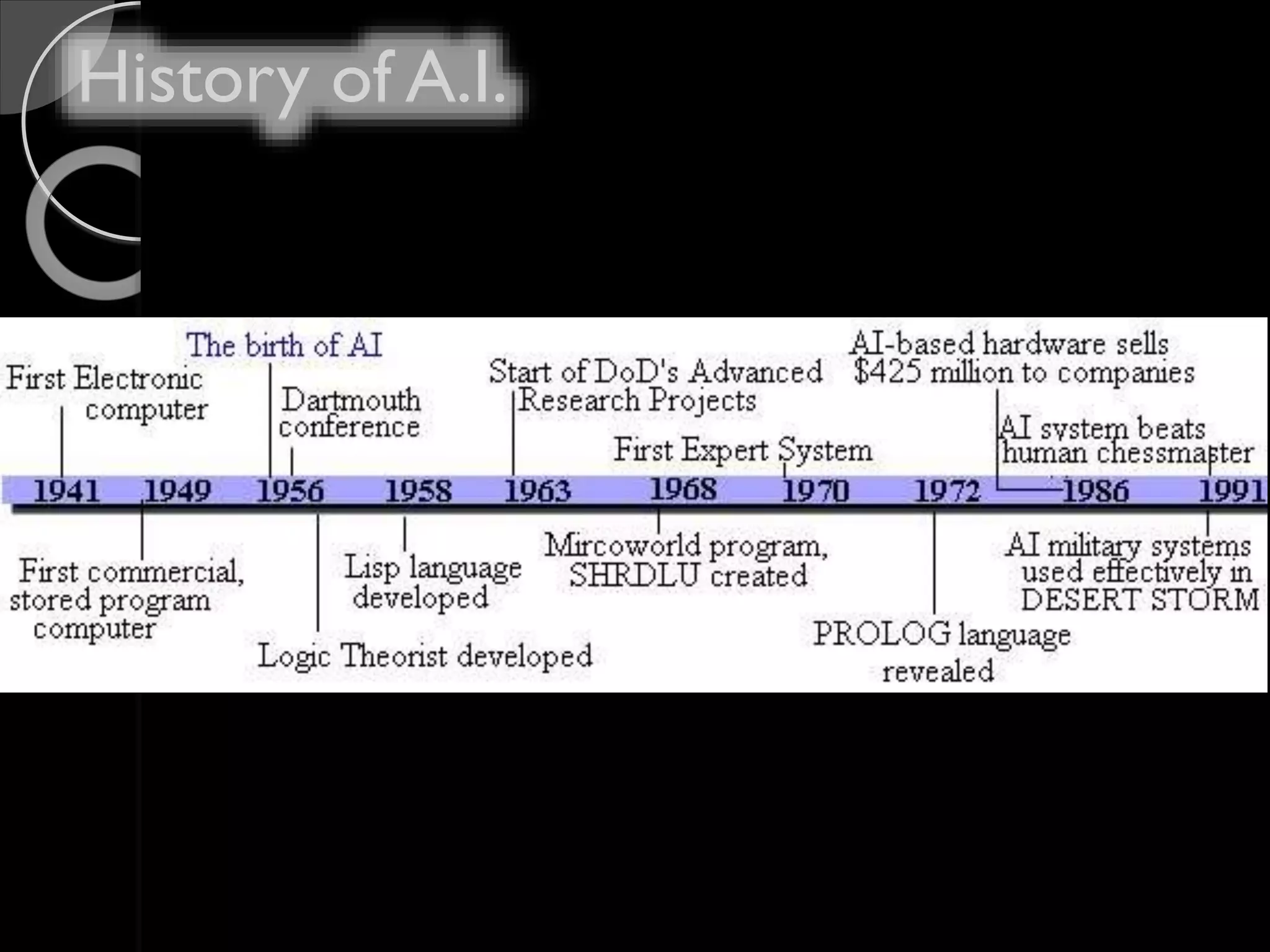
History of A.I.
History of A.I.
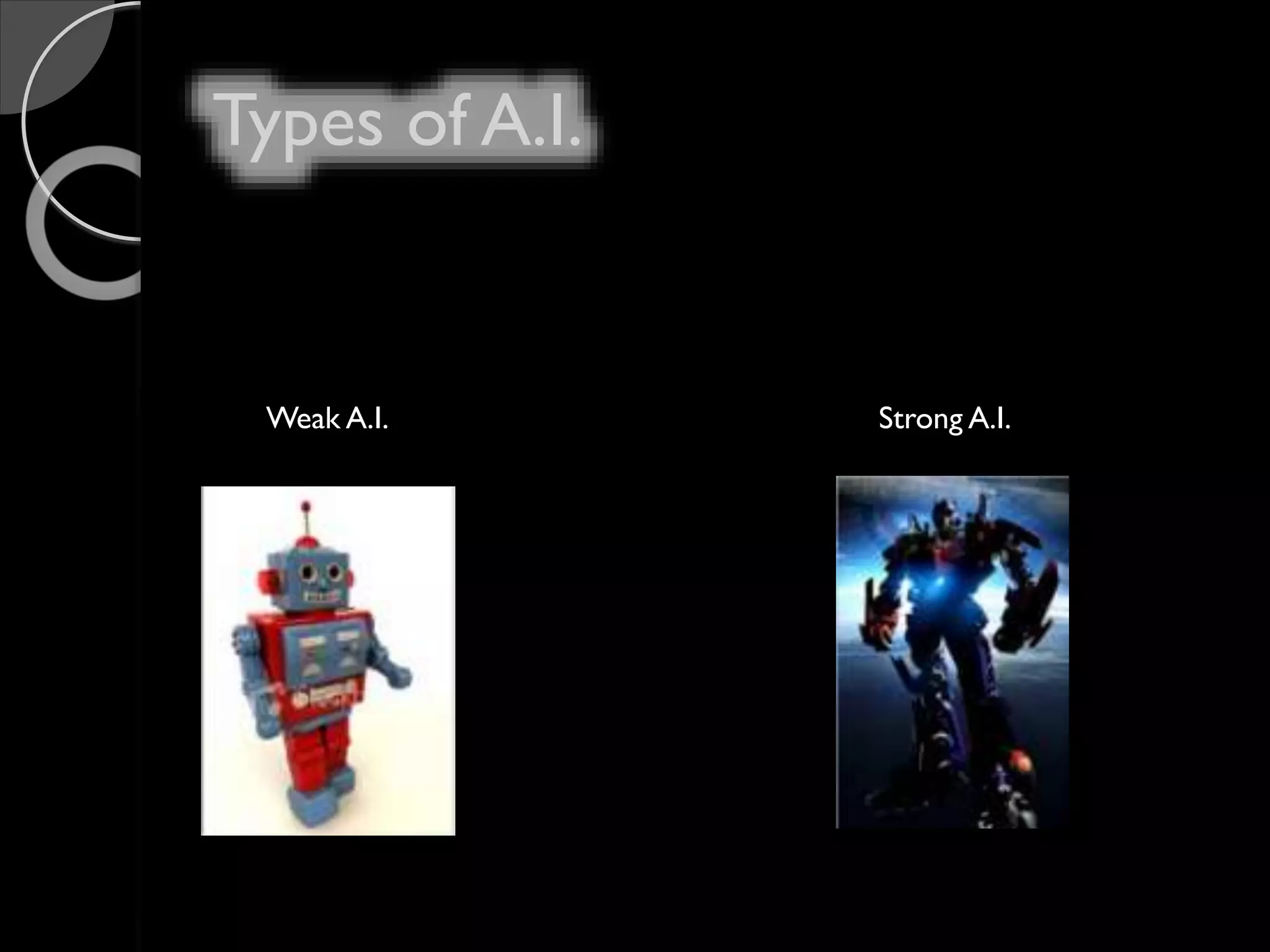
Weak A.I. Strong A.I.
Types of A.I.
Can AI System
Work As Efficient
As Human
Brain?????
Languages
Artificial intelligence researchers have developed several specialized
programming languages for artificial intelligence which include IPL,
Lisp, Prolog, STRIPS, Planner, POP-11 etc.
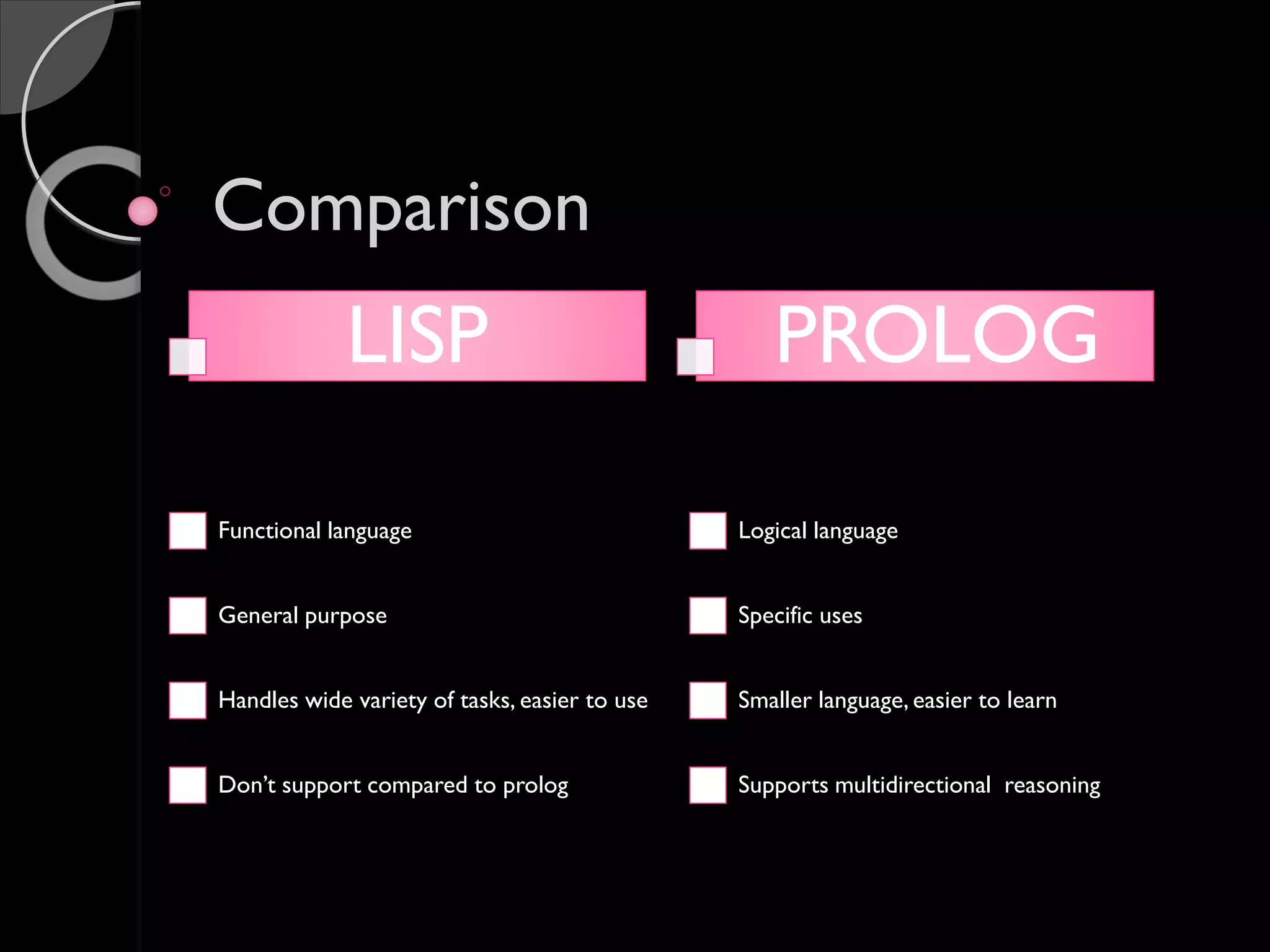
Comparison
LISP
Functional language
General purpose
Handles wide variety of tasks, easier to use
Don’t support compared to prolog
PROLOG
Logical language
Specific uses
Smaller language, easier to learn
Supports multidirectional reasoning
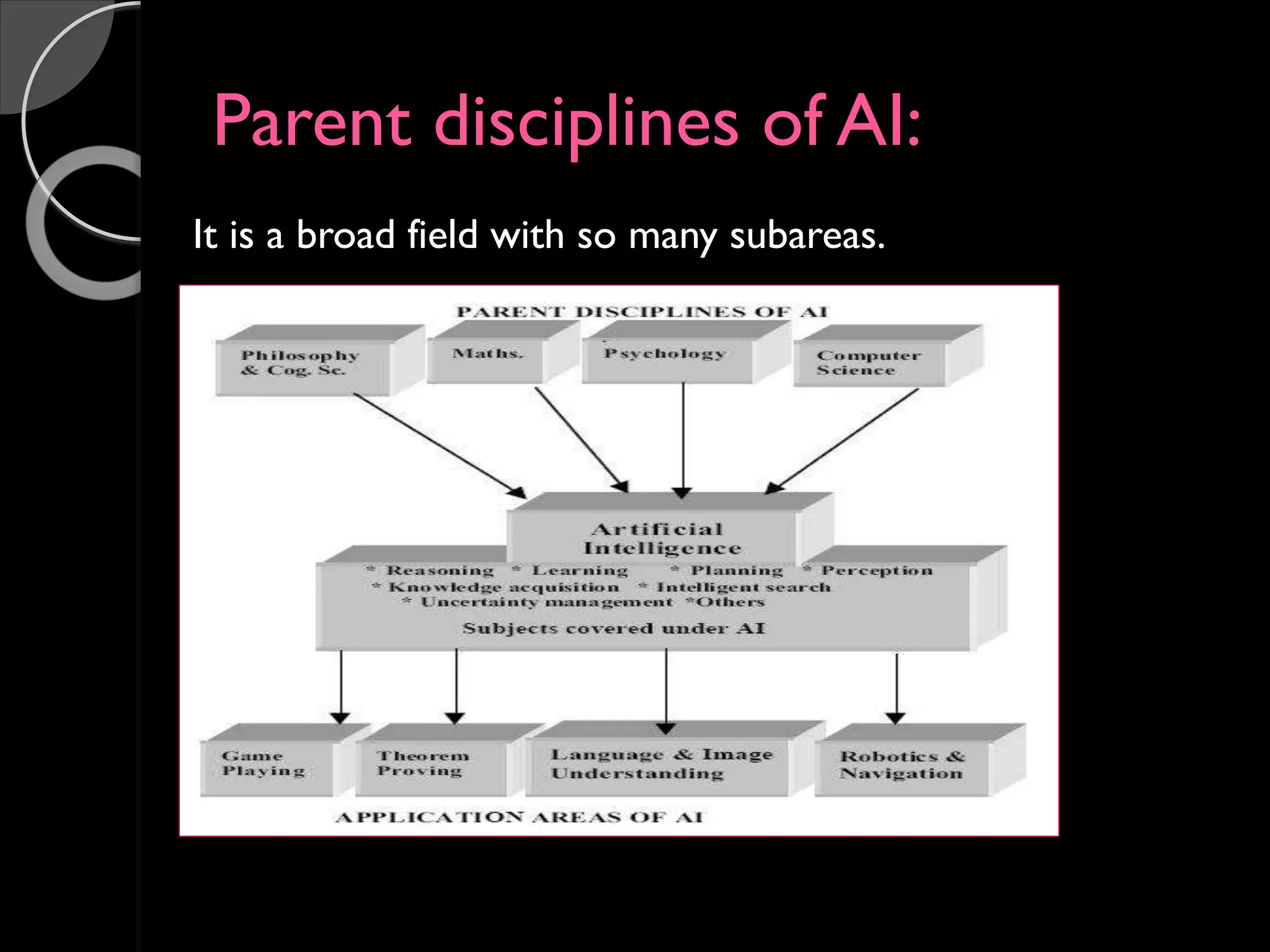
Parent disciplines of AI:
It is a broad field with so many subareas.
Applications of AI:
Natural Language Understanding
Expert Systems
Planning and Robotics
Machine Learning
Game Playing
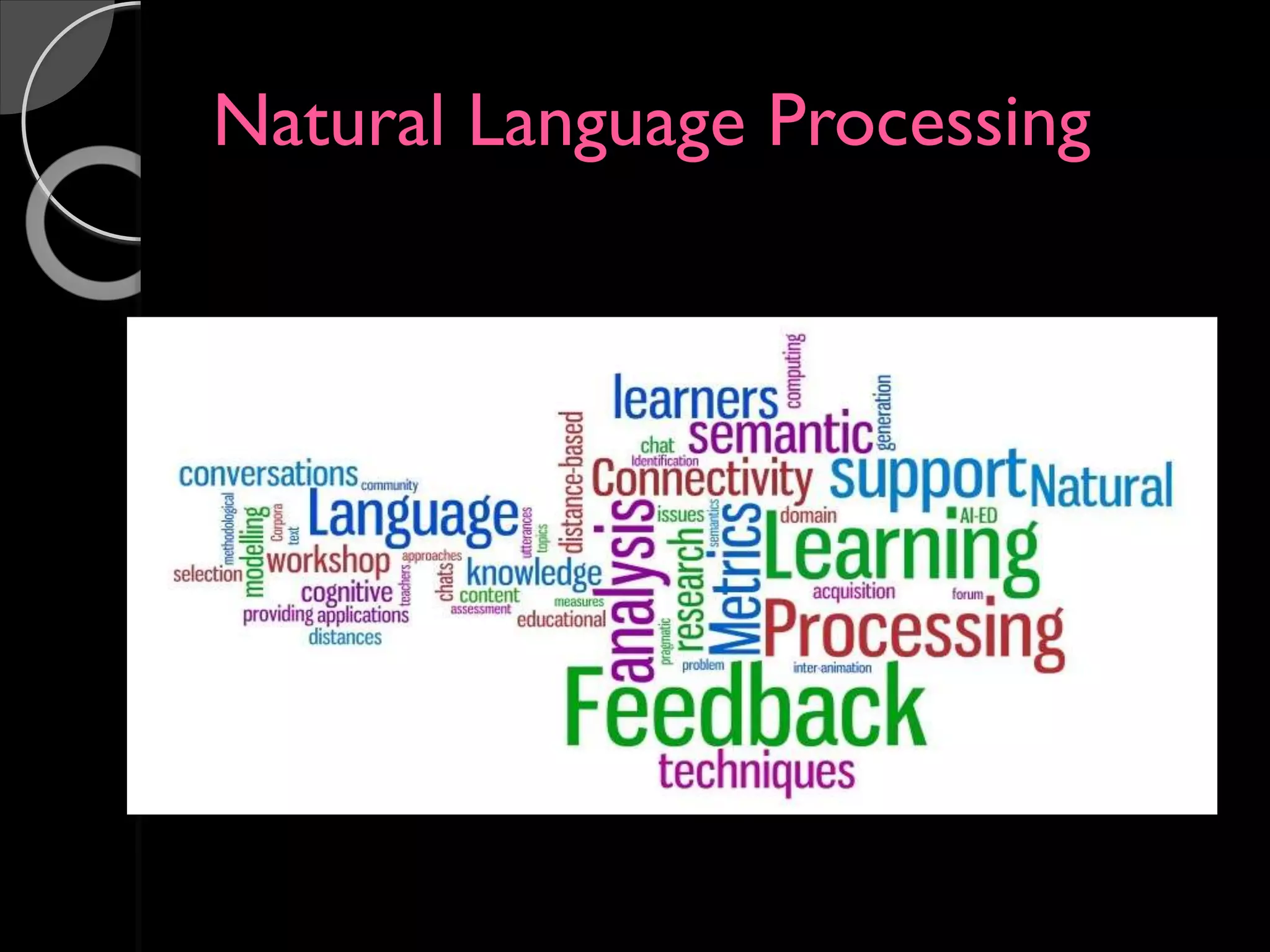
Natural Language Processing
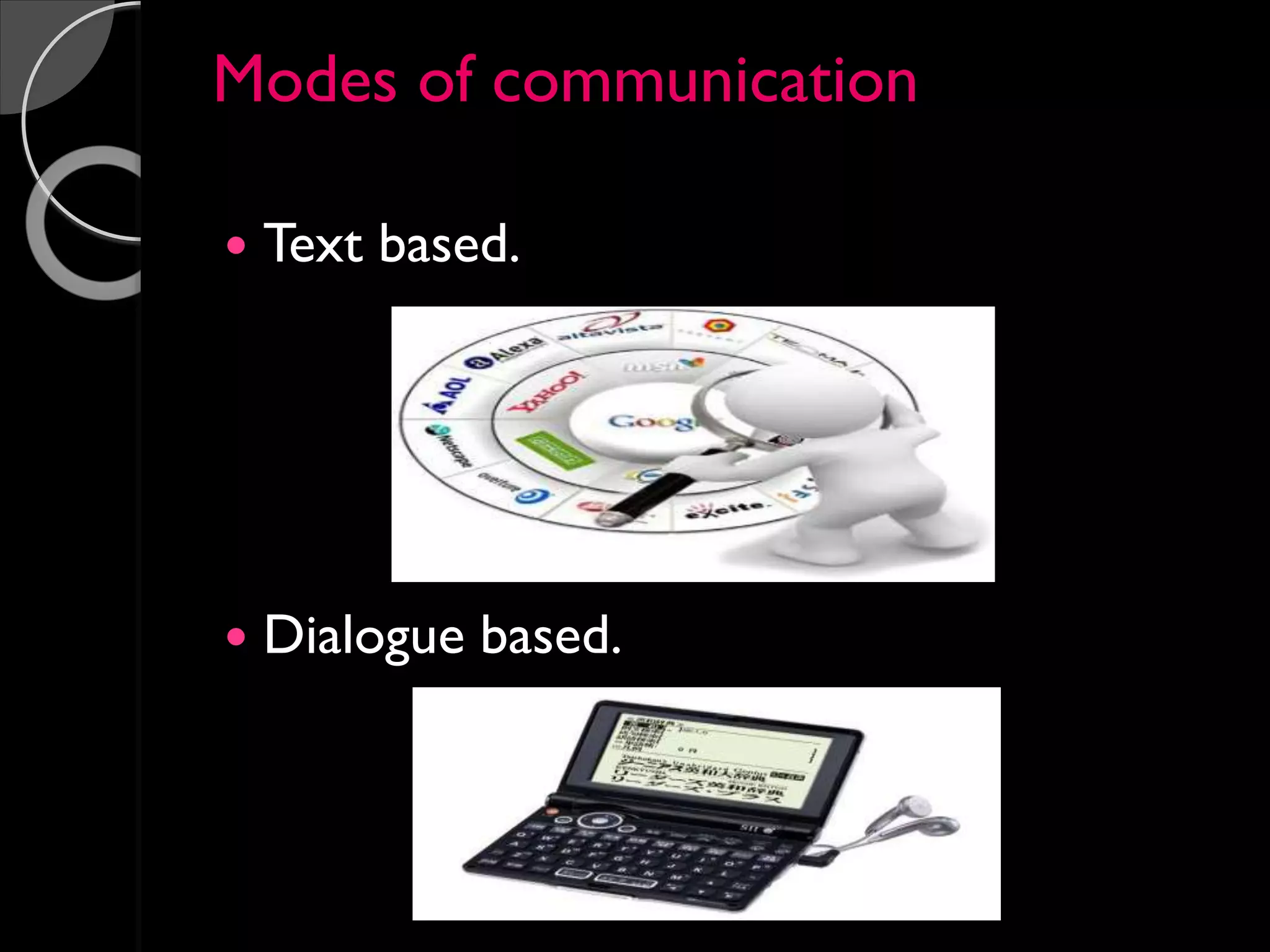
Modes of communication
 Text based.
 Dialogue based.
Speech Recognition
 Process of converting sound signal
captured by microphone or
mobile/telephone to a set of words.
 70-100 words / min with accuracy of 90%
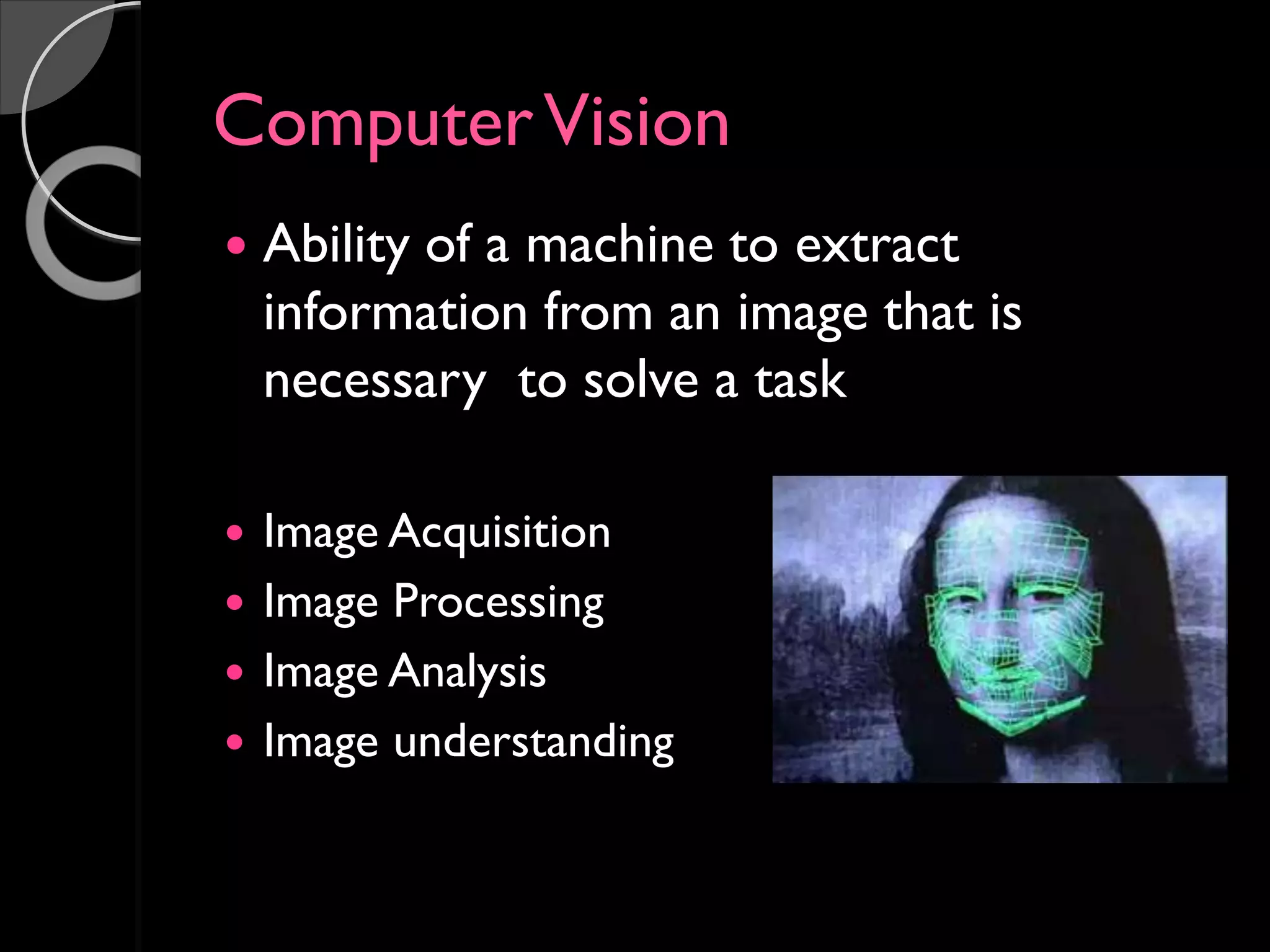
ComputerVision
 Ability of a machine to extract
information from an image that is
necessary to solve a task
 Image Acquisition
 Image Processing
 Image Analysis
 Image understanding
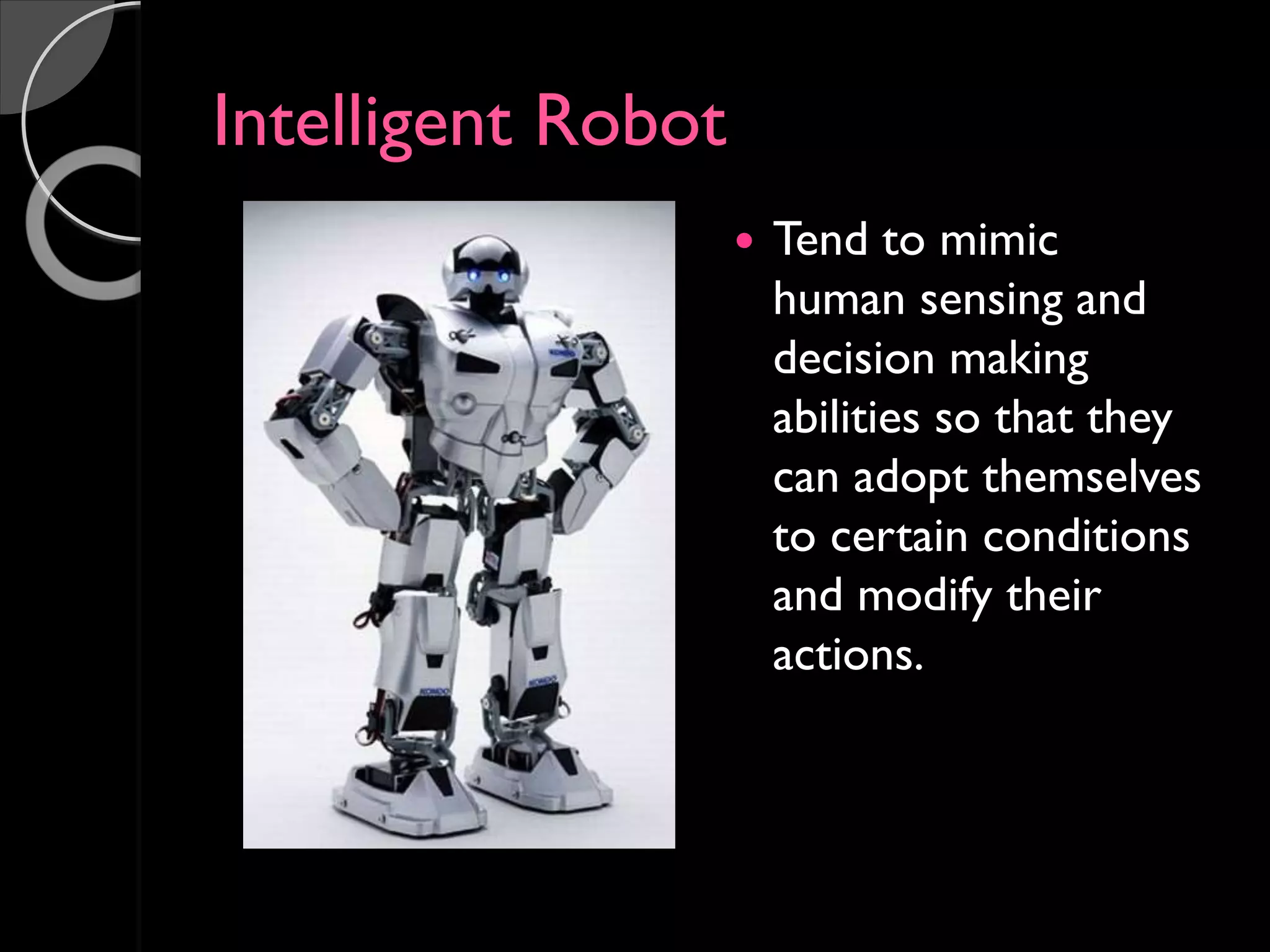
Intelligent Robot
 Tend to mimic
human sensing and
decision making
abilities so that they
can adopt themselves
to certain conditions
and modify their
actions.
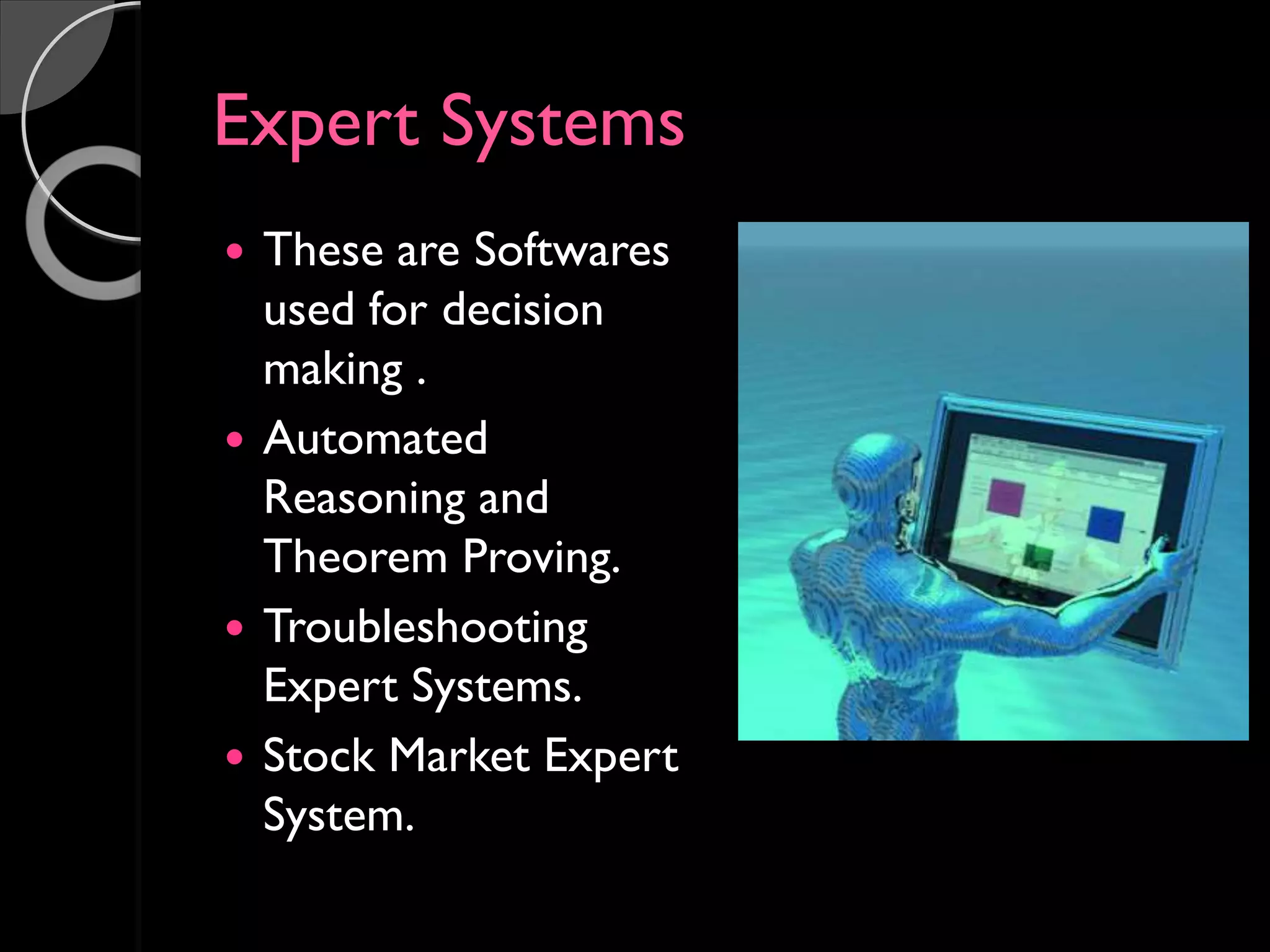
Expert Systems
 These are Softwares
used for decision
making .
 Automated
Reasoning and
Theorem Proving.
 Troubleshooting
Expert Systems.
 Stock Market Expert
System.
Fields of AI
Computer science:
 Graphical User Interface
 Automatic Storage management
 Object Oriented Programming
 Data miming
 computer gaming
 Telecommunication:
 Automated Online Assistants
 Voice dialing
 Speech Recognization
Fields of AI
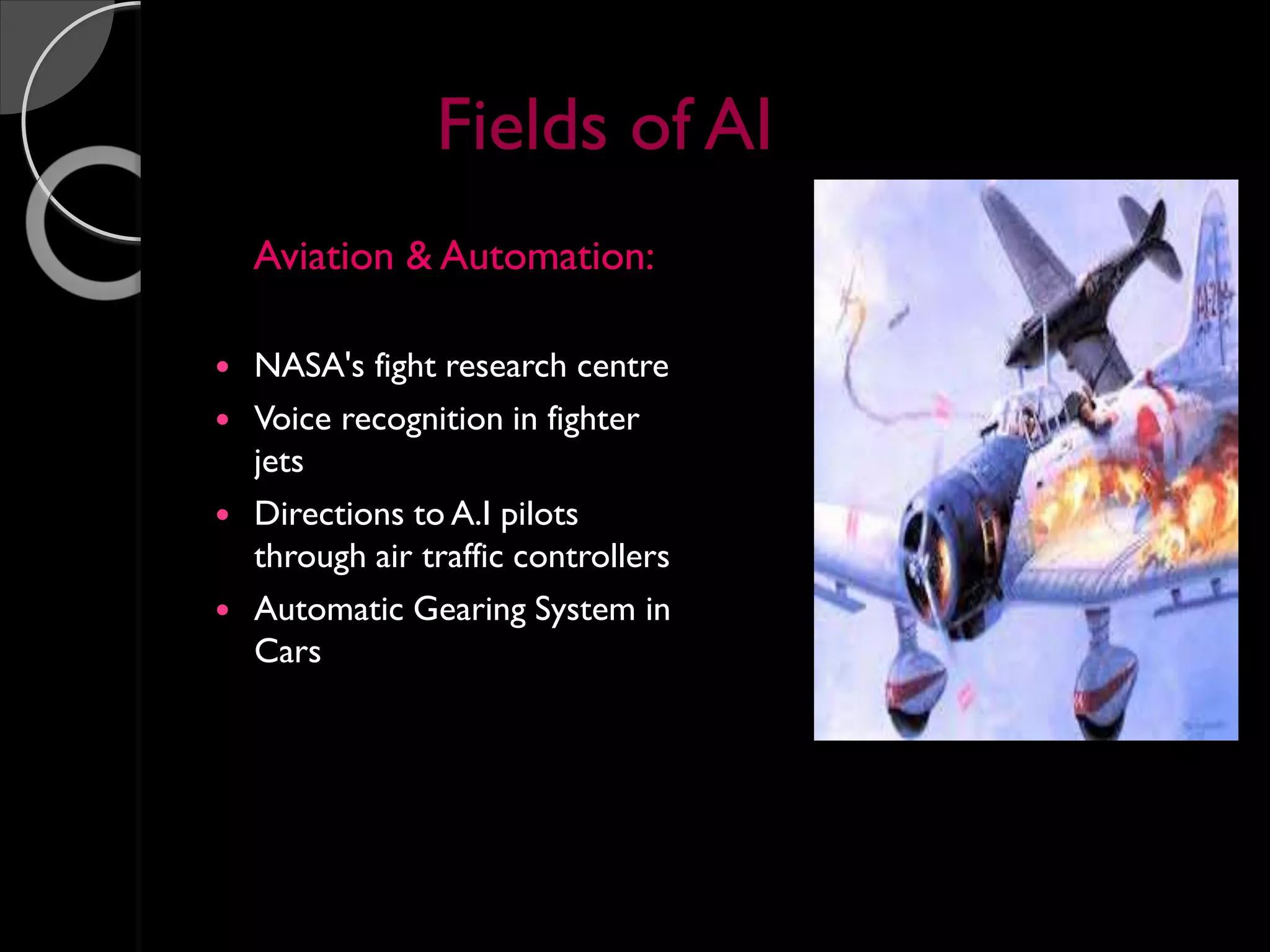
Aviation & Automation:
 NASA's fight research centre
 Voice recognition in fighter
jets
 Directions to A.I pilots
through air traffic controllers
 Automatic Gearing System in
Cars
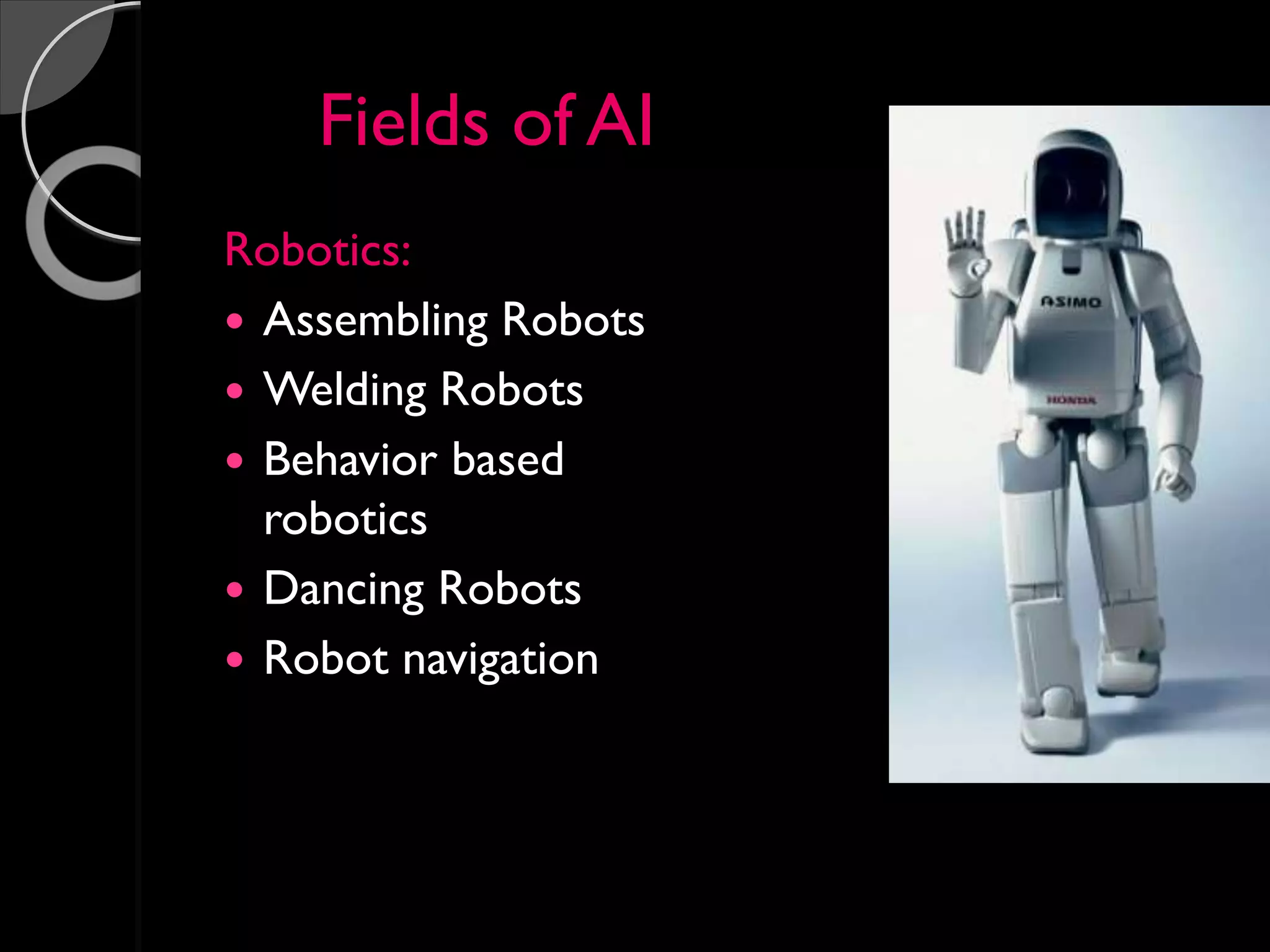
Fields of AI
Robotics:
 Assembling Robots
 Welding Robots
 Behavior based
robotics
 Dancing Robots
 Robot navigation
Daily life applications
 Home Security
 Bank
 Post office
 Websites
 Digital cameras
 News and
publishing
 Financial trades
 Health and medicine
 Games and toys
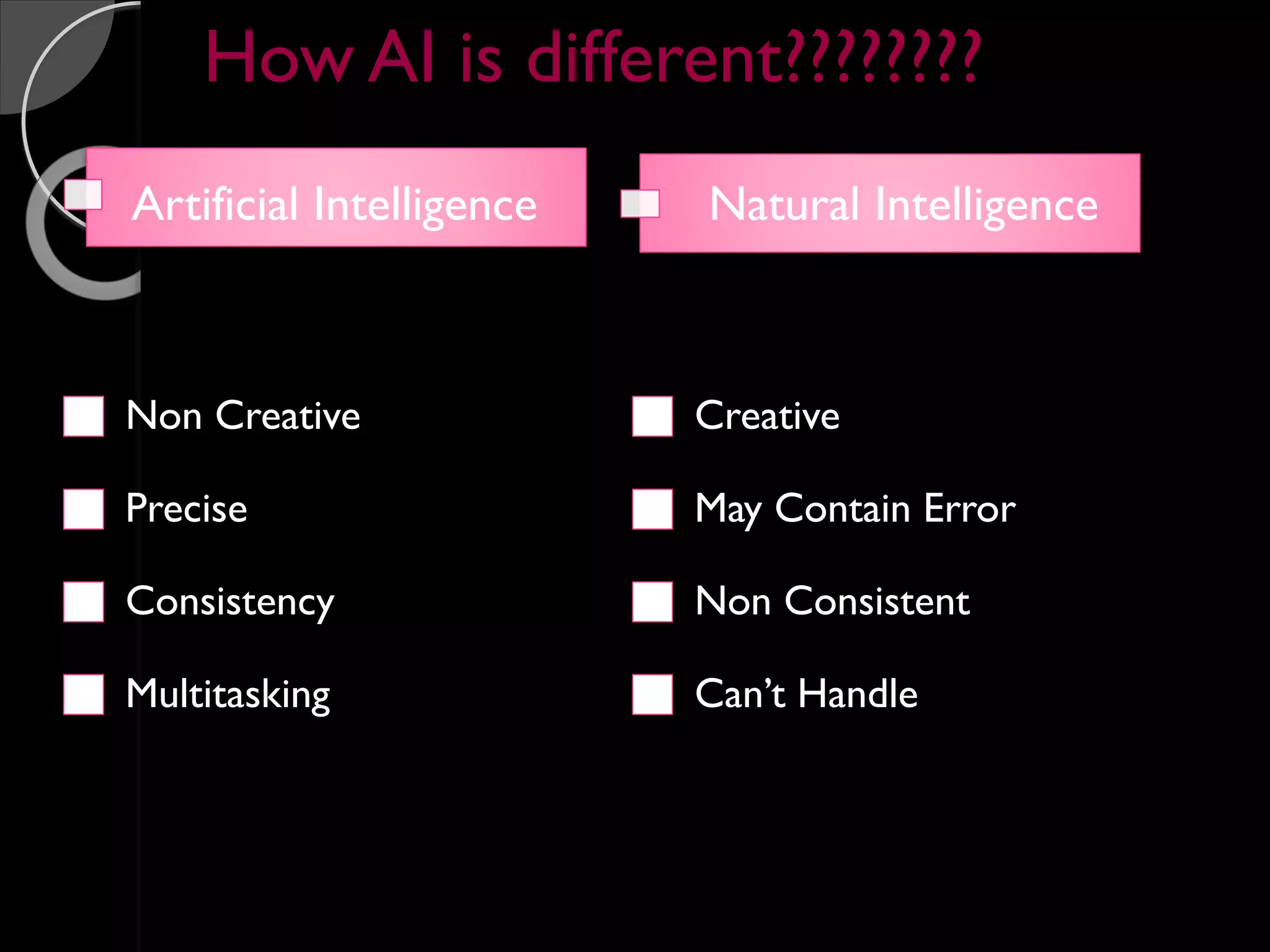
How AI is different????????
Artificial Intelligence
Non Creative
Precise
Consistency
Multitasking
Natural Intelligence
Creative
May Contain Error
Non Consistent
Can’t Handle
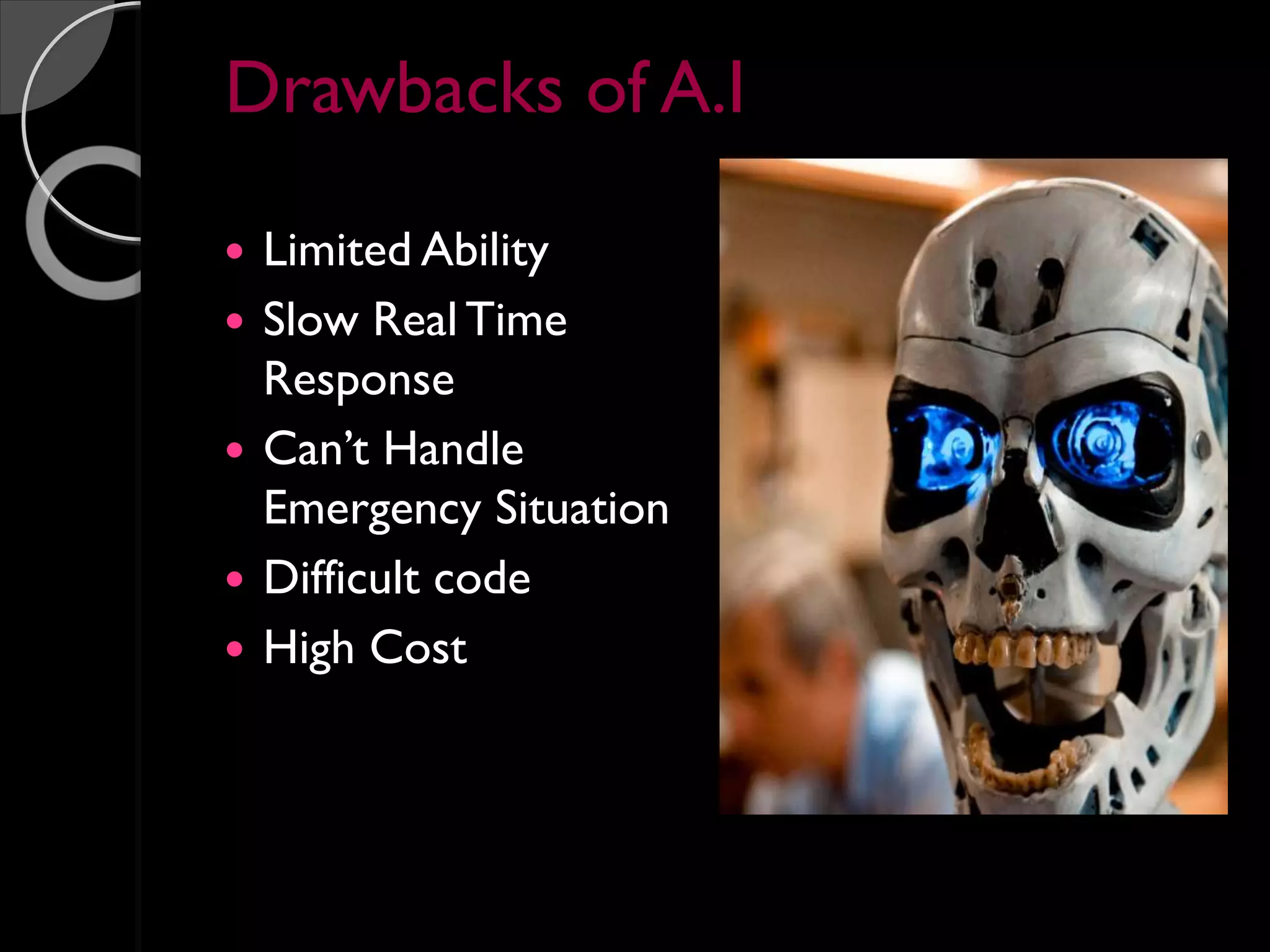
Drawbacks of A.I
 Limited Ability
 Slow Real Time
Response
 Can’t Handle
Emergency Situation
 Difficult code
 High Cost
Any
Questions
Artificial Intelligence by GK

Artificial Intelligence by GK

  • 2.
    John McCarthy  “Thescience and engineering of making intelligent machines”.  He was the first to introduce the term Artificial Intelligence.  “Dartmouth conference”-On August 31,1955 he called a conference that got all the main people in the field of AI together to lay the foundation for the AI industry.  Professor of Computer Science at Stanford university  M. L. Minsky, N. Rochester, and C.E. Shannon.
  • 3.
  • 4.
  • 5.
    Weak A.I. StrongA.I. Types of A.I.
  • 6.
    Can AI System WorkAs Efficient As Human Brain?????
  • 7.
    Languages Artificial intelligence researchershave developed several specialized programming languages for artificial intelligence which include IPL, Lisp, Prolog, STRIPS, Planner, POP-11 etc.
  • 8.
    Comparison LISP Functional language General purpose Handleswide variety of tasks, easier to use Don’t support compared to prolog PROLOG Logical language Specific uses Smaller language, easier to learn Supports multidirectional reasoning
  • 9.
    Parent disciplines ofAI: It is a broad field with so many subareas.
  • 10.
    Applications of AI: NaturalLanguage Understanding Expert Systems Planning and Robotics Machine Learning Game Playing
  • 11.
  • 12.
    Modes of communication Text based.  Dialogue based.
  • 13.
    Speech Recognition  Processof converting sound signal captured by microphone or mobile/telephone to a set of words.  70-100 words / min with accuracy of 90%
  • 14.
    ComputerVision  Ability ofa machine to extract information from an image that is necessary to solve a task  Image Acquisition  Image Processing  Image Analysis  Image understanding
  • 15.
    Intelligent Robot  Tendto mimic human sensing and decision making abilities so that they can adopt themselves to certain conditions and modify their actions.
  • 16.
    Expert Systems  Theseare Softwares used for decision making .  Automated Reasoning and Theorem Proving.  Troubleshooting Expert Systems.  Stock Market Expert System.
  • 17.
    Fields of AI Computerscience:  Graphical User Interface  Automatic Storage management  Object Oriented Programming  Data miming  computer gaming  Telecommunication:  Automated Online Assistants  Voice dialing  Speech Recognization
  • 18.
    Fields of AI Aviation& Automation:  NASA's fight research centre  Voice recognition in fighter jets  Directions to A.I pilots through air traffic controllers  Automatic Gearing System in Cars
  • 19.
    Fields of AI Robotics: Assembling Robots  Welding Robots  Behavior based robotics  Dancing Robots  Robot navigation
  • 20.
    Daily life applications Home Security  Bank  Post office  Websites  Digital cameras  News and publishing  Financial trades  Health and medicine  Games and toys
  • 21.
    How AI isdifferent???????? Artificial Intelligence Non Creative Precise Consistency Multitasking Natural Intelligence Creative May Contain Error Non Consistent Can’t Handle
  • 22.
    Drawbacks of A.I Limited Ability  Slow Real Time Response  Can’t Handle Emergency Situation  Difficult code  High Cost
  • 23.