


Deep Learning: Tensorflow,
CNTK
Jen Stirrup
Data Whisperer
Data Relish
Level: Intermediate
Agenda
• What is deep learning?
• Tensorflow
• CNTK
•
•
•
•
•
•
Microsoft Cognitive
Skype Translator
Cortana
Bing
HoloLens
Services
Microsoft Research
Microsoft
Cognitive
Toolkit
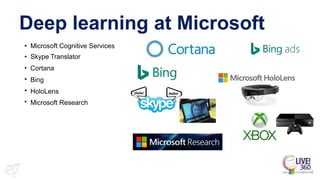
Deep learning at Microsoft
deep learning at Microsoft
• Microsoft Cognitive Services
• Skype Translator
• Cortana
• Bing
• HoloLens
• Microsoft Research
Microsoft
Cognitive
Toolkit
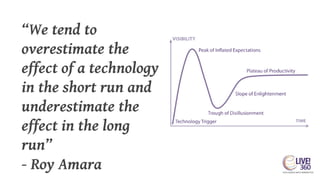
“We tend to
overestimate the
effect of a technology
in the short run and
underestimate the
effect in the long
run”
- Roy Amara
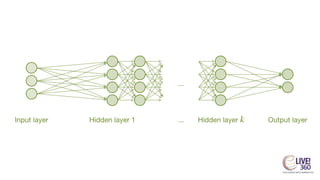
What is a Neural Network?
• Neural networks are a class of models that
are built with layers.
• Commonly used types of neural networks
include convolutional and recurrent neural
networks.
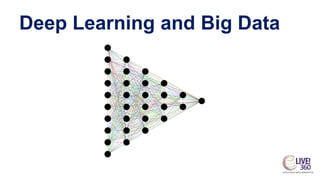
Deep Learning and Big Data
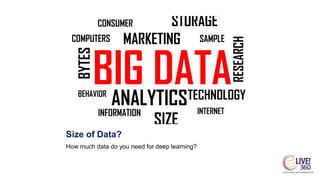
Size of Data?
How much data do you need for deep learning?
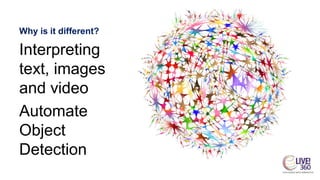
Why is it different?
Interpreting
text, images
and video
Automate
Object
Detection
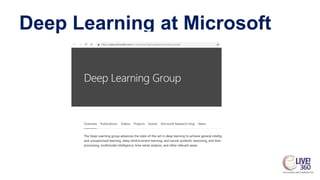
Deep Learning at Microsoft
Machine Learning?
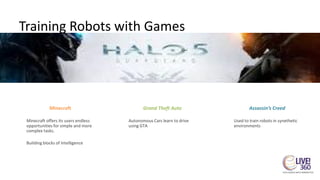
Training Robots with Games
Minecraft Grand Theft Auto Assassin’s Creed
Minecraft offers its users endless
opportunities for simple and more
complex tasks.
Building blocks of Intelligence
Autonomous Cars learn to drive
using GTA
Used to train robots in synethetic
environments
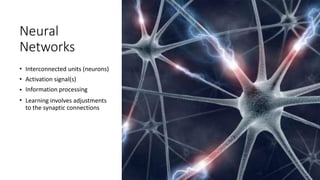
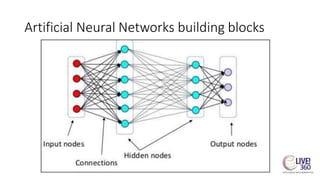
Neural
Networks
•
•
•
•
Interconnected units (neurons)
Activation signal(s)
Information processing
Learning involves adjustments
to the synaptic connections
Artificial Neural Networks building blocks
TENSORFLOW
Introduction to Tensorflow
Introduction to TensorFlow
• Computational Graph
Loss Function Optimisation
Neural Network Architectures
Deep Learning components
Machine Learning APIs
…
•
•
•
•
•
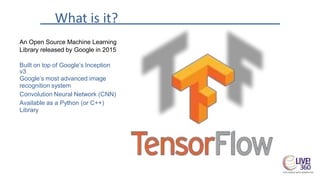
What is it?
An Open Source Machine Learning
Library released by Google in 2015
Built on top of Google’s Inception
v3
Google’s most advanced image
recognition system
Convolution Neural Network (CNN)
Available as a Python (or C++)
Library
Basics – What is a Vector?
• A vector is an array of numbers.
Vector = [ number, number, … ]
• In machine learning, a vector holds
sample.
the feature
values (variables) for a
Vector =
Years of
Experie
nce
Ag
e
Educati
on
Level
Inco
me
24 16 5
120000
Basics – What is a Matrix?
• A matrix is a 2-dimensional array of numbers.
Matrix = [ n ][ m ]
• In machine learning, a matrix holds the feature
values [columns] for samples [rows] in a dataset.
Matrix =
Years of
Experie
Ag
e
Educati
on
Level
Inco
me
24 16 5
12000027 12 8
7000028 18 2
135000
What is a Tensor?
• A tensor is a high dimensional array.
Tensor = [ n1 ][ n2 ] … [ nx ]
• A
is
tensor consists of features, where each feature
a vector or multi-dimensional array (e.g., such
as in embedding).
Featur
es
A
Sample
7
8
9
4
5
6
1
2
3
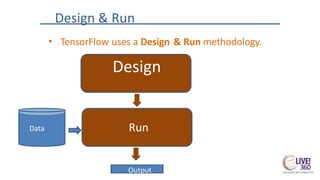
Design & Run
• TensorFlow uses a Design & Run methodology.
Design
RunData
Output
Tensorflow Hub
• What is Tensorflow?
• train a model with a smaller dataset
• improve generalization,
• significantly speed up training
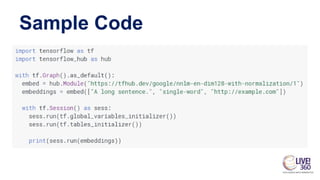
Sample Code
Reference: https://www.tensorflow.org/hub/
Getting Started With Tensorflow
• Enable Eager Execution dev environment
• Import Data with the Datasets API
• Build Models and Layers with Keras API
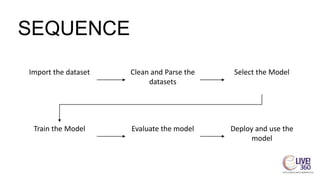
Import the dataset Clean and Parse the
datasets
Select the Model
Train the Model Evaluate the model Deploy and use the
model
SEQUENCE
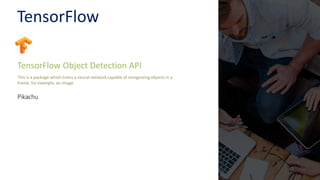
TensorFlow
TensorFlow Object Detection API
This is a package which trains a neural network capable of recognizing objects in a
frame, for example, an image.
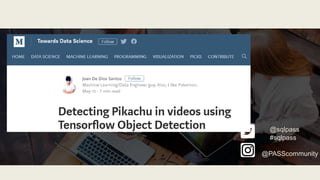
Pikachu
Thank you
for attending
@sqlpass
#sqlpass
@PASScommunity
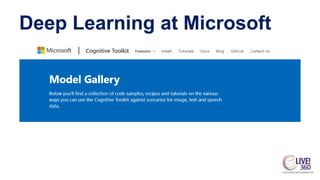
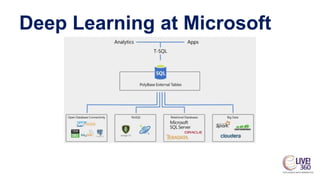
Deep Learning at Microsoft
• CNTK is Microsoft’s open-source, cross-platform toolkit for
learning and evaluating deep neural networks.
• CNTK expresses (nearly) arbitrary neural networks by
composing simple building blocks into complex
computational networks, supporting relevant network types
and applications.
• CNTK is production-ready: State-of-the-art accuracy,
efficient, and scales to multi-GPU/multi-server.
Computational Network Toolkit
• open-source model inside and outside the
company
• used by Speech, Windows (Hololens), Bing
(relevance, ads), MSR
• external contributions e.g. from MIT and
Stanford
Computational Network Toolkit
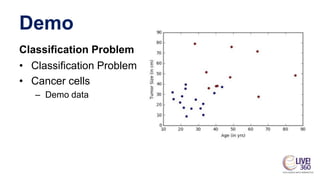
Demo
Classification Problem
• Classification Problem
• Cancer cells
– Demo data
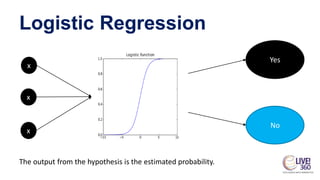
Logistic Regression
Yes
No
The output from the hypothesis is the estimated probability.
x
x
x
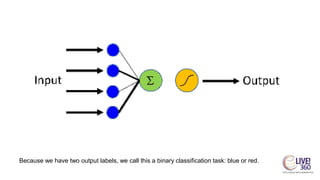
Because we have two output labels, we call this a binary classification task: blue or red.
Numpy
• NumPy is the fundamental package for
scientific computing with Python.
• A powerful N-dimensional array object
• NumPy can also be used as an efficient
multi-dimensional container of generic
data.
Deep Learning Futures
Summary
References
• Channel 9 –Microsoft Cognitive Toolkit CNTK for Deep Learning
• Microsoft Ignite Orlando 2017 videos
• Tensorflow.org

Artificial Intelligence and Deep Learning in Azure, CNTK and Tensorflow

  • 1.
    Deep Learning: Tensorflow, CNTK JenStirrup Data Whisperer Data Relish Level: Intermediate
  • 2.
    Agenda • What isdeep learning? • Tensorflow • CNTK
  • 3.
  • 4.
    deep learning atMicrosoft • Microsoft Cognitive Services • Skype Translator • Cortana • Bing • HoloLens • Microsoft Research Microsoft Cognitive Toolkit
  • 5.
    “We tend to overestimatethe effect of a technology in the short run and underestimate the effect in the long run” - Roy Amara
  • 7.
    What is aNeural Network? • Neural networks are a class of models that are built with layers. • Commonly used types of neural networks include convolutional and recurrent neural networks.
  • 9.
  • 10.
    Size of Data? Howmuch data do you need for deep learning?
  • 11.
    Why is itdifferent? Interpreting text, images and video Automate Object Detection
  • 12.
  • 13.
  • 16.
    Training Robots withGames Minecraft Grand Theft Auto Assassin’s Creed Minecraft offers its users endless opportunities for simple and more complex tasks. Building blocks of Intelligence Autonomous Cars learn to drive using GTA Used to train robots in synethetic environments
  • 17.
    Neural Networks • • • • Interconnected units (neurons) Activationsignal(s) Information processing Learning involves adjustments to the synaptic connections
  • 18.
  • 19.
  • 20.
    Introduction to TensorFlow •Computational Graph Loss Function Optimisation Neural Network Architectures Deep Learning components Machine Learning APIs … • • • • •
  • 21.
    What is it? AnOpen Source Machine Learning Library released by Google in 2015 Built on top of Google’s Inception v3 Google’s most advanced image recognition system Convolution Neural Network (CNN) Available as a Python (or C++) Library
  • 22.
    Basics – Whatis a Vector? • A vector is an array of numbers. Vector = [ number, number, … ] • In machine learning, a vector holds sample. the feature values (variables) for a Vector = Years of Experie nce Ag e Educati on Level Inco me 24 16 5 120000
  • 23.
    Basics – Whatis a Matrix? • A matrix is a 2-dimensional array of numbers. Matrix = [ n ][ m ] • In machine learning, a matrix holds the feature values [columns] for samples [rows] in a dataset. Matrix = Years of Experie Ag e Educati on Level Inco me 24 16 5 12000027 12 8 7000028 18 2 135000
  • 24.
    What is aTensor? • A tensor is a high dimensional array. Tensor = [ n1 ][ n2 ] … [ nx ] • A is tensor consists of features, where each feature a vector or multi-dimensional array (e.g., such as in embedding). Featur es A Sample 7 8 9 4 5 6 1 2 3
  • 25.
    Design & Run •TensorFlow uses a Design & Run methodology. Design RunData Output
  • 26.
    Tensorflow Hub • Whatis Tensorflow? • train a model with a smaller dataset • improve generalization, • significantly speed up training
  • 27.
  • 28.
    Getting Started WithTensorflow • Enable Eager Execution dev environment • Import Data with the Datasets API • Build Models and Layers with Keras API
  • 29.
    Import the datasetClean and Parse the datasets Select the Model Train the Model Evaluate the model Deploy and use the model SEQUENCE
  • 30.
    TensorFlow TensorFlow Object DetectionAPI This is a package which trains a neural network capable of recognizing objects in a frame, for example, an image. Pikachu
  • 31.
  • 32.
  • 33.
  • 34.
    • CNTK isMicrosoft’s open-source, cross-platform toolkit for learning and evaluating deep neural networks. • CNTK expresses (nearly) arbitrary neural networks by composing simple building blocks into complex computational networks, supporting relevant network types and applications. • CNTK is production-ready: State-of-the-art accuracy, efficient, and scales to multi-GPU/multi-server. Computational Network Toolkit
  • 35.
    • open-source modelinside and outside the company • used by Speech, Windows (Hololens), Bing (relevance, ads), MSR • external contributions e.g. from MIT and Stanford Computational Network Toolkit
  • 36.
    Demo Classification Problem • ClassificationProblem • Cancer cells – Demo data
  • 37.
    Logistic Regression Yes No The outputfrom the hypothesis is the estimated probability. x x x
  • 38.
    Because we havetwo output labels, we call this a binary classification task: blue or red.
  • 39.
    Numpy • NumPy isthe fundamental package for scientific computing with Python. • A powerful N-dimensional array object • NumPy can also be used as an efficient multi-dimensional container of generic data.
  • 40.
  • 41.
  • 42.
    References • Channel 9–Microsoft Cognitive Toolkit CNTK for Deep Learning • Microsoft Ignite Orlando 2017 videos • Tensorflow.org