
Artificial Intelligence (AI) in Waste
Management
Dr. A. Prabaharan
Professor & Research Director
Public Acton
www.indopraba.blogspot.com
AI in Waste Management
www.indopraba.blogspot.com
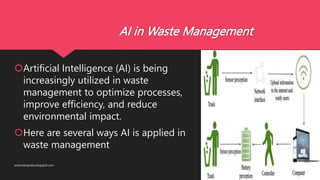
Artificial Intelligence (AI) is being
increasingly utilized in waste
management to optimize processes,
improve efficiency, and reduce
environmental impact.
Here are several ways AI is applied in
waste management
Waste Sorting
www.indopraba.blogspot.com
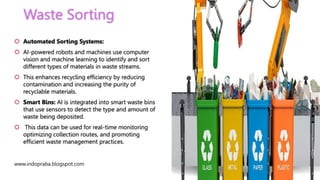
 Automated Sorting Systems:
 AI-powered robots and machines use computer
vision and machine learning to identify and sort
different types of materials in waste streams.
 This enhances recycling efficiency by reducing
contamination and increasing the purity of
recyclable materials.
 Smart Bins: AI is integrated into smart waste bins
that use sensors to detect the type and amount of
waste being deposited.
 This data can be used for real-time monitoring
optimizing collection routes, and promoting
efficient waste management practices.
Predictive Analytics for Waste Collection
www.indopraba.blogspot.com
 Route Optimization:
 AI algorithms analyze historical data on waste collection routes,
considering factors like collection frequency, bin capacity, and
geographic data.
 This helps optimize collection routes, reduce fuel consumption, and
minimize operational costs.
 Dynamic Scheduling: AI predicts when waste bins are likely to be full
based on historical patterns and current usage.
 This enables dynamic scheduling of waste collection to address
immediate needs and avoid unnecessary pickups.
www.indopraba.blogspot.com
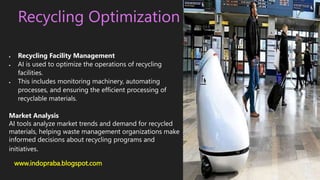
 Recycling Facility Management
 AI is used to optimize the operations of recycling
facilities.
 This includes monitoring machinery, automating
processes, and ensuring the efficient processing of
recyclable materials.
Market Analysis
AI tools analyze market trends and demand for recycled
materials, helping waste management organizations make
informed decisions about recycling programs and
initiatives.
Recycling Optimization
www.indopraba.blogspot.com
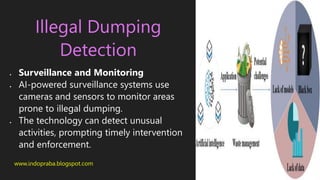
Illegal Dumping
Detection
 Surveillance and Monitoring
 AI-powered surveillance systems use
cameras and sensors to monitor areas
prone to illegal dumping.
 The technology can detect unusual
activities, prompting timely intervention
and enforcement.
www.indopraba.blogspot.com
Waste-to-Energy
Conversion
Optimizing Waste-to-Energy Processes
AI is applied to waste-to-energy plants to
optimize the combustion process and
energy production.
This ensures maximum energy output while
minimizing environmental impact.
www.indopraba.blogspot.com
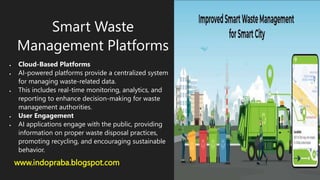
Smart Waste
Management Platforms
 Cloud-Based Platforms
 AI-powered platforms provide a centralized system
for managing waste-related data.
 This includes real-time monitoring, analytics, and
reporting to enhance decision-making for waste
management authorities.
 User Engagement
 AI applications engage with the public, providing
information on proper waste disposal practices,
promoting recycling, and encouraging sustainable
behavior.
www.indopraba.blogspot.com
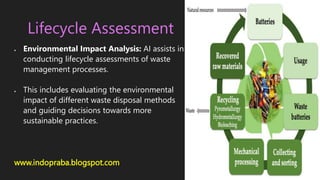
Lifecycle Assessment
 Environmental Impact Analysis: AI assists in
conducting lifecycle assessments of waste
management processes.
 This includes evaluating the environmental
impact of different waste disposal methods
and guiding decisions towards more
sustainable practices.
www.indopraba.blogspot.com
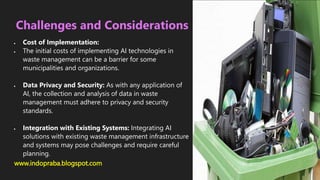
Challenges and Considerations
 Cost of Implementation:
 The initial costs of implementing AI technologies in
waste management can be a barrier for some
municipalities and organizations.
 Data Privacy and Security: As with any application of
AI, the collection and analysis of data in waste
management must adhere to privacy and security
standards.
 Integration with Existing Systems: Integrating AI
solutions with existing waste management infrastructure
and systems may pose challenges and require careful
planning.
www.indopraba.blogspot.com
Future Trends
 Advanced Sensor Technologies:
 Ongoing developments in sensor technologies, such
as Internet of Things (IoT) devices, will contribute to
more accurate and real-time waste data collection.
 Robotics in Waste Collection:
 Increased use of robotics in waste collection, including
autonomous vehicles and drones, for more efficient
and automated processes.
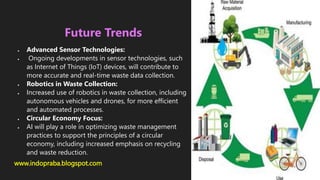
 Circular Economy Focus:
 AI will play a role in optimizing waste management
practices to support the principles of a circular
economy, including increased emphasis on recycling
and waste reduction.
www.indopraba.blogspot.com
End Note
AI is revolutionizing waste management by
introducing data-driven solutions that
enhance efficiency, reduce environmental
impact, and contribute to sustainable waste
practices.
As technology continues to evolve, the
integration of AI in waste management is likely
to become more widespread, offering
innovative solutions for a cleaner and more
sustainable future.
www.indopraba.blogspot.com

Artificial Intelligence (AI) in Waste Management.pptx

  • 1.
    Artificial Intelligence (AI)in Waste Management Dr. A. Prabaharan Professor & Research Director Public Acton www.indopraba.blogspot.com
  • 2.
    AI in WasteManagement www.indopraba.blogspot.com Artificial Intelligence (AI) is being increasingly utilized in waste management to optimize processes, improve efficiency, and reduce environmental impact. Here are several ways AI is applied in waste management
  • 3.
    Waste Sorting www.indopraba.blogspot.com  AutomatedSorting Systems:  AI-powered robots and machines use computer vision and machine learning to identify and sort different types of materials in waste streams.  This enhances recycling efficiency by reducing contamination and increasing the purity of recyclable materials.  Smart Bins: AI is integrated into smart waste bins that use sensors to detect the type and amount of waste being deposited.  This data can be used for real-time monitoring optimizing collection routes, and promoting efficient waste management practices.
  • 4.
    Predictive Analytics forWaste Collection www.indopraba.blogspot.com  Route Optimization:  AI algorithms analyze historical data on waste collection routes, considering factors like collection frequency, bin capacity, and geographic data.  This helps optimize collection routes, reduce fuel consumption, and minimize operational costs.  Dynamic Scheduling: AI predicts when waste bins are likely to be full based on historical patterns and current usage.  This enables dynamic scheduling of waste collection to address immediate needs and avoid unnecessary pickups.
  • 5.
    www.indopraba.blogspot.com  Recycling FacilityManagement  AI is used to optimize the operations of recycling facilities.  This includes monitoring machinery, automating processes, and ensuring the efficient processing of recyclable materials. Market Analysis AI tools analyze market trends and demand for recycled materials, helping waste management organizations make informed decisions about recycling programs and initiatives. Recycling Optimization
  • 6.
    www.indopraba.blogspot.com Illegal Dumping Detection  Surveillanceand Monitoring  AI-powered surveillance systems use cameras and sensors to monitor areas prone to illegal dumping.  The technology can detect unusual activities, prompting timely intervention and enforcement.
  • 7.
    www.indopraba.blogspot.com Waste-to-Energy Conversion Optimizing Waste-to-Energy Processes AIis applied to waste-to-energy plants to optimize the combustion process and energy production. This ensures maximum energy output while minimizing environmental impact.
  • 8.
    www.indopraba.blogspot.com Smart Waste Management Platforms Cloud-Based Platforms  AI-powered platforms provide a centralized system for managing waste-related data.  This includes real-time monitoring, analytics, and reporting to enhance decision-making for waste management authorities.  User Engagement  AI applications engage with the public, providing information on proper waste disposal practices, promoting recycling, and encouraging sustainable behavior.
  • 9.
    www.indopraba.blogspot.com Lifecycle Assessment  EnvironmentalImpact Analysis: AI assists in conducting lifecycle assessments of waste management processes.  This includes evaluating the environmental impact of different waste disposal methods and guiding decisions towards more sustainable practices.
  • 10.
    www.indopraba.blogspot.com Challenges and Considerations Cost of Implementation:  The initial costs of implementing AI technologies in waste management can be a barrier for some municipalities and organizations.  Data Privacy and Security: As with any application of AI, the collection and analysis of data in waste management must adhere to privacy and security standards.  Integration with Existing Systems: Integrating AI solutions with existing waste management infrastructure and systems may pose challenges and require careful planning.
  • 11.
    www.indopraba.blogspot.com Future Trends  AdvancedSensor Technologies:  Ongoing developments in sensor technologies, such as Internet of Things (IoT) devices, will contribute to more accurate and real-time waste data collection.  Robotics in Waste Collection:  Increased use of robotics in waste collection, including autonomous vehicles and drones, for more efficient and automated processes.  Circular Economy Focus:  AI will play a role in optimizing waste management practices to support the principles of a circular economy, including increased emphasis on recycling and waste reduction.
  • 12.
    www.indopraba.blogspot.com End Note AI isrevolutionizing waste management by introducing data-driven solutions that enhance efficiency, reduce environmental impact, and contribute to sustainable waste practices. As technology continues to evolve, the integration of AI in waste management is likely to become more widespread, offering innovative solutions for a cleaner and more sustainable future.
  • 13.