

AI in
Climate
Change
DR. A. PRABAHARAN
PROFESSOR & RESEARCH DIRECTOR
PUBLIC ACTION
WWW.INDOPRABA.BLOGSPOT.COM
Artificial Intelligence (AI) is increasingly
recognized as a valuable tool in the fight
against climate change.
Its applications span various sectors and
contribute to mitigation, adaptation, and
understanding the complexities of
environmental challenges.
Here are several ways AI is utilized in
addressing climate change
AI IN CLIMATE CHANGE
WWW.INDOPRABA.BLOGSPOT.COM
Climate Modeling and Prediction
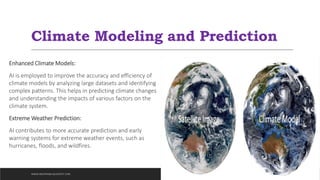
Enhanced Climate Models:
AI is employed to improve the accuracy and efficiency of
climate models by analyzing large datasets and identifying
complex patterns. This helps in predicting climate changes
and understanding the impacts of various factors on the
climate system.
Extreme Weather Prediction:
AI contributes to more accurate prediction and early
warning systems for extreme weather events, such as
hurricanes, floods, and wildfires.
WWW.INDOPRABA.BLOGSPOT.COM
Renewable Energy Optimization
Grid Management:
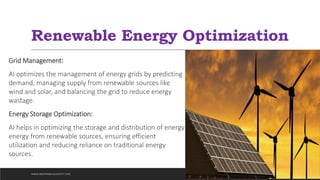
AI optimizes the management of energy grids by predicting
demand, managing supply from renewable sources like
wind and solar, and balancing the grid to reduce energy
wastage.
Energy Storage Optimization:
AI helps in optimizing the storage and distribution of energy
energy from renewable sources, ensuring efficient
utilization and reducing reliance on traditional energy
sources.
WWW.INDOPRABA.BLOGSPOT.COM
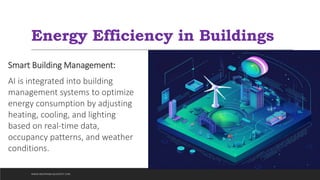
Energy Efficiency in Buildings
Smart Building Management:
AI is integrated into building
management systems to optimize
energy consumption by adjusting
heating, cooling, and lighting
based on real-time data,
occupancy patterns, and weather
conditions.
WWW.INDOPRABA.BLOGSPOT.COM
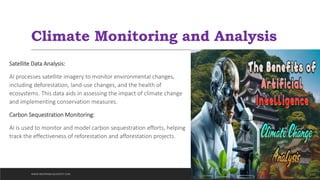
Climate Monitoring and Analysis
Satellite Data Analysis:
AI processes satellite imagery to monitor environmental changes,
including deforestation, land-use changes, and the health of
ecosystems. This data aids in assessing the impact of climate change
and implementing conservation measures.
Carbon Sequestration Monitoring:
AI is used to monitor and model carbon sequestration efforts, helping
track the effectiveness of reforestation and afforestation projects.
WWW.INDOPRABA.BLOGSPOT.COM
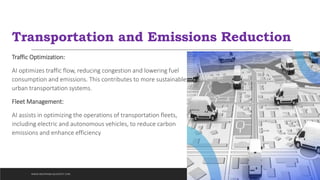
Transportation and Emissions Reduction
Traffic Optimization:
AI optimizes traffic flow, reducing congestion and lowering fuel
consumption and emissions. This contributes to more sustainable
urban transportation systems.
Fleet Management:
AI assists in optimizing the operations of transportation fleets,
including electric and autonomous vehicles, to reduce carbon
emissions and enhance efficiency
WWW.INDOPRABA.BLOGSPOT.COM
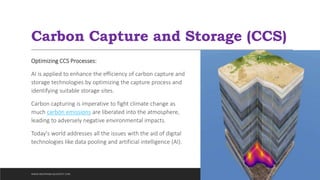
Carbon Capture and Storage (CCS)
Optimizing CCS Processes:
AI is applied to enhance the efficiency of carbon capture and
storage technologies by optimizing the capture process and
identifying suitable storage sites.
Carbon capturing is imperative to fight climate change as
much carbon emissions are liberated into the atmosphere,
leading to adversely negative environmental impacts.
Today's world addresses all the issues with the aid of digital
technologies like data pooling and artificial intelligence (AI).
WWW.INDOPRABA.BLOGSPOT.COM
Agriculture and Land Management
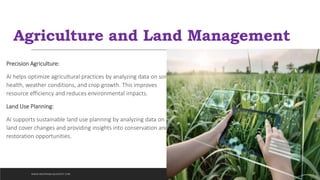
Precision Agriculture:
AI helps optimize agricultural practices by analyzing data on soil
health, weather conditions, and crop growth. This improves
resource efficiency and reduces environmental impacts.
Land Use Planning:
AI supports sustainable land use planning by analyzing data on
land cover changes and providing insights into conservation and
restoration opportunities.
WWW.INDOPRABA.BLOGSPOT.COM
Climate Finance and Risk Assessment
Risk Modeling:
AI is used to assess climate-
related risks for financial
institutions and investors.
This includes evaluating the
impact of climate change on
investment portfolios and guiding
sustainable financial decision-
making.
WWW.INDOPRABA.BLOGSPOT.COM
Challenges and Considerations
Data Quality and Bias: Ensuring that AI models are trained on
accurate and unbiased data is crucial for making reliable predictions
predictions and assessments.
Interdisciplinary Collaboration: Addressing climate change requires
collaboration between AI experts, climate scientists, policymakers,
and various stakeholders to develop effective solutions.
Ethical Considerations: Ethical considerations related to AI
applications in climate change, including transparency, fairness, and
and privacy, must be carefully addressed.
WWW.INDOPRABA.BLOGSPOT.COM
Future Trends
AI-Enabled Climate Governance:
Increased use of AI in policymaking and governance to develop and
implement climate policies more effectively.
Citizen Engagement:
AI applications that engage citizens in climate action, providing
information, and encouraging sustainable behavior.
Quantum Computing for Climate Modeling:
Advances in quantum computing are expected to further enhance the
accuracy and speed of climate modeling.
WWW.INDOPRABA.BLOGSPOT.COM
End Note
AI is a powerful ally in the fight against climate
change, offering innovative solutions to
mitigate its impacts and transition to a more
sustainable future.
As technology continues to evolve, the
integration of AI in climate-related initiatives is
likely to expand, contributing to more effective
and informed climate action.
WWW.INDOPRABA.BLOGSPOT.COM

Artificial Intelligence (AI) and Climate Change.pptx

  • 1.
    AI in Climate Change DR. A.PRABAHARAN PROFESSOR & RESEARCH DIRECTOR PUBLIC ACTION WWW.INDOPRABA.BLOGSPOT.COM
  • 2.
    Artificial Intelligence (AI)is increasingly recognized as a valuable tool in the fight against climate change. Its applications span various sectors and contribute to mitigation, adaptation, and understanding the complexities of environmental challenges. Here are several ways AI is utilized in addressing climate change AI IN CLIMATE CHANGE WWW.INDOPRABA.BLOGSPOT.COM
  • 3.
    Climate Modeling andPrediction Enhanced Climate Models: AI is employed to improve the accuracy and efficiency of climate models by analyzing large datasets and identifying complex patterns. This helps in predicting climate changes and understanding the impacts of various factors on the climate system. Extreme Weather Prediction: AI contributes to more accurate prediction and early warning systems for extreme weather events, such as hurricanes, floods, and wildfires. WWW.INDOPRABA.BLOGSPOT.COM
  • 4.
    Renewable Energy Optimization GridManagement: AI optimizes the management of energy grids by predicting demand, managing supply from renewable sources like wind and solar, and balancing the grid to reduce energy wastage. Energy Storage Optimization: AI helps in optimizing the storage and distribution of energy energy from renewable sources, ensuring efficient utilization and reducing reliance on traditional energy sources. WWW.INDOPRABA.BLOGSPOT.COM
  • 5.
    Energy Efficiency inBuildings Smart Building Management: AI is integrated into building management systems to optimize energy consumption by adjusting heating, cooling, and lighting based on real-time data, occupancy patterns, and weather conditions. WWW.INDOPRABA.BLOGSPOT.COM
  • 6.
    Climate Monitoring andAnalysis Satellite Data Analysis: AI processes satellite imagery to monitor environmental changes, including deforestation, land-use changes, and the health of ecosystems. This data aids in assessing the impact of climate change and implementing conservation measures. Carbon Sequestration Monitoring: AI is used to monitor and model carbon sequestration efforts, helping track the effectiveness of reforestation and afforestation projects. WWW.INDOPRABA.BLOGSPOT.COM
  • 7.
    Transportation and EmissionsReduction Traffic Optimization: AI optimizes traffic flow, reducing congestion and lowering fuel consumption and emissions. This contributes to more sustainable urban transportation systems. Fleet Management: AI assists in optimizing the operations of transportation fleets, including electric and autonomous vehicles, to reduce carbon emissions and enhance efficiency WWW.INDOPRABA.BLOGSPOT.COM
  • 8.
    Carbon Capture andStorage (CCS) Optimizing CCS Processes: AI is applied to enhance the efficiency of carbon capture and storage technologies by optimizing the capture process and identifying suitable storage sites. Carbon capturing is imperative to fight climate change as much carbon emissions are liberated into the atmosphere, leading to adversely negative environmental impacts. Today's world addresses all the issues with the aid of digital technologies like data pooling and artificial intelligence (AI). WWW.INDOPRABA.BLOGSPOT.COM
  • 9.
    Agriculture and LandManagement Precision Agriculture: AI helps optimize agricultural practices by analyzing data on soil health, weather conditions, and crop growth. This improves resource efficiency and reduces environmental impacts. Land Use Planning: AI supports sustainable land use planning by analyzing data on land cover changes and providing insights into conservation and restoration opportunities. WWW.INDOPRABA.BLOGSPOT.COM
  • 10.
    Climate Finance andRisk Assessment Risk Modeling: AI is used to assess climate- related risks for financial institutions and investors. This includes evaluating the impact of climate change on investment portfolios and guiding sustainable financial decision- making. WWW.INDOPRABA.BLOGSPOT.COM
  • 11.
    Challenges and Considerations DataQuality and Bias: Ensuring that AI models are trained on accurate and unbiased data is crucial for making reliable predictions predictions and assessments. Interdisciplinary Collaboration: Addressing climate change requires collaboration between AI experts, climate scientists, policymakers, and various stakeholders to develop effective solutions. Ethical Considerations: Ethical considerations related to AI applications in climate change, including transparency, fairness, and and privacy, must be carefully addressed. WWW.INDOPRABA.BLOGSPOT.COM
  • 12.
    Future Trends AI-Enabled ClimateGovernance: Increased use of AI in policymaking and governance to develop and implement climate policies more effectively. Citizen Engagement: AI applications that engage citizens in climate action, providing information, and encouraging sustainable behavior. Quantum Computing for Climate Modeling: Advances in quantum computing are expected to further enhance the accuracy and speed of climate modeling. WWW.INDOPRABA.BLOGSPOT.COM
  • 13.
    End Note AI isa powerful ally in the fight against climate change, offering innovative solutions to mitigate its impacts and transition to a more sustainable future. As technology continues to evolve, the integration of AI in climate-related initiatives is likely to expand, contributing to more effective and informed climate action. WWW.INDOPRABA.BLOGSPOT.COM
  • 14.