ARTIFICIAL INTELLIGENCE
Intelligence Behavior
  the ability to learn from experiences and
      apply knowledge acquired from
   experience, handle complex situations,
      solve problems when important
 information is missing, determine what is
important, react quickly and correctly to a
 new situation, understand visual images,
    process and manipulate symbols, be
     creative and imaginative, and use
                   heuristics.
Turing Test
(developed by Alan Turing, a British Mathematician)

       attempts to determine
   whether the responses from a
      computer with intelligent
    behavior are indistinguishable
   from responses from a human.
Specific characteristics of intelligent behavior:

1.Learn from experience and apply the
   knowledge acquired from experience.
2.Handle complex situations.
3.Solve problems when important information
   is missing.
4.Determine what is important.
Specific characteristics of intelligent behavior:

 5. React quickly and correctly to a new
   situation.
 6. Understand visual images.
 7. Process and manipulate symbols.
 8. Be creative and imaginative.
 9. Use heuristics.
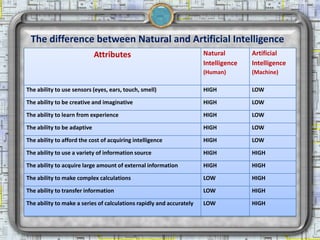
The difference between Natural and Artificial Intelligence
                             Attributes                               Natural        Artificial
                                                                      Intelligence   Intelligence
                                                                      (Human)        (Machine)

The ability to use sensors (eyes, ears, touch, smell)                 HIGH           LOW

The ability to be creative and imaginative                            HIGH           LOW

The ability to learn from experience                                  HIGH           LOW

The ability to be adaptive                                            HIGH           LOW

The ability to afford the cost of acquiring intelligence              HIGH           LOW

The ability to use a variety of information source                    HIGH           HIGH

The ability to acquire large amount of external information           HIGH           HIGH

The ability to make complex calculations                              LOW            HIGH

The ability to transfer information                                   LOW            HIGH

The ability to make a series of calculations rapidly and accurately   LOW            HIGH
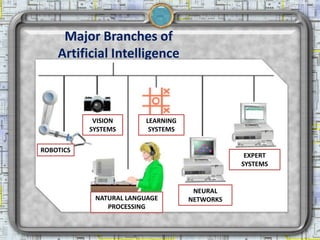
Major Branches of
    Artificial Intelligence


            VISION      LEARNING
           SYSTEMS       SYSTEMS

ROBOTICS
                                               EXPERT
                                              SYSTEMS


                                    NEURAL
            NATURAL LANGUAGE       NETWORKS
               PROCESSING
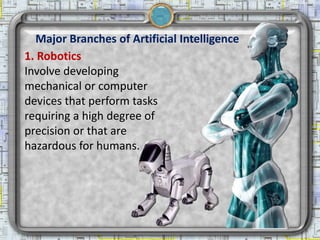
Major Branches of Artificial Intelligence
1. Robotics
Involve developing
mechanical or computer
devices that perform tasks
requiring a high degree of
precision or that are
hazardous for humans.
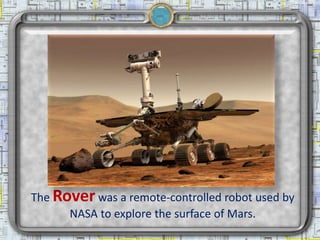
The Rover was a remote-controlled robot used by
      NASA to explore the surface of Mars.
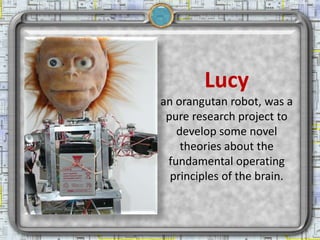
Lucy
an orangutan robot, was a
 pure research project to
   develop some novel
    theories about the
 fundamental operating
  principles of the brain.
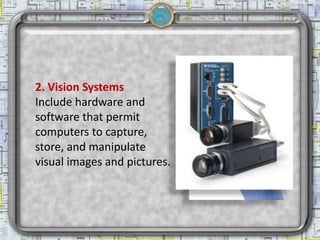
2. Vision Systems
Include hardware and
software that permit
computers to capture,
store, and manipulate
visual images and pictures.
3. Natural language processing
Computers understand and react to statements
and commands made in a “natural” language,
such as English.
4. Learning system
Computer changes how it functions or reacts to
situations based on feedback.


5. Neural network
Computer system that can act like or simulate
the functioning of the human brain.
6. Expert Systems
Consists of hardware and software that
stores knowledge and makes inferences,
similar to a human expert.
Presented by: RAJNISH KUMAR

Artificial intelligence

  • 2.
  • 3.
    Intelligence Behavior the ability to learn from experiences and apply knowledge acquired from experience, handle complex situations, solve problems when important information is missing, determine what is important, react quickly and correctly to a new situation, understand visual images, process and manipulate symbols, be creative and imaginative, and use heuristics.
  • 4.
    Turing Test (developed byAlan Turing, a British Mathematician) attempts to determine whether the responses from a computer with intelligent behavior are indistinguishable from responses from a human.
  • 5.
    Specific characteristics ofintelligent behavior: 1.Learn from experience and apply the knowledge acquired from experience. 2.Handle complex situations. 3.Solve problems when important information is missing. 4.Determine what is important.
  • 6.
    Specific characteristics ofintelligent behavior: 5. React quickly and correctly to a new situation. 6. Understand visual images. 7. Process and manipulate symbols. 8. Be creative and imaginative. 9. Use heuristics.
  • 7.
    The difference betweenNatural and Artificial Intelligence Attributes Natural Artificial Intelligence Intelligence (Human) (Machine) The ability to use sensors (eyes, ears, touch, smell) HIGH LOW The ability to be creative and imaginative HIGH LOW The ability to learn from experience HIGH LOW The ability to be adaptive HIGH LOW The ability to afford the cost of acquiring intelligence HIGH LOW The ability to use a variety of information source HIGH HIGH The ability to acquire large amount of external information HIGH HIGH The ability to make complex calculations LOW HIGH The ability to transfer information LOW HIGH The ability to make a series of calculations rapidly and accurately LOW HIGH
  • 8.
    Major Branches of Artificial Intelligence VISION LEARNING SYSTEMS SYSTEMS ROBOTICS EXPERT SYSTEMS NEURAL NATURAL LANGUAGE NETWORKS PROCESSING
  • 9.
    Major Branches ofArtificial Intelligence 1. Robotics Involve developing mechanical or computer devices that perform tasks requiring a high degree of precision or that are hazardous for humans.
  • 10.
    The Rover wasa remote-controlled robot used by NASA to explore the surface of Mars.
  • 11.
    Lucy an orangutan robot,was a pure research project to develop some novel theories about the fundamental operating principles of the brain.
  • 12.
    2. Vision Systems Includehardware and software that permit computers to capture, store, and manipulate visual images and pictures.
  • 13.
    3. Natural languageprocessing Computers understand and react to statements and commands made in a “natural” language, such as English.
  • 14.
    4. Learning system Computerchanges how it functions or reacts to situations based on feedback. 5. Neural network Computer system that can act like or simulate the functioning of the human brain.
  • 15.
    6. Expert Systems Consistsof hardware and software that stores knowledge and makes inferences, similar to a human expert.
  • 16.