welcome
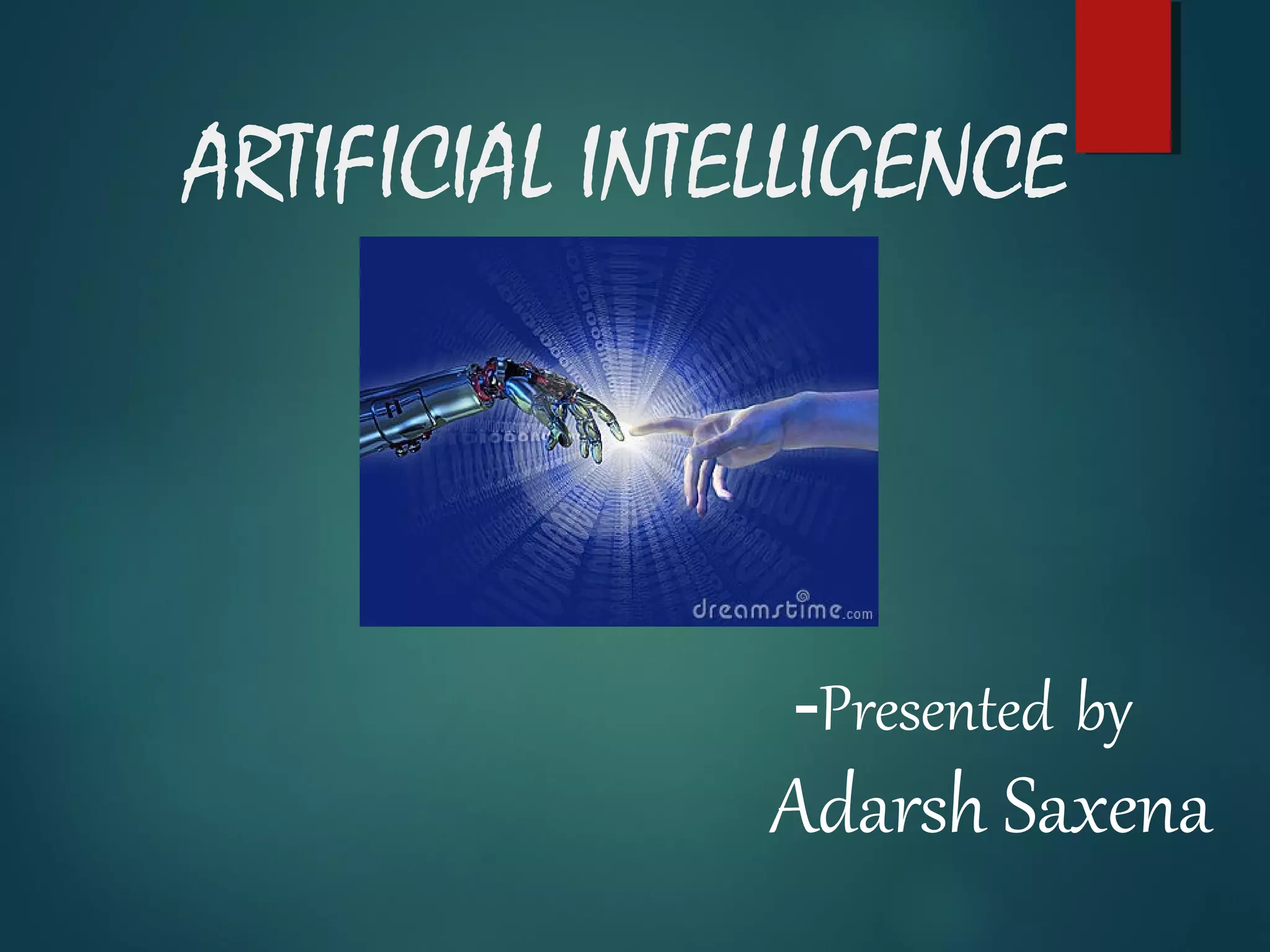
ARTIFICIAL INTELLIGENCE
-Presented by
Adarsh Saxena
CONTENTS
INTRODUCTION TO A.I.
HOW DOES A.I WORK.
EVOLUTION OF A.I.
BRANCHES OF A.I.
APPLICATIONS OF A.I.
CONCLUSIONS ON A.I.
What is Intelligence ??
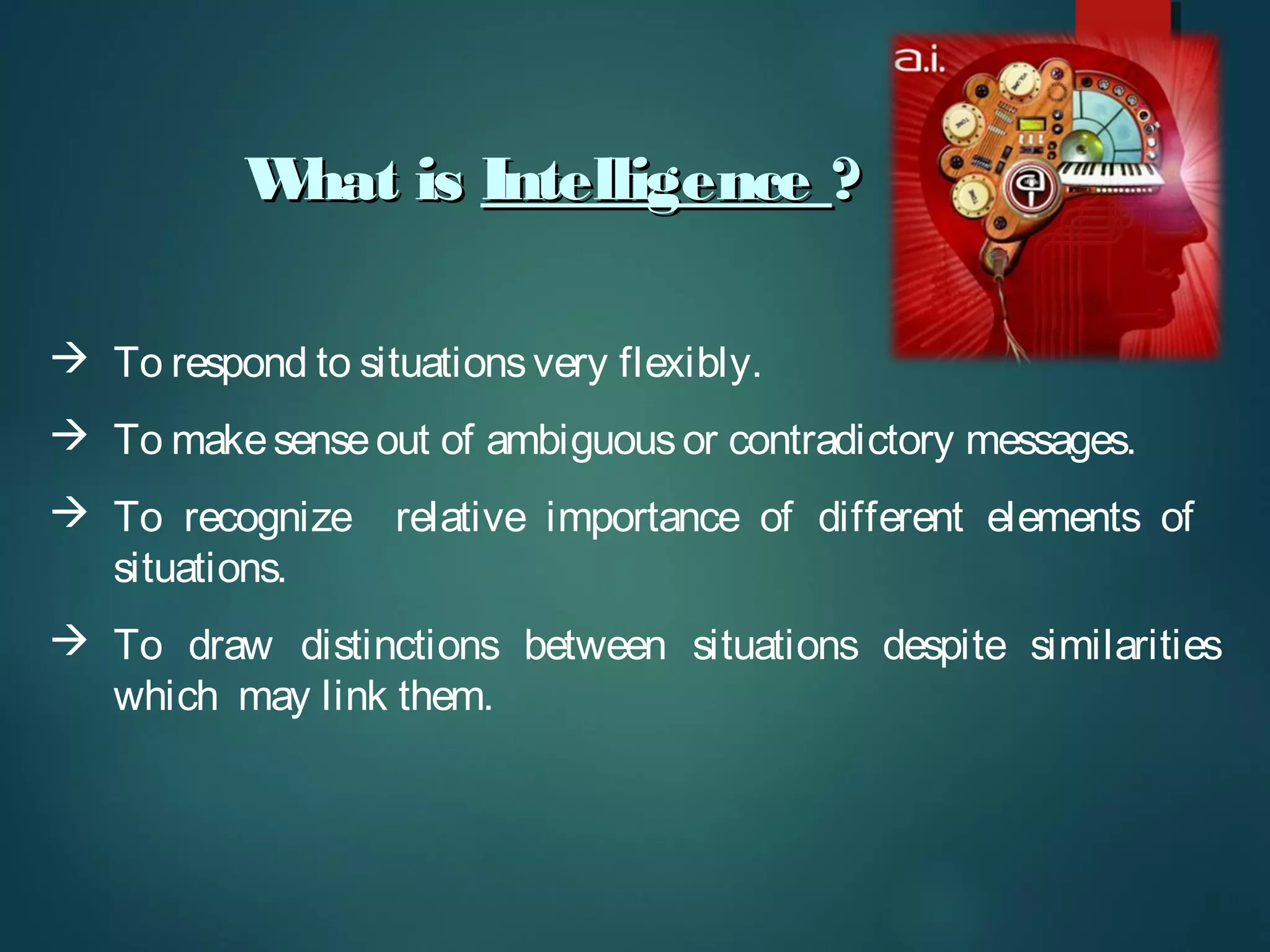
What isWhat is IntelligenceIntelligence ??
 To respond to situationsvery flexibly.
 To makesenseout of ambiguousor contradictory messages.
 To recognize relative importance of different elements of
situations.
 To draw distinctions between situations despite similarities
which may link them.
INTRODUCTIONINTRODUCTION
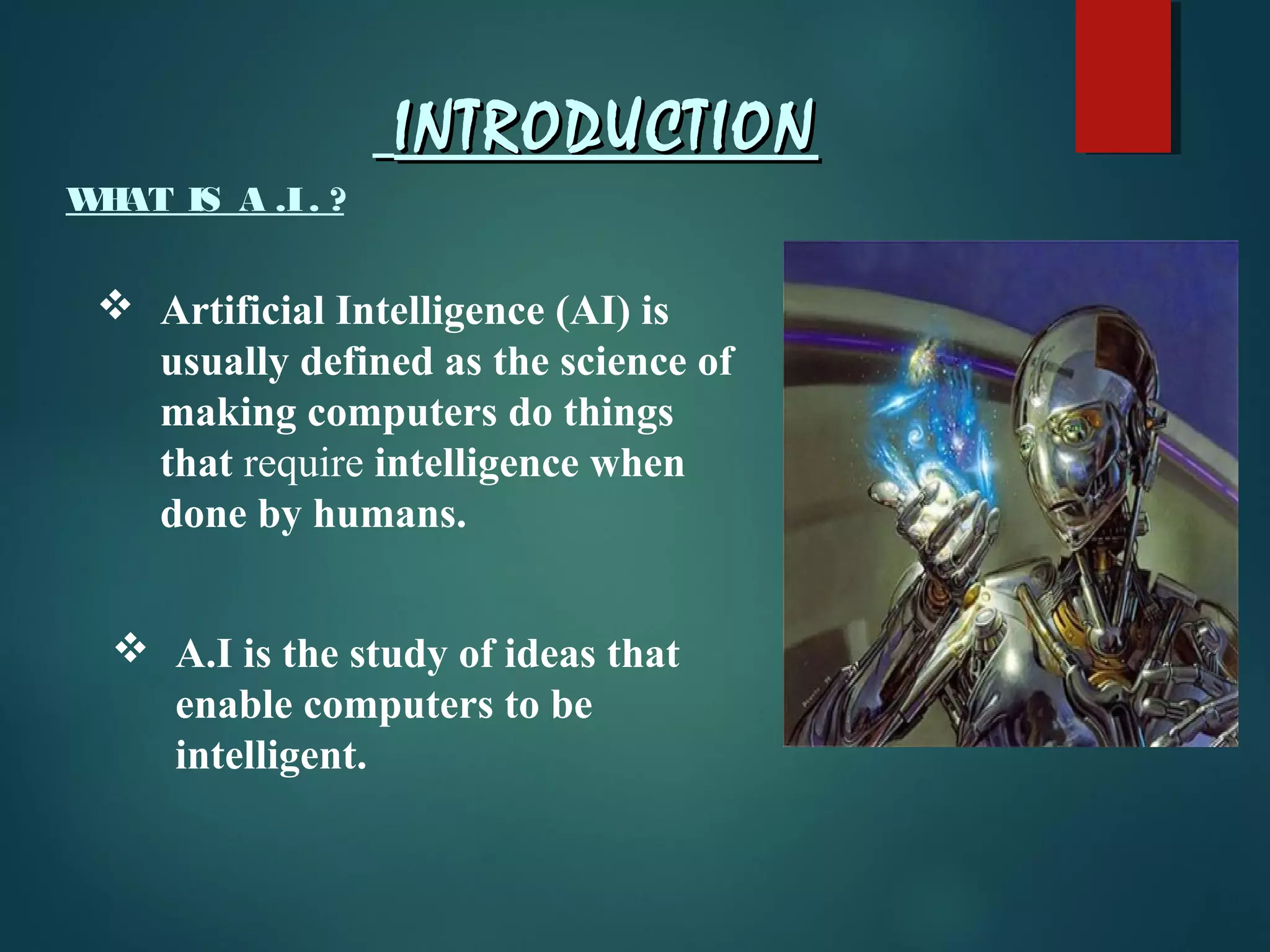
WHAT IS A .I. ?
 Artificial Intelligence (AI) is
usually defined as the science of
making computers do things
that require intelligence when
done by humans.
 A.I is the study of ideas that
enable computers to be
intelligent.
How Does AI Work??
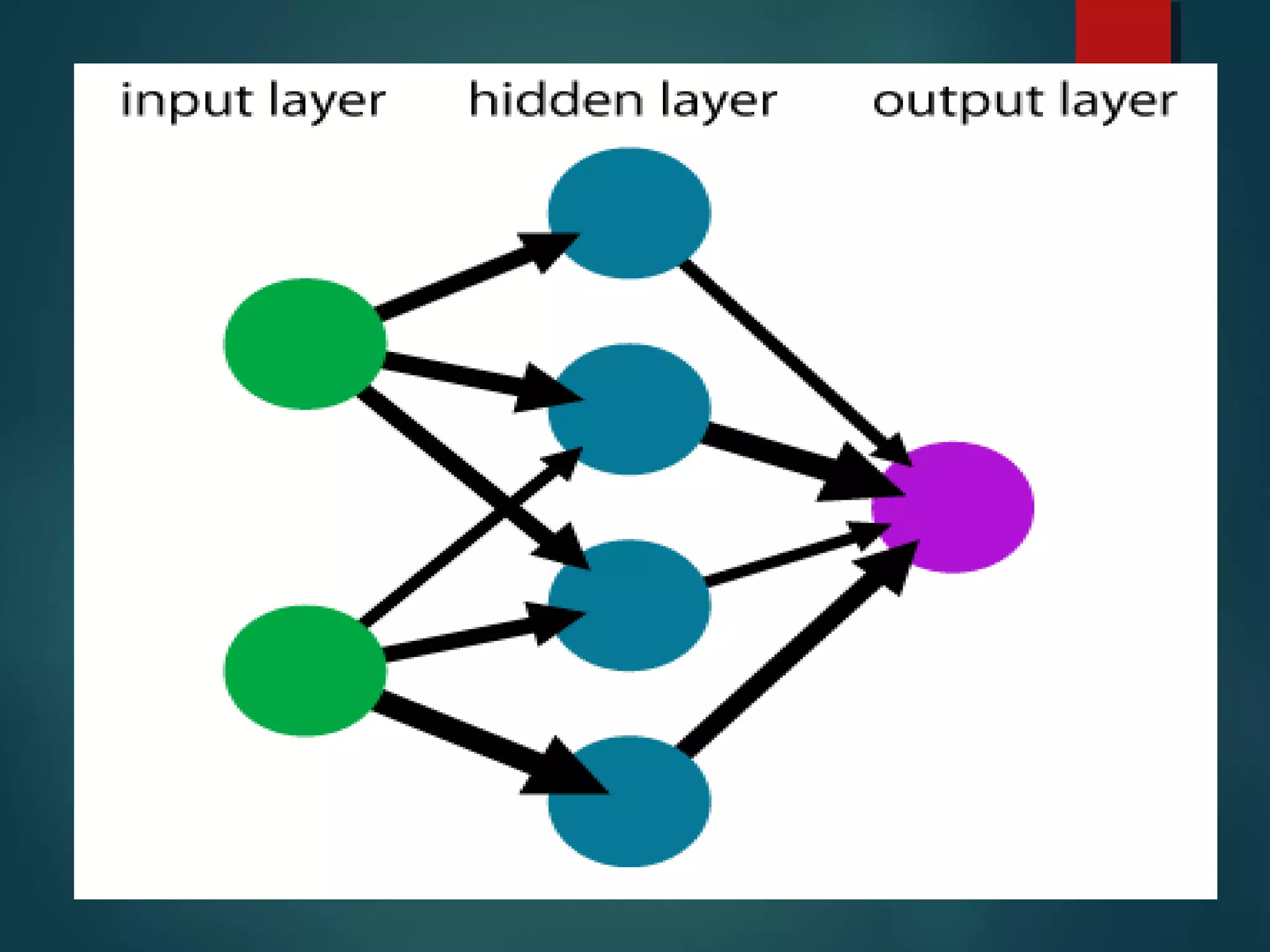
Artificial intelligence works with the
help of
• Artificial Neurons (Artificial Neural
Network)
And
• Scientific theorems(If-Then
Statements, Logics)
What is Neural Networking??
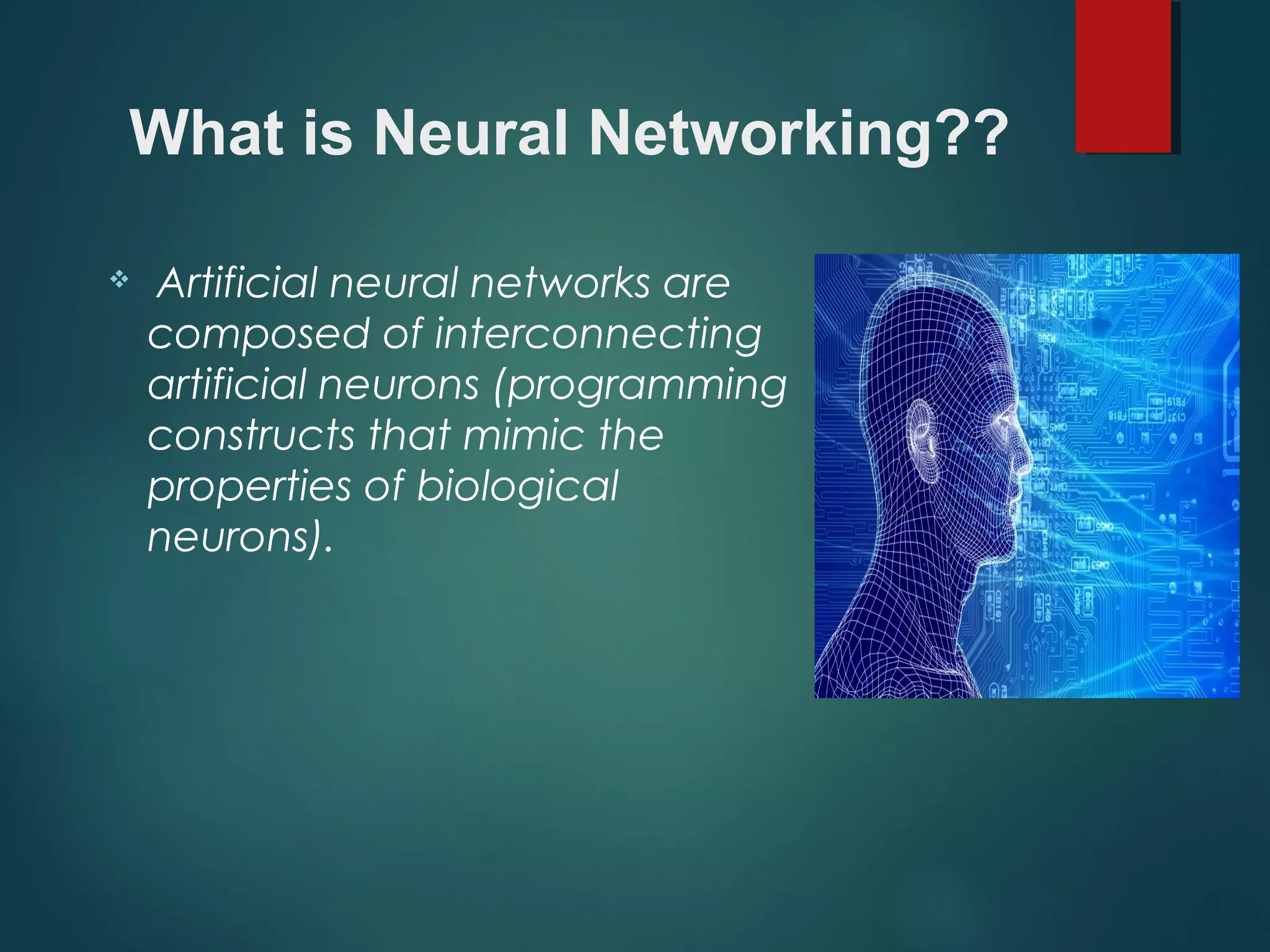
 Artificial neural networks are
composed of interconnecting
artificial neurons (programming
constructs that mimic the
properties of biological
neurons).
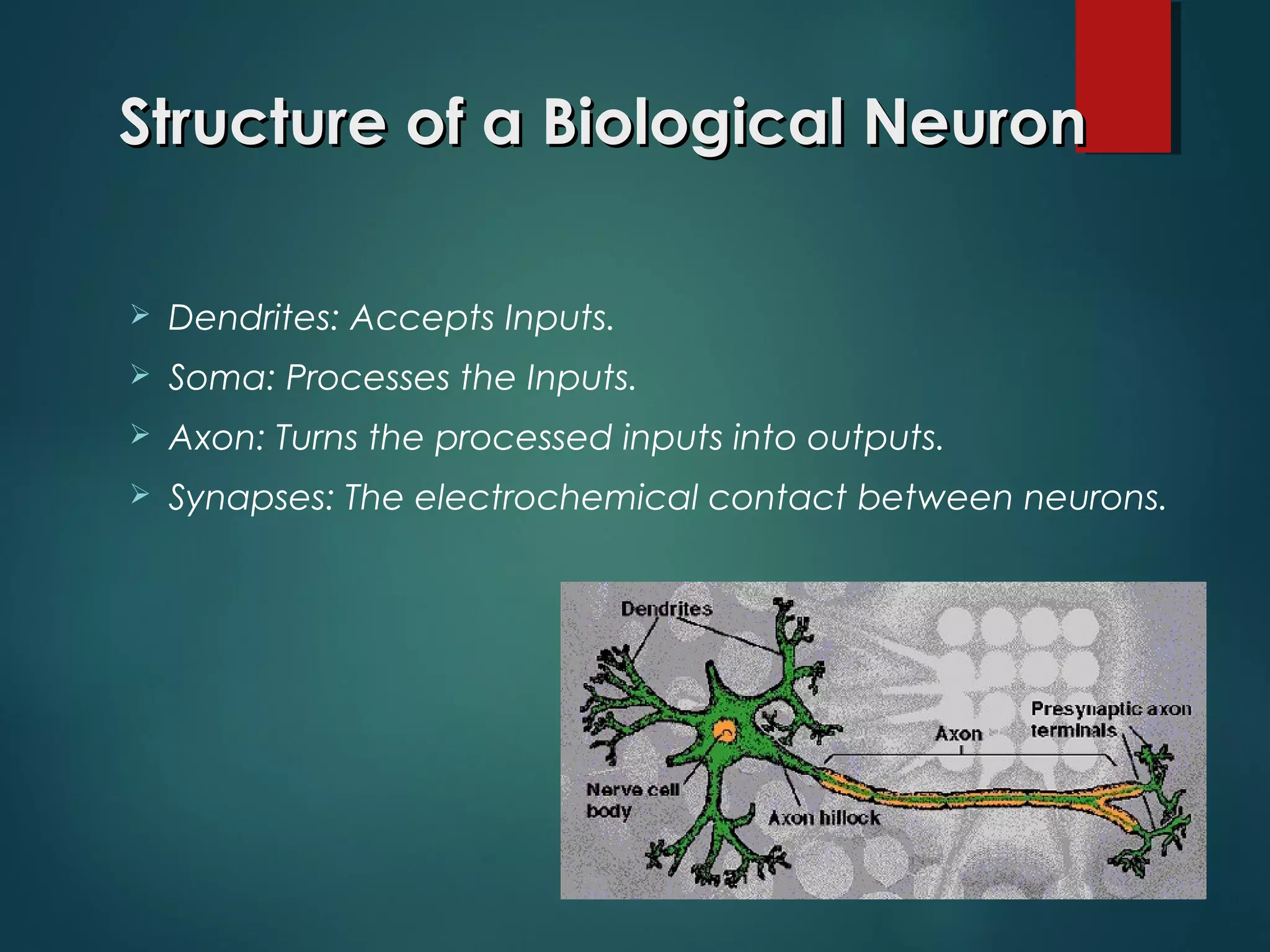
Structure of a Biological NeuronStructure of a Biological Neuron
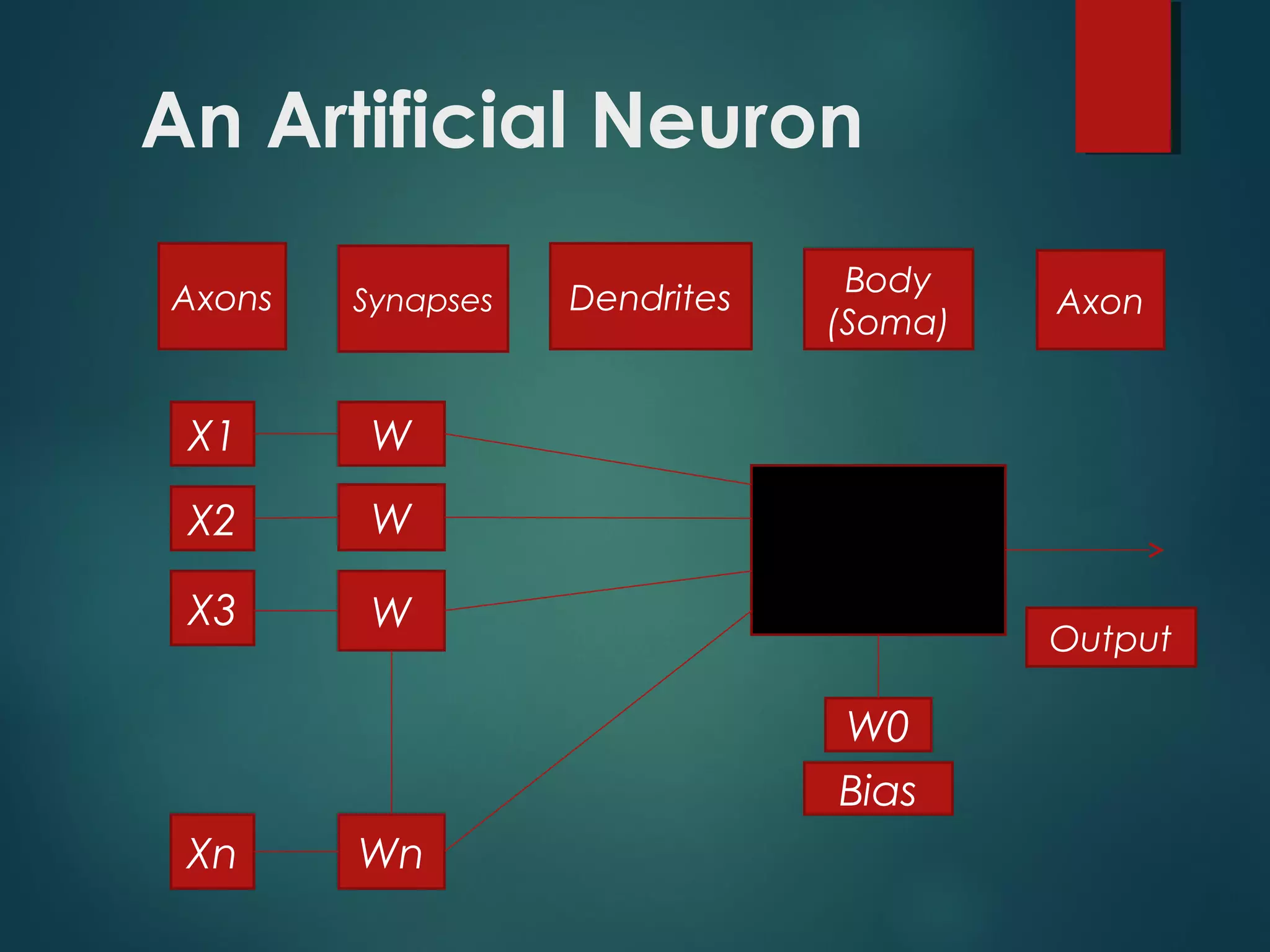
 Dendrites: Accepts Inputs.
 Soma: Processes the Inputs.
 Axon: Turns the processed inputs into outputs.
 Synapses: The electrochemical contact between neurons.
An Artificial Neuron
Axons Synapses Dendrites Axon
Body
(Soma)
X1
X3
Wn
W
W
Xn
W
X2
W0
Output
Bias
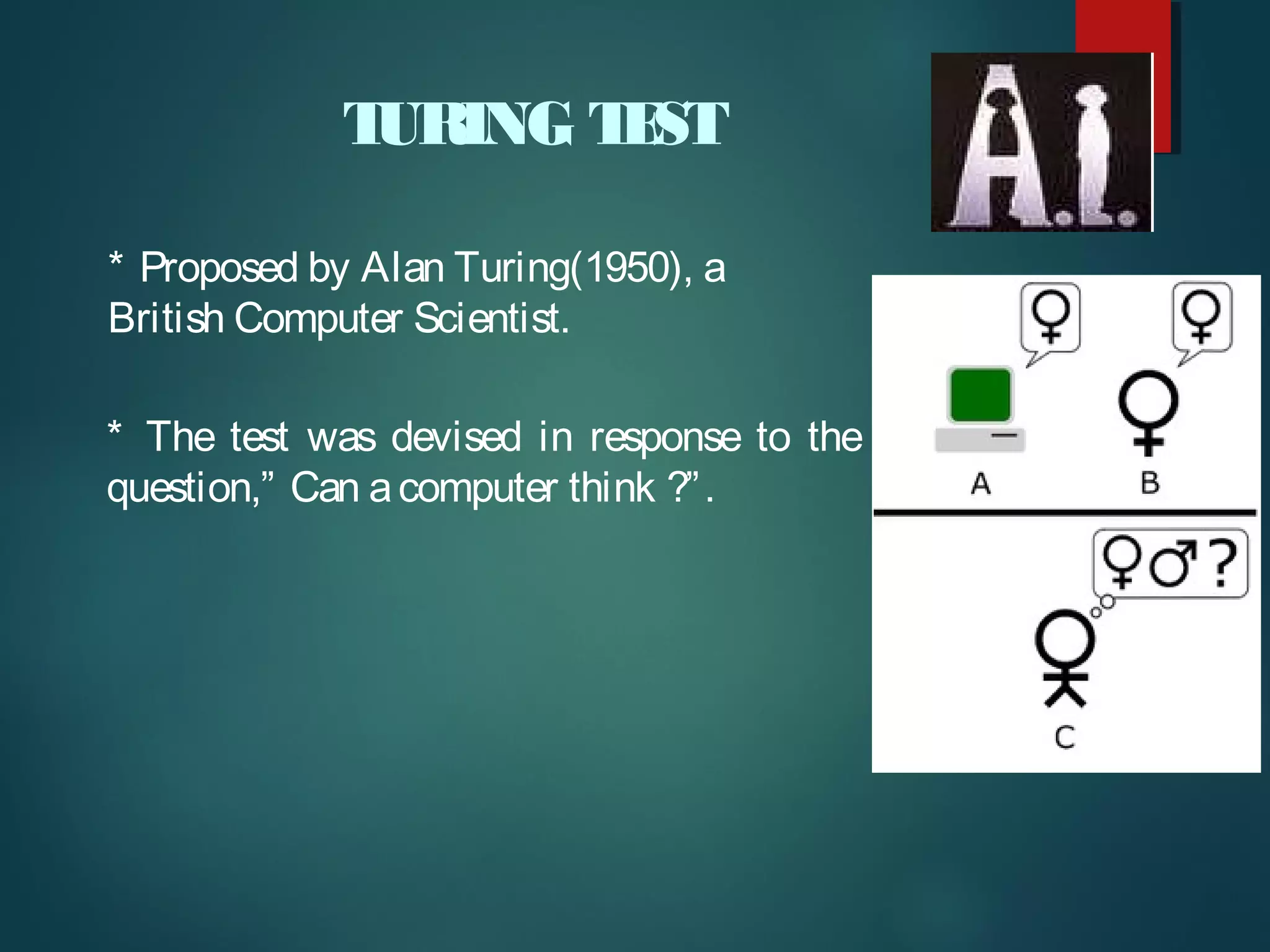
TURING TEST
* The test was devised in response to the
question,” Can acomputer think ?”.
* Proposed by Alan Turing(1950), a
British Computer Scientist.
1943 – McCulloh and Pitts, Boolean circuit model of
brain.
1950 – Turing’scomputing machineand intelligence.
1950’s – Early AI programs including Samuel’s checker
program, Newell and Simon’s logic theorist, Gelisnters
geometry engine
1956 – Dartmouth conference.
HISTORY
HISTORY
1952-69 – “Look, Ma, no hands!” era.
1958 – McCarthy moves to MIT, LISP was born.
1965 – Robinson’s complete algorithm for logical reasoning.
1966-74 – AI discovers computational complex.
1969-79 - Early development in knowledge based systems.
1980-88 : Expert system industry booms.
1988-93 : Expert system industry busts.
1985-88 : Neural networksreturn to popularity.
1995 : Agents… Agents… Agents.
(present)
HISTORY
APPLICATIONS OF A.I.
Expert systems.
Natural Language Processing (NLP).
Speech recognition.
Computer vision.
Robotics.
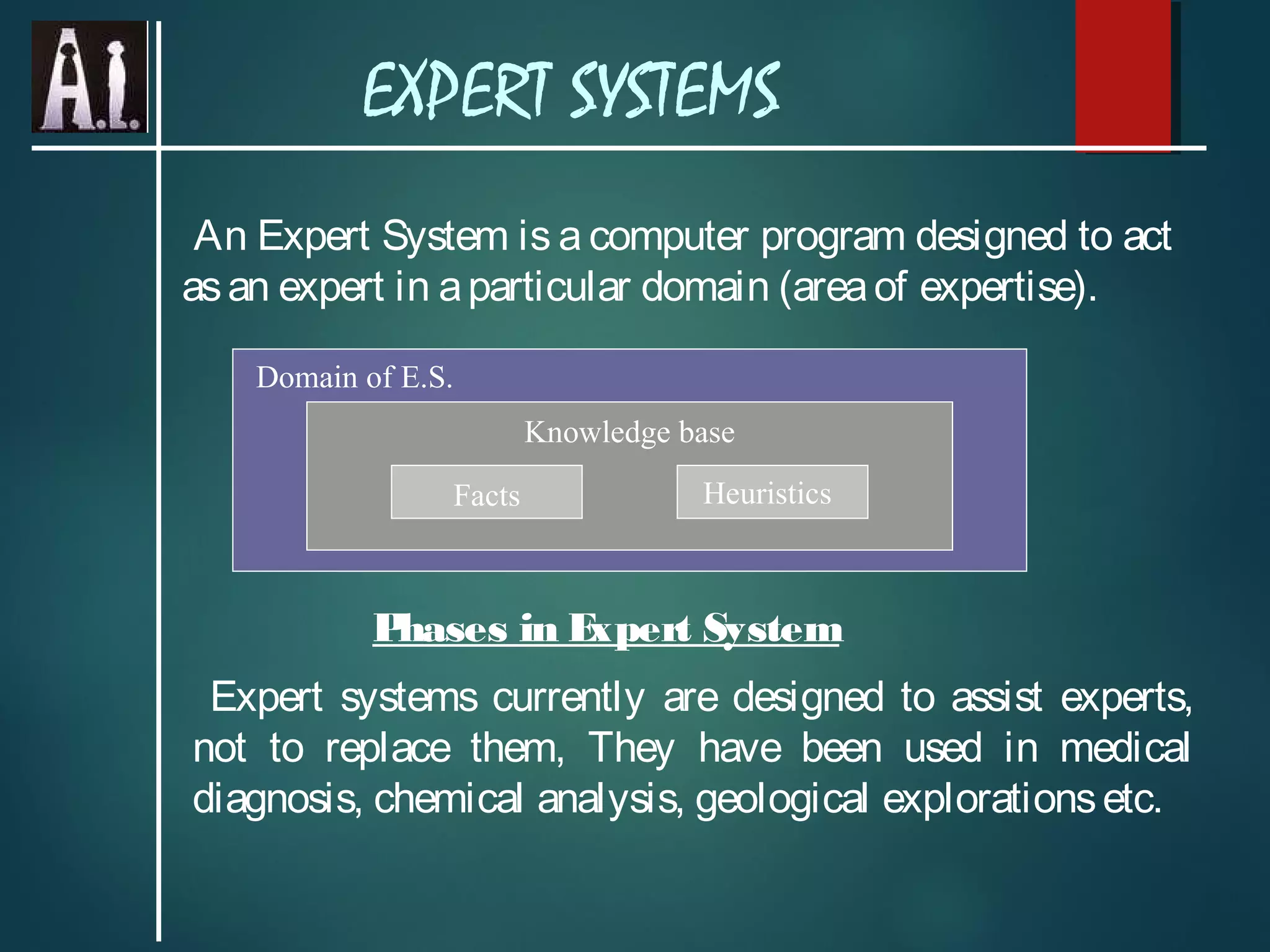
An Expert System is a computer program designed to act
asan expert in aparticular domain (areaof expertise).
Expert systems currently are designed to assist experts,
not to replace them, They have been used in medical
diagnosis, chemical analysis, geological explorationsetc.
Domain of E.S.
Knowledge base
Facts Heuristics
Phases in Expert System
EXPERT SYSTEMS
Natural Language
Processing
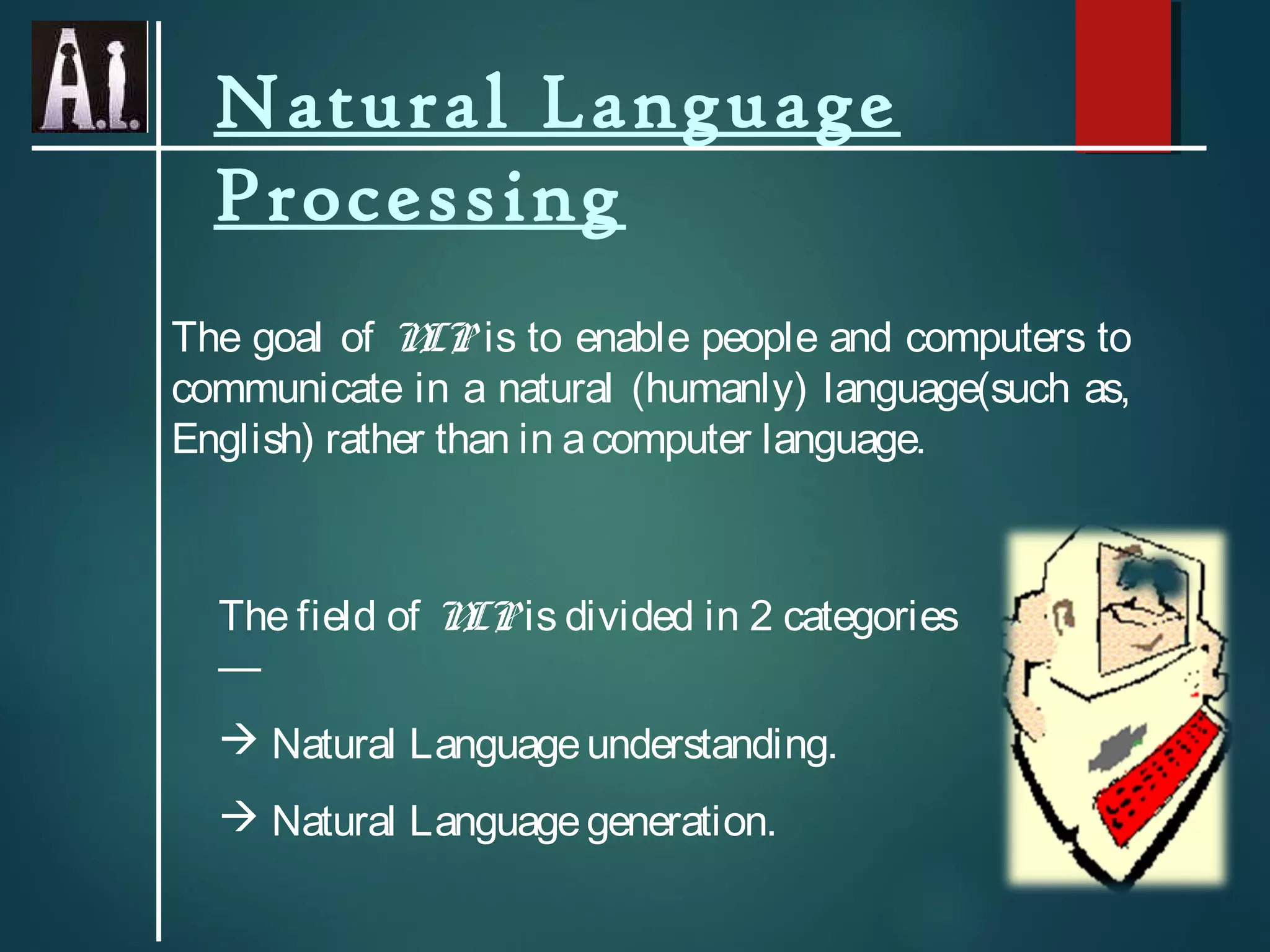
The goal of NLP is to enable people and computers to
communicate in a natural (humanly) language(such as,
English) rather than in acomputer language.
The field of NLP is divided in 2 categories
—
 Natural Languageunderstanding.
 Natural Languagegeneration.
Speech
Recognition
$ The goal of speech recognition research is to
allow computers to understand human speech. So that
they can hear our voices and recognize the words we
are speaking.
$ It simplifies the process of interactive
communication between people and computers, thus
it advances the goal of NLP.
Computer Vision
People generally use vision as their primary
means of sensing their environment, we generally see
morethan wehear, feel or smell or taste.
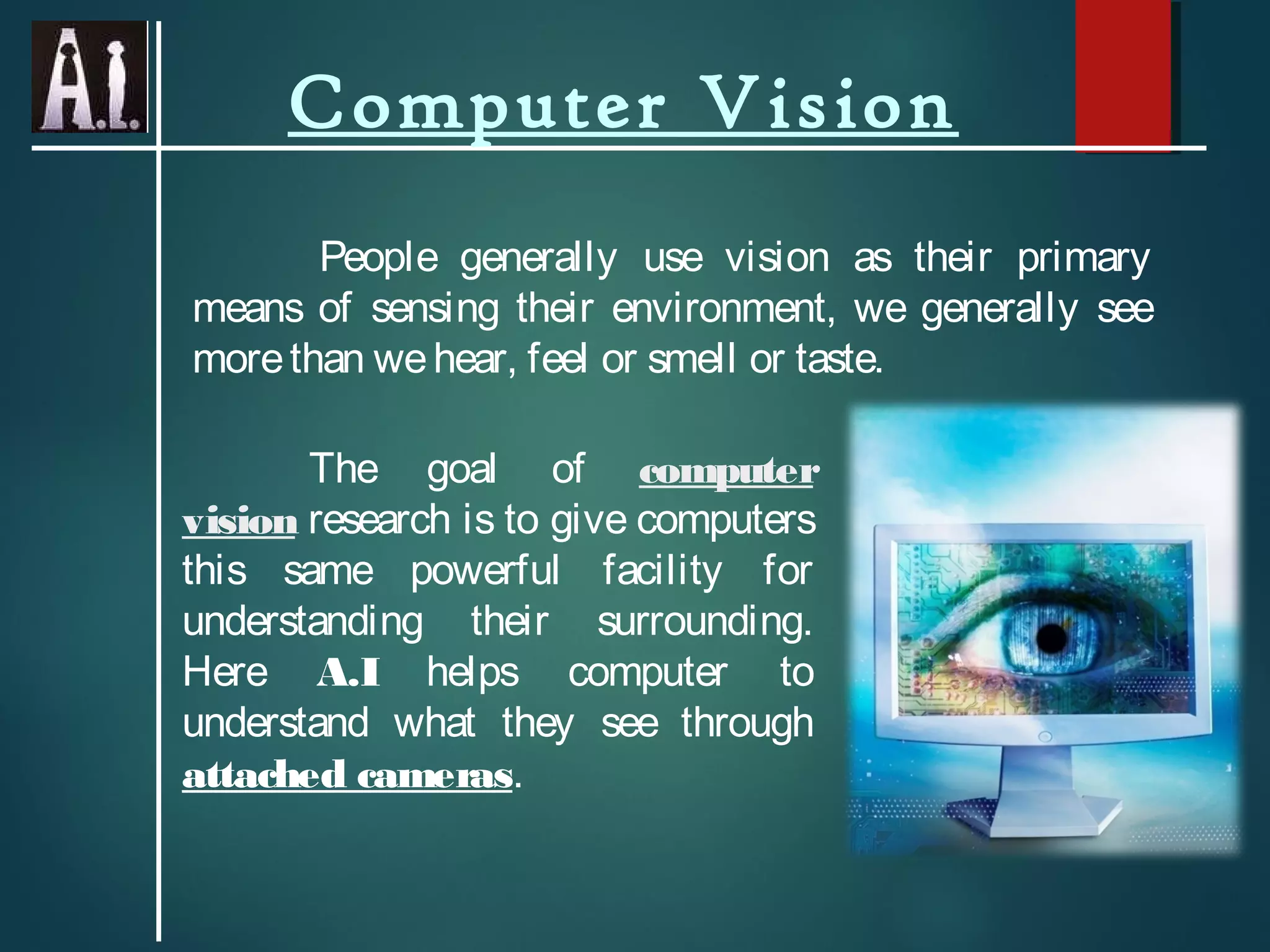
The goal of computer
vision research is to give computers
this same powerful facility for
understanding their surrounding.
Here A.I helps computer to
understand what they see through
attached cameras.
Robotics
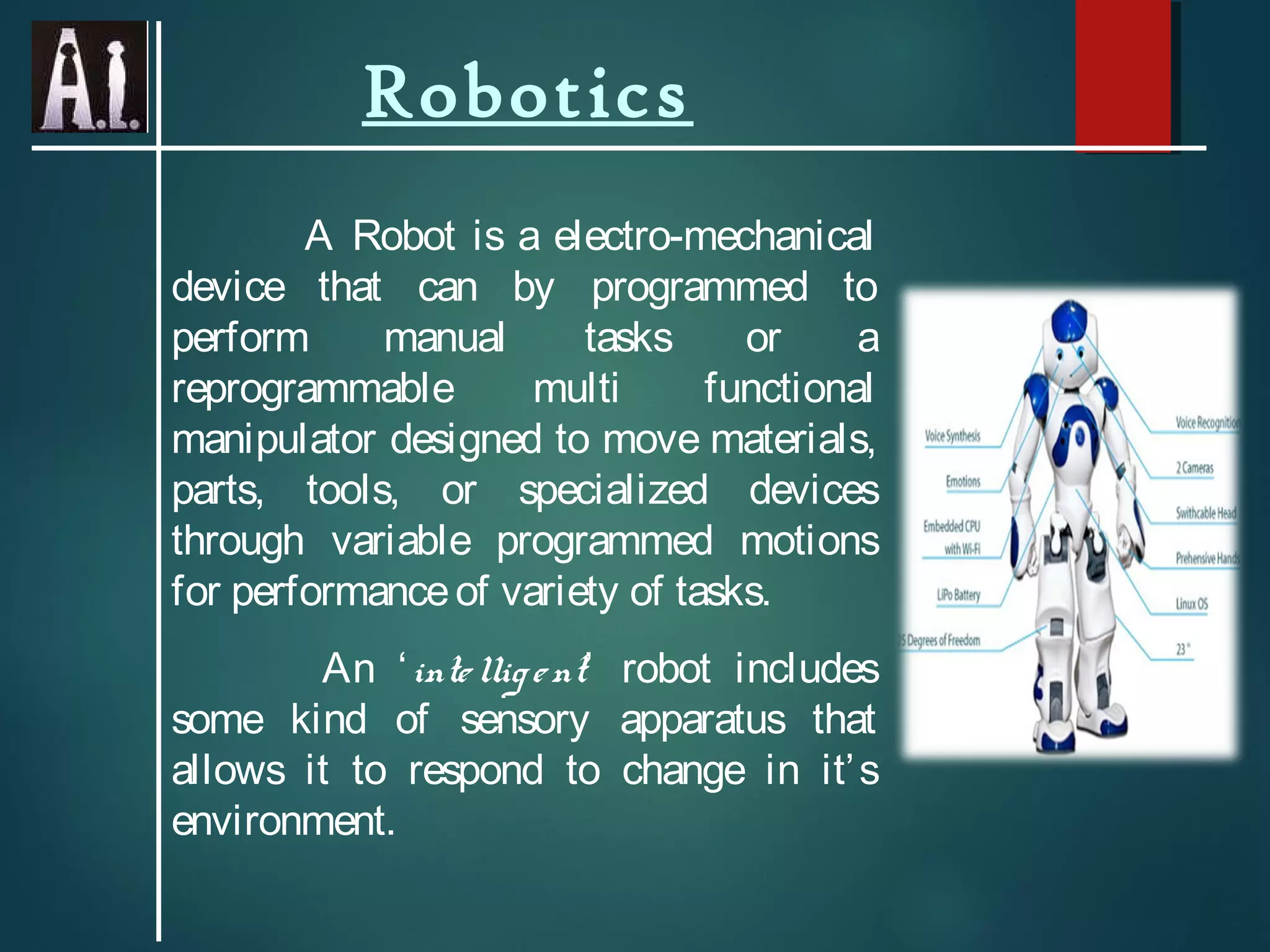
A Robot is a electro-mechanical
device that can by programmed to
perform manual tasks or a
reprogrammable multi functional
manipulator designed to move materials,
parts, tools, or specialized devices
through variable programmed motions
for performanceof variety of tasks.
An ‘intelligent’ robot includes
some kind of sensory apparatus that
allows it to respond to change in it’s
environment.
FUTURE
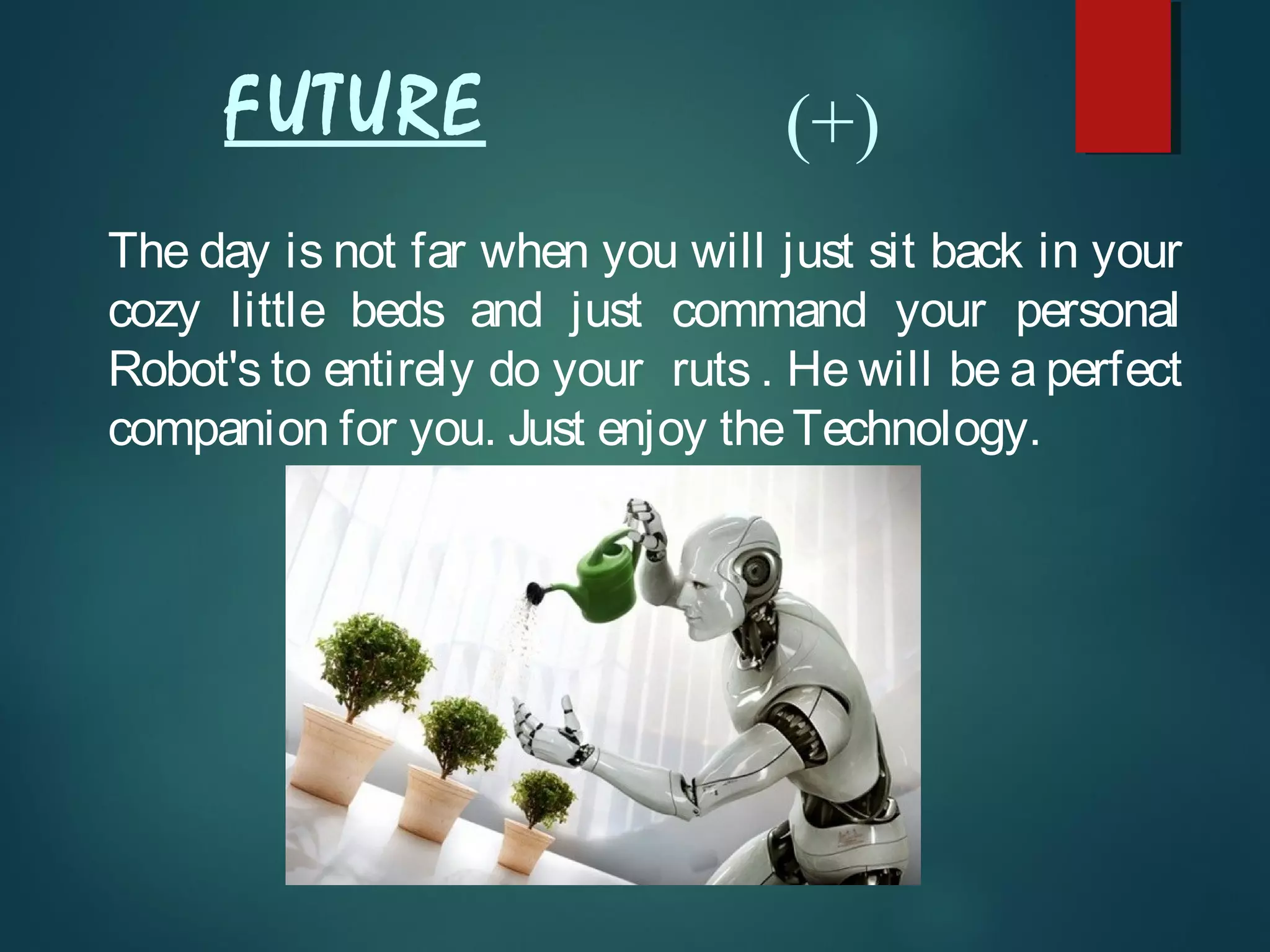
The day is not far when you will just sit back in your
cozy little beds and just command your personal
Robot's to entirely do your ruts . He will be a perfect
companion for you. Just enjoy theTechnology.
(+)
But wait, don’t behappy. . !
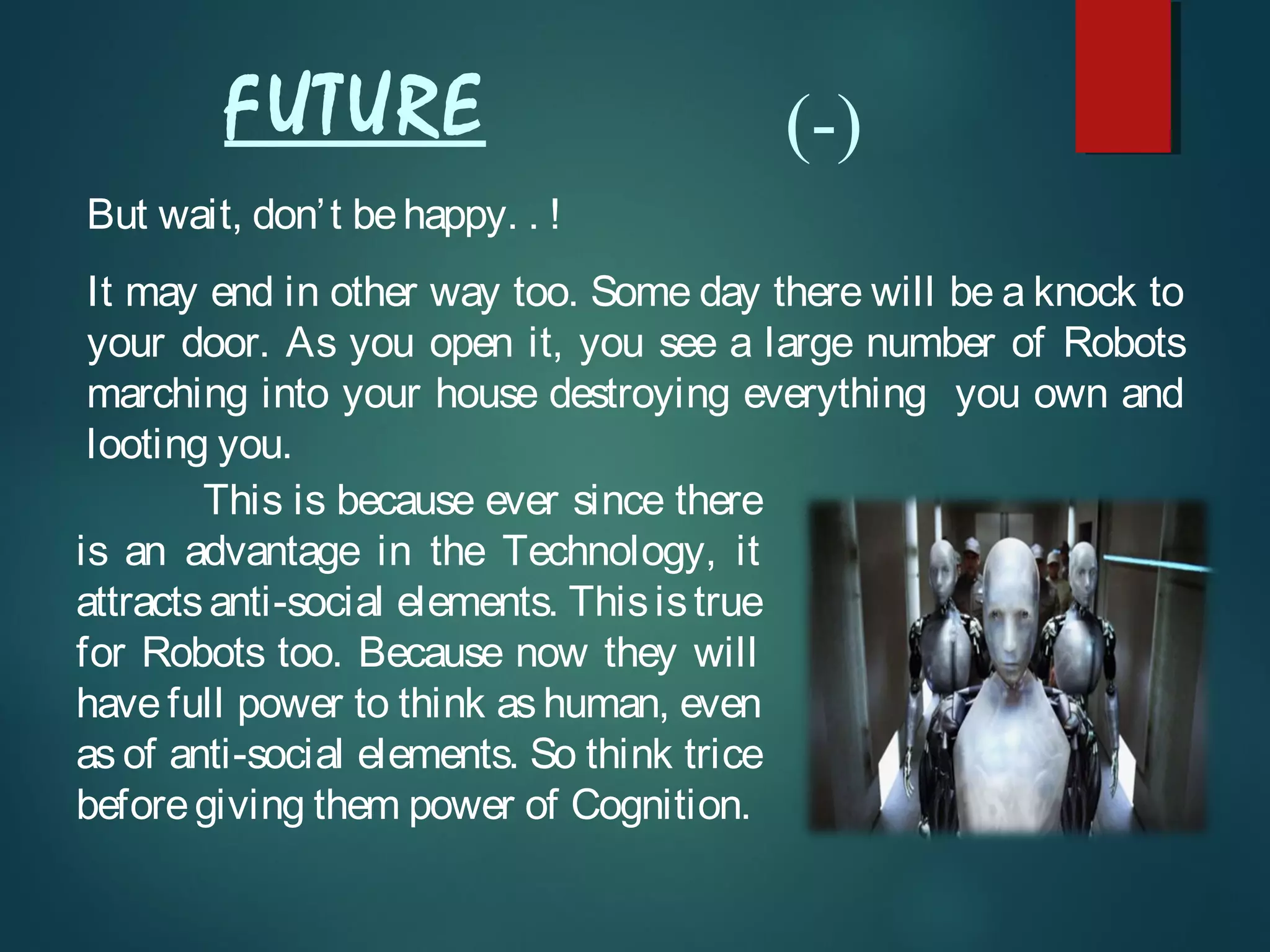
It may end in other way too. Some day there will be a knock to
your door. As you open it, you see a large number of Robots
marching into your house destroying everything you own and
looting you.
This is because ever since there
is an advantage in the Technology, it
attractsanti-social elements. Thisistrue
for Robots too. Because now they will
have full power to think as human, even
as of anti-social elements. So think trice
beforegiving them power of Cognition.
FUTURE (-)
CONCLUSION
In it’s short existence, AI has increased understanding of the
nature of intelligence and provided an impressive array of
application in a wide range of areas. It has sharpened
understanding of human reasoning, and of the nature of
intelligence in general. At the same time, it has revealed the
complexity of modeling human reasoning providing new areas
and rich challengesfor thefuture.
References
 Wikipedia
 You tube
Latest Invention
 Chinees Robot Jia Jia .
Go Ahead
With Question
Be Not Afraid Of Falling Be Afraid Of Not
Trying
thanQ

Artificial inteligence

  • 1.
  • 2.
  • 3.
    CONTENTS INTRODUCTION TO A.I. HOWDOES A.I WORK. EVOLUTION OF A.I. BRANCHES OF A.I. APPLICATIONS OF A.I. CONCLUSIONS ON A.I.
  • 4.
  • 5.
    What isWhat isIntelligenceIntelligence ??  To respond to situationsvery flexibly.  To makesenseout of ambiguousor contradictory messages.  To recognize relative importance of different elements of situations.  To draw distinctions between situations despite similarities which may link them.
  • 6.
    INTRODUCTIONINTRODUCTION WHAT IS A.I. ?  Artificial Intelligence (AI) is usually defined as the science of making computers do things that require intelligence when done by humans.  A.I is the study of ideas that enable computers to be intelligent.
  • 7.
    How Does AIWork?? Artificial intelligence works with the help of • Artificial Neurons (Artificial Neural Network) And • Scientific theorems(If-Then Statements, Logics)
  • 8.
    What is NeuralNetworking??  Artificial neural networks are composed of interconnecting artificial neurons (programming constructs that mimic the properties of biological neurons).
  • 9.
    Structure of aBiological NeuronStructure of a Biological Neuron  Dendrites: Accepts Inputs.  Soma: Processes the Inputs.  Axon: Turns the processed inputs into outputs.  Synapses: The electrochemical contact between neurons.
  • 11.
    An Artificial Neuron AxonsSynapses Dendrites Axon Body (Soma) X1 X3 Wn W W Xn W X2 W0 Output Bias
  • 12.
    TURING TEST * Thetest was devised in response to the question,” Can acomputer think ?”. * Proposed by Alan Turing(1950), a British Computer Scientist.
  • 13.
    1943 – McCullohand Pitts, Boolean circuit model of brain. 1950 – Turing’scomputing machineand intelligence. 1950’s – Early AI programs including Samuel’s checker program, Newell and Simon’s logic theorist, Gelisnters geometry engine 1956 – Dartmouth conference. HISTORY
  • 14.
    HISTORY 1952-69 – “Look,Ma, no hands!” era. 1958 – McCarthy moves to MIT, LISP was born. 1965 – Robinson’s complete algorithm for logical reasoning. 1966-74 – AI discovers computational complex. 1969-79 - Early development in knowledge based systems.
  • 15.
    1980-88 : Expertsystem industry booms. 1988-93 : Expert system industry busts. 1985-88 : Neural networksreturn to popularity. 1995 : Agents… Agents… Agents. (present) HISTORY
  • 16.
    APPLICATIONS OF A.I. Expertsystems. Natural Language Processing (NLP). Speech recognition. Computer vision. Robotics.
  • 17.
    An Expert Systemis a computer program designed to act asan expert in aparticular domain (areaof expertise). Expert systems currently are designed to assist experts, not to replace them, They have been used in medical diagnosis, chemical analysis, geological explorationsetc. Domain of E.S. Knowledge base Facts Heuristics Phases in Expert System EXPERT SYSTEMS
  • 18.
    Natural Language Processing The goalof NLP is to enable people and computers to communicate in a natural (humanly) language(such as, English) rather than in acomputer language. The field of NLP is divided in 2 categories —  Natural Languageunderstanding.  Natural Languagegeneration.
  • 19.
    Speech Recognition $ The goalof speech recognition research is to allow computers to understand human speech. So that they can hear our voices and recognize the words we are speaking. $ It simplifies the process of interactive communication between people and computers, thus it advances the goal of NLP.
  • 20.
    Computer Vision People generallyuse vision as their primary means of sensing their environment, we generally see morethan wehear, feel or smell or taste. The goal of computer vision research is to give computers this same powerful facility for understanding their surrounding. Here A.I helps computer to understand what they see through attached cameras.
  • 21.
    Robotics A Robot isa electro-mechanical device that can by programmed to perform manual tasks or a reprogrammable multi functional manipulator designed to move materials, parts, tools, or specialized devices through variable programmed motions for performanceof variety of tasks. An ‘intelligent’ robot includes some kind of sensory apparatus that allows it to respond to change in it’s environment.
  • 22.
    FUTURE The day isnot far when you will just sit back in your cozy little beds and just command your personal Robot's to entirely do your ruts . He will be a perfect companion for you. Just enjoy theTechnology. (+)
  • 23.
    But wait, don’tbehappy. . ! It may end in other way too. Some day there will be a knock to your door. As you open it, you see a large number of Robots marching into your house destroying everything you own and looting you. This is because ever since there is an advantage in the Technology, it attractsanti-social elements. Thisistrue for Robots too. Because now they will have full power to think as human, even as of anti-social elements. So think trice beforegiving them power of Cognition. FUTURE (-)
  • 24.
    CONCLUSION In it’s shortexistence, AI has increased understanding of the nature of intelligence and provided an impressive array of application in a wide range of areas. It has sharpened understanding of human reasoning, and of the nature of intelligence in general. At the same time, it has revealed the complexity of modeling human reasoning providing new areas and rich challengesfor thefuture.
  • 25.
  • 26.
  • 27.
    Go Ahead With Question BeNot Afraid Of Falling Be Afraid Of Not Trying
  • 28.