Perception 
How we interpret our world
IB Learning Outcomes 
C9- With reference to relevant research 
studies, to what extent is one cognitive 
process reliable? 
Key-Terms: 
 Bottom-Up and Top-Down processing
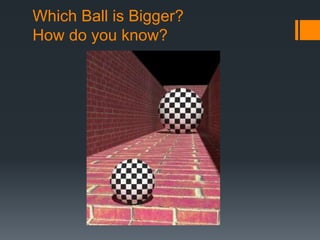
Which Ball is Bigger? 
How do you know?
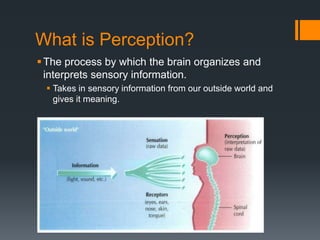
What is Perception? 
The process by which the brain organizes and 
interprets sensory information. 
 Takes in sensory information from our outside world and 
gives it meaning.
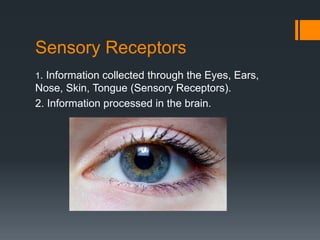
Sensory Receptors 
1. Information collected through the Eyes, Ears, 
Nose, Skin, Tongue (Sensory Receptors). 
2. Information processed in the brain.
Visual Cues 
Distance & Size (Depth) 
Boundaries & Edges 
Figures & Backgrounds 
Color & Shading (Texture) 
Placement 
Others?
How I Perceive Annie the 
Anniversary Dog
Types of Processing 
Bottom-Up Processing 
Top-Down Processing
Bottom-Up Processing 
Data Driven Processing 
Processing incoming individual pieces of 
sensory data and constructing them into a 
whole. (Parts into Whole) 
Starting point of perception.
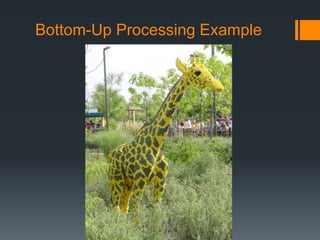
Bottom-Up Processing Example
Bottom-Up Perception 
Lets break it down… 
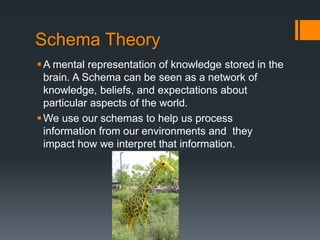
Thousands of Yellow and Brown Lego Bricks 
 Blades of grass 
Fences 
A crowd of people in the background 
 Start with a pile of legos at the Bottom (Individual 
elements) and you must build them Up (Whole)
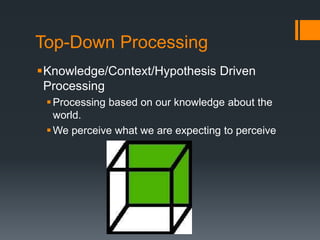
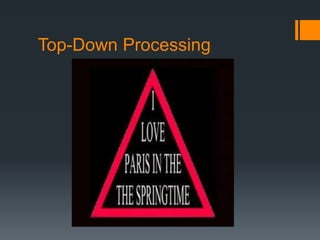
Top-Down Processing 
Knowledge/Context/Hypothesis Driven 
Processing 
 Processing based on our knowledge about the 
world. 
We perceive what we are expecting to perceive
Schema Theory 
A mental representation of knowledge stored in the 
brain. A Schema can be seen as a network of 
knowledge, beliefs, and expectations about 
particular aspects of the world. 
We use our schemas to help us process 
information from our environments and they 
impact how we interpret that information.
Top-Down Processing
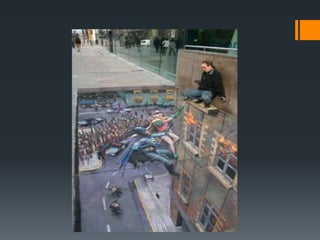
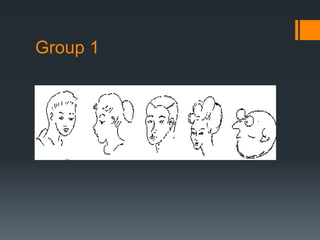
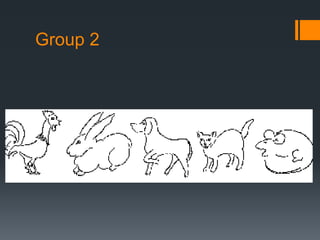
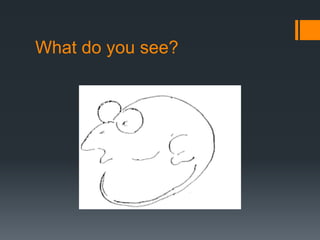
Optical Illusions 
How does Bottom-Up and Top-Down 
processing help explain the following 
illusions?
Group 1
Group 2
What do you see?
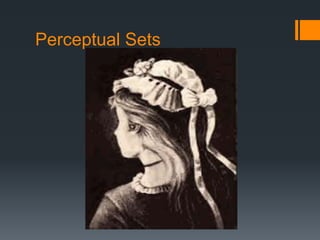
Perceptual Sets 
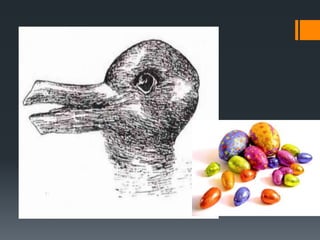
Perceptual Sets: Sets formed when 
expectations influence perceptions
Perceptual Sets
Perception pp

Perception pp

  • 1.
    Perception How weinterpret our world
  • 2.
    IB Learning Outcomes C9- With reference to relevant research studies, to what extent is one cognitive process reliable? Key-Terms:  Bottom-Up and Top-Down processing
  • 3.
    Which Ball isBigger? How do you know?
  • 4.
    What is Perception? The process by which the brain organizes and interprets sensory information.  Takes in sensory information from our outside world and gives it meaning.
  • 5.
    Sensory Receptors 1.Information collected through the Eyes, Ears, Nose, Skin, Tongue (Sensory Receptors). 2. Information processed in the brain.
  • 6.
    Visual Cues Distance& Size (Depth) Boundaries & Edges Figures & Backgrounds Color & Shading (Texture) Placement Others?
  • 7.
    How I PerceiveAnnie the Anniversary Dog
  • 8.
    Types of Processing Bottom-Up Processing Top-Down Processing
  • 9.
    Bottom-Up Processing DataDriven Processing Processing incoming individual pieces of sensory data and constructing them into a whole. (Parts into Whole) Starting point of perception.
  • 10.
  • 11.
    Bottom-Up Perception Letsbreak it down… Thousands of Yellow and Brown Lego Bricks  Blades of grass Fences A crowd of people in the background  Start with a pile of legos at the Bottom (Individual elements) and you must build them Up (Whole)
  • 12.
    Top-Down Processing Knowledge/Context/HypothesisDriven Processing  Processing based on our knowledge about the world. We perceive what we are expecting to perceive
  • 13.
    Schema Theory Amental representation of knowledge stored in the brain. A Schema can be seen as a network of knowledge, beliefs, and expectations about particular aspects of the world. We use our schemas to help us process information from our environments and they impact how we interpret that information.
  • 14.
  • 15.
    Optical Illusions Howdoes Bottom-Up and Top-Down processing help explain the following illusions?
  • 18.
  • 19.
  • 20.
  • 21.
    Perceptual Sets PerceptualSets: Sets formed when expectations influence perceptions
  • 22.