Indian Journal of Basic and Applied Medical Research; December 2015: Vol.-5, Issue- 1, P. 351-358
351
www.ijbamr.com P ISSN: 2250-284X , E ISSN : 2250-2858
Original article:
A Study of post operative pulmonary complications following upper
abdominal operations
Abraham Mathew*^, Sharath J. N**, P.T.Thomas***
*Asst Professor, Dept of General Surgery, PIMS, Tiruvalla
**Asst Professor, Dept of General Surgery, PIMS, Tiruvalla
***Professor and HOD, Dept of General Surgery, PIMS, Tiruvalla
^ Corresponding author: Dr. Abraham Mathew , Assistant Professor , Dept of General Surger , Pushpagiri Institute of
Medical Sciences , Tiruvalla , Kerala 689101
Abstract
Background: Postoperative Pulmonary complications (PPC) following upper abdominal surgery have a high incidence rate.
Many factors influence the incidence of PPC. We conducted this study to analyze the PPC and various factors to consider in this
subset of patients.
Methods: A prospective study was done on patients who underwent upper abdominal operations in a single tertiary care centre
over a period of 19 months. Development of PPC were observed and studied. Also parameters that are likely to increase the
incidence of PPC were seen.
Results: One hundred patients were studied over the time span of 19 months, including both elective and emergency cases of
upper abdominal operations. Of these 100 patients, 80 were electively performed and 20 were done on an emergency basis. 21
patients (21%) presented with pulmonary complications in the postoperative period. The single most common form of
complication was tracheobronchitis, in 38.1% (8/21), followed by atelectasis in 23.8% (5/21).Incidence of these complications
was higher in emergency surgery (8/20; 40%) as compared to elective surgery (13/80; 16.3%). Pre operative risk factors that have
an increasing chances of PPC were chronic pulmonary disease (p value =0.001), smoking (p value = 0.001) and surgery duration
> 210 minutes (p value = 0.001).
Conclusion: Emergency upper abdominal surgery, chronic pulmonary disease, smoking and prolonged surgery duration (>210
minutes) increase the chances of PPC in upper abdominal surgery.
Keywords: Post operative pulmonary complications; upper abdominal operation; elective; emergency
Introduction:
Pulmonary complications following upper abdominal
surgery have a relatively high incidence rate when
compared to surgeries performed on other parts of the
body. 1
The closer the incision is to the diaphragm, the
greater the reduction in post operative lung volumes.
2
The emergency nature of the procedure has also been
independently associated with higher rates of post-
operative complications like pneumonia and
respiratory failure. 3
The aim of the study is to follow prospectively a
group of patients undergoing elective and emergency
abdominal surgery and to identify those factors
associated with an increased risk of developing post-
operative pulmonary complication (PPC) using a
standard preoperative evaluation.
Indian Journal of Basic and Applied Medical Research; December 2015: Vol.-5, Issue- 1, P. 351-358
352
www.ijbamr.com P ISSN: 2250-284X , E ISSN : 2250-2858
Materials and methods
A prospective, unicentric study was conducted with
the approval of the Institutional Ethical Committee.
All patients, above the age of 12 years, undergoing
elective and emergency major upper abdominal
surgery in the department of General Surgery of
Pushpagiri Institute of Medical Sciences from 1st
November 2012 to 31st May 2014 were included in
the study.
Various baseline variables were recorded in a
proforma for each patient. Those who underwent
laparoscopy, thoracoabdominal surgeries and
palliative operations like gastrostomy/jejunostomy
were excluded from the study
After surgery, patients were followed up medically
by the same medical team that evaluated
preoperatively, till the patient got discharged or until
the occurrence of death.
Definition of PPC: A postoperative pulmonary
complication was considered when four or more of
the following criteria are present: radiological
evidence of collapse/ consolidation, temperature
above 38ºC, oxygen hemoglobin saturation less than
90%, abnormal sputum production, positive sputum
culture, raised white cell count, or abnormal
auscultatory findings.
The various possible PPC considered were as
follows:-
Pneumonia: The diagnosis of pneumonia was based
on the appearance of recent pulmonary infiltrate or
haziness on chest radiogram associated with at least
two of the following signs: purulent tracheal-
bronchial secretion, body temperature elevation
(greater than 38.3° C) and an increase in the number
of circulating leukocytes in excess of 25% of the
basal number.
Tracheobronchitis: Tracheobronchitis was diagnosed
by the increase in amount or color modification or
purulent aspect of tracheobronchial secretions with
normal chest radiogram.
Atelectasis: Atelectasis was considered a
complication when there was an acute respiratory
symptom as indicated by a chest radiogram and
radiological image was compatible with this
diagnosis.Acute Respiratory Failure: If invasive
mechanical ventilation was required, it was
considered as acute respiratory failure.
Bronchospasm: Bronchospasm was diagnosed in the
presence of wheezing on pulmonary auscultation
associated with acute respiratory symptoms and need
for drug therapy.
Data analysis: The percentage of patients, who
develop post op pulmonary complication (PPC) was
calculated individually for each of the variables- age,
gender, pre-operative respiratory co-morbidities,
smoking, nutritional status, type of surgery, site of
incision, and duration of surgery. The analysis was
made for various risk factors.
Univariate analysis was applied in order to study the
independent variables: age, nutritional status, and
body mass index, pre operative respiratory disease,
smoking habit, surgery duration and type of surgery
(elective or emergency).
Statistical analysis by the Chi square test/ Fisher‘s
exact test was used to test the significance of these
associations.
For all statistical evaluation, a two tailed probability
value <0.05 was considered significant.
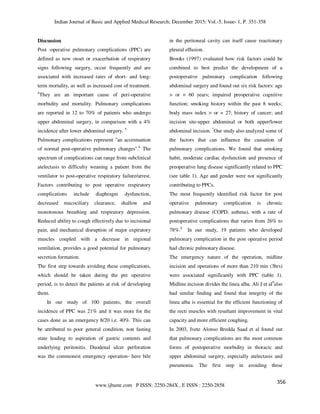
Results (see table 1 and 2)
A hundred patients who underwent upper abdominal
surgery were studied over a span of 19 months in a
prospective method.
Indian Journal of Basic and Applied Medical Research; December 2015: Vol.-5, Issue- 1, P. 351-358
353
www.ijbamr.com P ISSN: 2250-284X , E ISSN : 2250-2858
Gender- There was 64 males and 36 females. Out of
the 64 males, 15 developed pulmonary complication
following surgery as compared to 6 females but non-
significant.
Age- Majority of the patients who underwent surgery
were above the age of 55yrs (62%). 17% of these
developed PPC.
Pre op lung disease- Of the 100 patients studied 24%
had chronic respiratory problems in the form of
asthma (6%) and chronic obstructive pulmonary
disease (18%). Of the 24 % patients who had chronic
pulmonary disease, 19 patients developed pulmonary
complication after upper abdominal surgery. Patients
with the presence of chronic pulmonary disease was
associated with the development of post operative
pulmonary disease and this was statistically
significant (p value= 0.001).
Cardiac disease- Patient’s cardiovascular status was
evaluated by cardiologist and was diagnosed to have
either mild or moderate risk for peri operative cardio
vascular problems. It was found statistically
significant that patients having cardiovascular
diseases develop pulmonary complication in the post
operative period. (p value= 0.001).
BMI- Majority of patients who underwent surgery
belonged to normal range of BMI (18.5-24.9kg/m2),
89 out of 100. Of the patients who developed post-
operative pulmonary complications, Seventeen
patients were eutrophic (81%) and 4 patients (19%)
were dystrophic, of whom 2 (9.5%) were
undernourished and 2 (9.5%) obese
Preoperative respiratory symptoms-The preoperative
respiratory complaints were present in 28 patients
(28%): main complaints were shortness of breath in
10 patients, cough and shortness of breath in 9
patients.
Types of operation- Both elective and emergency
cases were included. 20 cases were done on an
emergency basis. The most frequent elective surgical
procedure was cholecystectomy (40%). Most
frequently performed emergency procedure was
duodenal ulcer perforation, for 6 patients (6%). 8 out
of the 20 patients (40%) who underwent emergency
procedures developed pulmonary complication.
Incision- 54% patients had a midline incision
compared to 46% patients who had transverse
incision. 16 out of 54 patients had a midline incision,
as compared to 5 out of 46 patients who underwent
surgery through a transverse incision.
Duration of surgery- 22% patients had duration of
surgery more than 210 minutes. An analysis of the
group that presented with postoperative pulmonary
complications showed that in the cases of 17 patients
(81.0%) the surgery took more than 210 minutes and
in the cases of 4 patients the surgery took less than
210 minutes.
Types of PPC- Of the 21 patients (21%) who had
pulmonary complications in the postoperative period,
the single most common form of complication was
tracheobronchitis, in 38.1% (8/21), followed by
atelectasis in 23.8% (5/21).
In the cases of the 21 patients with PPC, the main
post operative respiratory complaints were: cough
and expectoration in 8 patients, and shortness of
breath in 6 patients. The only symptom that
demonstrated statistical significance was cough (chi-
squared test; p = 0.02).
Patients who had PPC had cough, expectoration,
shortness of breath or wheeze as pulmonary symptom
and this was statistically significant (p value =
0.001).
Clinical features- 81% of patients who developed
post operative pulmonary complications had normal
Indian Journal of Basic and Applied Medical Research; December 2015: Vol.-5, Issue- 1, P. 351-358
354
www.ijbamr.com P ISSN: 2250-284X , E ISSN : 2250-2858
respiratory system on auscultation on Post Operation
Day 2. This may be because majority of the patients
had tracheobronchitis as a complication, where
respiratory system will be Body temperature-All the
patients who had post operative pulmonary
complications, was febrile
clear on auscultation.
Chest X-ray post op- Out of 21 patients who
developed pulmonary complications after major
upper abdominal surgeries, 52.4% patients had
haziness in the Chest X Ray taken in the post
operative period. Majority of patients who developed
post operative pulmonary complications had
radiological evidence in the chest X-Ray taken in the
post operative period and it was statistically
significant.
Post op oxygen saturation- Majority of patients who
developed post operative pulmonary complications
had oxygen saturation <90% and it was statistically
significant. 2 out of 21 patients developed acute
respiratory failure for which they were intubated and
ventilated
Physical diagnosis of the pulmonary complications:
(bar chart 1)
1.Tracheobronchitis: 8 out of 21 patients who
developed pulmonary complications were diagnosed
to have tracheobronchitis. Diagnosis was made when
a patient with normal chest radiogram developed an
increase in the amount or color modification or
purulent aspect of tracheobronchial secretions.
2. Bronchospasm: Diagnosed in 2 patients in the
presence sudden onset of wheezing on pulmonary
auscultation associated with acute respiratory
symptoms such as cough, expectoration or shortness
of breath requiring medications.
3.Atelectasis: was diagnosed in 5 patients when there
was recently developed haziness in chest radiogram
along with onset of acute respiratory symptoms such
as cough, expectoration, shortness of breath or
wheeze and radiological image was compatible with
this diagnosis.
4.Pneumonia: 4 patients were diagnosed to have
pneumonia. The diagnosis of pneumonia was made
when there was an appearance of recent pulmonary
haziness on chest radiogram along with purulent
sputum, elevated temperature and increase in total
leucocyte count.
5.Acute Respiratory Failure: 2 patients who needed
mechanical ventilation were diagnosed to have acute
respiratory failure for which they were intubated and
ventilated
Table 1: Factors studied in all the patients and PPC ( total pt =100)
Factors Number
(N=100)
who got
PPC(N=21)
χ 2
Chi square
P value
( significant if < 0.05)
Age above 55 yrs 62 17 3.662 0.161
Male gender 64 15 0.637 0.425
Smoker 19 15 47.478 0.001
Moderate cardiac risk 9 6 12.432 0.001
Preop lung disease
present
24 19 64.486 0.001
Indian Journal of Basic and Applied Medical Research; December 2015: Vol.-5, Issue- 1, P. 351-358
352
www.ijbamr.com P ISSN: 2250-284X , E ISSN : 2250-2858
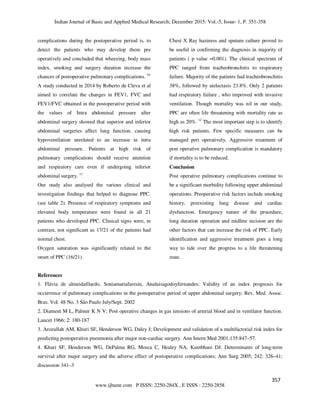
BMI>25 4 2 1.832 0.400
Emergency nature of
operation
20 8 5.440 0.020
Midline incision 54 16 5.270 0.022
Duration of
Surgery>210min
22 17 53.837 0.001
Table 2: Features in patients with post operative pulmonary complications ( total =21)
Feature number % χ 2 chi square p value( significant if
<0.05)
symptoms 21 100 90.520 0.001
Normal chest 17 93 5.877 0.05
Temp >38°C 21 100 90.520 0.001
O2 saturation<90% 16 76.2 66.732 0.001
Haziness in CXR 11 52.4 41.536 0.001
Positive sputum culture 19 90.5 83.387 0.001
Bar chart 1- The various post operative pulmonary complications (N=21)
0 1 2 3 4 5 6 7 8
atelectasis
Acute repiratory failure
Pneumonia
bronchospasm
Tracheobronchitis
355
Indian Journal of Basic and Applied Medical Research; December 2015: Vol.-5, Issue- 1, P. 351-358
351
www.ijbamr.com P ISSN: 2250-284X , E ISSN : 2250-2858
Discussion
Post -operative pulmonary complications (PPC) are
defined as new onset or exacerbation of respiratory
signs following surgery, occur frequently and are
associated with increased rates of short- and long-
term mortality, as well as increased cost of treatment.
4
They are an important cause of peri-operative
morbidity and mortality. Pulmonary complications
are reported in 12 to 70% of patients who undergo
upper abdominal surgery, in comparison with a 4%
incidence after lower abdominal surgery. 5
Pulmonary complications represent "an accentuation
of normal post-operative pulmonary changes".6
The
spectrum of complications can range from subclinical
atelectasis to difficulty weaning a patient from the
ventilator to post-operative respiratory failure/arrest.
Factors contributing to post operative respiratory
complications include diaphragm dysfunction,
decreased mucociliary clearance, shallow and
monotonous breathing and respiratory depression.
Reduced ability to cough effectively due to incisional
pain, and mechanical disruption of major expiratory
muscles coupled with a decrease in regional
ventilation, provides a good potential for pulmonary
secretion formation.
The first step towards avoiding these complications,
which should be taken during the pre operative
period, is to detect the patients at risk of developing
them.
In our study of 100 patients, the overall
incidence of PPC was 21% and it was more for the
cases done as an emergency 8/20 i.e. 40%. This can
be attributed to poor general condition, non fasting
state leading to aspiration of gastric contents and
underlying peritonitis. Duodenal ulcer perforation
was the commonest emergency operation- here bile
in the peritoneal cavity can itself cause reactionary
pleural effusion.
Brooks (1997) evaluated how risk factors could be
combined to best predict the development of a
postoperative pulmonary complication following
abdominal surgery and found out six risk factors: age
> or = 60 years; impaired preoperative cognitive
function; smoking history within the past 8 weeks;
body mass index > or = 27; history of cancer; and
incision site-upper abdominal or both upper/lower
abdominal incision. 7
Our study also analyzed some of
the factors that can influence the causation of
pulmonary complications. We found that smoking
habit, moderate cardiac dysfunction and presence of
preoperative lung disease significantly related to PPC
(see table 1). Age and gender were not significantly
contributing to PPCs.
The most frequently identified risk factor for post
operative pulmonary complication is chronic
pulmonary disease (COPD, asthma), with a rate of
postoperative complications that varies from 26% to
78%.8
In our study, 19 patients who developed
pulmonary complication in the post operative period
had chronic pulmonary disease.
The emergency nature of the operation, midline
incision and operations of more than 210 min (3hrs)
were associated significantly with PPC (table 1).
Midline incision divides the linea alba. Ali J et al9
also
had similar finding and found that integrity of the
linea alba is essential for the efficient functioning of
the recti muscles with resultant improvement in vital
capacity and more efficient coughing.
In 2003, Ivete Alonso Bredda Saad et al found out
that pulmonary complications are the most common
forms of postoperative morbidity in thoracic and
upper abdominal surgery, especially atelectasis and
pneumonia. The first step in avoiding these
356
Indian Journal of Basic and Applied Medical Research; December 2015: Vol.-5, Issue- 1, P. 351-358
352
www.ijbamr.com P ISSN: 2250-284X , E ISSN : 2250-2858
complications during the postoperative period is, to
detect the patients who may develop them pre
operatively and concluded that wheezing, body mass
index, smoking and surgery duration increase the
chances of postoperative pulmonary complications. 10
A study conducted in 2014 by Roberto de Cleva et al
aimed to correlate the changes in FEV1, FVC and
FEV1/FVC obtained in the postoperative period with
the values of Intra abdominal pressure after
abdominal surgery showed that superior and inferior
abdominal surgeries affect lung function, causing
hypoventilation unrelated to an increase in intra
abdominal pressure. Patients at high risk of
pulmonary complications should receive attention
and respiratory care even if undergoing inferior
abdominal surgery. 11
Our study also analysed the various clinical and
investigation findings that helped to diagnose PPC.
(see table 2). Presence of respiratory symptoms and
elevated body temperature were found in all 21
patients who developed PPC. Clinical signs were, in
contrast, not significant as 17/21 of the patients had
normal chest.
Oxygen saturation was significantly related to the
onset of PPC (16/21).
Chest X Ray haziness and sputum culture proved to
be useful in confirming the diagnosis in majority of
patients ( p value =0.001). The clinical spectrum of
PPC ranged from tracheobronchitis to respiratory
failure. Majority of the patients had tracheobronchitis
38%, followed by atelectasis 23.8%. Only 2 patients
had respiratory failure , who improved with invasive
ventilation. Though mortality was nil in our study,
PPC are often life threatening with mortality rate as
high as 20%. 12
The most important step is to identify
high risk patients. Few specific measures can be
managed peri operatively. Aggressive treatment of
post operative pulmonary complication is mandatory
if mortality is to be reduced.
Conclusion
Post operative pulmonary complications continue to
be a significant morbidity following upper abdominal
operations. Preoperative risk factors include smoking
history, preexisting lung disease and cardiac
dysfunction. Emergency nature of the procedure,
long duration operation and midline incision are the
other factors that can increase the risk of PPC. Early
identification and aggressive treatment goes a long
way to tide over the progress to a life threatening
state.
References
1. Flávia de almeidafilardo, Soniamariafaresin, Analuisagodoyfernandes; Validity of an index prognosis for
occurrence of pulmonary complications in the postoperative period of upper abdominal surgery; Rev. Med. Assoc.
Bras. Vol. 48 No. 3 São Paulo July/Sept. 2002
2. Diament M L, Palmer K N V; Post operative changes in gas tensions of arterial blood and in ventilator function.
Lancet 1966; 2: 180-187
3. Arozullah AM, Khuri SF, Henderson WG, Daley J; Development and validation of a multifactorial risk index for
predicting postoperative pneumonia after major non-cardiac surgery. Ann Intern Med 2001;135:847–57.
4. Khuri SF, Henderson WG, DePalma RG, Mosca C, Healey NA, Kumbhani DJ: Determinants of long-term
survival after major surgery and the adverse effect of postoperative complications; Ann Surg 2005; 242: 326–41;
discussion 341–3
357
Indian Journal of Basic and Applied Medical Research; December 2015: Vol.-5, Issue- 1, P. 351-358
352
www.ijbamr.com P ISSN: 2250-284X , E ISSN : 2250-2858
5. Neto LJ, Thomson JC, Cardoso JR. Complicaçõesrespiratórias no pós-operatório de cirurgiaseletivas e de
urgência e emergênciaem um Hospital Universitário; J Bras Pneumol. 2005;31(1):41-7.
6. Tisi GM: Preoperative identification and evaluation of the patient with lung disease. Med Clin N Am;71:399-411,
1987
7. Brooks-Brunn JA ; Predictors of postoperative pulmonary complications following abdominal surgery;; 1997
Mar;111(3):564-71.; PMID:9118688
8.Sakai RL, Abrão GMG, Ayres JFV, Vianna PTG, Carvalho RL, Castiglia YMM; Prognostic factors for peri-
operative pulmonary events among patients undergoing upper abdominal surgery. Sao Paulo Med J
2007;125(6):315-21.
9. Ali J, Khan TA: The comparative effects of muscle transection and median upper abdominal incisions on
postoperative pulmonary function. SurgGynObstet 148:863-866, 1979
10. Ivete Alonso Bredda Saad et al :Sao Paulo Med. J. vol.121 no.3 São Paulo 2003; Clinical variables of
preoperative risk in thoracic surgery.
11. Roberto de Cleva et al ; Correlation between intra-abdominal pressure and pulmonary volumes after superior and
inferior abdominal surgery;; 2014;69(7):483-486
12 J. Canet, V. Mazo; Post operative pulmonary complications; Minerva anestesiol, 2010; 76; 138-43
358

ARTICLE

  • 1.
    Indian Journal ofBasic and Applied Medical Research; December 2015: Vol.-5, Issue- 1, P. 351-358 351 www.ijbamr.com P ISSN: 2250-284X , E ISSN : 2250-2858 Original article: A Study of post operative pulmonary complications following upper abdominal operations Abraham Mathew*^, Sharath J. N**, P.T.Thomas*** *Asst Professor, Dept of General Surgery, PIMS, Tiruvalla **Asst Professor, Dept of General Surgery, PIMS, Tiruvalla ***Professor and HOD, Dept of General Surgery, PIMS, Tiruvalla ^ Corresponding author: Dr. Abraham Mathew , Assistant Professor , Dept of General Surger , Pushpagiri Institute of Medical Sciences , Tiruvalla , Kerala 689101 Abstract Background: Postoperative Pulmonary complications (PPC) following upper abdominal surgery have a high incidence rate. Many factors influence the incidence of PPC. We conducted this study to analyze the PPC and various factors to consider in this subset of patients. Methods: A prospective study was done on patients who underwent upper abdominal operations in a single tertiary care centre over a period of 19 months. Development of PPC were observed and studied. Also parameters that are likely to increase the incidence of PPC were seen. Results: One hundred patients were studied over the time span of 19 months, including both elective and emergency cases of upper abdominal operations. Of these 100 patients, 80 were electively performed and 20 were done on an emergency basis. 21 patients (21%) presented with pulmonary complications in the postoperative period. The single most common form of complication was tracheobronchitis, in 38.1% (8/21), followed by atelectasis in 23.8% (5/21).Incidence of these complications was higher in emergency surgery (8/20; 40%) as compared to elective surgery (13/80; 16.3%). Pre operative risk factors that have an increasing chances of PPC were chronic pulmonary disease (p value =0.001), smoking (p value = 0.001) and surgery duration > 210 minutes (p value = 0.001). Conclusion: Emergency upper abdominal surgery, chronic pulmonary disease, smoking and prolonged surgery duration (>210 minutes) increase the chances of PPC in upper abdominal surgery. Keywords: Post operative pulmonary complications; upper abdominal operation; elective; emergency Introduction: Pulmonary complications following upper abdominal surgery have a relatively high incidence rate when compared to surgeries performed on other parts of the body. 1 The closer the incision is to the diaphragm, the greater the reduction in post operative lung volumes. 2 The emergency nature of the procedure has also been independently associated with higher rates of post- operative complications like pneumonia and respiratory failure. 3 The aim of the study is to follow prospectively a group of patients undergoing elective and emergency abdominal surgery and to identify those factors associated with an increased risk of developing post- operative pulmonary complication (PPC) using a standard preoperative evaluation.
  • 2.
    Indian Journal ofBasic and Applied Medical Research; December 2015: Vol.-5, Issue- 1, P. 351-358 352 www.ijbamr.com P ISSN: 2250-284X , E ISSN : 2250-2858 Materials and methods A prospective, unicentric study was conducted with the approval of the Institutional Ethical Committee. All patients, above the age of 12 years, undergoing elective and emergency major upper abdominal surgery in the department of General Surgery of Pushpagiri Institute of Medical Sciences from 1st November 2012 to 31st May 2014 were included in the study. Various baseline variables were recorded in a proforma for each patient. Those who underwent laparoscopy, thoracoabdominal surgeries and palliative operations like gastrostomy/jejunostomy were excluded from the study After surgery, patients were followed up medically by the same medical team that evaluated preoperatively, till the patient got discharged or until the occurrence of death. Definition of PPC: A postoperative pulmonary complication was considered when four or more of the following criteria are present: radiological evidence of collapse/ consolidation, temperature above 38ºC, oxygen hemoglobin saturation less than 90%, abnormal sputum production, positive sputum culture, raised white cell count, or abnormal auscultatory findings. The various possible PPC considered were as follows:- Pneumonia: The diagnosis of pneumonia was based on the appearance of recent pulmonary infiltrate or haziness on chest radiogram associated with at least two of the following signs: purulent tracheal- bronchial secretion, body temperature elevation (greater than 38.3° C) and an increase in the number of circulating leukocytes in excess of 25% of the basal number. Tracheobronchitis: Tracheobronchitis was diagnosed by the increase in amount or color modification or purulent aspect of tracheobronchial secretions with normal chest radiogram. Atelectasis: Atelectasis was considered a complication when there was an acute respiratory symptom as indicated by a chest radiogram and radiological image was compatible with this diagnosis.Acute Respiratory Failure: If invasive mechanical ventilation was required, it was considered as acute respiratory failure. Bronchospasm: Bronchospasm was diagnosed in the presence of wheezing on pulmonary auscultation associated with acute respiratory symptoms and need for drug therapy. Data analysis: The percentage of patients, who develop post op pulmonary complication (PPC) was calculated individually for each of the variables- age, gender, pre-operative respiratory co-morbidities, smoking, nutritional status, type of surgery, site of incision, and duration of surgery. The analysis was made for various risk factors. Univariate analysis was applied in order to study the independent variables: age, nutritional status, and body mass index, pre operative respiratory disease, smoking habit, surgery duration and type of surgery (elective or emergency). Statistical analysis by the Chi square test/ Fisher‘s exact test was used to test the significance of these associations. For all statistical evaluation, a two tailed probability value <0.05 was considered significant. Results (see table 1 and 2) A hundred patients who underwent upper abdominal surgery were studied over a span of 19 months in a prospective method.
  • 3.
    Indian Journal ofBasic and Applied Medical Research; December 2015: Vol.-5, Issue- 1, P. 351-358 353 www.ijbamr.com P ISSN: 2250-284X , E ISSN : 2250-2858 Gender- There was 64 males and 36 females. Out of the 64 males, 15 developed pulmonary complication following surgery as compared to 6 females but non- significant. Age- Majority of the patients who underwent surgery were above the age of 55yrs (62%). 17% of these developed PPC. Pre op lung disease- Of the 100 patients studied 24% had chronic respiratory problems in the form of asthma (6%) and chronic obstructive pulmonary disease (18%). Of the 24 % patients who had chronic pulmonary disease, 19 patients developed pulmonary complication after upper abdominal surgery. Patients with the presence of chronic pulmonary disease was associated with the development of post operative pulmonary disease and this was statistically significant (p value= 0.001). Cardiac disease- Patient’s cardiovascular status was evaluated by cardiologist and was diagnosed to have either mild or moderate risk for peri operative cardio vascular problems. It was found statistically significant that patients having cardiovascular diseases develop pulmonary complication in the post operative period. (p value= 0.001). BMI- Majority of patients who underwent surgery belonged to normal range of BMI (18.5-24.9kg/m2), 89 out of 100. Of the patients who developed post- operative pulmonary complications, Seventeen patients were eutrophic (81%) and 4 patients (19%) were dystrophic, of whom 2 (9.5%) were undernourished and 2 (9.5%) obese Preoperative respiratory symptoms-The preoperative respiratory complaints were present in 28 patients (28%): main complaints were shortness of breath in 10 patients, cough and shortness of breath in 9 patients. Types of operation- Both elective and emergency cases were included. 20 cases were done on an emergency basis. The most frequent elective surgical procedure was cholecystectomy (40%). Most frequently performed emergency procedure was duodenal ulcer perforation, for 6 patients (6%). 8 out of the 20 patients (40%) who underwent emergency procedures developed pulmonary complication. Incision- 54% patients had a midline incision compared to 46% patients who had transverse incision. 16 out of 54 patients had a midline incision, as compared to 5 out of 46 patients who underwent surgery through a transverse incision. Duration of surgery- 22% patients had duration of surgery more than 210 minutes. An analysis of the group that presented with postoperative pulmonary complications showed that in the cases of 17 patients (81.0%) the surgery took more than 210 minutes and in the cases of 4 patients the surgery took less than 210 minutes. Types of PPC- Of the 21 patients (21%) who had pulmonary complications in the postoperative period, the single most common form of complication was tracheobronchitis, in 38.1% (8/21), followed by atelectasis in 23.8% (5/21). In the cases of the 21 patients with PPC, the main post operative respiratory complaints were: cough and expectoration in 8 patients, and shortness of breath in 6 patients. The only symptom that demonstrated statistical significance was cough (chi- squared test; p = 0.02). Patients who had PPC had cough, expectoration, shortness of breath or wheeze as pulmonary symptom and this was statistically significant (p value = 0.001). Clinical features- 81% of patients who developed post operative pulmonary complications had normal
  • 4.
    Indian Journal ofBasic and Applied Medical Research; December 2015: Vol.-5, Issue- 1, P. 351-358 354 www.ijbamr.com P ISSN: 2250-284X , E ISSN : 2250-2858 respiratory system on auscultation on Post Operation Day 2. This may be because majority of the patients had tracheobronchitis as a complication, where respiratory system will be Body temperature-All the patients who had post operative pulmonary complications, was febrile clear on auscultation. Chest X-ray post op- Out of 21 patients who developed pulmonary complications after major upper abdominal surgeries, 52.4% patients had haziness in the Chest X Ray taken in the post operative period. Majority of patients who developed post operative pulmonary complications had radiological evidence in the chest X-Ray taken in the post operative period and it was statistically significant. Post op oxygen saturation- Majority of patients who developed post operative pulmonary complications had oxygen saturation <90% and it was statistically significant. 2 out of 21 patients developed acute respiratory failure for which they were intubated and ventilated Physical diagnosis of the pulmonary complications: (bar chart 1) 1.Tracheobronchitis: 8 out of 21 patients who developed pulmonary complications were diagnosed to have tracheobronchitis. Diagnosis was made when a patient with normal chest radiogram developed an increase in the amount or color modification or purulent aspect of tracheobronchial secretions. 2. Bronchospasm: Diagnosed in 2 patients in the presence sudden onset of wheezing on pulmonary auscultation associated with acute respiratory symptoms such as cough, expectoration or shortness of breath requiring medications. 3.Atelectasis: was diagnosed in 5 patients when there was recently developed haziness in chest radiogram along with onset of acute respiratory symptoms such as cough, expectoration, shortness of breath or wheeze and radiological image was compatible with this diagnosis. 4.Pneumonia: 4 patients were diagnosed to have pneumonia. The diagnosis of pneumonia was made when there was an appearance of recent pulmonary haziness on chest radiogram along with purulent sputum, elevated temperature and increase in total leucocyte count. 5.Acute Respiratory Failure: 2 patients who needed mechanical ventilation were diagnosed to have acute respiratory failure for which they were intubated and ventilated Table 1: Factors studied in all the patients and PPC ( total pt =100) Factors Number (N=100) who got PPC(N=21) χ 2 Chi square P value ( significant if < 0.05) Age above 55 yrs 62 17 3.662 0.161 Male gender 64 15 0.637 0.425 Smoker 19 15 47.478 0.001 Moderate cardiac risk 9 6 12.432 0.001 Preop lung disease present 24 19 64.486 0.001
  • 5.
    Indian Journal ofBasic and Applied Medical Research; December 2015: Vol.-5, Issue- 1, P. 351-358 352 www.ijbamr.com P ISSN: 2250-284X , E ISSN : 2250-2858 BMI>25 4 2 1.832 0.400 Emergency nature of operation 20 8 5.440 0.020 Midline incision 54 16 5.270 0.022 Duration of Surgery>210min 22 17 53.837 0.001 Table 2: Features in patients with post operative pulmonary complications ( total =21) Feature number % χ 2 chi square p value( significant if <0.05) symptoms 21 100 90.520 0.001 Normal chest 17 93 5.877 0.05 Temp >38°C 21 100 90.520 0.001 O2 saturation<90% 16 76.2 66.732 0.001 Haziness in CXR 11 52.4 41.536 0.001 Positive sputum culture 19 90.5 83.387 0.001 Bar chart 1- The various post operative pulmonary complications (N=21) 0 1 2 3 4 5 6 7 8 atelectasis Acute repiratory failure Pneumonia bronchospasm Tracheobronchitis 355
  • 6.
    Indian Journal ofBasic and Applied Medical Research; December 2015: Vol.-5, Issue- 1, P. 351-358 351 www.ijbamr.com P ISSN: 2250-284X , E ISSN : 2250-2858 Discussion Post -operative pulmonary complications (PPC) are defined as new onset or exacerbation of respiratory signs following surgery, occur frequently and are associated with increased rates of short- and long- term mortality, as well as increased cost of treatment. 4 They are an important cause of peri-operative morbidity and mortality. Pulmonary complications are reported in 12 to 70% of patients who undergo upper abdominal surgery, in comparison with a 4% incidence after lower abdominal surgery. 5 Pulmonary complications represent "an accentuation of normal post-operative pulmonary changes".6 The spectrum of complications can range from subclinical atelectasis to difficulty weaning a patient from the ventilator to post-operative respiratory failure/arrest. Factors contributing to post operative respiratory complications include diaphragm dysfunction, decreased mucociliary clearance, shallow and monotonous breathing and respiratory depression. Reduced ability to cough effectively due to incisional pain, and mechanical disruption of major expiratory muscles coupled with a decrease in regional ventilation, provides a good potential for pulmonary secretion formation. The first step towards avoiding these complications, which should be taken during the pre operative period, is to detect the patients at risk of developing them. In our study of 100 patients, the overall incidence of PPC was 21% and it was more for the cases done as an emergency 8/20 i.e. 40%. This can be attributed to poor general condition, non fasting state leading to aspiration of gastric contents and underlying peritonitis. Duodenal ulcer perforation was the commonest emergency operation- here bile in the peritoneal cavity can itself cause reactionary pleural effusion. Brooks (1997) evaluated how risk factors could be combined to best predict the development of a postoperative pulmonary complication following abdominal surgery and found out six risk factors: age > or = 60 years; impaired preoperative cognitive function; smoking history within the past 8 weeks; body mass index > or = 27; history of cancer; and incision site-upper abdominal or both upper/lower abdominal incision. 7 Our study also analyzed some of the factors that can influence the causation of pulmonary complications. We found that smoking habit, moderate cardiac dysfunction and presence of preoperative lung disease significantly related to PPC (see table 1). Age and gender were not significantly contributing to PPCs. The most frequently identified risk factor for post operative pulmonary complication is chronic pulmonary disease (COPD, asthma), with a rate of postoperative complications that varies from 26% to 78%.8 In our study, 19 patients who developed pulmonary complication in the post operative period had chronic pulmonary disease. The emergency nature of the operation, midline incision and operations of more than 210 min (3hrs) were associated significantly with PPC (table 1). Midline incision divides the linea alba. Ali J et al9 also had similar finding and found that integrity of the linea alba is essential for the efficient functioning of the recti muscles with resultant improvement in vital capacity and more efficient coughing. In 2003, Ivete Alonso Bredda Saad et al found out that pulmonary complications are the most common forms of postoperative morbidity in thoracic and upper abdominal surgery, especially atelectasis and pneumonia. The first step in avoiding these 356
  • 7.
    Indian Journal ofBasic and Applied Medical Research; December 2015: Vol.-5, Issue- 1, P. 351-358 352 www.ijbamr.com P ISSN: 2250-284X , E ISSN : 2250-2858 complications during the postoperative period is, to detect the patients who may develop them pre operatively and concluded that wheezing, body mass index, smoking and surgery duration increase the chances of postoperative pulmonary complications. 10 A study conducted in 2014 by Roberto de Cleva et al aimed to correlate the changes in FEV1, FVC and FEV1/FVC obtained in the postoperative period with the values of Intra abdominal pressure after abdominal surgery showed that superior and inferior abdominal surgeries affect lung function, causing hypoventilation unrelated to an increase in intra abdominal pressure. Patients at high risk of pulmonary complications should receive attention and respiratory care even if undergoing inferior abdominal surgery. 11 Our study also analysed the various clinical and investigation findings that helped to diagnose PPC. (see table 2). Presence of respiratory symptoms and elevated body temperature were found in all 21 patients who developed PPC. Clinical signs were, in contrast, not significant as 17/21 of the patients had normal chest. Oxygen saturation was significantly related to the onset of PPC (16/21). Chest X Ray haziness and sputum culture proved to be useful in confirming the diagnosis in majority of patients ( p value =0.001). The clinical spectrum of PPC ranged from tracheobronchitis to respiratory failure. Majority of the patients had tracheobronchitis 38%, followed by atelectasis 23.8%. Only 2 patients had respiratory failure , who improved with invasive ventilation. Though mortality was nil in our study, PPC are often life threatening with mortality rate as high as 20%. 12 The most important step is to identify high risk patients. Few specific measures can be managed peri operatively. Aggressive treatment of post operative pulmonary complication is mandatory if mortality is to be reduced. Conclusion Post operative pulmonary complications continue to be a significant morbidity following upper abdominal operations. Preoperative risk factors include smoking history, preexisting lung disease and cardiac dysfunction. Emergency nature of the procedure, long duration operation and midline incision are the other factors that can increase the risk of PPC. Early identification and aggressive treatment goes a long way to tide over the progress to a life threatening state. References 1. Flávia de almeidafilardo, Soniamariafaresin, Analuisagodoyfernandes; Validity of an index prognosis for occurrence of pulmonary complications in the postoperative period of upper abdominal surgery; Rev. Med. Assoc. Bras. Vol. 48 No. 3 São Paulo July/Sept. 2002 2. Diament M L, Palmer K N V; Post operative changes in gas tensions of arterial blood and in ventilator function. Lancet 1966; 2: 180-187 3. Arozullah AM, Khuri SF, Henderson WG, Daley J; Development and validation of a multifactorial risk index for predicting postoperative pneumonia after major non-cardiac surgery. Ann Intern Med 2001;135:847–57. 4. Khuri SF, Henderson WG, DePalma RG, Mosca C, Healey NA, Kumbhani DJ: Determinants of long-term survival after major surgery and the adverse effect of postoperative complications; Ann Surg 2005; 242: 326–41; discussion 341–3 357
  • 8.
    Indian Journal ofBasic and Applied Medical Research; December 2015: Vol.-5, Issue- 1, P. 351-358 352 www.ijbamr.com P ISSN: 2250-284X , E ISSN : 2250-2858 5. Neto LJ, Thomson JC, Cardoso JR. Complicaçõesrespiratórias no pós-operatório de cirurgiaseletivas e de urgência e emergênciaem um Hospital Universitário; J Bras Pneumol. 2005;31(1):41-7. 6. Tisi GM: Preoperative identification and evaluation of the patient with lung disease. Med Clin N Am;71:399-411, 1987 7. Brooks-Brunn JA ; Predictors of postoperative pulmonary complications following abdominal surgery;; 1997 Mar;111(3):564-71.; PMID:9118688 8.Sakai RL, Abrão GMG, Ayres JFV, Vianna PTG, Carvalho RL, Castiglia YMM; Prognostic factors for peri- operative pulmonary events among patients undergoing upper abdominal surgery. Sao Paulo Med J 2007;125(6):315-21. 9. Ali J, Khan TA: The comparative effects of muscle transection and median upper abdominal incisions on postoperative pulmonary function. SurgGynObstet 148:863-866, 1979 10. Ivete Alonso Bredda Saad et al :Sao Paulo Med. J. vol.121 no.3 São Paulo 2003; Clinical variables of preoperative risk in thoracic surgery. 11. Roberto de Cleva et al ; Correlation between intra-abdominal pressure and pulmonary volumes after superior and inferior abdominal surgery;; 2014;69(7):483-486 12 J. Canet, V. Mazo; Post operative pulmonary complications; Minerva anestesiol, 2010; 76; 138-43 358