Pulmonary complications risk: 
Pneumonia,respiratory 
insufficiency….
• Risk Assessment for and Strategies To Reduce 
Perioperative Pulmonary Complications for Patients 
Undergoing Noncardiothoracic Surgery: A Guideline 
from the American College of Physicians 
• Amir Qaseem, MD, PhD, MHA; Vincenza Snow, MD; Nick Fitterman, Annals of Internal medicine 18 April 2006 | Volume 
144 Issue 8 | Pages 575-580
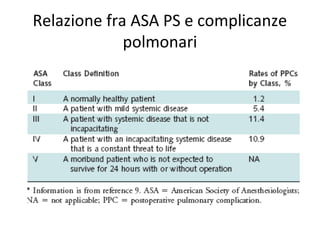
Relazione fra ASA PS e complicanze 
polmonari
Strategie tese alla riduzione delle complicanze postop 
• Lawrence VA, Cornell JE, Smetana GW. Strategies to reduce postoperative pulmonary 
complications after noncardiothoracic surgery: systematic review for the American 
College of Physicians. Ann Intern Med. 2005;144:596-608. 
• Tutte le tecniche di espansione polmonare : 
– spirometria incentiva 
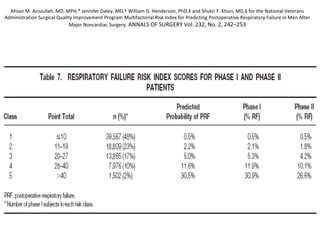
– terapia fisica 
– provocazione della tosse 
– drenaggio posturale 
– percussione e vibrazione 
– Aspirazione 
– Deambulazione 
– IPPB 
– CPAP 
• hanno dimostrato superiorità rispetto ai controlli dopo chirurgia 
addominale. 
• Non differenze fra le diverse modalità di espansione ,né dalla loro 
combinazione.
decompressione nasogastrica selettiva 
• effettuata nei pazienti con PONV ,incapaci di assumere nutrizione orale o con 
distensione addominale 
– diminuisce la frequenza di polmonite ed atelettasia 
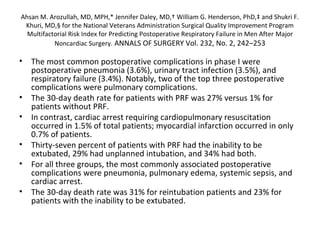
nei confronti della decompressione con sondino 
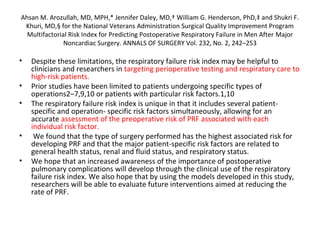
routinaria ,finche cioè non ritorni la motilità 
gastrointestinale. 
– Cheatham ML, Chapman WC, Key SP, Sawyers JL. A meta-analysis of selective 
versus routine nasogastric decompression after elective laparotomy. Ann Surg. 
1995;221:469-76. 
– Nelson R, Tse B, Edwards S. Systematic review of prophylactic nasogastric 
decompression after abdominal operations. Br J Surg. 2005;92:673-80. 
– Nelson R, Edwards S, Tse B. Prophylactic nasogastric decompression after 
abdominal surgery. Cochrane Database Syst Rev. 2005.
Pneumonia risk
Development and Validation of a Multifactorial Risk Index for 
Predicting Postoperative Pneumonia after Major Noncardiac 
Surgery Ahsan M. Arozullah, MD, MPH; Shukri F. Khuri, MD; 
William G. Henderson, PhD; and Jennifer Daley, MDAnn Intern 
Med. 2001;135:847-857 
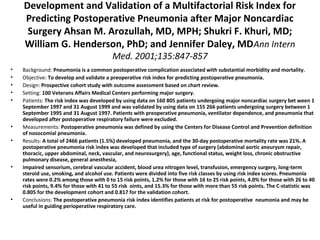
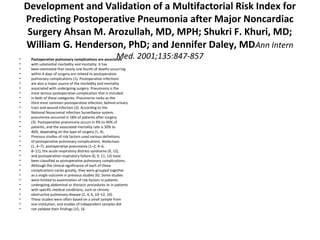
• Background: Pneumonia is a common postoperative complication associated with substantial morbidity and mortality. 
• Objective: To develop and validate a preoperative risk index for predicting postoperative pneumonia. 
• Design: Prospective cohort study with outcome assessment based on chart review. 
• Setting: 100 Veterans Affairs Medical Centers performing major surgery. 
• Patients: The risk index was developed by using data on 160 805 patients undergoing major noncardiac surgery bet ween 1 
September 1997 and 31 August 1999 and was validated by using data on 155 266 patients undergoing surgery between 1 
September 1995 and 31 August 1997. Patients with preoperative pneumonia, ventilator dependence, and pneumonia that 
developed after postoperative respiratory failure were excluded. 
• Measurements: Postoperative pneumonia was defined by using the Centers for Disease Control and Prevention definition 
of nosocomial pneumonia. 
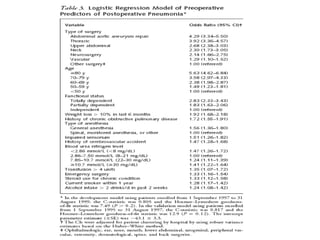
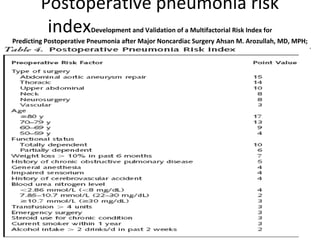
• Results: A total of 2466 patients (1.5%) developed pneumonia, and the 30-day postoperative mortality rate was 21%. A 
postoperative pneumonia risk index was developed that included type of surgery (abdominal aortic aneurysm repair, 
thoracic, upper abdominal, neck, vascular, and neurosurgery), age, functional status, weight loss, chronic obstructive 
pulmonary disease, general anesthesia, 
• impaired sensorium, cerebral vascular accident, blood urea nitrogen level, transfusion, emergency surgery, long-term 
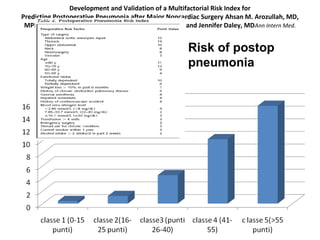
steroid use, smoking, and alcohol use. Patients were divided into five risk classes by using risk index scores. Pneumonia 
rates were 0.2% among those with 0 to 15 risk points, 1.2% for those with 16 to 25 risk points, 4.0% for those with 26 to 40 
risk points, 9.4% for those with 41 to 55 risk oints, and 15.3% for those with more than 55 risk points. The C-statistic was 
0.805 for the development cohort and 0.817 for the validation cohort. 
• Conclusions: The postoperative pneumonia risk index identifies patients at risk for postoperative neumonia and may be 
useful in guiding perioperative respiratory care.
Development and Validation of a Multifactorial Risk Index for 
Predicting Postoperative Pneumonia after Major Noncardiac Surgery Ahsan M. Arozullah, MD, 
MPH; Shukri F. Khuri, MD; William G. Henderson, PhD; and Jennifer Daley, MDAnn Intern Med. 
2001;135:847-857 
Risk of postop 
pneumonia
Risk factors for postop pneumonia 
Development and Validation of a Multifactorial Risk Index for Predicting Postoperative Pneumonia after Major 
Noncardiac Surgery Ahsan M. Arozullah, MD, MPH; Shukri F. Khuri, MD; William G. Henderson, PhD; and Jennifer 
Daley, MDAnn Intern Med. 2001;135:847-857 
• Long-term steroid use 
• Age older than 60 years 
• dependent functional status, 
• weight loss greater than 10% of body mass in the previous 6 
months 
• recent alcohol use. 
• Recent smoking 
• history of chronic obstructive pulmonary disease 
• history of cerebral vascular accident with a residual 
• deficit 
• impaired sensorium.
Fattori di rischio per la polmonite postop:paziente 
Development and Validation of a Multifactorial Risk Index for 
Predicting Postoperative Pneumonia after Major Noncardiac Surgery Ahsan M. Arozullah, MD, MPH; 
Shukri F. Khuri, MD; William G. Henderson, PhD; and Jennifer Daley, MDAnn Intern Med. 2001;135:847-857 
• Somministrazione di steroidi a lungo termine 
• Età>60 anni 
• Stato funzionale dipendente 
• Perdita di peso > 10% della massa coroorea nei 6 mesi 
precedenti 
• uso recente di alcohol 
• Fumo recente 
• Storia di COPD 
• Storia di accidente cerebrovascolare con deficit residuo. 
• Disturbo di coscienza
Fattori di rischio per la polmonite postop:interventi 
Development and Validation of a Multifactorial Risk Index for 
Predicting Postoperative Pneumonia after Major Noncardiac Surgery Ahsan M. Arozullah, MD, MPH; 
Shukri F. Khuri, MD; William G. Henderson, PhD; and Jennifer Daley, MDAnn Intern Med. 2001;135:847- 
857 
• abdominal aortic aneurysm repair 
• thoracic, 
• neck, 
• upper abdominal 
• peripheral vascular surgery 
• neurosurgery
Am J Respir Crit Care Med. 2005 Mar 1;171(5):514-7. Incidence of 
and risk factors for pulmonary complications after nonthoracic 
surgery.McAlister FA, Bertsch K, Man J, Bradley J, Jacka M 
• Identifica come fattori di rischio: 
– l’età>65 anni 
– il fumo(> 40 pacchetti/anno) 
– la diminuzione del FEV1 
– Diminuzione del FVC e del FEV1/FVC 
– la durata dell’anestesia >2.5 hr 
– storia di COPD 
– tosse produttiva giornaliera 
– incisione nell’addome sup 
– presenza di un SNG. 
• Solo 4 sono indipendenti dopo una analisi 
multivariata: età,test alla tosse 
positivo,presenza periop del SNG e la 
durata dell’anestesia.
a preoperative risk index for 
predicting postoperative respiratory 
failure (PRF).
Ahsan M. Arozullah, Jennifer Daley, William G. Henderson, Shukri F. Khuri, for the National 
Veterans Administration Surgical Quality Improvement Program Multifactorial Risk Index for Predicting 
Postoperative Respiratory Failure in Men After Major Noncardiac Surgery. ANNALS 
OF SURGERY Vol. 232, No. 2, 242–253 
• Objective 
• To develop and validate a preoperative risk index for 
predicting postoperative respiratory failure (PRF). 
• prospective cohort study 
• 44 Veterans Affairs Medical Centers (n 5 81,719) were used to 
develop the models. Cases from 132 Veterans Affairs Medical 
Centers (n 5 99,390) were used as a validation sample. 
• PRF was defined as mechanical ventilation for more than 48 
hours after surgery or reintubation and mechanical 
ventilation after postoperative extubation. 
• Ventilator-dependent, comatose, do not,resuscitate, and 
female patients were excluded. 
• respiratory care.
Multifactorial Risk Index for Predicting Postoperative 
Respiratory Failure in Men After Major Noncardiac 
Surgery Ahsan M. Arozullah, Jennifer Daley, William G. Henderson, Shukri F. Khuri, for the National Veterans Administration Surgical 
Quality Improvement Program Multifactorial Risk Index for Predicting Postoperative Respiratory Failure in Men After Major Noncardiac 
Surgery. ANNALS OF SURGERY Vol. 232, No. 2, 242–253 
• Results 
• PRF developed in 2,746 patients (3.4%). 
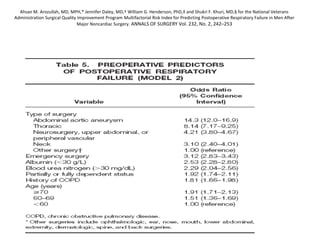
• The respiratory failure risk index was developed from a simplified logistic 
regression model and included: 
– abdominal aortic aneurysm repair, 
– thoracic surgery, 
– neurosurgery, 
– upper abdominal surgery, 
– Peripheral vascular surgery, 
– neck surgery 
– emergency surgery, 
– albumin level l< than 30 g/L, 
– blood urea nitrogen level >than 30 mg/dL, 
– dependent functional status, 
– chronic obstructive pulmonary disease, 
– age>60
Indici prognostici di insuff resp postop: Ahsan M. Arozullah, 
MD, MPH,* Jennifer Daley, MD,† William G. Henderson, PhD,‡ and Shukri F. Khuri, MD,§ for the 
National Veterans Administration Surgical Quality Improvement Program Multifactorial Risk Index for 
Predicting Postoperative Respiratory Failure in Men After Major Noncardiac Surgery. ANNALS OF 
SURGERY Vol. 232, No. 2, 242–253 
– Aneurismectomia aorta addominale, 
– Chir toracica 
– neurochir, 
– Chir addominale maggiore 
– Chir vascolare periferica 
– Chir del collo 
– Chir in emergenza , 
– Livelli di albumina < 30 g/L, 
– BUN > 30 mg/dL, 
– Dipendenza funzionale, 
– COPD (chronic obstructive pulmonary disease) 
– Età >60
Probability of PRF, postoperative resp failure 
Ahsan M. Arozullah, MD, MPH,* Jennifer Daley, MD,† William G. Henderson, PhD,‡ and Shukri F. Khuri, MD,§ for the National Veterans Administration 
Surgical Quality Improvement Program Multifactorial Risk Index for Predicting Postoperative Respiratory Failure in Men After Major Noncardiac 
Surgery. ANNALS OF SURGERY Vol. 232, No. 2, 242–253 
• Classe punti probab PRF 
• 1 <=10 0.5% 
• 2 11–19 2.2%-1.8% 
• 3 20–27 5.3%- 4.2% 
• 4 28–40 10%-11.9% 
• 5 . >40 30.9% -26.6%
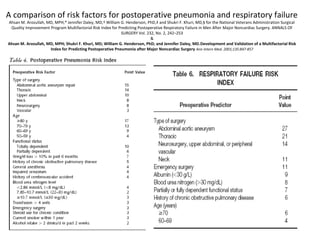
A comparison of risk factors for postoperative pneumonia and respiratory failure 
Ahsan M. Arozullah, MD, MPH,* Jennifer Daley, MD,† William G. Henderson, PhD,‡ and Shukri F. Khuri, MD,§ for the National Veterans Administration Surgical 
Quality Improvement Program Multifactorial Risk Index for Predicting Postoperative Respiratory Failure in Men After Major Noncardiac Surgery. ANNALS OF 
SURGERY Vol. 232, No. 2, 242–253 
& 
Ahsan M. Arozullah, MD, MPH; Shukri F. Khuri, MD; William G. Henderson, PhD; and Jennifer Daley, MD.Development and Validation of a Multifactorial Risk 
Index for Predicting Postoperative Pneumonia after Major Noncardiac Surgery Ann Intern Med. 2001;135:847-857
FINE 
Segue lavori in dettaglio….
Development and Validation of a Multifactorial Risk Index for 
Predicting Postoperative Pneumonia after Major Noncardiac 
Surgery Ahsan M. Arozullah, MD, MPH; Shukri F. Khuri, MD; 
William G. Henderson, PhD; and Jennifer Daley, MDAnn Intern 
Med. 2001;135:847-857 • Postoperative pulmonary complications are associated 
• with substantial morbidity and mortality. It has 
• been estimated that nearly one fourth of deaths occurring 
• within 6 days of surgery are related to postoperative 
• pulmonary complications (1). Postoperative infections 
• are also a major source of the morbidity and mortality 
• associated with undergoing surgery. Pneumonia is the 
• most serious postoperative complication that is included 
• in both of these categories. Pneumonia ranks as the 
• third most common postoperative infection, behind urinary 
• tract and wound infection (2). According to the 
• National Nosocomial Infection Surveillance system, 
• pneumonia occurred in 18% of patients after surgery 
• (3). Postoperative pneumonia occurs in 9% to 40% of 
• patients, and the associated mortality rate is 30% to 
• 46%, depending on the type of surgery (1, 4). 
• Previous studies of risk factors used various definitions 
• of postoperative pulmonary complications. Atelectasis 
• (1, 4–7), postoperative pneumonia (1–2, 4–6, 
• 8–11), the acute respiratory distress syndrome (9, 12), 
• and postoperative respiratory failure (6, 9, 11, 13) have 
• been classified as postoperative pulmonary complications. 
• Although the clinical significance of each of these 
• complications varies greatly, they were grouped together 
• as a single outcome in previous studies (6). Some studies 
• were limited to examination of risk factors in patients 
• undergoing abdominal or thoracic procedures or in patients 
• with specific medical conditions, such as chronic 
• obstructive pulmonary disease (2, 4, 6, 10–12, 14). 
• These studies were often based on a small sample from 
• one institution, and studies of independent samples did 
• not validate their findings (15, 16
Table 1. Definition of Postoperative 
PneumoniaDevelopment and Validation of a Multifactorial Risk Index for 
Predicting Postoperative Pneumonia after Major Noncardiac Surgery Ahsan M. Arozullah, MD, MPH; 
Shukri F. Khuri, MD; William G. Henderson, PhD; and Jennifer Daley, MDAnn Intern Med. 2001;135:847-857 
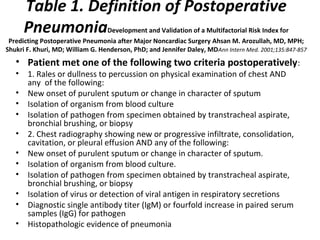
• Patient met one of the following two criteria postoperatively: 
• 1. Rales or dullness to percussion on physical examination of chest AND 
any of the following: 
• New onset of purulent sputum or change in character of sputum 
• Isolation of organism from blood culture 
• Isolation of pathogen from specimen obtained by transtracheal aspirate, 
bronchial brushing, or biopsy 
• 2. Chest radiography showing new or progressive infiltrate, consolidation, 
cavitation, or pleural effusion AND any of the following: 
• New onset of purulent sputum or change in character of sputum. 
• Isolation of organism from blood culture. 
• Isolation of pathogen from specimen obtained by transtracheal aspirate, 
bronchial brushing, or biopsy 
• Isolation of virus or detection of viral antigen in respiratory secretions 
• Diagnostic single antibody titer (IgM) or fourfold increase in paired serum 
samples (IgG) for pathogen 
• Histopathologic evidence of pneumonia
Postoperative pneumonia risk 
indexDevelopment and Validation of a Multifactorial Risk Index for 
Predicting Postoperative Pneumonia after Major Noncardiac Surgery Ahsan M. Arozullah, MD, MPH; 
Shukri F. Khuri, MD; William G. Henderson, PhD; and Jennifer Daley, MDAnn Intern Med. 2001;135:847-857
Development and Validation of a Multifactorial Risk Index for 
Predicting Postoperative Pneumonia after Major Noncardiac Surgery Ahsan 
M. Arozullah, MD, MPH; Shukri F. Khuri, MD; William G. Henderson, PhD; 
and Jennifer Daley, MDAnn Intern Med. 2001;135:847-857 
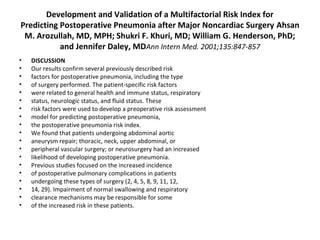
• DISCUSSION 
• Our results confirm several previously described risk 
• factors for postoperative pneumonia, including the type 
• of surgery performed. The patient-specific risk factors 
• were related to general health and immune status, respiratory 
• status, neurologic status, and fluid status. These 
• risk factors were used to develop a preoperative risk assessment 
• model for predicting postoperative pneumonia, 
• the postoperative pneumonia risk index. 
• We found that patients undergoing abdominal aortic 
• aneurysm repair; thoracic, neck, upper abdominal, or 
• peripheral vascular surgery; or neurosurgery had an increased 
• likelihood of developing postoperative pneumonia. 
• Previous studies focused on the increased incidence 
• of postoperative pulmonary complications in patients 
• undergoing these types of surgery (2, 4, 5, 8, 9, 11, 12, 
• 14, 29). Impairment of normal swallowing and respiratory 
• clearance mechanisms may be responsible for some 
• of the increased risk in these patients.
Patient specific risk factor for postop pneumonia 
Development and Validation of a Multifactorial Risk Index for 
Predicting Postoperative Pneumonia after Major Noncardiac Surgery Ahsan M. Arozullah, MD, MPH; Shukri F. 
Khuri, MD; William G. Henderson, PhD; and Jennifer Daley, MDAnn Intern Med. 2001;135:847-857 
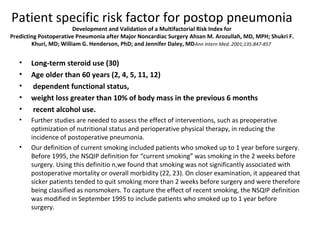
• Long-term steroid use (30) 
• Age older than 60 years (2, 4, 5, 11, 12) 
• dependent functional status, 
• weight loss greater than 10% of body mass in the previous 6 months 
• recent alcohol use. 
• Further studies are needed to assess the effect of interventions, such as preoperative 
optimization of nutritional status and perioperative physical therapy, in reducing the 
incidence of postoperative pneumonia. 
• Our definition of current smoking included patients who smoked up to 1 year before surgery. 
Before 1995, the NSQIP definition for “current smoking” was smoking in the 2 weeks before 
surgery. Using this definitio n,we found that smoking was not significantly associated with 
postoperative mortality or overall morbidity (22, 23). On closer examination, it appeared that 
sicker patients tended to quit smoking more than 2 weeks before surgery and were therefore 
being classified as nonsmokers. To capture the effect of recent smoking, the NSQIP definition 
was modified in September 1995 to include patients who smoked up to 1 year before 
surgery.
Development and Validation of a Multifactorial Risk Index for 
Predicting Postoperative Pneumonia after Major Noncardiac Surgery 
Ahsan M. Arozullah, MD, MPH; Shukri F. Khuri, MD; William G. 
Henderson, PhD; and Jennifer Daley, MDAnn Intern Med. 2001;135:847-857 
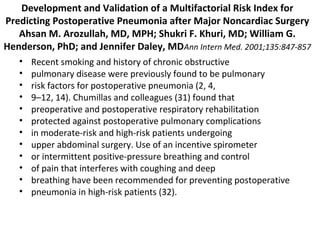
• Recent smoking and history of chronic obstructive 
• pulmonary disease were previously found to be pulmonary 
• risk factors for postoperative pneumonia (2, 4, 
• 9–12, 14). Chumillas and colleagues (31) found that 
• preoperative and postoperative respiratory rehabilitation 
• protected against postoperative pulmonary complications 
• in moderate-risk and high-risk patients undergoing 
• upper abdominal surgery. Use of an incentive spirometer 
• or intermittent positive-pressure breathing and control 
• of pain that interferes with coughing and deep 
• breathing have been recommended for preventing postoperative 
• pneumonia in high-risk patients (32).
Development and Validation of a Multifactorial Risk Index for 
Predicting Postoperative Pneumonia after Major Noncardiac Surgery 
Ahsan M. Arozullah, MD, MPH; Shukri F. Khuri, MD; William G. 
Henderson, PhD; and Jennifer Daley, MDAnn Intern Med. 2001;135:847- 
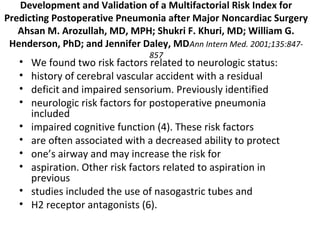
857 • We found two risk factors related to neurologic status: 
• history of cerebral vascular accident with a residual 
• deficit and impaired sensorium. Previously identified 
• neurologic risk factors for postoperative pneumonia 
included 
• impaired cognitive function (4). These risk factors 
• are often associated with a decreased ability to protect 
• one’s airway and may increase the risk for 
• aspiration. Other risk factors related to aspiration in 
previous 
• studies included the use of nasogastric tubes and 
• H2 receptor antagonists (6).
•APPENDIX: DEFINITIONS OF RISK FACTORS IN THE 
POSTOPERATIVE PNEUMONIA RISK INDEX 
Type of Surgery Development and Validation of a Multifactorial Risk Index for 
Predicting Postoperative Pneumonia after Major Noncardiac Surgery Ahsan M. Arozullah, MD, MPH; Shukri F. Khuri, 
MD; William G. Henderson, PhD; and Jennifer Daley, MDAnn Intern Med. 2001;135:847-857 
• Abdominal aortic aneurysm repair: Surgeries to repair ruptured or unruptured aortic 
aneurysm involving only abdominal incisions. 
• Neck surgery: Surgeries related to the thyroid, parathyroid,and larynx; tracheostomy; cervical 
and axillary lymph node excision; and cervical and axillary lymphadenectomy. 
• Neurosurgery: Application of a halo, central nervous system injection, central nervous system 
drainage, creation of a bur hole,craniectomy, craniotomy, arteriovenous malformation or 
aneurysm repair, stereotaxis, neurostimulator placement, skull repair, and cerebral spinal 
fluid shunt. 
• Thoracic surgery: Esophageal resection, esophageal repair, mediastinoscopy, pleural biopsy, 
pneumocentesis, chest wall excision, incision and drainage of neck and thorax, excision of 
neck and thorax, repair of fractured ribs, diaphragmatic hernia repair, bronchoscopy, 
catheterization of trachea, trachea repair, thoracotomy, pericardium, pacemaker placement, 
heart wound repair, valve repair, thoracic or abdominothoracic aortic aneurysm repair, 
• and pulmonary artery procedures. 
• Upper abdominal surgery: Gastrectomy; vagotomy; intestinal surgery; partial hepatectomy; 
subfascial abdominal excision; splenectomy; excision of abdominal masses; laparoscopic 
appendectomy and cholecystectomy; shunt insertion; ventral, umbilical and spigelian hernia 
repair; and liver, gallbladder, and pancreas surgery. 
• Vascular surgery: Any surgery related to the arteries or veins except central nervous 
system aneurysm or abdominal aortic aneurysm repair
APPENDIX: DEFINITIONS OF RISK FACTORS IN THE 
POSTOPERATIVE PNEUMONIA RISK INDEX: 
Functional StatusDevelopment and Validation of a Multifactorial Risk Index for 
Predicting Postoperative Pneumonia after Major Noncardiac Surgery Ahsan M. Arozullah, MD, MPH; Shukri F. Khuri, 
MD; William G. Henderson, PhD; and Jennifer Daley, MDAnn Intern Med. 2001;135:847-857 
• Functional status: The level of self-care demonstrated by the patient on 
admission to the hospital, reflecting his or her prehospitalization 
functional status. 
• Totally dependent: The patient cannot perform any activities of daily living 
for himself or herself; includes patients who are totally dependent on 
nursing care, such as a dependent nursing home patient. 
• Partially dependent: The patient requires use of equipment or devices plus 
assistance from another person for some activities of daily living. Patients 
admitted from a nursing home setting who are not totally dependent 
would fall into this category, as would any patient who requires kidney 
dialysis or home ventilator support yet maintains some independent 
function. 
• Independent: The patient is independent in activities of daily living; 
ncludes those who are able to function independently with a prosthesis, 
equipment, or devices.
APPENDIX: DEFINITIONS OF RISK FACTORS IN THE 
POSTOPERATIVE PNEUMONIA RISK INDEX: 
Other….. 
Development and Validation of a Multifactorial Risk Index for 
Predicting Postoperative Pneumonia after Major Noncardiac Surgery Ahsan M. Arozullah, MD, MPH; Shukri F. Khuri, 
MD; William G. Henderson, PhD; and Jennifer Daley, MDAnn Intern Med. 2001;135:847-857 
• History of chronic obstructive pulmonary disease: The patient has chronic obstructive 
pulmonary disease resulting in functional disability, hospitalization in the past to treat 
chronic obstructive pulmonary disease, need for bronchodilator therapy with oral or 
inhaled agents, or FEV1 of less than 75% of predicted value. 
• Patients excluded from this category were those in whom the only pulmonary disease was 
acute asthma, an acute and chronic inflammatory disease of the airways resulting in 
bronchospasm. 
• History of cerebrovascular accident: The patient has a history of cerebrovascular accident 
(embolic, thrombotic, or hemorrhagic) with persistent motor, sensory, or cognitive 
dysfunction. 
• Impaired sensorium: The patient is acutely confused or delirious and responds to verbal or 
mild tactile stimulation; patient with mental status changes or delirium in the context of 
the current illness. Patients with chronic mental status changes secondary to chronic 
mental illness or chronic dementing llnesses were excluded from this category. 
• Steroid use for chronic condition: The patient has required the regular administration of 
parenteral or oral corticosteroid medication in the month before admission. Patients using 
only topical, rectal, or inhalational corticosteroids were excluded from this category.
Ahsan M. Arozullah, MD, MPH,* Jennifer Daley, MD,† William G. Henderson, PhD,‡ and Shukri F. Khuri, MD,§ for the National Veterans 
Administration Surgical Quality Improvement Program Multifactorial Risk Index for Predicting Postoperative Respiratory Failure in Men After 
Major Noncardiac Surgery. ANNALS OF SURGERY Vol. 232, No. 2, 242–253
Ahsan M. Arozullah, MD, MPH,* Jennifer Daley, MD,† William G. Henderson, PhD,‡ and Shukri F. Khuri, MD,§ for the National Veterans 
Administration Surgical Quality Improvement Program Multifactorial Risk Index for Predicting Postoperative Respiratory Failure in Men After 
Major Noncardiac Surgery. ANNALS OF SURGERY Vol. 232, No. 2, 242–253
Ahsan M. Arozullah, MD, MPH,* Jennifer Daley, MD,† William G. Henderson, PhD,‡ and Shukri F. 
Khuri, MD,§ for the National Veterans Administration Surgical Quality Improvement Program 
Multifactorial Risk Index for Predicting Postoperative Respiratory Failure in Men After Major 
Noncardiac Surgery. ANNALS OF SURGERY Vol. 232, No. 2, 242–253 
• The most common postoperative complications in phase I were 
postoperative pneumonia (3.6%), urinary tract infection (3.5%), and 
respiratory failure (3.4%). Notably, two of the top three postoperative 
complications were pulmonary complications. 
• The 30-day death rate for patients with PRF was 27% versus 1% for 
patients without PRF. 
• In contrast, cardiac arrest requiring cardiopulmonary resuscitation 
occurred in 1.5% of total patients; myocardial infarction occurred in only 
0.7% of patients. 
• Thirty-seven percent of patients with PRF had the inability to be 
extubated, 29% had unplanned intubation, and 34% had both. 
• For all three groups, the most commonly associated postoperative 
complications were pneumonia, pulmonary edema, systemic sepsis, and 
cardiac arrest. 
• The 30-day death rate was 31% for reintubation patients and 23% for 
patients with the inability to be extubated.
Ahsan M. Arozullah, MD, MPH,* Jennifer Daley, MD,† William G. Henderson, PhD,‡ and Shukri F. 
Khuri, MD,§ for the National Veterans Administration Surgical Quality Improvement Program 
Multifactorial Risk Index for Predicting Postoperative Respiratory Failure in Men After Major 
Noncardiac Surgery. ANNALS OF SURGERY Vol. 232, No. 2, 242–253 
• Despite these limitations, the respiratory failure risk index may be helpful to 
clinicians and researchers in targeting perioperative testing and respiratory care to 
high-risk patients. 
• Prior studies have been limited to patients undergoing specific types of 
operations2–7,9,10 or patients with particular risk factors.1,10 
• The respiratory failure risk index is unique in that it includes several patient-specific 
and operation- specific risk factors simultaneously, allowing for an 
accurate assessment of the preoperative risk of PRF associated with each 
individual risk factor. 
• We found that the type of surgery performed has the highest associated risk for 
developing PRF and that the major patient-specific risk factors are related to 
general health status, renal and fluid status, and respiratory status. 
• We hope that an increased awareness of the importance of postoperative 
pulmonary complications will develop through the clinical use of the respiratory 
failure risk index. We also hope that by using the models developed in this study, 
researchers will be able to evaluate future interventions aimed at reducing the 
rate of PRF.

Pulmonary complications risk

  • 1.
    Pulmonary complications risk: Pneumonia,respiratory insufficiency….
  • 2.
    • Risk Assessmentfor and Strategies To Reduce Perioperative Pulmonary Complications for Patients Undergoing Noncardiothoracic Surgery: A Guideline from the American College of Physicians • Amir Qaseem, MD, PhD, MHA; Vincenza Snow, MD; Nick Fitterman, Annals of Internal medicine 18 April 2006 | Volume 144 Issue 8 | Pages 575-580
  • 3.
    Relazione fra ASAPS e complicanze polmonari
  • 4.
    Strategie tese allariduzione delle complicanze postop • Lawrence VA, Cornell JE, Smetana GW. Strategies to reduce postoperative pulmonary complications after noncardiothoracic surgery: systematic review for the American College of Physicians. Ann Intern Med. 2005;144:596-608. • Tutte le tecniche di espansione polmonare : – spirometria incentiva – terapia fisica – provocazione della tosse – drenaggio posturale – percussione e vibrazione – Aspirazione – Deambulazione – IPPB – CPAP • hanno dimostrato superiorità rispetto ai controlli dopo chirurgia addominale. • Non differenze fra le diverse modalità di espansione ,né dalla loro combinazione.
  • 5.
    decompressione nasogastrica selettiva • effettuata nei pazienti con PONV ,incapaci di assumere nutrizione orale o con distensione addominale – diminuisce la frequenza di polmonite ed atelettasia nei confronti della decompressione con sondino routinaria ,finche cioè non ritorni la motilità gastrointestinale. – Cheatham ML, Chapman WC, Key SP, Sawyers JL. A meta-analysis of selective versus routine nasogastric decompression after elective laparotomy. Ann Surg. 1995;221:469-76. – Nelson R, Tse B, Edwards S. Systematic review of prophylactic nasogastric decompression after abdominal operations. Br J Surg. 2005;92:673-80. – Nelson R, Edwards S, Tse B. Prophylactic nasogastric decompression after abdominal surgery. Cochrane Database Syst Rev. 2005.
  • 6.
  • 7.
    Development and Validationof a Multifactorial Risk Index for Predicting Postoperative Pneumonia after Major Noncardiac Surgery Ahsan M. Arozullah, MD, MPH; Shukri F. Khuri, MD; William G. Henderson, PhD; and Jennifer Daley, MDAnn Intern Med. 2001;135:847-857 • Background: Pneumonia is a common postoperative complication associated with substantial morbidity and mortality. • Objective: To develop and validate a preoperative risk index for predicting postoperative pneumonia. • Design: Prospective cohort study with outcome assessment based on chart review. • Setting: 100 Veterans Affairs Medical Centers performing major surgery. • Patients: The risk index was developed by using data on 160 805 patients undergoing major noncardiac surgery bet ween 1 September 1997 and 31 August 1999 and was validated by using data on 155 266 patients undergoing surgery between 1 September 1995 and 31 August 1997. Patients with preoperative pneumonia, ventilator dependence, and pneumonia that developed after postoperative respiratory failure were excluded. • Measurements: Postoperative pneumonia was defined by using the Centers for Disease Control and Prevention definition of nosocomial pneumonia. • Results: A total of 2466 patients (1.5%) developed pneumonia, and the 30-day postoperative mortality rate was 21%. A postoperative pneumonia risk index was developed that included type of surgery (abdominal aortic aneurysm repair, thoracic, upper abdominal, neck, vascular, and neurosurgery), age, functional status, weight loss, chronic obstructive pulmonary disease, general anesthesia, • impaired sensorium, cerebral vascular accident, blood urea nitrogen level, transfusion, emergency surgery, long-term steroid use, smoking, and alcohol use. Patients were divided into five risk classes by using risk index scores. Pneumonia rates were 0.2% among those with 0 to 15 risk points, 1.2% for those with 16 to 25 risk points, 4.0% for those with 26 to 40 risk points, 9.4% for those with 41 to 55 risk oints, and 15.3% for those with more than 55 risk points. The C-statistic was 0.805 for the development cohort and 0.817 for the validation cohort. • Conclusions: The postoperative pneumonia risk index identifies patients at risk for postoperative neumonia and may be useful in guiding perioperative respiratory care.
  • 8.
    Development and Validationof a Multifactorial Risk Index for Predicting Postoperative Pneumonia after Major Noncardiac Surgery Ahsan M. Arozullah, MD, MPH; Shukri F. Khuri, MD; William G. Henderson, PhD; and Jennifer Daley, MDAnn Intern Med. 2001;135:847-857 Risk of postop pneumonia
  • 9.
    Risk factors forpostop pneumonia Development and Validation of a Multifactorial Risk Index for Predicting Postoperative Pneumonia after Major Noncardiac Surgery Ahsan M. Arozullah, MD, MPH; Shukri F. Khuri, MD; William G. Henderson, PhD; and Jennifer Daley, MDAnn Intern Med. 2001;135:847-857 • Long-term steroid use • Age older than 60 years • dependent functional status, • weight loss greater than 10% of body mass in the previous 6 months • recent alcohol use. • Recent smoking • history of chronic obstructive pulmonary disease • history of cerebral vascular accident with a residual • deficit • impaired sensorium.
  • 10.
    Fattori di rischioper la polmonite postop:paziente Development and Validation of a Multifactorial Risk Index for Predicting Postoperative Pneumonia after Major Noncardiac Surgery Ahsan M. Arozullah, MD, MPH; Shukri F. Khuri, MD; William G. Henderson, PhD; and Jennifer Daley, MDAnn Intern Med. 2001;135:847-857 • Somministrazione di steroidi a lungo termine • Età>60 anni • Stato funzionale dipendente • Perdita di peso > 10% della massa coroorea nei 6 mesi precedenti • uso recente di alcohol • Fumo recente • Storia di COPD • Storia di accidente cerebrovascolare con deficit residuo. • Disturbo di coscienza
  • 11.
    Fattori di rischioper la polmonite postop:interventi Development and Validation of a Multifactorial Risk Index for Predicting Postoperative Pneumonia after Major Noncardiac Surgery Ahsan M. Arozullah, MD, MPH; Shukri F. Khuri, MD; William G. Henderson, PhD; and Jennifer Daley, MDAnn Intern Med. 2001;135:847- 857 • abdominal aortic aneurysm repair • thoracic, • neck, • upper abdominal • peripheral vascular surgery • neurosurgery
  • 12.
    Am J RespirCrit Care Med. 2005 Mar 1;171(5):514-7. Incidence of and risk factors for pulmonary complications after nonthoracic surgery.McAlister FA, Bertsch K, Man J, Bradley J, Jacka M • Identifica come fattori di rischio: – l’età>65 anni – il fumo(> 40 pacchetti/anno) – la diminuzione del FEV1 – Diminuzione del FVC e del FEV1/FVC – la durata dell’anestesia >2.5 hr – storia di COPD – tosse produttiva giornaliera – incisione nell’addome sup – presenza di un SNG. • Solo 4 sono indipendenti dopo una analisi multivariata: età,test alla tosse positivo,presenza periop del SNG e la durata dell’anestesia.
  • 13.
    a preoperative riskindex for predicting postoperative respiratory failure (PRF).
  • 14.
    Ahsan M. Arozullah,Jennifer Daley, William G. Henderson, Shukri F. Khuri, for the National Veterans Administration Surgical Quality Improvement Program Multifactorial Risk Index for Predicting Postoperative Respiratory Failure in Men After Major Noncardiac Surgery. ANNALS OF SURGERY Vol. 232, No. 2, 242–253 • Objective • To develop and validate a preoperative risk index for predicting postoperative respiratory failure (PRF). • prospective cohort study • 44 Veterans Affairs Medical Centers (n 5 81,719) were used to develop the models. Cases from 132 Veterans Affairs Medical Centers (n 5 99,390) were used as a validation sample. • PRF was defined as mechanical ventilation for more than 48 hours after surgery or reintubation and mechanical ventilation after postoperative extubation. • Ventilator-dependent, comatose, do not,resuscitate, and female patients were excluded. • respiratory care.
  • 15.
    Multifactorial Risk Indexfor Predicting Postoperative Respiratory Failure in Men After Major Noncardiac Surgery Ahsan M. Arozullah, Jennifer Daley, William G. Henderson, Shukri F. Khuri, for the National Veterans Administration Surgical Quality Improvement Program Multifactorial Risk Index for Predicting Postoperative Respiratory Failure in Men After Major Noncardiac Surgery. ANNALS OF SURGERY Vol. 232, No. 2, 242–253 • Results • PRF developed in 2,746 patients (3.4%). • The respiratory failure risk index was developed from a simplified logistic regression model and included: – abdominal aortic aneurysm repair, – thoracic surgery, – neurosurgery, – upper abdominal surgery, – Peripheral vascular surgery, – neck surgery – emergency surgery, – albumin level l< than 30 g/L, – blood urea nitrogen level >than 30 mg/dL, – dependent functional status, – chronic obstructive pulmonary disease, – age>60
  • 16.
    Indici prognostici diinsuff resp postop: Ahsan M. Arozullah, MD, MPH,* Jennifer Daley, MD,† William G. Henderson, PhD,‡ and Shukri F. Khuri, MD,§ for the National Veterans Administration Surgical Quality Improvement Program Multifactorial Risk Index for Predicting Postoperative Respiratory Failure in Men After Major Noncardiac Surgery. ANNALS OF SURGERY Vol. 232, No. 2, 242–253 – Aneurismectomia aorta addominale, – Chir toracica – neurochir, – Chir addominale maggiore – Chir vascolare periferica – Chir del collo – Chir in emergenza , – Livelli di albumina < 30 g/L, – BUN > 30 mg/dL, – Dipendenza funzionale, – COPD (chronic obstructive pulmonary disease) – Età >60
  • 17.
    Probability of PRF,postoperative resp failure Ahsan M. Arozullah, MD, MPH,* Jennifer Daley, MD,† William G. Henderson, PhD,‡ and Shukri F. Khuri, MD,§ for the National Veterans Administration Surgical Quality Improvement Program Multifactorial Risk Index for Predicting Postoperative Respiratory Failure in Men After Major Noncardiac Surgery. ANNALS OF SURGERY Vol. 232, No. 2, 242–253 • Classe punti probab PRF • 1 <=10 0.5% • 2 11–19 2.2%-1.8% • 3 20–27 5.3%- 4.2% • 4 28–40 10%-11.9% • 5 . >40 30.9% -26.6%
  • 18.
    A comparison ofrisk factors for postoperative pneumonia and respiratory failure Ahsan M. Arozullah, MD, MPH,* Jennifer Daley, MD,† William G. Henderson, PhD,‡ and Shukri F. Khuri, MD,§ for the National Veterans Administration Surgical Quality Improvement Program Multifactorial Risk Index for Predicting Postoperative Respiratory Failure in Men After Major Noncardiac Surgery. ANNALS OF SURGERY Vol. 232, No. 2, 242–253 & Ahsan M. Arozullah, MD, MPH; Shukri F. Khuri, MD; William G. Henderson, PhD; and Jennifer Daley, MD.Development and Validation of a Multifactorial Risk Index for Predicting Postoperative Pneumonia after Major Noncardiac Surgery Ann Intern Med. 2001;135:847-857
  • 19.
    FINE Segue lavoriin dettaglio….
  • 20.
    Development and Validationof a Multifactorial Risk Index for Predicting Postoperative Pneumonia after Major Noncardiac Surgery Ahsan M. Arozullah, MD, MPH; Shukri F. Khuri, MD; William G. Henderson, PhD; and Jennifer Daley, MDAnn Intern Med. 2001;135:847-857 • Postoperative pulmonary complications are associated • with substantial morbidity and mortality. It has • been estimated that nearly one fourth of deaths occurring • within 6 days of surgery are related to postoperative • pulmonary complications (1). Postoperative infections • are also a major source of the morbidity and mortality • associated with undergoing surgery. Pneumonia is the • most serious postoperative complication that is included • in both of these categories. Pneumonia ranks as the • third most common postoperative infection, behind urinary • tract and wound infection (2). According to the • National Nosocomial Infection Surveillance system, • pneumonia occurred in 18% of patients after surgery • (3). Postoperative pneumonia occurs in 9% to 40% of • patients, and the associated mortality rate is 30% to • 46%, depending on the type of surgery (1, 4). • Previous studies of risk factors used various definitions • of postoperative pulmonary complications. Atelectasis • (1, 4–7), postoperative pneumonia (1–2, 4–6, • 8–11), the acute respiratory distress syndrome (9, 12), • and postoperative respiratory failure (6, 9, 11, 13) have • been classified as postoperative pulmonary complications. • Although the clinical significance of each of these • complications varies greatly, they were grouped together • as a single outcome in previous studies (6). Some studies • were limited to examination of risk factors in patients • undergoing abdominal or thoracic procedures or in patients • with specific medical conditions, such as chronic • obstructive pulmonary disease (2, 4, 6, 10–12, 14). • These studies were often based on a small sample from • one institution, and studies of independent samples did • not validate their findings (15, 16
  • 21.
    Table 1. Definitionof Postoperative PneumoniaDevelopment and Validation of a Multifactorial Risk Index for Predicting Postoperative Pneumonia after Major Noncardiac Surgery Ahsan M. Arozullah, MD, MPH; Shukri F. Khuri, MD; William G. Henderson, PhD; and Jennifer Daley, MDAnn Intern Med. 2001;135:847-857 • Patient met one of the following two criteria postoperatively: • 1. Rales or dullness to percussion on physical examination of chest AND any of the following: • New onset of purulent sputum or change in character of sputum • Isolation of organism from blood culture • Isolation of pathogen from specimen obtained by transtracheal aspirate, bronchial brushing, or biopsy • 2. Chest radiography showing new or progressive infiltrate, consolidation, cavitation, or pleural effusion AND any of the following: • New onset of purulent sputum or change in character of sputum. • Isolation of organism from blood culture. • Isolation of pathogen from specimen obtained by transtracheal aspirate, bronchial brushing, or biopsy • Isolation of virus or detection of viral antigen in respiratory secretions • Diagnostic single antibody titer (IgM) or fourfold increase in paired serum samples (IgG) for pathogen • Histopathologic evidence of pneumonia
  • 23.
    Postoperative pneumonia risk indexDevelopment and Validation of a Multifactorial Risk Index for Predicting Postoperative Pneumonia after Major Noncardiac Surgery Ahsan M. Arozullah, MD, MPH; Shukri F. Khuri, MD; William G. Henderson, PhD; and Jennifer Daley, MDAnn Intern Med. 2001;135:847-857
  • 24.
    Development and Validationof a Multifactorial Risk Index for Predicting Postoperative Pneumonia after Major Noncardiac Surgery Ahsan M. Arozullah, MD, MPH; Shukri F. Khuri, MD; William G. Henderson, PhD; and Jennifer Daley, MDAnn Intern Med. 2001;135:847-857 • DISCUSSION • Our results confirm several previously described risk • factors for postoperative pneumonia, including the type • of surgery performed. The patient-specific risk factors • were related to general health and immune status, respiratory • status, neurologic status, and fluid status. These • risk factors were used to develop a preoperative risk assessment • model for predicting postoperative pneumonia, • the postoperative pneumonia risk index. • We found that patients undergoing abdominal aortic • aneurysm repair; thoracic, neck, upper abdominal, or • peripheral vascular surgery; or neurosurgery had an increased • likelihood of developing postoperative pneumonia. • Previous studies focused on the increased incidence • of postoperative pulmonary complications in patients • undergoing these types of surgery (2, 4, 5, 8, 9, 11, 12, • 14, 29). Impairment of normal swallowing and respiratory • clearance mechanisms may be responsible for some • of the increased risk in these patients.
  • 25.
    Patient specific riskfactor for postop pneumonia Development and Validation of a Multifactorial Risk Index for Predicting Postoperative Pneumonia after Major Noncardiac Surgery Ahsan M. Arozullah, MD, MPH; Shukri F. Khuri, MD; William G. Henderson, PhD; and Jennifer Daley, MDAnn Intern Med. 2001;135:847-857 • Long-term steroid use (30) • Age older than 60 years (2, 4, 5, 11, 12) • dependent functional status, • weight loss greater than 10% of body mass in the previous 6 months • recent alcohol use. • Further studies are needed to assess the effect of interventions, such as preoperative optimization of nutritional status and perioperative physical therapy, in reducing the incidence of postoperative pneumonia. • Our definition of current smoking included patients who smoked up to 1 year before surgery. Before 1995, the NSQIP definition for “current smoking” was smoking in the 2 weeks before surgery. Using this definitio n,we found that smoking was not significantly associated with postoperative mortality or overall morbidity (22, 23). On closer examination, it appeared that sicker patients tended to quit smoking more than 2 weeks before surgery and were therefore being classified as nonsmokers. To capture the effect of recent smoking, the NSQIP definition was modified in September 1995 to include patients who smoked up to 1 year before surgery.
  • 26.
    Development and Validationof a Multifactorial Risk Index for Predicting Postoperative Pneumonia after Major Noncardiac Surgery Ahsan M. Arozullah, MD, MPH; Shukri F. Khuri, MD; William G. Henderson, PhD; and Jennifer Daley, MDAnn Intern Med. 2001;135:847-857 • Recent smoking and history of chronic obstructive • pulmonary disease were previously found to be pulmonary • risk factors for postoperative pneumonia (2, 4, • 9–12, 14). Chumillas and colleagues (31) found that • preoperative and postoperative respiratory rehabilitation • protected against postoperative pulmonary complications • in moderate-risk and high-risk patients undergoing • upper abdominal surgery. Use of an incentive spirometer • or intermittent positive-pressure breathing and control • of pain that interferes with coughing and deep • breathing have been recommended for preventing postoperative • pneumonia in high-risk patients (32).
  • 27.
    Development and Validationof a Multifactorial Risk Index for Predicting Postoperative Pneumonia after Major Noncardiac Surgery Ahsan M. Arozullah, MD, MPH; Shukri F. Khuri, MD; William G. Henderson, PhD; and Jennifer Daley, MDAnn Intern Med. 2001;135:847- 857 • We found two risk factors related to neurologic status: • history of cerebral vascular accident with a residual • deficit and impaired sensorium. Previously identified • neurologic risk factors for postoperative pneumonia included • impaired cognitive function (4). These risk factors • are often associated with a decreased ability to protect • one’s airway and may increase the risk for • aspiration. Other risk factors related to aspiration in previous • studies included the use of nasogastric tubes and • H2 receptor antagonists (6).
  • 28.
    •APPENDIX: DEFINITIONS OFRISK FACTORS IN THE POSTOPERATIVE PNEUMONIA RISK INDEX Type of Surgery Development and Validation of a Multifactorial Risk Index for Predicting Postoperative Pneumonia after Major Noncardiac Surgery Ahsan M. Arozullah, MD, MPH; Shukri F. Khuri, MD; William G. Henderson, PhD; and Jennifer Daley, MDAnn Intern Med. 2001;135:847-857 • Abdominal aortic aneurysm repair: Surgeries to repair ruptured or unruptured aortic aneurysm involving only abdominal incisions. • Neck surgery: Surgeries related to the thyroid, parathyroid,and larynx; tracheostomy; cervical and axillary lymph node excision; and cervical and axillary lymphadenectomy. • Neurosurgery: Application of a halo, central nervous system injection, central nervous system drainage, creation of a bur hole,craniectomy, craniotomy, arteriovenous malformation or aneurysm repair, stereotaxis, neurostimulator placement, skull repair, and cerebral spinal fluid shunt. • Thoracic surgery: Esophageal resection, esophageal repair, mediastinoscopy, pleural biopsy, pneumocentesis, chest wall excision, incision and drainage of neck and thorax, excision of neck and thorax, repair of fractured ribs, diaphragmatic hernia repair, bronchoscopy, catheterization of trachea, trachea repair, thoracotomy, pericardium, pacemaker placement, heart wound repair, valve repair, thoracic or abdominothoracic aortic aneurysm repair, • and pulmonary artery procedures. • Upper abdominal surgery: Gastrectomy; vagotomy; intestinal surgery; partial hepatectomy; subfascial abdominal excision; splenectomy; excision of abdominal masses; laparoscopic appendectomy and cholecystectomy; shunt insertion; ventral, umbilical and spigelian hernia repair; and liver, gallbladder, and pancreas surgery. • Vascular surgery: Any surgery related to the arteries or veins except central nervous system aneurysm or abdominal aortic aneurysm repair
  • 29.
    APPENDIX: DEFINITIONS OFRISK FACTORS IN THE POSTOPERATIVE PNEUMONIA RISK INDEX: Functional StatusDevelopment and Validation of a Multifactorial Risk Index for Predicting Postoperative Pneumonia after Major Noncardiac Surgery Ahsan M. Arozullah, MD, MPH; Shukri F. Khuri, MD; William G. Henderson, PhD; and Jennifer Daley, MDAnn Intern Med. 2001;135:847-857 • Functional status: The level of self-care demonstrated by the patient on admission to the hospital, reflecting his or her prehospitalization functional status. • Totally dependent: The patient cannot perform any activities of daily living for himself or herself; includes patients who are totally dependent on nursing care, such as a dependent nursing home patient. • Partially dependent: The patient requires use of equipment or devices plus assistance from another person for some activities of daily living. Patients admitted from a nursing home setting who are not totally dependent would fall into this category, as would any patient who requires kidney dialysis or home ventilator support yet maintains some independent function. • Independent: The patient is independent in activities of daily living; ncludes those who are able to function independently with a prosthesis, equipment, or devices.
  • 30.
    APPENDIX: DEFINITIONS OFRISK FACTORS IN THE POSTOPERATIVE PNEUMONIA RISK INDEX: Other….. Development and Validation of a Multifactorial Risk Index for Predicting Postoperative Pneumonia after Major Noncardiac Surgery Ahsan M. Arozullah, MD, MPH; Shukri F. Khuri, MD; William G. Henderson, PhD; and Jennifer Daley, MDAnn Intern Med. 2001;135:847-857 • History of chronic obstructive pulmonary disease: The patient has chronic obstructive pulmonary disease resulting in functional disability, hospitalization in the past to treat chronic obstructive pulmonary disease, need for bronchodilator therapy with oral or inhaled agents, or FEV1 of less than 75% of predicted value. • Patients excluded from this category were those in whom the only pulmonary disease was acute asthma, an acute and chronic inflammatory disease of the airways resulting in bronchospasm. • History of cerebrovascular accident: The patient has a history of cerebrovascular accident (embolic, thrombotic, or hemorrhagic) with persistent motor, sensory, or cognitive dysfunction. • Impaired sensorium: The patient is acutely confused or delirious and responds to verbal or mild tactile stimulation; patient with mental status changes or delirium in the context of the current illness. Patients with chronic mental status changes secondary to chronic mental illness or chronic dementing llnesses were excluded from this category. • Steroid use for chronic condition: The patient has required the regular administration of parenteral or oral corticosteroid medication in the month before admission. Patients using only topical, rectal, or inhalational corticosteroids were excluded from this category.
  • 31.
    Ahsan M. Arozullah,MD, MPH,* Jennifer Daley, MD,† William G. Henderson, PhD,‡ and Shukri F. Khuri, MD,§ for the National Veterans Administration Surgical Quality Improvement Program Multifactorial Risk Index for Predicting Postoperative Respiratory Failure in Men After Major Noncardiac Surgery. ANNALS OF SURGERY Vol. 232, No. 2, 242–253
  • 32.
    Ahsan M. Arozullah,MD, MPH,* Jennifer Daley, MD,† William G. Henderson, PhD,‡ and Shukri F. Khuri, MD,§ for the National Veterans Administration Surgical Quality Improvement Program Multifactorial Risk Index for Predicting Postoperative Respiratory Failure in Men After Major Noncardiac Surgery. ANNALS OF SURGERY Vol. 232, No. 2, 242–253
  • 33.
    Ahsan M. Arozullah,MD, MPH,* Jennifer Daley, MD,† William G. Henderson, PhD,‡ and Shukri F. Khuri, MD,§ for the National Veterans Administration Surgical Quality Improvement Program Multifactorial Risk Index for Predicting Postoperative Respiratory Failure in Men After Major Noncardiac Surgery. ANNALS OF SURGERY Vol. 232, No. 2, 242–253 • The most common postoperative complications in phase I were postoperative pneumonia (3.6%), urinary tract infection (3.5%), and respiratory failure (3.4%). Notably, two of the top three postoperative complications were pulmonary complications. • The 30-day death rate for patients with PRF was 27% versus 1% for patients without PRF. • In contrast, cardiac arrest requiring cardiopulmonary resuscitation occurred in 1.5% of total patients; myocardial infarction occurred in only 0.7% of patients. • Thirty-seven percent of patients with PRF had the inability to be extubated, 29% had unplanned intubation, and 34% had both. • For all three groups, the most commonly associated postoperative complications were pneumonia, pulmonary edema, systemic sepsis, and cardiac arrest. • The 30-day death rate was 31% for reintubation patients and 23% for patients with the inability to be extubated.
  • 34.
    Ahsan M. Arozullah,MD, MPH,* Jennifer Daley, MD,† William G. Henderson, PhD,‡ and Shukri F. Khuri, MD,§ for the National Veterans Administration Surgical Quality Improvement Program Multifactorial Risk Index for Predicting Postoperative Respiratory Failure in Men After Major Noncardiac Surgery. ANNALS OF SURGERY Vol. 232, No. 2, 242–253 • Despite these limitations, the respiratory failure risk index may be helpful to clinicians and researchers in targeting perioperative testing and respiratory care to high-risk patients. • Prior studies have been limited to patients undergoing specific types of operations2–7,9,10 or patients with particular risk factors.1,10 • The respiratory failure risk index is unique in that it includes several patient-specific and operation- specific risk factors simultaneously, allowing for an accurate assessment of the preoperative risk of PRF associated with each individual risk factor. • We found that the type of surgery performed has the highest associated risk for developing PRF and that the major patient-specific risk factors are related to general health status, renal and fluid status, and respiratory status. • We hope that an increased awareness of the importance of postoperative pulmonary complications will develop through the clinical use of the respiratory failure risk index. We also hope that by using the models developed in this study, researchers will be able to evaluate future interventions aimed at reducing the rate of PRF.