Ref.: North American Clinics Mar 2016
-Dr. Anuradha T
Jubilee Mission Medical College
Thrissur, India
Preoperative Evaluation
- Estimation of Pulmonary Risk
 Postop pulmo compli (PPC) are 2nd MC postop compli, 2-
5.6 %
 Poor outcomes, longer hospital stay, increased mortality
 Clinically significant PPC include... Bronchospasm,
atelectasis, exacerbation of underlying c/c lung
conditions, infection ( bronchitis, pneumonia), prolonged
mechanical ventilation and respiratory failure
 Surgical, anesthetic, pt factors contribute
 Aims of preop evaluation :
 Identify risk factors for PPC, change modifiable factors,
discuss risks with patients, optimise health before sx,
plan appropriate periop care
 Overall risk predicted using clinical data
 Do not routinely perform PFT before high risk non
cardiothoracic surgery
Pulmo Pathophysiology in Periop
 Mainly restrictive change,measured as reduction in
FRC
 no change in airway resistance.
 Splinting diaphragm- abnormal resp pattern- shallow,
rapid
 Atelectasis in bases,persists >24 hrs in 50% pts
 V/Q mismatch and increased shunt = hypoxia
 Upper abd sx: VC falls by 50%, FRC by 30%
 Lower abd lesser levels
 Intracranial, peripheral vascular, ENT 20% fall
 No change with extremity sx
 Decreased resp drive d/t anesthetics, opioids.
Inhibition of cough, impaired mucociliary clearance all
contribute to PPC
Preop Risk Assessment
 History & physical examn are most imp
 History must include :
 General health status
 Focused history on pulmonary symptoms- cough,
dyspnoea, exercise tolerance, pre existing lung
diseases
Physical Examination
 May help detect unrecognised lung disease
 Look for signs of......
 Asthma
 COPD
 OSA, PAH
 Right heart failure
 Neurological impairment
 Neuromuscular weakness
 Spinal deformity
Patient related risk factors for PPC
 General:
 Age,
 General health status, functional status
 Obesity, OSA
 Pulmonary HTN
 Heart failure
 Nutrition
 Neurological impairment
Pulmonary Factors :
 Smoking, > 20 pack year. >4 weeks cessation reduces PPC,
longer duration more benefit
 COPD- severe ,high risk for pneumonia, ventiltor dependance
>48 hrs.
 No prohibitive level of PFT below which sx ia absolutely C/I.
Benefit Vs Risk and proceed if indication is compelling.
 Exacerbations of c/c ds or a/c issues eg. Pneumonia- PPC. Are
adequate reason to postpone elective sx
 Asthma-
 unclear if h/o asthma carries more risk.
 Poorly controlled asthma – prone for hypoxi,
hypercapnea, bronchospasm, inadequate cough,
atelectasis, pulmo infection after sx.

 ACP 2006 suggest asthma is not a risk factor for PPC
 ILD :
 PPC after all types of sx in ILD is higher than general
population. But complications in other sx types are
not as high as after lung sx
 Upper respiratory infection :
 few data. Evidence is weak to recommend
postponement of elctive sx during URI. If URI occurs
within 2 weeks preop, adults may hv increased risk for
bronchospasm, laryngospasm and desaturation. But
this does not increase morbidity or long term
sequelae.
Procedure related Risk Factors
 Surgical site- more for upper abd sx. Highest for
esophagectomy
 Duration of surgery & complexity : >3-4 hrs had 40 % PPC. <
2 hours 8%

 Type of anesthesia and analgesia: GA alone more risk.
Consider spinal/epidural + light GA/ nerve blocks in high
risk
 Neuromuscular blockade: use intermediate acting
Atrac/Vec + monitoring to avoid any residual NMB
 Open Vs Lap sx : Unclear if PPC are reduced with lap.
Lap shorter stay, less pain, better spirometric values
 Emergency surgery : significant predictor of PPC
Preop Pulmonary tests
 PFT :
 Includes spirometry, flow volume loops,DLCO, V/Q scan,
CPET.
 Spirometry is MC. Do not predict PPC.
 2006 ACP guidelines do not reccomend routine preop
use before high risk sx. Should not be used as primary
factor to deny sx
 ABG : PaCO2 > 45mmnhigh risk for PPC. Not an absolute
C/I for major noncardiac sx.
 CXR: routine preop CXR hardly give additional info. ACP
recommends CXR in those with known cardiopulmonary
ds, > 50 yrs for high risk sx
 Exercise testing:
 VO2 max and anaerobic threshold are valid predictors of
periop morbidity and mortality.
 Simple ones like stair case climbing capacity and 6-min
walk test are accurate and show concordance with VO2
max
 ECHO : No evidence for routine preop use even in
advanced lung diseases.
 Advised for pts with severe lung disase having features of
right heart failure.
 Also in reduced exercise tolerance to r/o cardiac illness
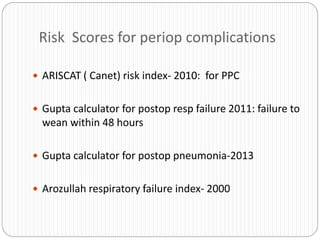
Risk Scores for periop complications
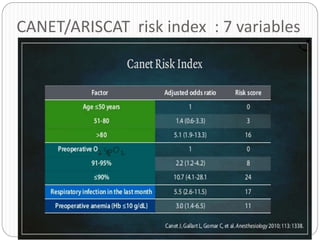
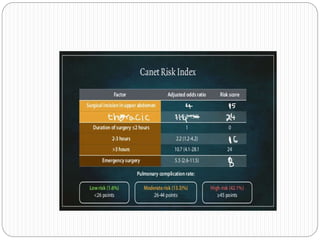
 ARISCAT ( Canet) risk index- 2010: for PPC
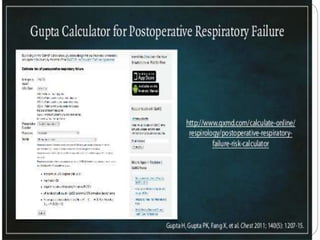
 Gupta calculator for postop resp failure 2011: failure to
wean within 48 hours
 Gupta calculator for postop pneumonia-2013
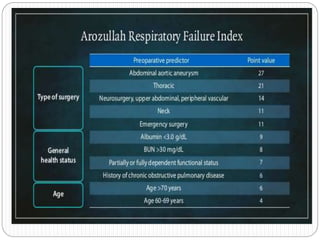
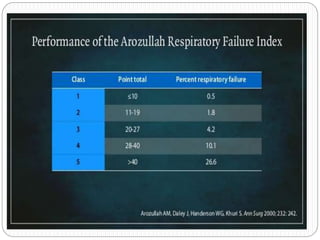
 Arozullah respiratory failure index- 2000
CANET/ARISCAT risk index : 7 variables
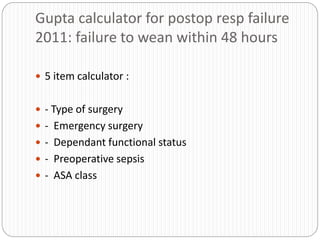
Gupta calculator for postop resp failure
2011: failure to wean within 48 hours
 5 item calculator :
 - Type of surgery
 - Emergency surgery
 - Dependant functional status
 - Preoperative sepsis
 - ASA class
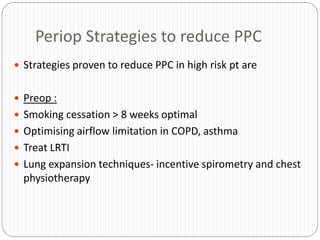
Periop Strategies to reduce PPC
 Strategies proven to reduce PPC in high risk pt are
 Preop :
 Smoking cessation > 8 weeks optimal
 Optimising airflow limitation in COPD, asthma
 Treat LRTI
 Lung expansion techniques- incentive spirometry and chest
physiotherapy
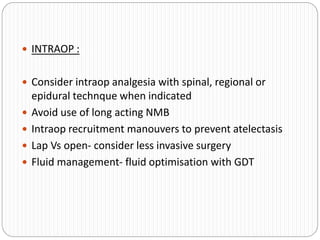
 INTRAOP :
 Consider intraop analgesia with spinal, regional or
epidural technque when indicated
 Avoid use of long acting NMB
 Intraop recruitment manouvers to prevent atelectasis
 Lap Vs open- consider less invasive surgery
 Fluid management- fluid optimisation with GDT
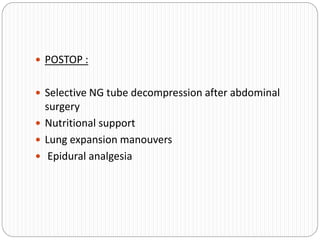
 POSTOP :
 Selective NG tube decompression after abdominal
surgery
 Nutritional support
 Lung expansion manouvers
 Epidural analgesia
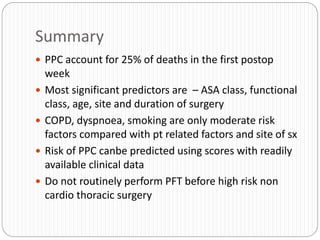
Summary
 PPC account for 25% of deaths in the first postop
week
 Most significant predictors are – ASA class, functional
class, age, site and duration of surgery
 COPD, dyspnoea, smoking are only moderate risk
factors compared with pt related factors and site of sx
 Risk of PPC canbe predicted using scores with readily
available clinical data
 Do not routinely perform PFT before high risk non
cardio thoracic surgery
THANK YOU

Preop pulmolary risk assessment - Anaesthesia

  • 1.
    Ref.: North AmericanClinics Mar 2016 -Dr. Anuradha T Jubilee Mission Medical College Thrissur, India Preoperative Evaluation - Estimation of Pulmonary Risk
  • 2.
     Postop pulmocompli (PPC) are 2nd MC postop compli, 2- 5.6 %  Poor outcomes, longer hospital stay, increased mortality  Clinically significant PPC include... Bronchospasm, atelectasis, exacerbation of underlying c/c lung conditions, infection ( bronchitis, pneumonia), prolonged mechanical ventilation and respiratory failure  Surgical, anesthetic, pt factors contribute
  • 3.
     Aims ofpreop evaluation :  Identify risk factors for PPC, change modifiable factors, discuss risks with patients, optimise health before sx, plan appropriate periop care  Overall risk predicted using clinical data  Do not routinely perform PFT before high risk non cardiothoracic surgery
  • 4.
    Pulmo Pathophysiology inPeriop  Mainly restrictive change,measured as reduction in FRC  no change in airway resistance.  Splinting diaphragm- abnormal resp pattern- shallow, rapid  Atelectasis in bases,persists >24 hrs in 50% pts  V/Q mismatch and increased shunt = hypoxia  Upper abd sx: VC falls by 50%, FRC by 30%  Lower abd lesser levels
  • 5.
     Intracranial, peripheralvascular, ENT 20% fall  No change with extremity sx  Decreased resp drive d/t anesthetics, opioids. Inhibition of cough, impaired mucociliary clearance all contribute to PPC
  • 6.
    Preop Risk Assessment History & physical examn are most imp  History must include :  General health status  Focused history on pulmonary symptoms- cough, dyspnoea, exercise tolerance, pre existing lung diseases
  • 7.
    Physical Examination  Mayhelp detect unrecognised lung disease  Look for signs of......  Asthma  COPD  OSA, PAH  Right heart failure  Neurological impairment  Neuromuscular weakness  Spinal deformity
  • 8.
    Patient related riskfactors for PPC  General:  Age,  General health status, functional status  Obesity, OSA  Pulmonary HTN  Heart failure  Nutrition  Neurological impairment
  • 9.
    Pulmonary Factors : Smoking, > 20 pack year. >4 weeks cessation reduces PPC, longer duration more benefit  COPD- severe ,high risk for pneumonia, ventiltor dependance >48 hrs.  No prohibitive level of PFT below which sx ia absolutely C/I. Benefit Vs Risk and proceed if indication is compelling.  Exacerbations of c/c ds or a/c issues eg. Pneumonia- PPC. Are adequate reason to postpone elective sx
  • 10.
     Asthma-  unclearif h/o asthma carries more risk.  Poorly controlled asthma – prone for hypoxi, hypercapnea, bronchospasm, inadequate cough, atelectasis, pulmo infection after sx.   ACP 2006 suggest asthma is not a risk factor for PPC
  • 11.
     ILD : PPC after all types of sx in ILD is higher than general population. But complications in other sx types are not as high as after lung sx  Upper respiratory infection :  few data. Evidence is weak to recommend postponement of elctive sx during URI. If URI occurs within 2 weeks preop, adults may hv increased risk for bronchospasm, laryngospasm and desaturation. But this does not increase morbidity or long term sequelae.
  • 12.
    Procedure related RiskFactors  Surgical site- more for upper abd sx. Highest for esophagectomy  Duration of surgery & complexity : >3-4 hrs had 40 % PPC. < 2 hours 8%   Type of anesthesia and analgesia: GA alone more risk. Consider spinal/epidural + light GA/ nerve blocks in high risk
  • 13.
     Neuromuscular blockade:use intermediate acting Atrac/Vec + monitoring to avoid any residual NMB  Open Vs Lap sx : Unclear if PPC are reduced with lap. Lap shorter stay, less pain, better spirometric values  Emergency surgery : significant predictor of PPC
  • 14.
    Preop Pulmonary tests PFT :  Includes spirometry, flow volume loops,DLCO, V/Q scan, CPET.  Spirometry is MC. Do not predict PPC.  2006 ACP guidelines do not reccomend routine preop use before high risk sx. Should not be used as primary factor to deny sx  ABG : PaCO2 > 45mmnhigh risk for PPC. Not an absolute C/I for major noncardiac sx.  CXR: routine preop CXR hardly give additional info. ACP recommends CXR in those with known cardiopulmonary ds, > 50 yrs for high risk sx
  • 15.
     Exercise testing: VO2 max and anaerobic threshold are valid predictors of periop morbidity and mortality.  Simple ones like stair case climbing capacity and 6-min walk test are accurate and show concordance with VO2 max  ECHO : No evidence for routine preop use even in advanced lung diseases.  Advised for pts with severe lung disase having features of right heart failure.  Also in reduced exercise tolerance to r/o cardiac illness
  • 16.
    Risk Scores forperiop complications  ARISCAT ( Canet) risk index- 2010: for PPC  Gupta calculator for postop resp failure 2011: failure to wean within 48 hours  Gupta calculator for postop pneumonia-2013  Arozullah respiratory failure index- 2000
  • 17.
  • 22.
    Gupta calculator forpostop resp failure 2011: failure to wean within 48 hours  5 item calculator :  - Type of surgery  - Emergency surgery  - Dependant functional status  - Preoperative sepsis  - ASA class
  • 23.
    Periop Strategies toreduce PPC  Strategies proven to reduce PPC in high risk pt are  Preop :  Smoking cessation > 8 weeks optimal  Optimising airflow limitation in COPD, asthma  Treat LRTI  Lung expansion techniques- incentive spirometry and chest physiotherapy
  • 24.
     INTRAOP : Consider intraop analgesia with spinal, regional or epidural technque when indicated  Avoid use of long acting NMB  Intraop recruitment manouvers to prevent atelectasis  Lap Vs open- consider less invasive surgery  Fluid management- fluid optimisation with GDT
  • 25.
     POSTOP : Selective NG tube decompression after abdominal surgery  Nutritional support  Lung expansion manouvers  Epidural analgesia
  • 26.
    Summary  PPC accountfor 25% of deaths in the first postop week  Most significant predictors are – ASA class, functional class, age, site and duration of surgery  COPD, dyspnoea, smoking are only moderate risk factors compared with pt related factors and site of sx  Risk of PPC canbe predicted using scores with readily available clinical data  Do not routinely perform PFT before high risk non cardio thoracic surgery
  • 27.