Art in themiddleage A mainlyreligious art
First: Late AntiqueArt in Romanstyle, so peoplewouldknowtheywereRomanChristians. Simple, streamlined, resigning perspective and depth, eliminating proportions and characteristics of the human body in order to increase the religious aspects. The bottom predominates on the form and the expression surrends to the aesthetic one.
The Virgin Mary: Theotokos, in Greek terminology, was central to Byzantine spiritualityIt is a synthesis of hellenistic traditions and Eastern traditions that penetrate through diverse routes, and especially of the neighboring Persia.The hellenistic elements are noticed in the maintenance of a classic spirit, in the measured gestures, the sensible compositions, the painting of the nature, the pagan themes.
Old Saint Peter
MosquesGreat Mosque, Córdoba)
Mihrab
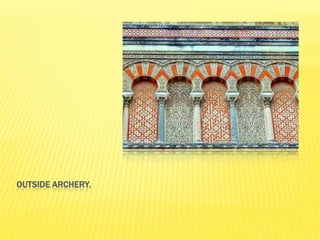
Outsidearchery.
Dome of rock, Jerusalem
Second: ByzantiumInteraction with Islamic culture had a profound effect on its art. Islam arise and military success were the greatest threat to the stability of the empire and its territories. The Christian influence is dominant. The main buildings are destined to the cult and as much the sculpture as the mosaic and the painting of the Byzantine art, are dominated by the glorification of the Christ, the God of Majesty, the Virgin and the Apostles, in order to teach the Biblical episodes graphically.New testament (IV A.D)
The Eastern: Front paints, flattening and deformation of the figuresSymbolism.Geometric conception of the bodies and therefore the stylisation of its forms.The decorative, visible eagerness in the wealth of the used materials.Variety of the color, in many conventionalisms that stay through time. Use of elements like the cupola on pecinas, the marble coatings and the decoration of capitals stays in the architectonic plan of the Byzantine art.Progressive abandonment of the bulk sculpture, relief suggested by light resistances are visible also in the sculpture techniques
Saint Vitale
Court of Justinian
Court of theodora
HagiaSophia
Romanesque (románico)Circa1000 AD to XIII century.Roman –likeRoundedarches, stonevaults, thickwalls, exterirorreliefsculptures, Cathedrals, churches and monasteries.Feudalism
HistoricalBackgroundFeudalism9th century: invasionsfrommuslims and vikings.Christianims spread troughbarbarians.Pilgrims: Santiago de Compostela (Spain), Rome and Jerusalem (Cruzades)
StavelOtTryptichMosan, Belgium, c. 1156-1158
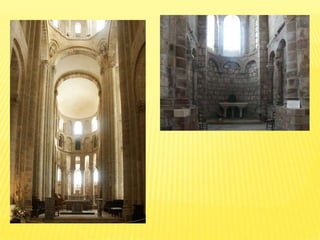
ArchitectureChurchesbigenoughtoacomodatepilgrims, goodsound and iluminated.
Saint FoyAbbeyConques.
Woodenroofwerechangedbystonebarrelsvaults(bettersound, lessfirerisk)GregorianChantsgorwstronger.Sculpture as teacher and propaganda.
ManuscriptsTheapperance of theScriptoria
Mralpainting and TapestryCastel of Appiano, ItalyUse of richcolors.Manyartistworkedonthem
Murder of theInnocents in Bethlehemc. 1180FrescoPanteón de los Reyes, Colegiata de San Isidoro, Léon
The Virgin Mary and Childc. 1200FrescoNotre-Dame, Montmorillon
UNKNOWNWEAVER, EnglishTheBayeuxTapestry (detail)c. 1080Woolembroideredon a linenbackgroundMusée de la Tapisserie de la Reine Mathilde, Bayeux
Gothic ArtRefers, mainly, toarchitectureNamedafter de Goths, whodestroyedwhatwasleft of Classic art.
MathematicalarmonyUse of lightPointedarchesStainedGlassGargoilesSkeletonsAge of cathedrals
Saint Denis
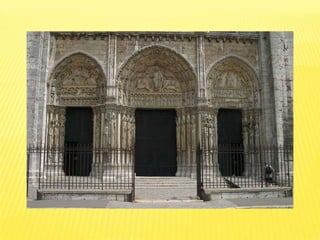
Notre Dame of Chartres
Notre Dame of paris
Reims Cathedral
Salisbury
Art in the middle age

Art in the middle age