Elements and Principles
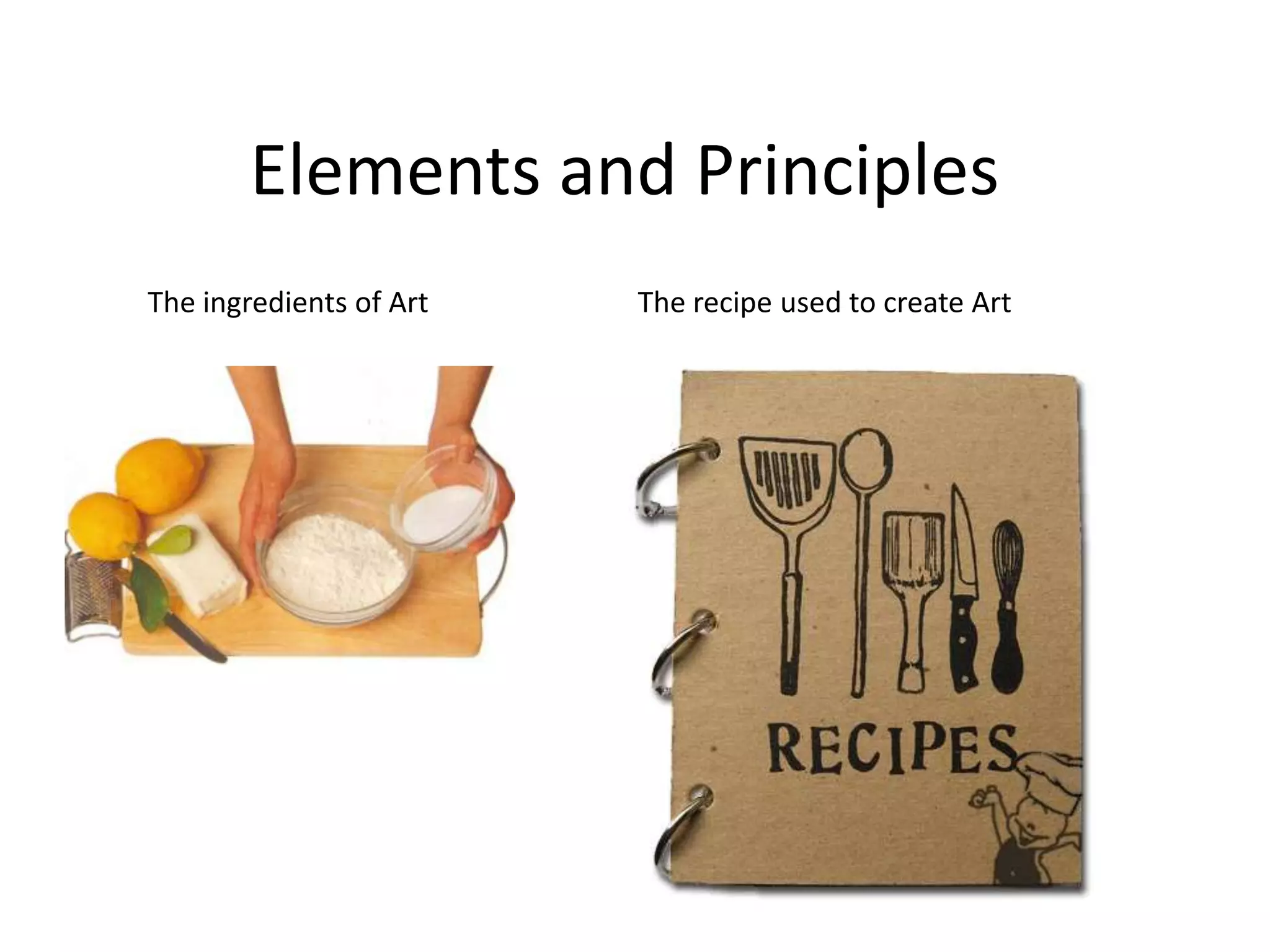
The ingredients of Art The recipe used to create Art
Elements
• The ingredients of Art. Most basic forms.
Line
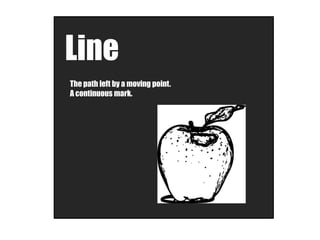
The path left by a moving point.
A continuous mark.
Colour
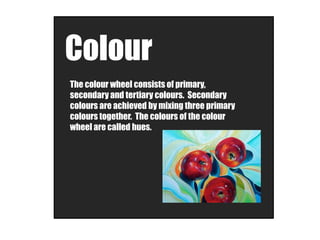
The colour wheel consists of primary,
secondary and tertiary colours. Secondary
colours are achieved by mixing three primary
colours together. The colours of the colour
wheel are called hues.
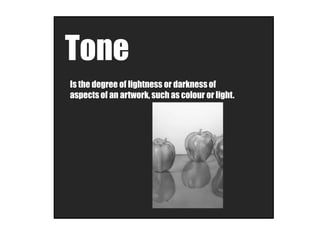
Tone
Is the degree of lightness or darkness of
aspects of an artwork, such as colour or light.
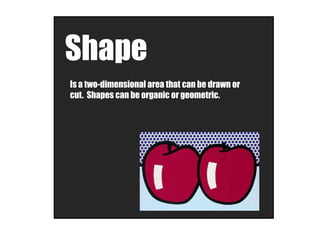
Shape
Is a two-dimensional area that can be drawn or
cut. Shapes can be organic or geometric.
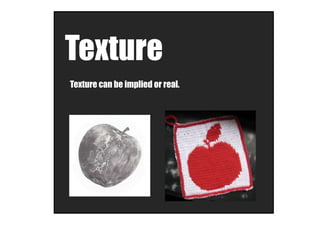
Texture
Texture can be implied or real.
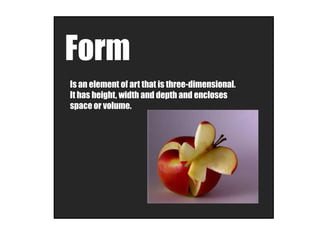
Form
Is an element of art that is three-dimensional.
It has height, width and depth and encloses
space or volume.
Principles
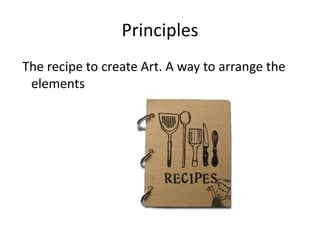
The recipe to create Art. A way to arrange the
elements
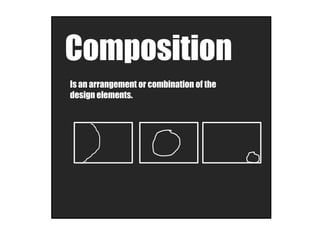
Composition
Is an arrangement or combination of the
design elements.
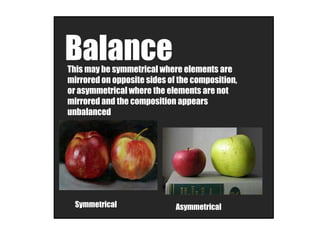
BalanceThis may be symmetrical where elements are
mirrored on opposite sides of the composition,
or asymmetrical where the elements are not
mirrored and the composition appears
unbalanced
Symmetrical Asymmetrical
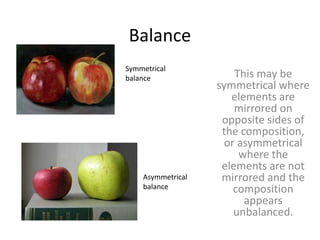
Balance
This may be
symmetrical where
elements are
mirrored on
opposite sides of
the composition,
or asymmetrical
where the
elements are not
mirrored and the
composition
appears
unbalanced.
Symmetrical
balance
Asymmetrical
balance
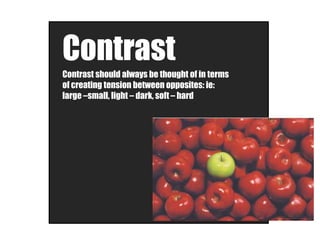
Contrast
Contrast should always be thought of in terms
of creating tension between opposites: ie:
large –small, light – dark, soft – hard
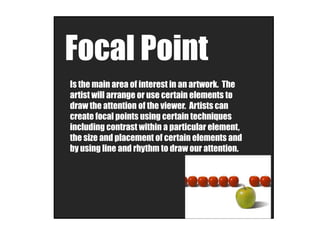
Focal Point
Is the main area of interest in an artwork. The
artist will arrange or use certain elements to
draw the attention of the viewer. Artists can
create focal points using certain techniques
including contrast within a particular element,
the size and placement of certain elements and
by using line and rhythm to draw our attention.
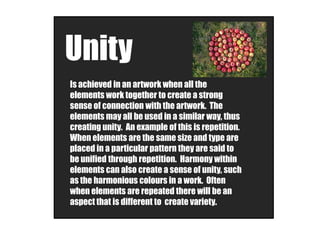
Unity
Is achieved in an artwork when all the
elements work together to create a strong
sense of connection with the artwork. The
elements may all be used in a similar way, thus
creating unity. An example of this is repetition.
When elements are the same size and type are
placed in a particular pattern they are said to
be unified through repetition. Harmony within
elements can also create a sense of unity, such
as the harmonious colours in a work. Often
when elements are repeated there will be an
aspect that is different to create variety.
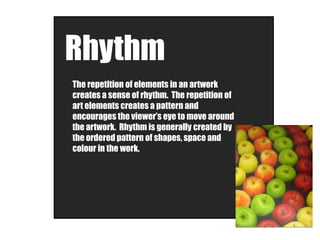
Rhythm
The repetition of elements in an artwork
creates a sense of rhythm. The repetition of
art elements creates a pattern and
encourages the viewer’s eye to move around
the artwork. Rhythm is generally created by
the ordered pattern of shapes, space and
colour in the work.
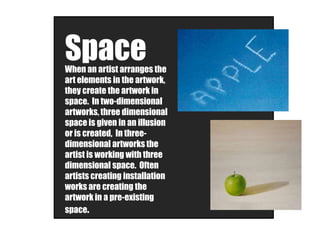
SpaceWhen an artist arranges the
art elements in the artwork,
they create the artwork in
space. In two-dimensional
artworks, three dimensional
space is given in an illusion
or is created, In three-
dimensional artworks the
artist is working with three
dimensional space. Often
artists creating installation
works are creating the
artwork in a pre-existing
space.
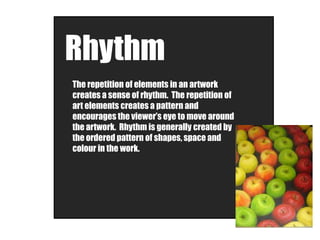
Rhythm
The repetition of elements in an artwork
creates a sense of rhythm. The repetition of
art elements creates a pattern and
encourages the viewer’s eye to move around
the artwork. Rhythm is generally created by
the ordered pattern of shapes, space and
colour in the work.

Art elements and principles 2

  • 1.
    Elements and Principles Theingredients of Art The recipe used to create Art
  • 2.
    Elements • The ingredientsof Art. Most basic forms.
  • 3.
    Line The path leftby a moving point. A continuous mark.
  • 4.
    Colour The colour wheelconsists of primary, secondary and tertiary colours. Secondary colours are achieved by mixing three primary colours together. The colours of the colour wheel are called hues.
  • 5.
    Tone Is the degreeof lightness or darkness of aspects of an artwork, such as colour or light.
  • 6.
    Shape Is a two-dimensionalarea that can be drawn or cut. Shapes can be organic or geometric.
  • 7.
    Texture Texture can beimplied or real.
  • 8.
    Form Is an elementof art that is three-dimensional. It has height, width and depth and encloses space or volume.
  • 9.
    Principles The recipe tocreate Art. A way to arrange the elements
  • 10.
    Composition Is an arrangementor combination of the design elements.
  • 11.
    BalanceThis may besymmetrical where elements are mirrored on opposite sides of the composition, or asymmetrical where the elements are not mirrored and the composition appears unbalanced Symmetrical Asymmetrical
  • 12.
    Balance This may be symmetricalwhere elements are mirrored on opposite sides of the composition, or asymmetrical where the elements are not mirrored and the composition appears unbalanced. Symmetrical balance Asymmetrical balance
  • 13.
    Contrast Contrast should alwaysbe thought of in terms of creating tension between opposites: ie: large –small, light – dark, soft – hard
  • 14.
    Focal Point Is themain area of interest in an artwork. The artist will arrange or use certain elements to draw the attention of the viewer. Artists can create focal points using certain techniques including contrast within a particular element, the size and placement of certain elements and by using line and rhythm to draw our attention.
  • 15.
    Unity Is achieved inan artwork when all the elements work together to create a strong sense of connection with the artwork. The elements may all be used in a similar way, thus creating unity. An example of this is repetition. When elements are the same size and type are placed in a particular pattern they are said to be unified through repetition. Harmony within elements can also create a sense of unity, such as the harmonious colours in a work. Often when elements are repeated there will be an aspect that is different to create variety.
  • 16.
    Rhythm The repetition ofelements in an artwork creates a sense of rhythm. The repetition of art elements creates a pattern and encourages the viewer’s eye to move around the artwork. Rhythm is generally created by the ordered pattern of shapes, space and colour in the work.
  • 17.
    SpaceWhen an artistarranges the art elements in the artwork, they create the artwork in space. In two-dimensional artworks, three dimensional space is given in an illusion or is created, In three- dimensional artworks the artist is working with three dimensional space. Often artists creating installation works are creating the artwork in a pre-existing space.
  • 18.
    Rhythm The repetition ofelements in an artwork creates a sense of rhythm. The repetition of art elements creates a pattern and encourages the viewer’s eye to move around the artwork. Rhythm is generally created by the ordered pattern of shapes, space and colour in the work.