Art appropriation
Appropriation in art
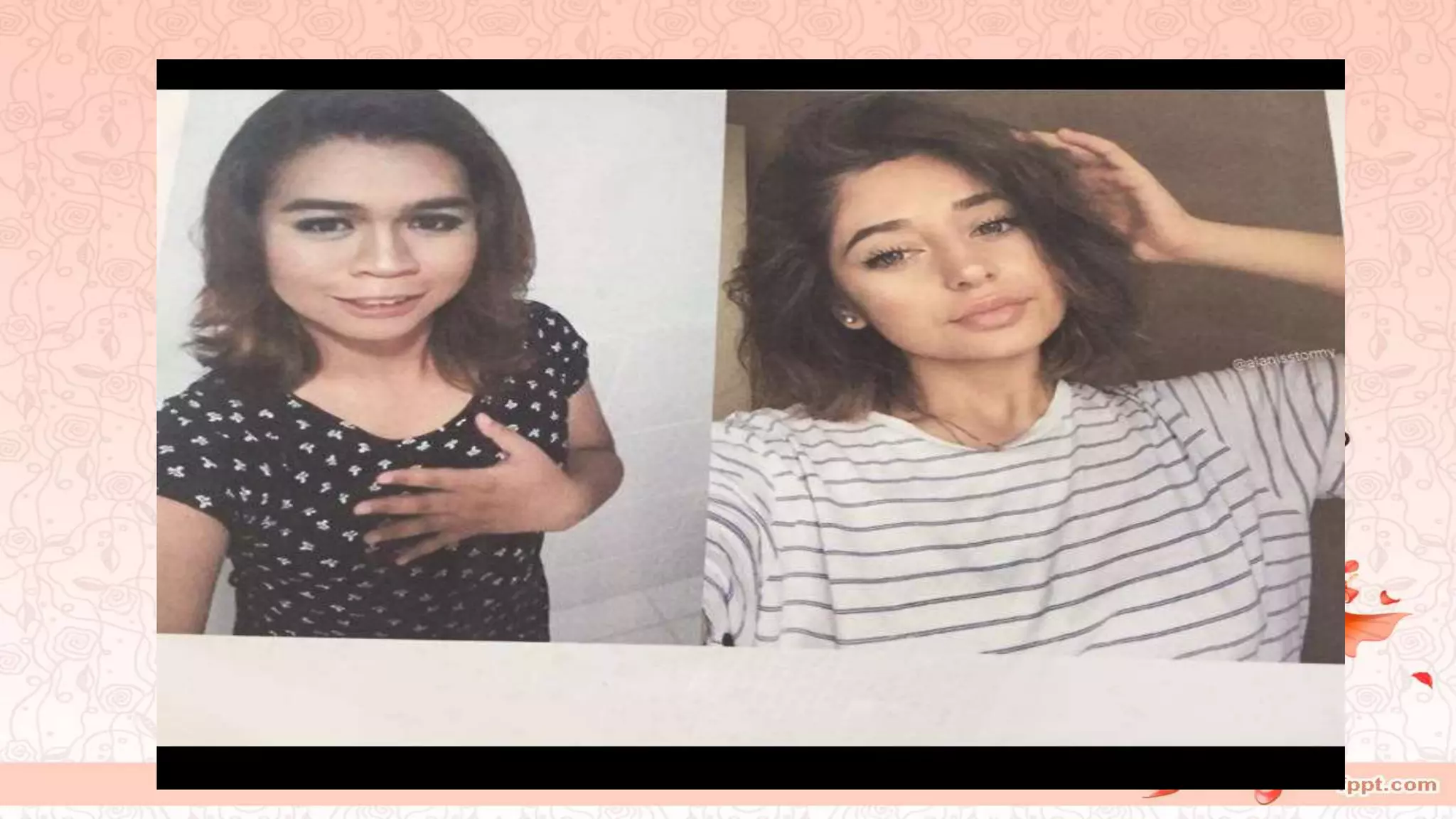
To "appropriate" is to take possession of something.
Appropriation artists deliberately copy images to take
possession of them in their art. They are not stealing or
plagiarizing, nor are they are passing off these images as their
very own.
Yet, this artistic approach does stir up controversy because
some people view appropriation as unoriginal or theft. Due to
this, it's important to understand why artists appropriate the
artwork of others.
What's the Intent of Appropriation Art?
• Appropriation artists want the viewer to recognize the images
they copy. They hope that the viewer will bring all of his
original associations with the image to the artist's new
context, be it a painting, a sculpture, a collage, a combine, or
an entire installation.
• The deliberate "borrowing" of an image for this new context is
called "recontextualization." Recontextualization helps the
artist comment on the image's original meaning and the
viewer's association with either the original image or the real
thing.
• In separating images from the original context of their own
media, we allow them to take on new and varied
meanings. The process and nature of appropriation has
considered by anthropologists as part of the study of
cultural change and cross-cultural contact.
• Above we see a contemporary example of appropriation, a
painting which borrows its narrative and composition from the
infamous Les Demoiselles d’Avignon by Picasso. Here
Colesscott has developed Picasso’s abstraction and
‘Africanism’ in line with European influences. Colescott has
made this famous image his own, in terms of colour and
content, whilst still making his inspiration clear. The historical
reference to Picasso is there, but this is undeniably the artist’s
own work. Other types of appropriation often do not have
such clear differences between the original and the newly
appropriated piece.
• “Appropriation artists, by revealing that no aspect of the
objectives an artists pursues are in fact built in to the
concept of art, demonstrate artists’ responsibility for all
aspects of their objectives and hence, of their products.
This responsibility is constitutive of authorship and
accounts for the interpretability of artworks.”
Left: Sherrie Levine, After Walker Evans, 1981;
Right: Walker Evans, Alabama Tenant Farmer's
Wife, 193613
• Barbara Kruger insists, “I work with pictures and
words because they have the ability to determine who
we are, what we want to be and who we become.”
Whilst there may or may not be political elements to
Kruger’s work, the undeniable underlying theme
prominent throughout all of her works is the issue of
our consumer society.
• By using images available for public consumption in a
composition with a thought provoking statement,
Kruger is asking us to rethink the images that we
consume on a daily basis in terms of perception and
how underlying messages function within this imagery.
Kruger’s use of “less abstract subjects than
Duchamp’s” may well increase the accessibility of her
work, making it familiar and thus available to a wider
audience.
• The proliferation of appropriation art over the latter half of the 20th
century has led to a rash of copyright infringement lawsuits. Artists
whose practices involve appropriation but aren’t looking to get sued
are often left wondering what constitutes the fair use of copyrighted
works.
• Many of the most significant cases assessing fair use have common
origins: a photographer finds their work was used by another artist to
make a derivative work without their authorization. Although
photographers have attempted to argue that the law forbids this
unauthorized use, the evolution of fair use over the years has
arguably bended in the favor of the appropriator.

art appropriation.pptx

  • 1.
  • 10.
  • 11.
    To "appropriate" isto take possession of something. Appropriation artists deliberately copy images to take possession of them in their art. They are not stealing or plagiarizing, nor are they are passing off these images as their very own. Yet, this artistic approach does stir up controversy because some people view appropriation as unoriginal or theft. Due to this, it's important to understand why artists appropriate the artwork of others.
  • 12.
    What's the Intentof Appropriation Art? • Appropriation artists want the viewer to recognize the images they copy. They hope that the viewer will bring all of his original associations with the image to the artist's new context, be it a painting, a sculpture, a collage, a combine, or an entire installation. • The deliberate "borrowing" of an image for this new context is called "recontextualization." Recontextualization helps the artist comment on the image's original meaning and the viewer's association with either the original image or the real thing.
  • 13.
    • In separatingimages from the original context of their own media, we allow them to take on new and varied meanings. The process and nature of appropriation has considered by anthropologists as part of the study of cultural change and cross-cultural contact.
  • 15.
    • Above wesee a contemporary example of appropriation, a painting which borrows its narrative and composition from the infamous Les Demoiselles d’Avignon by Picasso. Here Colesscott has developed Picasso’s abstraction and ‘Africanism’ in line with European influences. Colescott has made this famous image his own, in terms of colour and content, whilst still making his inspiration clear. The historical reference to Picasso is there, but this is undeniably the artist’s own work. Other types of appropriation often do not have such clear differences between the original and the newly appropriated piece.
  • 16.
    • “Appropriation artists,by revealing that no aspect of the objectives an artists pursues are in fact built in to the concept of art, demonstrate artists’ responsibility for all aspects of their objectives and hence, of their products. This responsibility is constitutive of authorship and accounts for the interpretability of artworks.”
  • 17.
    Left: Sherrie Levine,After Walker Evans, 1981; Right: Walker Evans, Alabama Tenant Farmer's Wife, 193613
  • 18.
    • Barbara Krugerinsists, “I work with pictures and words because they have the ability to determine who we are, what we want to be and who we become.” Whilst there may or may not be political elements to Kruger’s work, the undeniable underlying theme prominent throughout all of her works is the issue of our consumer society. • By using images available for public consumption in a composition with a thought provoking statement, Kruger is asking us to rethink the images that we consume on a daily basis in terms of perception and how underlying messages function within this imagery. Kruger’s use of “less abstract subjects than Duchamp’s” may well increase the accessibility of her work, making it familiar and thus available to a wider audience.
  • 20.
    • The proliferationof appropriation art over the latter half of the 20th century has led to a rash of copyright infringement lawsuits. Artists whose practices involve appropriation but aren’t looking to get sued are often left wondering what constitutes the fair use of copyrighted works. • Many of the most significant cases assessing fair use have common origins: a photographer finds their work was used by another artist to make a derivative work without their authorization. Although photographers have attempted to argue that the law forbids this unauthorized use, the evolution of fair use over the years has arguably bended in the favor of the appropriator.

Editor's Notes

  • #11 This presentation demonstrates the new capabilities of PowerPoint and it is best viewed in Slide Show. These slides are designed to give you great ideas for the presentations you’ll create in PowerPoint 2010! For more sample templates, click the File tab, and then on the New tab, click Sample Templates.