AP ARGUMENT PROMPT
AP ARGUMENT PROMPT
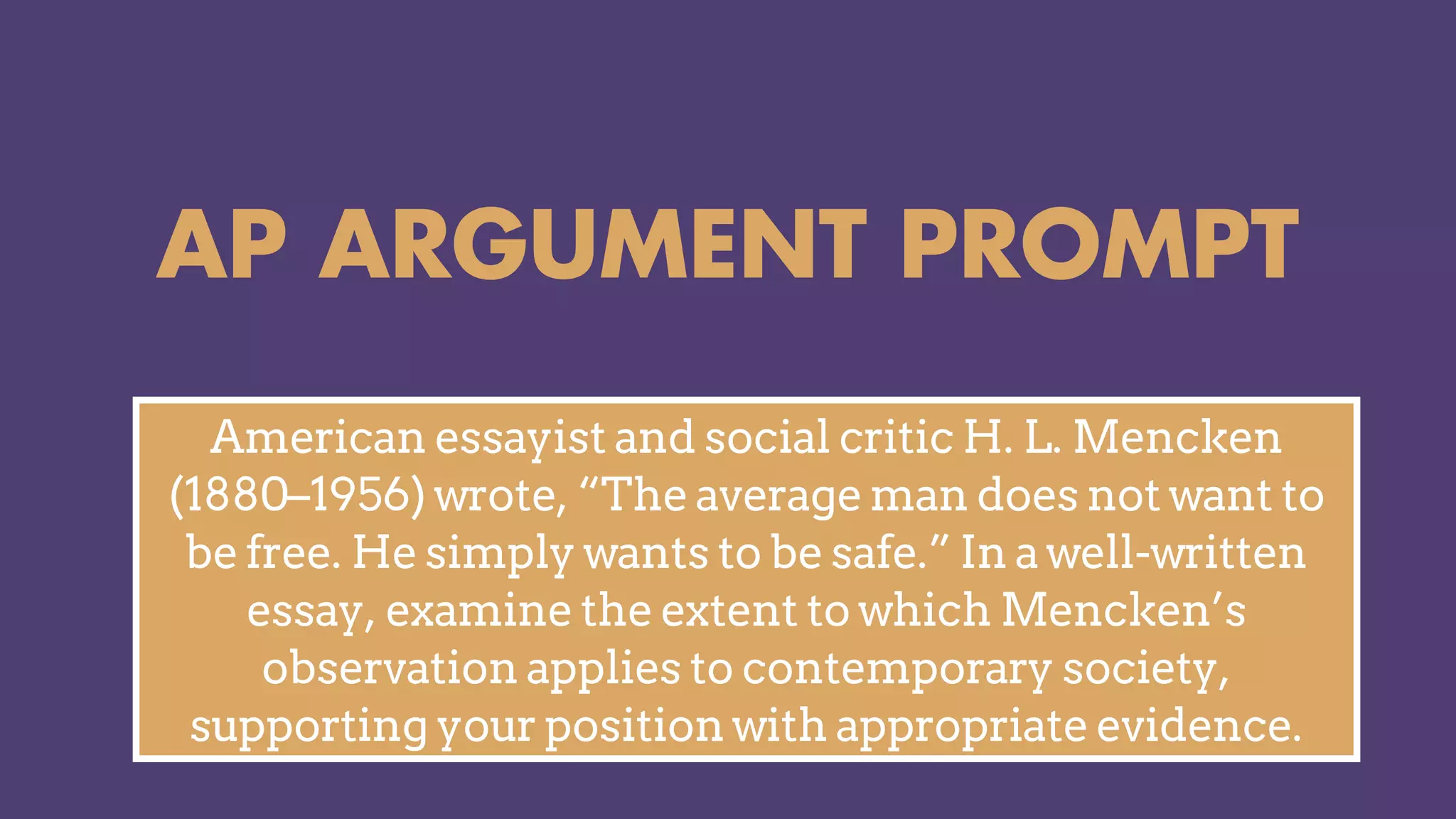
American essayist and social critic H. L. Mencken
(1880–1956) wrote, “The average man does not want to
be free. He simply wants to be safe.” In a well-written
essay, examine the extent to which Mencken’s
observation applies to contemporary society,
supporting your position with appropriate evidence.
UNDERSTANDING THE QUOTE
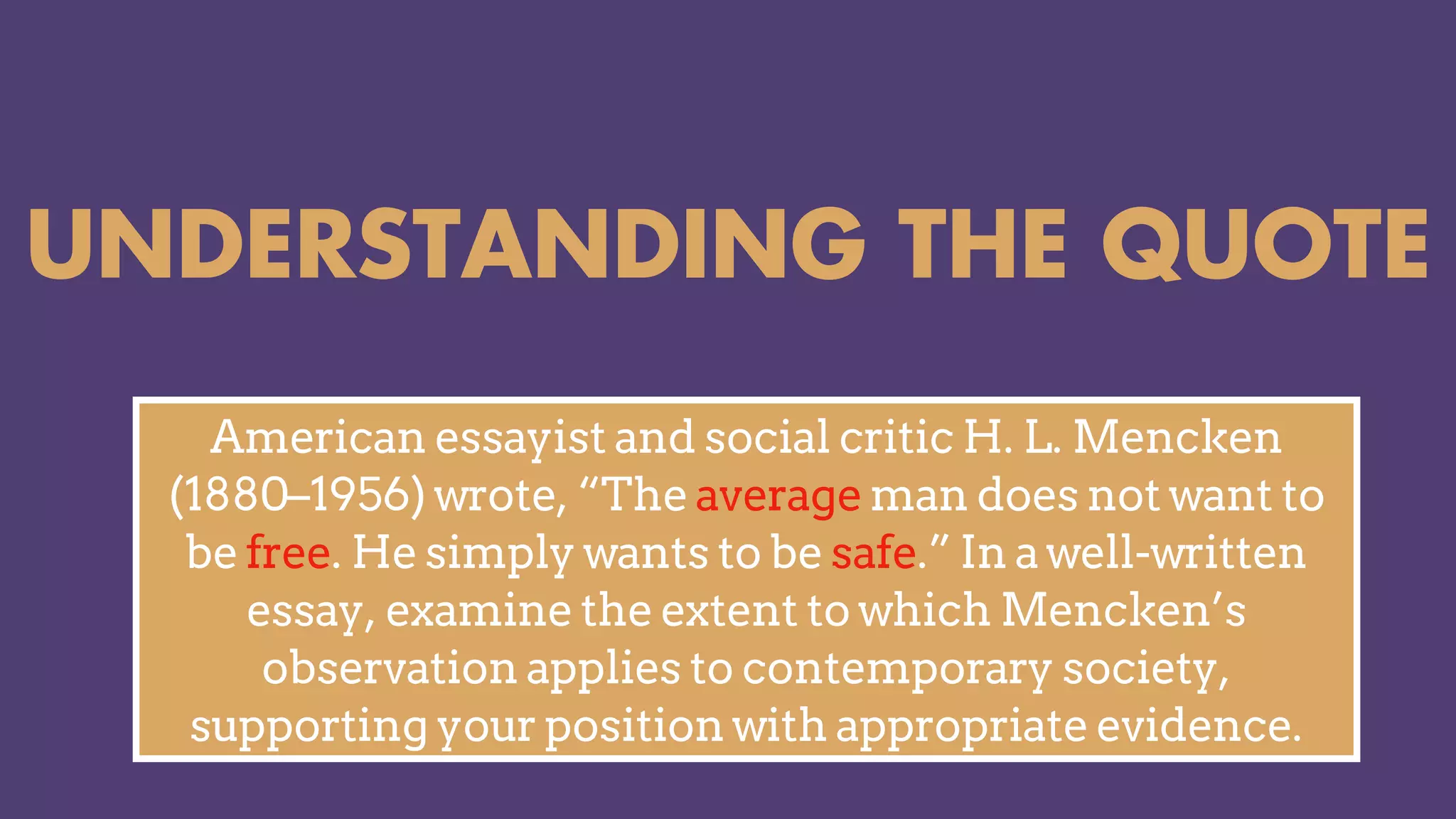
American essayist and social critic H. L. Mencken
(1880–1956) wrote, “The average man does not want to
be free. He simply wants to be safe.” In a well-written
essay, examine the extent to which Mencken’s
observation applies to contemporary society,
supporting your position with appropriate evidence.
UNDERSTANDING THE
PROMPT
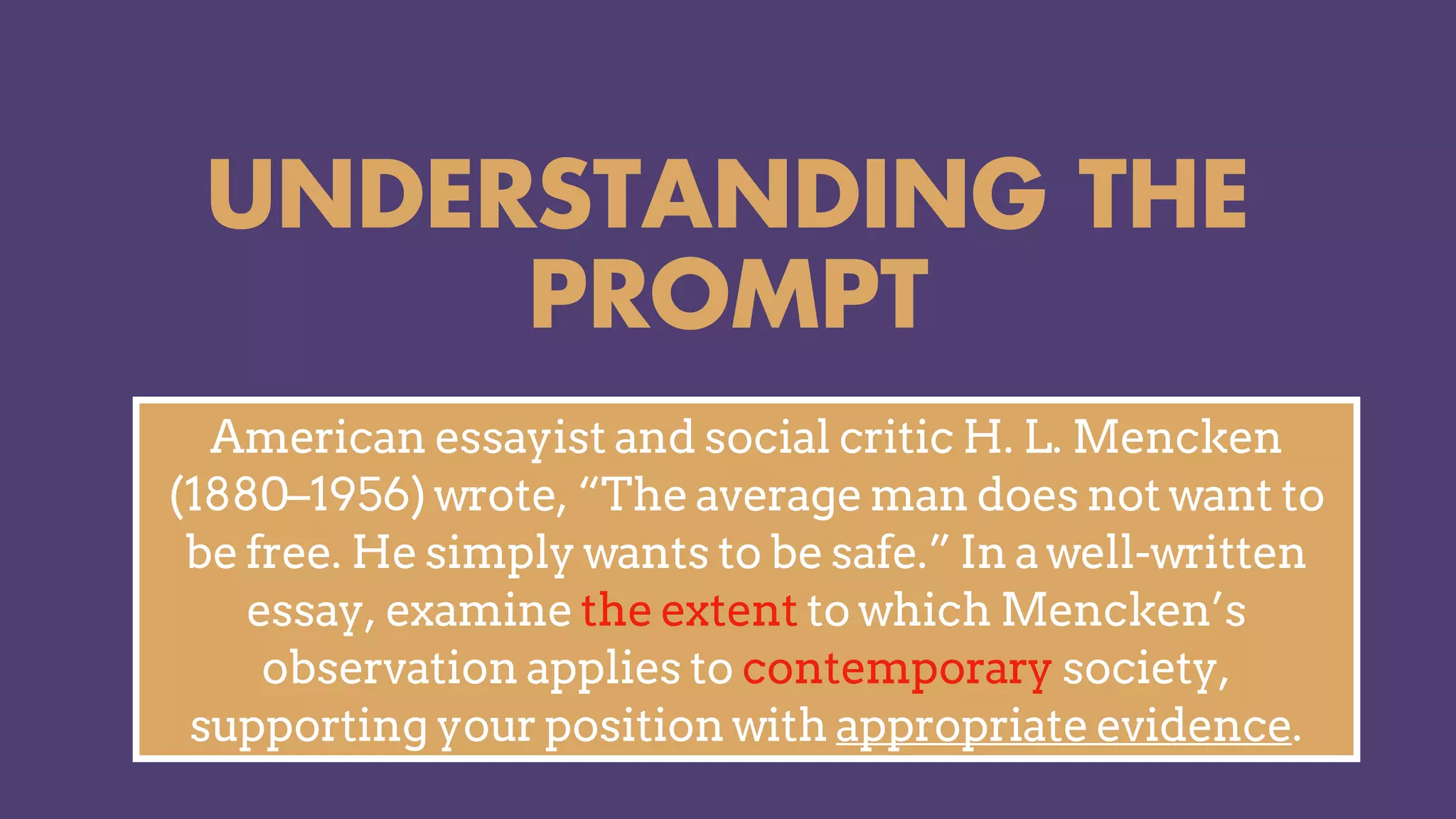
American essayist and social critic H. L. Mencken
(1880–1956) wrote, “The average man does not want to
be free. He simply wants to be safe.” In a well-written
essay, examine the extent to which Mencken’s
observation applies to contemporary society,
supporting your position with appropriate evidence.
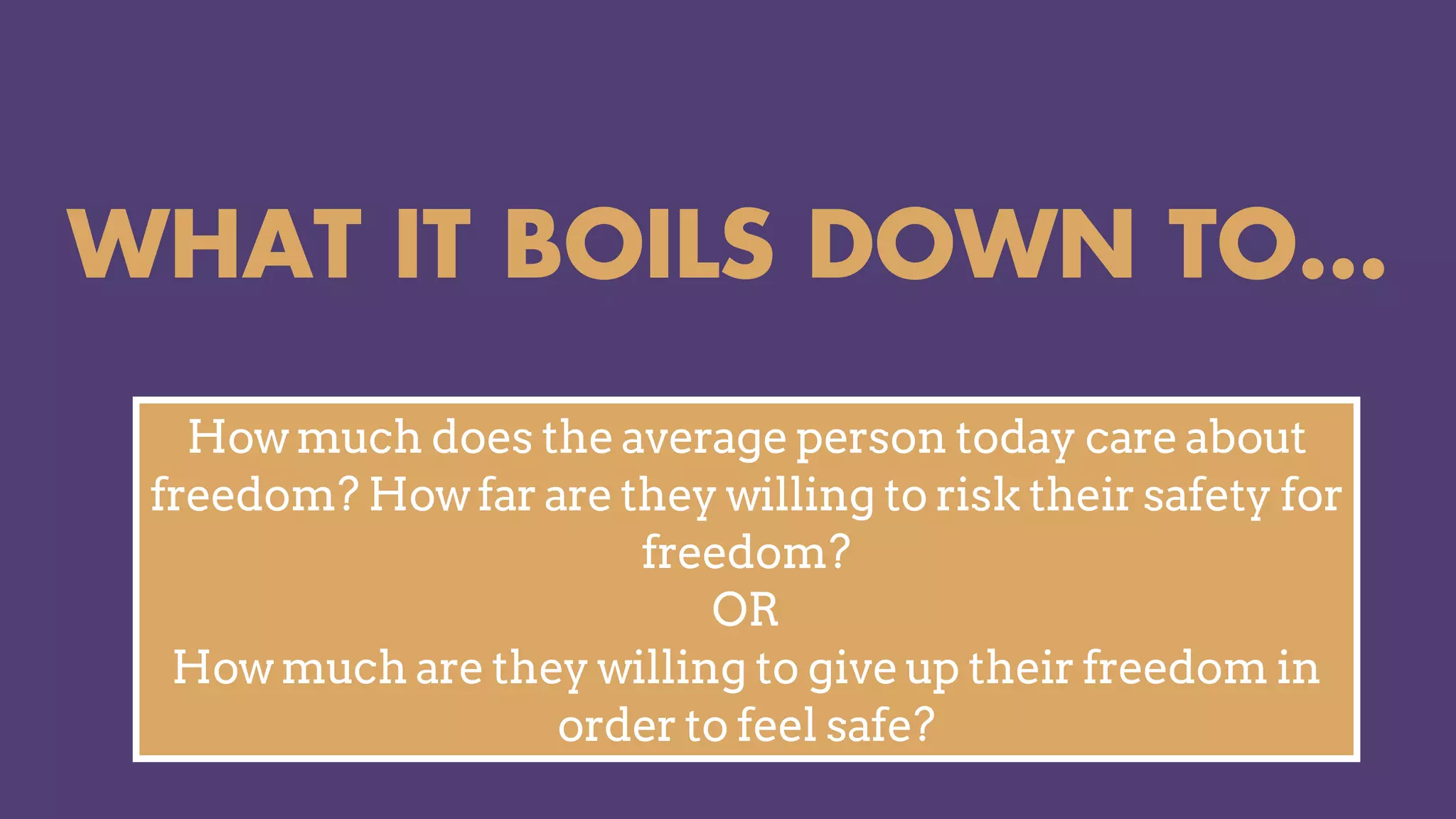
WHAT IT BOILS DOWN TO…
How much does the average person today care about
freedom? How far are they willing to risk their safety for
freedom?
OR
How much are they willing to give up their freedom in
order to feel safe?
SOME PITFALLS
Misunderstanding the Prompt
SOME PITFALLS
Missing the “contemporary” part of the
prompt
SOME PITFALLS
Being too simple
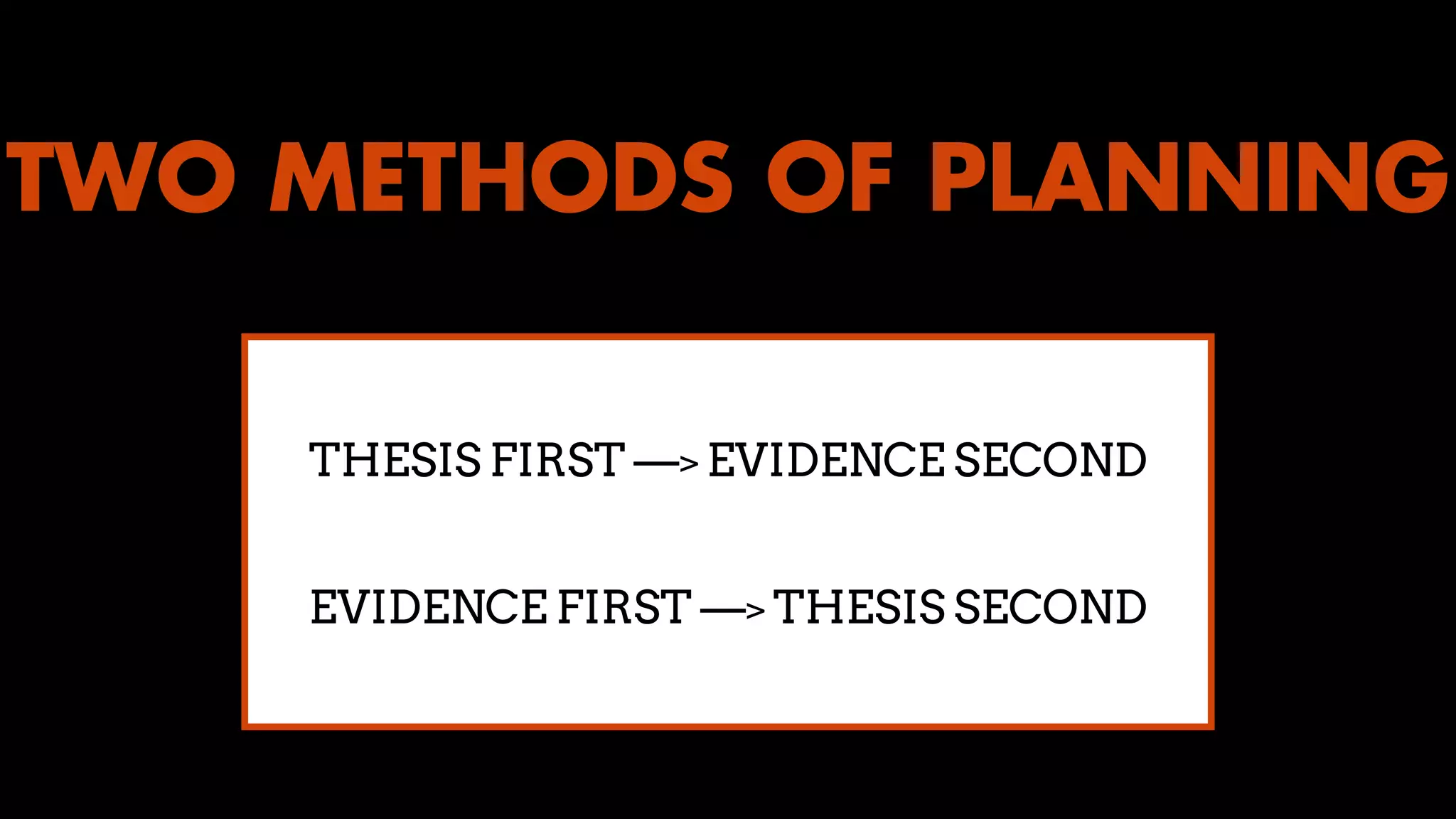
TWO METHODS OF PLANNING
EVIDENCE FIRST —> THESIS SECOND
THESIS FIRST —> EVIDENCE SECOND
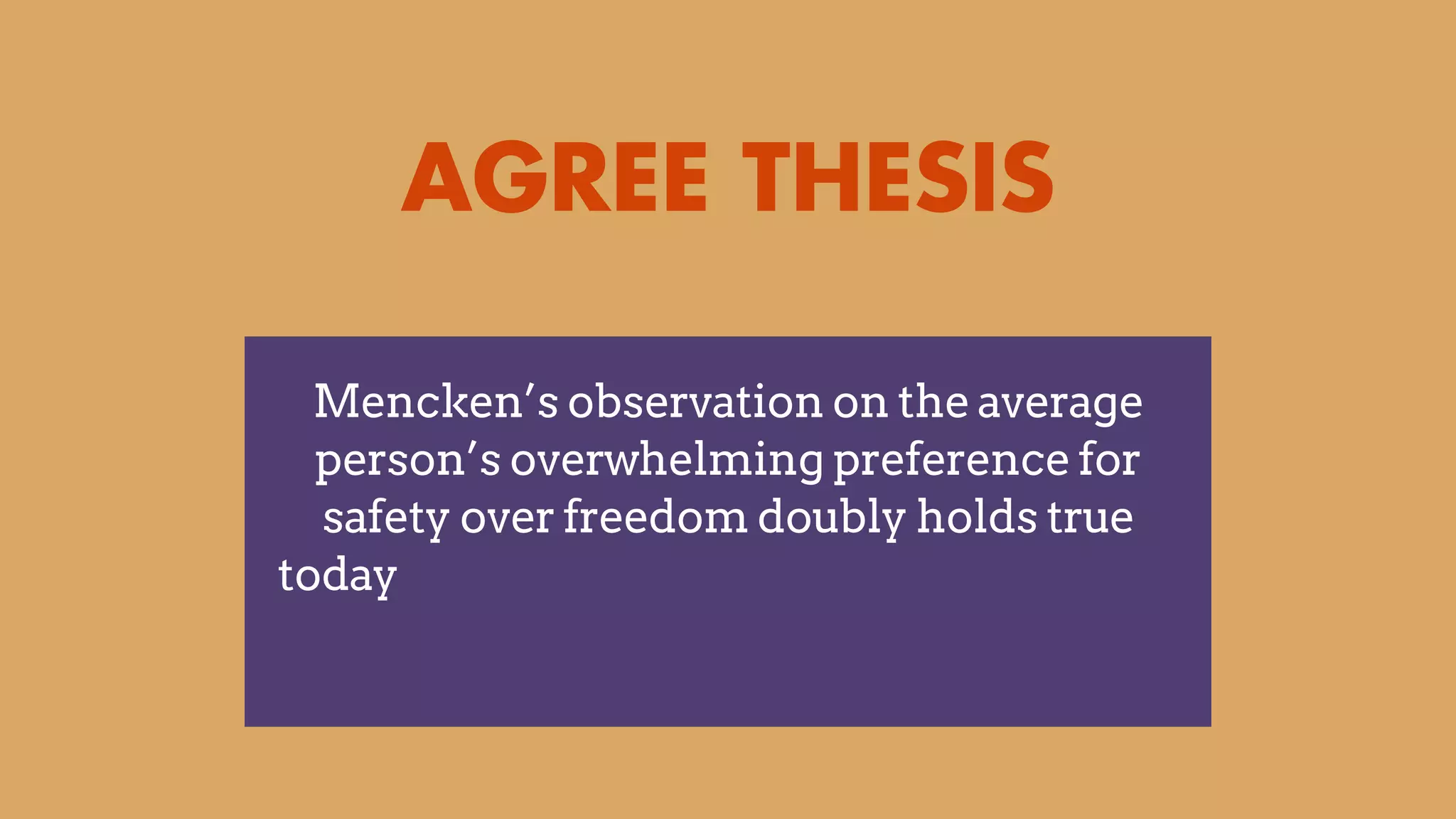
AGREE THESIS
Mencken’s observation on the average
person’s overwhelming preference for
safety over freedom doubly holds true
today as we face existential threats such as
terrorism and pandemic
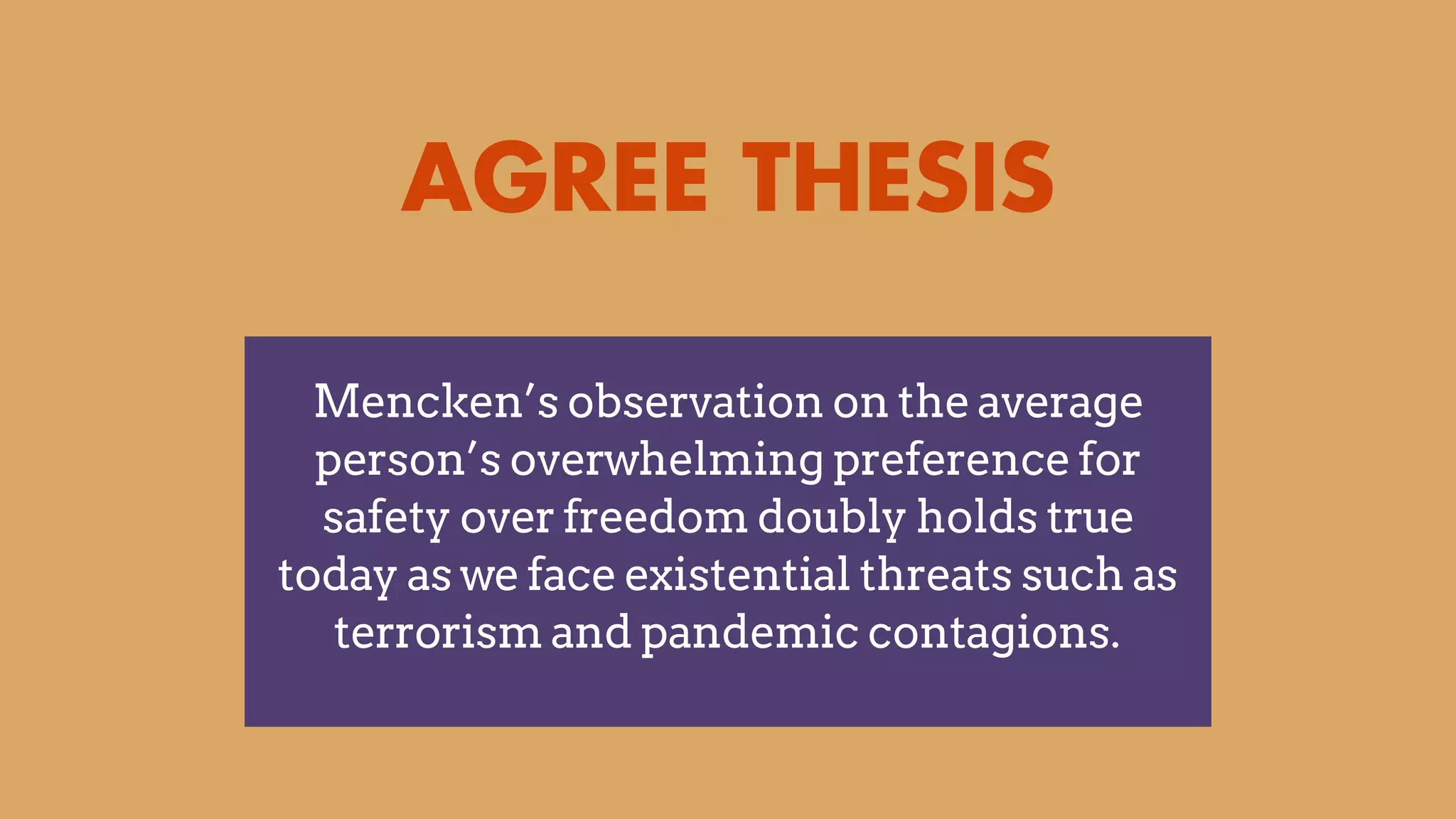
AGREE THESIS
Mencken’s observation on the average
person’s overwhelming preference for
safety over freedom doubly holds true
today as we face existential threats such as
terrorism and pandemic contagions.
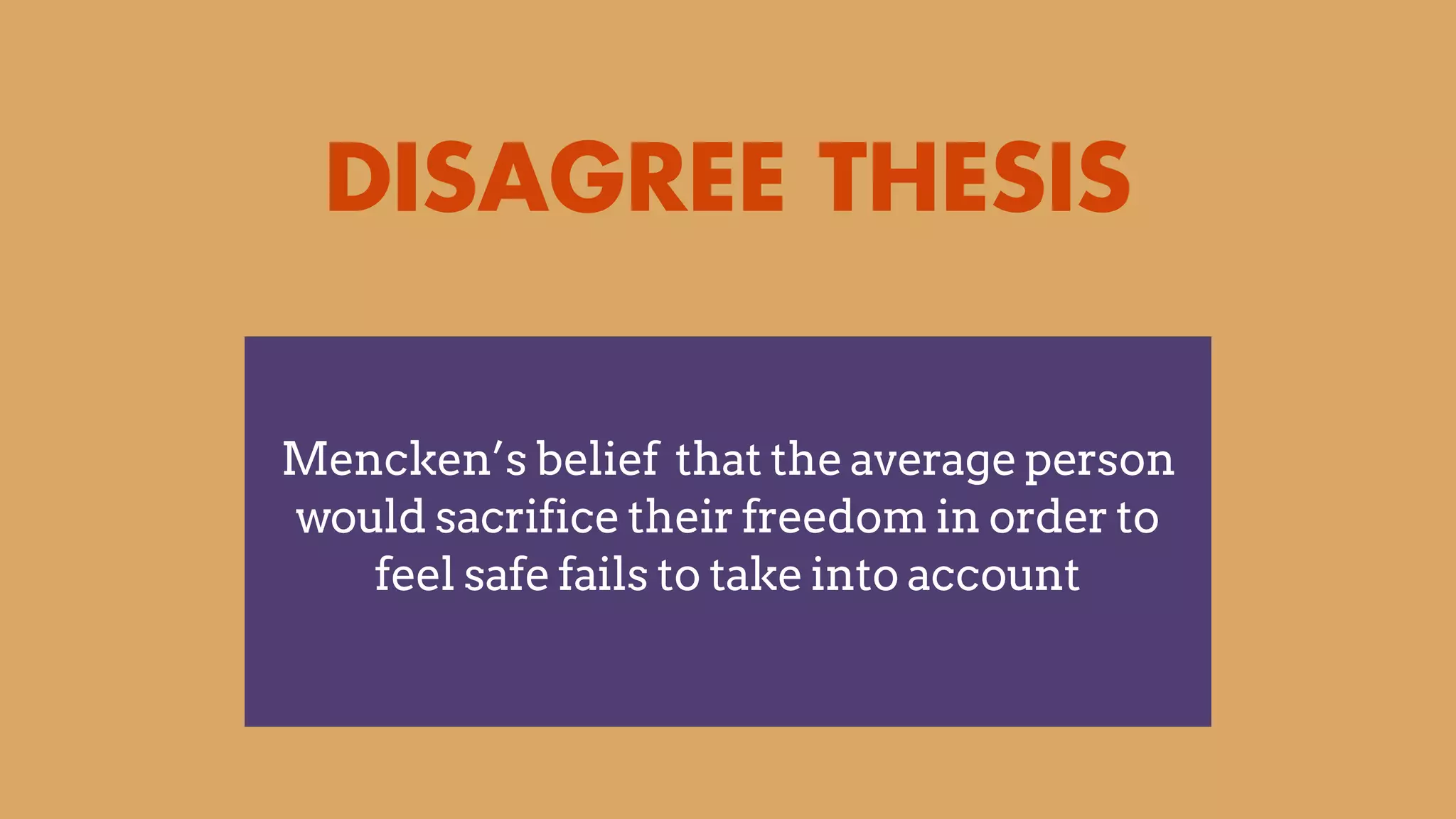
DISAGREE THESIS
Mencken’s belief that the average person
would sacrifice their freedom in order to
feel safe fails to take into account
DISAGREE THESIS
Mencken’s belief that the average person
would sacrifice their freedom in order to
feel safe fails to take into account our
willingness to face great dangers in the
name of science or patriotism.
QUALIFY THESIS
Mencken’s may be right that most people
usually value safety more highly than
freedom but he forgets how people will
risk everything if it means protecting the
people they love.
EVIDENCE FIRST?
PATRIOT Act
Volunteering for War
Sacrificing for a son/daughter
Thrill-seeking: Parachuting
Professions: Police Officers/Coal Miners
Thrill-seeking: Parachuting
Safety can be boring
SHOWS us…
Risking our lives can lend meaning
MOST people risk at some time
Many kind of risk taking possible
NEW THESIS
Despite Mencken’s belief that the average person is
willing to abandon freedom for safety, we can see that
most people actually enjoy risking their lives, at least
occasionally.
DEVELOPING THE TOPIC
SENTENCE
Very few people are content to stay and home and stare
at their walls all day. Most people feel a deep seeded
desire to engage in risky activities of various degrees.
PRESENTING THE EVIDENCE
My entire family enjoys rock climbing in the Cascades
on the weekend. My parents are fine with my little sister
dangling from ledges and crawling up steep inclines.
Now, of course, we wear proper safety equipment and
avoid taking undue risks.
CONNECTING THE EVIDENCE
TO THE THESIS
Still, if we were truly motivated by the desire for safety
we wouldn’t be scrambling over rocks in the first place.
All humans have the innate desire to feel alive by risking
what is most precious to them. Even the average person
takes these risks. Sometimes these risks are unhealthy:
driving too fast, alcohol and drug use, participating in
Reality TV shows. However, some times our risks make
our lives worth living.
Establish the reason
Present relevant evidence
Connect this evidence to the
thesis
Above all, EXTEND your
argument. Don’t make 1
point and repeat. Instead,
make it interesting,
complicated, and deep.
FINAL THOUGHTS
If you want that Sophistication Point…
Write Really, Really Well
Use less common, erudite evidence
Use less common arguments/reasoning
Show the complex nature of the question

Arg prompt class

  • 1.
  • 2.
    AP ARGUMENT PROMPT Americanessayist and social critic H. L. Mencken (1880–1956) wrote, “The average man does not want to be free. He simply wants to be safe.” In a well-written essay, examine the extent to which Mencken’s observation applies to contemporary society, supporting your position with appropriate evidence.
  • 3.
    UNDERSTANDING THE QUOTE Americanessayist and social critic H. L. Mencken (1880–1956) wrote, “The average man does not want to be free. He simply wants to be safe.” In a well-written essay, examine the extent to which Mencken’s observation applies to contemporary society, supporting your position with appropriate evidence.
  • 4.
    UNDERSTANDING THE PROMPT American essayistand social critic H. L. Mencken (1880–1956) wrote, “The average man does not want to be free. He simply wants to be safe.” In a well-written essay, examine the extent to which Mencken’s observation applies to contemporary society, supporting your position with appropriate evidence.
  • 5.
    WHAT IT BOILSDOWN TO… How much does the average person today care about freedom? How far are they willing to risk their safety for freedom? OR How much are they willing to give up their freedom in order to feel safe?
  • 6.
  • 7.
    SOME PITFALLS Missing the“contemporary” part of the prompt
  • 8.
  • 9.
    TWO METHODS OFPLANNING EVIDENCE FIRST —> THESIS SECOND THESIS FIRST —> EVIDENCE SECOND
  • 10.
    AGREE THESIS Mencken’s observationon the average person’s overwhelming preference for safety over freedom doubly holds true today as we face existential threats such as terrorism and pandemic
  • 11.
    AGREE THESIS Mencken’s observationon the average person’s overwhelming preference for safety over freedom doubly holds true today as we face existential threats such as terrorism and pandemic contagions.
  • 12.
    DISAGREE THESIS Mencken’s beliefthat the average person would sacrifice their freedom in order to feel safe fails to take into account
  • 13.
    DISAGREE THESIS Mencken’s beliefthat the average person would sacrifice their freedom in order to feel safe fails to take into account our willingness to face great dangers in the name of science or patriotism.
  • 14.
    QUALIFY THESIS Mencken’s maybe right that most people usually value safety more highly than freedom but he forgets how people will risk everything if it means protecting the people they love.
  • 15.
    EVIDENCE FIRST? PATRIOT Act Volunteeringfor War Sacrificing for a son/daughter Thrill-seeking: Parachuting Professions: Police Officers/Coal Miners
  • 16.
    Thrill-seeking: Parachuting Safety canbe boring SHOWS us… Risking our lives can lend meaning MOST people risk at some time Many kind of risk taking possible
  • 17.
    NEW THESIS Despite Mencken’sbelief that the average person is willing to abandon freedom for safety, we can see that most people actually enjoy risking their lives, at least occasionally.
  • 18.
    DEVELOPING THE TOPIC SENTENCE Veryfew people are content to stay and home and stare at their walls all day. Most people feel a deep seeded desire to engage in risky activities of various degrees.
  • 19.
    PRESENTING THE EVIDENCE Myentire family enjoys rock climbing in the Cascades on the weekend. My parents are fine with my little sister dangling from ledges and crawling up steep inclines. Now, of course, we wear proper safety equipment and avoid taking undue risks.
  • 20.
    CONNECTING THE EVIDENCE TOTHE THESIS Still, if we were truly motivated by the desire for safety we wouldn’t be scrambling over rocks in the first place. All humans have the innate desire to feel alive by risking what is most precious to them. Even the average person takes these risks. Sometimes these risks are unhealthy: driving too fast, alcohol and drug use, participating in Reality TV shows. However, some times our risks make our lives worth living.
  • 21.
    Establish the reason Presentrelevant evidence Connect this evidence to the thesis
  • 22.
    Above all, EXTENDyour argument. Don’t make 1 point and repeat. Instead, make it interesting, complicated, and deep.
  • 23.
    FINAL THOUGHTS If youwant that Sophistication Point… Write Really, Really Well Use less common, erudite evidence Use less common arguments/reasoning Show the complex nature of the question