AP ARGUMENT PROMPT
AP ARGUMENT PROMPT
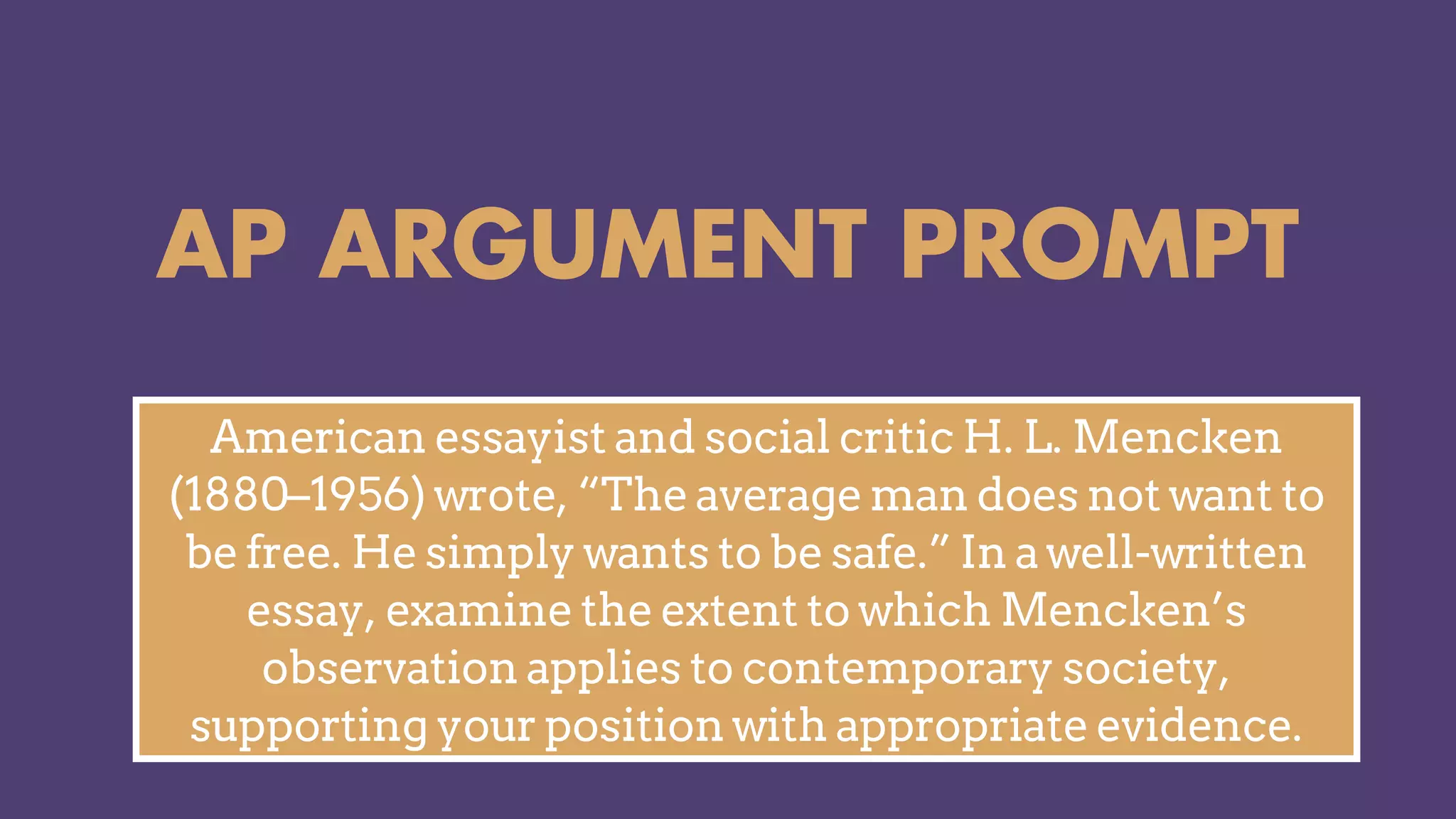
American essayist and social critic H. L. Mencken
(1880–1956) wrote, “The average man does not want to
be free. He simply wants to be safe.” In a well-written
essay, examine the extent to which Mencken’s
observation applies to contemporary society,
supporting your position with appropriate evidence.
UNDERSTANDING THE QUOTE
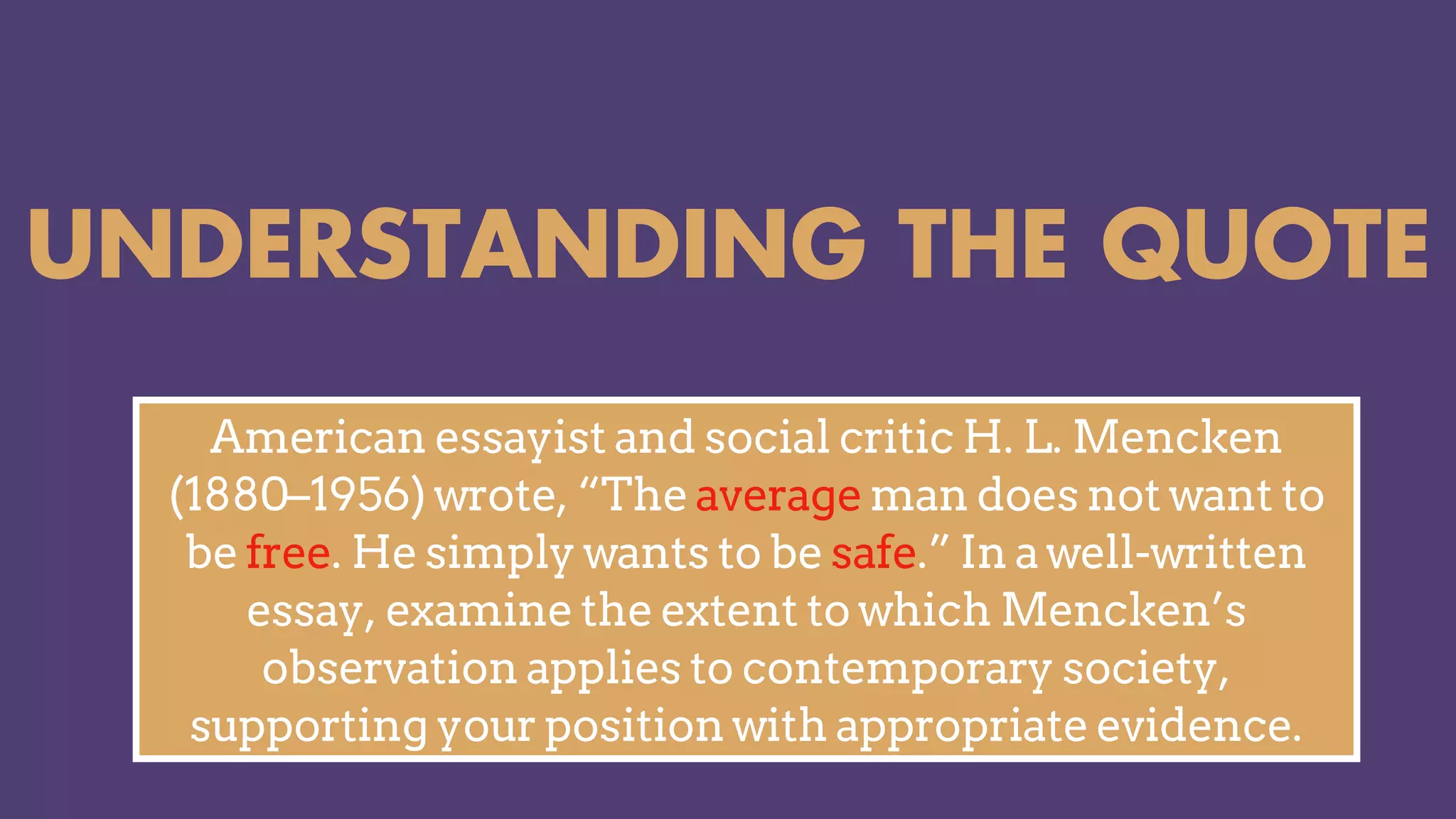
American essayist and social critic H. L. Mencken
(1880–1956) wrote, “The average man does not want to
be free. He simply wants to be safe.” In a well-written
essay, examine the extent to which Mencken’s
observation applies to contemporary society,
supporting your position with appropriate evidence.
UNDERSTANDING THE
PROMPT
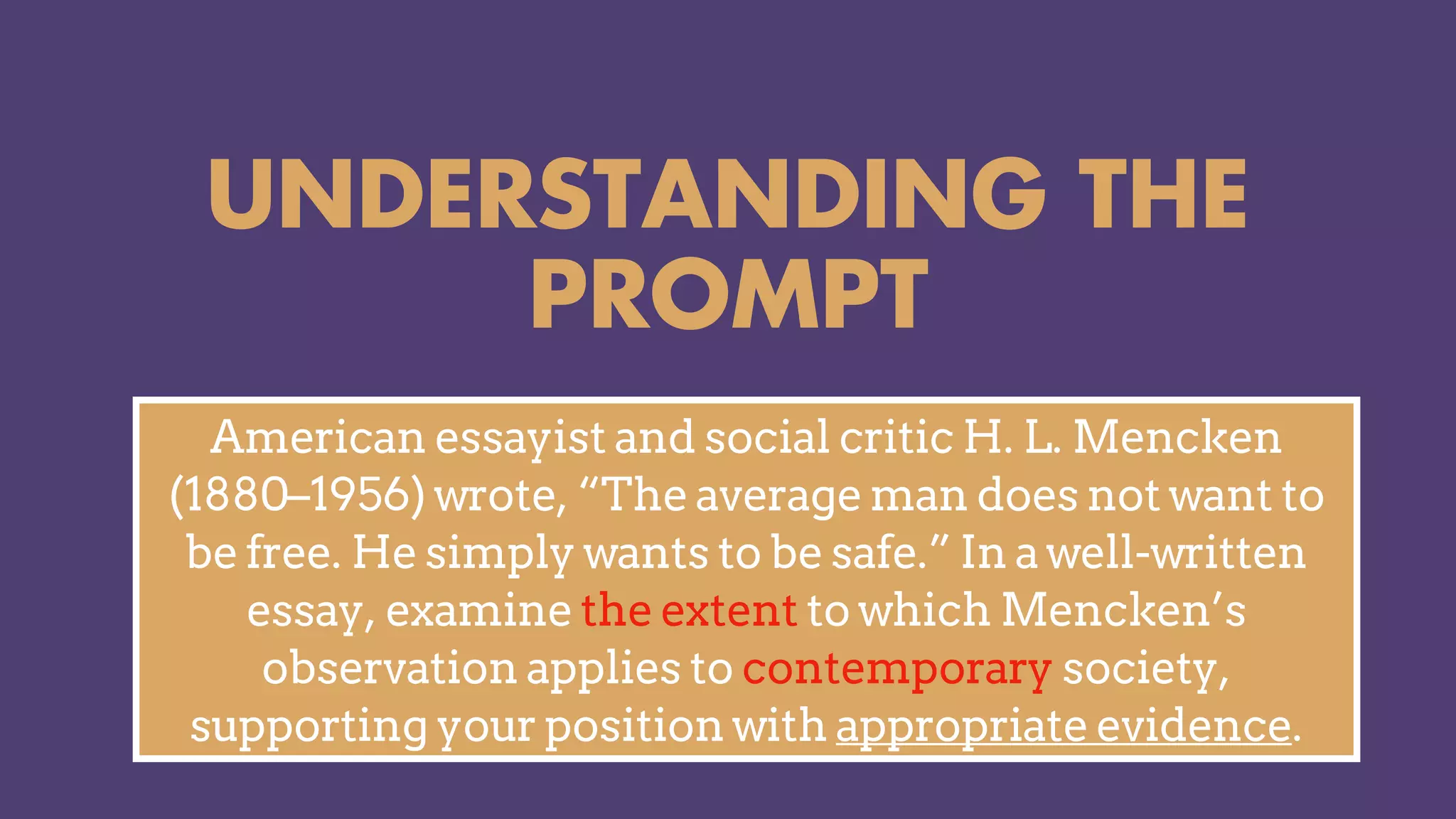
American essayist and social critic H. L. Mencken
(1880–1956) wrote, “The average man does not want to
be free. He simply wants to be safe.” In a well-written
essay, examine the extent to which Mencken’s
observation applies to contemporary society,
supporting your position with appropriate evidence.
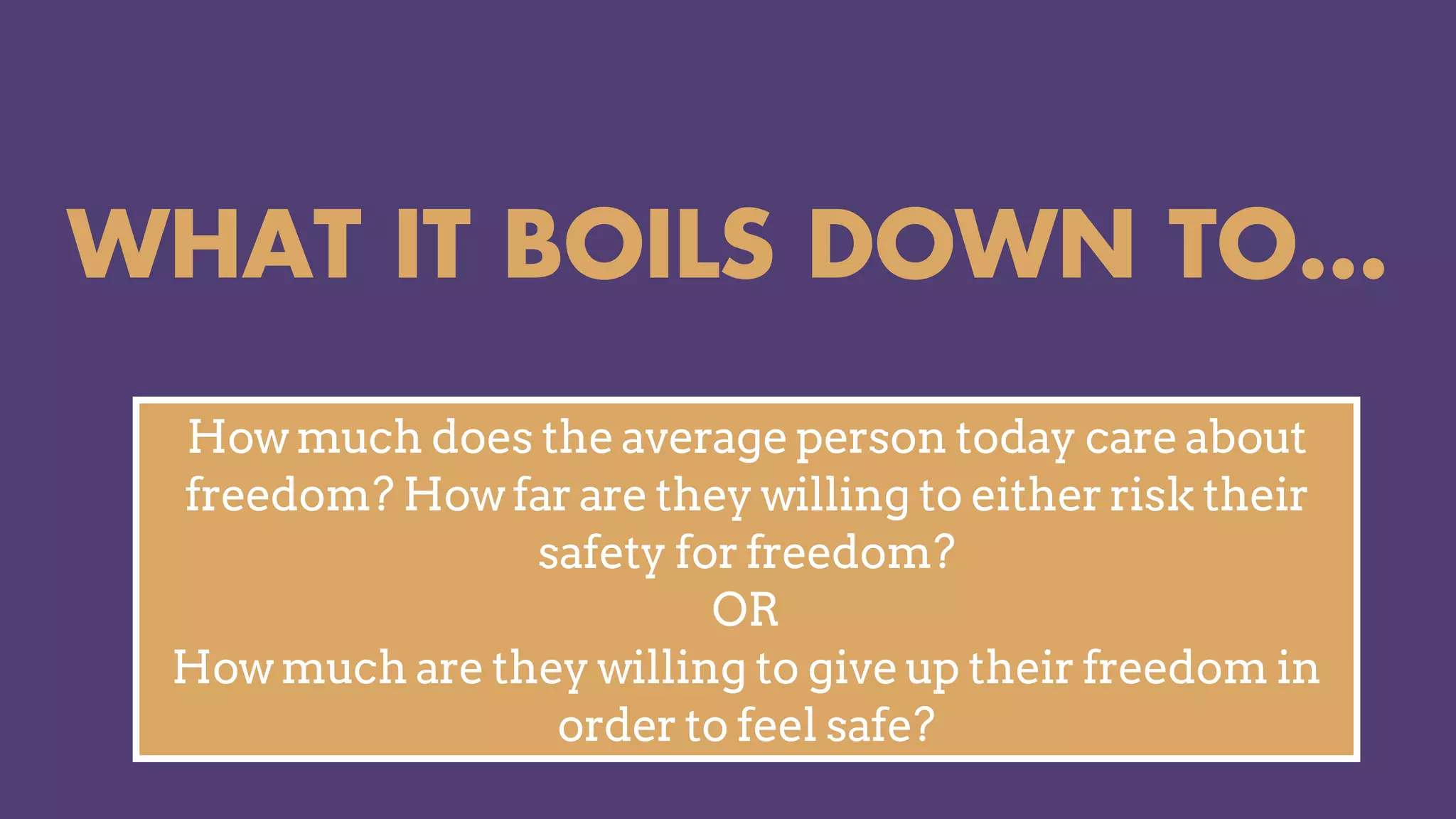
WHAT IT BOILS DOWN TO…
How much does the average person today care about
freedom? How far are they willing to either risk their
safety for freedom?
OR
How much are they willing to give up their freedom in
order to feel safe?
SOME PITFALLS
Misunderstanding the Prompt
SOME PITFALLS
Missing the “contemporary” part of the
prompt
SOME PITFALLS
Being too simple
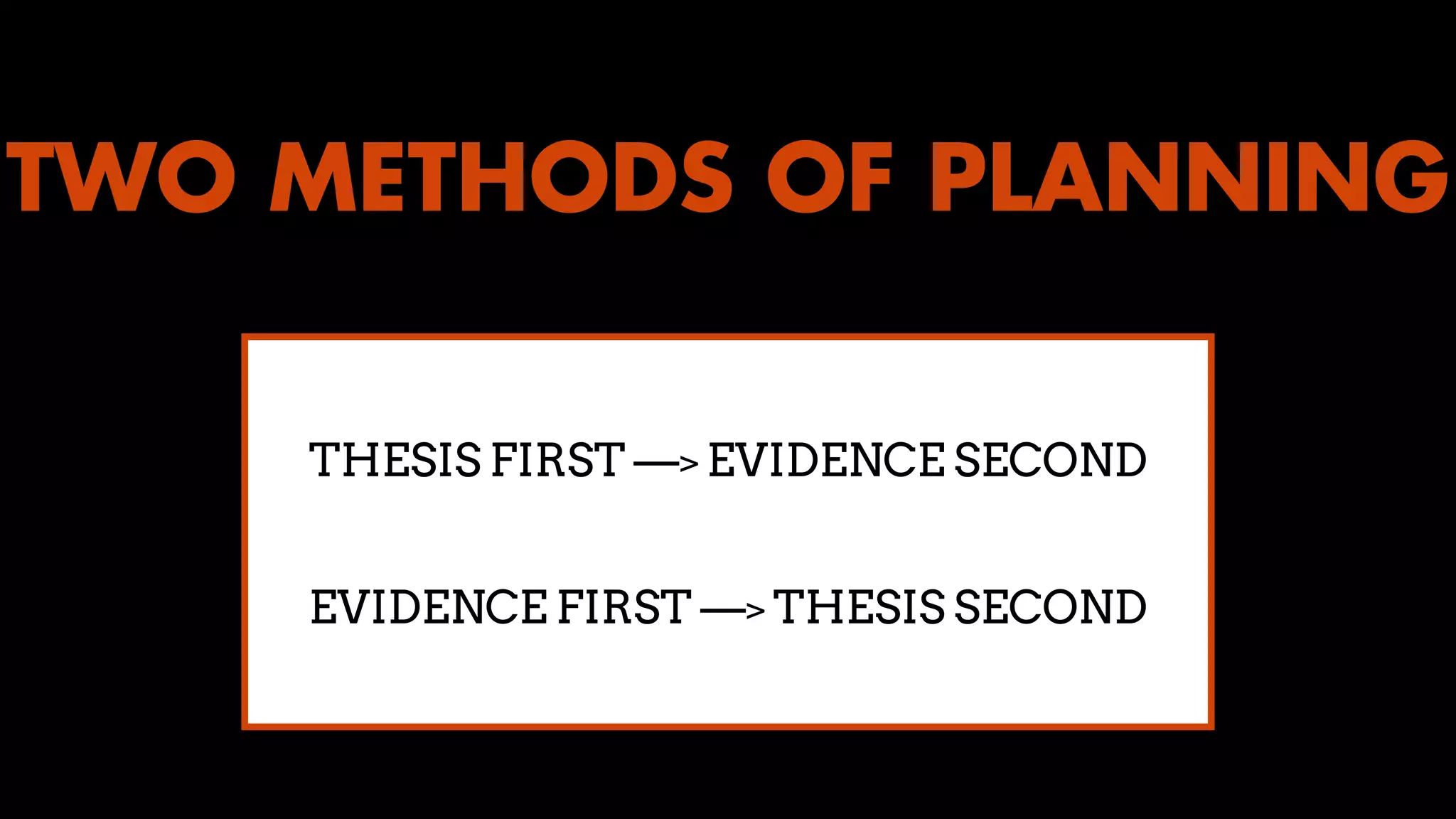
TWO METHODS OF PLANNING
EVIDENCE FIRST —> THESIS SECOND
THESIS FIRST —> EVIDENCE SECOND
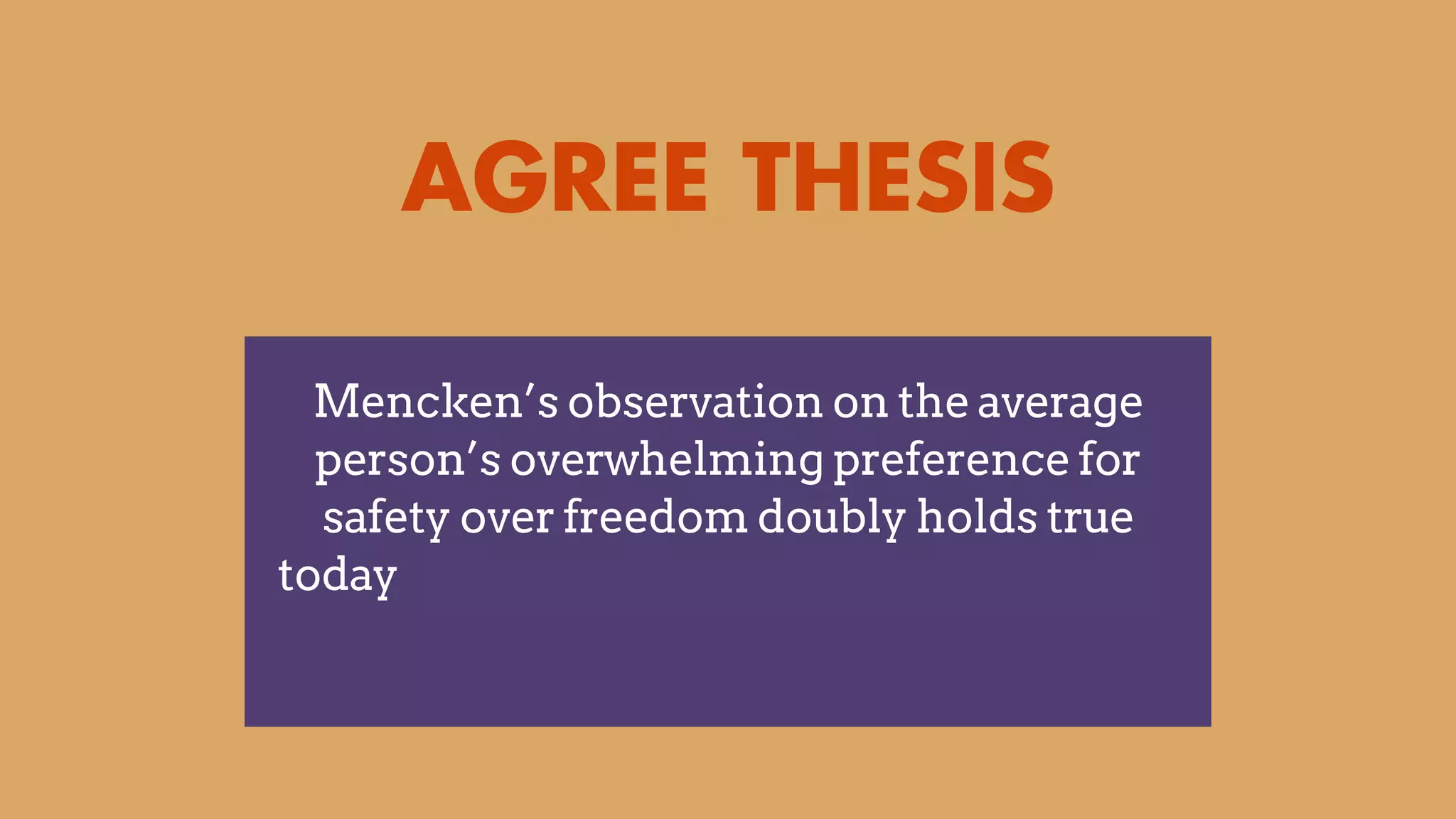
AGREE THESIS
Mencken’s observation on the average
person’s overwhelming preference for
safety over freedom doubly holds true
today as we face existential threats such as
terrorism and pandemic
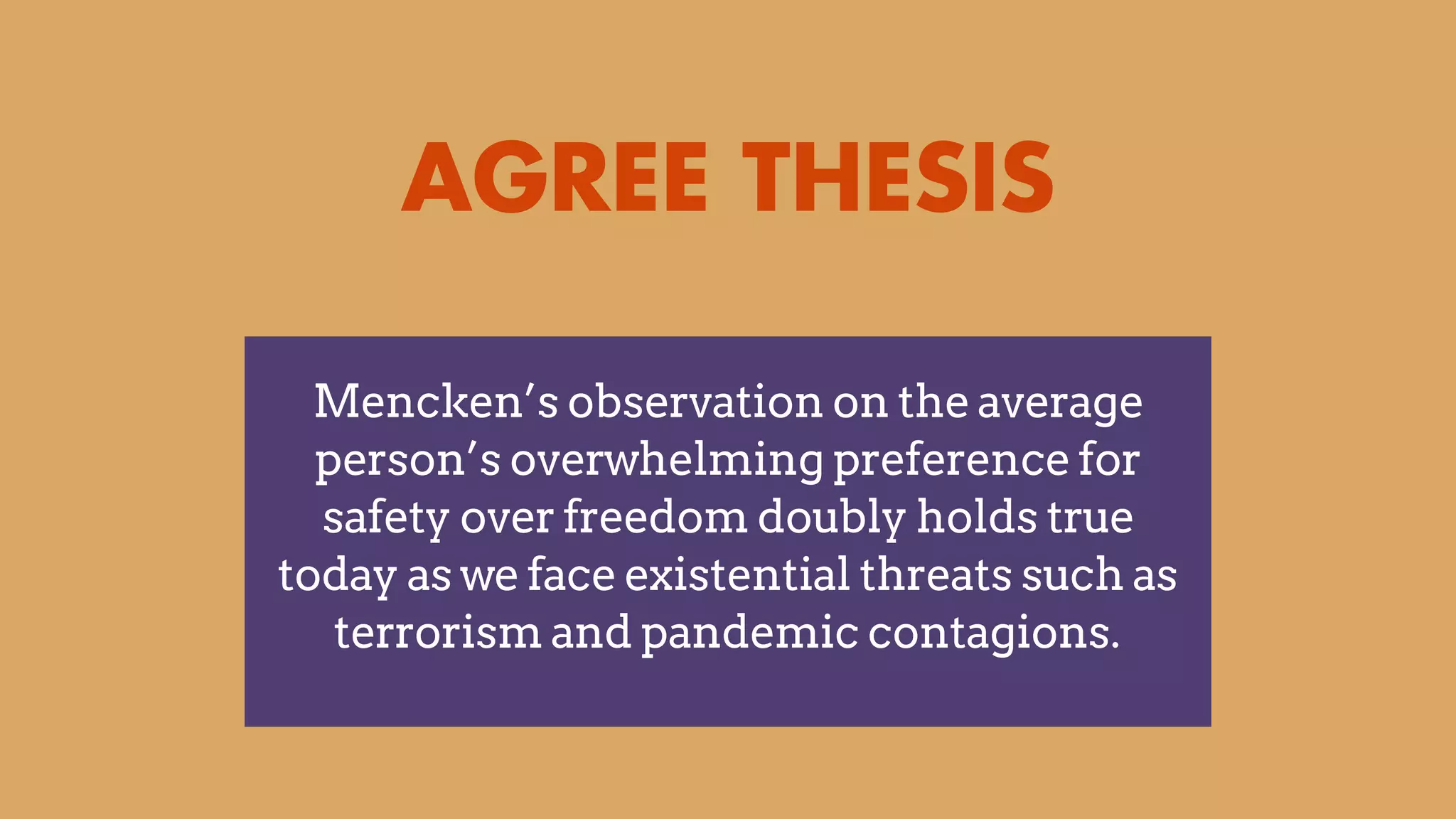
AGREE THESIS
Mencken’s observation on the average
person’s overwhelming preference for
safety over freedom doubly holds true
today as we face existential threats such as
terrorism and pandemic contagions.
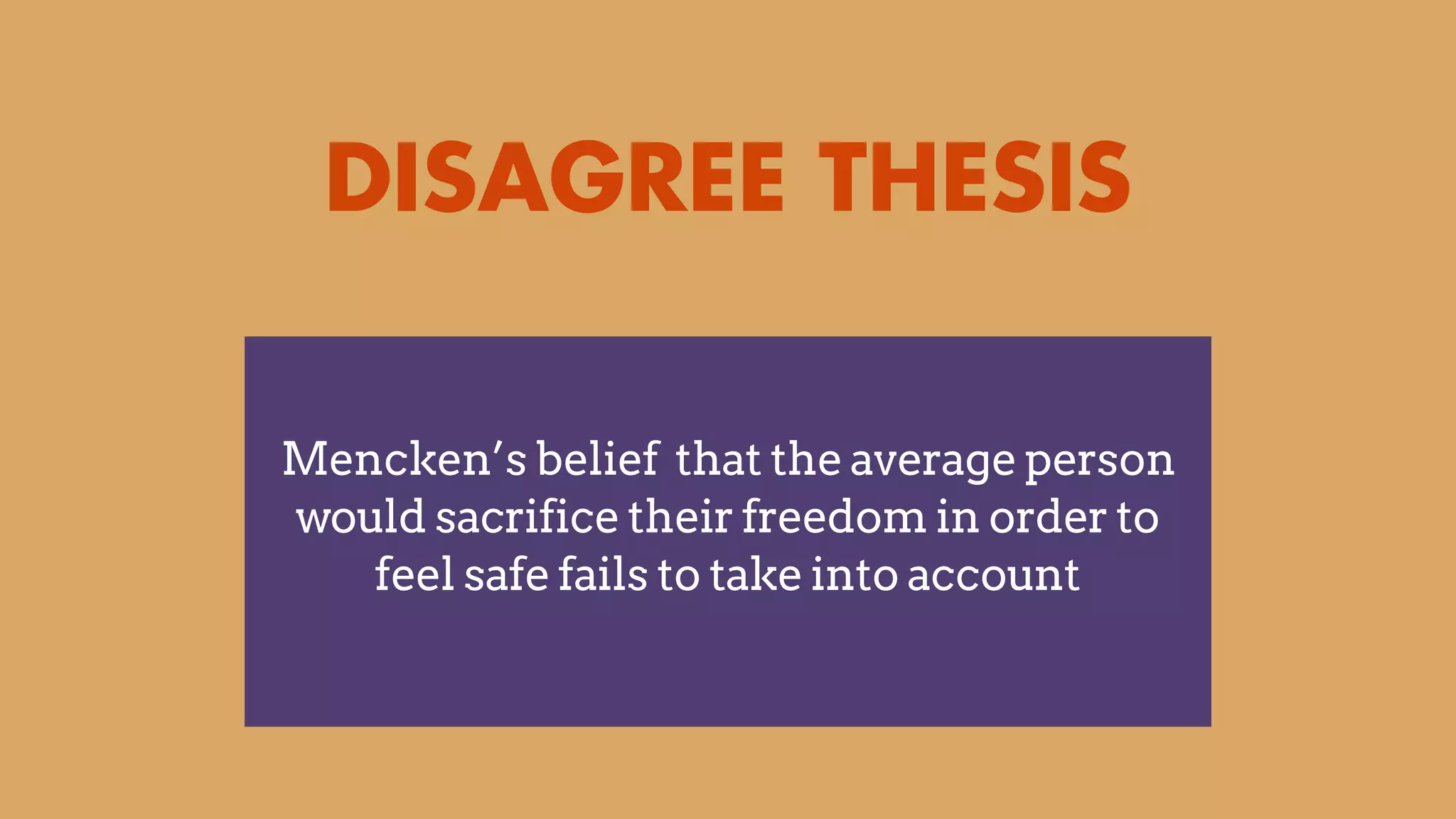
DISAGREE THESIS
Mencken’s belief that the average person
would sacrifice their freedom in order to
feel safe fails to take into account
DISAGREE THESIS
Mencken’s belief that the average person
would sacrifice their freedom in order to
feel safe fails to take into account our
willingness to face great dangers in the
name of science or patriotism.
QUALIFY THESIS
Mencken’s may be right that most people
usually value safety more highly than
freedom but he forgets how people will
risk everything if it means protecting the
people they love.
EVIDENCE FIRST?
PATRIOT Act
Volunteering for War
Sacrificing for a son/daughter
Thrill-seeking: Parachuting
Professions: Police Officers/Coal Miners
Thrill-seeking: Parachuting
Safety can be boring
SHOWS us…
Risking our lives can lend meaning
MOST people risk at some time
Many kind of risk taking possible
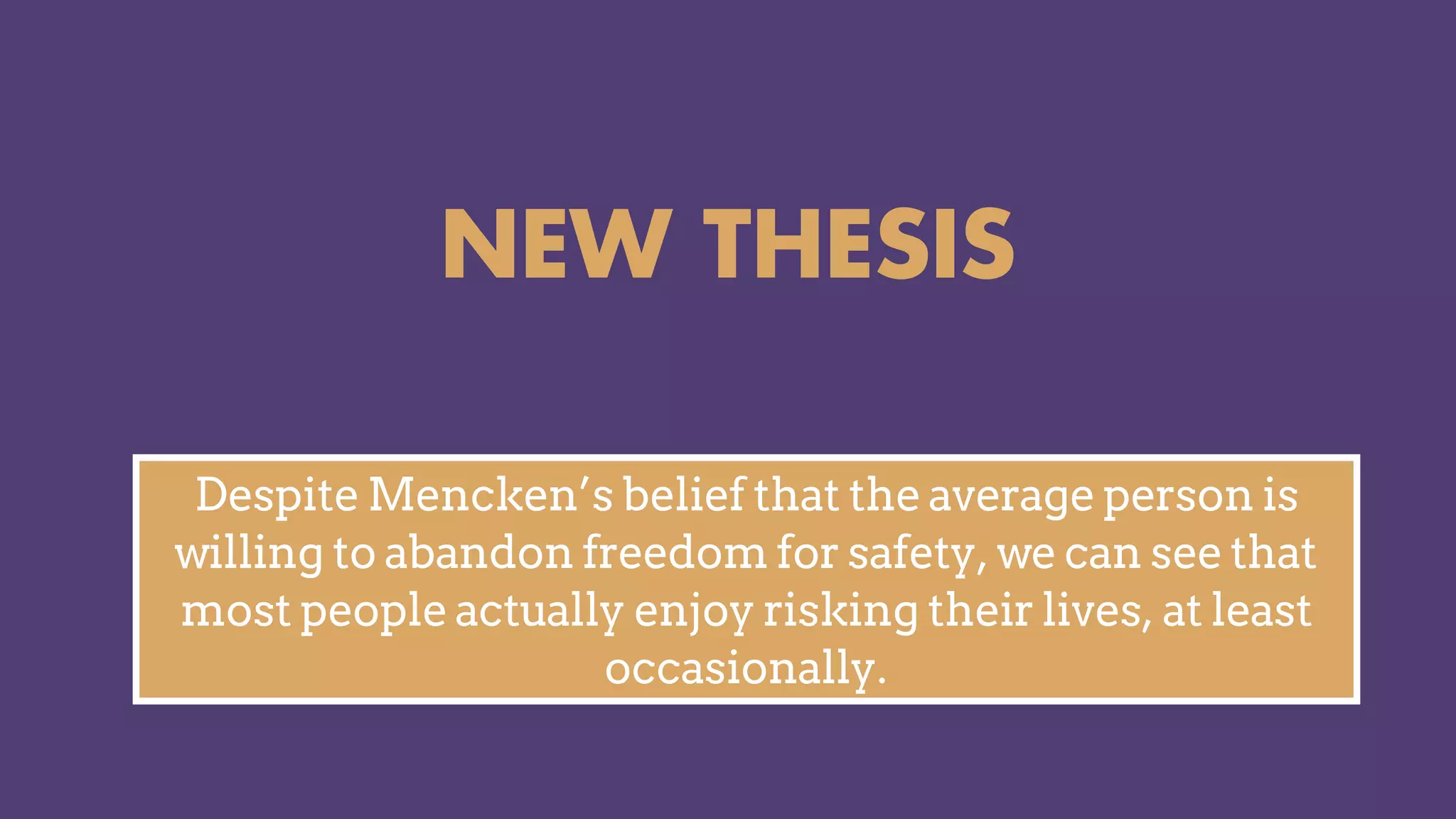
NEW THESIS
Despite Mencken’s belief that the average person is
willing to abandon freedom for safety, we can see that
most people actually enjoy risking their lives, at least
occasionally.

Arg prompt class

  • 2.
  • 3.
    AP ARGUMENT PROMPT Americanessayist and social critic H. L. Mencken (1880–1956) wrote, “The average man does not want to be free. He simply wants to be safe.” In a well-written essay, examine the extent to which Mencken’s observation applies to contemporary society, supporting your position with appropriate evidence.
  • 4.
    UNDERSTANDING THE QUOTE Americanessayist and social critic H. L. Mencken (1880–1956) wrote, “The average man does not want to be free. He simply wants to be safe.” In a well-written essay, examine the extent to which Mencken’s observation applies to contemporary society, supporting your position with appropriate evidence.
  • 5.
    UNDERSTANDING THE PROMPT American essayistand social critic H. L. Mencken (1880–1956) wrote, “The average man does not want to be free. He simply wants to be safe.” In a well-written essay, examine the extent to which Mencken’s observation applies to contemporary society, supporting your position with appropriate evidence.
  • 6.
    WHAT IT BOILSDOWN TO… How much does the average person today care about freedom? How far are they willing to either risk their safety for freedom? OR How much are they willing to give up their freedom in order to feel safe?
  • 7.
  • 8.
    SOME PITFALLS Missing the“contemporary” part of the prompt
  • 9.
  • 10.
    TWO METHODS OFPLANNING EVIDENCE FIRST —> THESIS SECOND THESIS FIRST —> EVIDENCE SECOND
  • 11.
    AGREE THESIS Mencken’s observationon the average person’s overwhelming preference for safety over freedom doubly holds true today as we face existential threats such as terrorism and pandemic
  • 12.
    AGREE THESIS Mencken’s observationon the average person’s overwhelming preference for safety over freedom doubly holds true today as we face existential threats such as terrorism and pandemic contagions.
  • 13.
    DISAGREE THESIS Mencken’s beliefthat the average person would sacrifice their freedom in order to feel safe fails to take into account
  • 14.
    DISAGREE THESIS Mencken’s beliefthat the average person would sacrifice their freedom in order to feel safe fails to take into account our willingness to face great dangers in the name of science or patriotism.
  • 15.
    QUALIFY THESIS Mencken’s maybe right that most people usually value safety more highly than freedom but he forgets how people will risk everything if it means protecting the people they love.
  • 16.
    EVIDENCE FIRST? PATRIOT Act Volunteeringfor War Sacrificing for a son/daughter Thrill-seeking: Parachuting Professions: Police Officers/Coal Miners
  • 17.
    Thrill-seeking: Parachuting Safety canbe boring SHOWS us… Risking our lives can lend meaning MOST people risk at some time Many kind of risk taking possible
  • 18.
    NEW THESIS Despite Mencken’sbelief that the average person is willing to abandon freedom for safety, we can see that most people actually enjoy risking their lives, at least occasionally.