Architectural Design 
Studio 
Responsibilities and 
expectations 
by 
CT.Lakshmanan B.Arch., M.C.P.
Mode of learning Design 
 project-based work 
 learning through first hand observation 
 learning through workshop (Hands on 
practice) and 
 Apprenticeship – practical training 
Can we teach design as we were taught it? 
We tend to teach as we have learnt.
philosophy 
 Studio teaching is not just another kind of 
classroom activity. It is not a lab session, nor is it 
just a series of class projects. 
 It is an approach to teaching and learning that 
gets students actively engaged in directing their 
own learning. The instructor is not the focus of 
the class, as in traditional classrooms. 
 This pedagogical philosophy will be new to 
many students and so requires time for 
adjustment
 Challenge of identifying a problem, 
defining its limits, and developing a 
creative approach to solve it, aids in the 
development of reasoned judgment, 
interpersonal skills, reflection-in-action, 
and critical reflection on practice which 
form the basis of architectural education 
 Expectations must be clear: students will 
not be comfortable unless they know what 
is expected of them and how they will be 
evaluated.
strategy 
 A key to studio teaching is to develop a 
collection of exercises/projects that will 
provide the focus for learning throughout the 
semester. 
 A good way to do this is to make a list of 
good exercises/projects you already have. 
 Then make a list of learning goals and 
compare the two lists. 
 Then go back and forth – adding or 
subtracting from each list until the semester 
is planned.
things to remember 
 You do not have to cover all topics in class. 
Students can read and they can do some 
homework to supplement what goes on in the 
classroom. 
 If your studio is successful, students will take 
more time than you expect to complete each 
project. 
 You can always make mid-course corrections if 
they are needed. 
 Patience is a virtue – let students carry-on with 
design as far as possible before you step in.
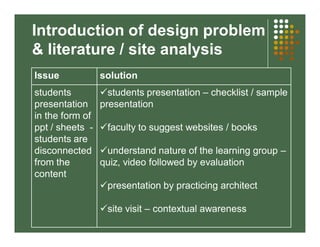
Introduction of design problem 
& literature / site analysis 
Issue solution 
students 
presentation 
in the form of 
ppt / sheets - 
students are 
disconnected 
from the 
content 
students presentation – checklist / sample 
presentation 
faculty to suggest websites / books 
understand nature of the learning group – 
quiz, video followed by evaluation 
presentation by practicing architect 
site visit – contextual awareness
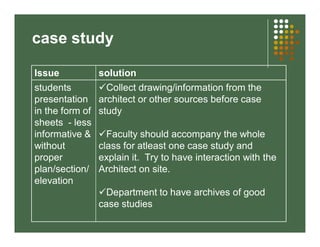
case study 
Issue solution 
students 
presentation 
in the form of 
sheets - less 
informative & 
without 
proper 
plan/section/ 
elevation 
Collect drawing/information from the 
architect or other sources before case 
study 
Faculty should accompany the whole 
class for atleast one case study and 
explain it. Try to have interaction with the 
Architect on site. 
Department to have archives of good 
case studies
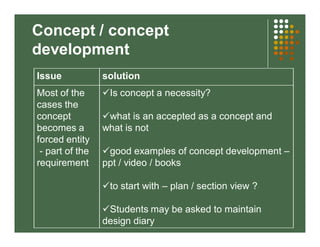
Concept / concept 
development 
Issue solution 
Most of the 
cases the 
concept 
becomes a 
forced entity 
- part of the 
requirement 
Is concept a necessity? 
what is an accepted as a concept and 
what is not 
good examples of concept development – 
ppt / video / books 
to start with – plan / section view ? 
Students may be asked to maintain 
design diary
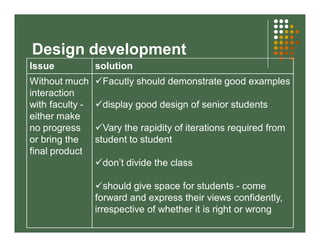
Design development 
Issue solution 
Without much 
interaction 
with faculty - 
either make 
no progress 
or bring the 
final product 
Facutly should demonstrate good examples 
display good design of senior students 
Vary the rapidity of iterations required from 
student to student 
don’t divide the class 
should give space for students - come 
forward and express their views confidently, 
irrespective of whether it is right or wrong
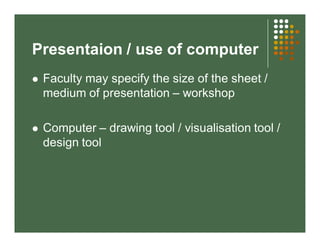
Presentaion / use of computer 
 Faculty may specify the size of the sheet / 
medium of presentation – workshop 
 Computer – drawing tool / visualisation tool / 
design tool
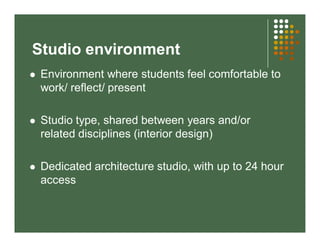
Studio environment 
 Environment where students feel comfortable to 
work/ reflect/ present 
 Studio type, shared between years and/or 
related disciplines (interior design) 
 Dedicated architecture studio, with up to 24 hour 
access
evaluation 
 Self evaluation 
 Crit - Individual, Peer, Group, Written 
 Unfair assessment – why group design 
projects are universally unpopular?
Externals 
 externals presence and their comments are 
effective for their future designing because 
they can understand different approaches, 
perspectives to their projects 
 externals come to juries with different agenda 
and may not know much about, what the 
target and criteria of the project is about and 
this may lead to expect beyond the scope of 
their project and less mark to them
Summery of students’ responses to key issue on 
evaluation process in National University Malaysia
Interaction with seniors 
 There is productive interaction between 
senior and junior students. This is further 
encouraged by the employment of top senior 
students as assistant tutors for 1st and 2nd 
years 
 Junior students who work more consistently 
in the studio – and interacting with senior 
students – commonly achieve superior 
outcomes
Good practice 
 Dayorder : studio (all 7 periods) for 
evaluation / case study / presentation / site 
visit 
 Continuous internal assessment - feedback / 
evaluation of the process and not the product 
 “Design session plan” – difficult to formulate 
but not impossible
Good practice 
 Design components in all lecture subjects 
to counter reduction in Studio teaching 
 The introduction of online lectures with 
tutorials related to the studio projects 
 Ensure students have emotional bonding with 
their project
Good practice 
 Is compensatory course necessary for 
Design 
 open crit – students learn from the mistakes 
of others 
 Benchmarks for successful studio teaching 
will assist academics to maximise the quality 
of learning outcomes
 Academic workloads are believed to have 
increased to an unsustainable level - 
additional administrative and quality 
assurance requirements - result in reduced 
time for teaching and learning 
 Good outcomes are dependent on the “right 
student candidate” and the fuel he/she has to 
be “ignited”
Faculty who teach studio are expected to 
 have the ability to inspire students to learn 
 to engage students in critical thinking 
 to bring forward their particular expertise 
 to convey a sense of optimism about the field 
of architecture.

Architectural design studio responsibilities and expectations

  • 1.
    Architectural Design Studio Responsibilities and expectations by CT.Lakshmanan B.Arch., M.C.P.
  • 2.
    Mode of learningDesign  project-based work  learning through first hand observation  learning through workshop (Hands on practice) and  Apprenticeship – practical training Can we teach design as we were taught it? We tend to teach as we have learnt.
  • 3.
    philosophy  Studioteaching is not just another kind of classroom activity. It is not a lab session, nor is it just a series of class projects.  It is an approach to teaching and learning that gets students actively engaged in directing their own learning. The instructor is not the focus of the class, as in traditional classrooms.  This pedagogical philosophy will be new to many students and so requires time for adjustment
  • 4.
     Challenge ofidentifying a problem, defining its limits, and developing a creative approach to solve it, aids in the development of reasoned judgment, interpersonal skills, reflection-in-action, and critical reflection on practice which form the basis of architectural education  Expectations must be clear: students will not be comfortable unless they know what is expected of them and how they will be evaluated.
  • 5.
    strategy  Akey to studio teaching is to develop a collection of exercises/projects that will provide the focus for learning throughout the semester.  A good way to do this is to make a list of good exercises/projects you already have.  Then make a list of learning goals and compare the two lists.  Then go back and forth – adding or subtracting from each list until the semester is planned.
  • 6.
    things to remember  You do not have to cover all topics in class. Students can read and they can do some homework to supplement what goes on in the classroom.  If your studio is successful, students will take more time than you expect to complete each project.  You can always make mid-course corrections if they are needed.  Patience is a virtue – let students carry-on with design as far as possible before you step in.
  • 7.
    Introduction of designproblem & literature / site analysis Issue solution students presentation in the form of ppt / sheets - students are disconnected from the content students presentation – checklist / sample presentation faculty to suggest websites / books understand nature of the learning group – quiz, video followed by evaluation presentation by practicing architect site visit – contextual awareness
  • 8.
    case study Issuesolution students presentation in the form of sheets - less informative & without proper plan/section/ elevation Collect drawing/information from the architect or other sources before case study Faculty should accompany the whole class for atleast one case study and explain it. Try to have interaction with the Architect on site. Department to have archives of good case studies
  • 9.
    Concept / concept development Issue solution Most of the cases the concept becomes a forced entity - part of the requirement Is concept a necessity? what is an accepted as a concept and what is not good examples of concept development – ppt / video / books to start with – plan / section view ? Students may be asked to maintain design diary
  • 10.
    Design development Issuesolution Without much interaction with faculty - either make no progress or bring the final product Facutly should demonstrate good examples display good design of senior students Vary the rapidity of iterations required from student to student don’t divide the class should give space for students - come forward and express their views confidently, irrespective of whether it is right or wrong
  • 11.
    Presentaion / useof computer  Faculty may specify the size of the sheet / medium of presentation – workshop  Computer – drawing tool / visualisation tool / design tool
  • 12.
    Studio environment Environment where students feel comfortable to work/ reflect/ present  Studio type, shared between years and/or related disciplines (interior design)  Dedicated architecture studio, with up to 24 hour access
  • 13.
    evaluation  Selfevaluation  Crit - Individual, Peer, Group, Written  Unfair assessment – why group design projects are universally unpopular?
  • 14.
    Externals  externalspresence and their comments are effective for their future designing because they can understand different approaches, perspectives to their projects  externals come to juries with different agenda and may not know much about, what the target and criteria of the project is about and this may lead to expect beyond the scope of their project and less mark to them
  • 15.
    Summery of students’responses to key issue on evaluation process in National University Malaysia
  • 16.
    Interaction with seniors  There is productive interaction between senior and junior students. This is further encouraged by the employment of top senior students as assistant tutors for 1st and 2nd years  Junior students who work more consistently in the studio – and interacting with senior students – commonly achieve superior outcomes
  • 17.
    Good practice Dayorder : studio (all 7 periods) for evaluation / case study / presentation / site visit  Continuous internal assessment - feedback / evaluation of the process and not the product  “Design session plan” – difficult to formulate but not impossible
  • 18.
    Good practice Design components in all lecture subjects to counter reduction in Studio teaching  The introduction of online lectures with tutorials related to the studio projects  Ensure students have emotional bonding with their project
  • 19.
    Good practice Is compensatory course necessary for Design  open crit – students learn from the mistakes of others  Benchmarks for successful studio teaching will assist academics to maximise the quality of learning outcomes
  • 20.
     Academic workloadsare believed to have increased to an unsustainable level - additional administrative and quality assurance requirements - result in reduced time for teaching and learning  Good outcomes are dependent on the “right student candidate” and the fuel he/she has to be “ignited”
  • 21.
    Faculty who teachstudio are expected to  have the ability to inspire students to learn  to engage students in critical thinking  to bring forward their particular expertise  to convey a sense of optimism about the field of architecture.