ARC 101
BUILDING UTILITIES2 – ELECTRICAL,
ELECTRONICS, AND MECHANICAL SYSTEMS
PREPARED BY: AR. J.I.S.B
(PART 4)
2.
“Energy can neitherbe created
nor destroyed – only converted
from one form of energy to
another.”
- JULIUS ROBERT MAYER
3.
Audio/Video system
Is electronicmedia possessing both a sound and a visual component, such as slide
tape presentations, films, television programs, corporate conferencing, church
services, and live theater productions.
Audiovisual service providers frequently offer
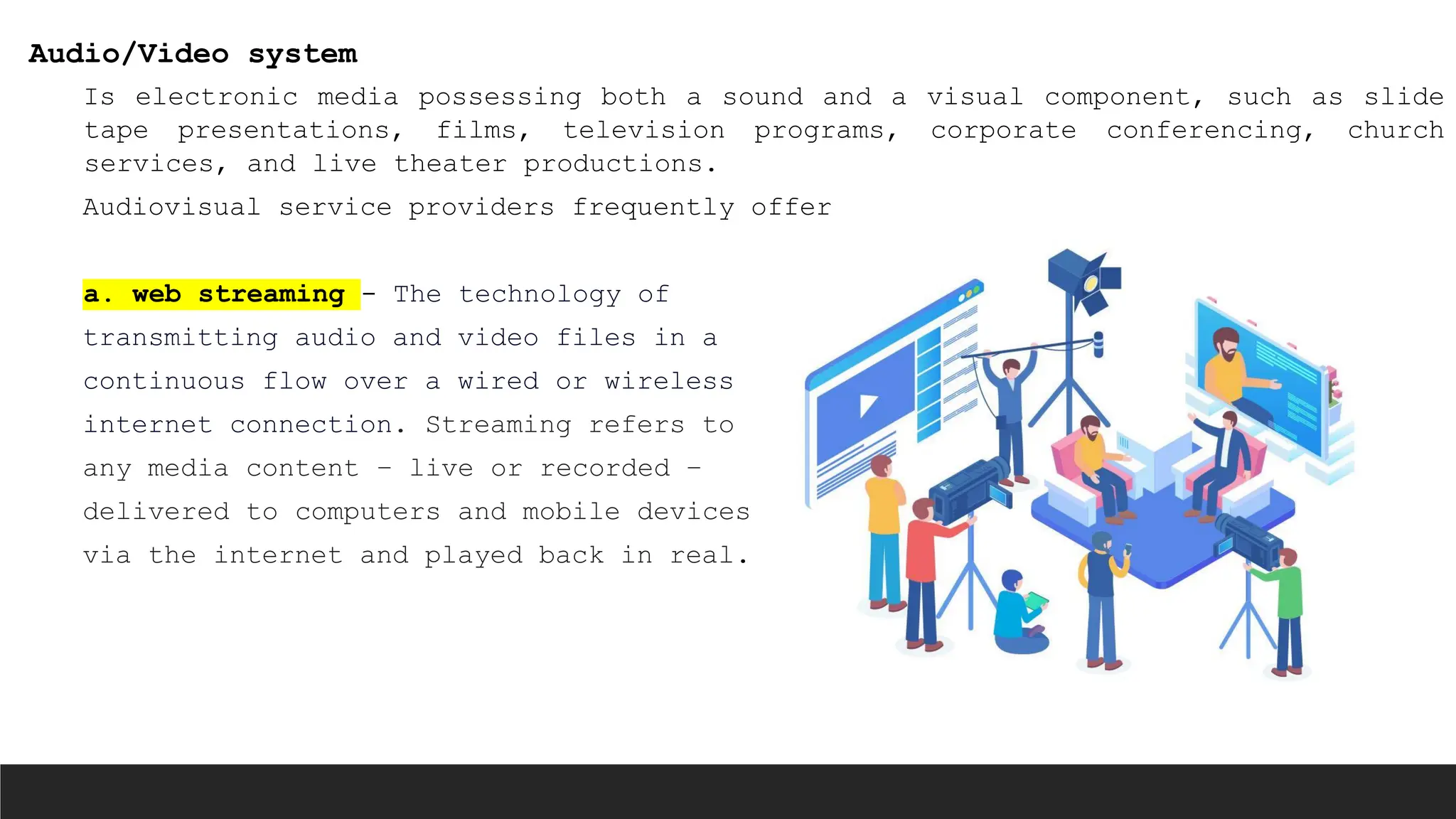
a. web streaming - The technology of
transmitting audio and video files in a
continuous flow over a wired or wireless
internet connection. Streaming refers to
any media content – live or recorded –
delivered to computers and mobile devices
via the internet and played back in real.
4.
video conferencing -Video conferencing is a meeting with two or more participants
who are participating from different locations. They use a computer connection,
audio, and video to connect. Video conferencing can be used for team meetings,
webinars, product demos, job interviews, and more.
5.
live broadcast services- A live broadcasting, also called a live transmission,
generally refers to various types of media that are broadcasting without a significant
delay. The most common seen media example of the live transmission is a news program or
a news broadcasting. Other types of live broadcasts include: Live radio. Live
television.
Computer-based audiovisual
equipment is often used in education,
with many schools and universities
installing projection equipment
and using interactive whiteboard technology.
6.
PA system
A publicaddress system (PA system) is an electronic system comprising
microphones, amplifiers, loudspeakers, and related equipment. It increases the
apparent volume (loudness) of a human voice, musical instrument, or other
acoustic sound source or recorded sound or music. PA systems are used in any
public venue that requires that an announcer, performer, etc. be sufficiently
audible at a distance or over a large area. Typical applications include sports
stadiums, public transportation vehicles and facilities, and live or recorded
music venues and events. A PA system may include multiple microphones or other
sound sources, a mixing console to combine and modify multiple sources, and
multiple amplifiers and loudspeakers for louder volume or wider distribution.
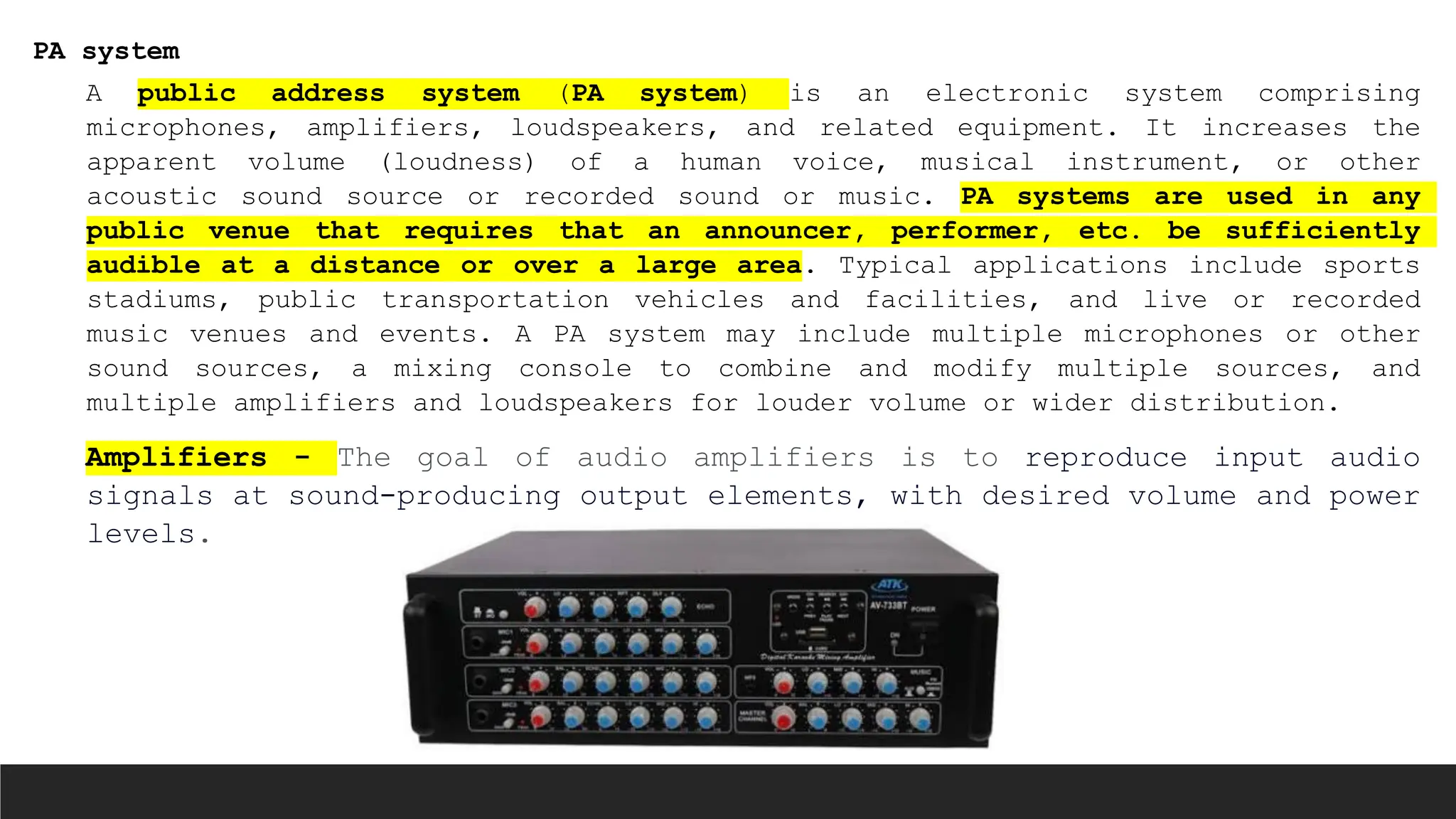
Amplifiers - The goal of audio amplifiers is to reproduce input audio
signals at sound-producing output elements, with desired volume and power
levels.
7.
3. High Technology(Hi-Tech) system
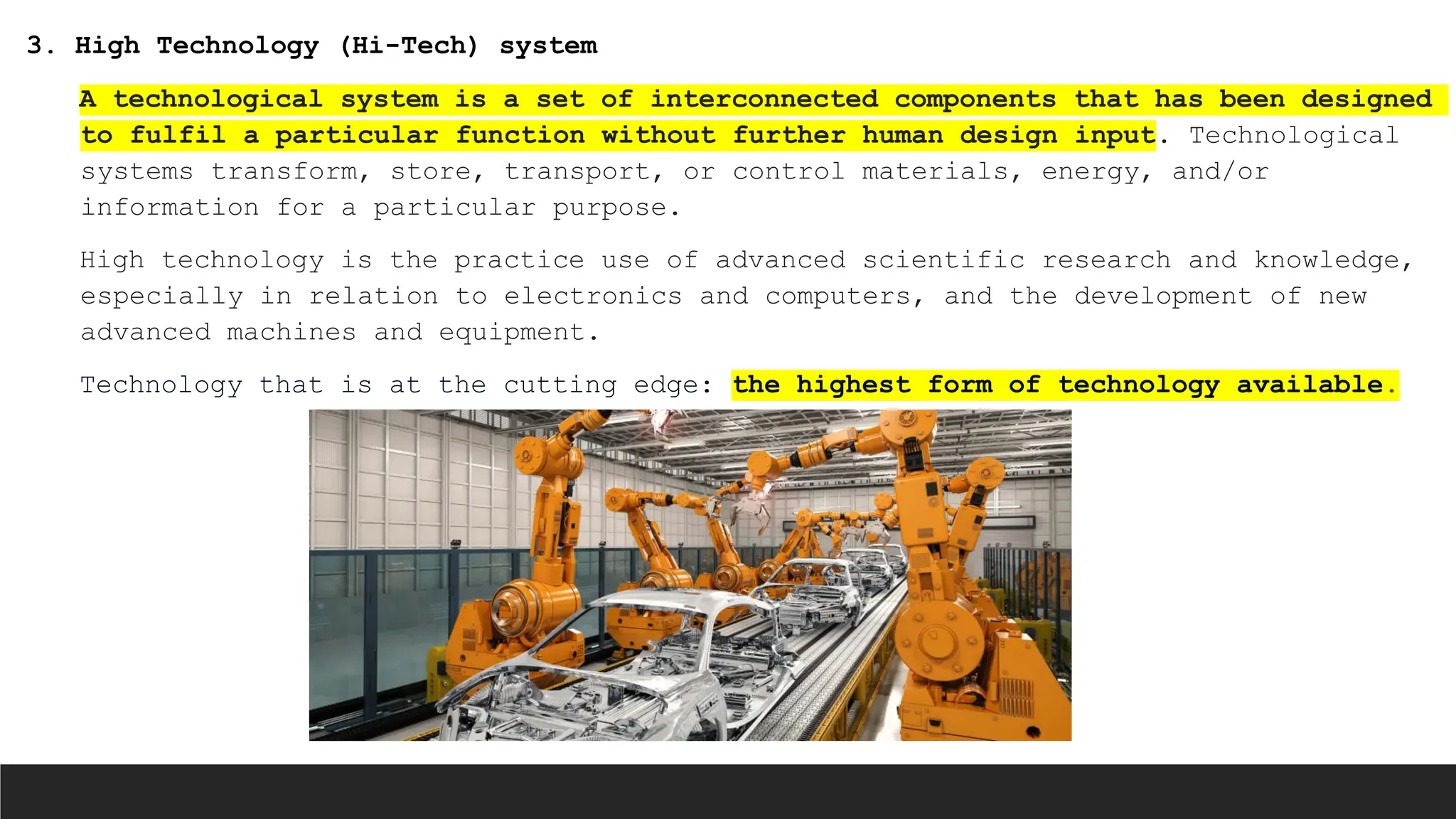
A technological system is a set of interconnected components that has been designed
to fulfil a particular function without further human design input. Technological
systems transform, store, transport, or control materials, energy, and/or
information for a particular purpose.
High technology is the practice use of advanced scientific research and knowledge,
especially in relation to electronics and computers, and the development of new
advanced machines and equipment.
Technology that is at the cutting edge: the highest form of technology available.
8.
4. Building automationsystem
Building automation is the automatic centralized control of a building's HVAC (heating,
ventilation and air conditioning), electrical, lighting, shading, Access Control, Security
Systems, and other interrelated systems through a Building Management System (BMS) or
Building Automation System (BAS). The objectives of building automation are improved
occupant comfort, efficient operation of building systems, reduction in energy consumption,
reduced operating and maintaining costs, increased security, historical performance
documentation, remote access/control/operation, and improved life cycle of equipment and
related utilities.
Building automation is an example of a distributed control system – the computer
networking of electronic devices designed to monitor and control the systems in a
building.
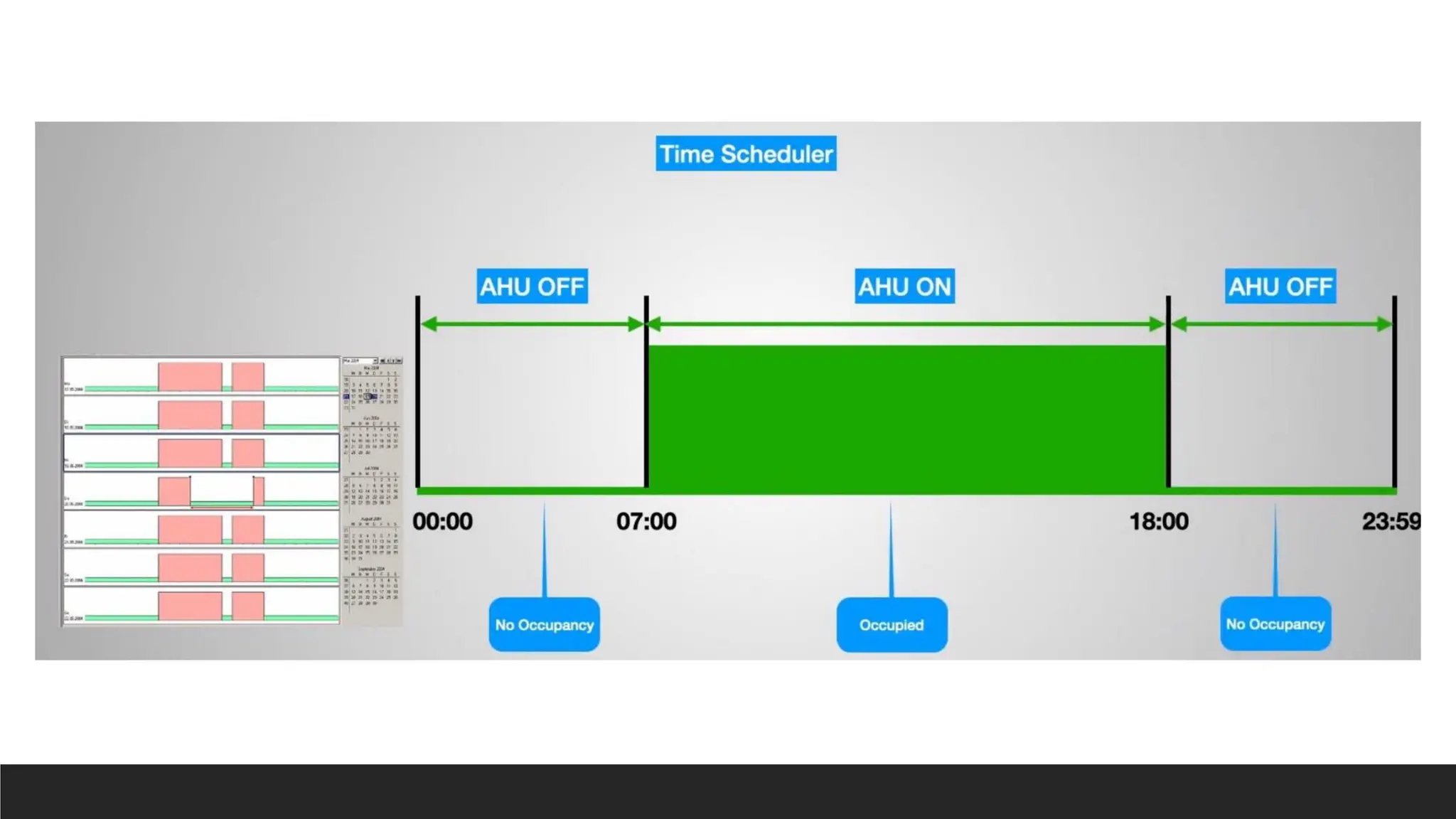
BAS core functionality keeps building climate within a specified range, provides
light to rooms based on an occupancy schedule (in the absence of overt switches to
the contrary), monitors performance and device failures in all systems, and
provides malfunction alarms to building maintenance staff. A BAS should reduce
building energy and maintenance costs compared to a non-controlled building. Most
commercial, institutional, and industrial buildings built after 2000 include a BAS.
Many older buildings have been retrofitted with a new BAS, typically financed
through energy and insurance savings, and other savings associated with pre-emptive
maintenance and fault detection.
9.
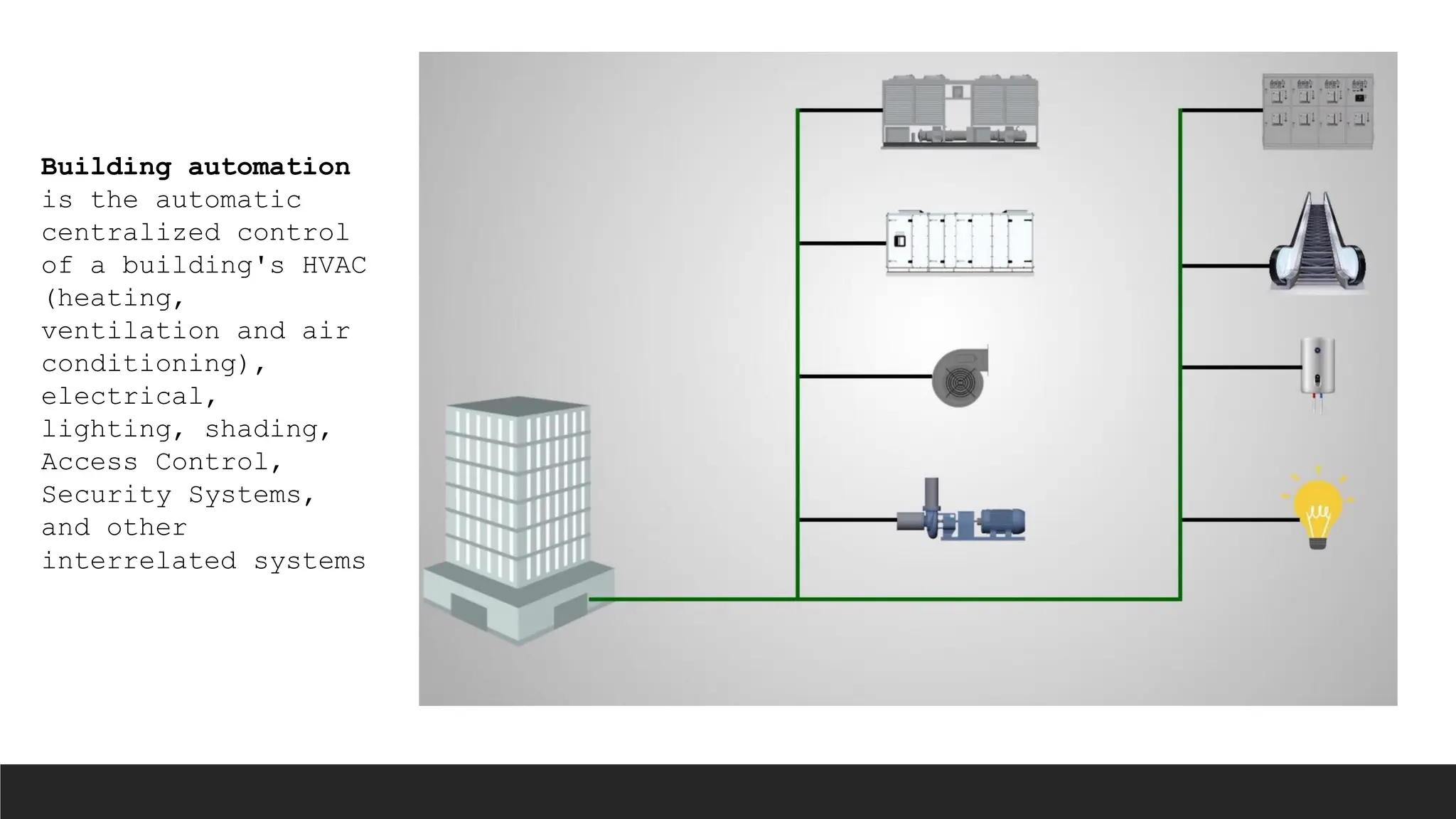
Building automation
is theautomatic
centralized control
of a building's HVAC
(heating,
ventilation and air
conditioning),
electrical,
lighting, shading,
Access Control,
Security Systems,
and other
interrelated systems
10.
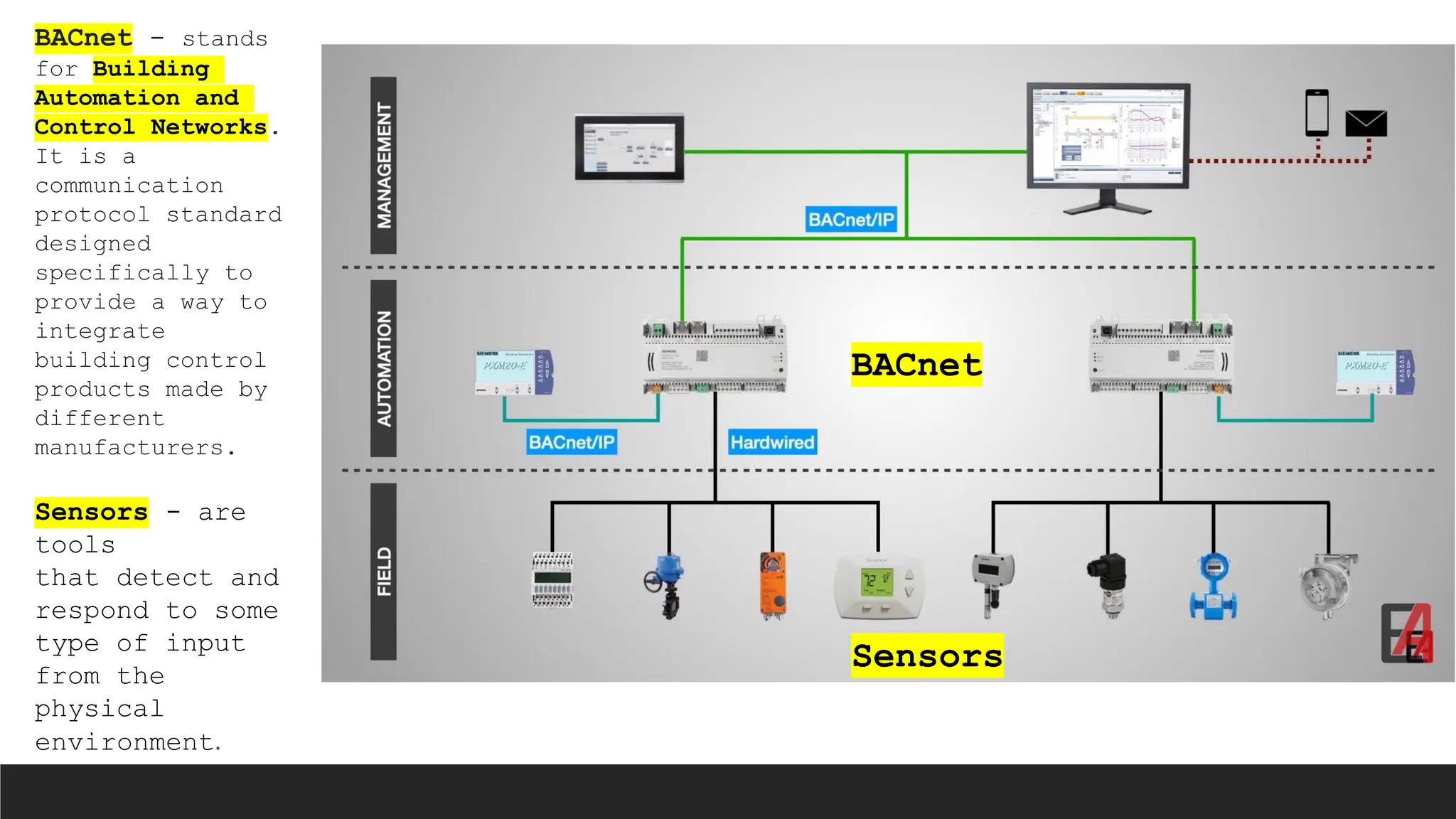
Sensors - are
tools
thatdetect and
respond to some
type of input
from the
physical
environment.
BACnet - stands
for Building
Automation and
Control Networks.
It is a
communication
protocol standard
designed
specifically to
provide a way to
integrate
building control
products made by
different
manufacturers.
Sensors
BACnet
11.
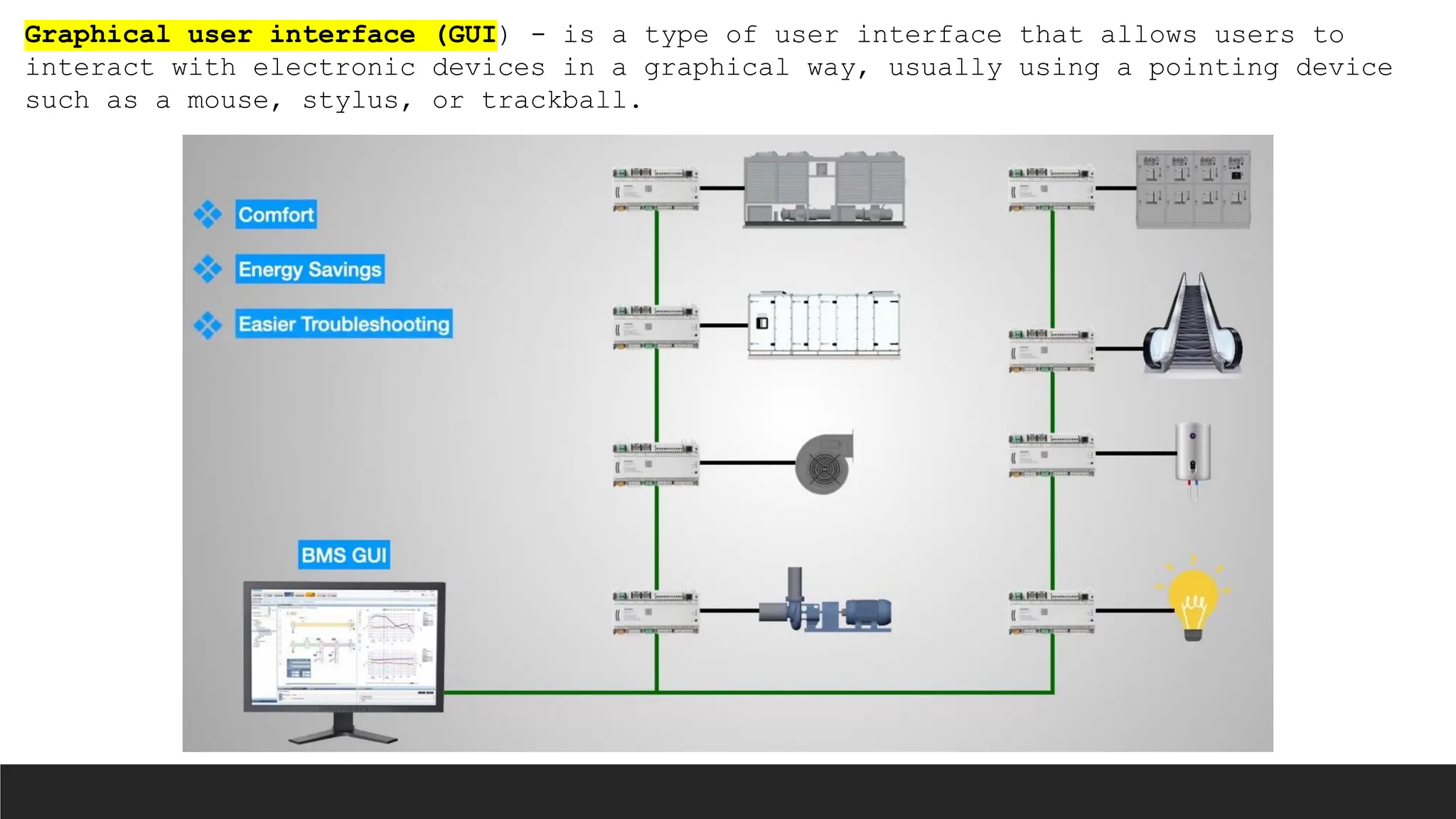
Graphical user interface(GUI) - is a type of user interface that allows users to
interact with electronic devices in a graphical way, usually using a pointing device
such as a mouse, stylus, or trackball.
12.
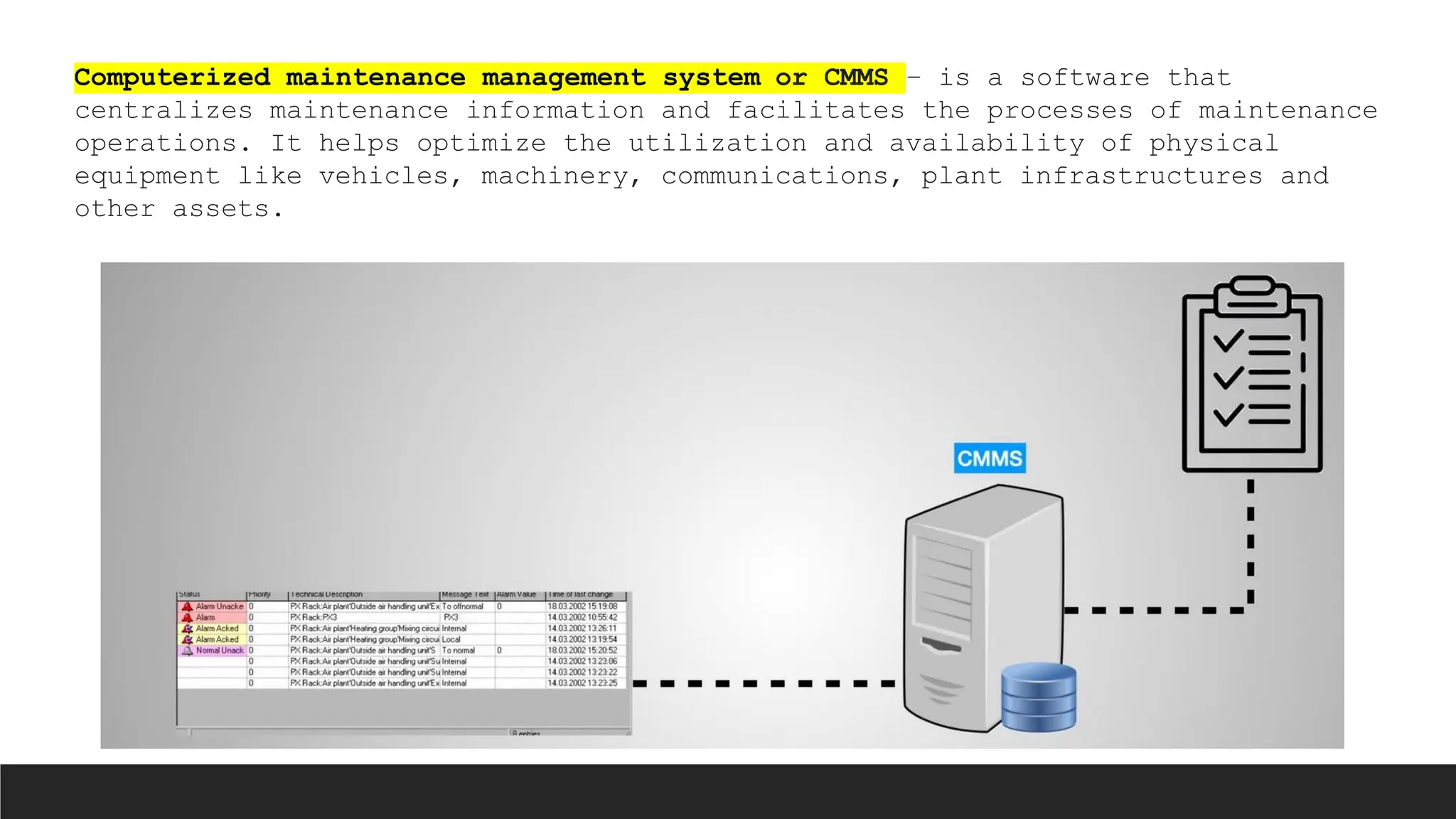
Computerized maintenance managementsystem or CMMS – is a software that
centralizes maintenance information and facilitates the processes of maintenance
operations. It helps optimize the utilization and availability of physical
equipment like vehicles, machinery, communications, plant infrastructures and
other assets.
14.
5. Intelligent building
Intelligentbuildings (IBs) has become increasingly popular due to their
potentials for deploying design initiatives and emerging technologies towards
maximized occupants’ comfort and wellbeing with sustainable design. However,
various definitions, interpretations, and implications regarding the essence
of IBs exist. Various key performance indicators of IBs have been proposed in
different contexts. This study explores the notion of IBs and presents an
analysis of their main constituents. Through a comparison of these
constituents in different contexts, this study aims to extract the common
features of IBs leading to an evolved definition which could be useful as a
reference framework for design, evaluation, and development of future IBs.
Findings also scrutinize the long run benefits of IBs, while demonstrating
the constraints and challenges of the current international interpretations.
15.
What features doesa smart building have?
Connecting building systems
A modern building incorporating the latest technology is one that connects all the equipment
and systems that exist in a building. In this way, you can be informed of what is happening
in real time and access the historical records of what happened a few minutes, hours or days
ago so that you can act on the building’s systems remotely in case of an emergency.
Connecting people and technology
Intelligent buildings are those that allow people to take advantage of the latest
technological innovations in a simple and intuitive way. For example, accessibility for the
disabled, with automated door opening, fall detection, voice control, etc.
Controlling the building’s expenditure
The use of technologies to build intelligent buildings allows their users to reduce the money
spent on different supplies such as heating, light, water, etc.
Centralized control of building behaviour
Anyone with access to a centralized platform is able to visualize in a screenshot the
behavior of the building to make the necessary adjustments. It is possible to control and
automate systems such as lighting, power sockets, heating, air conditioning, appliances,
doors, windows, blinds, irrigation, DHW generators, etc.
Connecting the building to a smart grid
In the next few years, buildings will become more sustainable and efficient, and we will see
that they are increasingly able to predict the ambient temperature and contract light
according to their needs, such as when the kilowatt is cheaper.
To all this, we can add that the functionalities of an intelligent building bring different
benefits.



![[BROCHURE] Italy Tour Project | @SlideON](https://cdn.slidesharecdn.com/ss_thumbnails/brochure8-251215152319-2805af68-thumbnail.jpg?width=640&height=640&fit=bounds)


