Approaches to Literary
Criticism
G 11- 21st Century Literature
Approaches
to Literary
Criticism
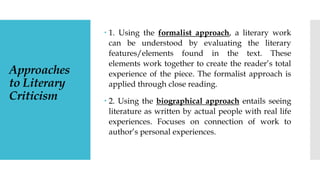
 1. Using the formalist approach, a literary work
can be understood by evaluating the literary
features/elements found in the text. These
elements work together to create the reader’s total
experience of the piece. The formalist approach is
applied through close reading.
 2. Using the biographical approach entails seeing
literature as written by actual people with real life
experiences. Focuses on connection of work to
author’s personal experiences.
Approaches
to Literary
Criticism
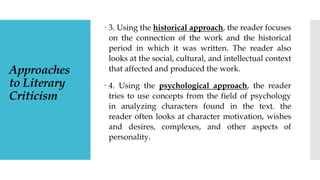
 3. Using the historical approach, the reader focuses
on the connection of the work and the historical
period in which it was written. The reader also
looks at the social, cultural, and intellectual context
that affected and produced the work.
 4. Using the psychological approach, the reader
tries to use concepts from the field of psychology
in analyzing characters found in the text. the
reader often looks at character motivation, wishes
and desires, complexes, and other aspects of
personality.
Approaches
to Literary
Criticism
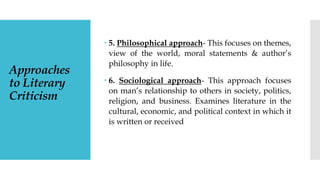
 5. Philosophical approach- This focuses on themes,
view of the world, moral statements & author’s
philosophy in life.
 6. Sociological approach- This approach focuses
on man’s relationship to others in society, politics,
religion, and business. Examines literature in the
cultural, economic, and political context in which it
is written or received
Approaches
to Literary
Criticism
 7. Gender Criticism-This approach
“examines how sexual identity influences
the creation and reception of literary
works.” Originally an offshoot
of feminist movements, gender
criticism today includes a number of
approaches, including the so-called
“masculinist” approach.
Approaches
to Literary
Criticism
8. Reader-Response-is a school of
literary theory that focuses on
the reader (or "audience") and their
experience of a literary work, in
contrast to other schools and theories
that focus attention primarily on the
author or the content and form of the
work.
Approaches-to-Literary-Criticism.pptx

Approaches-to-Literary-Criticism.pptx

  • 1.
    Approaches to Literary Criticism G11- 21st Century Literature
  • 2.
    Approaches to Literary Criticism  1.Using the formalist approach, a literary work can be understood by evaluating the literary features/elements found in the text. These elements work together to create the reader’s total experience of the piece. The formalist approach is applied through close reading.  2. Using the biographical approach entails seeing literature as written by actual people with real life experiences. Focuses on connection of work to author’s personal experiences.
  • 3.
    Approaches to Literary Criticism  3.Using the historical approach, the reader focuses on the connection of the work and the historical period in which it was written. The reader also looks at the social, cultural, and intellectual context that affected and produced the work.  4. Using the psychological approach, the reader tries to use concepts from the field of psychology in analyzing characters found in the text. the reader often looks at character motivation, wishes and desires, complexes, and other aspects of personality.
  • 4.
    Approaches to Literary Criticism  5.Philosophical approach- This focuses on themes, view of the world, moral statements & author’s philosophy in life.  6. Sociological approach- This approach focuses on man’s relationship to others in society, politics, religion, and business. Examines literature in the cultural, economic, and political context in which it is written or received
  • 5.
    Approaches to Literary Criticism  7.Gender Criticism-This approach “examines how sexual identity influences the creation and reception of literary works.” Originally an offshoot of feminist movements, gender criticism today includes a number of approaches, including the so-called “masculinist” approach.
  • 6.
    Approaches to Literary Criticism 8. Reader-Response-isa school of literary theory that focuses on the reader (or "audience") and their experience of a literary work, in contrast to other schools and theories that focus attention primarily on the author or the content and form of the work.