MD NAZMUL HOSSAIN
ENV 06805215
STAMFORD UNIVERSITY BANGLADESH
Application of Remote sensing on Disaster management in Bangladesh .
MD NAZMUL HOSSAIN
ENV 06805215
STAMFORD UNIVERSITY BANGLADESH
COURSE TEACHER: ABDULLAH ALL NAYEEM
STAMFORD UNIVERSITY,BANGLADESH.
ENVIRONMENT SCIENCE DEPARTMENT
CORUSE REMOTE SENSING
DATE:28/07/2020
Types of Disaster
Natural Disasters
 Geophysical (e.g. Earthquakes, Landslides, Tsunamis
and Volcanic Activity)
 Hydrological (e.g. Avalanches and Floods)
 Climatological (e.g. Extreme Temperatures, Drought
and Wildfires) Meteorological (e.g. Cyclones and
Storms/Wave Surges)
 Biological (e.g. Disease Epidemics and Insect/Animal
Plagues)
Man-Made Disasters
 Environmental Degradation
 Pollution
 Accidents (e.g. Industrial, Technological and Transport
usually involving the production, use or transport of
hazardous materials)
 Food Insecurity
 Epidemics
 Armed Conflicts
 Displaced Populations
According to IRRC these Complex Emergencies are
typically characterized by :
 Extensive Violence
 Displacements of Populations
 Loss of Life
 Widespread Damage to both Societies and Economies
 Need for Large-scale, Humanitarian Assistance across
Multiple Agencies
 Political and Military Constraints which impact or
prevent Humanitarian Assistance
 Increased Security Risks for Humanitarian Relief
Workers
Complex Emergencies
Pandemic Emergencies
Ebola
Zika
Avian Flu
Cholera
Dengue Fever
Malaria
Yellow Fever
Coronavirus Disease
(COVID-19)
Hazard mapping
Landslide early warning
Volcano and land subsidence monitoring
 Wildfire early detection and control
Glacial lake outburst flood (GLOF) early
warning in Bhutan
 Response to the 2011 Great East Japan
Earthquake.
Application of Remote sensing on Disaster
management IN BANGLADESH
Major Disasters in Bangladesh
Cyclone
Floods
Droughts
Tornado
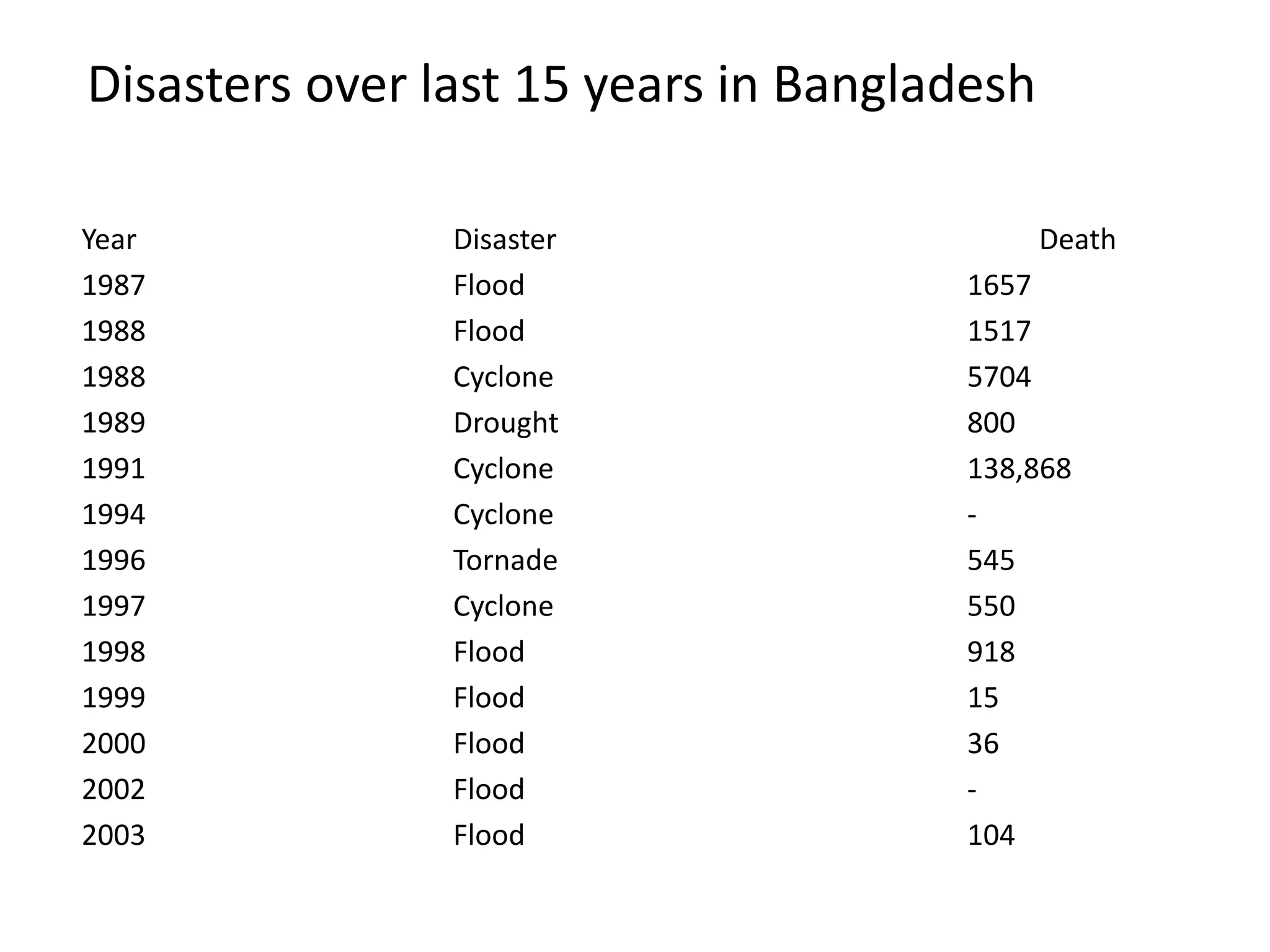
Disasters over last 15 years in Bangladesh
Year Disaster Death
1987 Flood 1657
1988 Flood 1517
1988 Cyclone 5704
1989 Drought 800
1991 Cyclone 138,868
1994 Cyclone -
1996 Tornade 545
1997 Cyclone 550
1998 Flood 918
1999 Flood 15
2000 Flood 36
2002 Flood -
2003 Flood 104
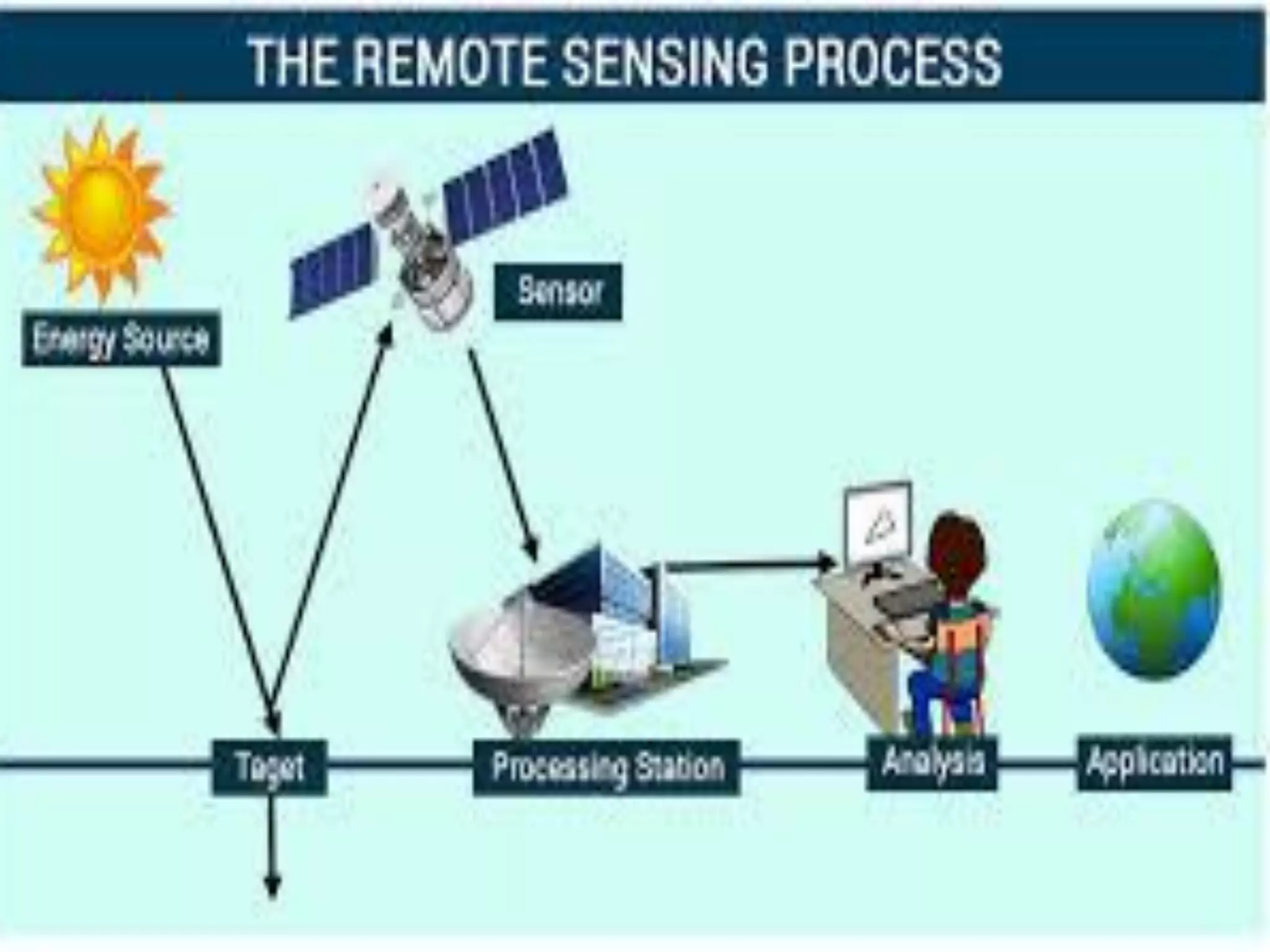
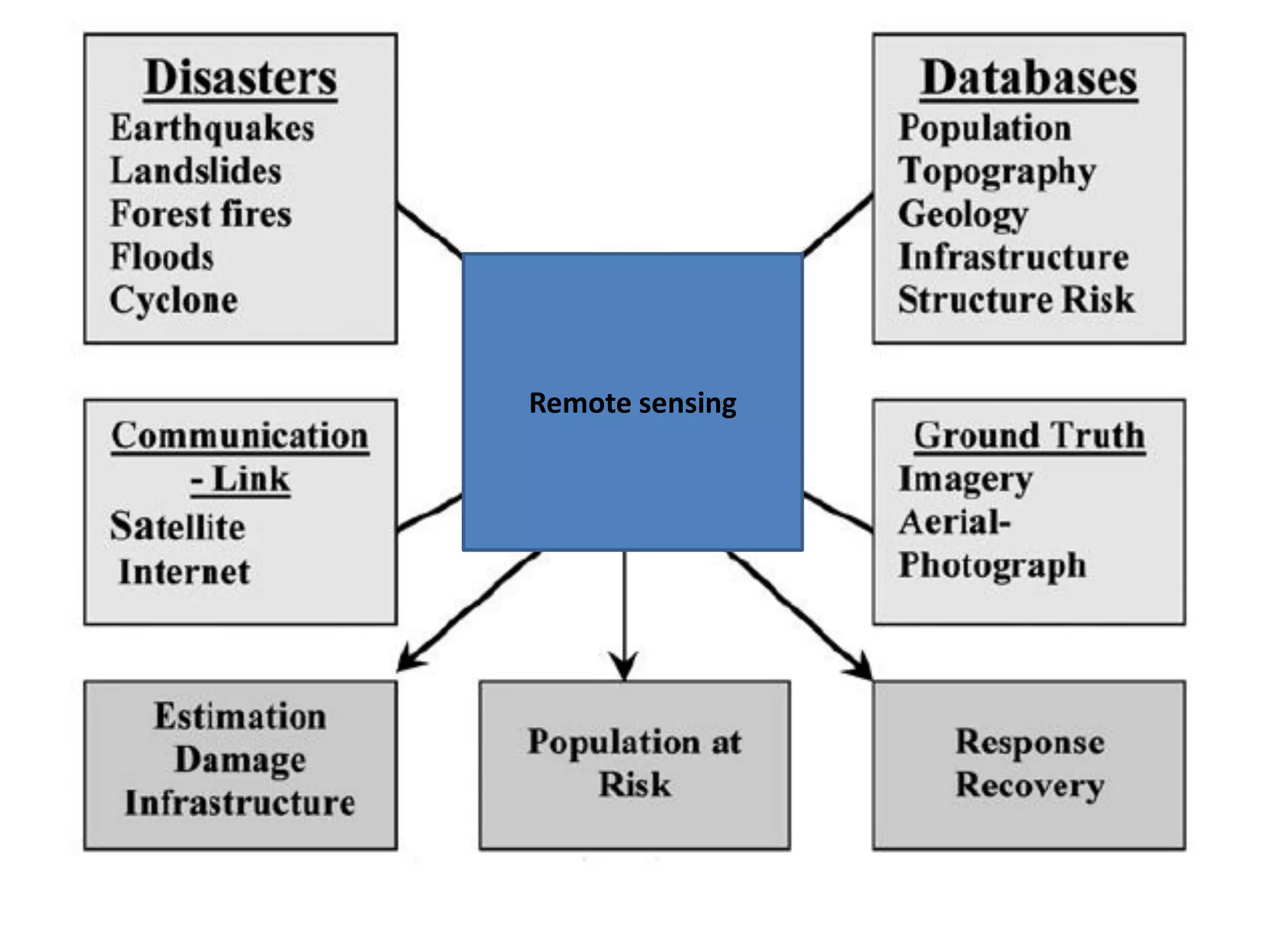
Remote sensing
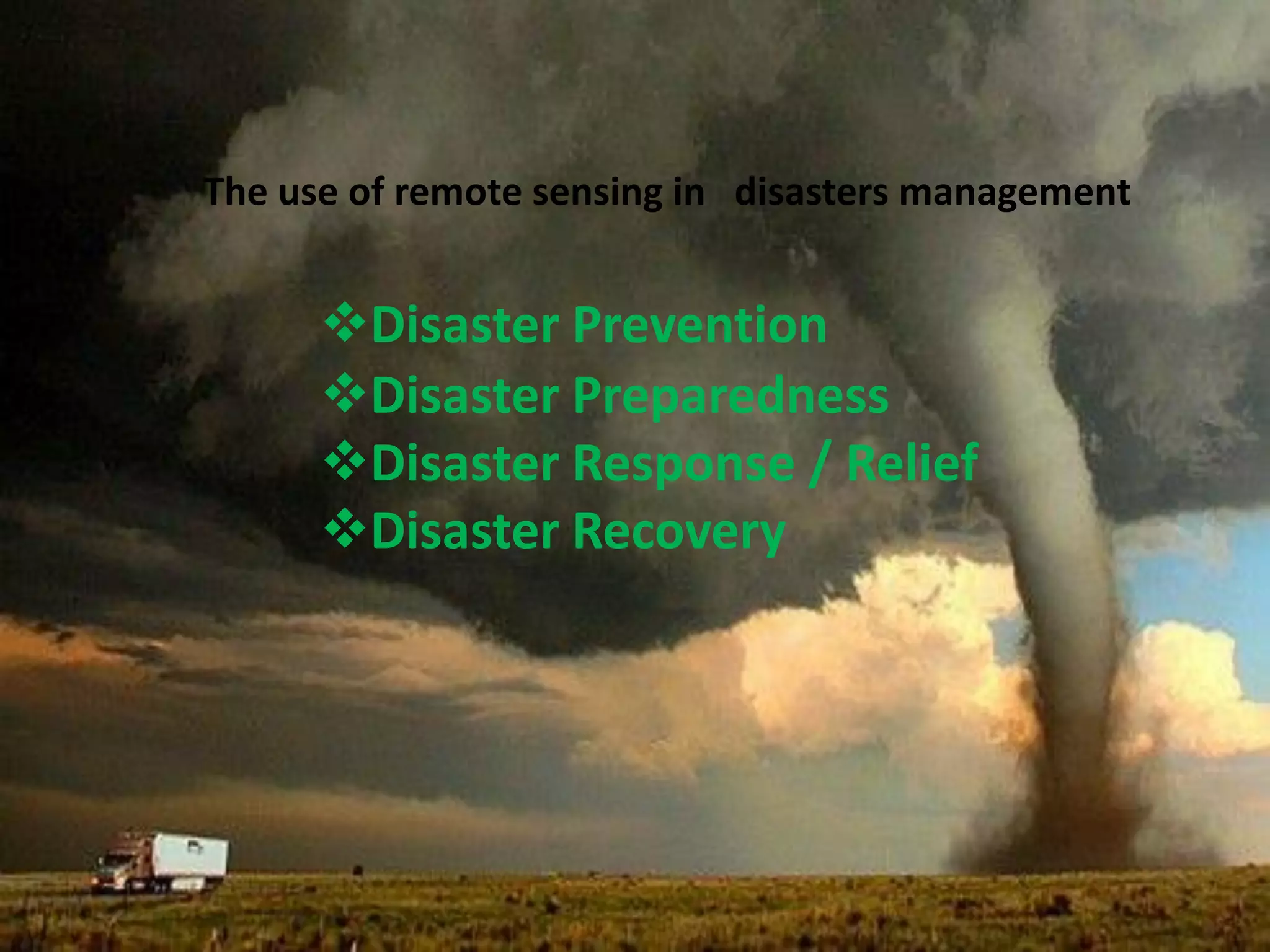
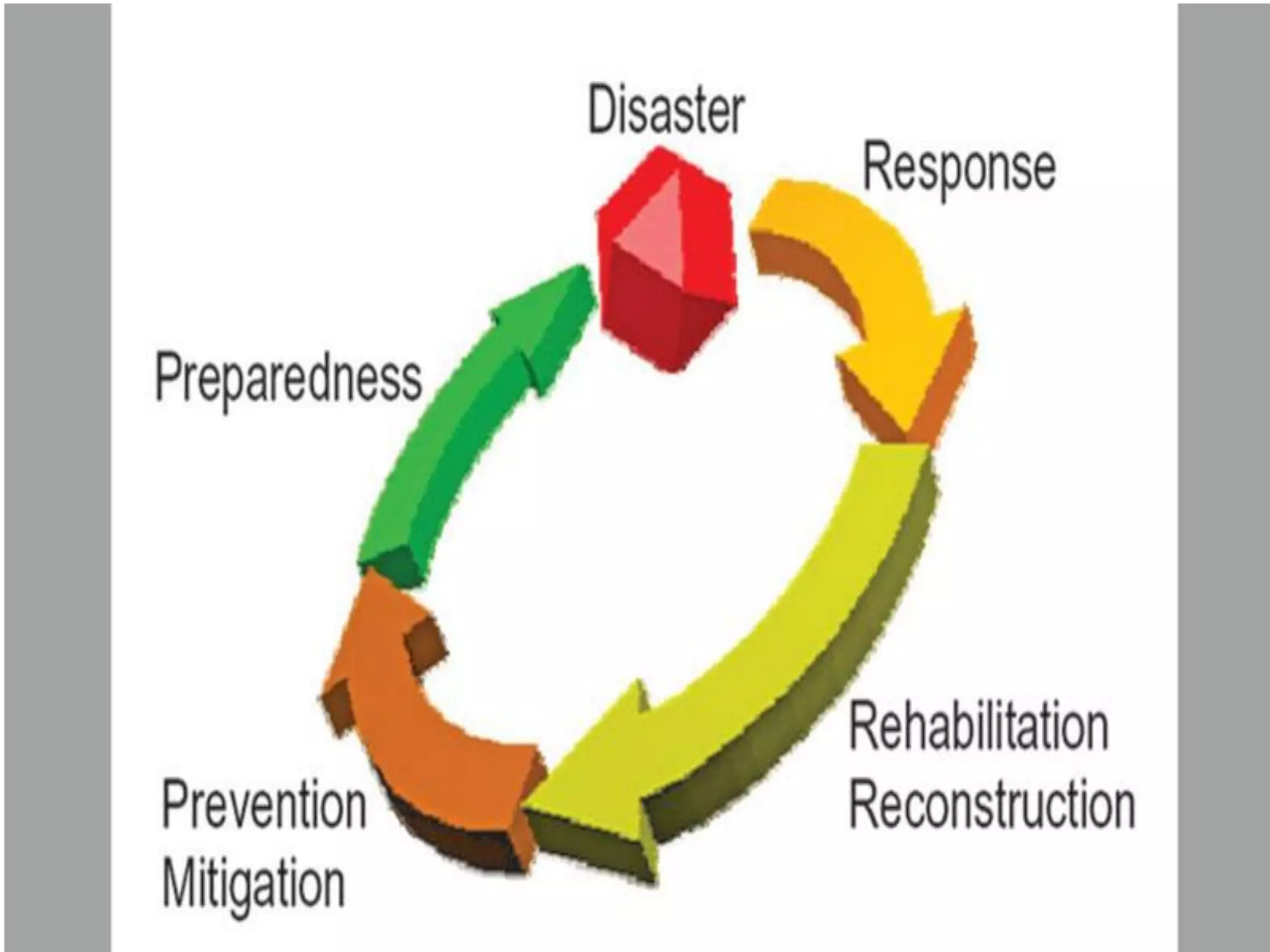
The use of remote sensing in disasters management
Disaster Prevention
Disaster Preparedness
Disaster Response / Relief
Disaster Recovery
Disaster Response / Relief
Rescue
Relocation
Provision Food and Water
Provision Emergency Health
Care
Prevention of Disease and
Disability
Repairing Vital Services e.g.
Telecommunications, Transport
Provision Temporary Shelter
Rebuilding Infrastructure
e.g. Homes, Schools,
Hospitals, Roads
Health Care and
Rehabilitation
Development Activities
e.g. building human
resources for health
Development Policies and
Practices to avoid or
mitigate similar situations
in future
Disaster Recovery
applicartion on remote sensing of disaster management.

applicartion on remote sensing of disaster management.

  • 1.
    MD NAZMUL HOSSAIN ENV06805215 STAMFORD UNIVERSITY BANGLADESH Application of Remote sensing on Disaster management in Bangladesh . MD NAZMUL HOSSAIN ENV 06805215 STAMFORD UNIVERSITY BANGLADESH
  • 2.
    COURSE TEACHER: ABDULLAHALL NAYEEM STAMFORD UNIVERSITY,BANGLADESH. ENVIRONMENT SCIENCE DEPARTMENT CORUSE REMOTE SENSING DATE:28/07/2020
  • 3.
    Types of Disaster NaturalDisasters  Geophysical (e.g. Earthquakes, Landslides, Tsunamis and Volcanic Activity)  Hydrological (e.g. Avalanches and Floods)  Climatological (e.g. Extreme Temperatures, Drought and Wildfires) Meteorological (e.g. Cyclones and Storms/Wave Surges)  Biological (e.g. Disease Epidemics and Insect/Animal Plagues) Man-Made Disasters  Environmental Degradation  Pollution  Accidents (e.g. Industrial, Technological and Transport usually involving the production, use or transport of hazardous materials)
  • 4.
     Food Insecurity Epidemics  Armed Conflicts  Displaced Populations According to IRRC these Complex Emergencies are typically characterized by :  Extensive Violence  Displacements of Populations  Loss of Life  Widespread Damage to both Societies and Economies  Need for Large-scale, Humanitarian Assistance across Multiple Agencies  Political and Military Constraints which impact or prevent Humanitarian Assistance  Increased Security Risks for Humanitarian Relief Workers Complex Emergencies
  • 5.
    Pandemic Emergencies Ebola Zika Avian Flu Cholera DengueFever Malaria Yellow Fever Coronavirus Disease (COVID-19)
  • 6.
    Hazard mapping Landslide earlywarning Volcano and land subsidence monitoring  Wildfire early detection and control Glacial lake outburst flood (GLOF) early warning in Bhutan  Response to the 2011 Great East Japan Earthquake. Application of Remote sensing on Disaster management IN BANGLADESH
  • 7.
    Major Disasters inBangladesh Cyclone Floods Droughts Tornado
  • 8.
    Disasters over last15 years in Bangladesh Year Disaster Death 1987 Flood 1657 1988 Flood 1517 1988 Cyclone 5704 1989 Drought 800 1991 Cyclone 138,868 1994 Cyclone - 1996 Tornade 545 1997 Cyclone 550 1998 Flood 918 1999 Flood 15 2000 Flood 36 2002 Flood - 2003 Flood 104
  • 10.
  • 11.
    The use ofremote sensing in disasters management Disaster Prevention Disaster Preparedness Disaster Response / Relief Disaster Recovery
  • 13.
    Disaster Response /Relief Rescue Relocation Provision Food and Water Provision Emergency Health Care Prevention of Disease and Disability Repairing Vital Services e.g. Telecommunications, Transport Provision Temporary Shelter
  • 14.
    Rebuilding Infrastructure e.g. Homes,Schools, Hospitals, Roads Health Care and Rehabilitation Development Activities e.g. building human resources for health Development Policies and Practices to avoid or mitigate similar situations in future Disaster Recovery