The Apple App StoreCase Study
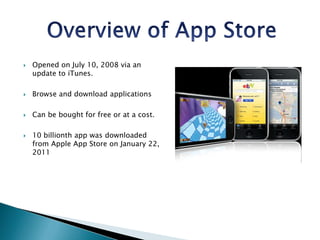
Overview of App StoreOpened on July 10, 2008 via an update to iTunes.Browse and download applicationsCan be bought for free or at a cost. 10 billionth app was downloaded from Apple App Store on January 22, 2011
Ownership and ControlApple generated $250 million in revenue in 2010Promotion30% of revenues from the store go to Apple, and 70% go to the seller of the applicationReject or applications by companiesCompanies may compete in order for their apps to be successful
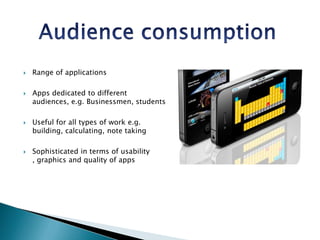
Audience consumptionRange of applicationsApps dedicated to different audiences, e.g. Businessmen, studentsUseful for all types of work e.g. building, calculating, note takingSophisticated in terms of usability , graphics and quality of apps
Distribution and ExhibitionApp Store is set categories such as Entertainment, ProductivityAndroid Marketplace and OVI Store have similar apps, but mainly for entertainment and workExhibited different platforms such as internet advertisements, viral marketing, tube postersApp store popular due to quality of apps and usefulness of apps
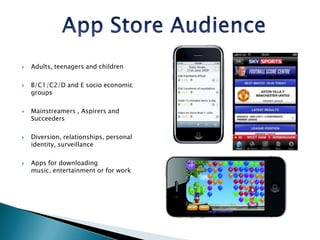
App Store Audience Adults, teenagers and childrenB/C1/C2/D and E socio economic groupsMainstreamers , Aspirers and SucceedersDiversion, relationships, personal identity, surveillanceApps for downloading music, entertainment or for work
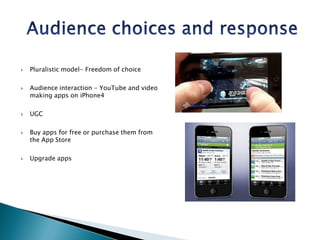
Audience choices and responsePluralistic model- Freedom of choiceAudience interaction - YouTube and video making apps on iPhone4UGCBuy apps for free or purchase them from the App StoreUpgrade apps
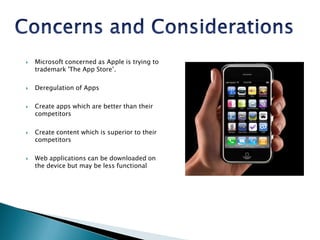
Concerns and ConsiderationsMicrosoft concerned as Apple is trying to trademark 'The App Store’.Deregulation of AppsCreate apps which are better than their competitorsCreate content which is superior to their competitorsWeb applications can be downloaded on the device but may be less functional
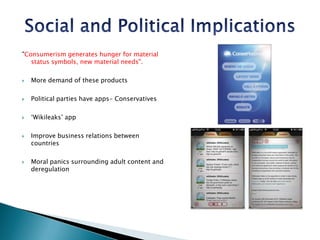
Social and Political Implications"Consumerism generates hunger for material status symbols, new material needs".More demand of these productsPolitical parties have apps- Conservatives‘Wikileaks’ app Improve business relations between countriesMoral panics surrounding adult content and deregulation
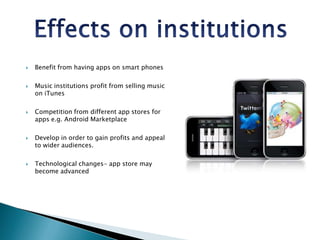
Effects on institutions Benefit from having apps on smart phonesMusic institutions profit from selling music on iTunesCompetition from different app stores for apps e.g. Android MarketplaceDevelop in order to gain profits and appeal to wider audiences.Technological changes- app store may become advanced
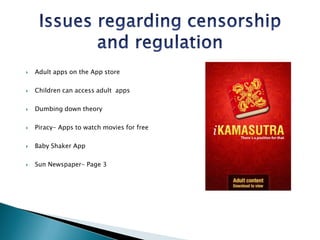
Issues regarding censorship and regulationAdult apps on the App storeChildren can access adult  appsDumbing down theoryPiracy- Apps to watch movies for freeBaby Shaker AppSun Newspaper- Page 3
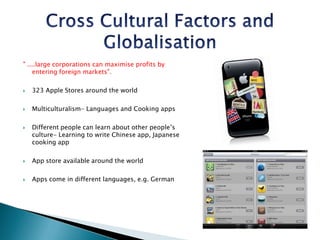
Cross Cultural Factors and Globalisation" ....large corporations can maximise profits by entering foreign markets".323 Apple Stores around the worldMulticulturalism- Languages and Cooking appsDifferent people can learn about other people’s culture- Learning to write Chinese app, Japanese cooking appApp store available around the worldApps come in different languages, e.g. German

Apple app store case study

  • 1.
    The Apple AppStoreCase Study
  • 2.
    Overview of AppStoreOpened on July 10, 2008 via an update to iTunes.Browse and download applicationsCan be bought for free or at a cost. 10 billionth app was downloaded from Apple App Store on January 22, 2011
  • 3.
    Ownership and ControlApplegenerated $250 million in revenue in 2010Promotion30% of revenues from the store go to Apple, and 70% go to the seller of the applicationReject or applications by companiesCompanies may compete in order for their apps to be successful
  • 4.
    Audience consumptionRange ofapplicationsApps dedicated to different audiences, e.g. Businessmen, studentsUseful for all types of work e.g. building, calculating, note takingSophisticated in terms of usability , graphics and quality of apps
  • 5.
    Distribution and ExhibitionAppStore is set categories such as Entertainment, ProductivityAndroid Marketplace and OVI Store have similar apps, but mainly for entertainment and workExhibited different platforms such as internet advertisements, viral marketing, tube postersApp store popular due to quality of apps and usefulness of apps
  • 6.
    App Store AudienceAdults, teenagers and childrenB/C1/C2/D and E socio economic groupsMainstreamers , Aspirers and SucceedersDiversion, relationships, personal identity, surveillanceApps for downloading music, entertainment or for work
  • 7.
    Audience choices andresponsePluralistic model- Freedom of choiceAudience interaction - YouTube and video making apps on iPhone4UGCBuy apps for free or purchase them from the App StoreUpgrade apps
  • 8.
    Concerns and ConsiderationsMicrosoftconcerned as Apple is trying to trademark 'The App Store’.Deregulation of AppsCreate apps which are better than their competitorsCreate content which is superior to their competitorsWeb applications can be downloaded on the device but may be less functional
  • 9.
    Social and PoliticalImplications"Consumerism generates hunger for material status symbols, new material needs".More demand of these productsPolitical parties have apps- Conservatives‘Wikileaks’ app Improve business relations between countriesMoral panics surrounding adult content and deregulation
  • 10.
    Effects on institutionsBenefit from having apps on smart phonesMusic institutions profit from selling music on iTunesCompetition from different app stores for apps e.g. Android MarketplaceDevelop in order to gain profits and appeal to wider audiences.Technological changes- app store may become advanced
  • 11.
    Issues regarding censorshipand regulationAdult apps on the App storeChildren can access adult appsDumbing down theoryPiracy- Apps to watch movies for freeBaby Shaker AppSun Newspaper- Page 3
  • 12.
    Cross Cultural Factorsand Globalisation" ....large corporations can maximise profits by entering foreign markets".323 Apple Stores around the worldMulticulturalism- Languages and Cooking appsDifferent people can learn about other people’s culture- Learning to write Chinese app, Japanese cooking appApp store available around the worldApps come in different languages, e.g. German