PRESENTED BY
DR.M. GAYATHRI
ASSISTANT PROFESSOR
DEPARTMENT OF BOTANY
BON SECOURS COLLEGEFOR WOMEN
THANJAVUR
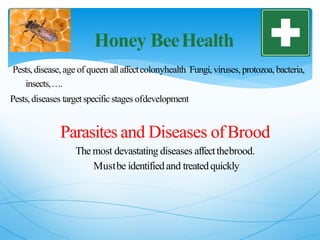
Honey BeeHealth
Pests,disease, age of queen allaffectcolonyhealth Fungi,viruses,protozoa, bacteria,
insects,….
Pests,diseases targetspecific stages ofdevelopment
Parasites and Diseases ofBrood
Themost devastating diseases affectthebrood.
Mustbe identifiedand treatedquickly
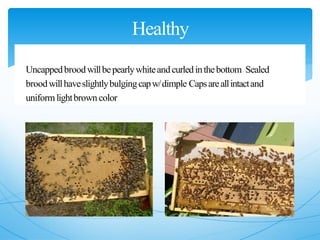
Healthy
Brood
Uncappedbroodwillbepearlywhiteandcurledinthebottom Sealed
broodwillhaveslightlybulgingcapw/dimple Capsareallintactand
uniformlightbrowncolor
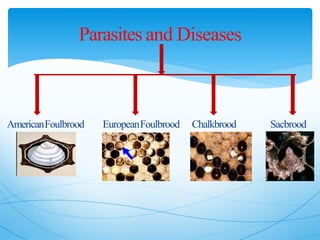
AmericanFoulbrood EuropeanFoulbrood Chalkbrood Sacbrood
Parasites and Diseases
AmericanFoulbrood
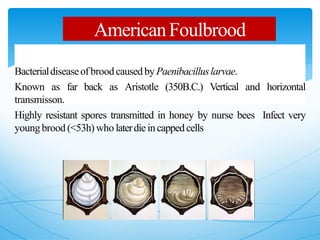
Bacterialdiseaseofbroodcaused byPaenibacilluslarvae.
Known as far back as Aristotle (350B.C.) Vertical and horizontal
transmisson.
Highly resistant spores transmitted in honey by nurse bees Infect very
youngbrood (<53h) who laterdieincappedcells
AmericanFoulbrood
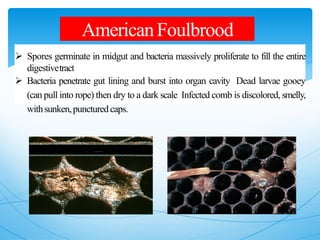
 Spores germinate in midgut and bacteria massively proliferate to fill the entire
digestivetract
 Bacteria penetrate gut lining and burst into organ cavity Dead larvae gooey
(can pull into rope) then dry to a dark scale Infected comb is discolored, smelly,
withsunken,puncturedcaps.
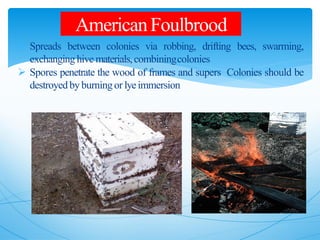
 Spreads between colonies via robbing, drifting bees, swarming,
exchanginghive materials,combiningcolonies
 Spores penetrate the wood of frames and supers Colonies should be
destroyedby burningor lyeimmersion
AmericanFoulbrood
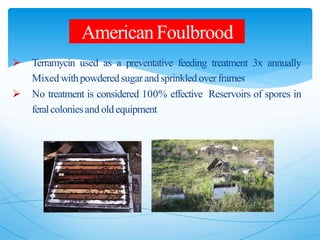
 Terramycin used as a preventative feeding treatment 3x annually
Mixed withpowderedsugarandsprinkled overframes
 No treatment is considered 100% effective Reservoirs of spores in
feralcoloniesand oldequipment
AmericanFoulbrood
EuropeanFoulbrood
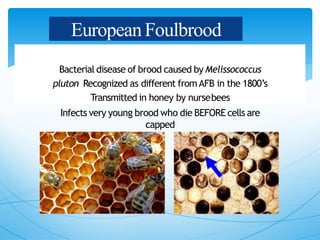
Bacterial disease of brood caused by Melissococcus
pluton Recognized as different from AFB in the 1800’s
Transmitted in honey by nursebees
Infects very young brood who die BEFORE cells are
capped
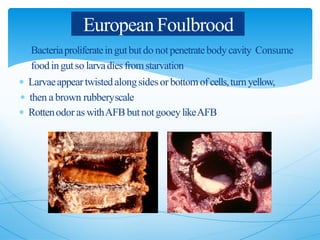
 Bacteriaproliferateingutbutdo notpenetratebody cavity Consume
foodingutso larvadiesfromstarvation
 Larvaeappear twistedalongsidesor bottomofcells,turnyellow,
 then a brown rubberyscale
 Rottenodor as withAFB butnotgooey likeAFB
EuropeanFoulbrood
EuropeanFoulbrood
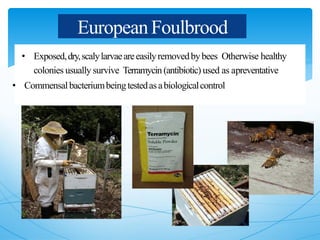
• Exposed,dry,scalylarvaeareeasilyremovedbybees Otherwise healthy
colonies usually survive Terramycin (antibiotic) used as apreventative
• Commensalbacteriumbeingtestedasabiologicalcontrol
Chalkbrood
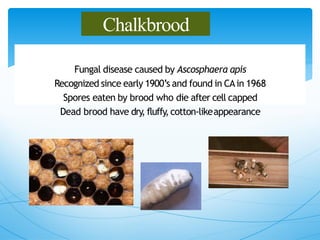
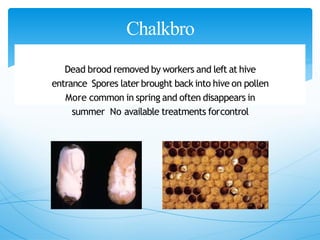
Fungal disease caused by Ascosphaera apis
Recognized since early 1900’s and found in CAin 1968
Spores eaten by brood who die after cell capped
Dead brood have dry, fluffy,cotton‐likeappearance
Chalkbro
od
Dead brood removed by workers and left at hive
entrance Spores later brought back into hive on pollen
More common in spring and often disappears in
summer No available treatments forcontrol
Sacbrood
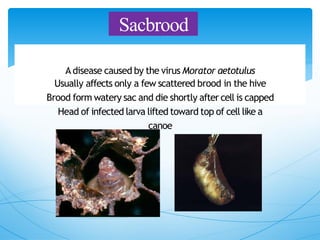
A disease caused by the virus Morator aetotulus
Usually affects only a few scattered brood in the hive
Brood form watery sac and die shortly after cell is capped
Head of infected larva lifted toward top of cell like a
canoe
Sacbrood
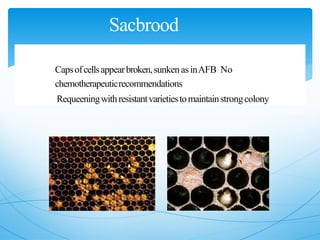
Capsofcellsappearbroken,sunkenasinAFB No
chemotherapeuticrecommendations
Requeeningwithresistantvarietiestomaintainstrongcolony
BEE PARASITES
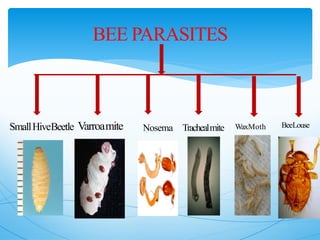
SmallHiveBeetle Varroamite Nosema Trachealmite WaxMoth BeeLouse
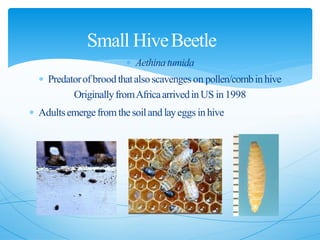
 Aethinatumida
 Predatorofbroodthatalsoscavengeson pollen/combinhive
OriginallyfromAfricaarrivedinUS in1998
 Adultsemergefromthesoiland layeggs inhive
Small HiveBeetle
Small HiveBeetle
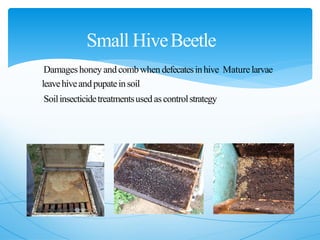
Damageshoney andcombwhen defecatesinhive Maturelarvae
leavehiveandpupateinsoil
Soilinsecticidetreatmentsused ascontrolstrategy
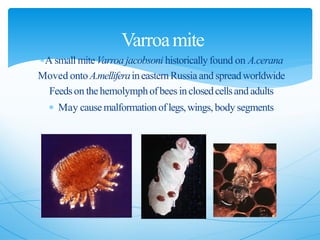
A small mite Varroa jacobsoni historicallyfound on A.cerana
Moved onto A.melliferaineasternRussia and spreadworldwide
Feedson thehemolymphofbees inclosedcellsand adults
 May causemalformationoflegs,wings,body segments
Varroamite
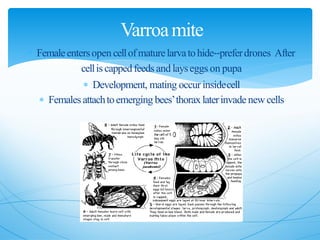
 Femaleentersopencellofmaturelarvatohide‐‐preferdrones After
celliscappedfeeds and layseggs on pupa
 Development, mating occur insidecell
 Females attachtoemerging bees’thoraxlaterinvadenew cells
Varroamite
Varroamite
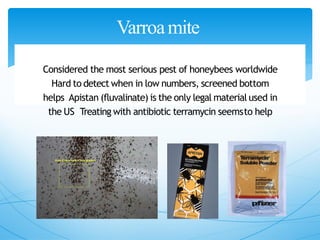
Considered the most serious pest of honeybees worldwide
Hard to detect when in low numbers, screened bottom
helps Apistan (fluvalinate) is the only legal material used in
the US Treating with antibiotic terramycin seemsto help
Nosema
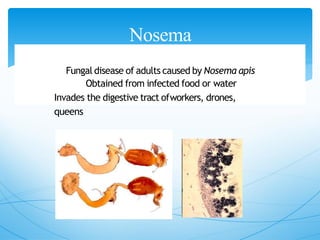
Fungal disease of adults caused by Nosema apis
Obtained from infected food or water
Invades the digestive tract ofworkers, drones,
queens
Nosema
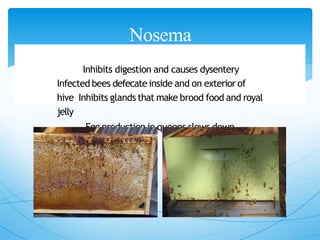
Inhibits digestion and causes dysentery
Infected bees defecate inside and on exterior of
hive Inhibits glands that make brood food and royal
jelly
Egg production in queens slows down
Nosema
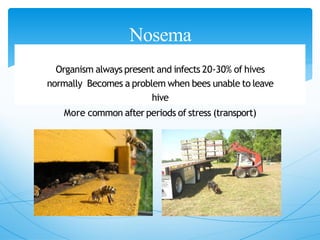
Organism always present and infects 20‐30% of hives
normally Becomes a problem when bees unable to leave
hive
More common after periods of stress (transport)
Nosema
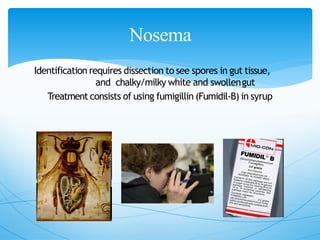
Identification requires dissection to see spores in gut tissue,
and chalky/milky white and swollengut
Treatment consists of using fumigillin (Fumidil‐B) in syrup
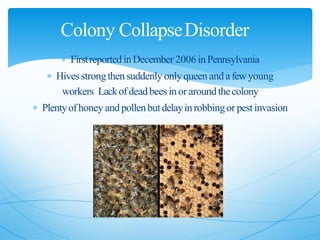
 FirstreportedinDecember 2006inPennsylvania
 Hivesstrongthensuddenly onlyqueen andafewyoung
workers Lackofdeadbees inor aroundthecolony
 Plentyofhoney andpollenbutdelayinrobbingor pestinvasion
Colony CollapseDisorder
Colony Collapse
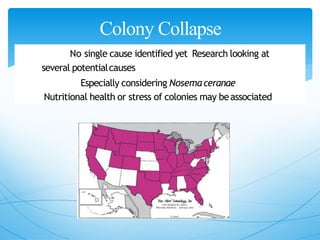
DisorderNo single cause identified yet Research looking at
several potentialcauses
Especially considering Nosemaceranae
Nutritional health or stress of colonies may beassociated
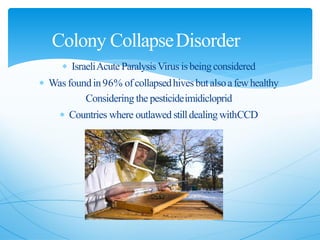
 IsraeliAcuteParalysisVirus isbeingconsidered
 Was foundin96% ofcollapsedhivesbutalsoafewhealthy
Considering the pesticideimidicloprid
 Countries where outlawed stilldealingwithCCD
Colony CollapseDisorder
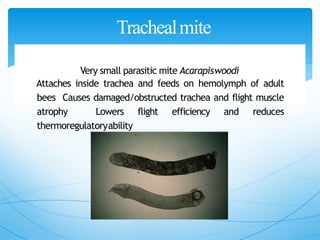
Trachealmite
Very small parasitic mite Acarapiswoodi
Attaches inside trachea and feeds on hemolymph of adult
bees Causes damaged/obstructed trachea and flight muscle
atrophy Lowers flight efficiency and reduces
thermoregulatoryability
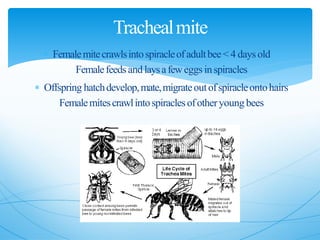
 Femalemitecrawlsintospiracleofadultbee< 4 days old
Femalefeeds and laysafeweggs inspiracles
 Offspring hatchdevelop,mate,migrateoutofspiracleontohairs
Femalemitescrawlintospiraclesofotheryoung bees
Trachealmite
Tracheal
mite
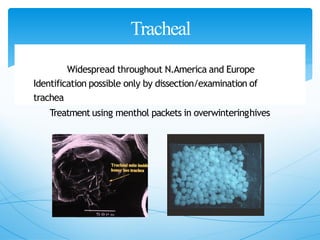
Widespread throughout N.America and Europe
Identification possible only by dissection/examination of
trachea
Treatment using menthol packets in overwinteringhives
WaxMoth
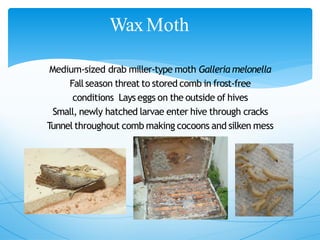
Medium‐sized drab miller‐type moth Galleria melonella
Fallseason threat to stored comb in frost‐free
conditions Lays eggs on the outside of hives
Small, newly hatched larvae enter hive through cracks
Tunnel throughout comb making cocoons and silken mess
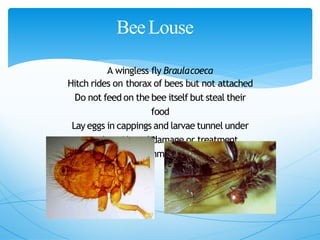
BeeLouse
A wingless fly Braulacoeca
Hitch rides on thorax of bees but not attached
Do not feed on the bee itself but steal their
food
Lay eggs in cappings and larvae tunnel under
cappings Noreal damage or treatment
recommended
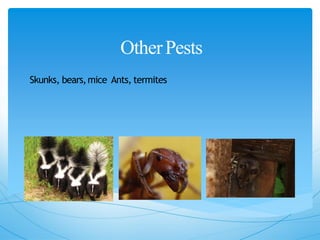
OtherPests
Skunks, bears,mice Ants, termites
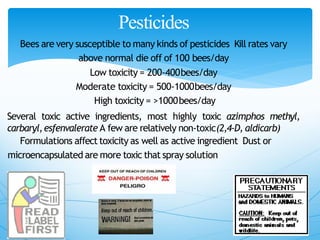
Pesticides
Bees are very susceptible to many kinds of pesticides Kill rates vary
above normal die off of 100 bees/day
Low toxicity = 200‐400bees/day
Moderate toxicity = 500‐1000bees/day
High toxicity = >1000bees/day
Several toxic active ingredients, most highly toxic azimphos methyl,
carbaryl,esfenvalerate A few are relatively non‐toxic(2,4‐D, aldicarb)
Formulations affect toxicity as well as active ingredient Dust or
microencapsulated are more toxic that spray solution
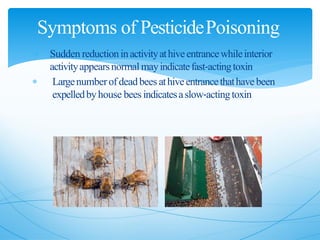
 Sudden reductioninactivityathiveentrancewhileinterior
activityappearsnormalmayindicatefast‐actingtoxin
 Largenumberofdeadbees athiveentrancethathavebeen
expelledbyhouse bees indicatesaslow‐actingtoxin
Symptoms of PesticidePoisoning
What are the
options?
Cooperation between beekeeping organization and
farmers Legal recourse, compensation if large number
affected
Small beekeepers can realistically only identify source
and prevent future contamination
Anticipate applications and protect beesaccordingly
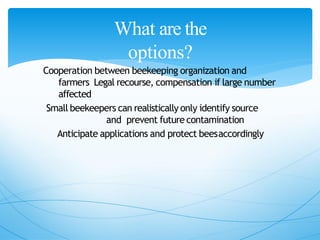
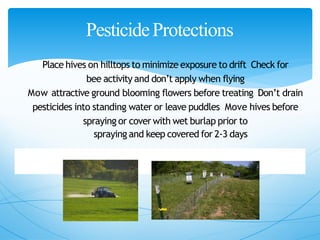
PesticideProtections
Place hives on hilltops to minimize exposure to drift Check for
bee activity and don’t apply when flying
Mow attractive ground blooming flowers before treating Don’t drain
pesticides into standing water or leave puddles Move hives before
spraying or cover with wet burlap prior to
spraying and keep covered for 2‐3 days
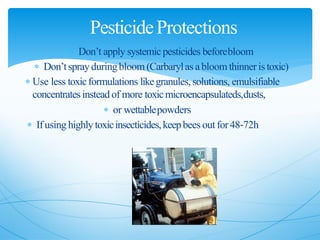
 Don’t apply systemic pesticides beforebloom
 Don’tsprayduringbloom (Carbarylas abloomthinner istoxic)
 Use less toxicformulations likegranules,solutions, emulsifiable
concentratesinstead of more toxicmicroencapsulateds,dusts,
 or wettablepowders
 Ifusing highly toxicinsecticides,keepbees outfor48‐72h
PesticideProtections
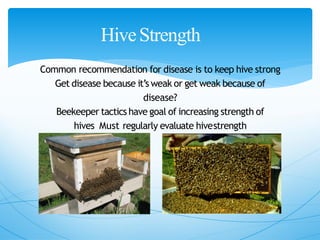
HiveStrength
Common recommendation for disease is to keep hive strong
Get disease because it’s weak or get weak because of
disease?
Beekeeper tactics have goal of increasing strength of
hives Must regularly evaluate hivestrength
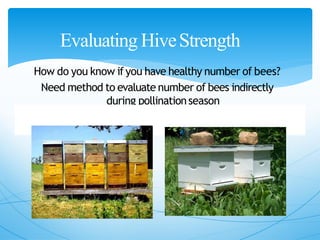
Evaluating HiveStrength
How do you know if you have healthy number of bees?
Need method to evaluate number of bees indirectly
during pollinationseason
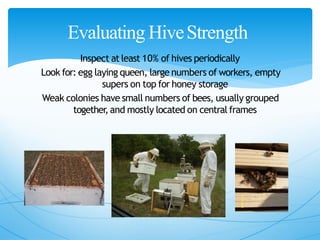
Evaluating HiveStrength
Inspect at least 10% of hives periodically
Look for: egg laying queen, large numbers of workers, empty
supers on top for honey storage
Weak colonies have small numbers of bees, usually grouped
together,and mostly located on central frames
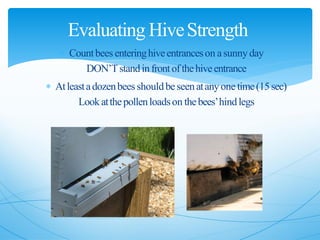
 Countbees enteringhiveentranceson asunnyday
DON’Tstandinfrontofthehiveentrance
 Atleastadozenbees shouldbeseenatanyone time(15sec)
Lookatthepollenloadson thebees’hindlegs
Evaluating HiveStrength
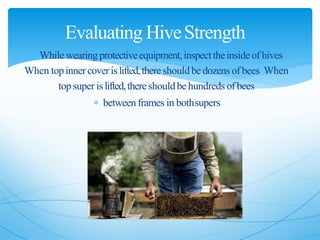
 While wearing protectiveequipment,inspecttheinsideofhives
When topinnercoverislifted,thereshouldbedozens ofbees When
topsuper islifted,thereshouldbehundreds ofbees
 between frames in bothsupers
Evaluating HiveStrength
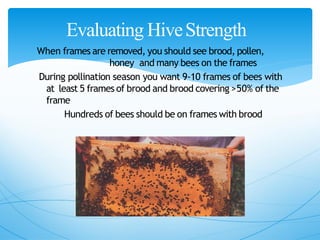
When frames are removed, you should see brood, pollen,
honey and many bees on the frames
During pollination season you want 9‐10 frames of bees with
at least 5 frames of brood and brood covering >50% of the
frame
Hundreds of bees should be on frames with brood
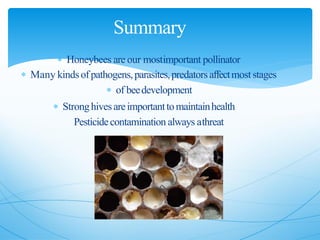
 Honeybees are our mostimportant pollinator
 Many kindsofpathogens,parasites,predatorsaffectmost stages
 of beedevelopment
 Stronghivesareimportanttomaintainhealth
Pesticidecontamination always athreat
Summary
The Bottom
Line
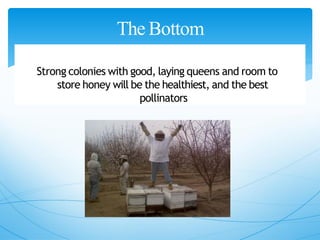
Strong colonies with good, laying queens and room to
store honey will be the healthiest, and the best
pollinators
THANK YOU

Apiculture Diseases

  • 1.
    PRESENTED BY DR.M. GAYATHRI ASSISTANTPROFESSOR DEPARTMENT OF BOTANY BON SECOURS COLLEGEFOR WOMEN THANJAVUR
  • 2.
    Honey BeeHealth Pests,disease, ageof queen allaffectcolonyhealth Fungi,viruses,protozoa, bacteria, insects,…. Pests,diseases targetspecific stages ofdevelopment Parasites and Diseases ofBrood Themost devastating diseases affectthebrood. Mustbe identifiedand treatedquickly
  • 3.
  • 4.
    AmericanFoulbrood EuropeanFoulbrood ChalkbroodSacbrood Parasites and Diseases
  • 5.
    AmericanFoulbrood Bacterialdiseaseofbroodcaused byPaenibacilluslarvae. Known asfar back as Aristotle (350B.C.) Vertical and horizontal transmisson. Highly resistant spores transmitted in honey by nurse bees Infect very youngbrood (<53h) who laterdieincappedcells
  • 6.
    AmericanFoulbrood  Spores germinatein midgut and bacteria massively proliferate to fill the entire digestivetract  Bacteria penetrate gut lining and burst into organ cavity Dead larvae gooey (can pull into rope) then dry to a dark scale Infected comb is discolored, smelly, withsunken,puncturedcaps.
  • 7.
     Spreads betweencolonies via robbing, drifting bees, swarming, exchanginghive materials,combiningcolonies  Spores penetrate the wood of frames and supers Colonies should be destroyedby burningor lyeimmersion AmericanFoulbrood
  • 8.
     Terramycin usedas a preventative feeding treatment 3x annually Mixed withpowderedsugarandsprinkled overframes  No treatment is considered 100% effective Reservoirs of spores in feralcoloniesand oldequipment AmericanFoulbrood
  • 9.
    EuropeanFoulbrood Bacterial disease ofbrood caused by Melissococcus pluton Recognized as different from AFB in the 1800’s Transmitted in honey by nursebees Infects very young brood who die BEFORE cells are capped
  • 10.
     Bacteriaproliferateingutbutdo notpenetratebodycavity Consume foodingutso larvadiesfromstarvation  Larvaeappear twistedalongsidesor bottomofcells,turnyellow,  then a brown rubberyscale  Rottenodor as withAFB butnotgooey likeAFB EuropeanFoulbrood
  • 11.
    EuropeanFoulbrood • Exposed,dry,scalylarvaeareeasilyremovedbybees Otherwisehealthy colonies usually survive Terramycin (antibiotic) used as apreventative • Commensalbacteriumbeingtestedasabiologicalcontrol
  • 12.
    Chalkbrood Fungal disease causedby Ascosphaera apis Recognized since early 1900’s and found in CAin 1968 Spores eaten by brood who die after cell capped Dead brood have dry, fluffy,cotton‐likeappearance
  • 13.
    Chalkbro od Dead brood removedby workers and left at hive entrance Spores later brought back into hive on pollen More common in spring and often disappears in summer No available treatments forcontrol
  • 14.
    Sacbrood A disease causedby the virus Morator aetotulus Usually affects only a few scattered brood in the hive Brood form watery sac and die shortly after cell is capped Head of infected larva lifted toward top of cell like a canoe
  • 15.
  • 16.
    BEE PARASITES SmallHiveBeetle VarroamiteNosema Trachealmite WaxMoth BeeLouse
  • 17.
     Aethinatumida  Predatorofbroodthatalsoscavengesonpollen/combinhive OriginallyfromAfricaarrivedinUS in1998  Adultsemergefromthesoiland layeggs inhive Small HiveBeetle
  • 18.
    Small HiveBeetle Damageshoney andcombwhendefecatesinhive Maturelarvae leavehiveandpupateinsoil Soilinsecticidetreatmentsused ascontrolstrategy
  • 19.
    A small miteVarroa jacobsoni historicallyfound on A.cerana Moved onto A.melliferaineasternRussia and spreadworldwide Feedson thehemolymphofbees inclosedcellsand adults  May causemalformationoflegs,wings,body segments Varroamite
  • 20.
     Femaleentersopencellofmaturelarvatohide‐‐preferdrones After celliscappedfeedsand layseggs on pupa  Development, mating occur insidecell  Females attachtoemerging bees’thoraxlaterinvadenew cells Varroamite
  • 21.
    Varroamite Considered the mostserious pest of honeybees worldwide Hard to detect when in low numbers, screened bottom helps Apistan (fluvalinate) is the only legal material used in the US Treating with antibiotic terramycin seemsto help
  • 22.
    Nosema Fungal disease ofadults caused by Nosema apis Obtained from infected food or water Invades the digestive tract ofworkers, drones, queens
  • 23.
    Nosema Inhibits digestion andcauses dysentery Infected bees defecate inside and on exterior of hive Inhibits glands that make brood food and royal jelly Egg production in queens slows down
  • 24.
    Nosema Organism always presentand infects 20‐30% of hives normally Becomes a problem when bees unable to leave hive More common after periods of stress (transport)
  • 25.
    Nosema Identification requires dissectionto see spores in gut tissue, and chalky/milky white and swollengut Treatment consists of using fumigillin (Fumidil‐B) in syrup
  • 26.
     FirstreportedinDecember 2006inPennsylvania Hivesstrongthensuddenly onlyqueen andafewyoung workers Lackofdeadbees inor aroundthecolony  Plentyofhoney andpollenbutdelayinrobbingor pestinvasion Colony CollapseDisorder
  • 27.
    Colony Collapse DisorderNo singlecause identified yet Research looking at several potentialcauses Especially considering Nosemaceranae Nutritional health or stress of colonies may beassociated
  • 28.
     IsraeliAcuteParalysisVirus isbeingconsidered Was foundin96% ofcollapsedhivesbutalsoafewhealthy Considering the pesticideimidicloprid  Countries where outlawed stilldealingwithCCD Colony CollapseDisorder
  • 29.
    Trachealmite Very small parasiticmite Acarapiswoodi Attaches inside trachea and feeds on hemolymph of adult bees Causes damaged/obstructed trachea and flight muscle atrophy Lowers flight efficiency and reduces thermoregulatoryability
  • 30.
     Femalemitecrawlsintospiracleofadultbee< 4days old Femalefeeds and laysafeweggs inspiracles  Offspring hatchdevelop,mate,migrateoutofspiracleontohairs Femalemitescrawlintospiraclesofotheryoung bees Trachealmite
  • 31.
    Tracheal mite Widespread throughout N.Americaand Europe Identification possible only by dissection/examination of trachea Treatment using menthol packets in overwinteringhives
  • 32.
    WaxMoth Medium‐sized drab miller‐typemoth Galleria melonella Fallseason threat to stored comb in frost‐free conditions Lays eggs on the outside of hives Small, newly hatched larvae enter hive through cracks Tunnel throughout comb making cocoons and silken mess
  • 33.
    BeeLouse A wingless flyBraulacoeca Hitch rides on thorax of bees but not attached Do not feed on the bee itself but steal their food Lay eggs in cappings and larvae tunnel under cappings Noreal damage or treatment recommended
  • 34.
  • 35.
    Pesticides Bees are verysusceptible to many kinds of pesticides Kill rates vary above normal die off of 100 bees/day Low toxicity = 200‐400bees/day Moderate toxicity = 500‐1000bees/day High toxicity = >1000bees/day Several toxic active ingredients, most highly toxic azimphos methyl, carbaryl,esfenvalerate A few are relatively non‐toxic(2,4‐D, aldicarb) Formulations affect toxicity as well as active ingredient Dust or microencapsulated are more toxic that spray solution
  • 36.
     Sudden reductioninactivityathiveentrancewhileinterior activityappearsnormalmayindicatefast‐actingtoxin Largenumberofdeadbees athiveentrancethathavebeen expelledbyhouse bees indicatesaslow‐actingtoxin Symptoms of PesticidePoisoning
  • 37.
    What are the options? Cooperationbetween beekeeping organization and farmers Legal recourse, compensation if large number affected Small beekeepers can realistically only identify source and prevent future contamination Anticipate applications and protect beesaccordingly
  • 38.
    PesticideProtections Place hives onhilltops to minimize exposure to drift Check for bee activity and don’t apply when flying Mow attractive ground blooming flowers before treating Don’t drain pesticides into standing water or leave puddles Move hives before spraying or cover with wet burlap prior to spraying and keep covered for 2‐3 days
  • 39.
     Don’t applysystemic pesticides beforebloom  Don’tsprayduringbloom (Carbarylas abloomthinner istoxic)  Use less toxicformulations likegranules,solutions, emulsifiable concentratesinstead of more toxicmicroencapsulateds,dusts,  or wettablepowders  Ifusing highly toxicinsecticides,keepbees outfor48‐72h PesticideProtections
  • 40.
    HiveStrength Common recommendation fordisease is to keep hive strong Get disease because it’s weak or get weak because of disease? Beekeeper tactics have goal of increasing strength of hives Must regularly evaluate hivestrength
  • 41.
    Evaluating HiveStrength How doyou know if you have healthy number of bees? Need method to evaluate number of bees indirectly during pollinationseason
  • 42.
    Evaluating HiveStrength Inspect atleast 10% of hives periodically Look for: egg laying queen, large numbers of workers, empty supers on top for honey storage Weak colonies have small numbers of bees, usually grouped together,and mostly located on central frames
  • 43.
     Countbees enteringhiveentrancesonasunnyday DON’Tstandinfrontofthehiveentrance  Atleastadozenbees shouldbeseenatanyone time(15sec) Lookatthepollenloadson thebees’hindlegs Evaluating HiveStrength
  • 44.
     While wearingprotectiveequipment,inspecttheinsideofhives When topinnercoverislifted,thereshouldbedozens ofbees When topsuper islifted,thereshouldbehundreds ofbees  between frames in bothsupers Evaluating HiveStrength
  • 45.
    Evaluating HiveStrength When framesare removed, you should see brood, pollen, honey and many bees on the frames During pollination season you want 9‐10 frames of bees with at least 5 frames of brood and brood covering >50% of the frame Hundreds of bees should be on frames with brood
  • 46.
     Honeybees areour mostimportant pollinator  Many kindsofpathogens,parasites,predatorsaffectmost stages  of beedevelopment  Stronghivesareimportanttomaintainhealth Pesticidecontamination always athreat Summary
  • 47.
    The Bottom Line Strong colonieswith good, laying queens and room to store honey will be the healthiest, and the best pollinators
  • 48.