Download to read offline
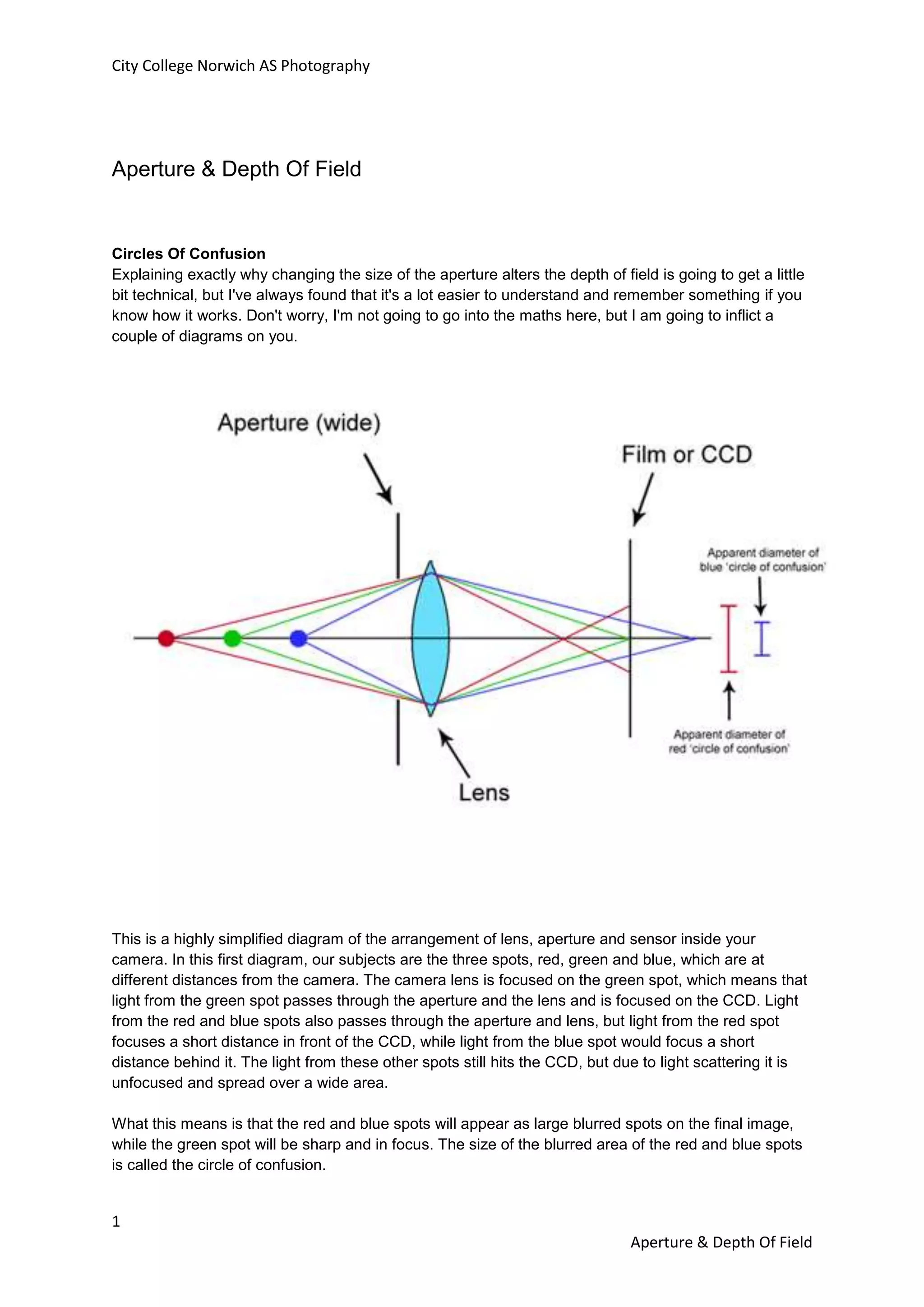
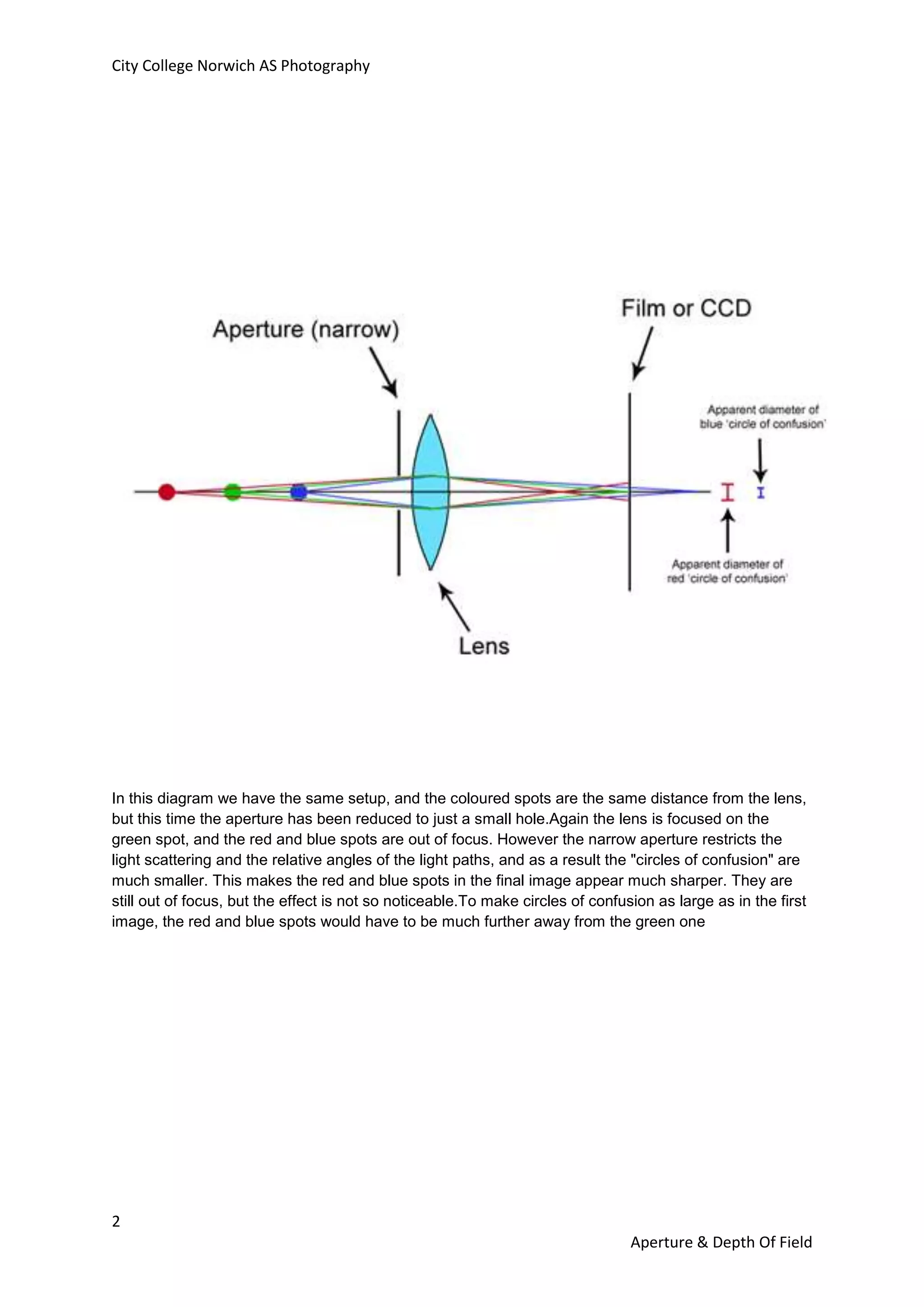

Smaller apertures increase depth of field by reducing circles of confusion. Circles of confusion refer to the out-of-focus areas created when light from objects that are not perfectly focused hits the camera sensor. With a smaller aperture, light rays passing through from objects outside the focal plane are restricted, decreasing their angle and scattering, which in turn reduces circles of confusion and makes more objects appear acceptably sharp. Changing the aperture size alters the depth of field by varying the size of these circles of confusion for objects in front of and behind the focal plane.


