General Document Guidelines

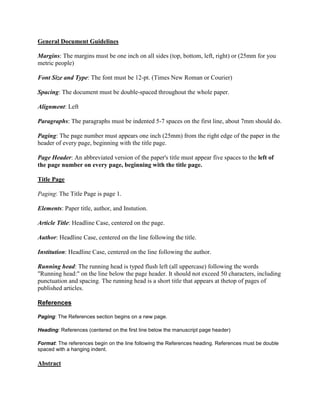
Margins: The margins must be one inch on all sides (top, bottom, left, right) or (25mm for you
metric people)

Font Size and Type: The font must be 12-pt. (Times New Roman or Courier)

Spacing: The document must be double-spaced throughout the whole paper.

Alignment: Left

Paragraphs: The paragraphs must be indented 5-7 spaces on the first line, about 7mm should do.

Paging: The page number must appears one inch (25mm) from the right edge of the paper in the
header of every page, beginning with the title page.

Page Header: An abbreviated version of the paper's title must appear five spaces to the left of
the page number on every page, beginning with the title page.

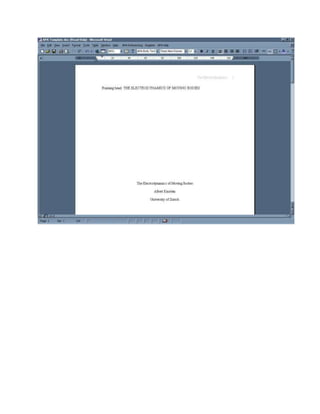
Title Page

Paging: The Title Page is page 1.

Elements: Paper title, author, and Instution.

Article Title: Headline Case, centered on the page.

Author: Headline Case, centered on the line following the title.

Institution: Headline Case, centered on the line following the author.

Running head: The running head is typed flush left (all uppercase) following the words
"Running head:" on the line below the page header. It should not exceed 50 characters, including
punctuation and spacing. The running head is a short title that appears at thetop of pages of
published articles.

References

Paging: The References section begins on a new page.

Heading: References (centered on the first line below the manuscript page header)

Format: The references begin on the line following the References heading. References must be double
spaced with a hanging indent.

Abstract
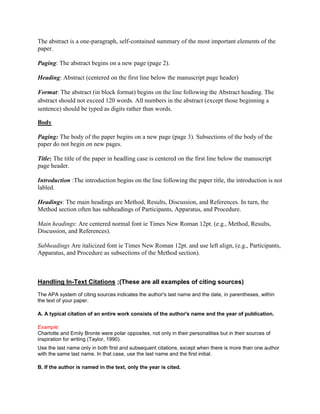
The abstract is a one-paragraph, self-contained summary of the most important elements of the
paper.

Paging: The abstract begins on a new page (page 2).

Heading: Abstract (centered on the first line below the manuscript page header)

Format: The abstract (in block format) begins on the line following the Abstract heading. The
abstract should not exceed 120 words. All numbers in the abstract (except those beginning a
sentence) should be typed as digits rather than words.

Body

Paging: The body of the paper begins on a new page (page 3). Subsections of the body of the
paper do not begin on new pages.

Title: The title of the paper in headling case is centered on the first line below the manuscript
page header.

Introduction :The introduction begins on the line following the paper title, the introduction is not
labled.

Headings: The main headings are Method, Results, Discussion, and References. In turn, the
Method section often has subheadings of Participants, Apparatus, and Procedure.

Main headings: Are centered normal font ie Times New Roman 12pt. (e.g., Method, Results,
Discussion, and References).

Subheadings Are italicized font ie Times New Roman 12pt. and use left align, (e.g., Participants,
Apparatus, and Procedure as subsections of the Method section).


Handling In-Text Citations ;(These are all examples of citing sources)
The APA system of citing sources indicates the author's last name and the date, in parentheses, within
the text of your paper.

A. A typical citation of an entire work consists of the author's name and the year of publication.

Example:
Charlotte and Emily Bronte were polar opposites, not only in their personalities but in their sources of
inspiration for writing (Taylor, 1990).
Use the last name only in both first and subsequent citations, except when there is more than one author
with the same last name. In that case, use the last name and the first initial.

B. If the author is named in the text, only the year is cited.
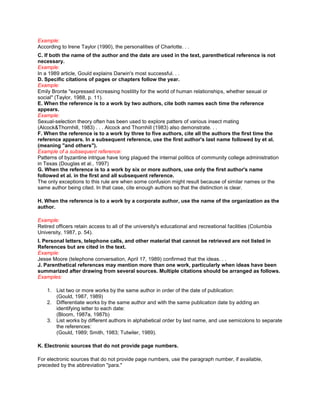
Example:
According to Irene Taylor (1990), the personalities of Charlotte. . .
C. If both the name of the author and the date are used in the text, parenthetical reference is not
necessary.
Example:
In a 1989 article, Gould explains Darwin's most successful. . .
D. Specific citations of pages or chapters follow the year.
Example:
Emily Bronte "expressed increasing hostility for the world of human relationships, whether sexual or
social" (Taylor, 1988, p. 11).
E. When the reference is to a work by two authors, cite both names each time the reference
appears.
Example:
Sexual-selection theory often has been used to explore patters of various insect mating
(Alcock&Thornhill, 1983) . . . Alcock and Thornhill (1983) also demonstrate. . .
F. When the reference is to a work by three to five authors, cite all the authors the first time the
reference appears. In a subsequent reference, use the first author's last name followed by et al.
(meaning "and others").
Example of a subsequent reference:
Patterns of byzantine intrigue have long plagued the internal politics of community college administration
in Texas (Douglas et al., 1997)
G. When the reference is to a work by six or more authors, use only the first author's name
followed et al. in the first and all subsequent reference.
The only exceptions to this rule are when some confusion might result because of similar names or the
same author being cited. In that case, cite enough authors so that the distinction is clear.

H. When the reference is to a work by a corporate author, use the name of the organization as the
author.

Example:
Retired officers retain access to all of the university's educational and recreational facilities (Columbia
University, 1987, p. 54).
I. Personal letters, telephone calls, and other material that cannot be retrieved are not listed in
References but are cited in the text.
Example:
Jesse Moore (telephone conversation, April 17, 1989) confirmed that the ideas. . .
J. Parenthetical references may mention more than one work, particularly when ideas have been
summarized after drawing from several sources. Multiple citations should be arranged as follows.
Examples:

    1. List two or more works by the same author in order of the date of publication:
       (Gould, 1987, 1989)
    2. Differentiate works by the same author and with the same publication date by adding an
       identifying letter to each date:
       (Bloom, 1987a, 1987b)
    3. List works by different authors in alphabetical order by last name, and use semicolons to separate
       the references:
       (Gould, 1989; Smith, 1983; Tutwiler, 1989).

K. Electronic sources that do not provide page numbers.

For electronic sources that do not provide page numbers, use the paragraph number, if available,
preceded by the abbreviation "para."
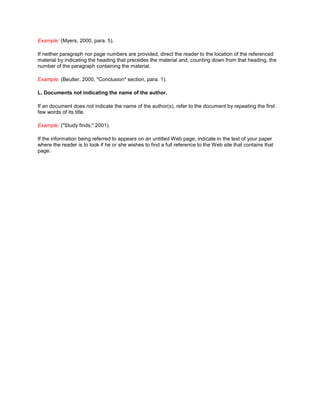
Example: (Myers, 2000, para. 5).

If neither paragraph nor page numbers are provided, direct the reader to the location of the referenced
material by indicating the heading that precedes the material and, counting down from that heading, the
number of the paragraph containing the material.

Example: (Beutler, 2000, "Conclusion" section, para. 1).

L. Documents not indicating the name of the author.

If an document does not indicate the name of the author(s), refer to the document by repeating the first
few words of its title.

Example: ("Study finds," 2001).

If the information being referred to appears on an untitled Web page, indicate in the text of your paper
where the reader is to look if he or she wishes to find a full reference to the Web site that contains that
page.
APA general document guidelines

APA general document guidelines

  • 1.
    General Document Guidelines Margins:The margins must be one inch on all sides (top, bottom, left, right) or (25mm for you metric people) Font Size and Type: The font must be 12-pt. (Times New Roman or Courier) Spacing: The document must be double-spaced throughout the whole paper. Alignment: Left Paragraphs: The paragraphs must be indented 5-7 spaces on the first line, about 7mm should do. Paging: The page number must appears one inch (25mm) from the right edge of the paper in the header of every page, beginning with the title page. Page Header: An abbreviated version of the paper's title must appear five spaces to the left of the page number on every page, beginning with the title page. Title Page Paging: The Title Page is page 1. Elements: Paper title, author, and Instution. Article Title: Headline Case, centered on the page. Author: Headline Case, centered on the line following the title. Institution: Headline Case, centered on the line following the author. Running head: The running head is typed flush left (all uppercase) following the words "Running head:" on the line below the page header. It should not exceed 50 characters, including punctuation and spacing. The running head is a short title that appears at thetop of pages of published articles. References Paging: The References section begins on a new page. Heading: References (centered on the first line below the manuscript page header) Format: The references begin on the line following the References heading. References must be double spaced with a hanging indent. Abstract
  • 2.
    The abstract isa one-paragraph, self-contained summary of the most important elements of the paper. Paging: The abstract begins on a new page (page 2). Heading: Abstract (centered on the first line below the manuscript page header) Format: The abstract (in block format) begins on the line following the Abstract heading. The abstract should not exceed 120 words. All numbers in the abstract (except those beginning a sentence) should be typed as digits rather than words. Body Paging: The body of the paper begins on a new page (page 3). Subsections of the body of the paper do not begin on new pages. Title: The title of the paper in headling case is centered on the first line below the manuscript page header. Introduction :The introduction begins on the line following the paper title, the introduction is not labled. Headings: The main headings are Method, Results, Discussion, and References. In turn, the Method section often has subheadings of Participants, Apparatus, and Procedure. Main headings: Are centered normal font ie Times New Roman 12pt. (e.g., Method, Results, Discussion, and References). Subheadings Are italicized font ie Times New Roman 12pt. and use left align, (e.g., Participants, Apparatus, and Procedure as subsections of the Method section). Handling In-Text Citations ;(These are all examples of citing sources) The APA system of citing sources indicates the author's last name and the date, in parentheses, within the text of your paper. A. A typical citation of an entire work consists of the author's name and the year of publication. Example: Charlotte and Emily Bronte were polar opposites, not only in their personalities but in their sources of inspiration for writing (Taylor, 1990). Use the last name only in both first and subsequent citations, except when there is more than one author with the same last name. In that case, use the last name and the first initial. B. If the author is named in the text, only the year is cited.
  • 3.
    Example: According to IreneTaylor (1990), the personalities of Charlotte. . . C. If both the name of the author and the date are used in the text, parenthetical reference is not necessary. Example: In a 1989 article, Gould explains Darwin's most successful. . . D. Specific citations of pages or chapters follow the year. Example: Emily Bronte "expressed increasing hostility for the world of human relationships, whether sexual or social" (Taylor, 1988, p. 11). E. When the reference is to a work by two authors, cite both names each time the reference appears. Example: Sexual-selection theory often has been used to explore patters of various insect mating (Alcock&Thornhill, 1983) . . . Alcock and Thornhill (1983) also demonstrate. . . F. When the reference is to a work by three to five authors, cite all the authors the first time the reference appears. In a subsequent reference, use the first author's last name followed by et al. (meaning "and others"). Example of a subsequent reference: Patterns of byzantine intrigue have long plagued the internal politics of community college administration in Texas (Douglas et al., 1997) G. When the reference is to a work by six or more authors, use only the first author's name followed et al. in the first and all subsequent reference. The only exceptions to this rule are when some confusion might result because of similar names or the same author being cited. In that case, cite enough authors so that the distinction is clear. H. When the reference is to a work by a corporate author, use the name of the organization as the author. Example: Retired officers retain access to all of the university's educational and recreational facilities (Columbia University, 1987, p. 54). I. Personal letters, telephone calls, and other material that cannot be retrieved are not listed in References but are cited in the text. Example: Jesse Moore (telephone conversation, April 17, 1989) confirmed that the ideas. . . J. Parenthetical references may mention more than one work, particularly when ideas have been summarized after drawing from several sources. Multiple citations should be arranged as follows. Examples: 1. List two or more works by the same author in order of the date of publication: (Gould, 1987, 1989) 2. Differentiate works by the same author and with the same publication date by adding an identifying letter to each date: (Bloom, 1987a, 1987b) 3. List works by different authors in alphabetical order by last name, and use semicolons to separate the references: (Gould, 1989; Smith, 1983; Tutwiler, 1989). K. Electronic sources that do not provide page numbers. For electronic sources that do not provide page numbers, use the paragraph number, if available, preceded by the abbreviation "para."
  • 4.
    Example: (Myers, 2000,para. 5). If neither paragraph nor page numbers are provided, direct the reader to the location of the referenced material by indicating the heading that precedes the material and, counting down from that heading, the number of the paragraph containing the material. Example: (Beutler, 2000, "Conclusion" section, para. 1). L. Documents not indicating the name of the author. If an document does not indicate the name of the author(s), refer to the document by repeating the first few words of its title. Example: ("Study finds," 2001). If the information being referred to appears on an untitled Web page, indicate in the text of your paper where the reader is to look if he or she wishes to find a full reference to the Web site that contains that page.