

www.themegallery.com
Presentation By


M.A.Wadood Aref
   Infertility or Subfertility is defined as
    the failure to conceive after 1 year of
    regular, unprotected intercourse with
    the same partner.
   10–17% of all couples experience
    primary or secondary infertility at some
    time during their reproductive life.

                                     M.A.Wadood Aref
   Male factor is considered a major contributory
    factor to infertility in 50% of cases, with no
    identifiable cause in 25%.
   Along with the conventional causes for male
    infertility such as varicocele, cryptorchidism,
    infections, obstructive lesions, cystic fibrosis,
    trauma, and tumors, a new, yet important
    cause has been identified: oxidative stress.

                                         M.A.Wadood Aref
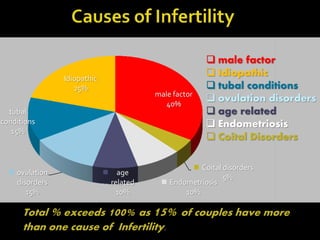
 male factor
                Idiopathic
                                                      Idiopathic
                   25%                                tubal conditions
                                       male factor
                                          40%
                                                      ovulation disorders
  tubal                                               age related
conditions                                            Endometriosis
   15%
                                                      Coital Disorders

                                                   Coital disorders
    ovulation                  age
                                                          5%
    disorders                related       Endometriosis
       15%                    10%              10%

      Total % exceeds 100% as 15% of couples have more
      than one cause of Infertility.
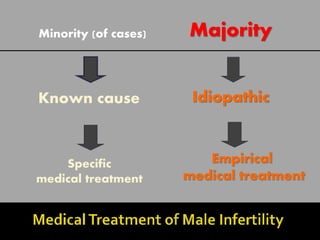
Minority (of cases)   Majority


Known cause            Idiopathic


    Specific             Empirical
medical treatment     medical treatment
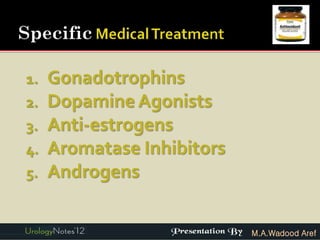
1.   Gonadotrophins
2.   Dopamine Agonists
3.   Anti-estrogens
4.   Aromatase Inhibitors
5.   Androgens

                            M.A.Wadood Aref
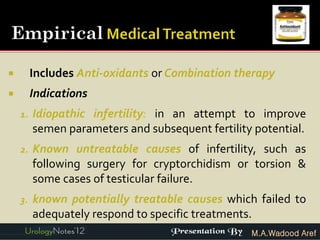
        Includes Anti-oxidants or Combination therapy
        Indications
    1.   Idiopathic infertility: in an attempt to improve
         semen parameters and subsequent fertility potential.
    2.   Known untreatable causes of infertility, such as
         following surgery for cryptorchidism or torsion &
         some cases of testicular failure.
    3.   known potentially treatable causes which failed to
         adequately respond to specific treatments.
                                                  M.A.Wadood Aref
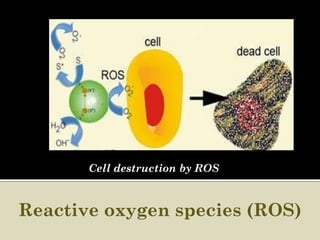
Cell destruction by ROS


Reactive oxygen species (ROS)
 Cells
      living under aerobic conditions
 require oxygen to support life.
 Free radicals are highly reactive
 molecules with one or more
 unpaired electrons that can
 oxidatively modify biomolecules.

                              M.A.Wadood Aref
   Reactive oxygen species (ROS) are free radicals
    that are derived from the metabolism of oxygen.
   Major ROS in seminal plasma include:
     superoxide (O2).
     hydrogen peroxide (H2O2).
     hydroxyl radical (OH).
   Male germ cells generate ROS at low physiologic
    levels to regulate sperm capacitation, acrosome
    reaction and sperm–oocyte fusion
                                        M.A.Wadood Aref
   ROS React almost immediately with any
    substance in surrounding beginning a chain
    reaction leading to cellular damage.
   In healthy men, a delicate balance exists
    between physiological ROS and antioxidants
    in the male reproductive tract
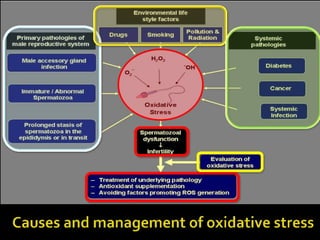
   High levels of seminal ROS have been found
    in 30 - 80% of infertile men.
                                      M.A.Wadood Aref
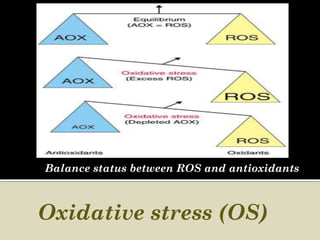
Balance status between ROS and antioxidants


Oxidative stress (OS)
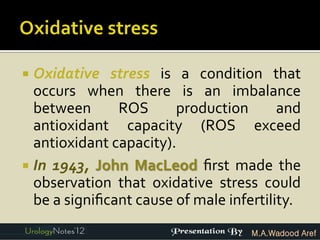
 Oxidative stress is a condition that
  occurs when there is an imbalance
  between      ROS      production       and
  antioxidant capacity (ROS exceed
  antioxidant capacity).
 In 1943, John MacLeod first made the
  observation that oxidative stress could
  be a significant cause of male infertility.
                                    M.A.Wadood Aref
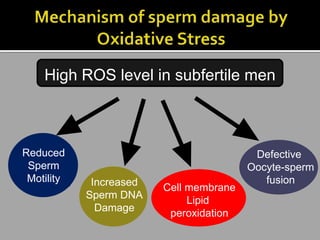
High ROS level in subfertile men


Reduced                                   Defective
 Sperm                                   Oocyte-sperm
 Motility    Increased                      fusion
                         Cell membrane
            Sperm DNA         Lipid
              Damage
                          peroxidation
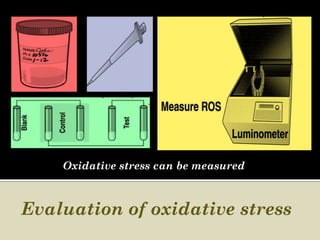
Oxidative stress can be measured


Evaluation of oxidative stress
   Quantification of the level of oxidative
    stress is important to determine if it is a
    significant contributor to sperm
    dysfunction in a given patient.
   Despite the different methods available
    to measure ROS, currently no standard
    exists for estimating oxidative stress.

                                       M.A.Wadood Aref
 oneof the most widely used
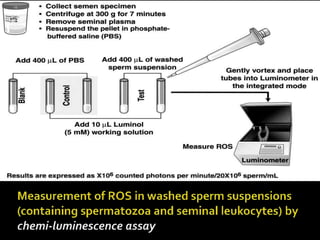
 methods to assess the level of ROS.
 discriminates    between    the
 production of superoxide and
 hydrogen peroxide by spermatozoa
 by the reagent used.

                             M.A.Wadood Aref
 uses   the principles of light
 scattering, light excitation, and
 emission of fluorochrome molecules
 to generate specific multiparameter
 data measures.


                            M.A.Wadood Aref
 determines relation between total
  amount of ROS and the total
  antioxidant capacity      to measure
  ultimate amount of oxidative stress and
  subsequent damage.
 determined by either the enhanced
  chemiluminescence assay or the
  calorimetric assay.
                                 M.A.Wadood Aref
Treatment of infertility caused by
       oxidative stress
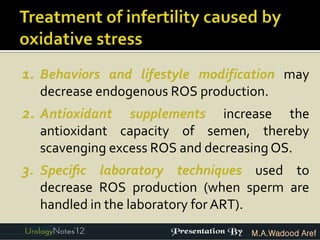
1. Behaviors and lifestyle modification may
  decrease endogenous ROS production.
2. Antioxidant  supplements increase the
  antioxidant capacity of semen, thereby
  scavenging excess ROS and decreasing OS.
3. Specific laboratory techniques used to
  decrease ROS production (when sperm are
  handled in the laboratory for ART).
                                  M.A.Wadood Aref
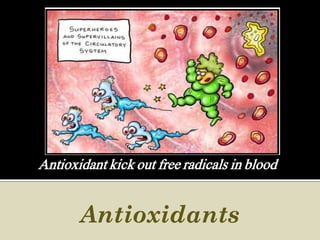
Antioxidant kick out free radicals in blood


       Antioxidants
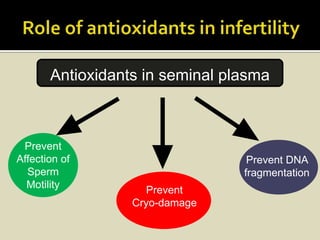
Antioxidants in seminal plasma


 Prevent
Affection of                      Prevent DNA
  Sperm                          fragmentation
  Motility
                    Prevent
                  Cryo-damage
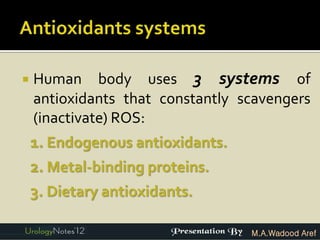
   Human body uses 3 systems of
    antioxidants that constantly scavengers
    (inactivate) ROS:
    1. Endogenous antioxidants.
    2. Metal-binding proteins.
    3. Dietary antioxidants.

                                  M.A.Wadood Aref
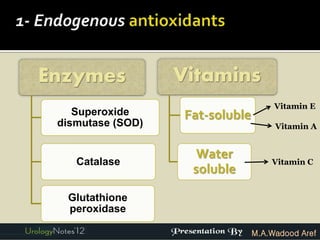
Enzymes            Vitamins
                                       Vitamin E
    Superoxide      Fat-soluble
 dismutase (SOD)                       Vitamin A


                      Water           Vitamin C
    Catalase
                     soluble

  Glutathione
  peroxidase

                                  M.A.Wadood Aref
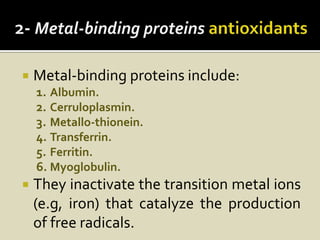
   Metal-binding proteins include:
    1. Albumin.
    2. Cerruloplasmin.
    3. Metallo-thionein.
    4. Transferrin.
    5. Ferritin.
    6. Myoglobulin.
   They inactivate the transition metal ions
    (e.g, iron) that catalyze the production
    of free radicals.
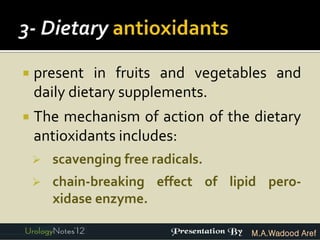
   present in fruits and vegetables and
    daily dietary supplements.
   The mechanism of action of the dietary
    antioxidants includes:
       scavenging free radicals.
       chain-breaking effect of lipid pero-
        xidase enzyme.

                                    M.A.Wadood Aref
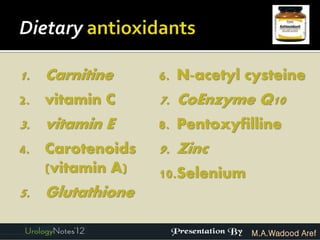
1. Carnitine     6. N-acetyl cysteine
2. vitamin C     7. CoEnzyme Q10
3. vitamin E     8. Pentoxyfilline
4. Carotenoids   9. Zinc
   (vitamin A)   10.Selenium
5. Glutathione

                             M.A.Wadood Aref
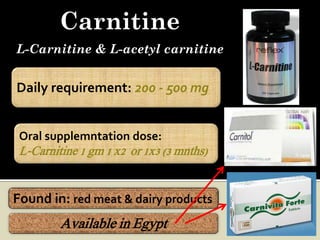
Carnitine
L-Carnitine & L-acetyl carnitine


Daily requirement: 200 - 500 mg


 Oral supplemntation dose:
 L-Carnitine 1 gm 1 x2 or 1x3 (3 mnths)


Found in: red meat & dairy products
         Available in Egypt
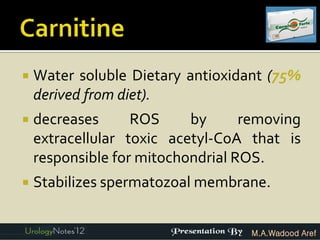
   Water soluble Dietary antioxidant (75%
    derived from diet).
   decreases      ROS     by      removing
    extracellular toxic acetyl-CoA that is
    responsible for mitochondrial ROS.
   Stabilizes spermatozoal membrane.


                                   M.A.Wadood Aref
 The   highest concentration of
  carnitine occurs in the epididymis
  (2000-fold that of plasma).
 50% of carnitine In seminal fluid
  exists as acetyl-carnitine.

                             M.A.Wadood Aref
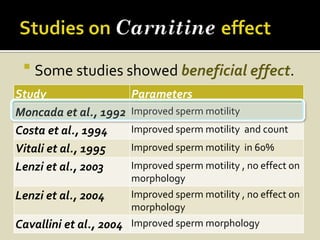
   Some studies showed beneficial effect.
Study                   Parameters
Moncada et al., 1992    Improved sperm motility
Costa et al., 1994      Improved sperm motility and count
Vitali et al., 1995     Improved sperm motility in 60%
Lenzi et al., 2003     Improved sperm motility , no effect on
                       morphology
Lenzi et al., 2004     Improved sperm motility , no effect on
                       morphology
Cavallini et al., 2004 Improved sperm morphology
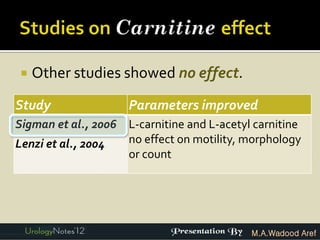
   Other studies showed no effect.
Study                Parameters improved
Sigman et al., 2006 L-carnitine and L-acetyl carnitine
Lenzi et al., 2004  no effect on motility, morphology
                    or count


                                            M.A.Wadood Aref
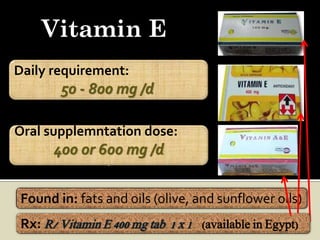
Vitamin E
Daily requirement:
        50 - 800 mg /d.

Oral supplemntation dose:
       400 or 600 mg /d
                 .


 Found in: fats and oils (olive, and sunflower oils)
 Rx: R/ Vitamin E 400 mg tab 1 x 1 (available in Egypt)
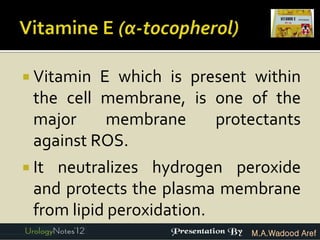
 Vitamin  E which is present within
  the cell membrane, is one of the
  major     membrane     protectants
  against ROS.
 It neutralizes hydrogen peroxide
  and protects the plasma membrane
  from lipid peroxidation.
                             M.A.Wadood Aref
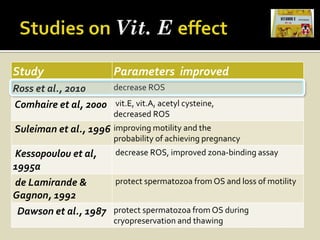
Study                    Parameters improved
Ross et al., 2010        decrease ROS
Comhaire et al, 2000 vit.E, vit.A, acetyl cysteine,
                         decreased ROS
Suleiman et al., 1996 improving motility and the
                         probability of achieving pregnancy
Kessopoulou et al,   decrease ROS, improved zona-binding assay
1995a
de Lamirande &       protect spermatozoa from OS and loss of motility
Gagnon, 1992
 Dawson et al., 1987 protect spermatozoa from OS during
                         cryopreservation and thawing
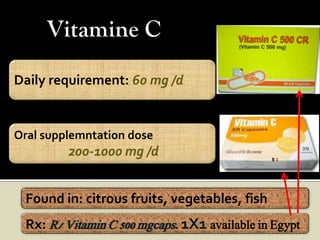
Vitamine C
Daily requirement: 60 mg /d


Oral supplemntation dose
         200-1000 mg /d


  Found in: citrous fruits, vegetables, fish
  Rx: R/ Vitamin C 500 mgcaps. 1X1 available in Egypt
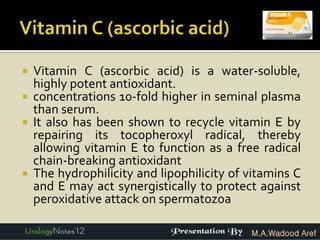
   Vitamin C (ascorbic acid) is a water-soluble,
    highly potent antioxidant.
   concentrations 10-fold higher in seminal plasma
    than serum.
   It also has been shown to recycle vitamin E by
    repairing its tocopheroxyl radical, thereby
    allowing vitamin E to function as a free radical
    chain-breaking antioxidant
   The hydrophilicity and lipophilicity of vitamins C
    and E may act synergistically to protect against
    peroxidative attack on spermatozoa

                                            M.A.Wadood Aref
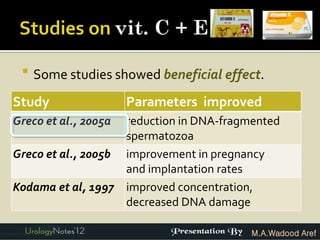
   Some studies showed beneficial effect.
Study                 Parameters improved
Greco et al., 2005a reduction in DNA-fragmented
                    spermatozoa
Greco et al., 2005b improvement in pregnancy
                    and implantation rates
Kodama et al, 1997 improved concentration,
                    decreased DNA damage

                                          M.A.Wadood Aref
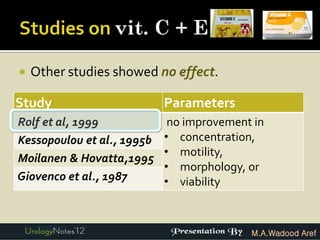
   Other studies showed no effect.

Study                       Parameters
Rolf et al, 1999             no improvement in
Kessopoulou et al., 1995b   • concentration,
                            • motility,
Moilanen & Hovatta,1995
                            • morphology, or
Giovenco et al., 1987       • viability


                                           M.A.Wadood Aref
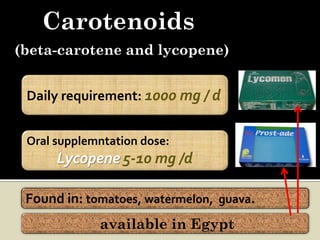
Carotenoids
(beta-carotene and lycopene)


 Daily requirement: 1000 mg / d


 Oral supplemntation dose:
      Lycopene 5-10 mg /d

 Found in: tomatoes, watermelon, guava.
             available in Egypt
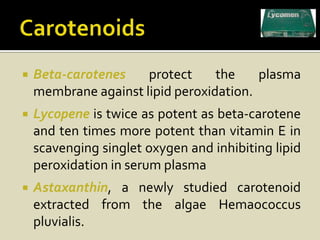
   Beta-carotenes    protect     the    plasma
    membrane against lipid peroxidation.
   Lycopene is twice as potent as beta-carotene
    and ten times more potent than vitamin E in
    scavenging singlet oxygen and inhibiting lipid
    peroxidation in serum plasma
   Astaxanthin, a newly studied carotenoid
    extracted from the algae Hemaococcus
    pluvialis.
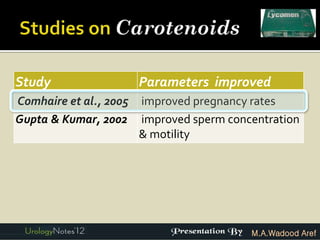
Study                   Parameters improved
Comhaire et al., 2005   improved pregnancy rates
Gupta & Kumar, 2002     improved sperm concentration
                        & motility


                                           M.A.Wadood Aref
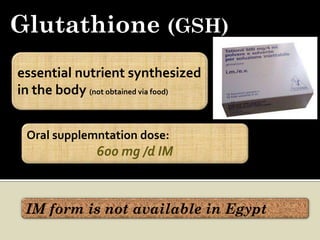
Glutathione (GSH)
essential nutrient synthesized
in the body (not obtained via food)


 Oral supplemntation dose:
               600 mg /d IM


 IM form is not available in Egypt
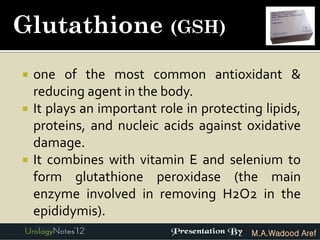
Glutathione (GSH)
   one of the most common antioxidant &
    reducing agent in the body.
   It plays an important role in protecting lipids,
    proteins, and nucleic acids against oxidative
    damage.
   It combines with vitamin E and selenium to
    form glutathione peroxidase (the main
    enzyme involved in removing H2O2 in the
    epididymis).
                                           M.A.Wadood Aref
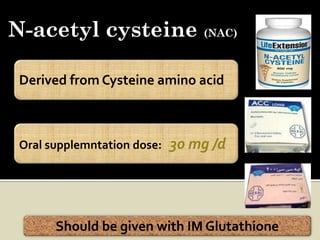
N-acetyl cysteine (NAC)

 Derived from Cysteine amino acid


 Oral supplemntation dose:   30 mg /d


       Should be given with IM Glutathione
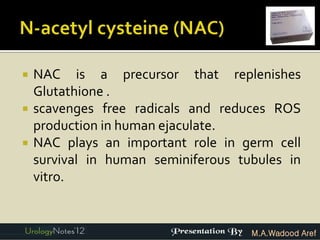
   NAC is a precursor that replenishes
    Glutathione .
   scavenges free radicals and reduces ROS
    production in human ejaculate.
   NAC plays an important role in germ cell
    survival in human seminiferous tubules in
    vitro.


                                     M.A.Wadood Aref
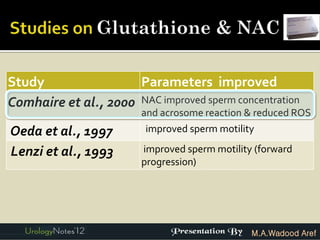
Study                 Parameters improved
Comhaire et al., 2000 NAC improved sperm concentration
                        and acrosome reaction & reduced ROS
Oeda et al., 1997        improved sperm motility

Lenzi et al., 1993      improved sperm motility (forward
                        progression)


                                               M.A.Wadood Aref
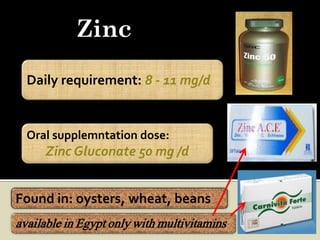
Zinc
  Daily requirement: 8 - 11 mg/d


  Oral supplemntation dose:
     Zinc Gluconate 50 mg /d


Found in: oysters, wheat, beans
available in Egypt only with multivitamins
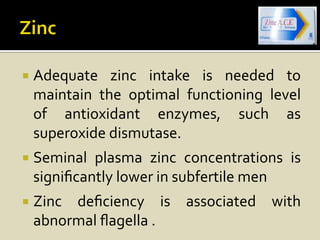
   Adequate zinc intake is needed to
    maintain the optimal functioning level
    of antioxidant enzymes, such as
    superoxide dismutase.
   Seminal plasma zinc concentrations is
    significantly lower in subfertile men
   Zinc deficiency is associated with
    abnormal flagella .
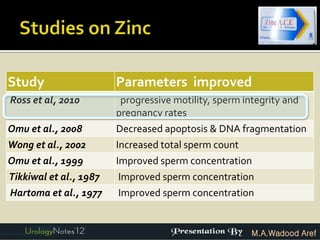
Study                   Parameters improved
Ross et al, 2010          progressive motility, sperm integrity and
                        pregnancy rates
Omu et al., 2008        Decreased apoptosis & DNA fragmentation
Wong et al., 2002       Increased total sperm count
Omu et al., 1999        Improved sperm concentration
Tikkiwal et al., 1987    Improved sperm concentration
Hartoma et al., 1977     Improved sperm concentration


                                                      M.A.Wadood Aref
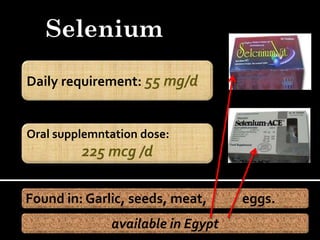
Selenium

Daily requirement: 55 mg/d


Oral supplemntation dose:
         225 mcg /d

Found in: Garlic, seeds, meat,     eggs.
              available in Egypt
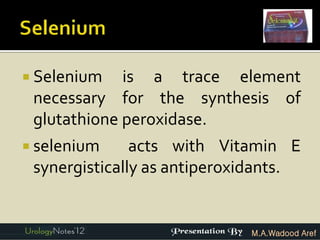
 Selenium   is a trace element
 necessary for the synthesis of
 glutathione peroxidase.
 selenium     acts with Vitamin E
 synergistically as antiperoxidants.


                             M.A.Wadood Aref
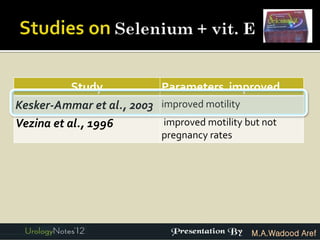
Study          Parameters improved
Kesker-Ammar et al., 2003 improved motility
Vezina et al., 1996        improved motility but not
                            pregnancy rates


                                              M.A.Wadood Aref
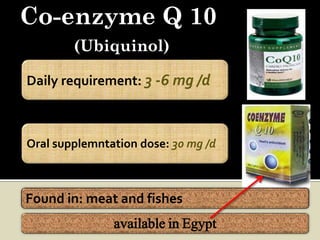
Co-enzyme Q 10
        (Ubiquinol)

Daily requirement: 3 -6 mg /d


Oral supplemntation dose: 30 mg /d


Found in: meat and fishes
               available in Egypt
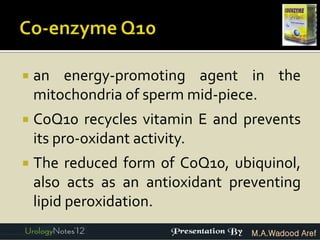
   an energy-promoting agent in the
    mitochondria of sperm mid-piece.
   CoQ10 recycles vitamin E and prevents
    its pro-oxidant activity.
   The reduced form of CoQ10, ubiquinol,
    also acts as an antioxidant preventing
    lipid peroxidation.
                                   M.A.Wadood Aref
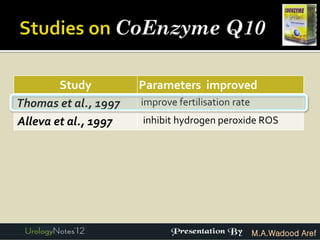
Study         Parameters improved
Thomas et al., 1997   improve fertilisation rate
Alleva et al., 1997   inhibit hydrogen peroxide ROS


                                                   M.A.Wadood Aref
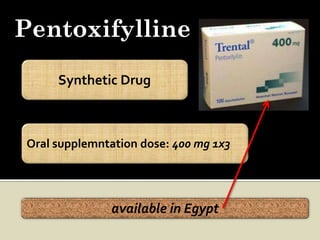
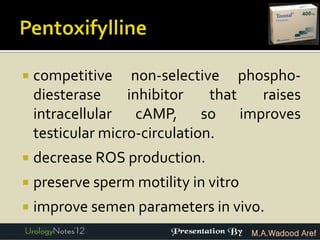
Pentoxifylline
      Synthetic Drug


 Oral supplemntation dose: 400 mg 1x3


               available in Egypt
   competitive non-selective phospho-
    diesterase     inhibitor    that raises
    intracellular cAMP, so improves
    testicular micro-circulation.
   decrease ROS production.
   preserve sperm motility in vitro
   improve semen parameters in vivo.
                                       M.A.Wadood Aref
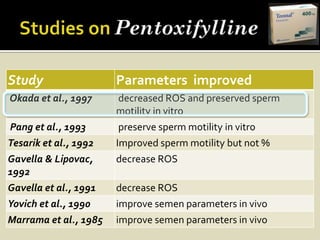
Study                  Parameters improved
Okada et al., 1997     decreased ROS and preserved sperm
                       motility in vitro
Pang et al., 1993      preserve sperm motility in vitro
Tesarik et al., 1992   Improved sperm motility but not %
Gavella & Lipovac,     decrease ROS
1992
Gavella et al., 1991   decrease ROS
Yovich et al., 1990    improve semen parameters in vivo
Marrama et al., 1985   improve semen parameters in vivo
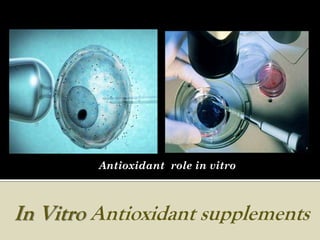
Antioxidant role in vitro


In Vitro Antioxidant supplements
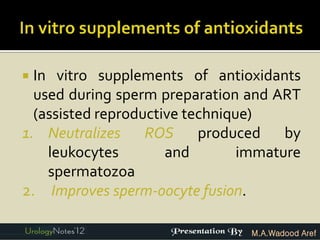
 In vitro supplements of antioxidants
  used during sperm preparation and ART
  (assisted reproductive technique)
1. Neutralizes ROS produced by
    leukocytes        and        immature
    spermatozoa
2. Improves sperm-oocyte fusion.

                                 M.A.Wadood Aref
 In     vitro    supplementation     with
  superoxide dismutase and catalase leads
  to:
1. prevention of lipid peroxidation of the
     sperm plasma membrane caused by
     ROS.
2. recovery of high-quality spermatozoa
     after freezing-thawing procedures.
                                  M.A.Wadood Aref
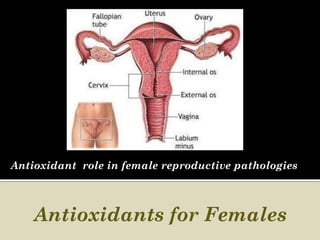
Antioxidant role in female reproductive pathologies


    Antioxidants for Females
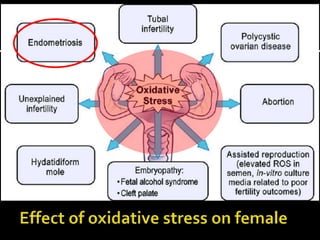
 OS   is implicated in pathological
 processes of the female reproductive
 tract that contribute to infertility and
 poor pregnancy outcome.
 Antioxidants   are used in order to
 improve fertility and pregnancy rates.

                                M.A.Wadood Aref
   PCOS: N-acetyl cysteine improve glucose
    control and peripheral insulin sensitivity in
    hyperinsulinemic patients.
   Endometriosis: The antioxidants catalase,
    RU486, curcumin, melatonin, and
    catechins have anti-proliferative and anti-
    angiogenic effects stopping disease
    progression.
                                       M.A.Wadood Aref
   Unexplained      infertility:  Selenium
    normalize patient’s RBC Mg levels and
    can result in clinical pregnancy after 8
    months of treatment.
   recurrent pregnancy loss: folic acid,
    melatonin, and omega-3 fatty acids are
    now     investigated   (particularly in
    antiphospholid antibody syndrome).
                                   M.A.Wadood Aref
Antioxidant kick out free radicals


Take Home Message
 Spermatozoa  are under a continuous
 influence of OS because of excessive
 generation of ROS but natural
 antioxidants decrease the progression
 of the damage.


                               M.A.Wadood Aref
 However, when an imbalance exists
 between levels of ROS and the natural
 antioxidant     defenses,     various
 measures can be used to protect
 spermatozoa against the OS-induced
 injury .

                               M.A.Wadood Aref
 For patients suspected to have high
 levels of ROS and Oxidative stress
 (OS), antioxidant supplements can
 be considered.


                              M.A.Wadood Aref
 Oxidativestress can be also
 reduced by modifying certain
 lifestyle     behaviors and
 environmental factors.


                       M.A.Wadood Aref
 Another    important method for
 decreasing OS is the use of
 antioxidants during various sperm
 processing techniques (ARTs).


                           M.A.Wadood Aref
 Combined    therapy is much more
 beneficial because antioxidants act
 by different mechanisms on different
 free radicals.


                              M.A.Wadood Aref
 Although   further studies are required
 to validate use of antioxidants, The
 low cost and relatively low risk of
 toxicity of the antioxidants is
 appealing to both patients and
 clinicians.

                                 M.A.Wadood Aref
M.A.Wadood Aref
M.A.Wadood Aref
M.A.Wadood Aref

Antioxidant

  • 1.
  • 2.
  • 3.
    Infertility or Subfertility is defined as the failure to conceive after 1 year of regular, unprotected intercourse with the same partner.  10–17% of all couples experience primary or secondary infertility at some time during their reproductive life. M.A.Wadood Aref
  • 4.
    Male factor is considered a major contributory factor to infertility in 50% of cases, with no identifiable cause in 25%.  Along with the conventional causes for male infertility such as varicocele, cryptorchidism, infections, obstructive lesions, cystic fibrosis, trauma, and tumors, a new, yet important cause has been identified: oxidative stress. M.A.Wadood Aref
  • 5.
     male factor Idiopathic  Idiopathic 25%  tubal conditions male factor 40%  ovulation disorders tubal  age related conditions  Endometriosis 15%  Coital Disorders Coital disorders ovulation age 5% disorders related Endometriosis 15% 10% 10% Total % exceeds 100% as 15% of couples have more than one cause of Infertility.
  • 6.
    Minority (of cases) Majority Known cause Idiopathic Specific Empirical medical treatment medical treatment
  • 7.
    1. Gonadotrophins 2. Dopamine Agonists 3. Anti-estrogens 4. Aromatase Inhibitors 5. Androgens M.A.Wadood Aref
  • 8.
    Includes Anti-oxidants or Combination therapy  Indications 1. Idiopathic infertility: in an attempt to improve semen parameters and subsequent fertility potential. 2. Known untreatable causes of infertility, such as following surgery for cryptorchidism or torsion & some cases of testicular failure. 3. known potentially treatable causes which failed to adequately respond to specific treatments. M.A.Wadood Aref
  • 9.
    Cell destruction byROS Reactive oxygen species (ROS)
  • 10.
     Cells living under aerobic conditions require oxygen to support life.  Free radicals are highly reactive molecules with one or more unpaired electrons that can oxidatively modify biomolecules. M.A.Wadood Aref
  • 11.
    Reactive oxygen species (ROS) are free radicals that are derived from the metabolism of oxygen.  Major ROS in seminal plasma include:  superoxide (O2).  hydrogen peroxide (H2O2).  hydroxyl radical (OH).  Male germ cells generate ROS at low physiologic levels to regulate sperm capacitation, acrosome reaction and sperm–oocyte fusion M.A.Wadood Aref
  • 12.
    ROS React almost immediately with any substance in surrounding beginning a chain reaction leading to cellular damage.  In healthy men, a delicate balance exists between physiological ROS and antioxidants in the male reproductive tract  High levels of seminal ROS have been found in 30 - 80% of infertile men. M.A.Wadood Aref
  • 13.
    Balance status betweenROS and antioxidants Oxidative stress (OS)
  • 14.
     Oxidative stressis a condition that occurs when there is an imbalance between ROS production and antioxidant capacity (ROS exceed antioxidant capacity).  In 1943, John MacLeod first made the observation that oxidative stress could be a significant cause of male infertility. M.A.Wadood Aref
  • 16.
    High ROS levelin subfertile men Reduced Defective Sperm Oocyte-sperm Motility Increased fusion Cell membrane Sperm DNA Lipid Damage peroxidation
  • 17.
    Oxidative stress canbe measured Evaluation of oxidative stress
  • 18.
    Quantification of the level of oxidative stress is important to determine if it is a significant contributor to sperm dysfunction in a given patient.  Despite the different methods available to measure ROS, currently no standard exists for estimating oxidative stress. M.A.Wadood Aref
  • 19.
     oneof themost widely used methods to assess the level of ROS.  discriminates between the production of superoxide and hydrogen peroxide by spermatozoa by the reagent used. M.A.Wadood Aref
  • 20.
     uses the principles of light scattering, light excitation, and emission of fluorochrome molecules to generate specific multiparameter data measures. M.A.Wadood Aref
  • 21.
     determines relationbetween total amount of ROS and the total antioxidant capacity to measure ultimate amount of oxidative stress and subsequent damage.  determined by either the enhanced chemiluminescence assay or the calorimetric assay. M.A.Wadood Aref
  • 23.
    Treatment of infertilitycaused by oxidative stress
  • 24.
    1. Behaviors andlifestyle modification may decrease endogenous ROS production. 2. Antioxidant supplements increase the antioxidant capacity of semen, thereby scavenging excess ROS and decreasing OS. 3. Specific laboratory techniques used to decrease ROS production (when sperm are handled in the laboratory for ART). M.A.Wadood Aref
  • 25.
    Antioxidant kick outfree radicals in blood Antioxidants
  • 26.
    Antioxidants in seminalplasma Prevent Affection of Prevent DNA Sperm fragmentation Motility Prevent Cryo-damage
  • 27.
    Human body uses 3 systems of antioxidants that constantly scavengers (inactivate) ROS: 1. Endogenous antioxidants. 2. Metal-binding proteins. 3. Dietary antioxidants. M.A.Wadood Aref
  • 28.
    Enzymes Vitamins Vitamin E Superoxide Fat-soluble dismutase (SOD) Vitamin A Water Vitamin C Catalase soluble Glutathione peroxidase M.A.Wadood Aref
  • 29.
    Metal-binding proteins include: 1. Albumin. 2. Cerruloplasmin. 3. Metallo-thionein. 4. Transferrin. 5. Ferritin. 6. Myoglobulin.  They inactivate the transition metal ions (e.g, iron) that catalyze the production of free radicals.
  • 30.
    present in fruits and vegetables and daily dietary supplements.  The mechanism of action of the dietary antioxidants includes:  scavenging free radicals.  chain-breaking effect of lipid pero- xidase enzyme. M.A.Wadood Aref
  • 31.
    1. Carnitine 6. N-acetyl cysteine 2. vitamin C 7. CoEnzyme Q10 3. vitamin E 8. Pentoxyfilline 4. Carotenoids 9. Zinc (vitamin A) 10.Selenium 5. Glutathione M.A.Wadood Aref
  • 32.
    Carnitine L-Carnitine & L-acetylcarnitine Daily requirement: 200 - 500 mg Oral supplemntation dose: L-Carnitine 1 gm 1 x2 or 1x3 (3 mnths) Found in: red meat & dairy products Available in Egypt
  • 33.
    Water soluble Dietary antioxidant (75% derived from diet).  decreases ROS by removing extracellular toxic acetyl-CoA that is responsible for mitochondrial ROS.  Stabilizes spermatozoal membrane. M.A.Wadood Aref
  • 34.
     The highest concentration of carnitine occurs in the epididymis (2000-fold that of plasma).  50% of carnitine In seminal fluid exists as acetyl-carnitine. M.A.Wadood Aref
  • 35.
    Some studies showed beneficial effect. Study Parameters Moncada et al., 1992 Improved sperm motility Costa et al., 1994 Improved sperm motility and count Vitali et al., 1995 Improved sperm motility in 60% Lenzi et al., 2003 Improved sperm motility , no effect on morphology Lenzi et al., 2004 Improved sperm motility , no effect on morphology Cavallini et al., 2004 Improved sperm morphology
  • 36.
    Other studies showed no effect. Study Parameters improved Sigman et al., 2006 L-carnitine and L-acetyl carnitine Lenzi et al., 2004 no effect on motility, morphology or count M.A.Wadood Aref
  • 37.
    Vitamin E Daily requirement: 50 - 800 mg /d. Oral supplemntation dose: 400 or 600 mg /d . Found in: fats and oils (olive, and sunflower oils) Rx: R/ Vitamin E 400 mg tab 1 x 1 (available in Egypt)
  • 38.
     Vitamin E which is present within the cell membrane, is one of the major membrane protectants against ROS.  It neutralizes hydrogen peroxide and protects the plasma membrane from lipid peroxidation. M.A.Wadood Aref
  • 39.
    Study Parameters improved Ross et al., 2010 decrease ROS Comhaire et al, 2000 vit.E, vit.A, acetyl cysteine, decreased ROS Suleiman et al., 1996 improving motility and the probability of achieving pregnancy Kessopoulou et al, decrease ROS, improved zona-binding assay 1995a de Lamirande & protect spermatozoa from OS and loss of motility Gagnon, 1992 Dawson et al., 1987 protect spermatozoa from OS during cryopreservation and thawing
  • 40.
    Vitamine C Daily requirement:60 mg /d Oral supplemntation dose 200-1000 mg /d Found in: citrous fruits, vegetables, fish Rx: R/ Vitamin C 500 mgcaps. 1X1 available in Egypt
  • 41.
    Vitamin C (ascorbic acid) is a water-soluble, highly potent antioxidant.  concentrations 10-fold higher in seminal plasma than serum.  It also has been shown to recycle vitamin E by repairing its tocopheroxyl radical, thereby allowing vitamin E to function as a free radical chain-breaking antioxidant  The hydrophilicity and lipophilicity of vitamins C and E may act synergistically to protect against peroxidative attack on spermatozoa M.A.Wadood Aref
  • 42.
    Some studies showed beneficial effect. Study Parameters improved Greco et al., 2005a reduction in DNA-fragmented spermatozoa Greco et al., 2005b improvement in pregnancy and implantation rates Kodama et al, 1997 improved concentration, decreased DNA damage M.A.Wadood Aref
  • 43.
    Other studies showed no effect. Study Parameters Rolf et al, 1999 no improvement in Kessopoulou et al., 1995b • concentration, • motility, Moilanen & Hovatta,1995 • morphology, or Giovenco et al., 1987 • viability M.A.Wadood Aref
  • 44.
    Carotenoids (beta-carotene and lycopene) Daily requirement: 1000 mg / d Oral supplemntation dose: Lycopene 5-10 mg /d Found in: tomatoes, watermelon, guava. available in Egypt
  • 45.
    Beta-carotenes protect the plasma membrane against lipid peroxidation.  Lycopene is twice as potent as beta-carotene and ten times more potent than vitamin E in scavenging singlet oxygen and inhibiting lipid peroxidation in serum plasma  Astaxanthin, a newly studied carotenoid extracted from the algae Hemaococcus pluvialis.
  • 46.
    Study Parameters improved Comhaire et al., 2005 improved pregnancy rates Gupta & Kumar, 2002 improved sperm concentration & motility M.A.Wadood Aref
  • 47.
    Glutathione (GSH) essential nutrientsynthesized in the body (not obtained via food) Oral supplemntation dose: 600 mg /d IM IM form is not available in Egypt
  • 48.
    Glutathione (GSH)  one of the most common antioxidant & reducing agent in the body.  It plays an important role in protecting lipids, proteins, and nucleic acids against oxidative damage.  It combines with vitamin E and selenium to form glutathione peroxidase (the main enzyme involved in removing H2O2 in the epididymis). M.A.Wadood Aref
  • 49.
    N-acetyl cysteine (NAC) Derived from Cysteine amino acid Oral supplemntation dose: 30 mg /d Should be given with IM Glutathione
  • 50.
    NAC is a precursor that replenishes Glutathione .  scavenges free radicals and reduces ROS production in human ejaculate.  NAC plays an important role in germ cell survival in human seminiferous tubules in vitro. M.A.Wadood Aref
  • 51.
    Study Parameters improved Comhaire et al., 2000 NAC improved sperm concentration and acrosome reaction & reduced ROS Oeda et al., 1997 improved sperm motility Lenzi et al., 1993 improved sperm motility (forward progression) M.A.Wadood Aref
  • 52.
    Zinc Dailyrequirement: 8 - 11 mg/d Oral supplemntation dose: Zinc Gluconate 50 mg /d Found in: oysters, wheat, beans available in Egypt only with multivitamins
  • 53.
    Adequate zinc intake is needed to maintain the optimal functioning level of antioxidant enzymes, such as superoxide dismutase.  Seminal plasma zinc concentrations is significantly lower in subfertile men  Zinc deficiency is associated with abnormal flagella .
  • 54.
    Study Parameters improved Ross et al, 2010 progressive motility, sperm integrity and pregnancy rates Omu et al., 2008 Decreased apoptosis & DNA fragmentation Wong et al., 2002 Increased total sperm count Omu et al., 1999 Improved sperm concentration Tikkiwal et al., 1987 Improved sperm concentration Hartoma et al., 1977 Improved sperm concentration M.A.Wadood Aref
  • 55.
    Selenium Daily requirement: 55mg/d Oral supplemntation dose: 225 mcg /d Found in: Garlic, seeds, meat, eggs. available in Egypt
  • 56.
     Selenium is a trace element necessary for the synthesis of glutathione peroxidase.  selenium acts with Vitamin E synergistically as antiperoxidants. M.A.Wadood Aref
  • 57.
    Study Parameters improved Kesker-Ammar et al., 2003 improved motility Vezina et al., 1996 improved motility but not pregnancy rates M.A.Wadood Aref
  • 58.
    Co-enzyme Q 10 (Ubiquinol) Daily requirement: 3 -6 mg /d Oral supplemntation dose: 30 mg /d Found in: meat and fishes available in Egypt
  • 59.
    an energy-promoting agent in the mitochondria of sperm mid-piece.  CoQ10 recycles vitamin E and prevents its pro-oxidant activity.  The reduced form of CoQ10, ubiquinol, also acts as an antioxidant preventing lipid peroxidation. M.A.Wadood Aref
  • 60.
    Study Parameters improved Thomas et al., 1997 improve fertilisation rate Alleva et al., 1997 inhibit hydrogen peroxide ROS M.A.Wadood Aref
  • 61.
    Pentoxifylline Synthetic Drug Oral supplemntation dose: 400 mg 1x3 available in Egypt
  • 62.
    competitive non-selective phospho- diesterase inhibitor that raises intracellular cAMP, so improves testicular micro-circulation.  decrease ROS production.  preserve sperm motility in vitro  improve semen parameters in vivo. M.A.Wadood Aref
  • 63.
    Study Parameters improved Okada et al., 1997 decreased ROS and preserved sperm motility in vitro Pang et al., 1993 preserve sperm motility in vitro Tesarik et al., 1992 Improved sperm motility but not % Gavella & Lipovac, decrease ROS 1992 Gavella et al., 1991 decrease ROS Yovich et al., 1990 improve semen parameters in vivo Marrama et al., 1985 improve semen parameters in vivo
  • 64.
    Antioxidant role invitro In Vitro Antioxidant supplements
  • 65.
     In vitrosupplements of antioxidants used during sperm preparation and ART (assisted reproductive technique) 1. Neutralizes ROS produced by leukocytes and immature spermatozoa 2. Improves sperm-oocyte fusion. M.A.Wadood Aref
  • 66.
     In vitro supplementation with superoxide dismutase and catalase leads to: 1. prevention of lipid peroxidation of the sperm plasma membrane caused by ROS. 2. recovery of high-quality spermatozoa after freezing-thawing procedures. M.A.Wadood Aref
  • 67.
    Antioxidant role infemale reproductive pathologies Antioxidants for Females
  • 69.
     OS is implicated in pathological processes of the female reproductive tract that contribute to infertility and poor pregnancy outcome.  Antioxidants are used in order to improve fertility and pregnancy rates. M.A.Wadood Aref
  • 70.
    PCOS: N-acetyl cysteine improve glucose control and peripheral insulin sensitivity in hyperinsulinemic patients.  Endometriosis: The antioxidants catalase, RU486, curcumin, melatonin, and catechins have anti-proliferative and anti- angiogenic effects stopping disease progression. M.A.Wadood Aref
  • 71.
    Unexplained infertility: Selenium normalize patient’s RBC Mg levels and can result in clinical pregnancy after 8 months of treatment.  recurrent pregnancy loss: folic acid, melatonin, and omega-3 fatty acids are now investigated (particularly in antiphospholid antibody syndrome). M.A.Wadood Aref
  • 72.
    Antioxidant kick outfree radicals Take Home Message
  • 73.
     Spermatozoa are under a continuous influence of OS because of excessive generation of ROS but natural antioxidants decrease the progression of the damage. M.A.Wadood Aref
  • 74.
     However, whenan imbalance exists between levels of ROS and the natural antioxidant defenses, various measures can be used to protect spermatozoa against the OS-induced injury . M.A.Wadood Aref
  • 75.
     For patientssuspected to have high levels of ROS and Oxidative stress (OS), antioxidant supplements can be considered. M.A.Wadood Aref
  • 76.
     Oxidativestress canbe also reduced by modifying certain lifestyle behaviors and environmental factors. M.A.Wadood Aref
  • 77.
     Another important method for decreasing OS is the use of antioxidants during various sperm processing techniques (ARTs). M.A.Wadood Aref
  • 78.
     Combined therapy is much more beneficial because antioxidants act by different mechanisms on different free radicals. M.A.Wadood Aref
  • 79.
     Although further studies are required to validate use of antioxidants, The low cost and relatively low risk of toxicity of the antioxidants is appealing to both patients and clinicians. M.A.Wadood Aref
  • 80.
  • 81.
  • 82.