- An anti-lock braking system (ABS) prevents wheels from locking up during braking to maintain steering control. It monitors wheel speed and controls brake pressure to each wheel.
- Early ABS systems were developed for aircraft in the 1920s and introduced on cars in the 1960s-1970s but were expensive and unreliable. Mercedes introduced the first fully electronic 4-wheel ABS in 1978.
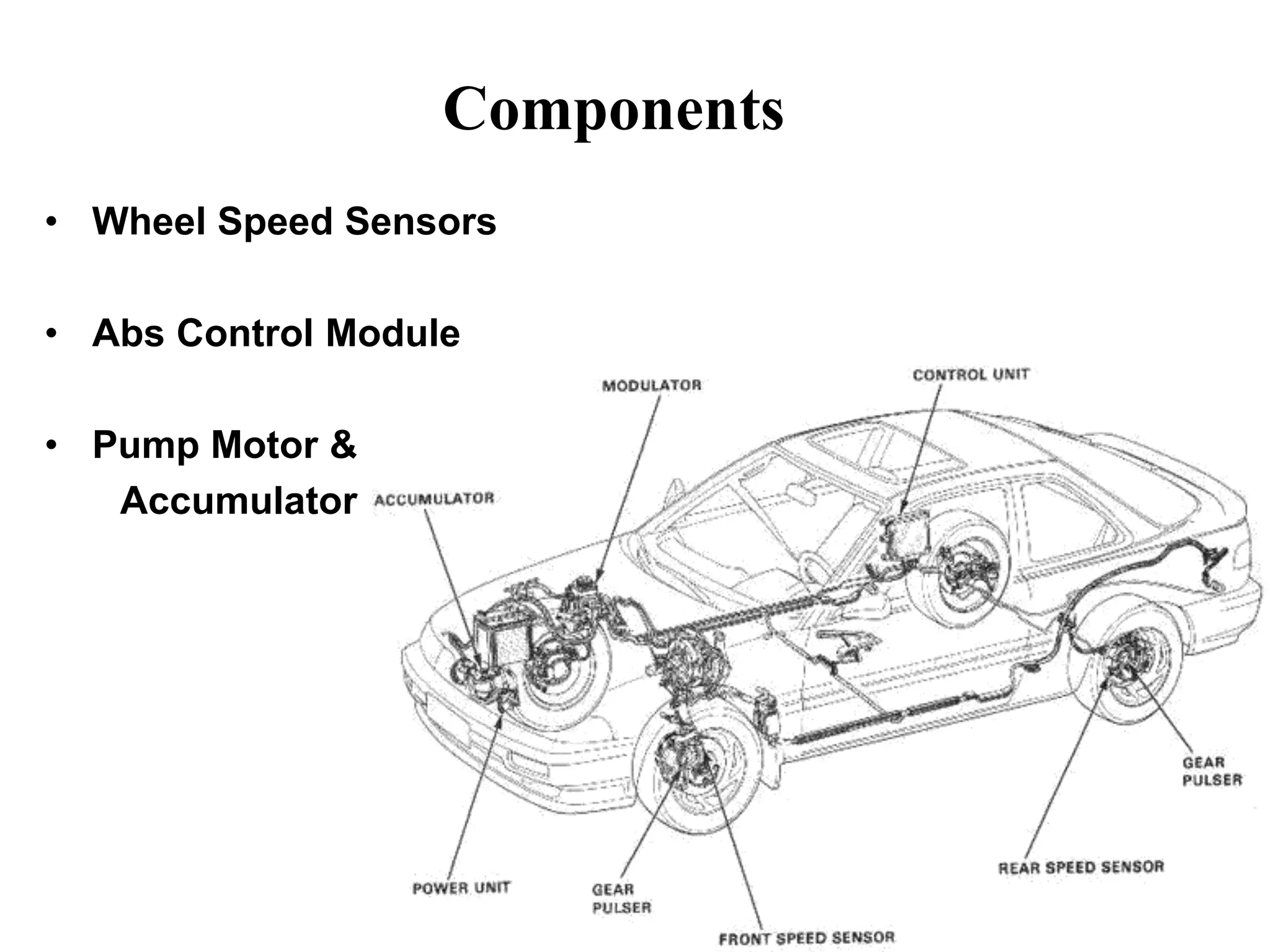
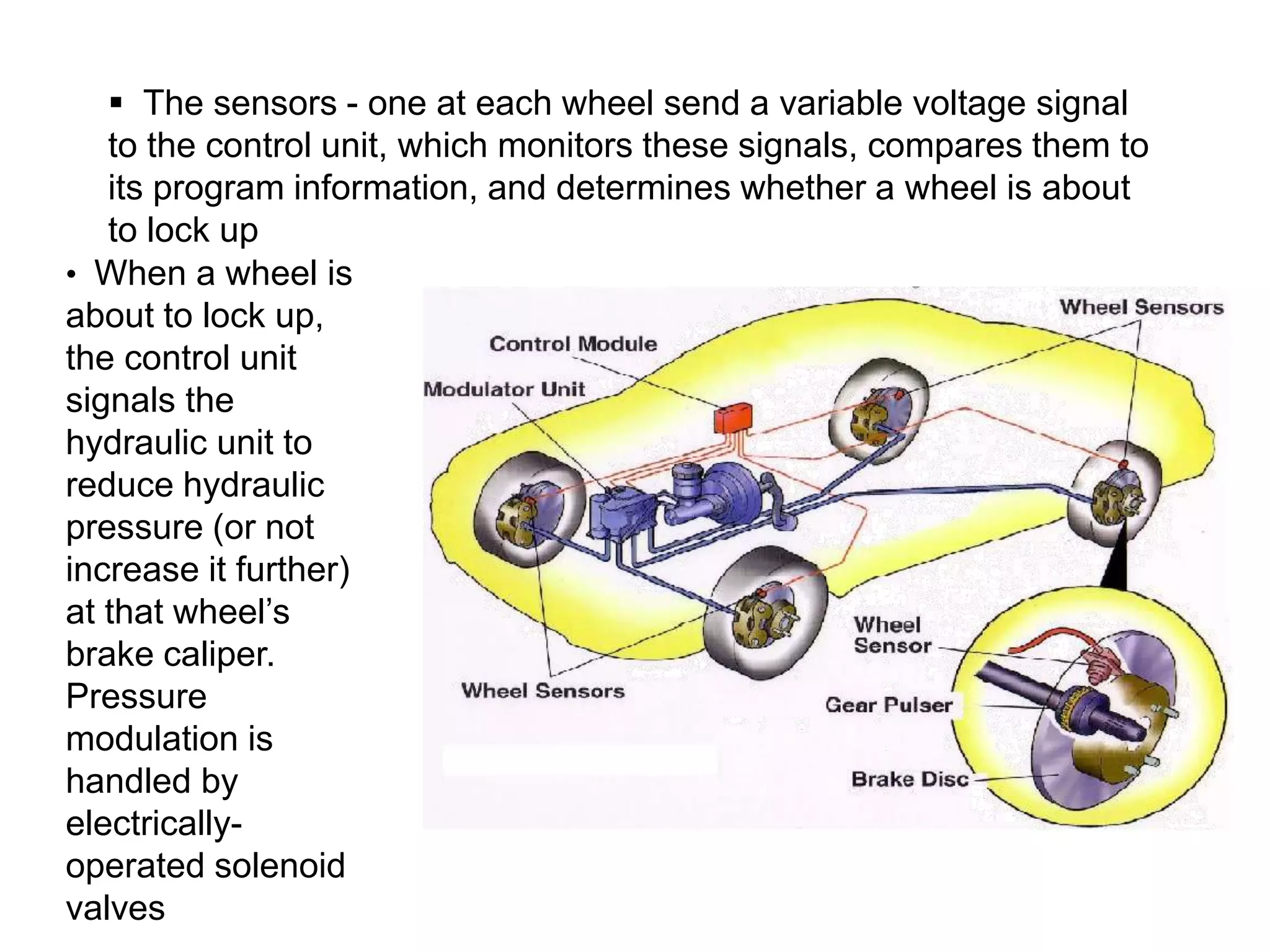
- ABS works by pumping the brakes on and off faster than the driver can in order to prevent a wheel from locking up while still slowing the vehicle. It uses wheel speed sensors and a control module to modulate brake pressure through solenoid valves when a wheel is close to locking.