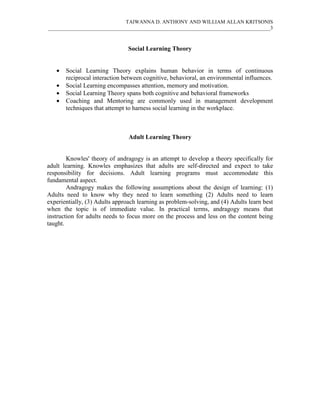
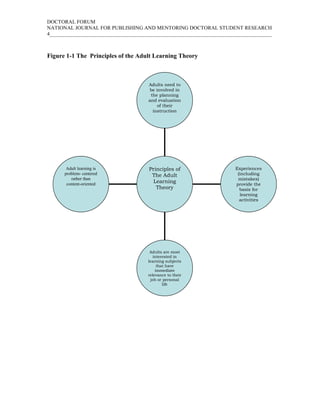
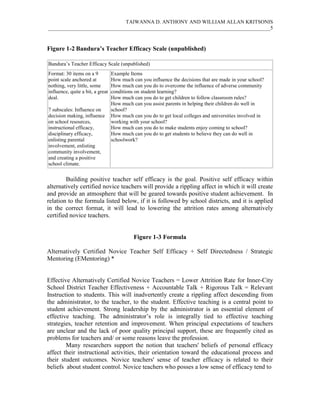
This article discusses an assessment of the effectiveness of strategic e-mentoring in improving self-efficacy and retention of alternatively certified novice teachers in an inner city school district. The study is important because research shows teachers with higher self-efficacy are more effective in the classroom. They are more innovative, open to student ideas, and create a motivating learning environment. The purpose is to understand how developing self-efficacy affects high attrition rates among these teachers. Social learning theory and adult learning theory provide the framework. A strategic e-mentoring program was used to build participants' sense of self-efficacy using Bandura's teacher efficacy scale. The goal was improving teacher effectiveness and retention through increasing positive self-bel