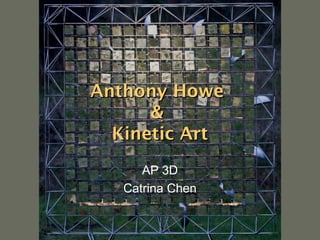
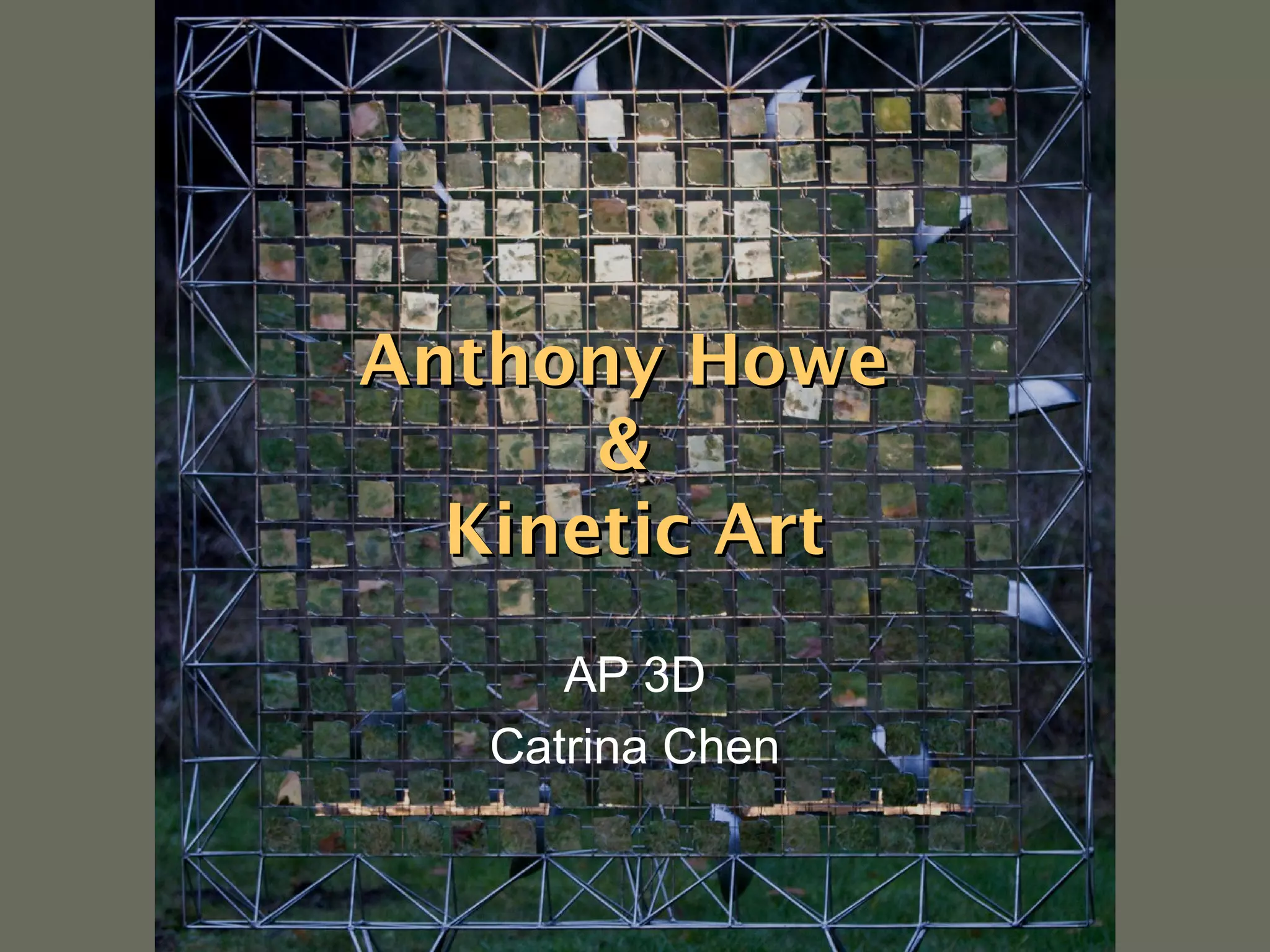
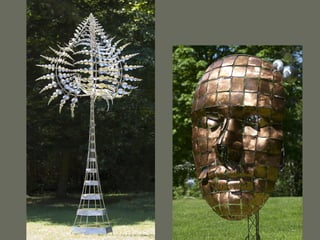
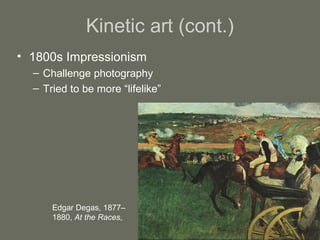
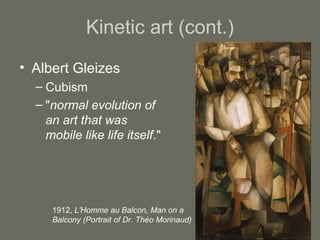
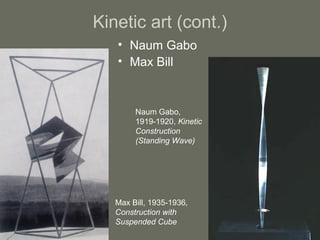
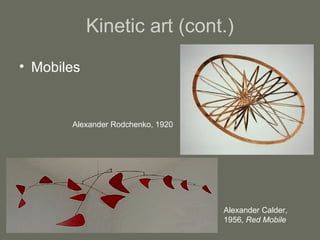
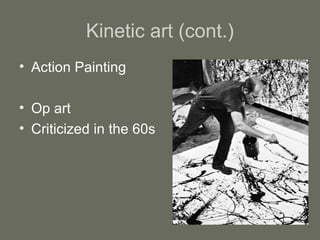
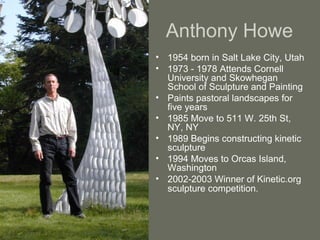
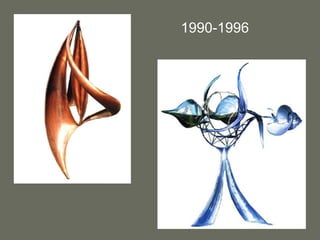
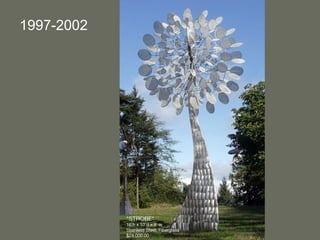
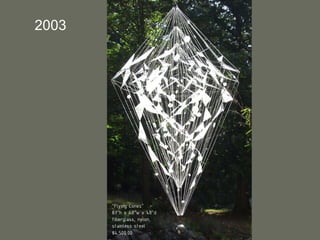
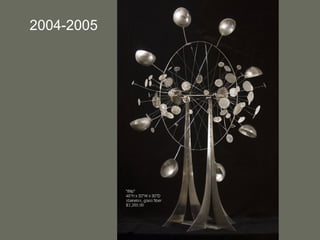
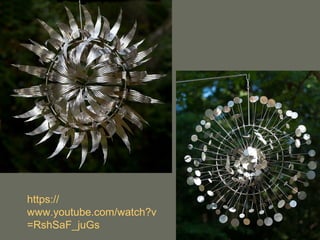
Kinetic art refers to any medium that contains perceivable movement or depends on motion for its effect, mostly referring to 3D sculptures that move naturally or through machines. It emerged in the 1800s as artists challenged photography by trying to create more lifelike art. Important early kinetic artists included Naum Gabo, Max Bill, and Alexander Calder who created mobiles. In the 1950s and 60s, kinetic art was influenced by action painting and op art but was also criticized. American sculptor Anthony Howe began creating kinetic sculptures in the late 1980s and early 1990s after painting landscapes, winning awards for his works that incorporate perceivable motion.