Annotating digital texts in the Brown University Library Andrew Ashton Brown University Library
Textual scholarship at Brown Brown University Women Writers Project Virtual Humanities Lab Center of Digital Epigraphy Modernist Journals Project Hypertext, CAVE Writing, etc.
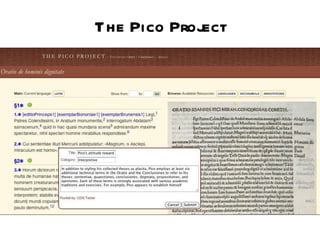
The Pico Project
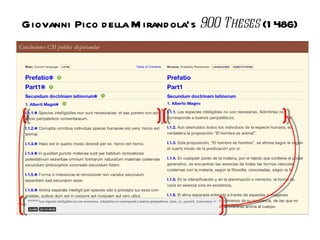
Giovanni Pico della Mirandola’s  900 Theses  (1486)
AtomPub AtomPub is an engine for creating, publishing, and updating annotations via HTTP. XML-based format for sending, receiving data on the web. Includes annotation body, metadata, links to target resource. RDF to express relationships between collections, digital objects, and annotations.
A place to gather, index, store, preserve, and make available digital assets produced via the scholarly, instructional, research, and administrative activities at Brown.
Based on Fedora Commons Rights management via Shibboleth APIs and  web services for campus developers User interface to upload, catalog, and arrange personal materials stored in the BDR
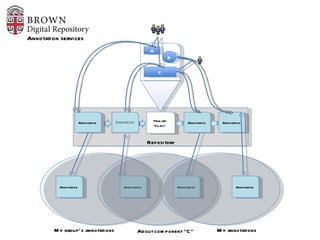
Primary Object  Repository Annotation services A B C My group’s annotations Annotation  Annotation  About component “C” Annotation  Annotation  Annotation  Annotation  My annotations Annotation
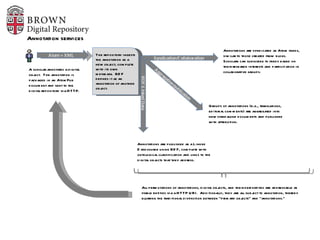
A scholar annotates a digital object.  The annotation is  packaged in an AtomPub document and sent to the digital repository via HTTP. Atom + XML The repository ingests the annotation as a new object, complete with its own metadata.  RDF defines it as an annotation of another object. Annotations are syndicated as Atom feeds, similar to those created from blogs. Scholars can subscribe to feeds based on their research interests and participation in collaborative groups. Groups of annotations (e.g., translations, editorial comments) are aggregated into new standalone documents and published with attribution.  Annotations are published as a Linked Data source using RDF, complete with ontological classification and links to the digital objects that they address.  All permutations of annotations, digital objects, and their derivatives are addressable as stable entities via a HTTP URI.  Additionally, they are all subject to annotation, thereby blurring the traditional distinction between “primary objects” and “annotations.” Annotation services RDF/Linked Data Syndication/Collaboration Aggregation/publication
Targeting portions of documents TEI offers structural anchors (<p>, <div>, etc.) XPointer offers one mechanism for addressing structural anchors via Xpath: Example: http://www.brown.edu/texts/Bradstreet.xml#xpointer(‘/TEI/teiHeader’) XPointer is insufficient as a sole solution for addressing fragments of TEI texts.
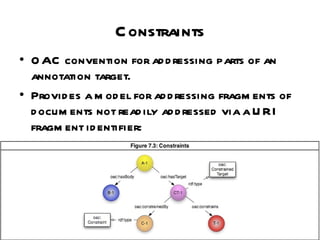
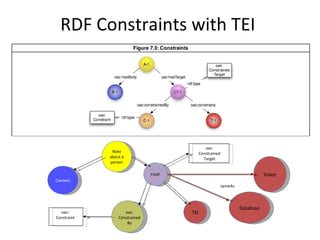
Constraints OAC convention for addressing parts of an annotation target. Provides a model for addressing fragments of documents not readily addressed via a URI fragment identifier:
RDF “Aspect slicing” Creating RDF out of fragments of TEI (and other objects). Addressable, URIs including semantic information and links back to source documents. Enables annotation of semantic data within and across documents, rather than simply fragments or passages.
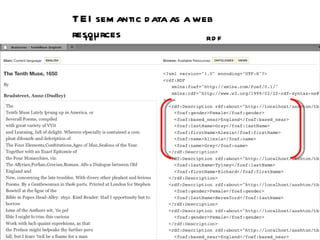
TEI RDF TEI semantic data as a web resources
RDF Constraints with TEI Note about a person FOAF TEI Content oac: Constrained  Target Database Video oac: Constraint oac: Constrained By sameAs
Thank you Andrew Ashton Brown University library [email_address] Twitter: @andyashton http://library.brown.edu/cds

Annotating Digital Texts in the Brown University Library

  • 1.
    Annotating digital textsin the Brown University Library Andrew Ashton Brown University Library
  • 2.
    Textual scholarship atBrown Brown University Women Writers Project Virtual Humanities Lab Center of Digital Epigraphy Modernist Journals Project Hypertext, CAVE Writing, etc.
  • 3.
  • 4.
    Giovanni Pico dellaMirandola’s 900 Theses (1486)
  • 5.
    AtomPub AtomPub isan engine for creating, publishing, and updating annotations via HTTP. XML-based format for sending, receiving data on the web. Includes annotation body, metadata, links to target resource. RDF to express relationships between collections, digital objects, and annotations.
  • 6.
    A place togather, index, store, preserve, and make available digital assets produced via the scholarly, instructional, research, and administrative activities at Brown.
  • 7.
    Based on FedoraCommons Rights management via Shibboleth APIs and web services for campus developers User interface to upload, catalog, and arrange personal materials stored in the BDR
  • 8.
    Primary Object Repository Annotation services A B C My group’s annotations Annotation Annotation About component “C” Annotation Annotation Annotation Annotation My annotations Annotation
  • 9.
    A scholar annotatesa digital object. The annotation is packaged in an AtomPub document and sent to the digital repository via HTTP. Atom + XML The repository ingests the annotation as a new object, complete with its own metadata. RDF defines it as an annotation of another object. Annotations are syndicated as Atom feeds, similar to those created from blogs. Scholars can subscribe to feeds based on their research interests and participation in collaborative groups. Groups of annotations (e.g., translations, editorial comments) are aggregated into new standalone documents and published with attribution. Annotations are published as a Linked Data source using RDF, complete with ontological classification and links to the digital objects that they address. All permutations of annotations, digital objects, and their derivatives are addressable as stable entities via a HTTP URI. Additionally, they are all subject to annotation, thereby blurring the traditional distinction between “primary objects” and “annotations.” Annotation services RDF/Linked Data Syndication/Collaboration Aggregation/publication
  • 10.
    Targeting portions ofdocuments TEI offers structural anchors (<p>, <div>, etc.) XPointer offers one mechanism for addressing structural anchors via Xpath: Example: http://www.brown.edu/texts/Bradstreet.xml#xpointer(‘/TEI/teiHeader’) XPointer is insufficient as a sole solution for addressing fragments of TEI texts.
  • 11.
    Constraints OAC conventionfor addressing parts of an annotation target. Provides a model for addressing fragments of documents not readily addressed via a URI fragment identifier:
  • 12.
    RDF “Aspect slicing”Creating RDF out of fragments of TEI (and other objects). Addressable, URIs including semantic information and links back to source documents. Enables annotation of semantic data within and across documents, rather than simply fragments or passages.
  • 13.
    TEI RDF TEIsemantic data as a web resources
  • 14.
    RDF Constraints withTEI Note about a person FOAF TEI Content oac: Constrained Target Database Video oac: Constraint oac: Constrained By sameAs
  • 15.
    Thank you AndrewAshton Brown University library [email_address] Twitter: @andyashton http://library.brown.edu/cds